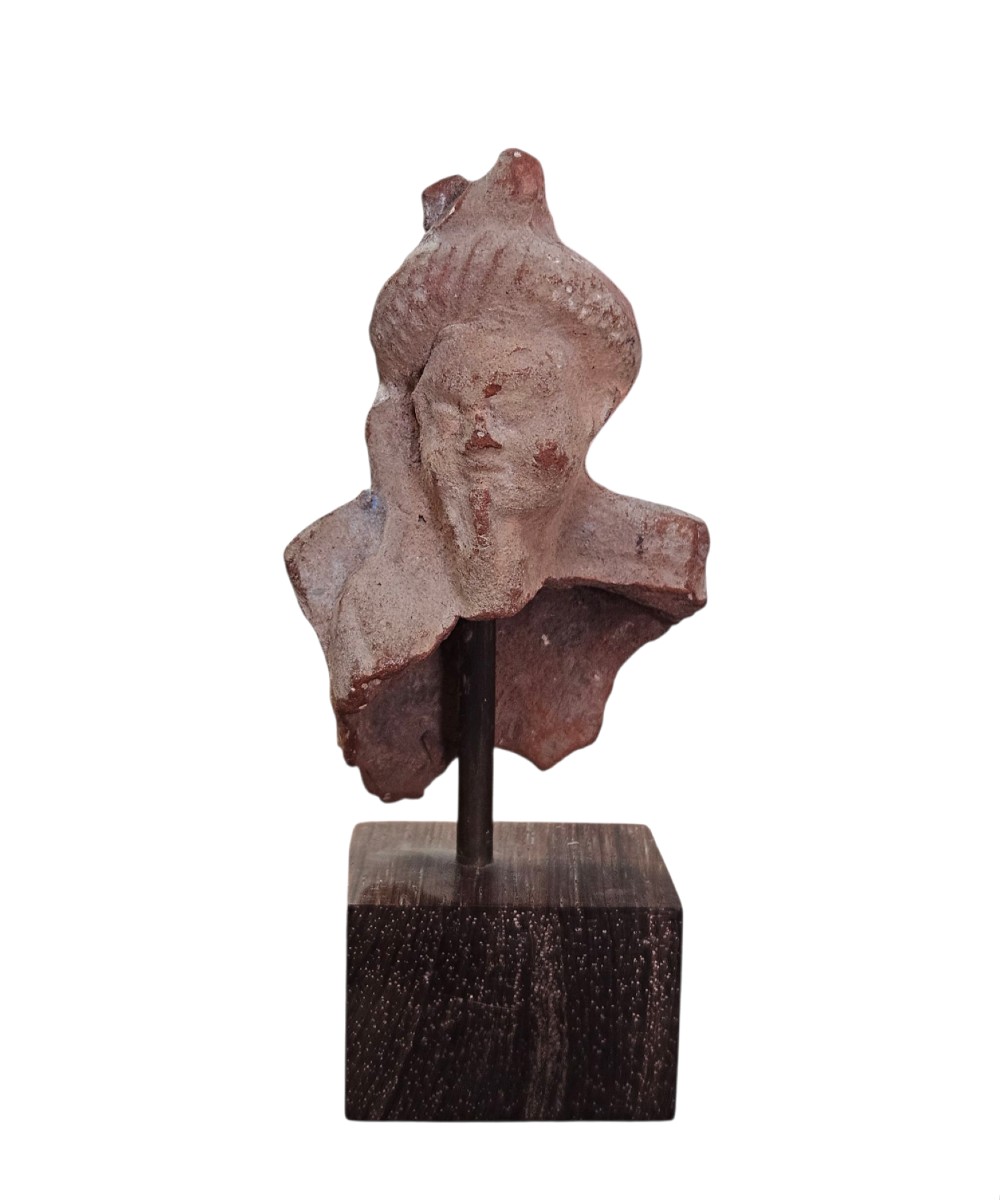
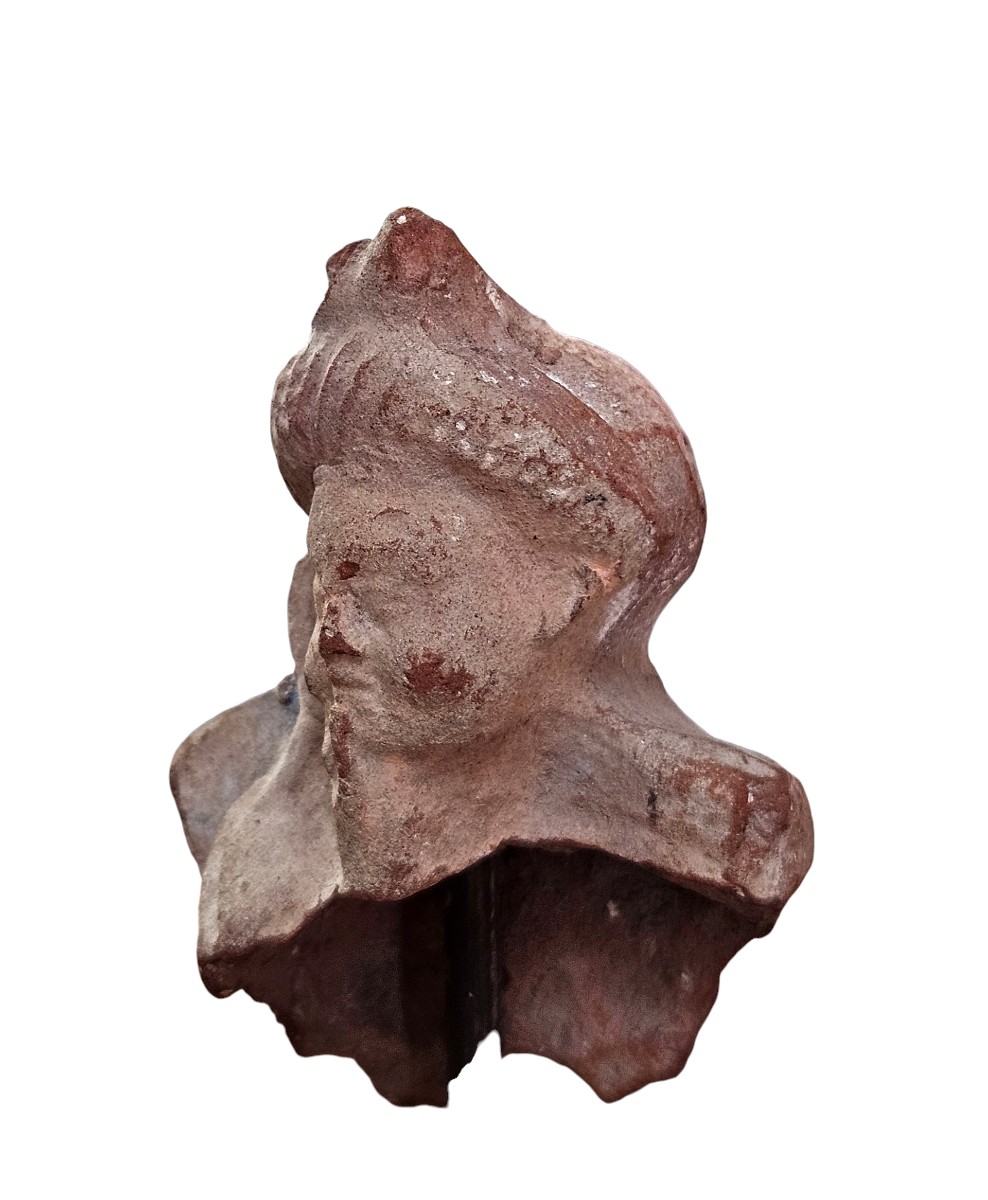


Bust Of The God Harpocrates, Greco-roman Period, Mediterranean Basin, 300 To 100 Bc.
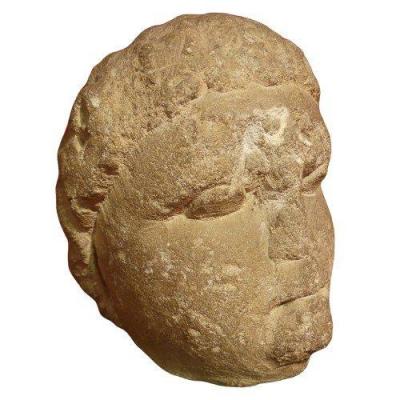
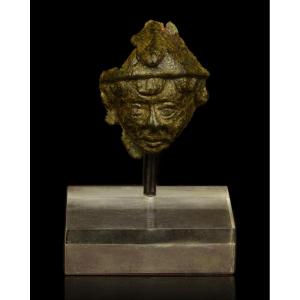
Bust of the god Harpocrates, with puffed cheeks and a youthful expression. His hand rests on his chin while a finger touches his lips, a gesture emblematic of the deity. He wears a wide turban across his forehead, along with a characteristic headdress. Beige terracotta with traces of white pigment, some chips and minor wear (see photos). Greco-Roman period, Mediterranean basin, 300–100 BC. Dimensions: 7 × 4.5 cm. Provenance: former Tessier & Sarrou sale, Drouot, Paris. Sold with a certificate from expert Serge Reynes and an invoice from Galerie Ocarina. "In Greco-Roman iconography, Harpocrates—a Hellenized form of the child Horus—is depicted as a young boy, with his finger to his mouth. Far from evoking silence in the modern sense, this gesture derives from the traditional posture of the Egyptian child and symbolizes divine youth, protection, and the forces of rebirth. Terracotta figurines of Harpocrates were widely used in domestic cults, associated with apotropaic and propitiatory virtues. This small bust, with its soft lines and carefully rendered turban, illustrates the popularity of this benevolent deity within the family beliefs of the ancient Mediterranean world."* Shipping costs upon request.
350 €
Period: Before 16th century
Style: Rome and Antic Greece
Condition: En l'etat
Material: Terracotta
Width: 4,5 cm
Height: 7 cm
Reference (ID): 1653136
Availability: In stock
Print