THIS OBJECT WAS SOLD
Portico Watchmaker Revel XVIIIème Era Louis XVI 18th Century XVIIIe

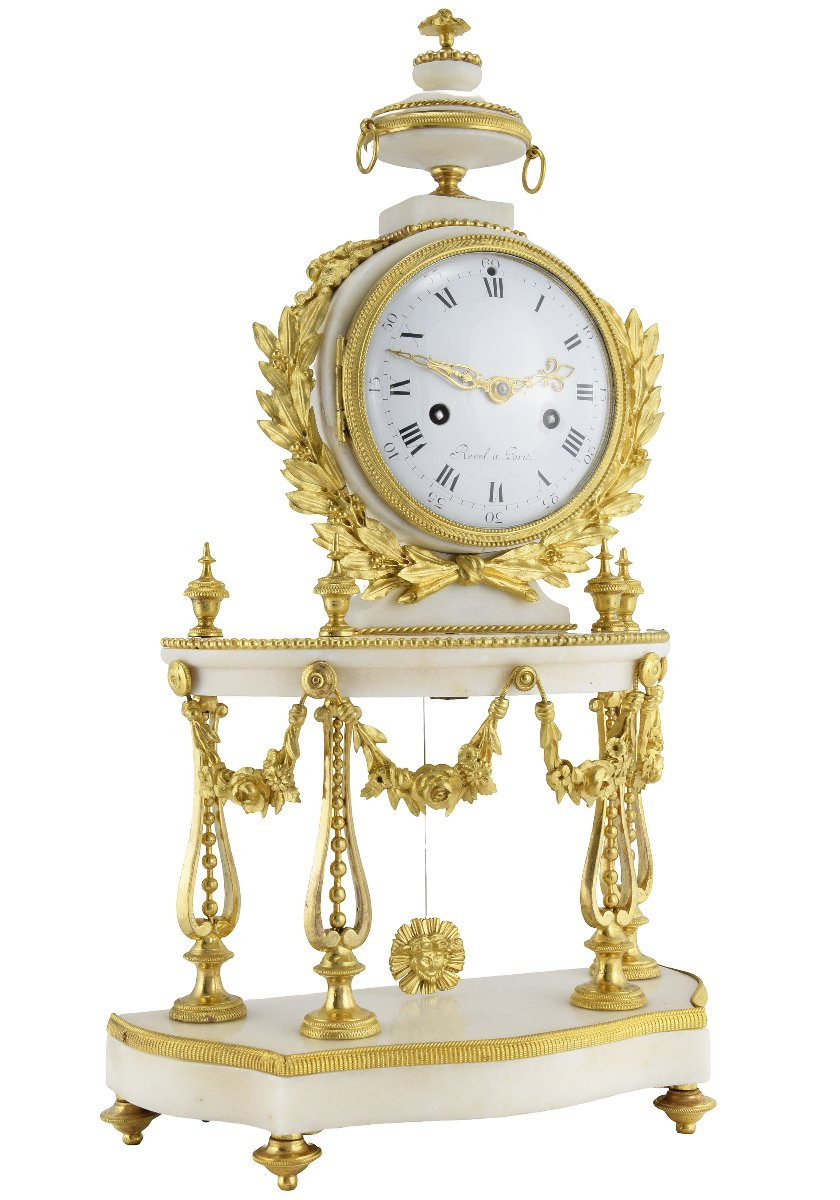
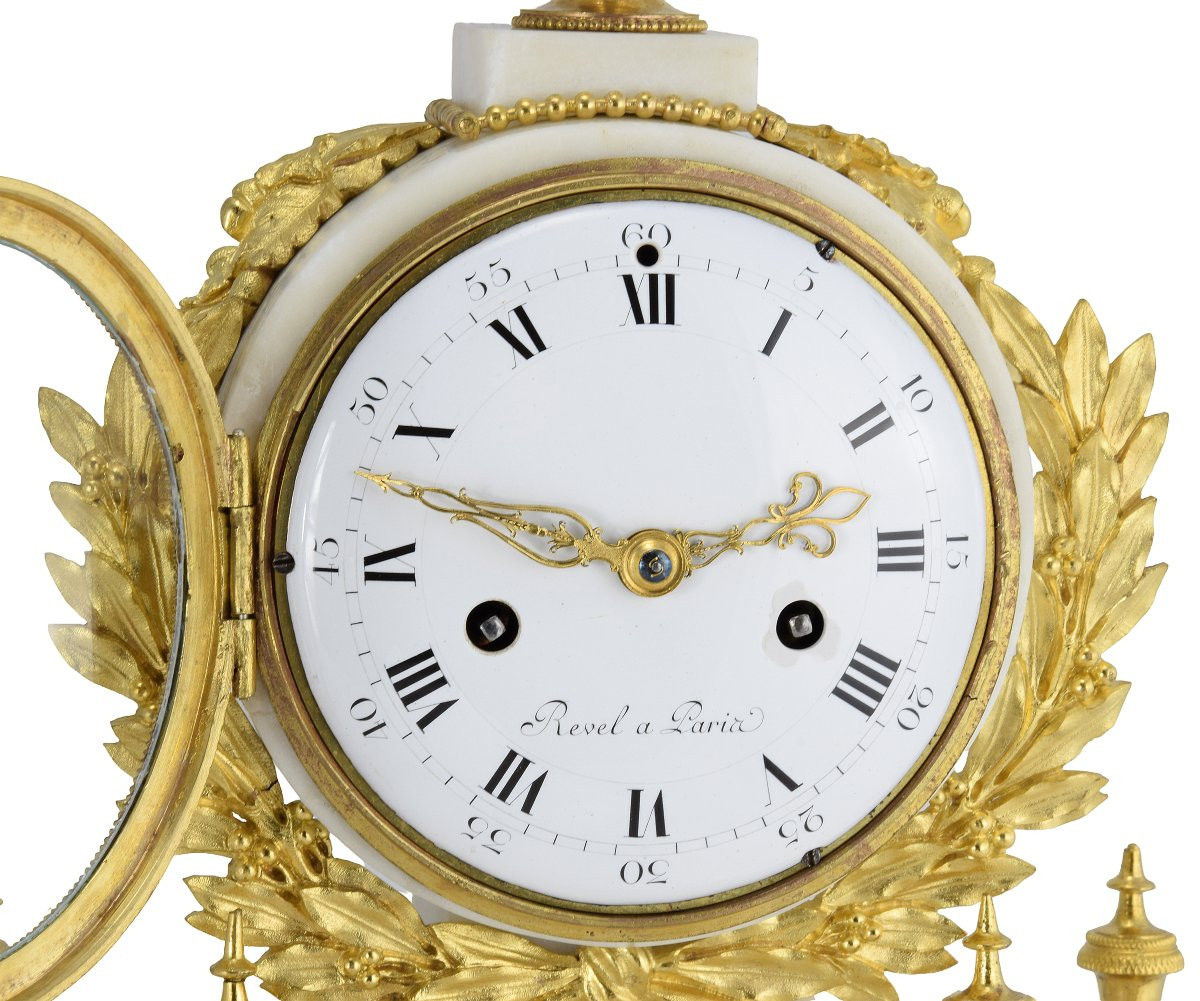
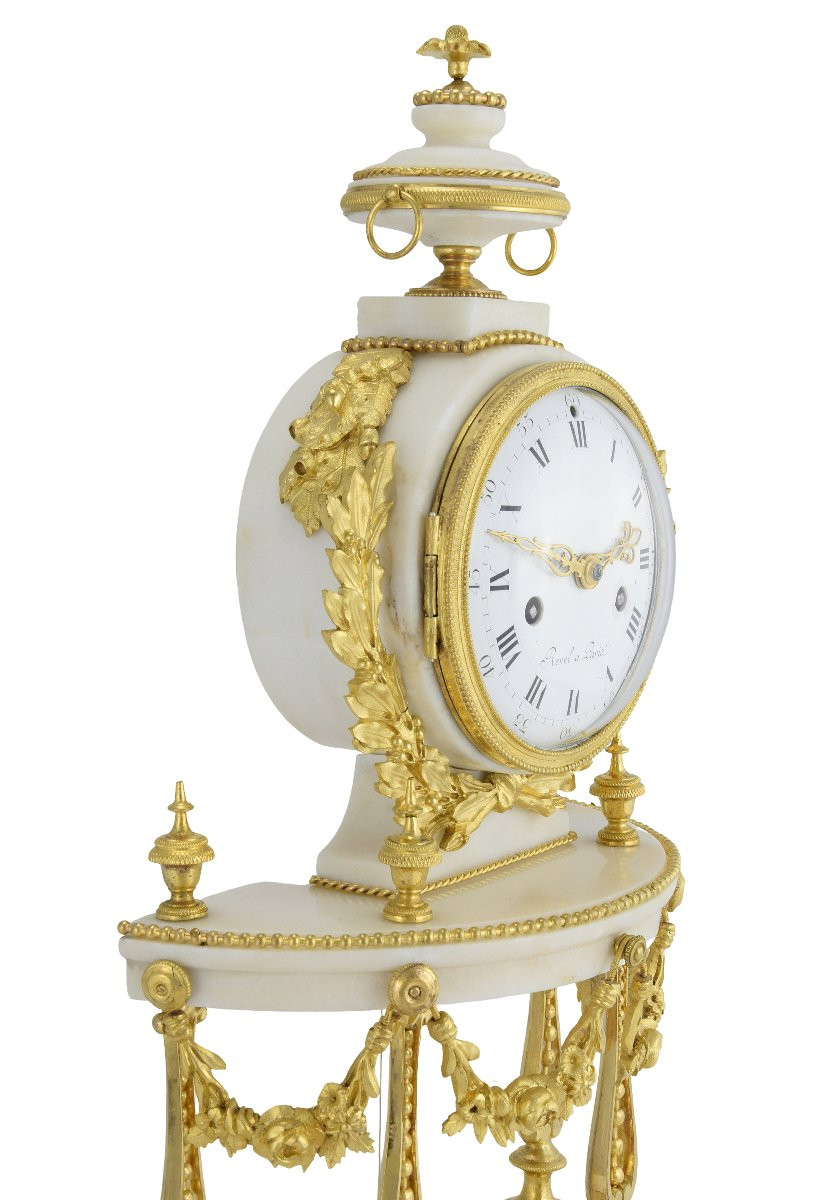
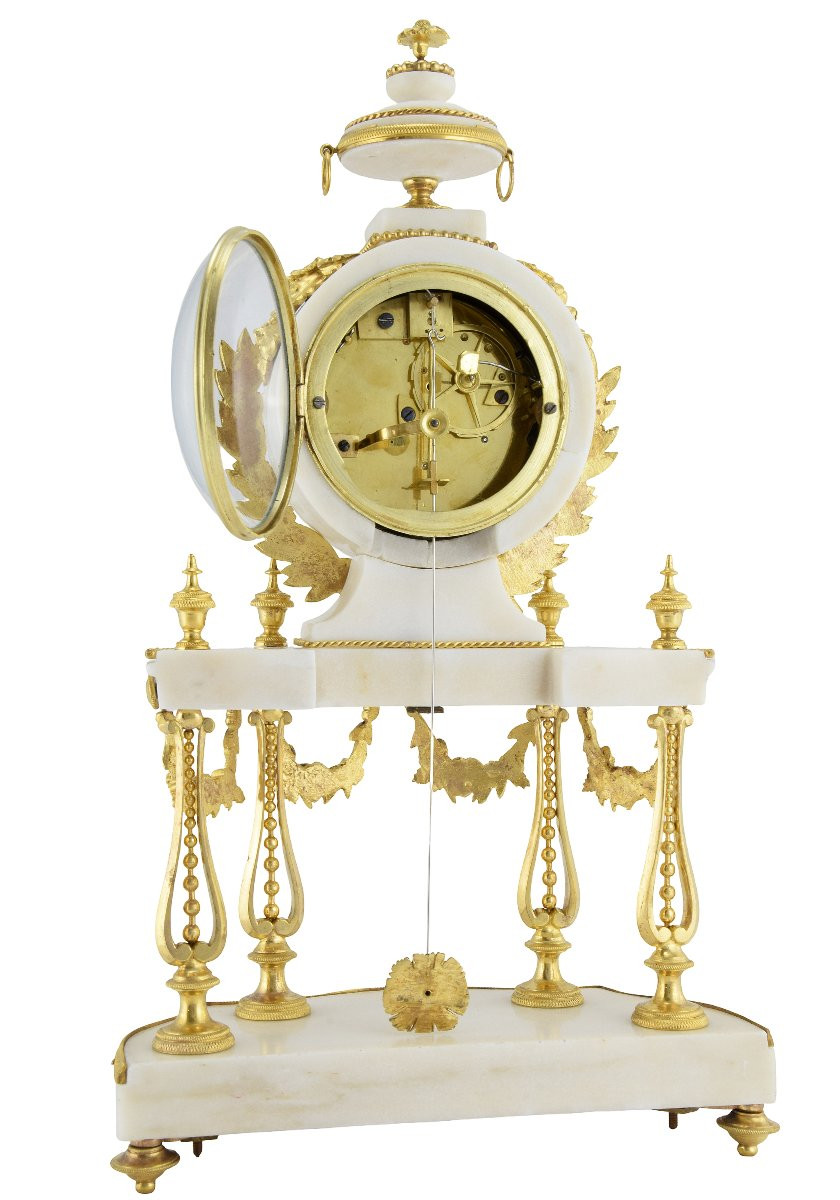
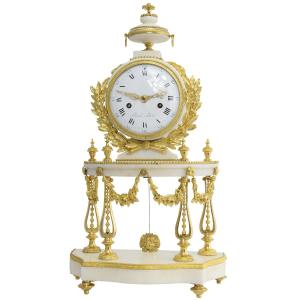


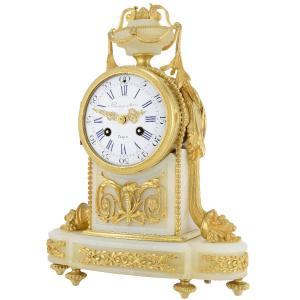
A Louis XVI period portico clock, 18th century, circa 1780. Made of
white marble and mercury-gilt bronze, it features an elegant half-moon
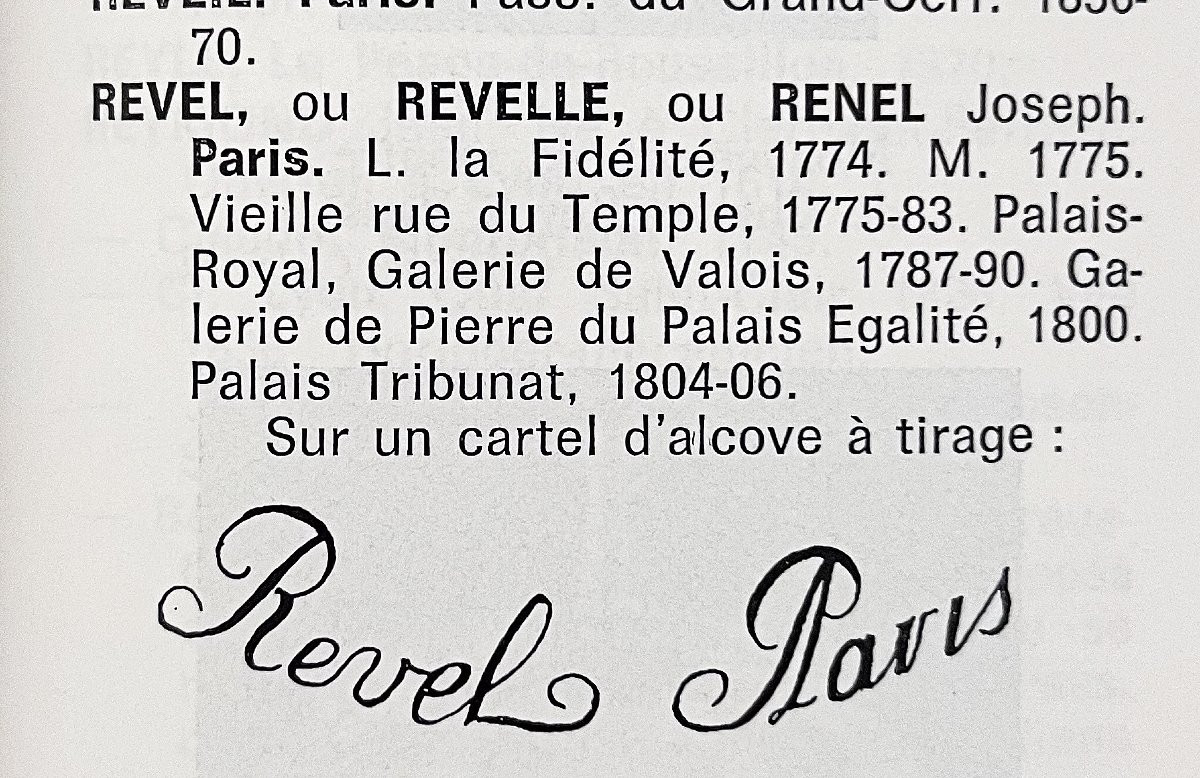
shape. Signed Revel in Paris, a clockmaker listed in Tardy's dictionary
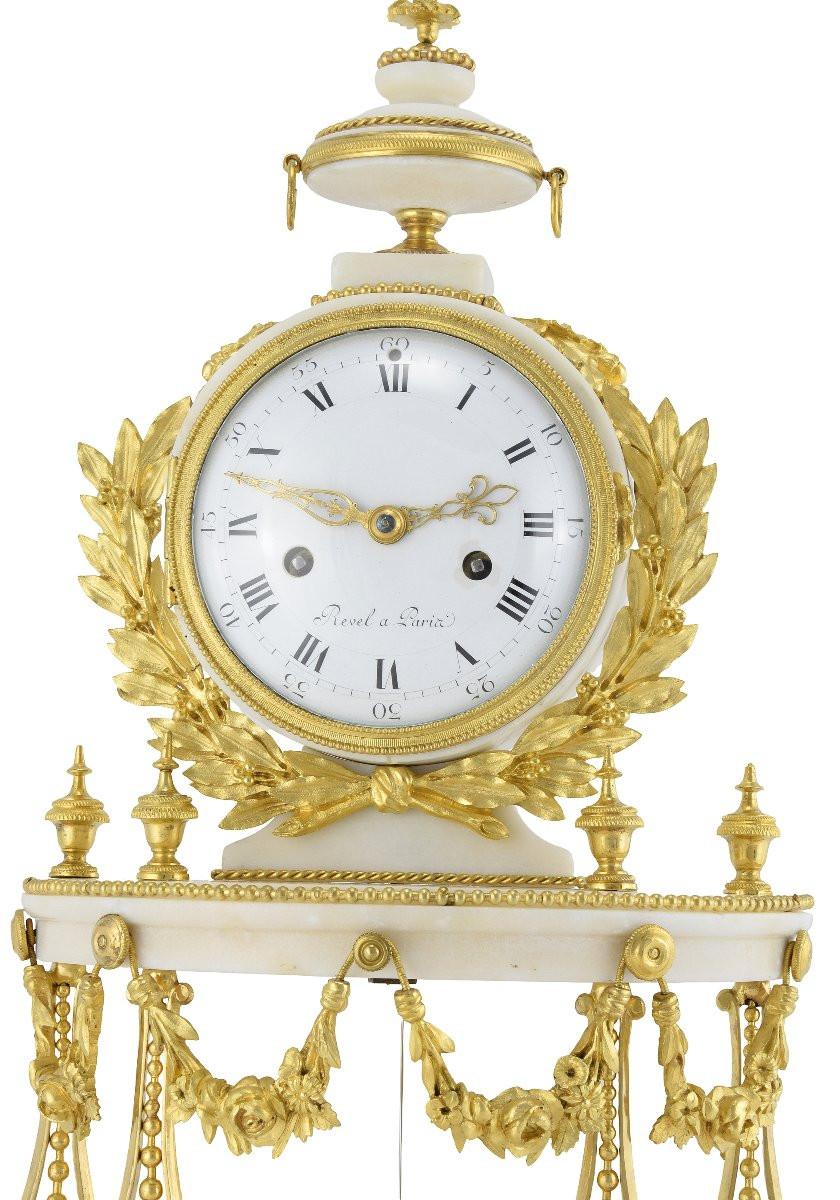
of French clockmakers. The domed white enamel dial displays Roman
numerals for the hours and a peripheral minute track. It is protected
by a gilt bronze bezel set with a domed glass. The clock is in perfect
original condition, without alteration.
The movement is housed in a circular white marble case, framed by a wide wreath of finely chased and gilt bronze laurel leaves. This laurel motif, a symbol of victory and honor in Antiquity, is highly characteristic of the Louis XVI decorative style, which drew heavily on the rediscovered art of antiquity.
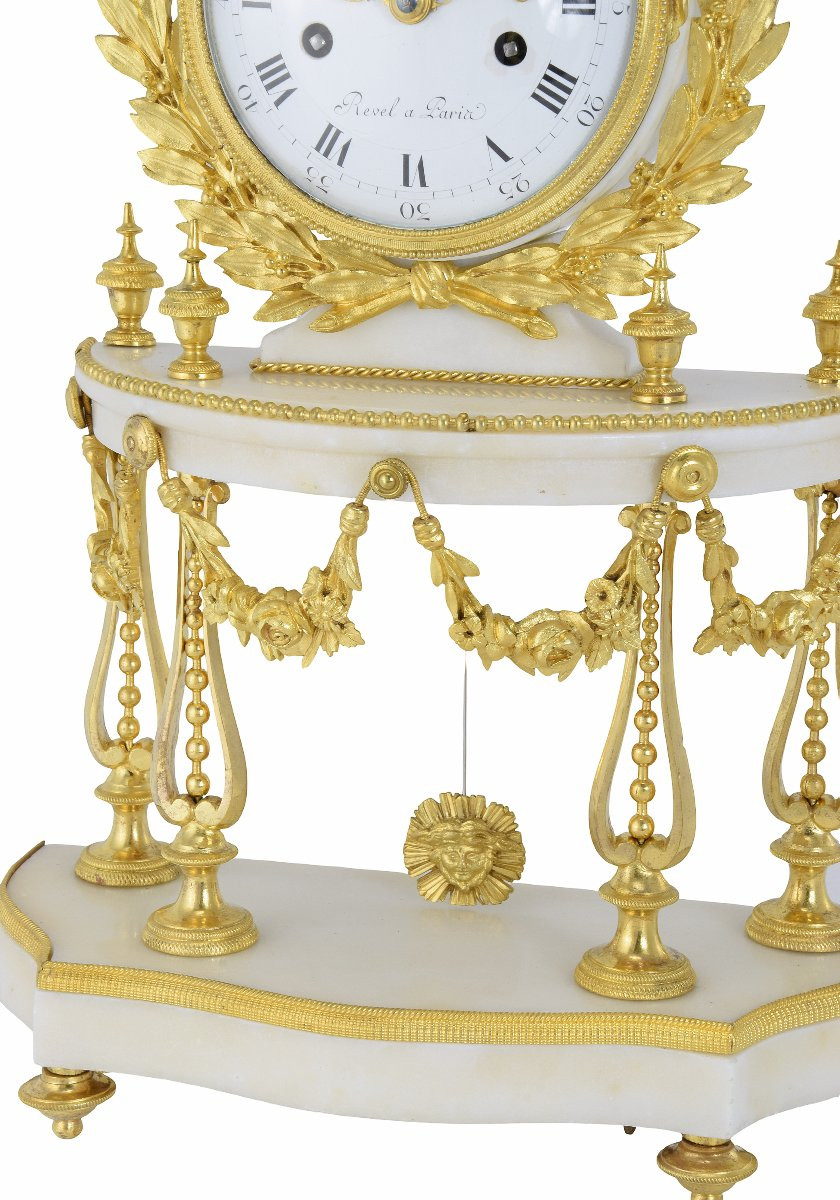
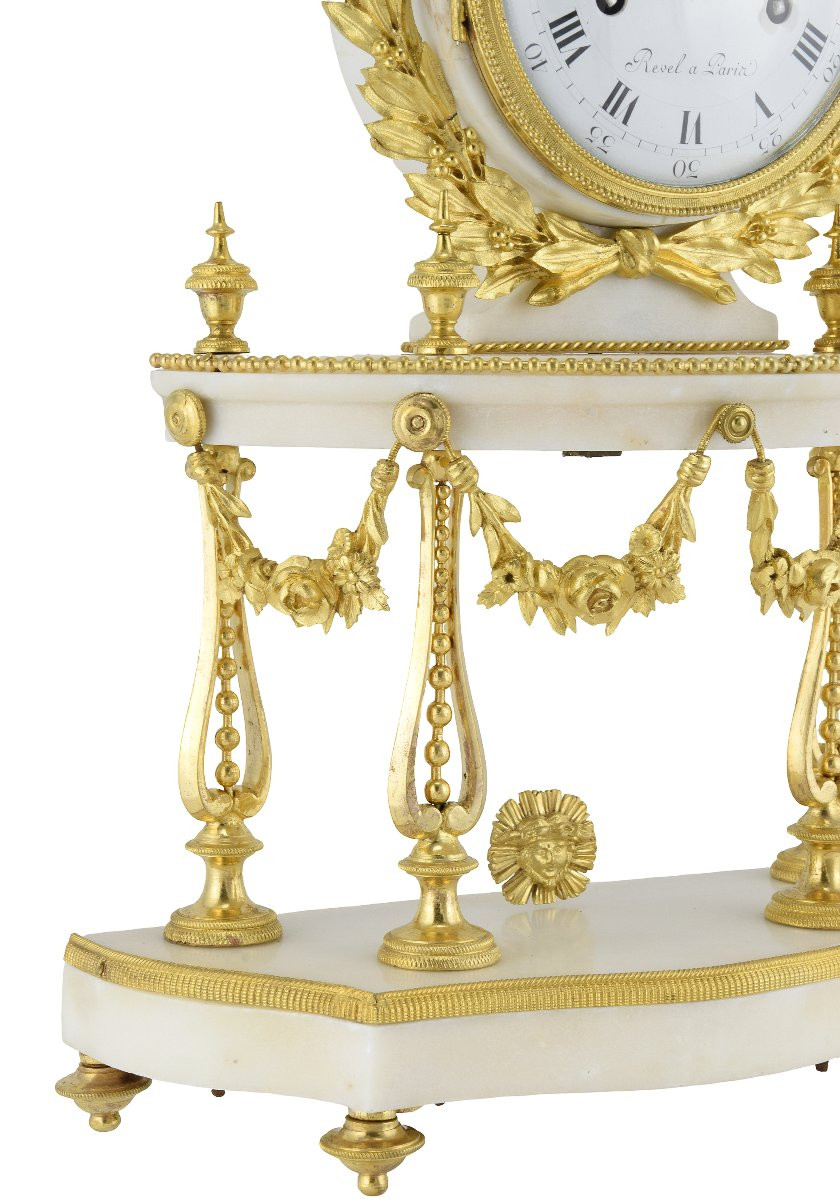
The portico structure rests on a half-moon shaped white marble base, highlighted by a row of pearls. Four slender columns in the shape of elongated lyres support the upper section. These exquisitely delicate columns are composed of uprights adorned with strings of pearls and topped with small capitals and bases. Between them hang delicate floral and foliate garlands, attached by stylized rosettes and ribbons, creating a light and elegant decorative rhythm.
At the top of the dial, the clock is crowned with an architectural element in marble and gilt bronze, forming a small covered vase inspired by antique urns. This is surrounded by movable ring handles. The overall composition is perfectly balanced: the geometric rigor of the architecture—semi-circular base, regular columns, central dial—is softened by the abundance of finely chiseled plant motifs.
Beneath the base, the pendulum appears between the columns, animated by a radiating pattern that provides an additional focal point to the composition. The ensemble perfectly illustrates the Louis XVI aesthetic, where the purity of architectural lines is combined with refined and measured ornamentation, testifying to the know-how of Parisian bronze workers and watchmakers of the late 18th century.
ORDERING AND ADDITIONAL INFORMATION FROM OUR WEBSITE
The movement is housed in a circular white marble case, framed by a wide wreath of finely chased and gilt bronze laurel leaves. This laurel motif, a symbol of victory and honor in Antiquity, is highly characteristic of the Louis XVI decorative style, which drew heavily on the rediscovered art of antiquity.
The portico structure rests on a half-moon shaped white marble base, highlighted by a row of pearls. Four slender columns in the shape of elongated lyres support the upper section. These exquisitely delicate columns are composed of uprights adorned with strings of pearls and topped with small capitals and bases. Between them hang delicate floral and foliate garlands, attached by stylized rosettes and ribbons, creating a light and elegant decorative rhythm.
At the top of the dial, the clock is crowned with an architectural element in marble and gilt bronze, forming a small covered vase inspired by antique urns. This is surrounded by movable ring handles. The overall composition is perfectly balanced: the geometric rigor of the architecture—semi-circular base, regular columns, central dial—is softened by the abundance of finely chiseled plant motifs.
Beneath the base, the pendulum appears between the columns, animated by a radiating pattern that provides an additional focal point to the composition. The ensemble perfectly illustrates the Louis XVI aesthetic, where the purity of architectural lines is combined with refined and measured ornamentation, testifying to the know-how of Parisian bronze workers and watchmakers of the late 18th century.
ORDERING AND ADDITIONAL INFORMATION FROM OUR WEBSITE
Explore similar pieces and discover your ideal find:
Mantel Clocks