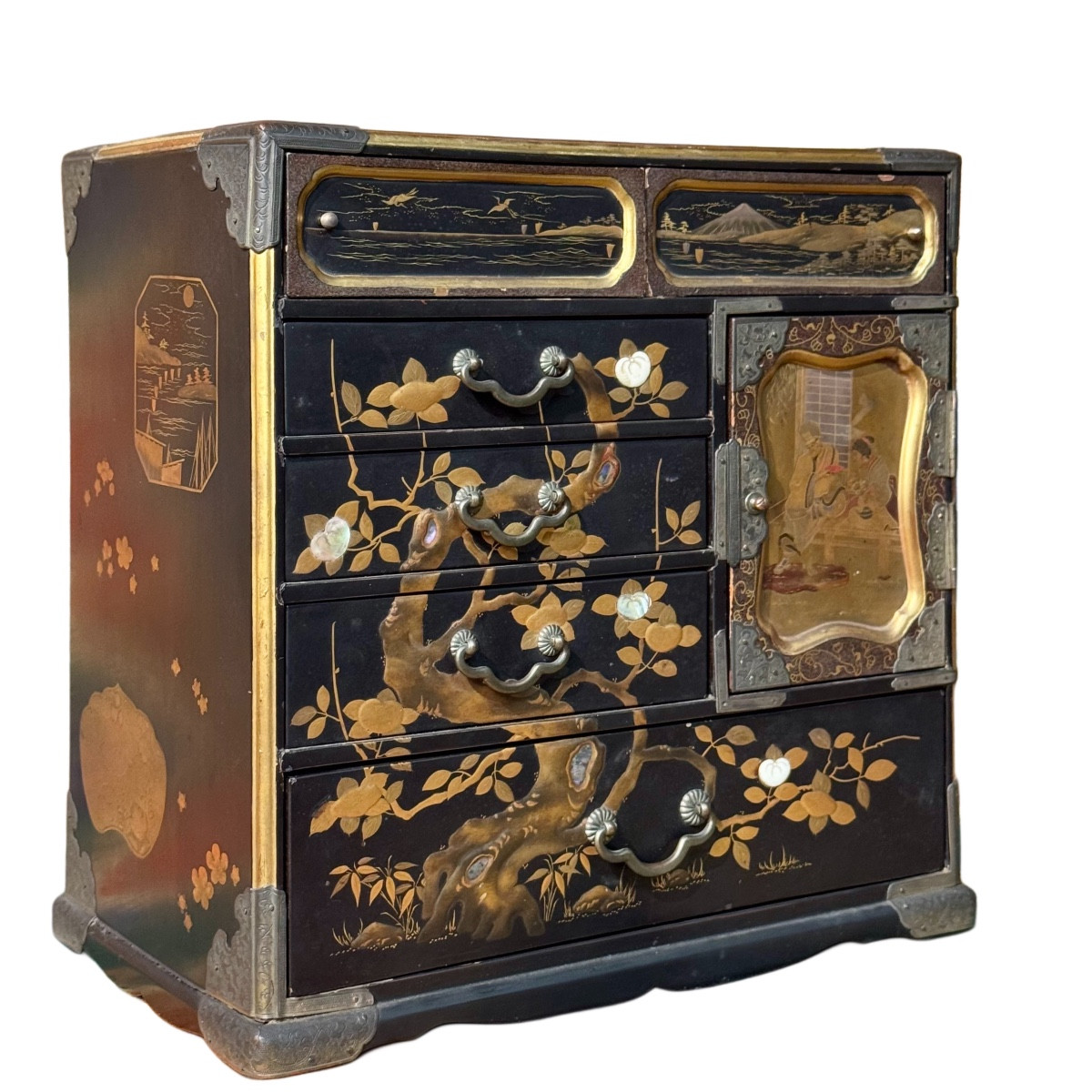
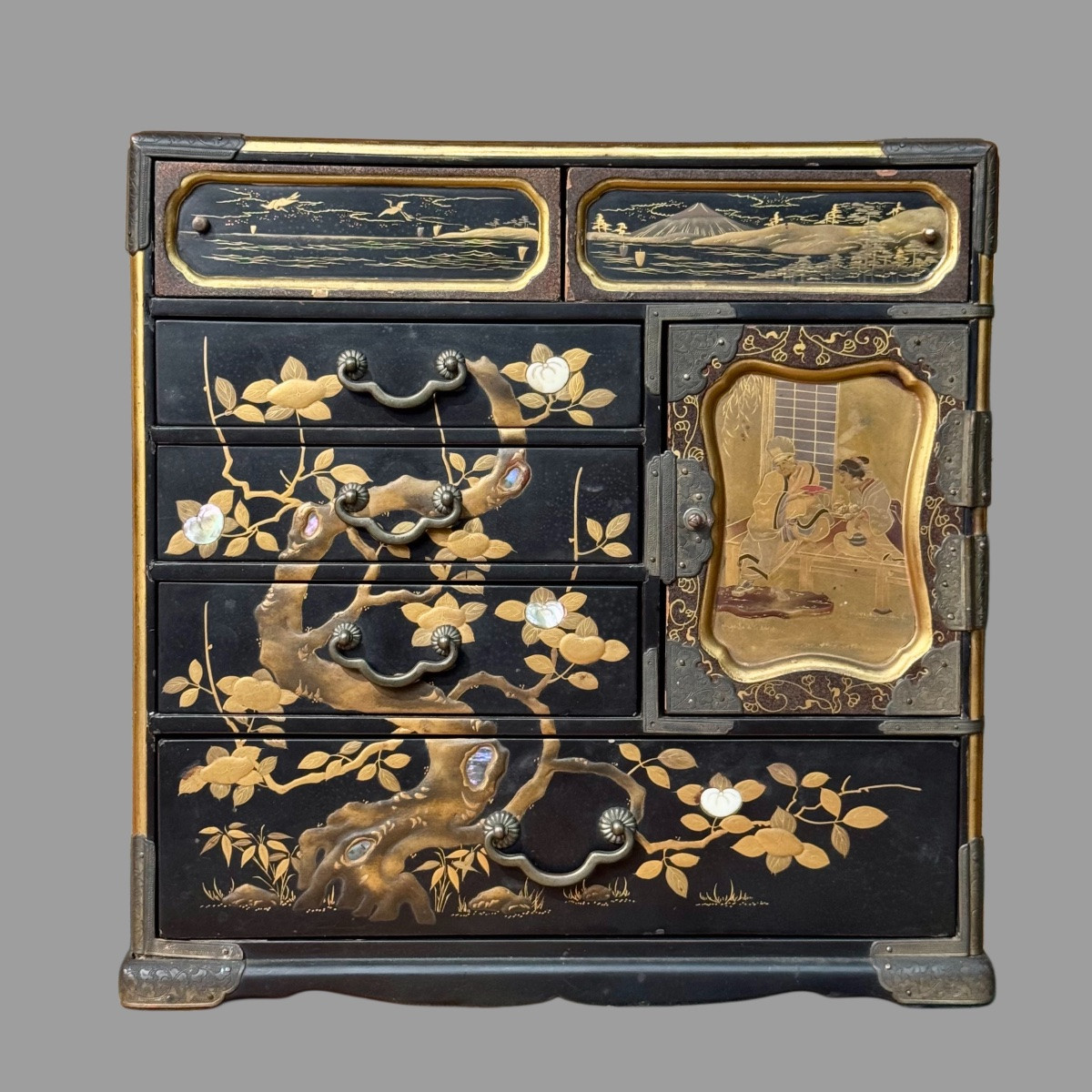




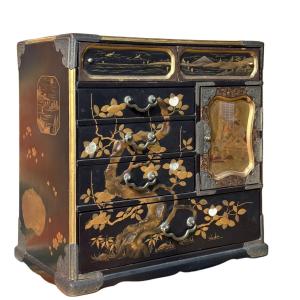


Small Japanese Cabinet (kodansu) From The Meiji Period, Decorated With Gold Lacquer.
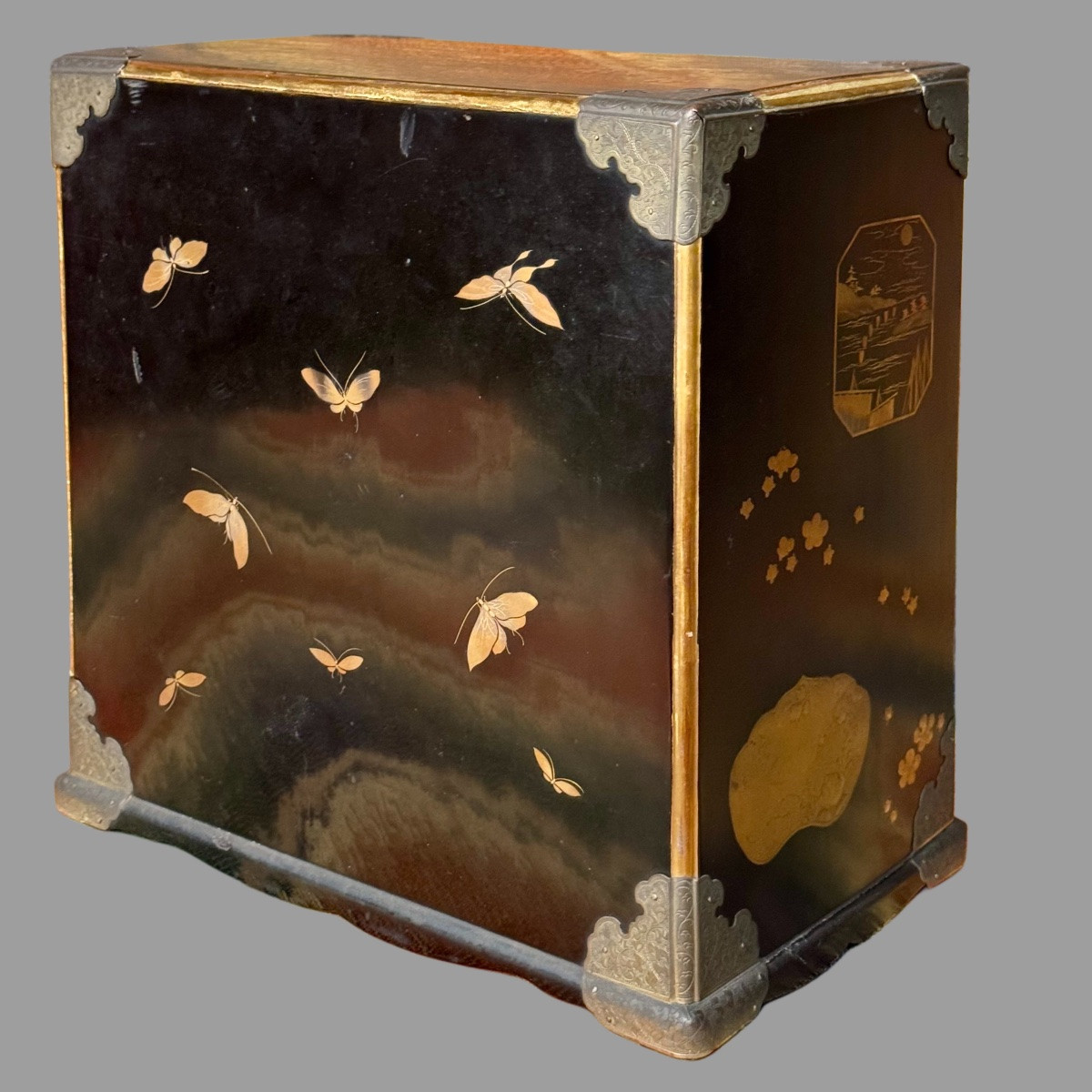
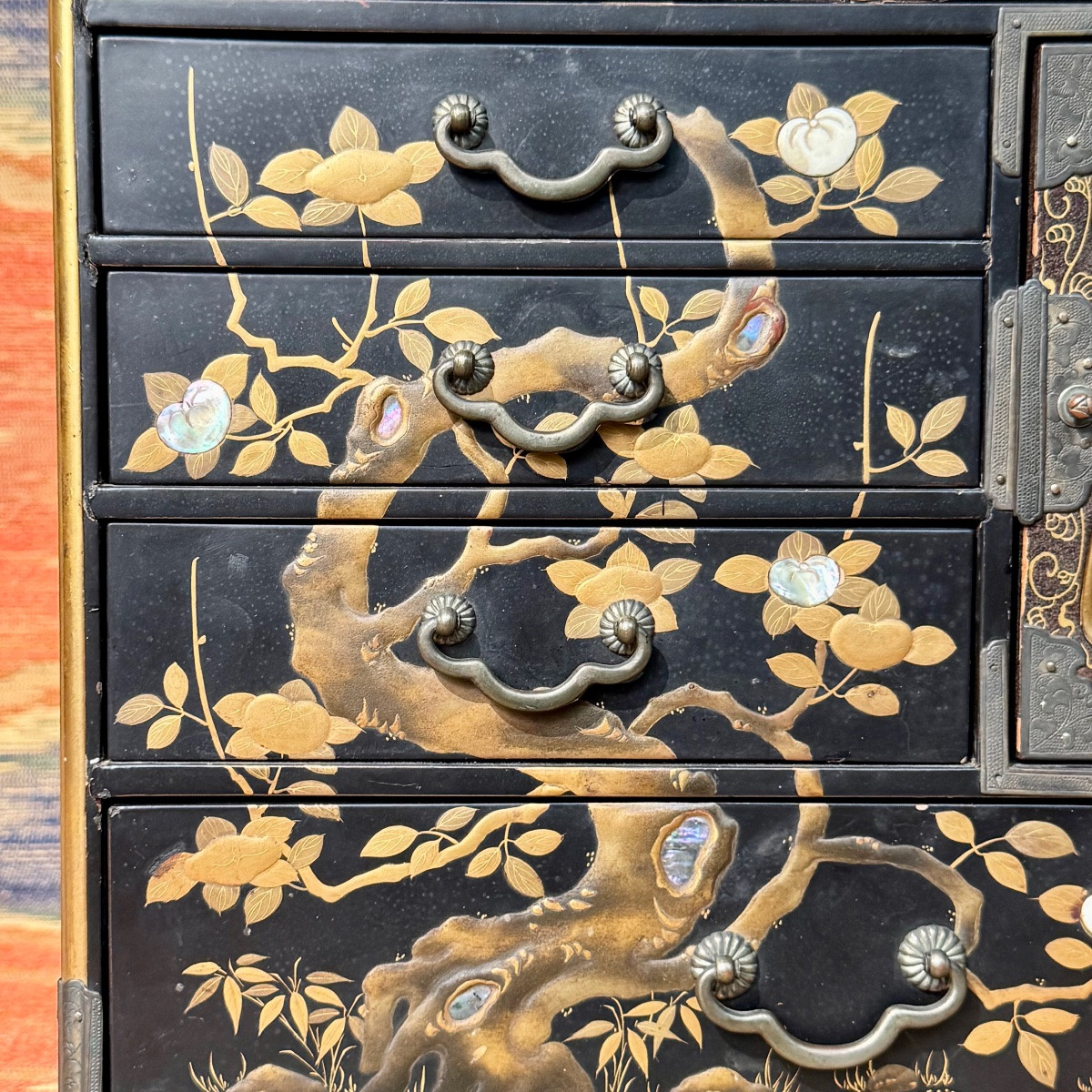
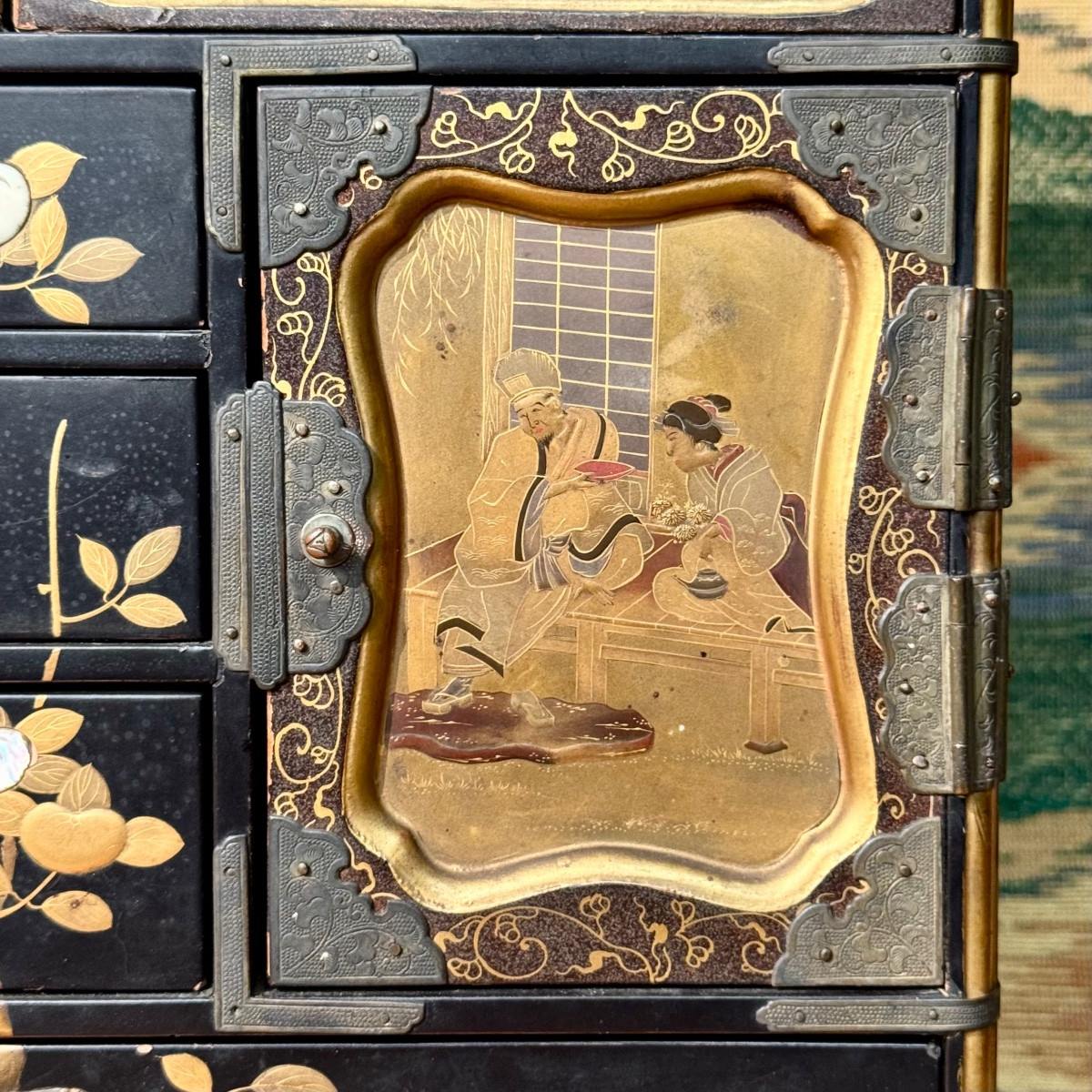
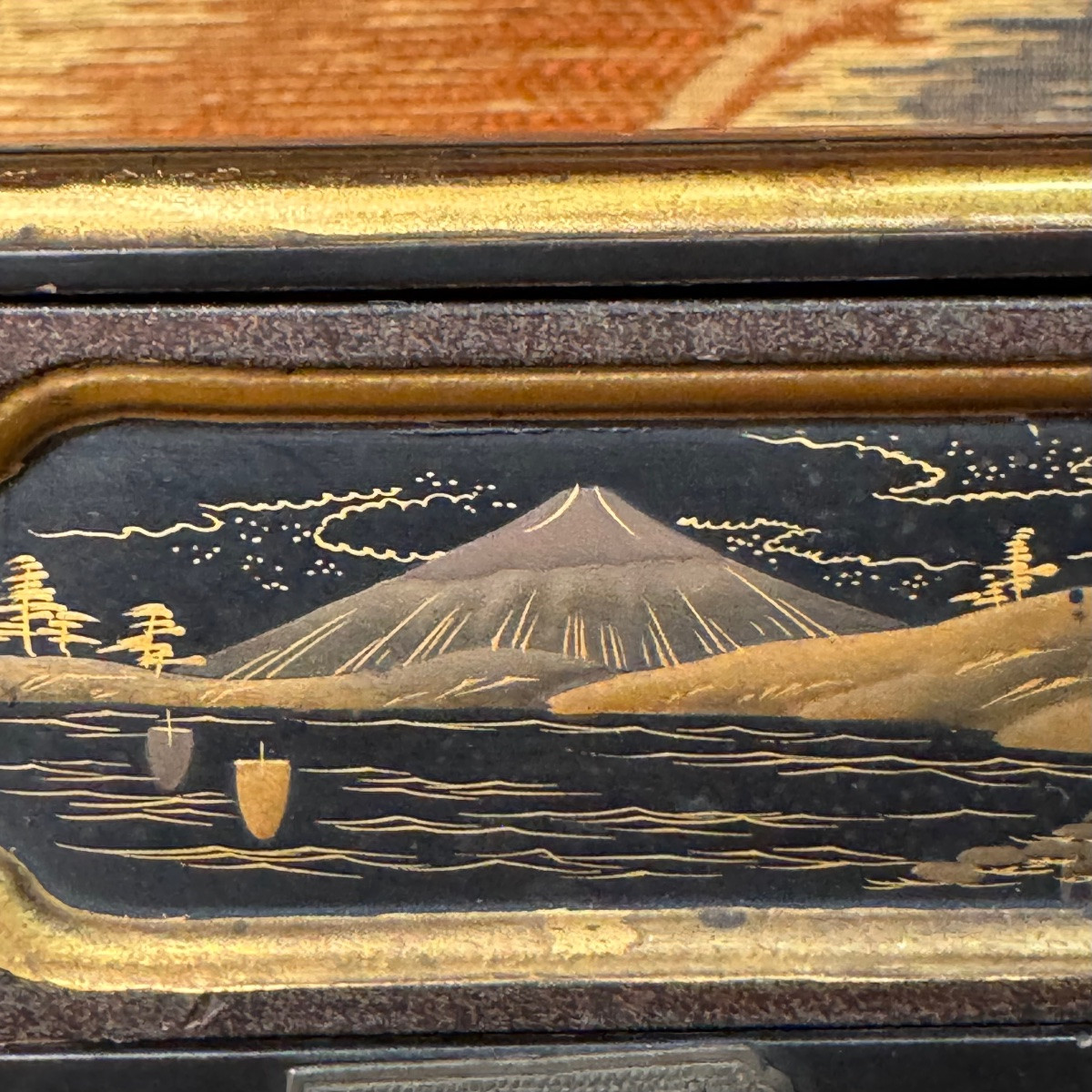
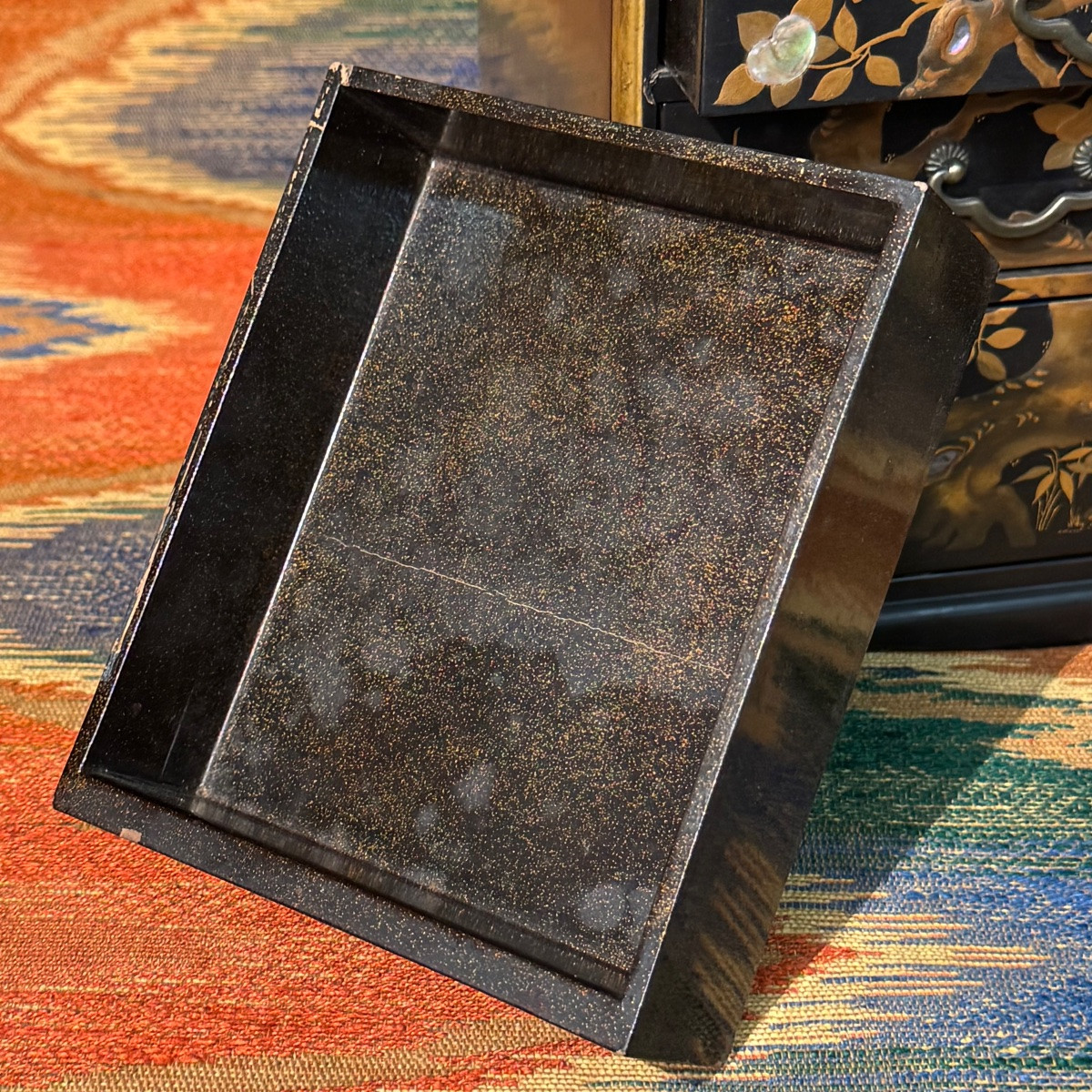
Mother-of-pearl inlays and black lacquered wood with gold maki-e decoration adorn this Japanese cabinet, a typical piece from the Tokyo-Yokohama region, circa 1880-1900, likely intended for export. The fittings are of engraved and stamped metal. The foreground depicts a tree with a gnarled and twisted trunk, probably a plum tree. The flowers are round with five petals, and the buds and small golden leaves evoke the early bloom of late winter. In Japanese culture, the plum tree symbolizes: the renewal of spring, perseverance (as it blossoms despite the cold), elegance, and purity. The small, iridescent mother-of-pearl inlays in the trunk represent natural cavities common on old plum trees. The landscape depicted on the two small upper drawers appears to evoke Mount Fuji. Around the mountain, one sees water with stylized waves, small boats, migratory birds or cranes, and pine trees. This type of composition evokes the lakes around Fuji, particularly the Fuji Five Lakes region. These motifs formed a kind of “ideal Japanese landscape.” The scene on the cabinet door depicts a scholar in a Japanese interior. In the background, a screen with gridded panels is visible, reminiscent of a Japanese sliding door (shōji) or a folding screen. The scholar receives an offering—a tray or a cushion—brought by a woman, either his wife or a servant. The hardware is also characteristic of small Japanese furniture produced in the workshops of Tokyo or Yokohama at the end of the 19th century. It is made of engraved and stamped metal and features an elaborate decoration of flowers and scrolls. This small cabinet is decorated on all its visible surfaces. The back is adorned with insects and butterflies, the sides with small paintings set against a gold background, and the top features a scattering of tiny flowers and a fan-shaped design. The small door reveals two drawers lined with brown lacquer. The drawer interiors have a speckled lacquer finish. A charming piece, an invitation to travel, and a perfect complement to a refined décor, it can be placed on a coffee table or chest of drawers.
1 750 €
Period: 19th century
Style: Asian art
Condition: Excellent condition
Length: 26 cm
Height: 26,4
Depth: 15 cm
Reference (ID): 1720640
Availability: In stock
Print