

China, Southern Song Dynasty, Qingbai Bowl With Phoenix Decoration Among Clouds
Visible in Paris. Free local pickup in the capital and its suburbs. Shipping within France: €30, contact me for shipping to Europe and the rest of the world.
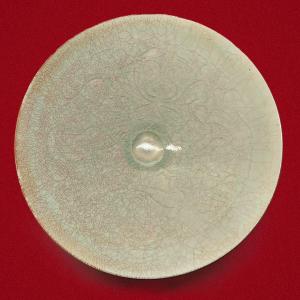
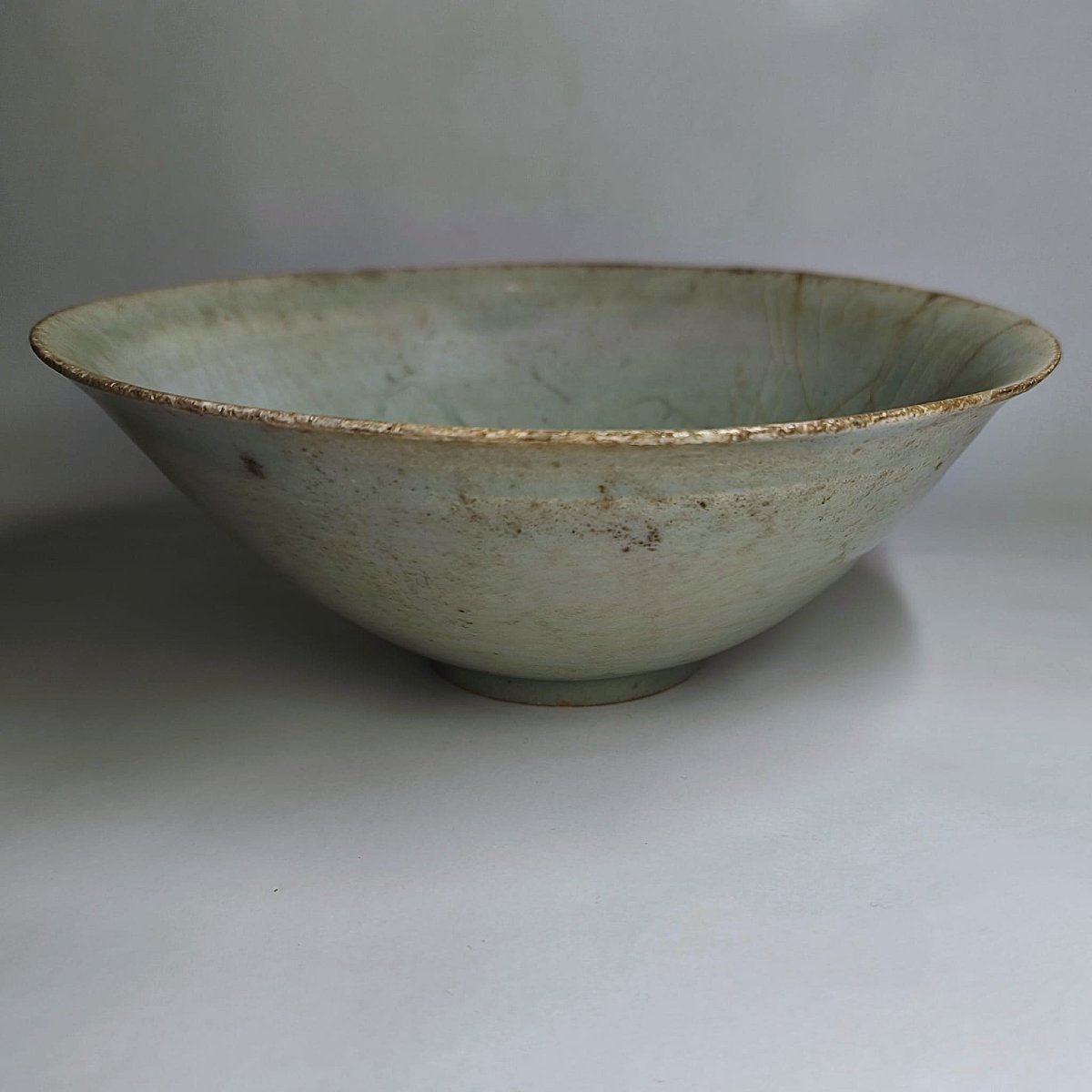
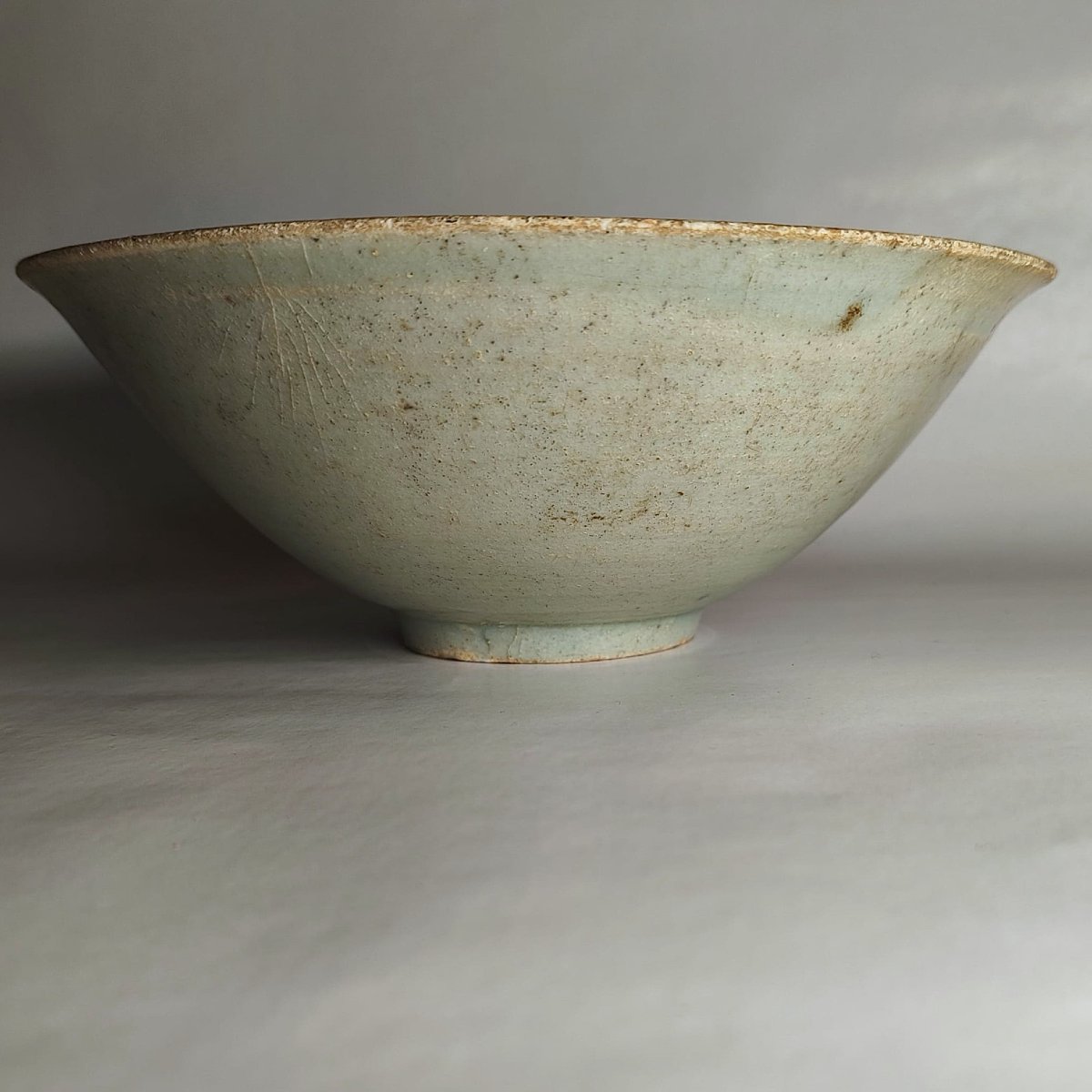
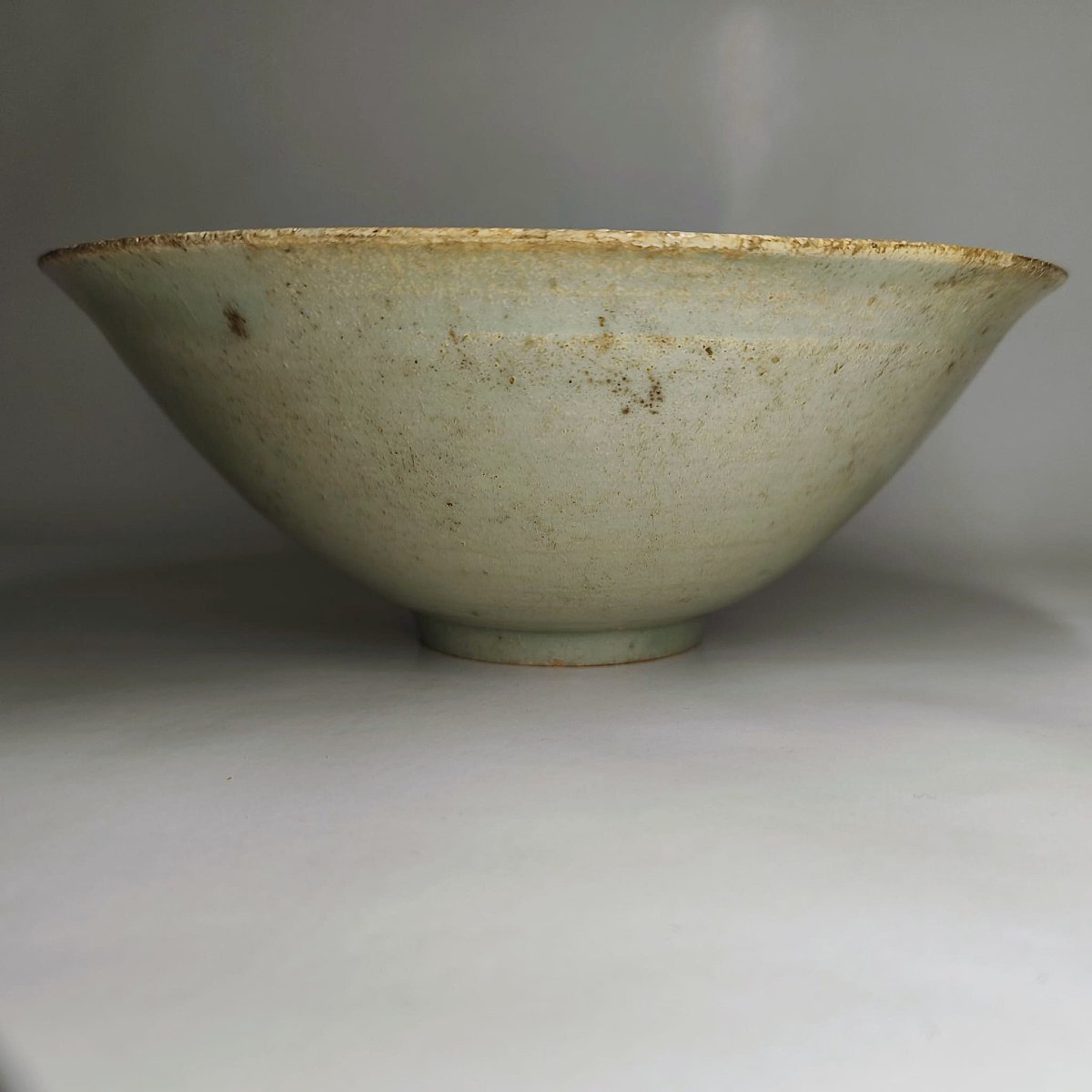
Large qingbai glazed bowl (bluish-white).
Glazed stoneware.
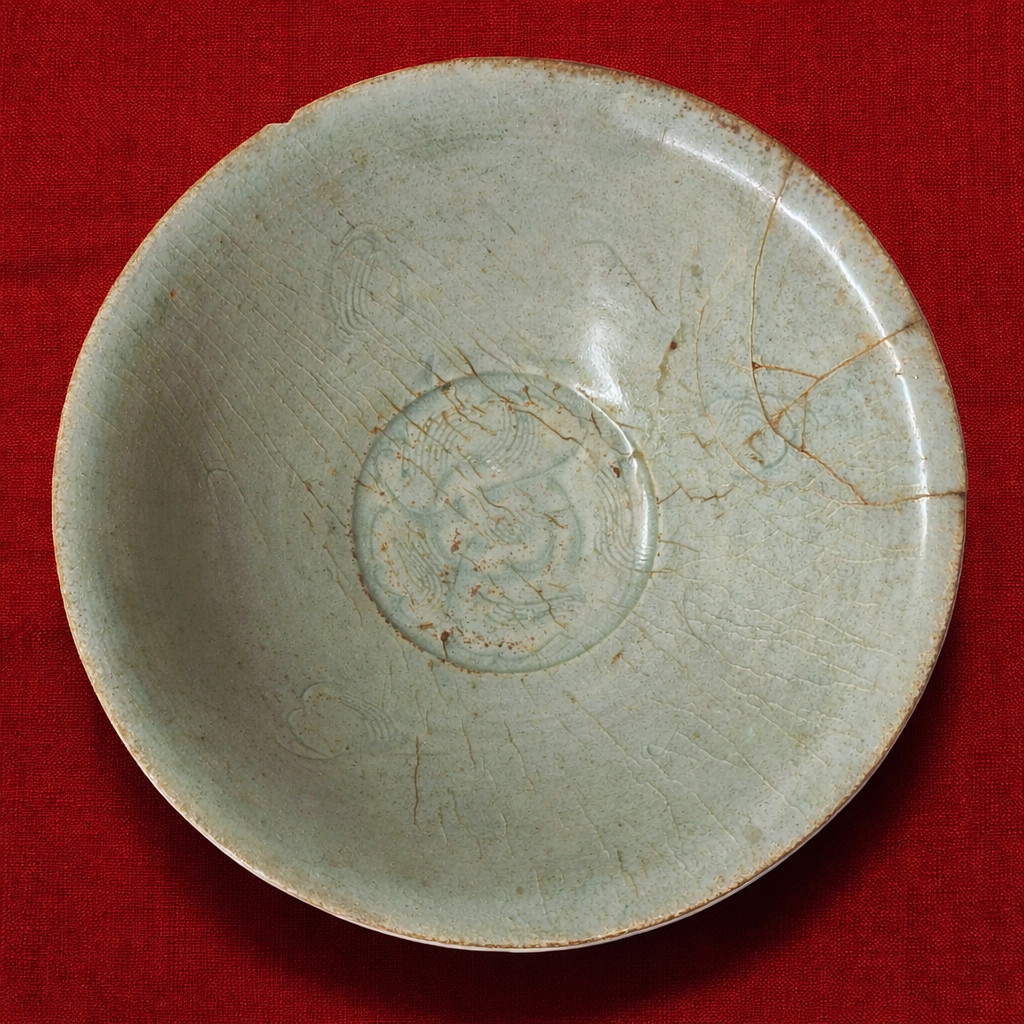
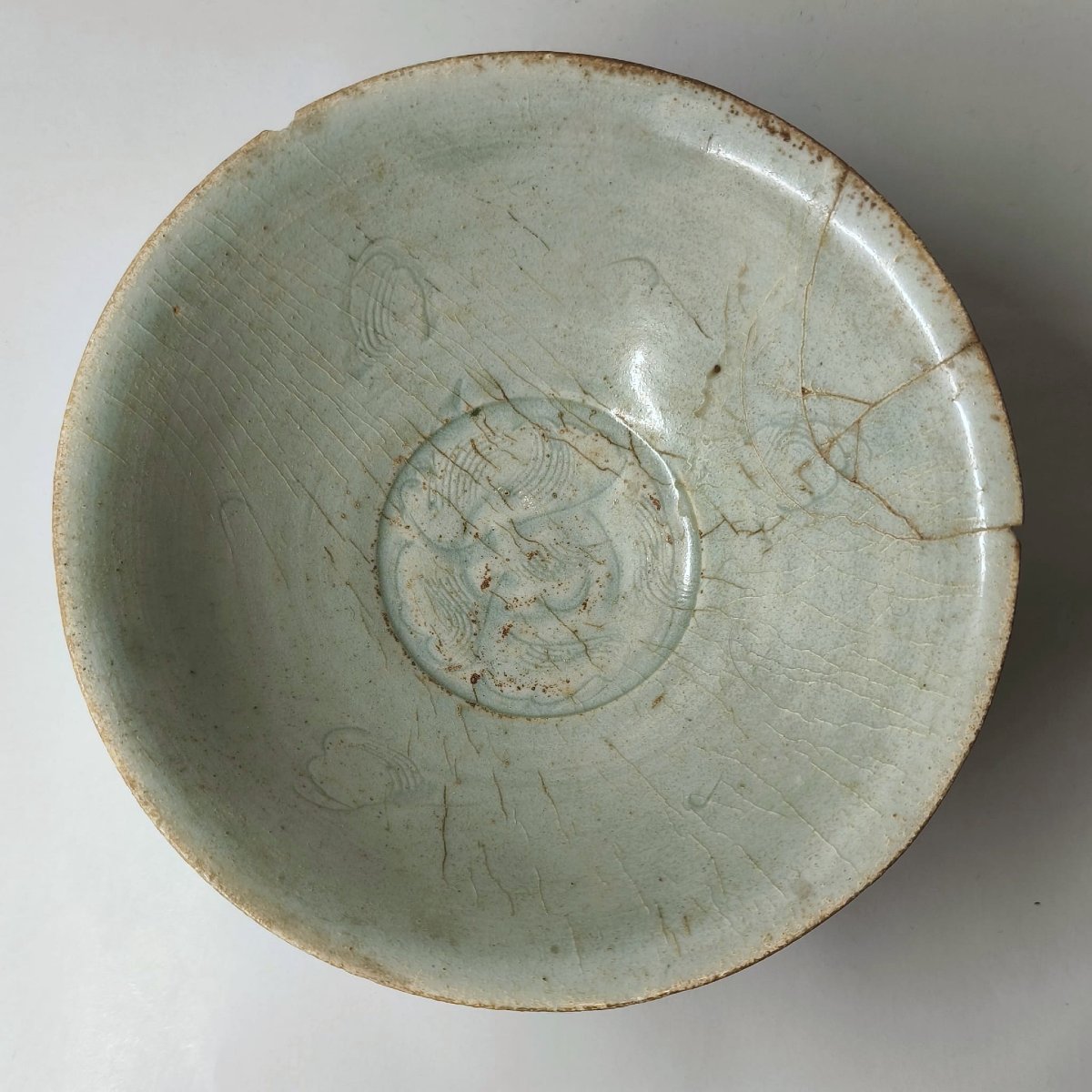
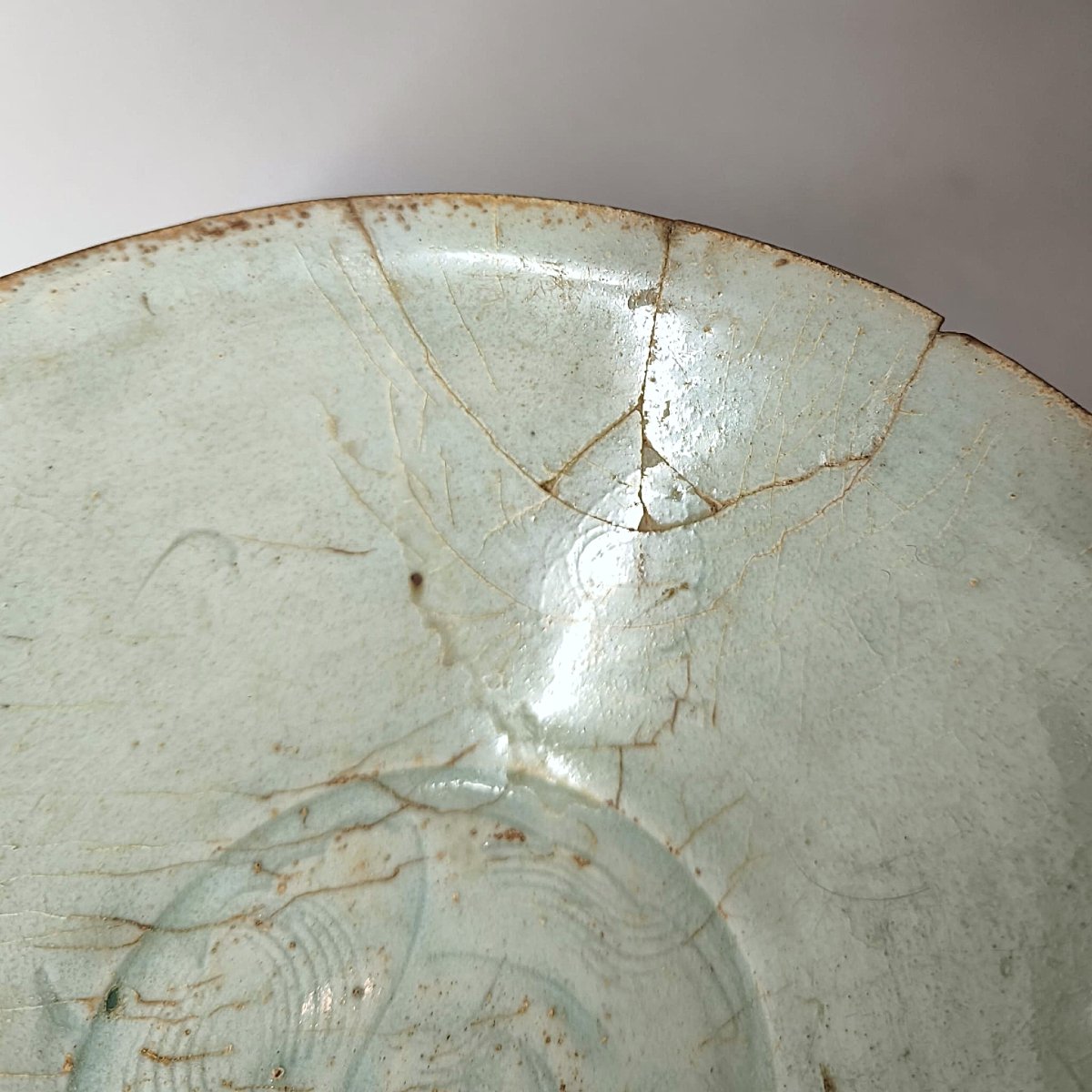
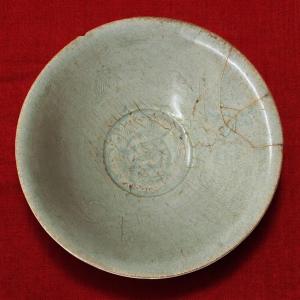
Incised underglaze decoration of a phoenix among clouds.
China, Southern Song Dynasty (1127-1279).
Dimensions: Diameter 18 cm.
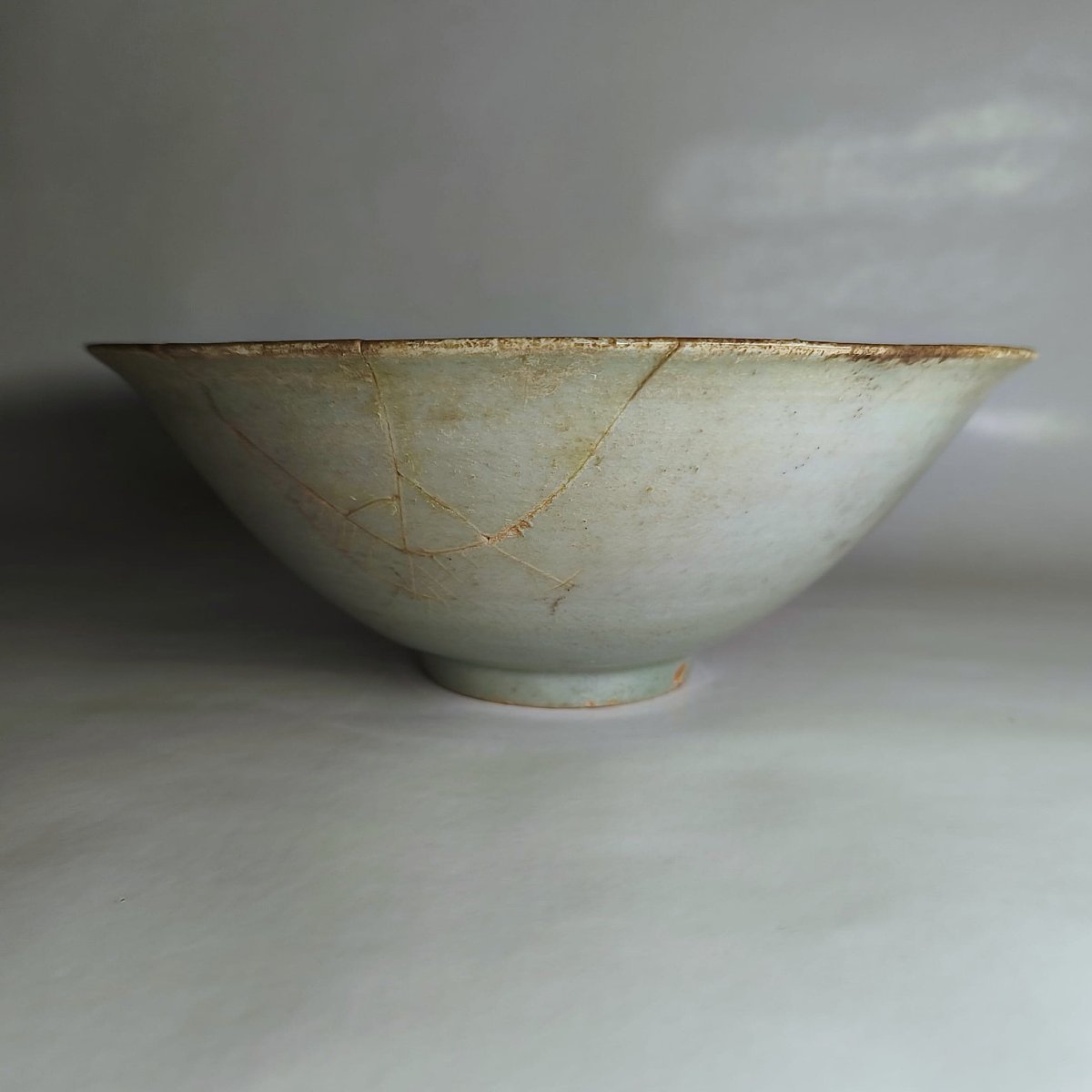
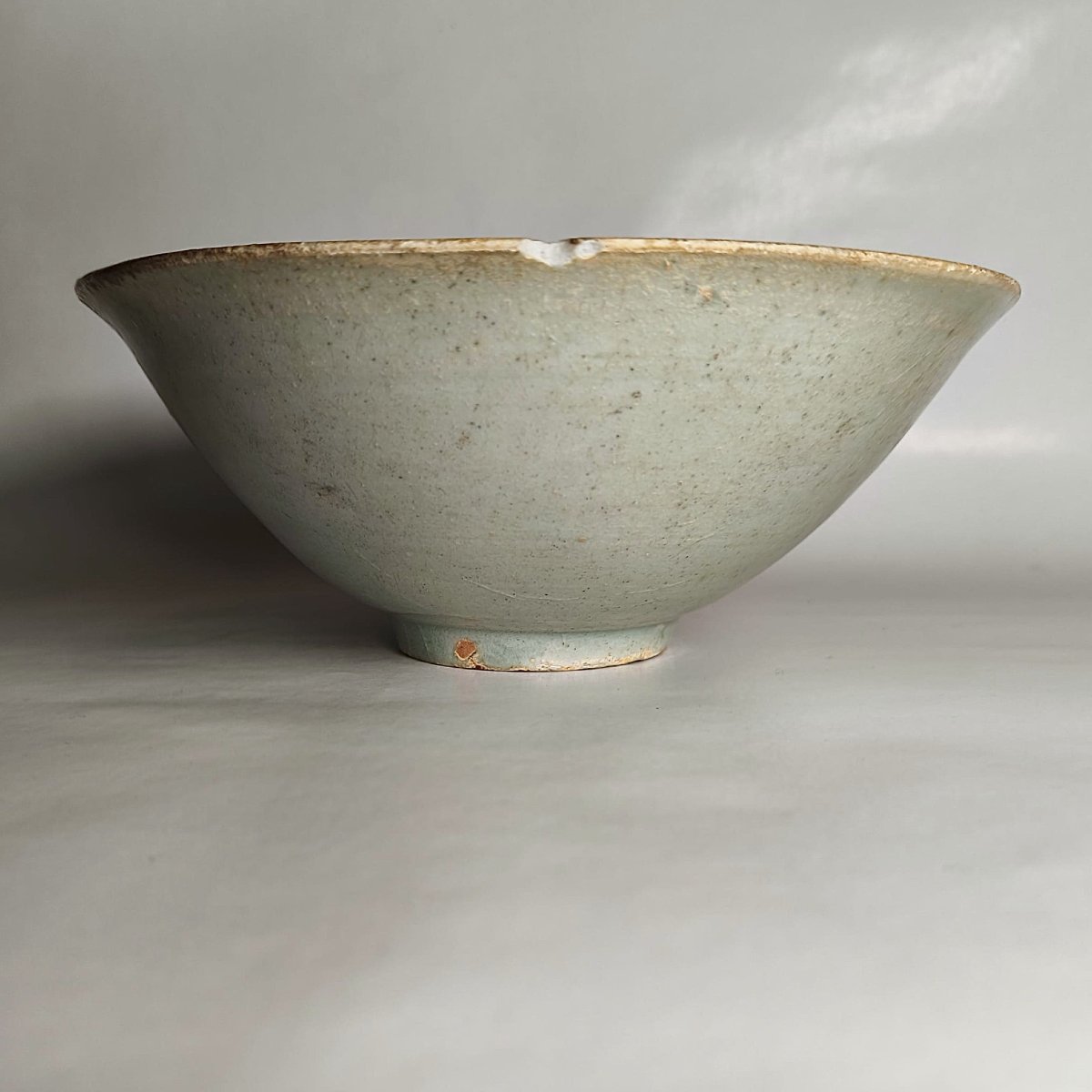
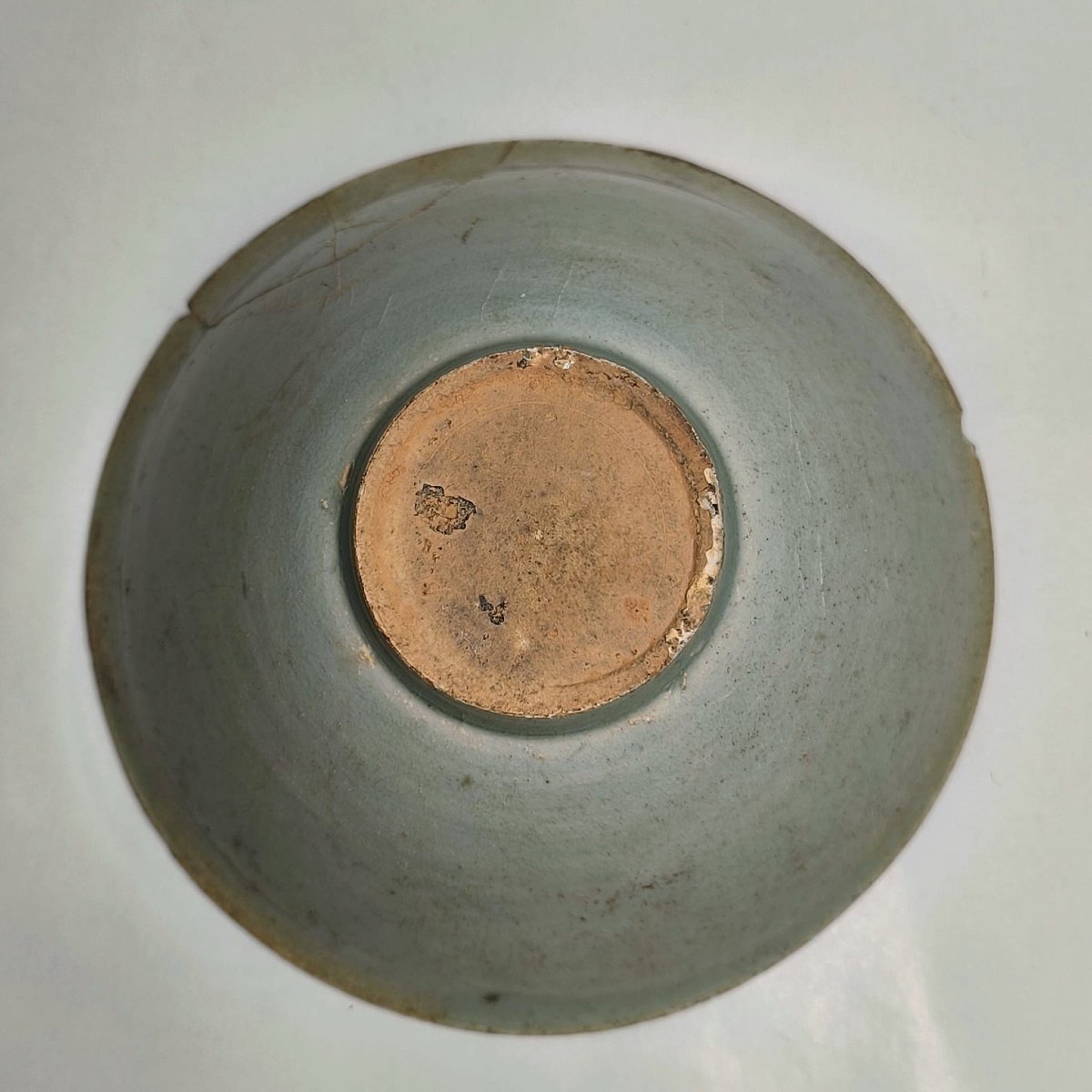
Condition report: significant restoration visible on one side, a small recent chip on the rim.
Qingbai ware is one of the last major types of ceramics produced by the Southern Song before their fall. This type of ware, which appeared during the Northern Song Dynasty (960-1127), is made from a body of high-fired vitrified stoneware, obtained by adding fusible feldspathic materials to the clay to allow for this vitrification (the "petuntse").
This glaze is primarily composed of petuntse (65%) and a mixture of lime and alumina (35%). Rich in flux, the glaze is very fluid. Furthermore, its iron oxide content gives it a soft bluish hue, revealed during reduction firing, which takes place at around 1220-1260°C. Like contemporary celadons, Qinqbai ceramics can be decorated using molded, stamped, or incised under the glaze.
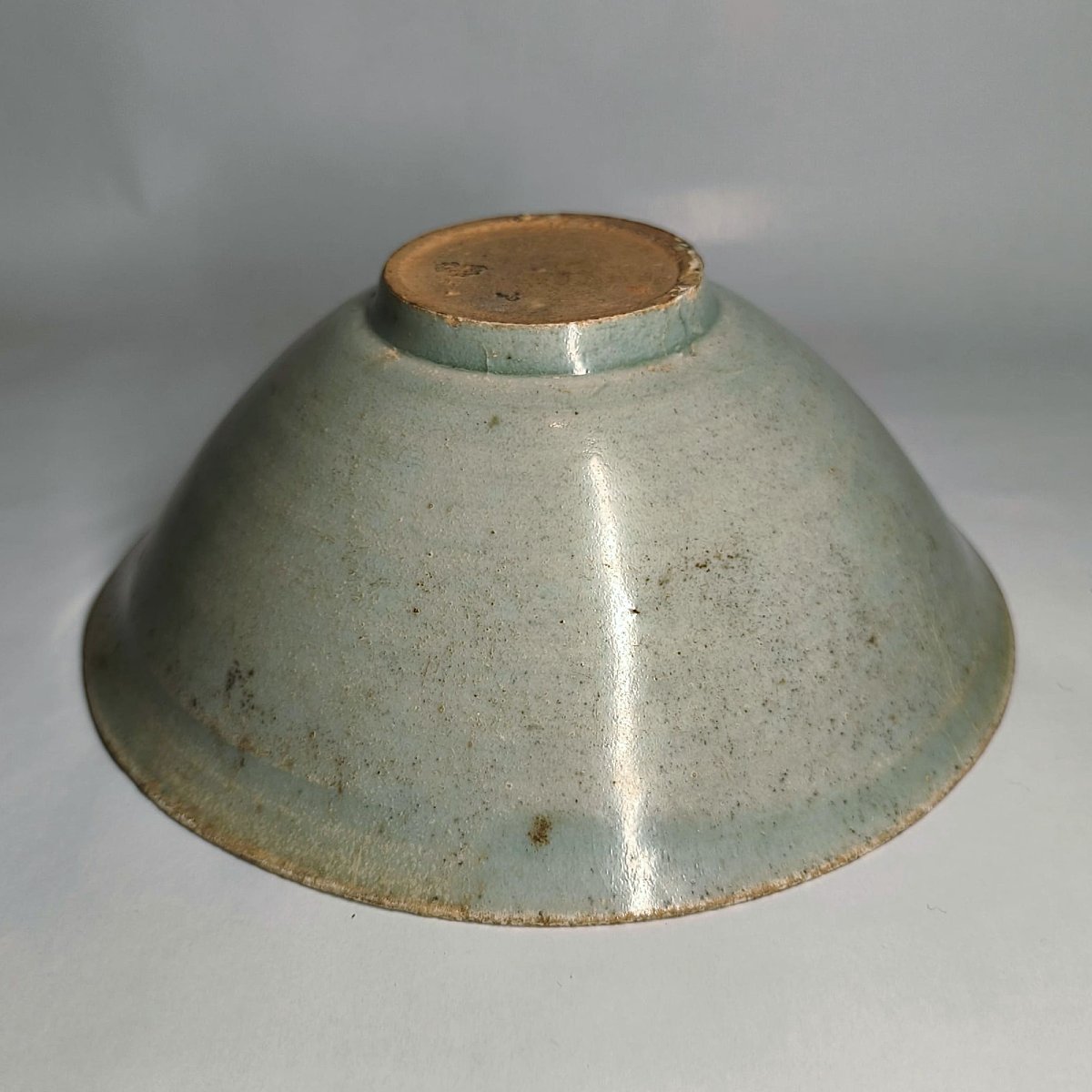
Our example, with its bluish-gray hue tending towards moonlight in places, is, although incomplete, a very fine collector's piece. The stylized phoenix is reminiscent of those found in Middle Eastern art (due to centuries of exchange via the Silk Road), while the clouds adorning the walls are in the strictest Song tradition (laying the foundations for a motif that would become particularly popular under the Yuan dynasty). To compensate for the brilliance on the surface, it is very interesting to note that it is a beautiful, almost vitrified white, unlike the underside, which, being unglazed, has acquired a reddish iron oxide patina over the centuries (although this is not an exclusive dating criterion).
Large qingbai glazed bowl (bluish-white).
Glazed stoneware.
Incised underglaze decoration of a phoenix among clouds.
China, Southern Song Dynasty (1127-1279).
Dimensions: Diameter 18 cm.
Condition report: significant restoration visible on one side, a small recent chip on the rim.
Qingbai ware is one of the last major types of ceramics produced by the Southern Song before their fall. This type of ware, which appeared during the Northern Song Dynasty (960-1127), is made from a body of high-fired vitrified stoneware, obtained by adding fusible feldspathic materials to the clay to allow for this vitrification (the "petuntse").
This glaze is primarily composed of petuntse (65%) and a mixture of lime and alumina (35%). Rich in flux, the glaze is very fluid. Furthermore, its iron oxide content gives it a soft bluish hue, revealed during reduction firing, which takes place at around 1220-1260°C. Like contemporary celadons, Qinqbai ceramics can be decorated using molded, stamped, or incised under the glaze.
Our example, with its bluish-gray hue tending towards moonlight in places, is, although incomplete, a very fine collector's piece. The stylized phoenix is reminiscent of those found in Middle Eastern art (due to centuries of exchange via the Silk Road), while the clouds adorning the walls are in the strictest Song tradition (laying the foundations for a motif that would become particularly popular under the Yuan dynasty). To compensate for the brilliance on the surface, it is very interesting to note that it is a beautiful, almost vitrified white, unlike the underside, which, being unglazed, has acquired a reddish iron oxide patina over the centuries (although this is not an exclusive dating criterion).
860 €
Period: Before 16th century
Style: Asian art
Condition: En l'etat
Material: Porcelain
Reference (ID): 1710739
Availability: In stock
Print