THIS OBJECT WAS SOLD
China, Kangxi (18th Century), Imposing Export Dish Decorated With Imari






Visible in Paris. Free local pickup in the capital and its suburbs. Shipping within France: €100, contact me for shipping to Europe and the rest of the world.
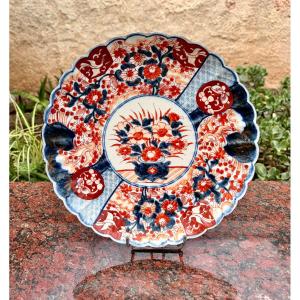
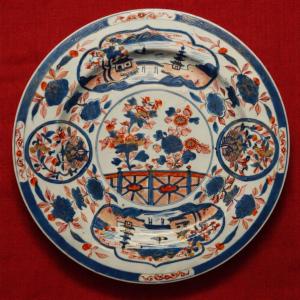
Very large porcelain platter with Imari decoration.
Landscape decoration in cobalt blue, iron red, and gold.
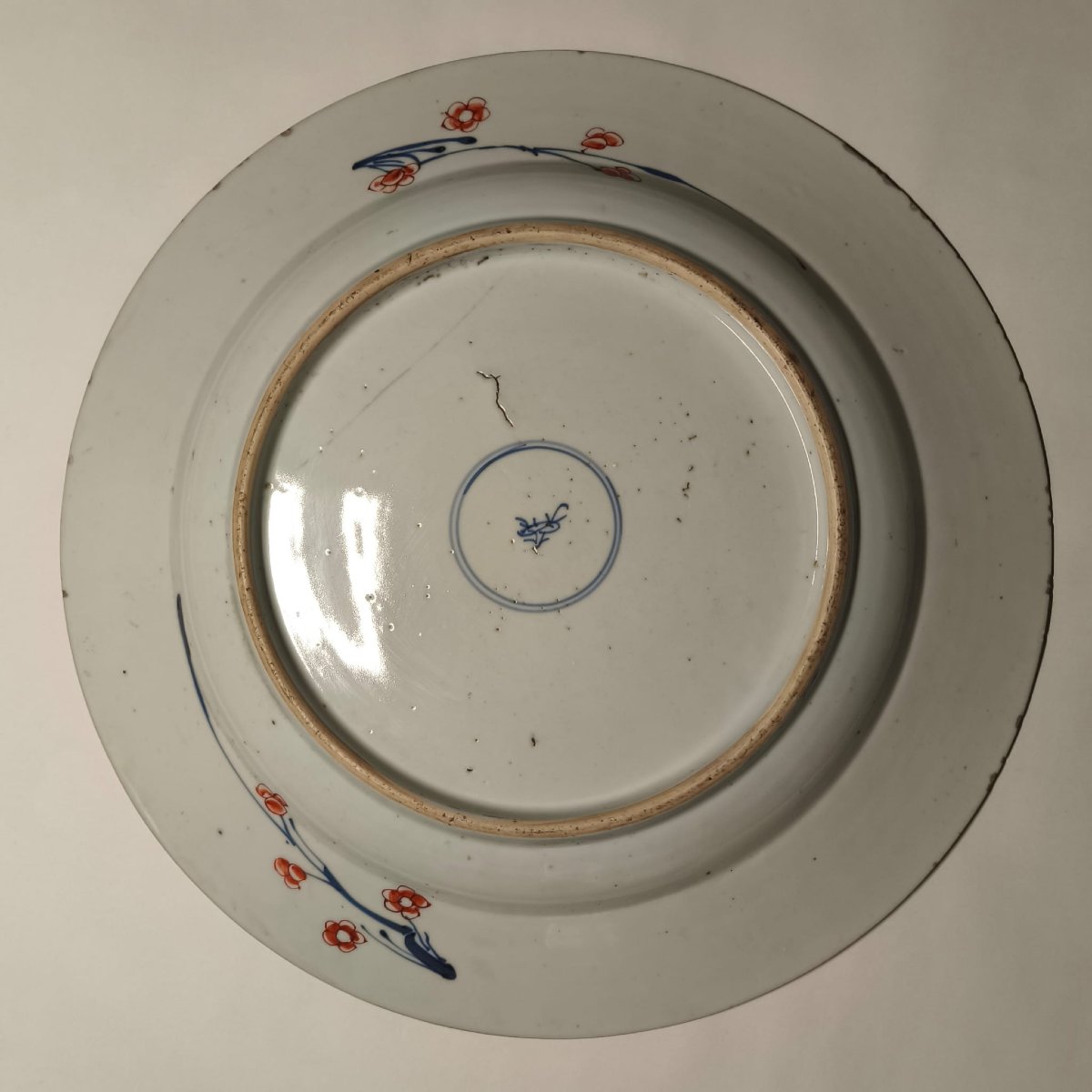
Sacred mushroom mark in underglaze cobalt blue.
Qing Dynasty, Kangxi reign (1661-1722).
Piece intended for European export.
Dimensions: 39.5 cm (diameter).
Condition report: very good used condition, wear to the gilding, minor chips.
Imari porcelain originated in the Arita kilns of Japan. It became known and appreciated in Europe from the beginning of the 17th century thanks to the work of the East India Company. For economic reasons, the Imari style was widely copied, first by the Chinese when they resumed trade with the West after Japan's isolation in the late 17th and early 18th centuries. This is referred to as "Chinese Imari," or more generally as "East India Company" porcelain, since Imari was far from the only decorative style produced by the Chinese. Soon after, Europeans, in turn, drew inspiration from the colors and repertoire of this style. Initially applied to earthenware, as in Delft, the Imari decoration then adorned porcelain when it was developed in Dresden in 1708 by the Meissen factory.
Very large porcelain platter with Imari decoration.
Landscape decoration in cobalt blue, iron red, and gold.
Sacred mushroom mark in underglaze cobalt blue.
Qing Dynasty, Kangxi reign (1661-1722).
Piece intended for European export.
Dimensions: 39.5 cm (diameter).
Condition report: very good used condition, wear to the gilding, minor chips.
Imari porcelain originated in the Arita kilns of Japan. It became known and appreciated in Europe from the beginning of the 17th century thanks to the work of the East India Company. For economic reasons, the Imari style was widely copied, first by the Chinese when they resumed trade with the West after Japan's isolation in the late 17th and early 18th centuries. This is referred to as "Chinese Imari," or more generally as "East India Company" porcelain, since Imari was far from the only decorative style produced by the Chinese. Soon after, Europeans, in turn, drew inspiration from the colors and repertoire of this style. Initially applied to earthenware, as in Delft, the Imari decoration then adorned porcelain when it was developed in Dresden in 1708 by the Meissen factory.
Explore similar pieces and discover your ideal find:
Porcelain Serveware