
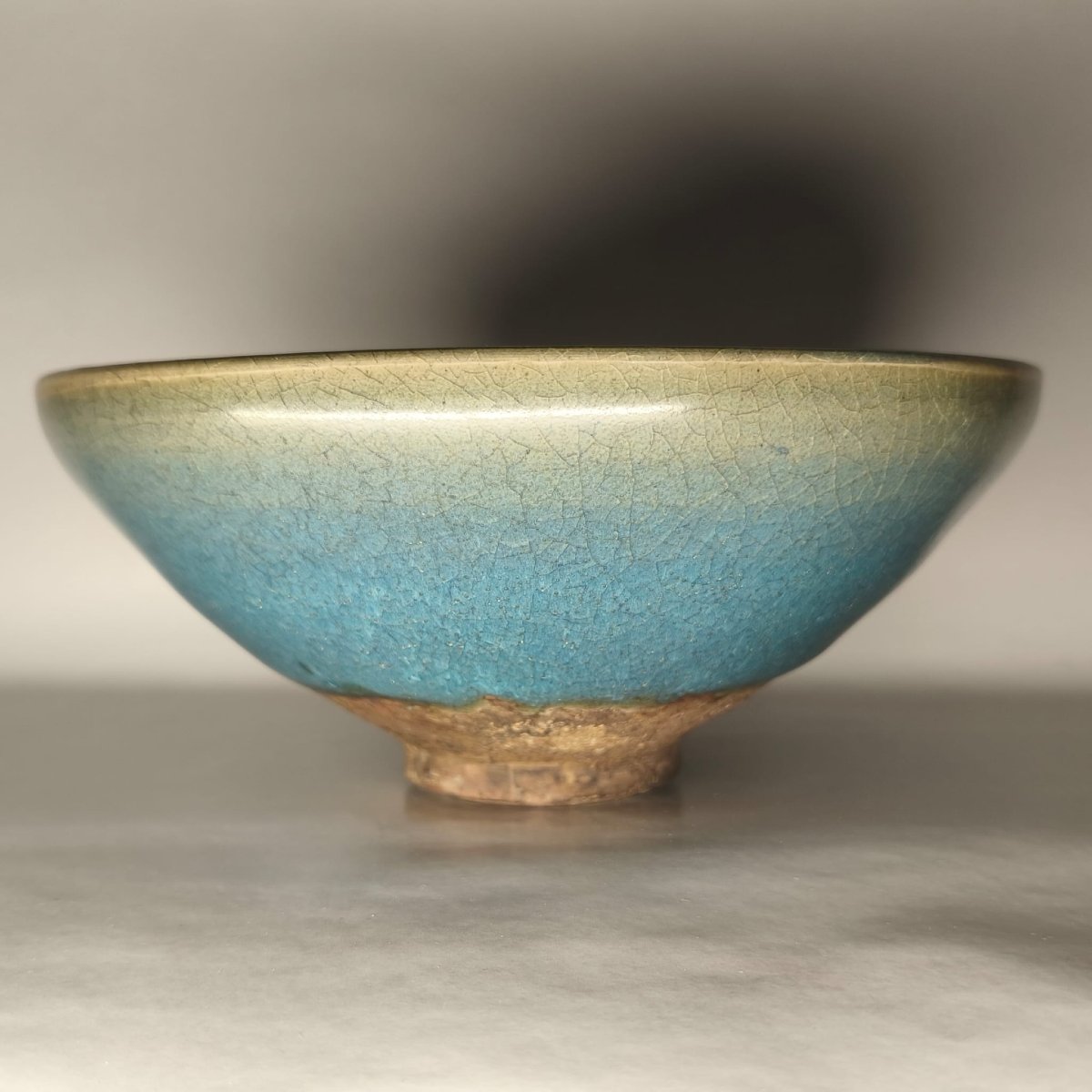


China, Yuan Dynasty, Important Jun Glazed Bowl
Visible in Paris. Free local pickup in the capital and its suburbs. Shipping within France: €30, contact me for shipping to Europe and the rest of the world.
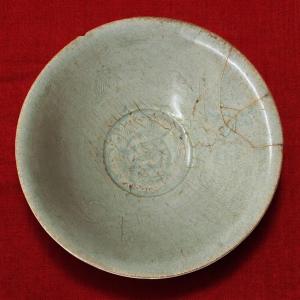
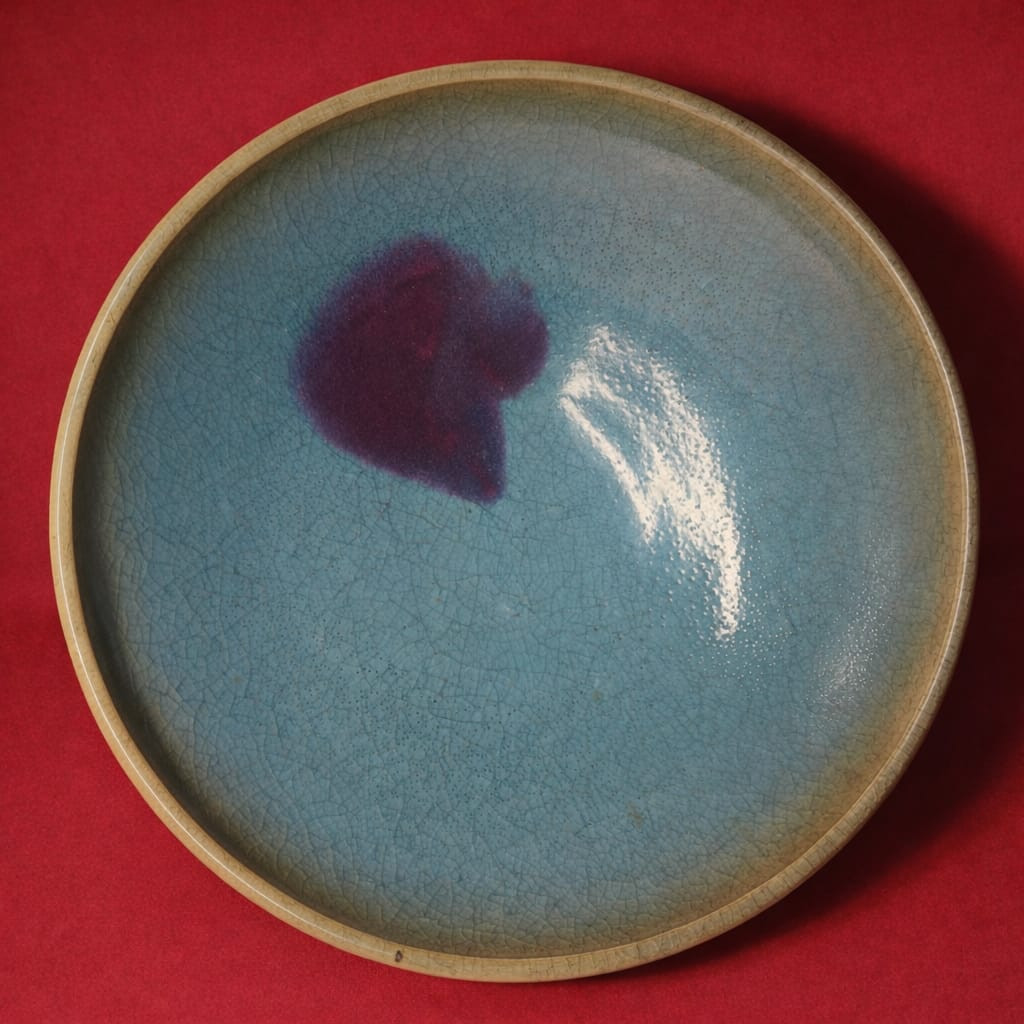
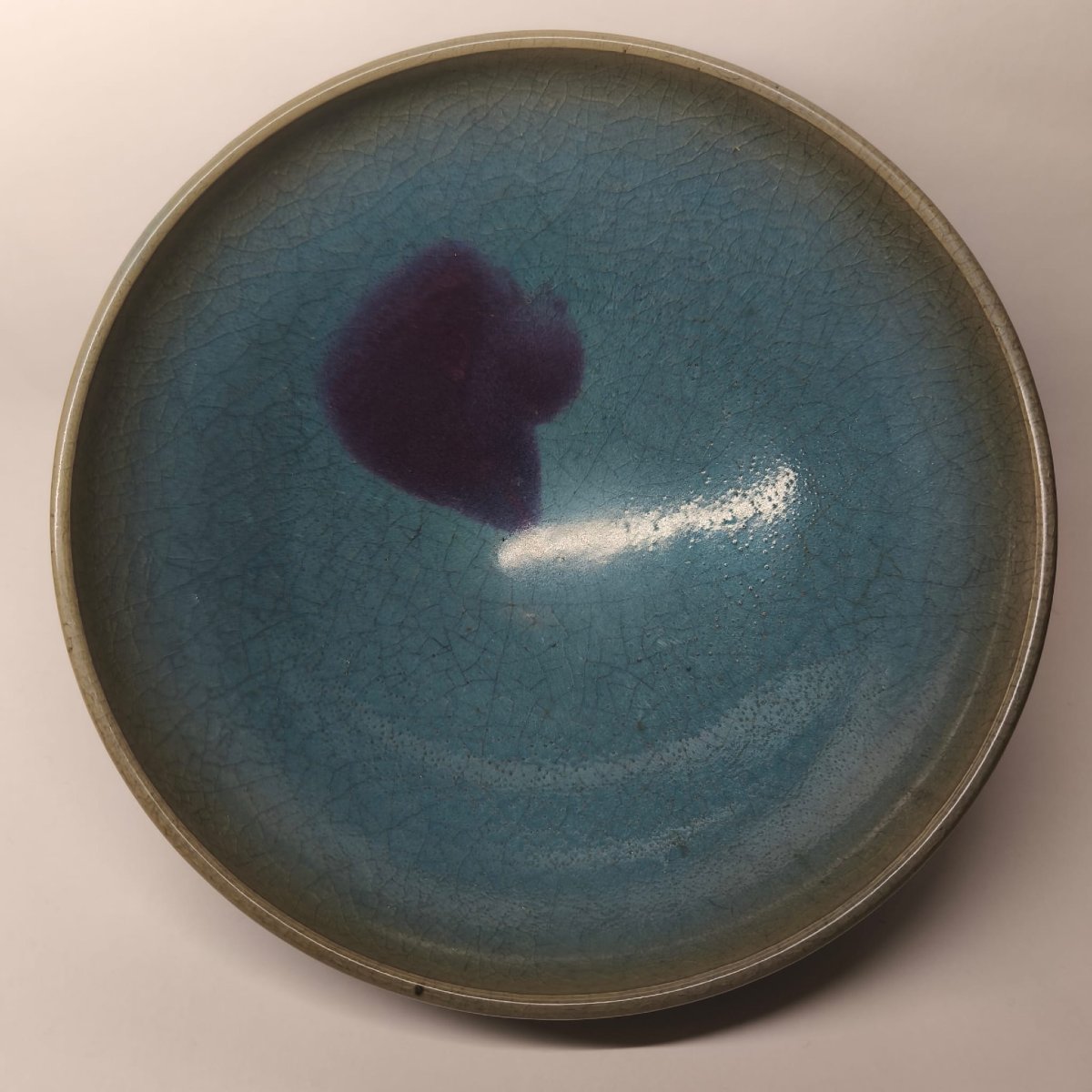
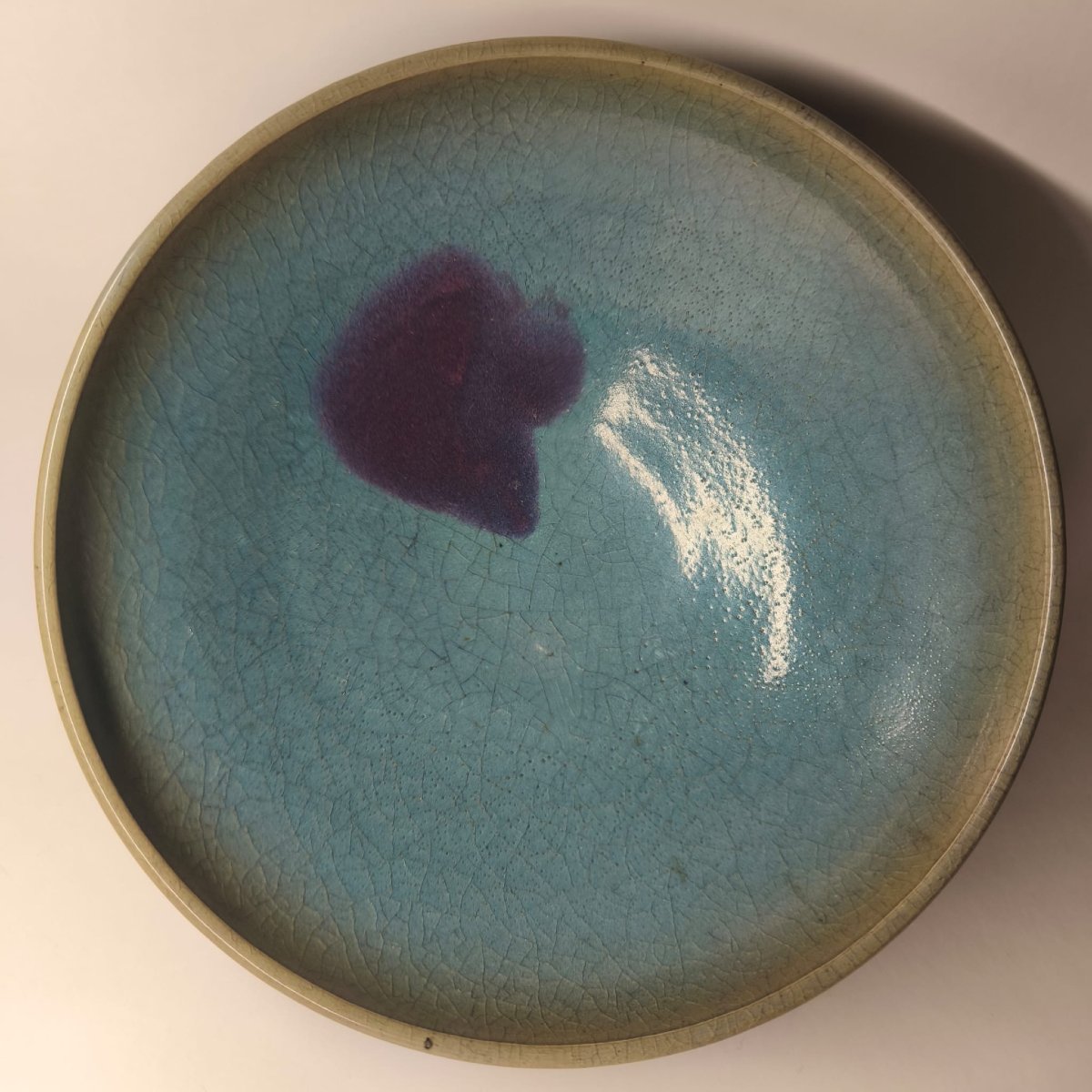
Stoneware bowl with Jun glaze (Jūn yáo),
China, Yuan Dynasty (13th-14th century).
Dimensions: (Diameter) 18.5 x (Height) 8 cm.
Condition report: excellent condition, some minor firing flaws but no damage or chips.
The bowl we are offering is a beautiful testament to the excellence of medieval Chinese potters. This Jun glaze is obtained through a skillful mixture of iron oxide and alumina (among other things) fired in a reducing atmosphere, resulting in shades ranging from lavender blue to electric blue, including buff gray, depending on the temperature and the percentage of each.
And yet, this captivating blue color is only an illusion! Indeed, while iron oxide fired in reduction is known to produce a celadon color, the composition of Jun glaze differs from that of celadons in its alumina percentage (≤10% for a Jun glaze, compared to ≥15% for a Ru glaze). The low alumina content promotes liquid-liquid phase separation of the glaze during firing, creating the illusion (unlike an optical blue such as cobalt blue) of a nuanced blue in the thickest areas, tending towards olive brown in the thinnest areas, particularly at the rim.
The characteristic purple or carmine splashes result from the random addition of copper oxide during firing. These splashes can be minute and localized or, conversely, cover most of the piece, depending on the period and production center.
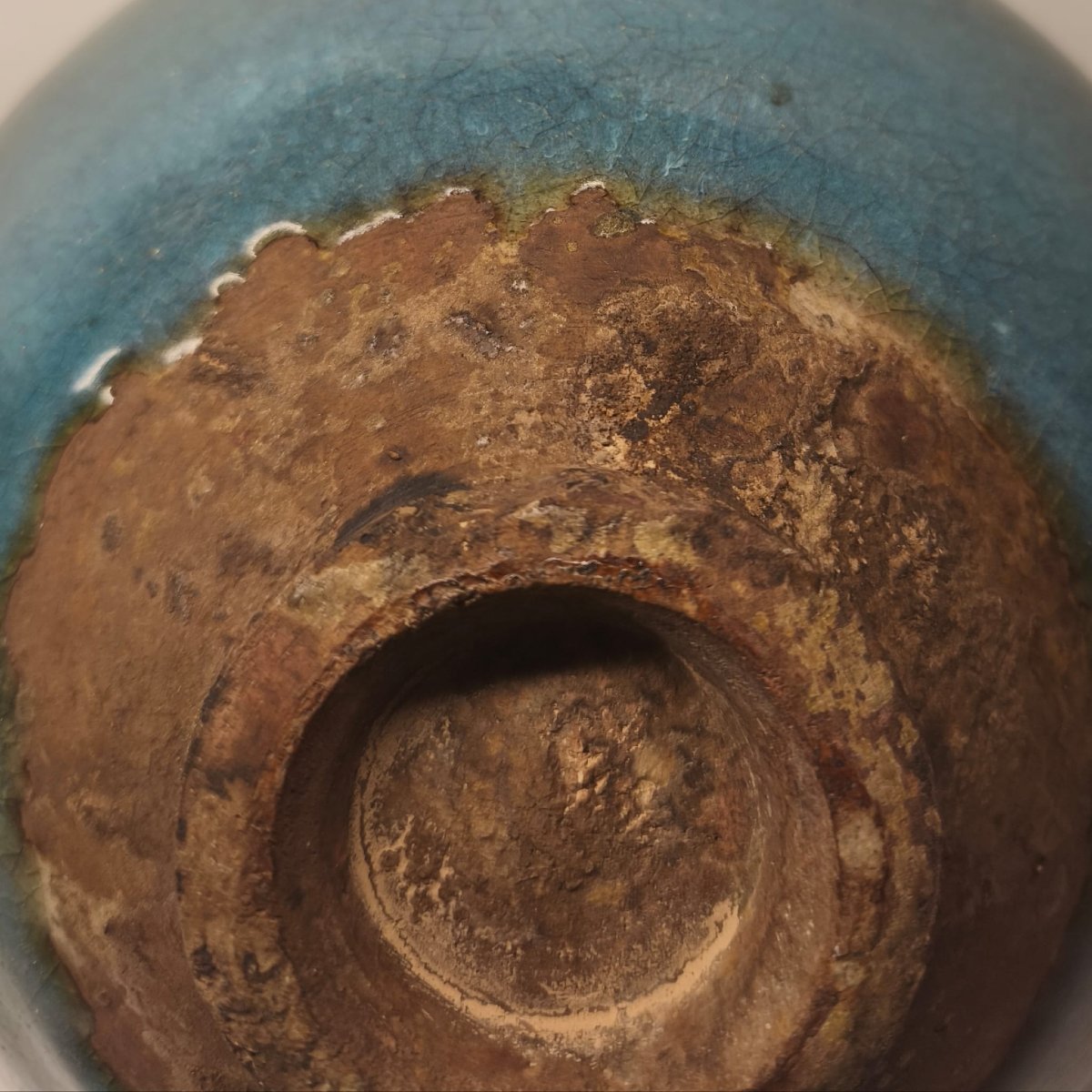
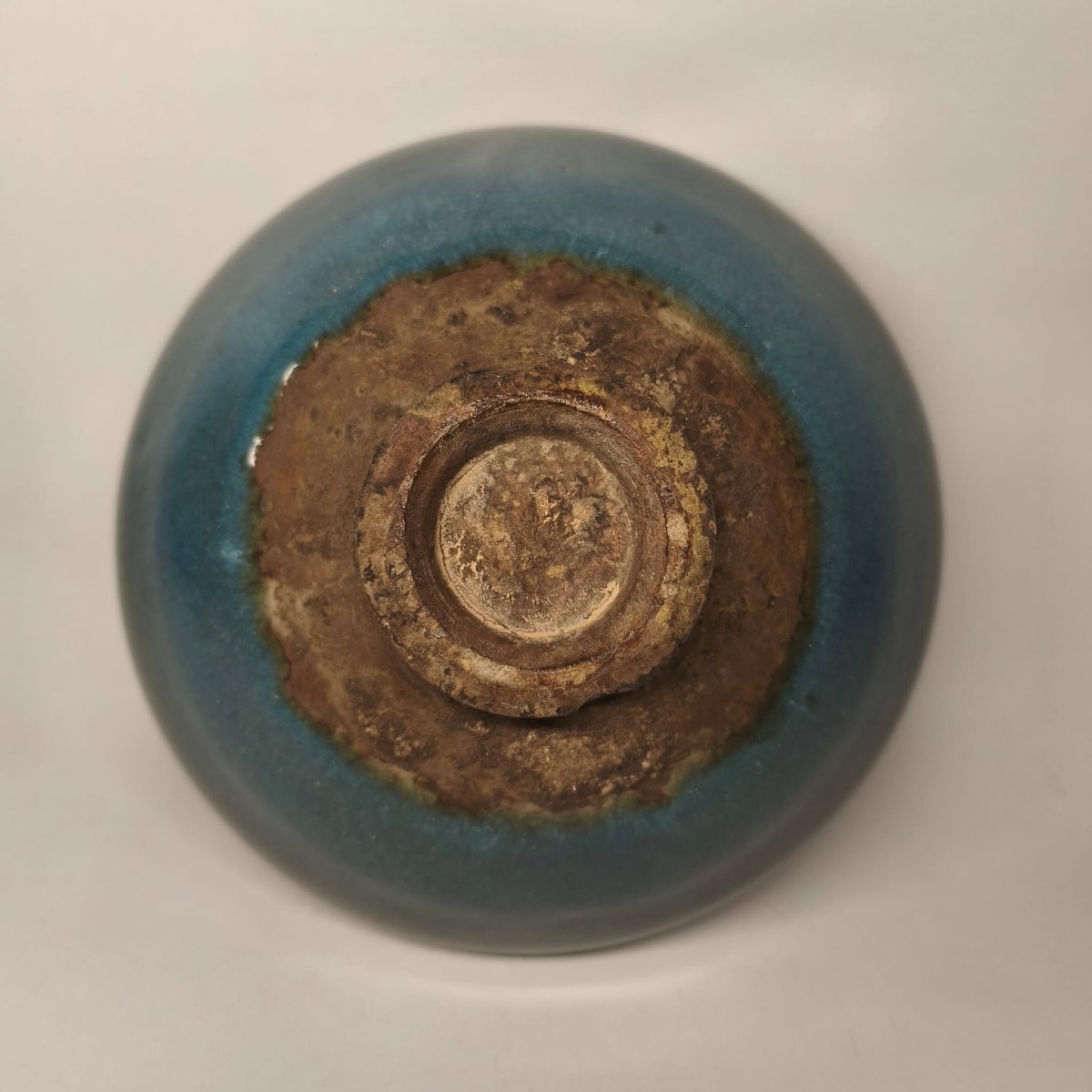
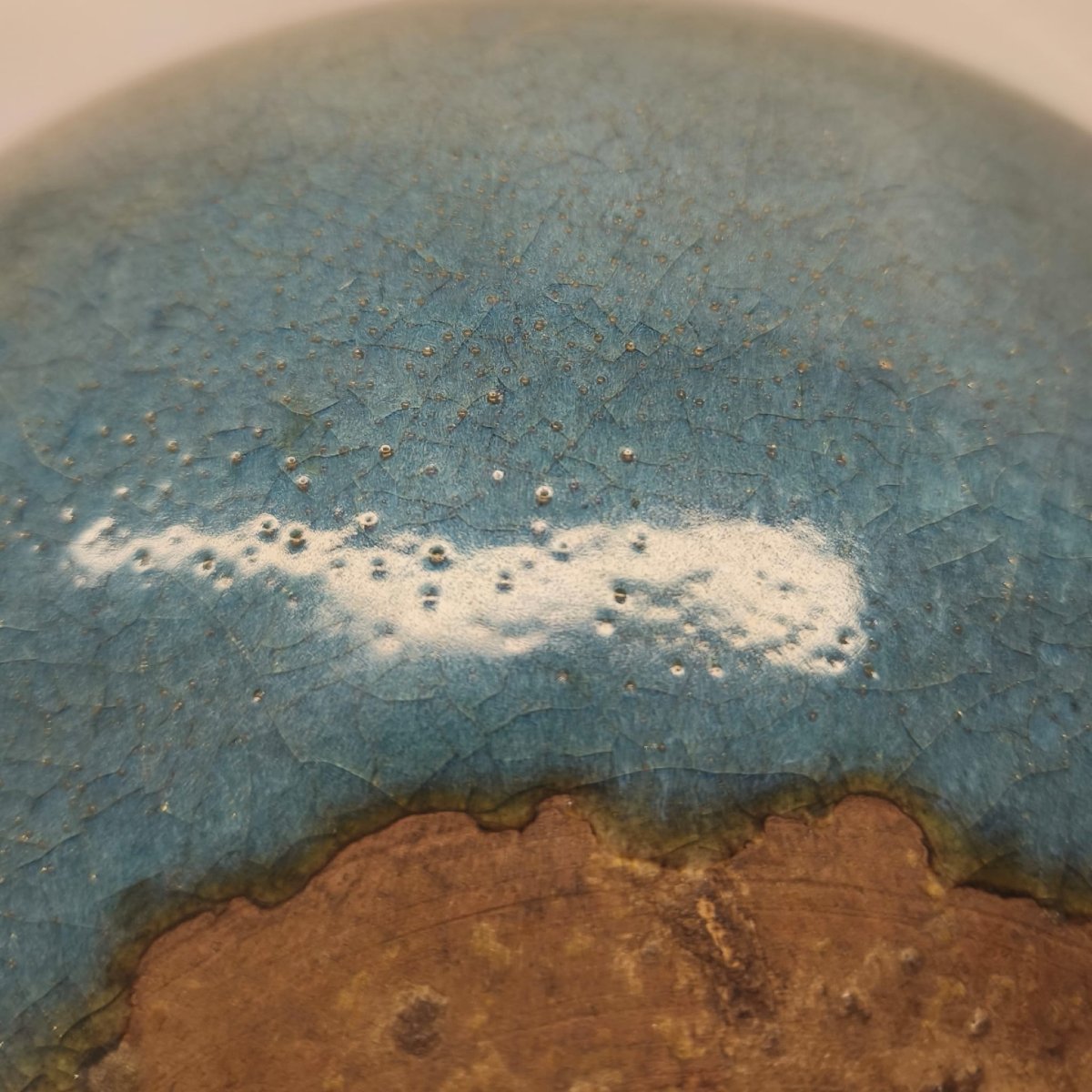
The massive, unglazed, reddish foot displays beautiful wheel marks. The numerous characteristic pinhole-like firing bubbles give the piece its golden sheen and orange-peel texture, and the glaze tears (Lei Hen) at the base are entirely consistent with the expected viscosity of this type of glaze.
This glaze style originated during the Song dynasty and remained very popular during the Jin and Yuan dynasties, with significant diversification of forms and the emergence of much larger and more colorful pieces. It appears that the last traces of "classical" Jun piece production date to the beginning of the Ming dynasty.
Stoneware bowl with Jun glaze (Jūn yáo),
China, Yuan Dynasty (13th-14th century).
Dimensions: (Diameter) 18.5 x (Height) 8 cm.
Condition report: excellent condition, some minor firing flaws but no damage or chips.
The bowl we are offering is a beautiful testament to the excellence of medieval Chinese potters. This Jun glaze is obtained through a skillful mixture of iron oxide and alumina (among other things) fired in a reducing atmosphere, resulting in shades ranging from lavender blue to electric blue, including buff gray, depending on the temperature and the percentage of each.
And yet, this captivating blue color is only an illusion! Indeed, while iron oxide fired in reduction is known to produce a celadon color, the composition of Jun glaze differs from that of celadons in its alumina percentage (≤10% for a Jun glaze, compared to ≥15% for a Ru glaze). The low alumina content promotes liquid-liquid phase separation of the glaze during firing, creating the illusion (unlike an optical blue such as cobalt blue) of a nuanced blue in the thickest areas, tending towards olive brown in the thinnest areas, particularly at the rim.
The characteristic purple or carmine splashes result from the random addition of copper oxide during firing. These splashes can be minute and localized or, conversely, cover most of the piece, depending on the period and production center.
The massive, unglazed, reddish foot displays beautiful wheel marks. The numerous characteristic pinhole-like firing bubbles give the piece its golden sheen and orange-peel texture, and the glaze tears (Lei Hen) at the base are entirely consistent with the expected viscosity of this type of glaze.
This glaze style originated during the Song dynasty and remained very popular during the Jin and Yuan dynasties, with significant diversification of forms and the emergence of much larger and more colorful pieces. It appears that the last traces of "classical" Jun piece production date to the beginning of the Ming dynasty.
2 200 €
Period: Before 16th century
Style: Asian art
Condition: Perfect condition
Reference (ID): 1700679
Availability: In stock
Print