THIS OBJECT WAS SOLD
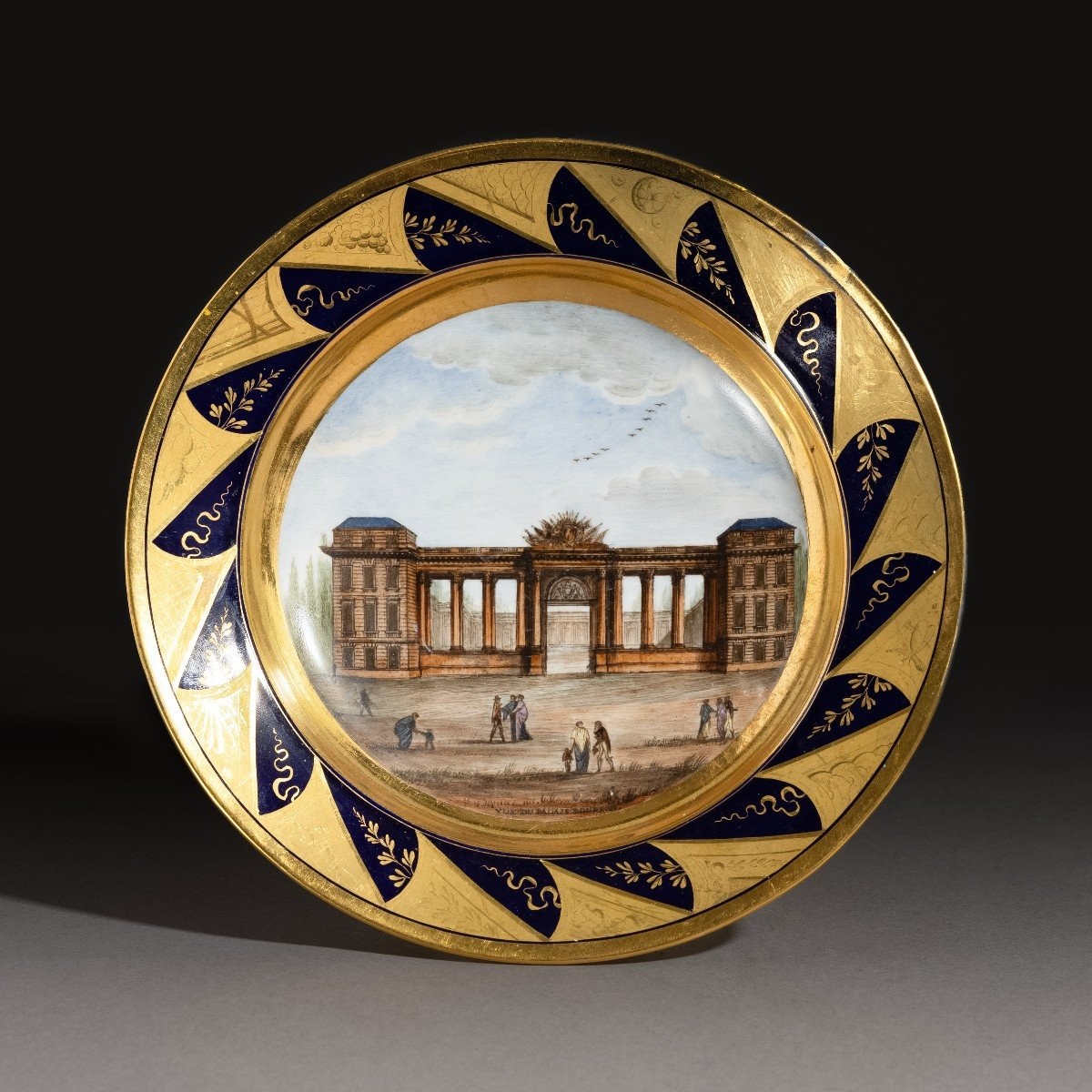
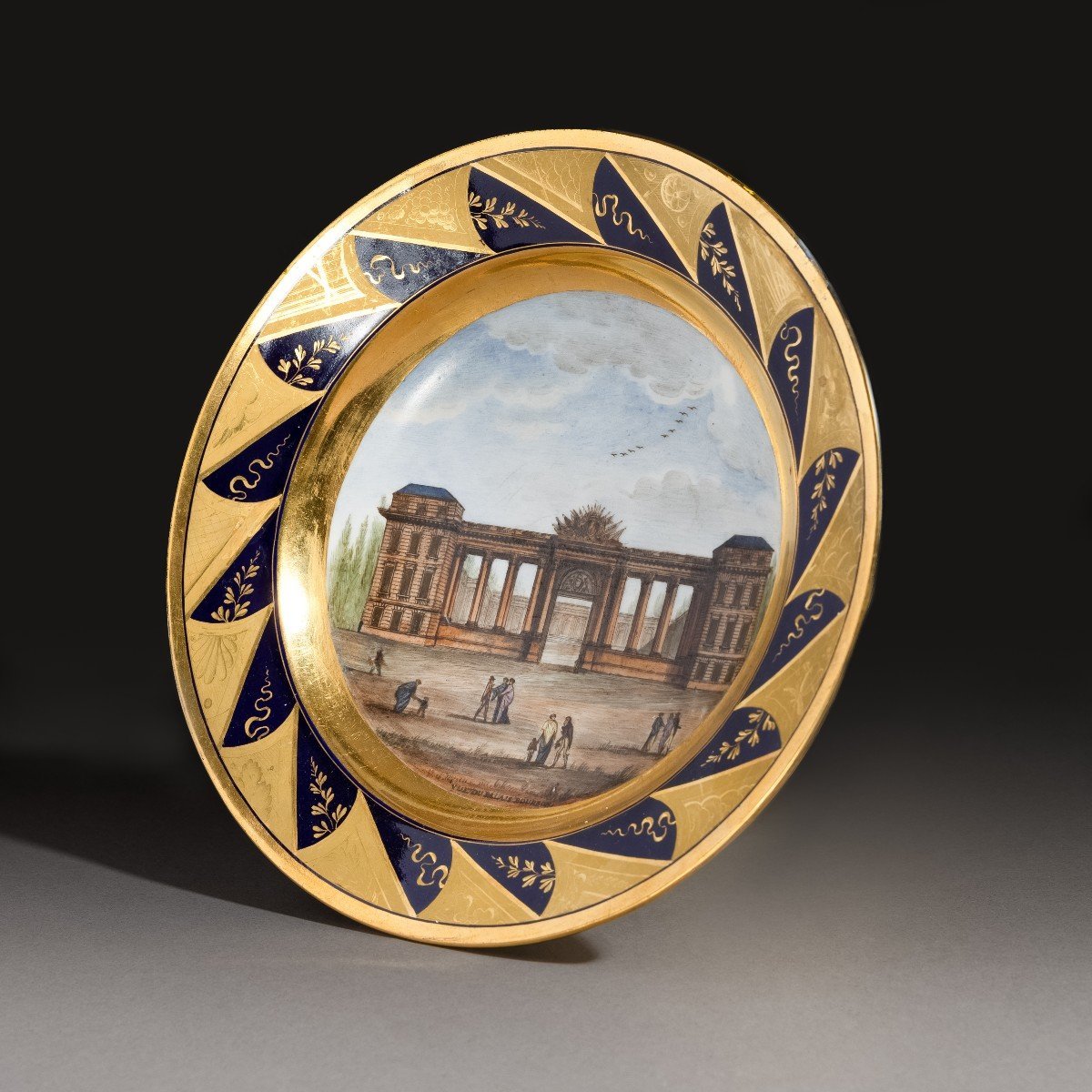
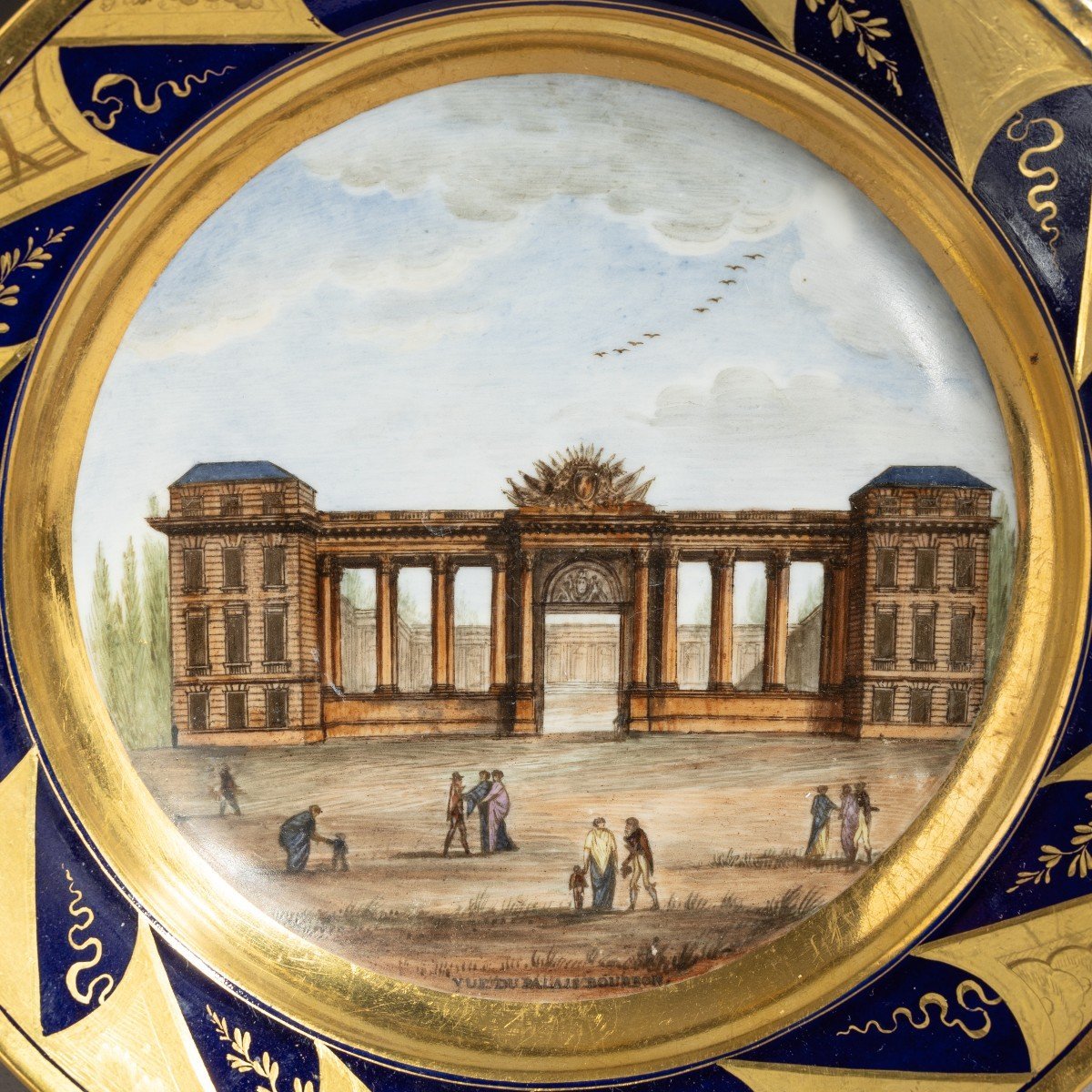
Darte Frères - Table Plate With Topographical Decoration, Consulate And Empire Periods


Visible in Paris. Free worldwide delivery via DHL.
Dinner plate
Hard porcelain painted and enhanced with gilding
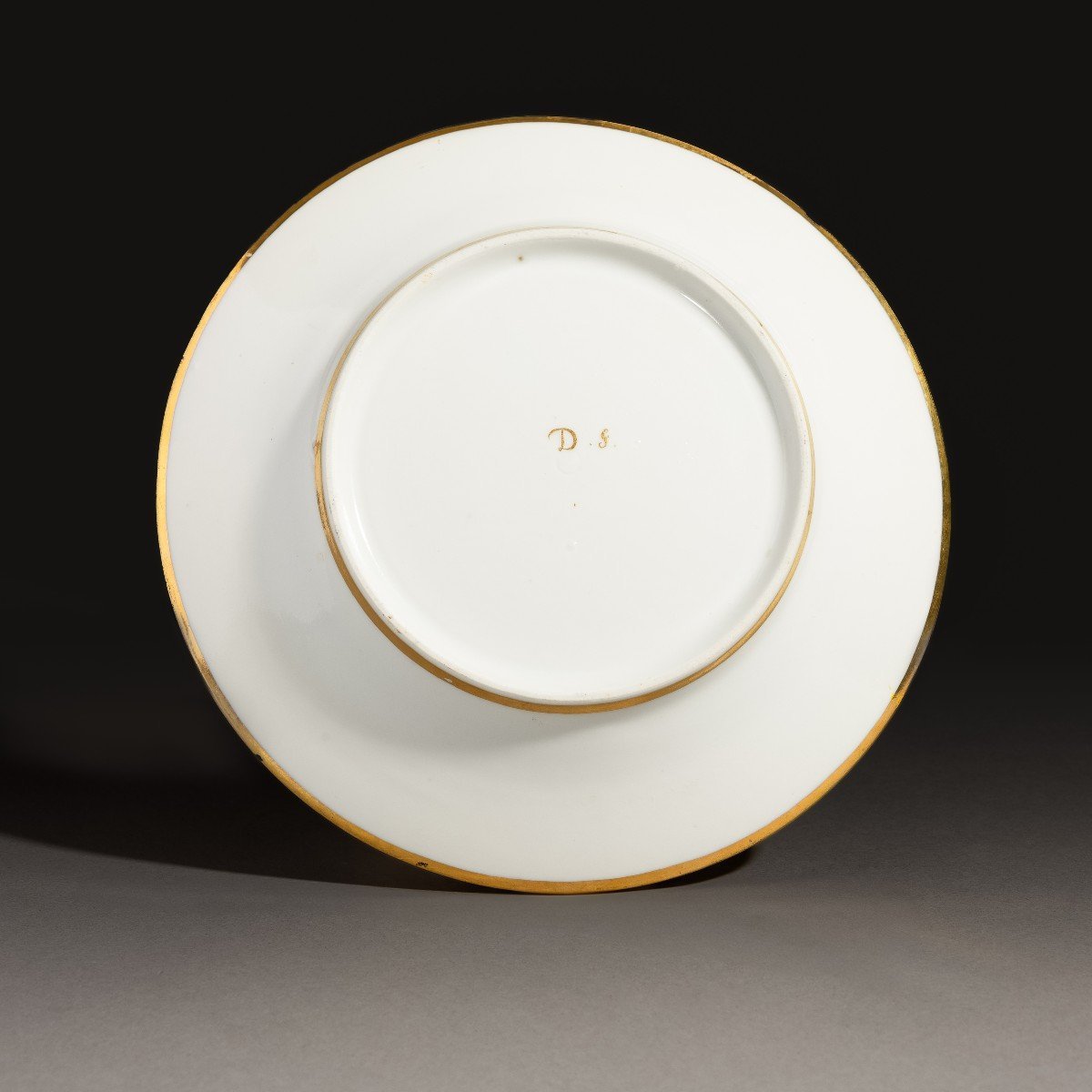
Signed in gold
Dimensions: 24 cm
Paris, circa 1805
Rare deep plate with beautiful blue and gold amati marli, burnished and “scraped.” The bowl is finely decorated with a view of the Palais Bourbon.
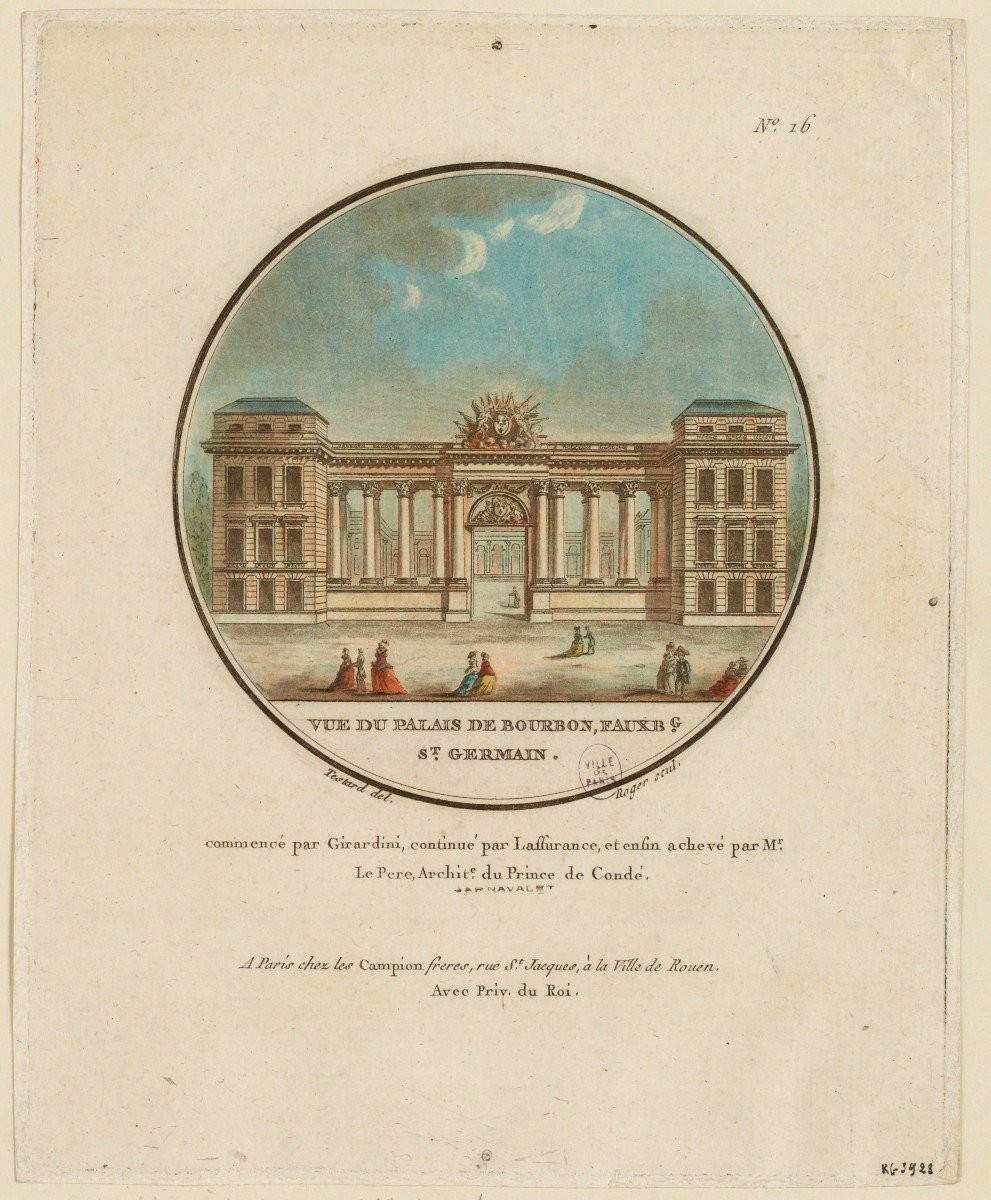
This plate belongs to a popular production, based on a series of aquatints made at the end of the reign of Louis XVI, which can be seen at the Musée Carnavalet Histoire de Paris.
The Darte factory
Originally three brothers, they launched their porcelain manufacturing and trading business in 1795, purchasing a factory on Rue de Charonne and opening a shop in the Palais Royal at the same time. In 1804, they amicably parted ways. Louis Joseph and Jean François founded a new company, retaining the name Darte Frères, and moved to Rue de la Roquette, while Joseph Darte continued under the name “Darte Ainé à Paris” and moved to Rue de Popincourt. The brothers prospered (employing 80 to 100 workers in peacetime). An advertisement from 1809 announced that the factory bore the title “Manufacture de porcelaine de S.A.I. Madame Mère de S.M. L'Empereur et Roi” (Porcelain Manufacturer of Her Imperial Highness, Mother of His Majesty the Emperor and King). In 1816, a second store opened at 16 Rue Vienne. The factory participated in the 1819 exhibition and, as in 1806, won a silver medal. However, things became complicated in 1820 and three years later the brothers divided up the assets of the struggling company. In 1824, Louis Joseph went into partnership with one of his sons, Auguste Remi, but the business collapsed a year later. In 1828, bankruptcy was declared.
Condition report: excellent condition
Explore similar pieces and discover your ideal find:
Porcelain Plates & Dinnerware