THIS OBJECT WAS SOLD
Sculpture - The Kaolin Horse , Alfred Dubucand (1828 - 1894) - Bronze
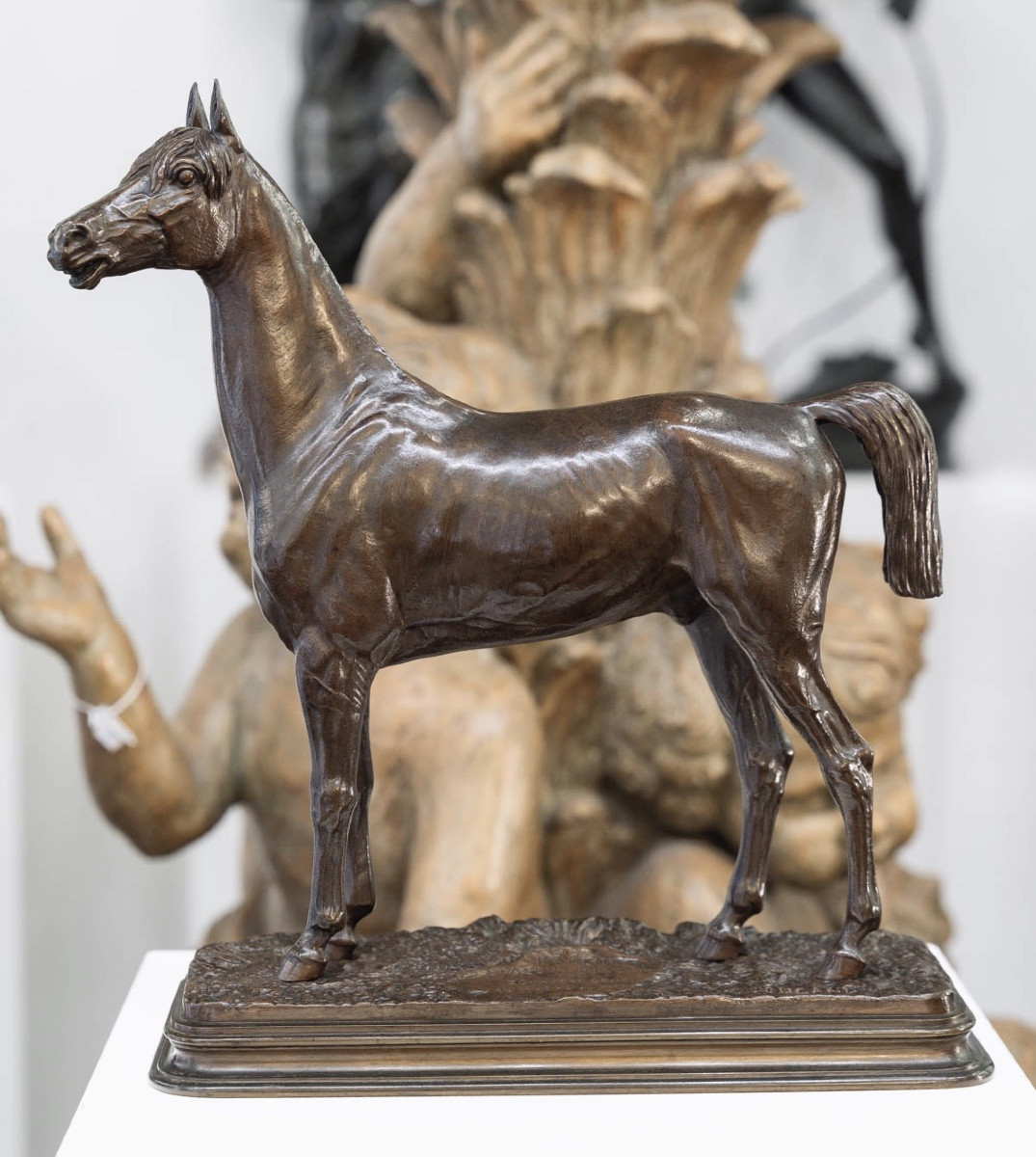
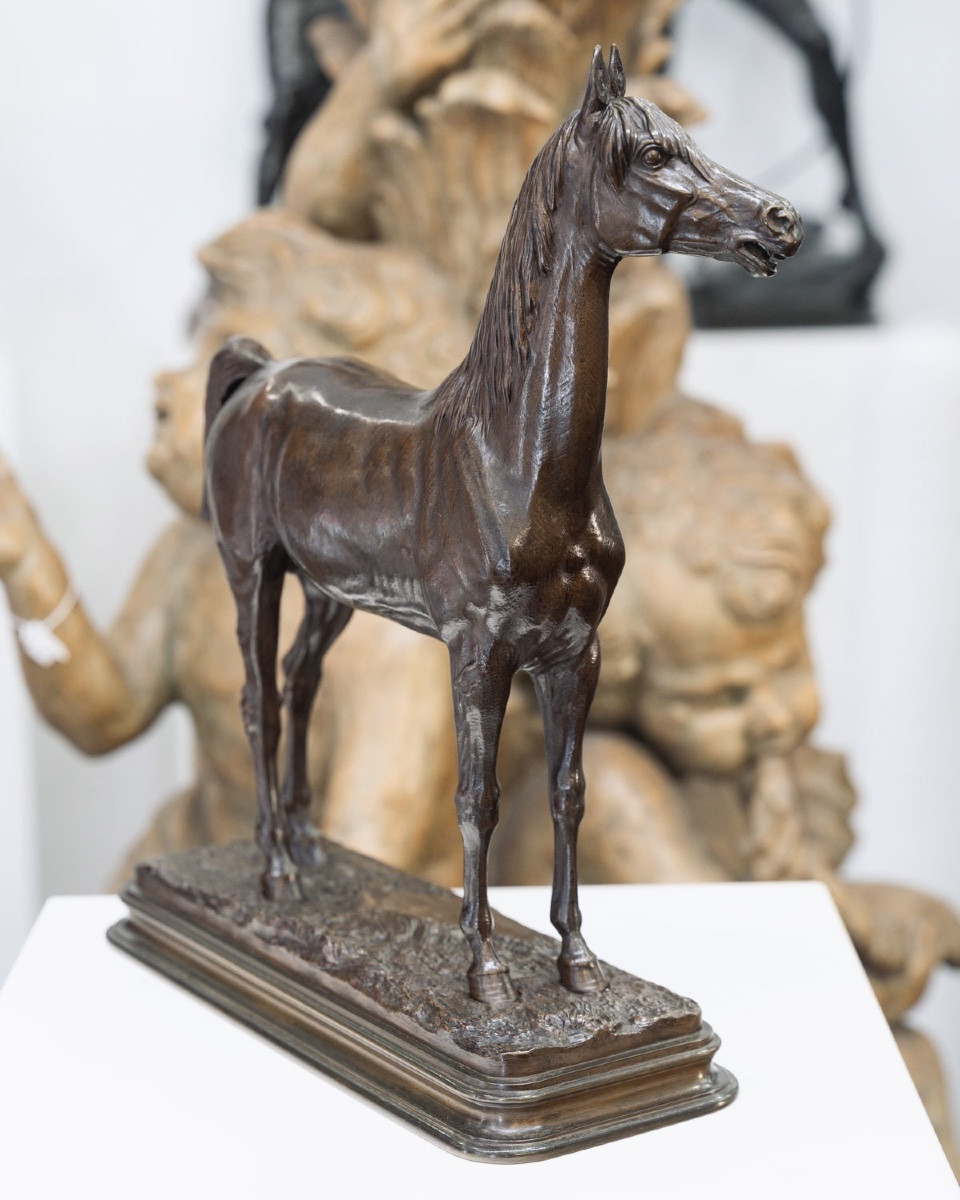
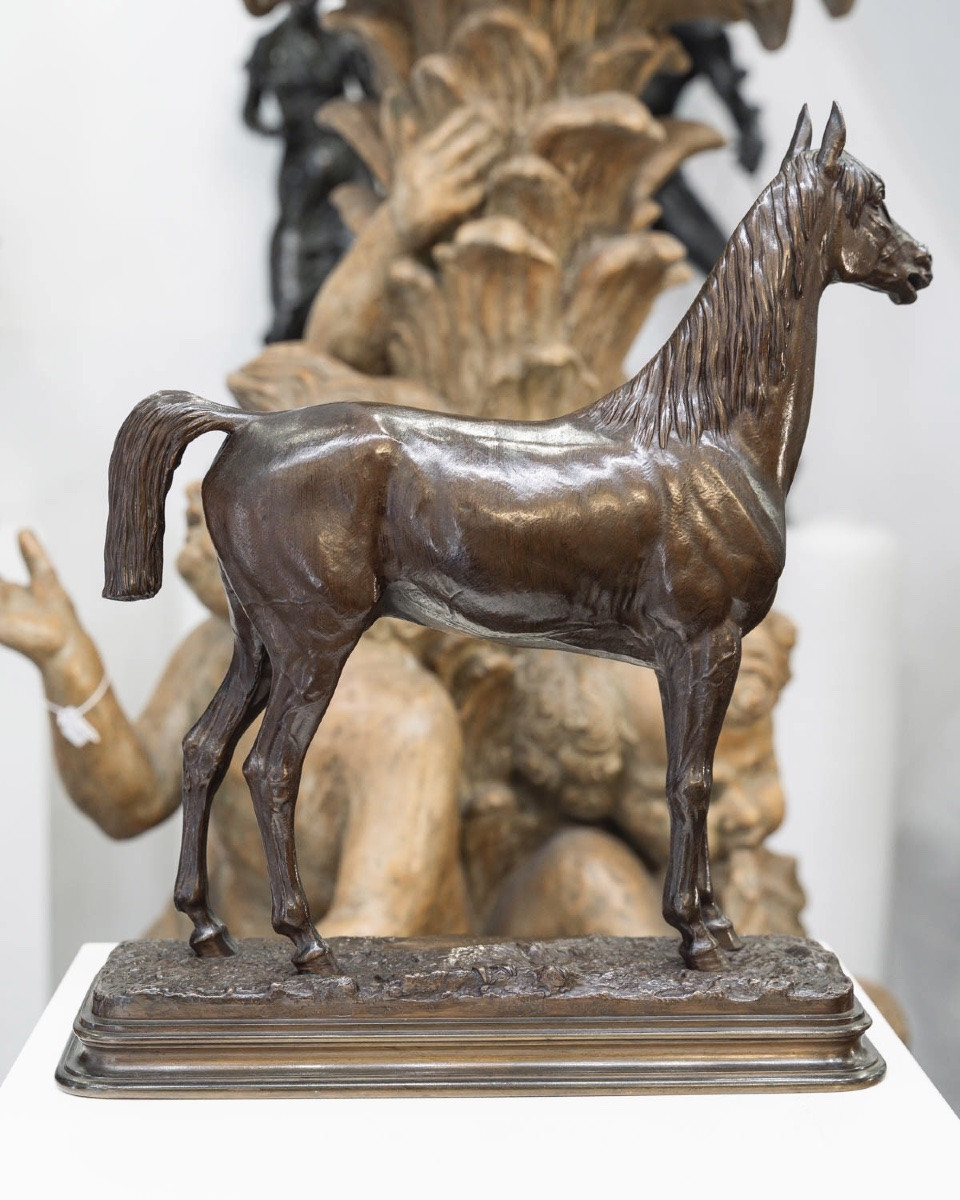
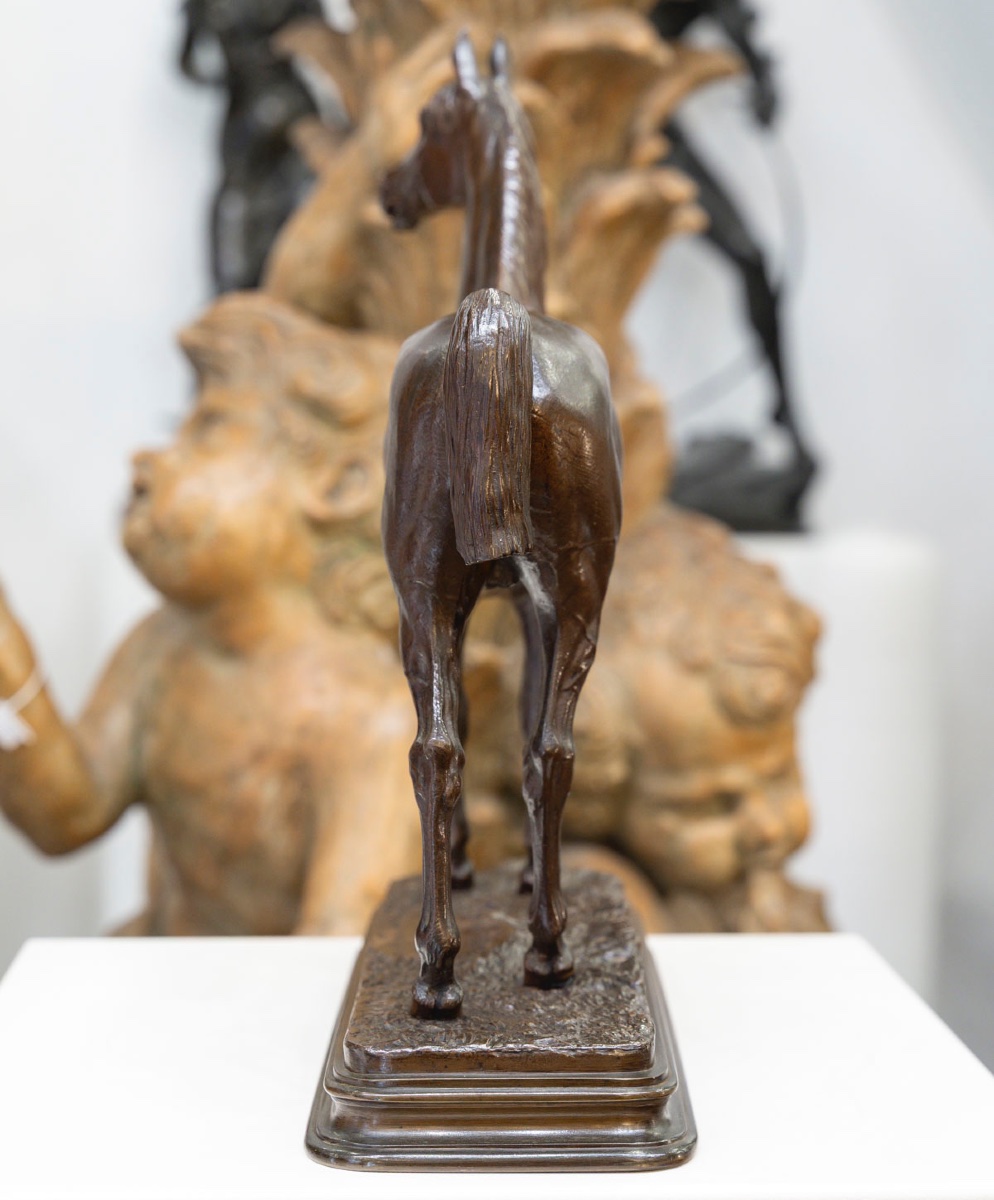
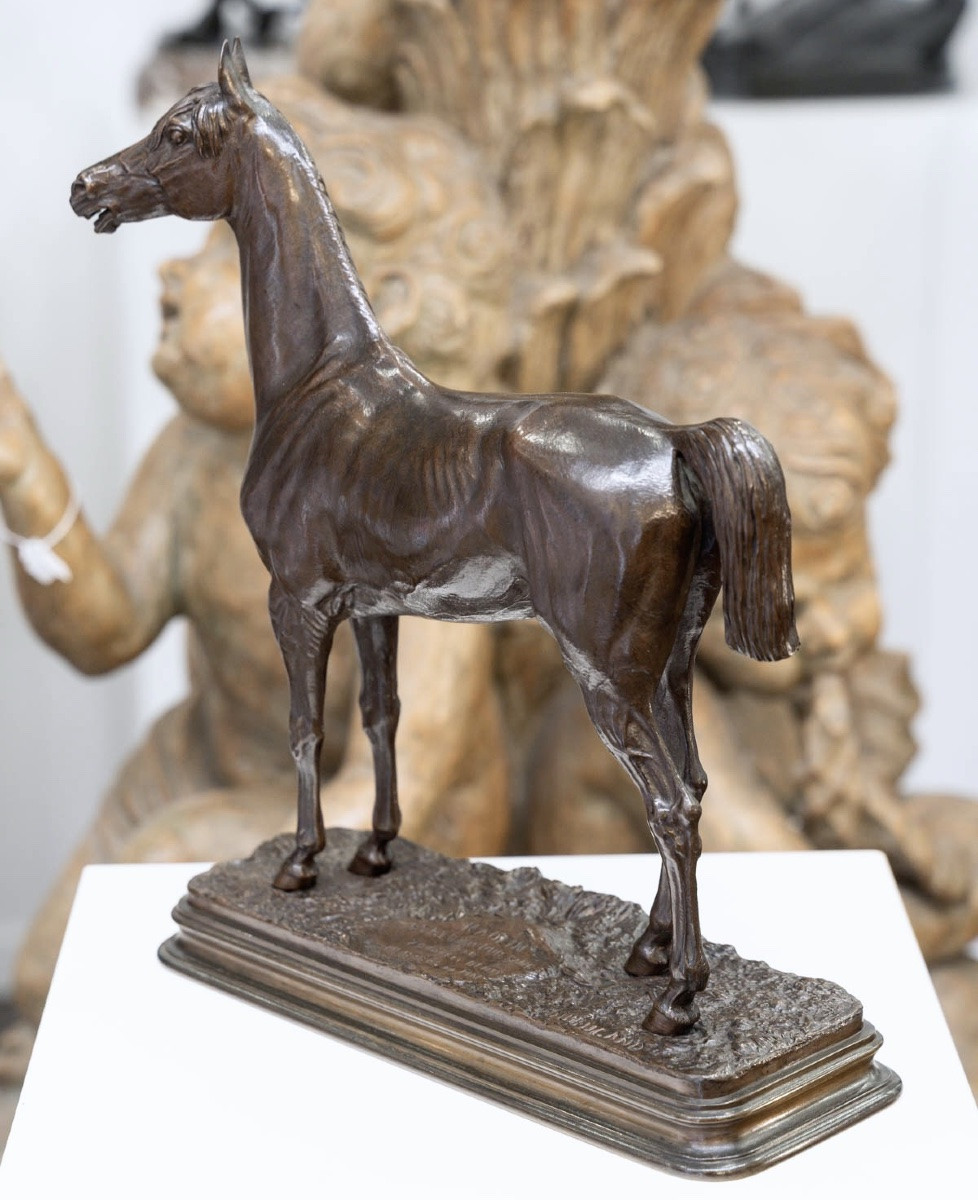


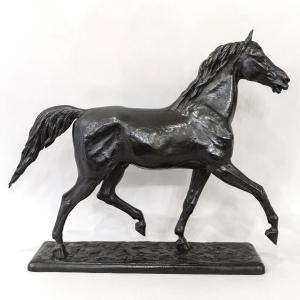
A bronze sculpture with a brown patina , depicting the portrait of the famous racehorse "KAOLIN" , a thoroughbred stallion , by the sculptor Alfred Dubucand (1828-1894) .
The horse , a symbol of nobility and power , is situated within a historical context where horse races were not only sporting events but also displays of prestige and wealth .
Through this sculpture , Alfred Dubucand immortalizes not only the object of his passion but also the spirit of an era where art and equestrian sports were harmoniously intertwined .
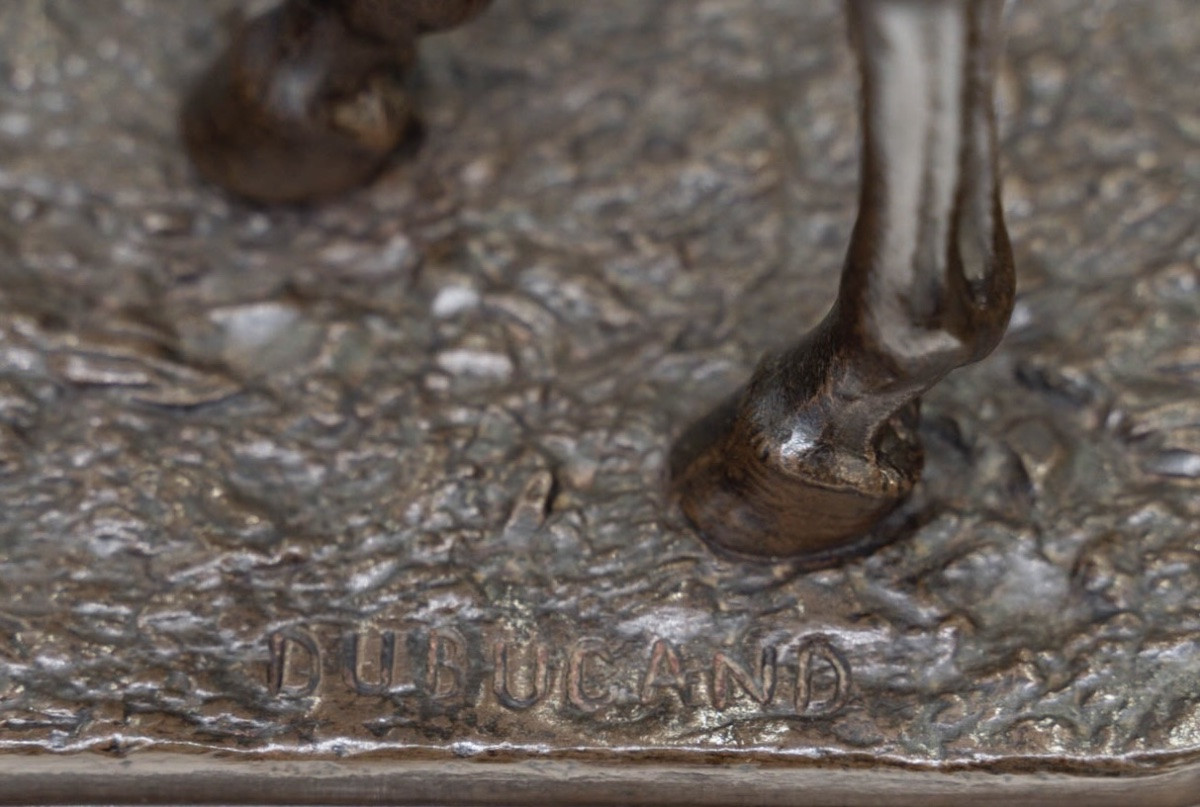
The sculptor's signature , "DUBUCAND" , is incised on the richly chiseled , naturalistic base .
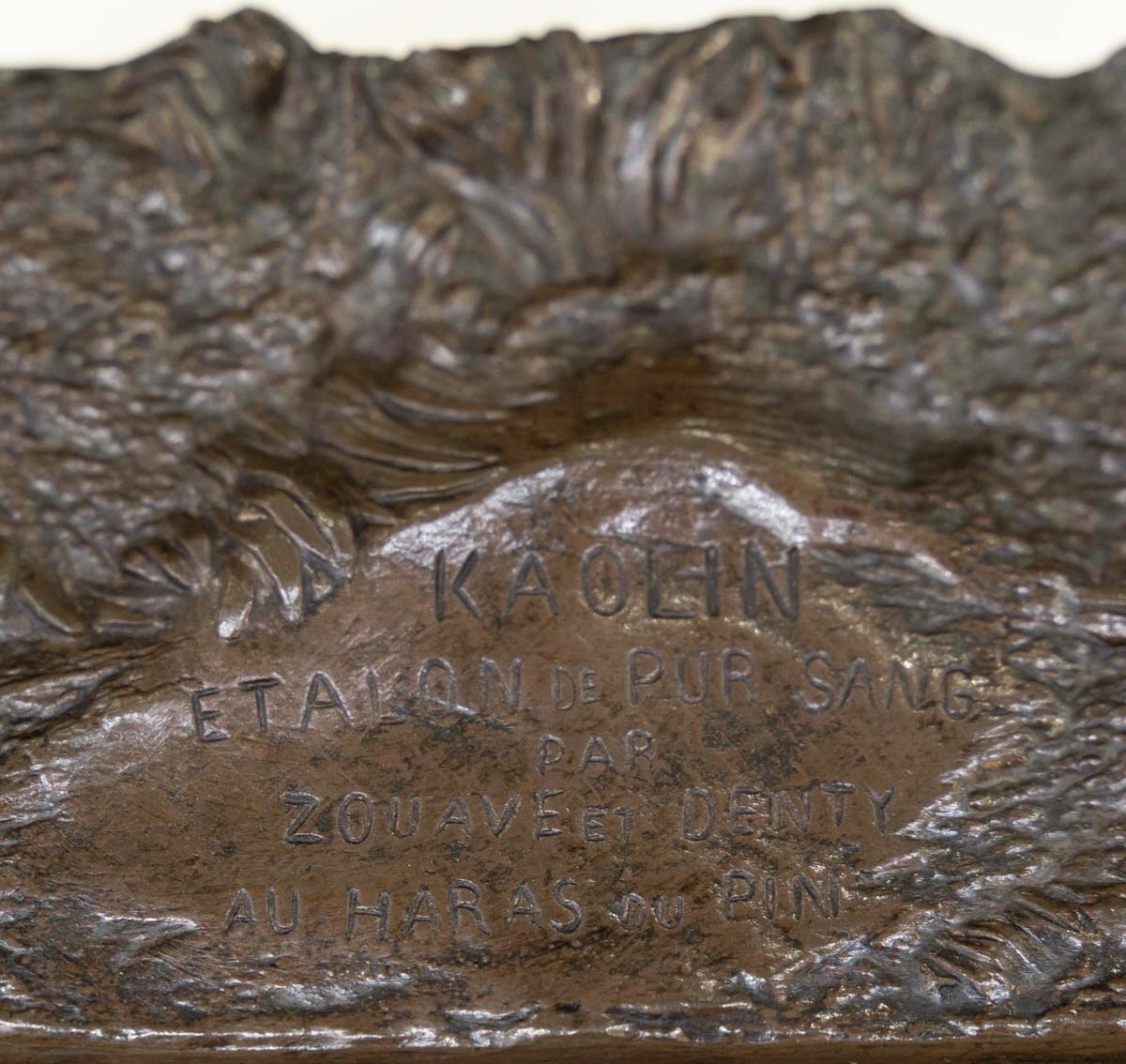
The bronze is titled "KAOLIN ETALON PUR-SANG PAR ZOUAVE ET DENTY AU HARAS DU PIN" (KAOLIN Thoroughbred Stallion by Zouave and Denty at the Haras du Pin) , in the center of the base .
This is an early edition sculpture , dating from the second half of the 19th century .
Perfect condition of preservation and patina .
Dimensions : 36.5 cm x 30 cm x 12 cm
Alfred Dubucand (1828-1894)
Alfred Dubucand , famous French sculptor , was born in Paris on November 25 , 1828 .
He was one of the prize-winning students of Antoine-Louis Barye (1795-1875) .
A.Dubucand made his debut at the Salon of 1867 .
He mainly modeled groups of animals , deer , dogs and horses . `He frequently experimented with chemical patinas for his bronzes , following the teaching of Antoine-Louis Barye , who pushed the boundaries with his dark green patinas .
A . Dubucand paid particular attention to anatomical details and the accuracy of movement of his subjects .
He modeled his figures in wax or clay, then cast them in bronze using the lost wax or sand casting method .
Many of his Orientalist sculptures depict North African scenes depicting Arab tribes and nomads with horses or camels .
Alfred Dubucand exhibited for the last time at the Salon of 1883 with his group of "Arab Horsemen and Women at the Fountain" .
The horse , a symbol of nobility and power , is situated within a historical context where horse races were not only sporting events but also displays of prestige and wealth .
Through this sculpture , Alfred Dubucand immortalizes not only the object of his passion but also the spirit of an era where art and equestrian sports were harmoniously intertwined .
The sculptor's signature , "DUBUCAND" , is incised on the richly chiseled , naturalistic base .
The bronze is titled "KAOLIN ETALON PUR-SANG PAR ZOUAVE ET DENTY AU HARAS DU PIN" (KAOLIN Thoroughbred Stallion by Zouave and Denty at the Haras du Pin) , in the center of the base .
This is an early edition sculpture , dating from the second half of the 19th century .
Perfect condition of preservation and patina .
Dimensions : 36.5 cm x 30 cm x 12 cm
Alfred Dubucand (1828-1894)
Alfred Dubucand , famous French sculptor , was born in Paris on November 25 , 1828 .
He was one of the prize-winning students of Antoine-Louis Barye (1795-1875) .
A.Dubucand made his debut at the Salon of 1867 .
He mainly modeled groups of animals , deer , dogs and horses . `He frequently experimented with chemical patinas for his bronzes , following the teaching of Antoine-Louis Barye , who pushed the boundaries with his dark green patinas .
A . Dubucand paid particular attention to anatomical details and the accuracy of movement of his subjects .
He modeled his figures in wax or clay, then cast them in bronze using the lost wax or sand casting method .
Many of his Orientalist sculptures depict North African scenes depicting Arab tribes and nomads with horses or camels .
Alfred Dubucand exhibited for the last time at the Salon of 1883 with his group of "Arab Horsemen and Women at the Fountain" .
Explore similar pieces and discover your ideal find:
Bronze Animal Sculptures