

Sculpture - The Return Of The Swallows , Emile Joseph Nestor Carlier (1849-1927) - Bronze
Artist: émile Joseph Nestor Carlier (1849-1927)
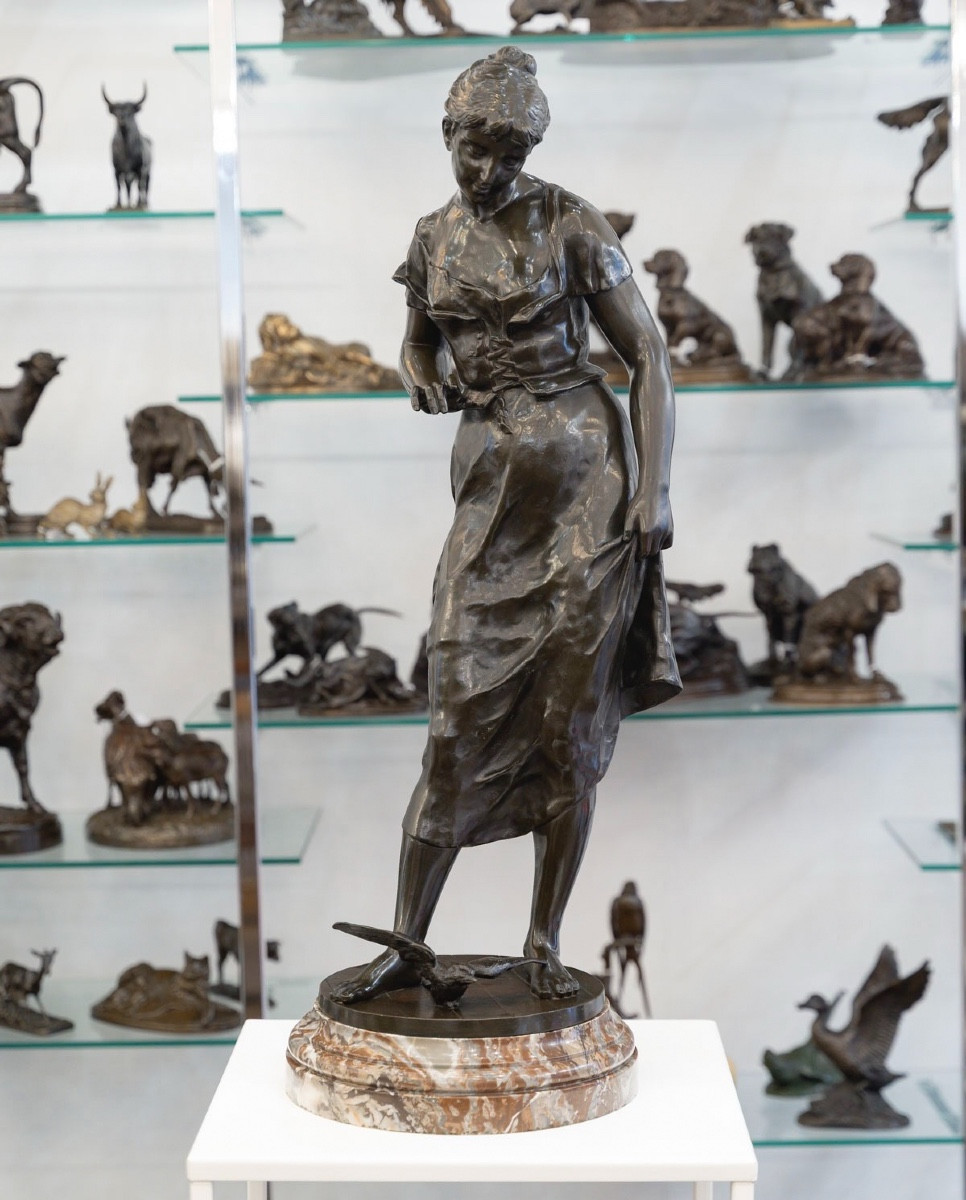
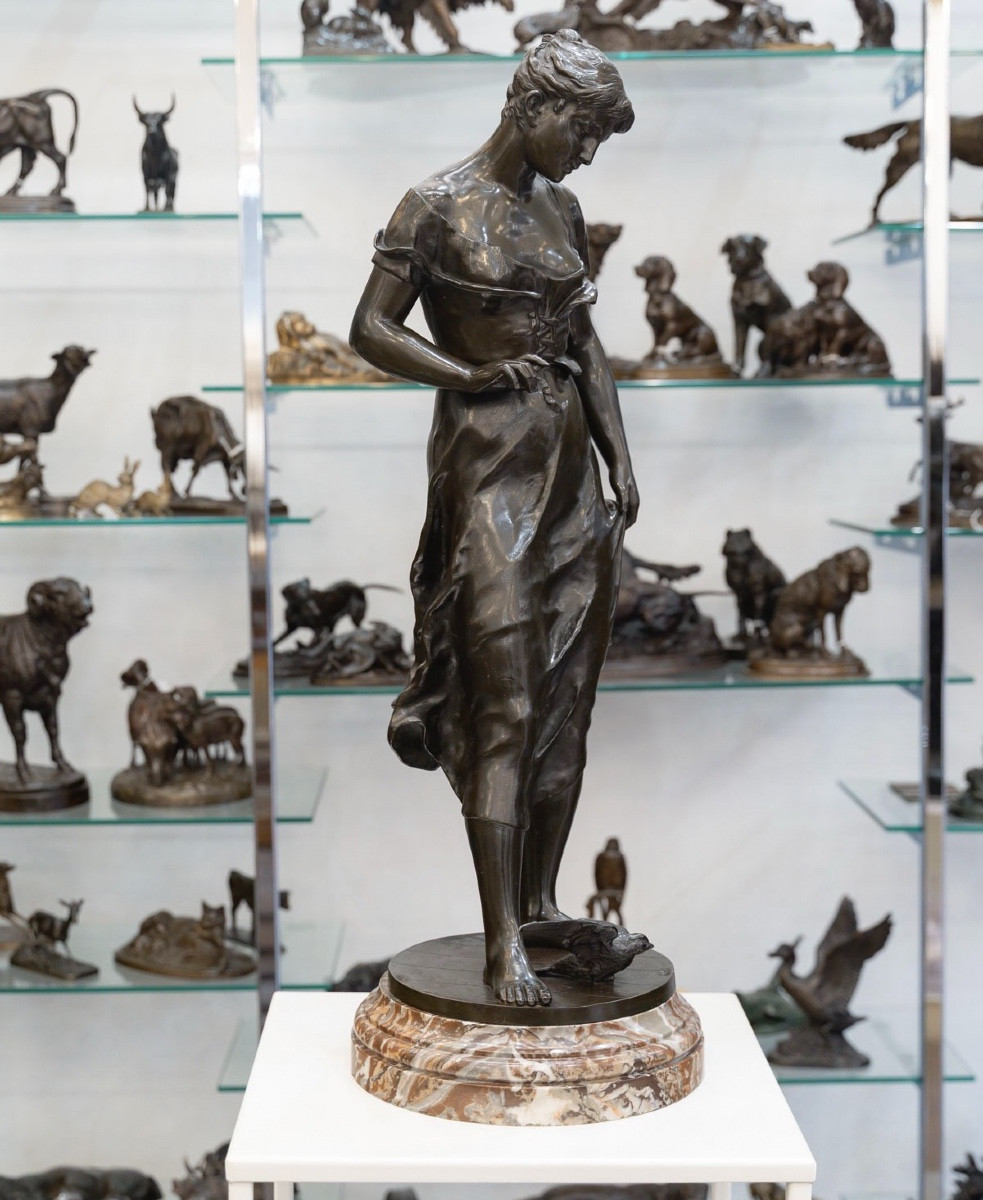
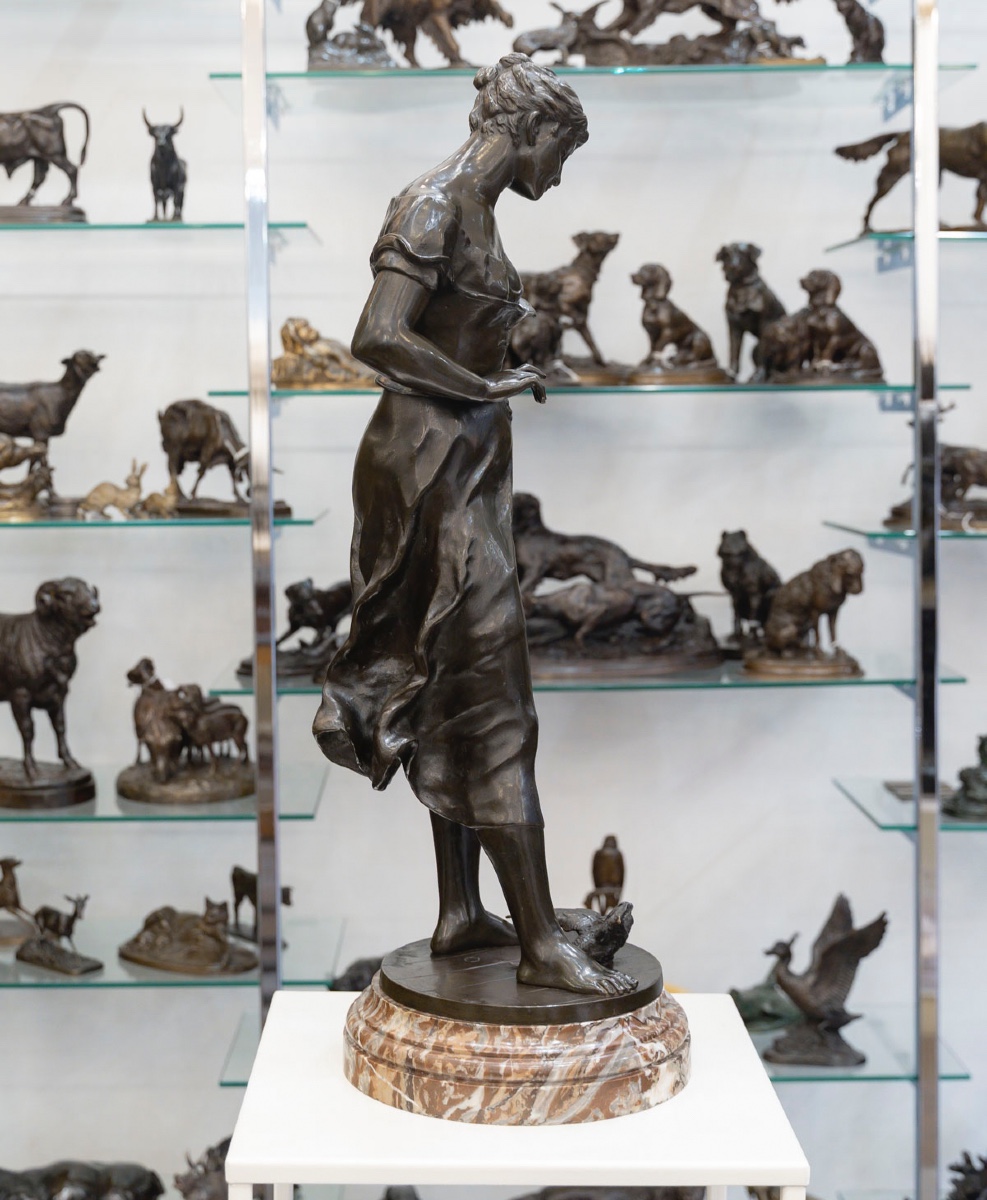
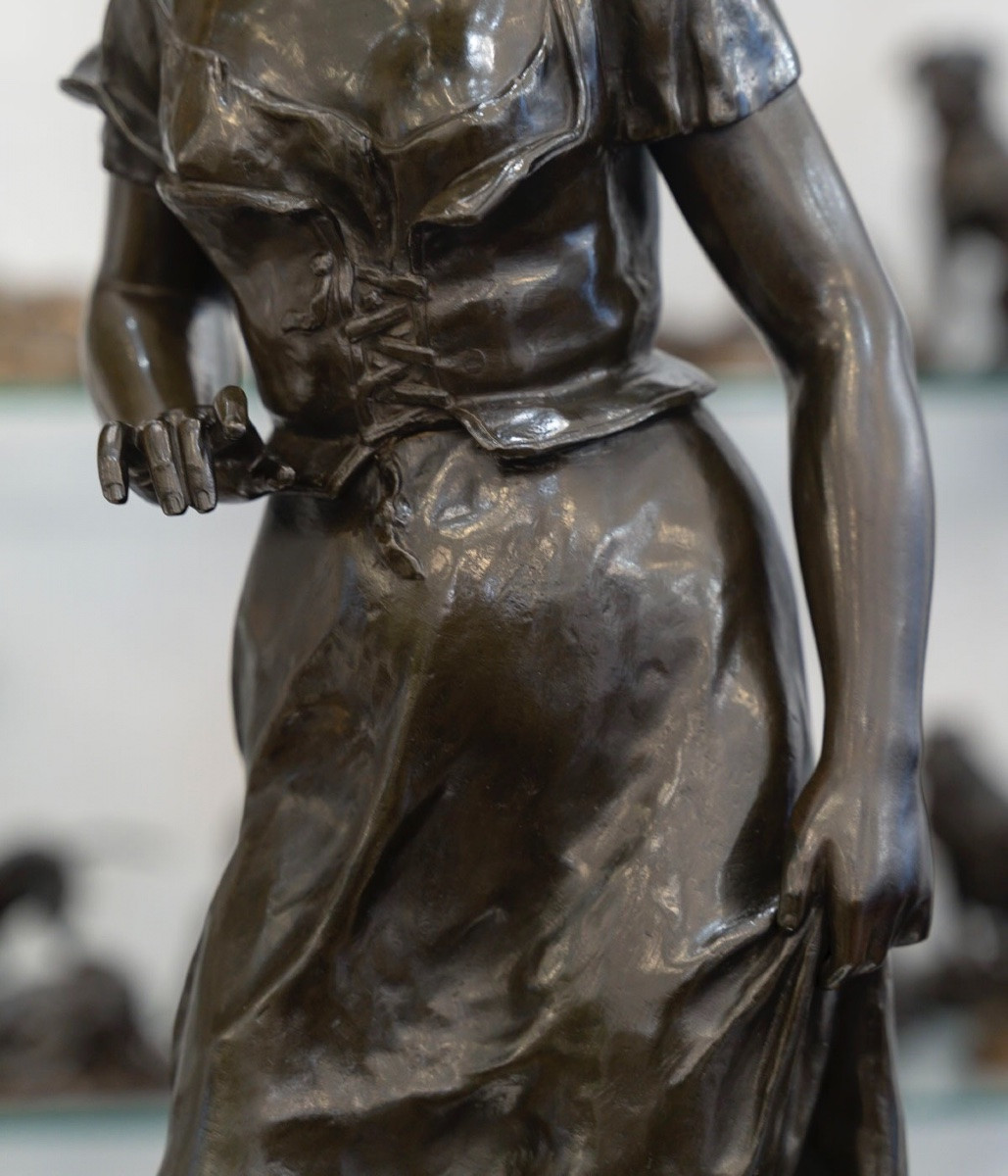
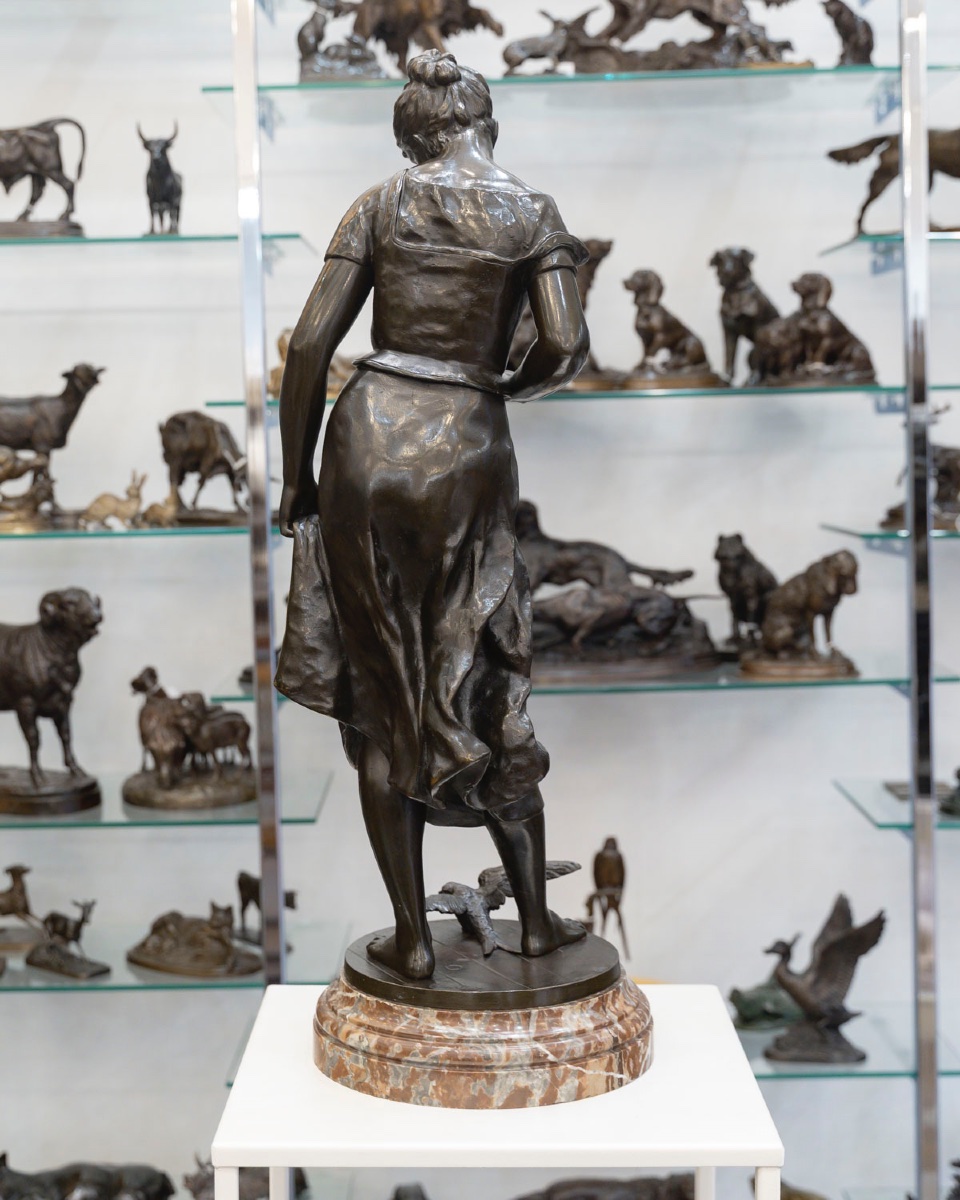
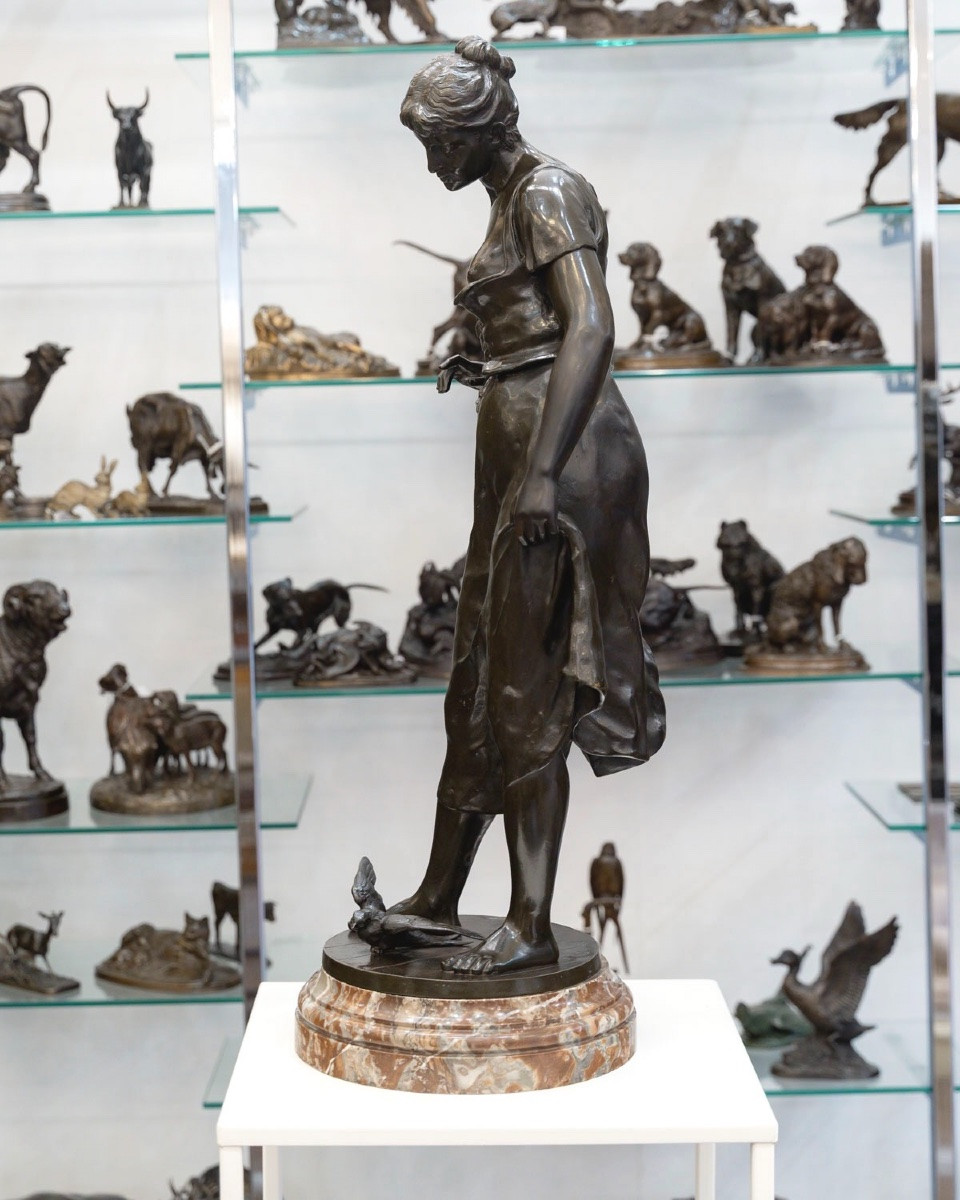
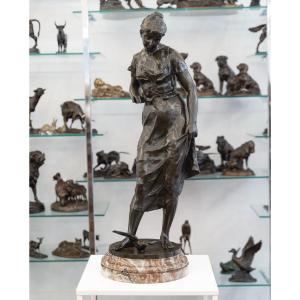
An important bronze sculpture with a brown patina , depicting a young woman captivated by the return of the swallows , by the sculptor Emile Joseph Nestor Carlier (1849-1927) .
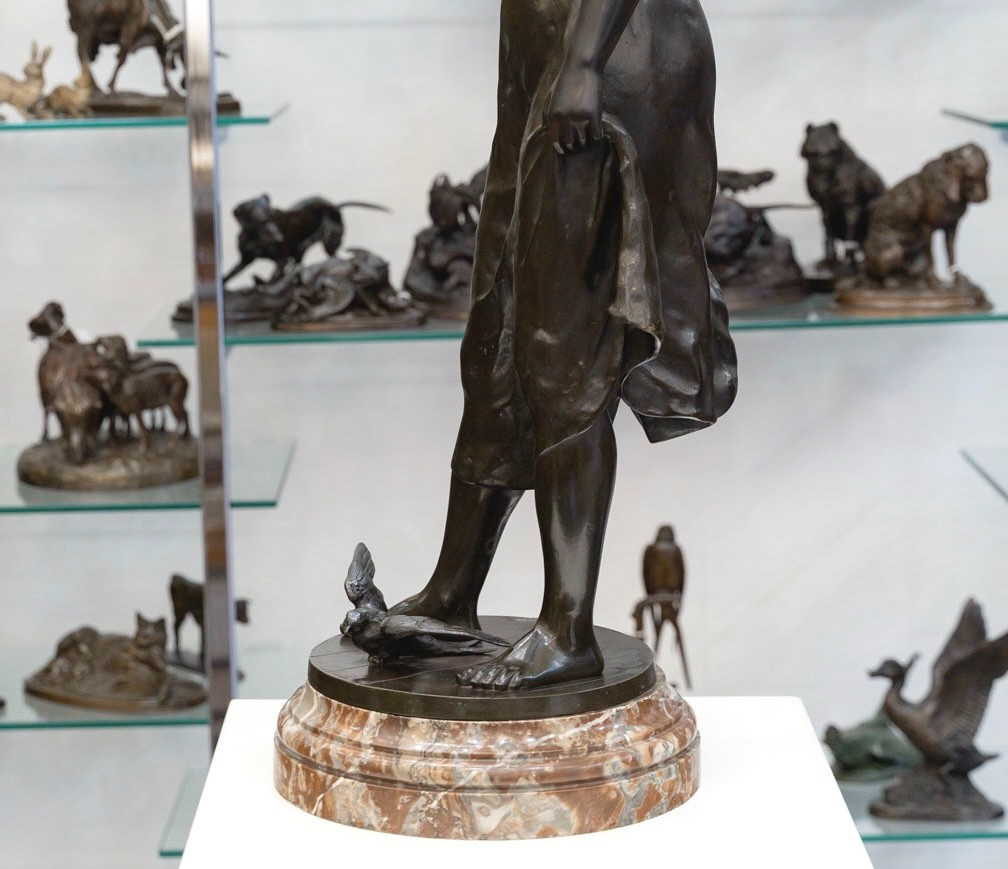
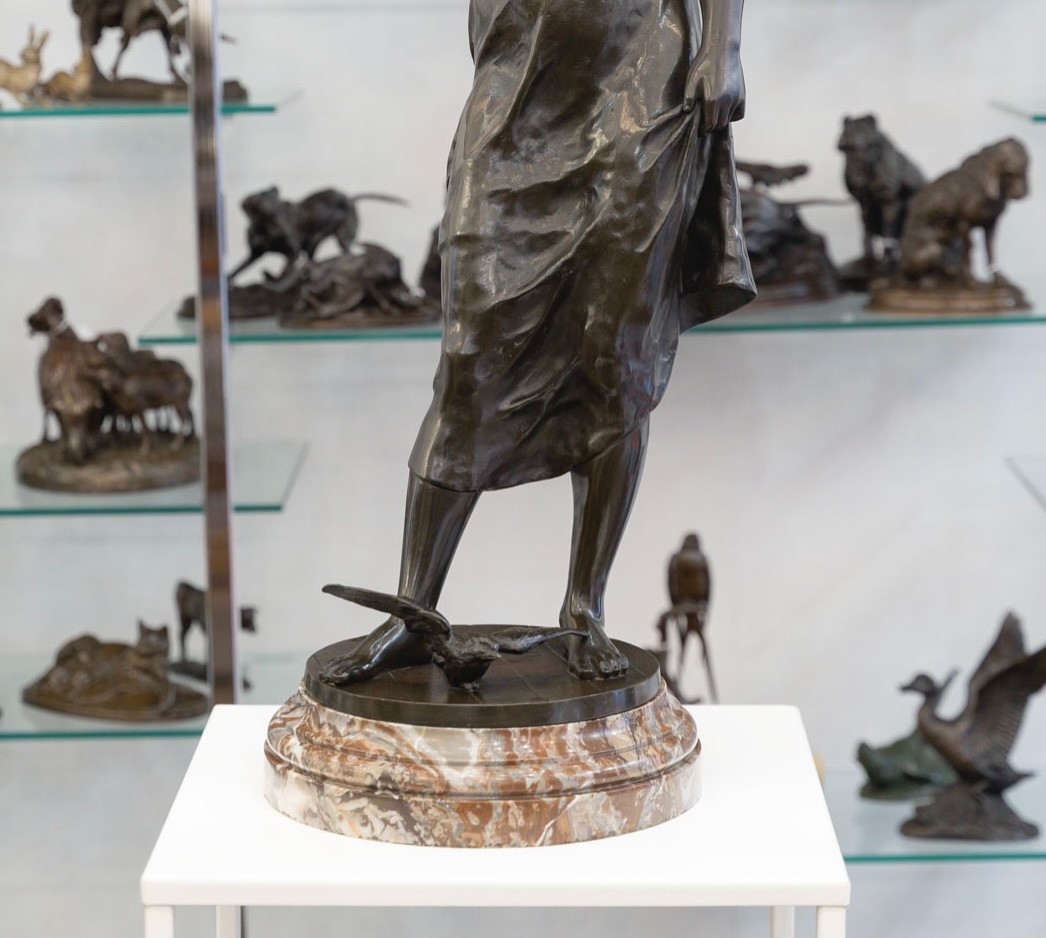
She stands, observing the swallow that has just landed at her feet .
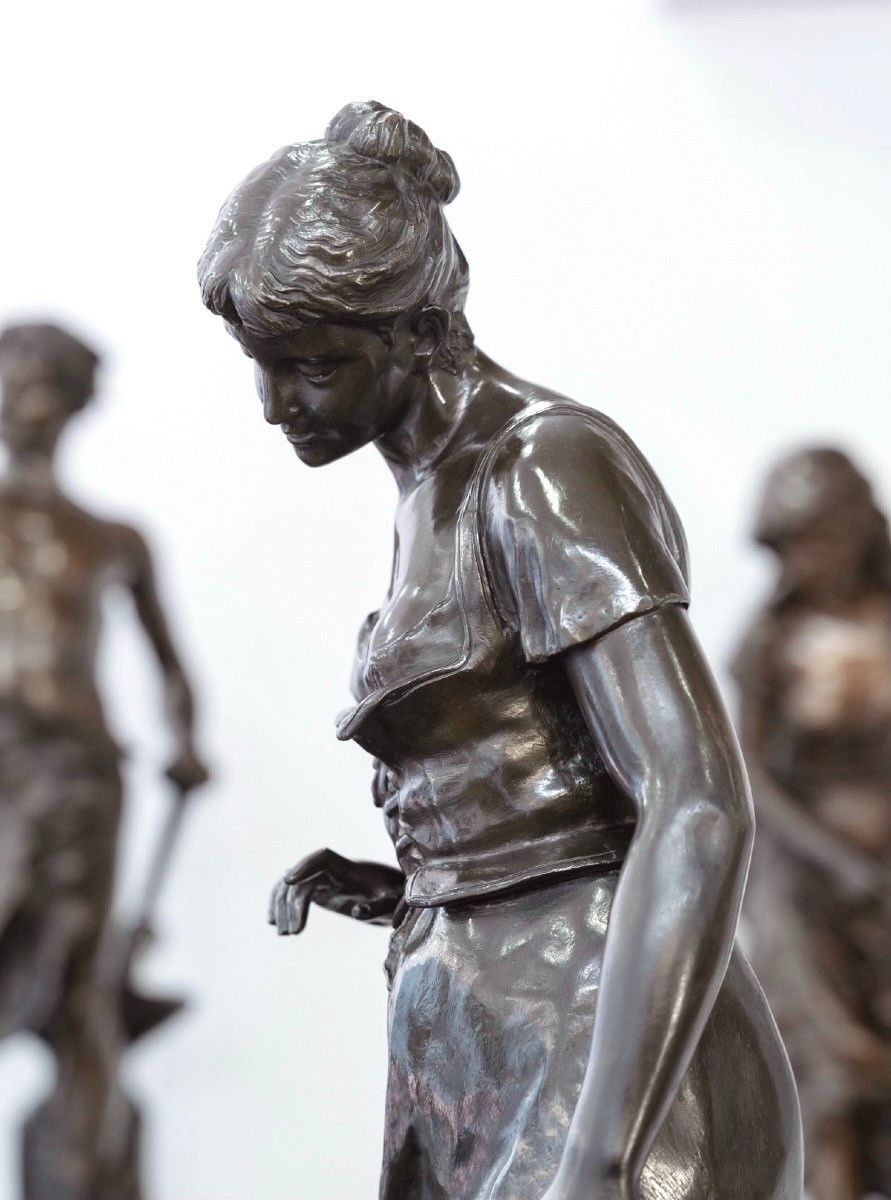
She is dressed in a traditional corseted gown of the period and her hair is styled in a chignon .
The scene illustrates the ideal harmony between humankind and nature.
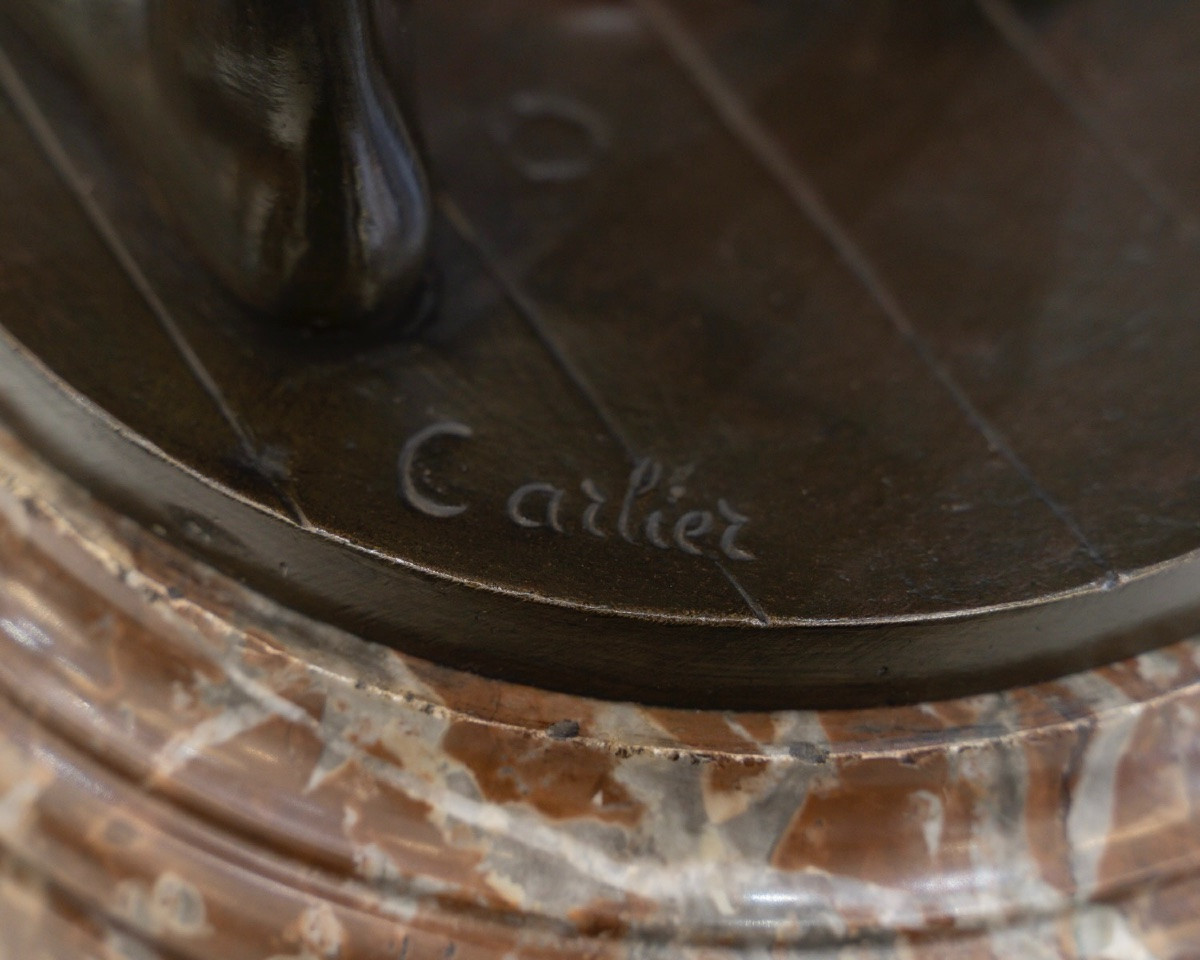
The sculptor's signature "Carlier" , is incised on the oval naturalistic base .
The sculpture rests on an oval base of pink marble .
Early 20th century , Art Nouveau , circa 1905 .
Perfect condition and patina .
Dimensions : 76 cm x 25 cm x 25 cm
Emile Joseph Nestor Carlier (1849-1927)
Emile Joseph Nestor Carlier was a famous French academic sculptor, born in Cambrai in 1849.
A pupil at the École des Frères , he attended the “Municipal Drawing School” , under the watchful eye of his teachers Berger , father and son .
His father , fearful of the hazards of an artist's life , was less than enthusiastic about his son's professional choice .
So , in 1864 , with his mother's support, he joined the workshop of the Cambrian ornamental sculptor Lecaron , where he learned the trade by sculpting the stones of Cambrai Cathedral .
It was during this period that the young apprentice fell from a scaffolding , and owed his salvation only to the strap of his bag , which kept him suspended from the mast .
He went to Paris to visit the 1867 World's Fair, which confirmed his vocation as an artist.
With no financial support from his parents , he had to do odd jobs and was hired by a furniture maker in the Faubourg Saint-Antoine .
He then returned to Cambrai to attend the Academic School in Rene Fache's studio.
A studious and diligent student , his teacher convinced his parents to let him move to Paris , to enter the School of Fine Arts.
In 1869 , he received a scholarship from the city of Cambrai , and was admitted to the studio of sculptor Jules Cavelier , who taught him in a rigorously academic manner .
The 1870 war interrupted his studies .
Exempted from military service , he visited his parents and joined the Montrouge volunteers .
After a short military career , he was awarded the military medal by decree on December 31 , 1871 , following a report by the Minister of War .
He then joined François Jouffroy's workshop .
He continued his training in François Jouffroy's studio , then at the Julian Academie , in Henri Chapu's studio , where he met up again with his friend from Valenciennes , Leon Fagel .
In 1874, he made his debut at the Salon and exhibited there every year thereafter .
As a token of his gratitude , he donated his first major work to the town of Cambrai .
In 1876 , he created a stone statue of the Cambrian chronicler "Enguerrand of Monstrelet" , which was erected in a public garden . It was destroyed by bombing in 1944 .
He exhibited "Gilliat grapples with octopuses" which won him a 2nd medal at the 1879 Salon , then "Before the Stone Age" which enabled him to obtain a travel grant and visit Italy in 1881 .
In Florence , he modeled the sketch for "The Blind Man and the Paralytic" , for which he was awarded the first medal at the 1883 Salon .
In 1889 , after winning a gold medal at the Paris Universal Exhibition , he decided to transform his "Gilliat" , which he exhibited at the 1890 Salon . His work was bought by the State for the Luxembourg Museum .
He became a member of the jury of the French Artists' Fair , and had the rules revised .
Joseph Carlier died in Paris on April 11 , 1927 .
She stands, observing the swallow that has just landed at her feet .
She is dressed in a traditional corseted gown of the period and her hair is styled in a chignon .
The scene illustrates the ideal harmony between humankind and nature.
The sculptor's signature "Carlier" , is incised on the oval naturalistic base .
The sculpture rests on an oval base of pink marble .
Early 20th century , Art Nouveau , circa 1905 .
Perfect condition and patina .
Dimensions : 76 cm x 25 cm x 25 cm
Emile Joseph Nestor Carlier (1849-1927)
Emile Joseph Nestor Carlier was a famous French academic sculptor, born in Cambrai in 1849.
A pupil at the École des Frères , he attended the “Municipal Drawing School” , under the watchful eye of his teachers Berger , father and son .
His father , fearful of the hazards of an artist's life , was less than enthusiastic about his son's professional choice .
So , in 1864 , with his mother's support, he joined the workshop of the Cambrian ornamental sculptor Lecaron , where he learned the trade by sculpting the stones of Cambrai Cathedral .
It was during this period that the young apprentice fell from a scaffolding , and owed his salvation only to the strap of his bag , which kept him suspended from the mast .
He went to Paris to visit the 1867 World's Fair, which confirmed his vocation as an artist.
With no financial support from his parents , he had to do odd jobs and was hired by a furniture maker in the Faubourg Saint-Antoine .
He then returned to Cambrai to attend the Academic School in Rene Fache's studio.
A studious and diligent student , his teacher convinced his parents to let him move to Paris , to enter the School of Fine Arts.
In 1869 , he received a scholarship from the city of Cambrai , and was admitted to the studio of sculptor Jules Cavelier , who taught him in a rigorously academic manner .
The 1870 war interrupted his studies .
Exempted from military service , he visited his parents and joined the Montrouge volunteers .
After a short military career , he was awarded the military medal by decree on December 31 , 1871 , following a report by the Minister of War .
He then joined François Jouffroy's workshop .
He continued his training in François Jouffroy's studio , then at the Julian Academie , in Henri Chapu's studio , where he met up again with his friend from Valenciennes , Leon Fagel .
In 1874, he made his debut at the Salon and exhibited there every year thereafter .
As a token of his gratitude , he donated his first major work to the town of Cambrai .
In 1876 , he created a stone statue of the Cambrian chronicler "Enguerrand of Monstrelet" , which was erected in a public garden . It was destroyed by bombing in 1944 .
He exhibited "Gilliat grapples with octopuses" which won him a 2nd medal at the 1879 Salon , then "Before the Stone Age" which enabled him to obtain a travel grant and visit Italy in 1881 .
In Florence , he modeled the sketch for "The Blind Man and the Paralytic" , for which he was awarded the first medal at the 1883 Salon .
In 1889 , after winning a gold medal at the Paris Universal Exhibition , he decided to transform his "Gilliat" , which he exhibited at the 1890 Salon . His work was bought by the State for the Luxembourg Museum .
He became a member of the jury of the French Artists' Fair , and had the rules revised .
Joseph Carlier died in Paris on April 11 , 1927 .
3 800 €
Period: 20th century
Style: Art Nouveau
Condition: Perfect condition
Material: Bronze
Length: 25 cm
Height: 76 cm
Depth: 25 cm
Reference (ID): 1662189
Availability: In stock
Print