THIS OBJECT WAS SOLD
Domesticated Buffalo, Nindohari Culture, Indus Valley, 2300–2000 Bc
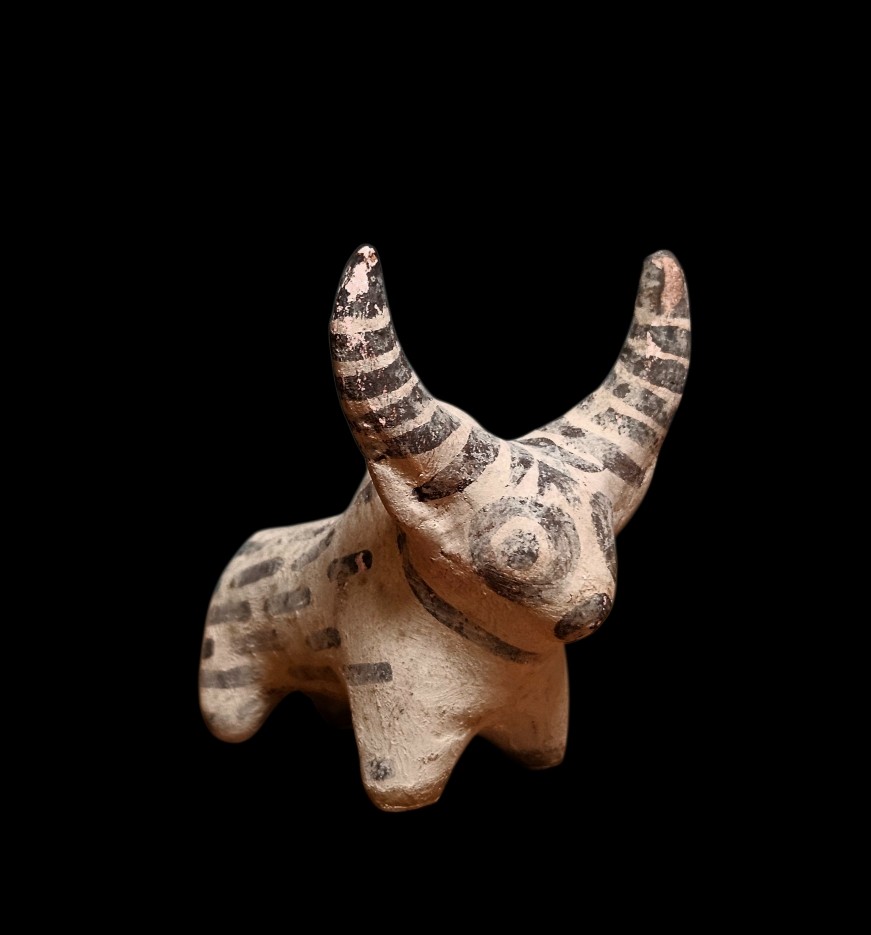
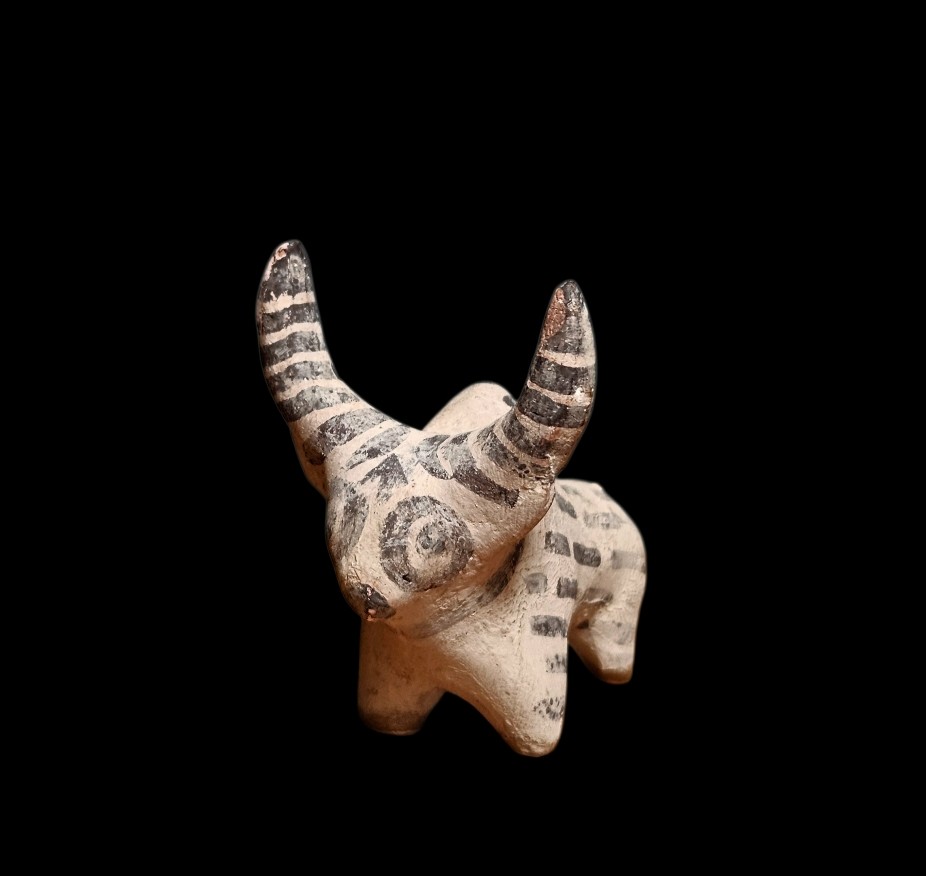
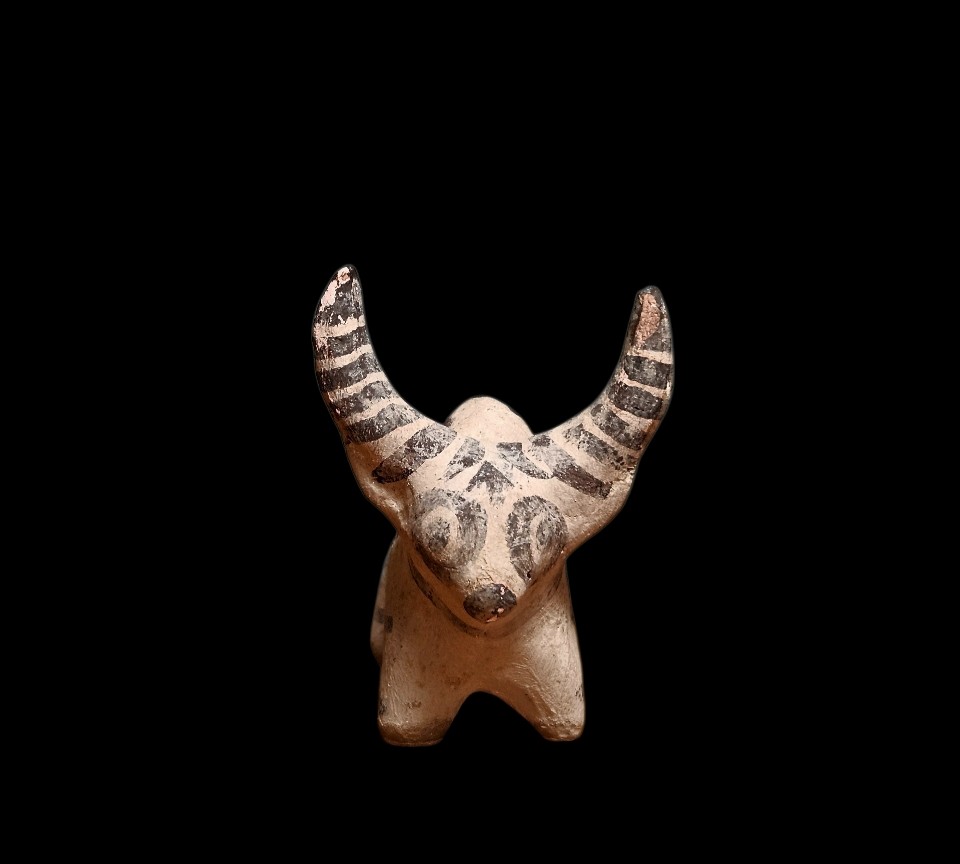
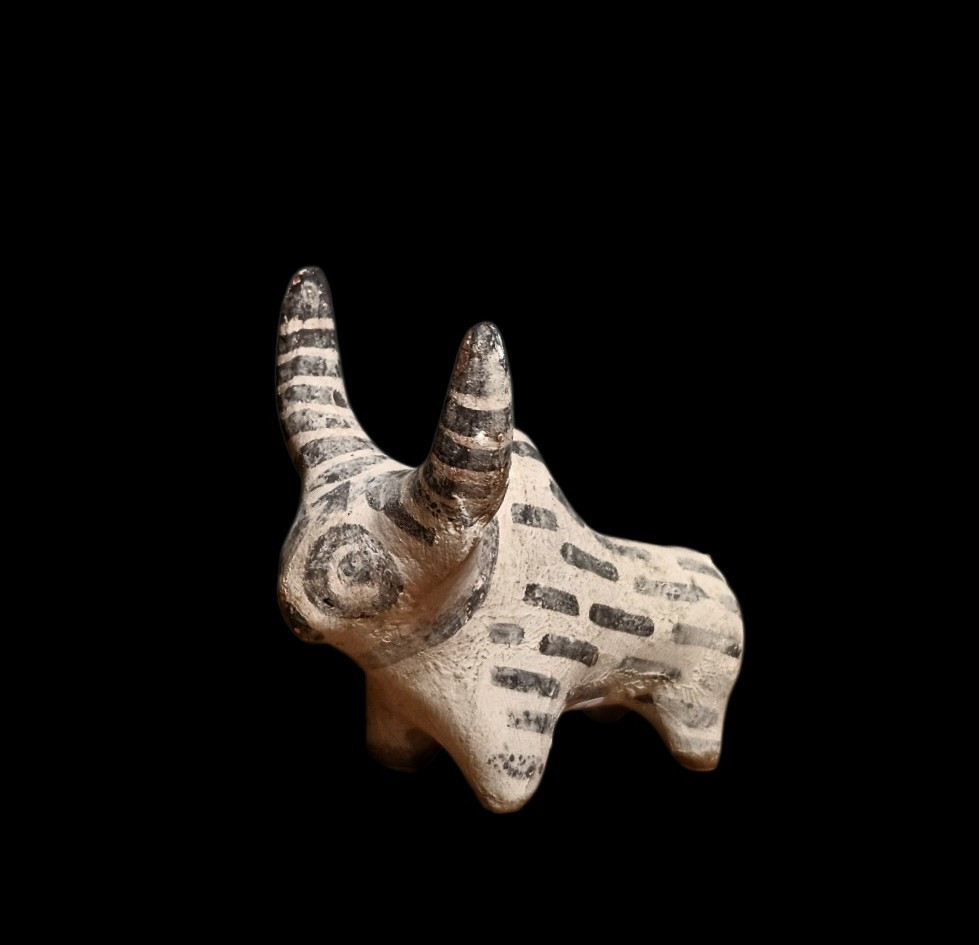
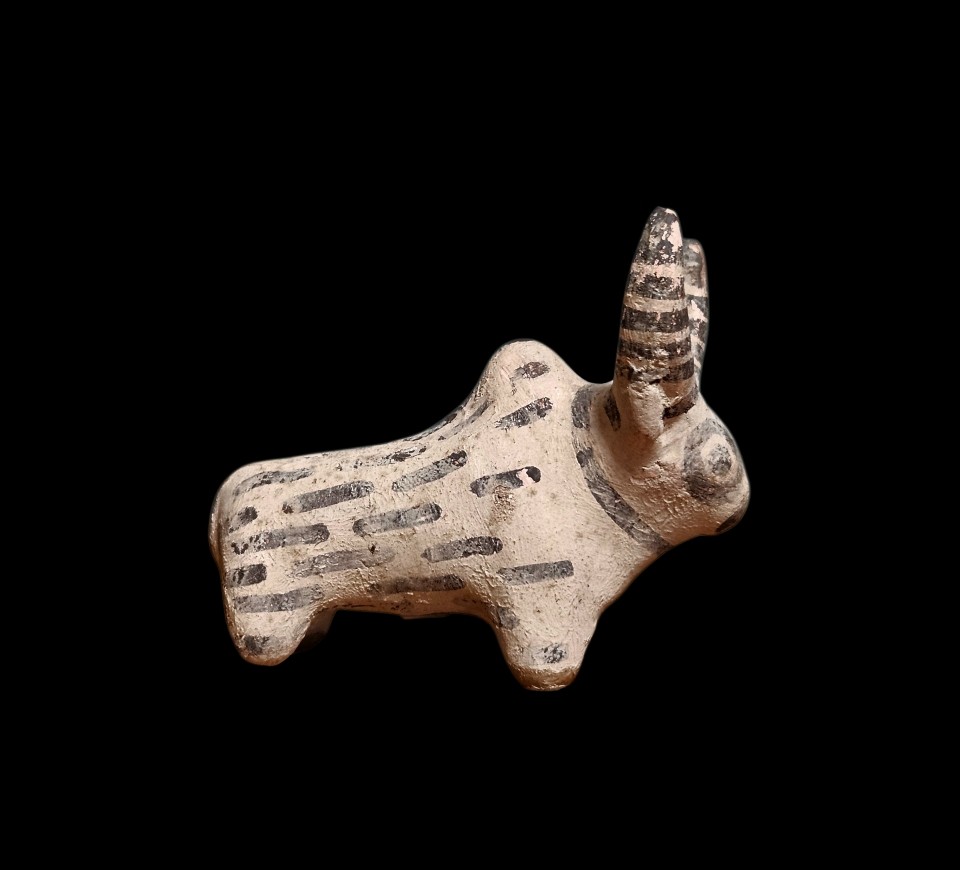
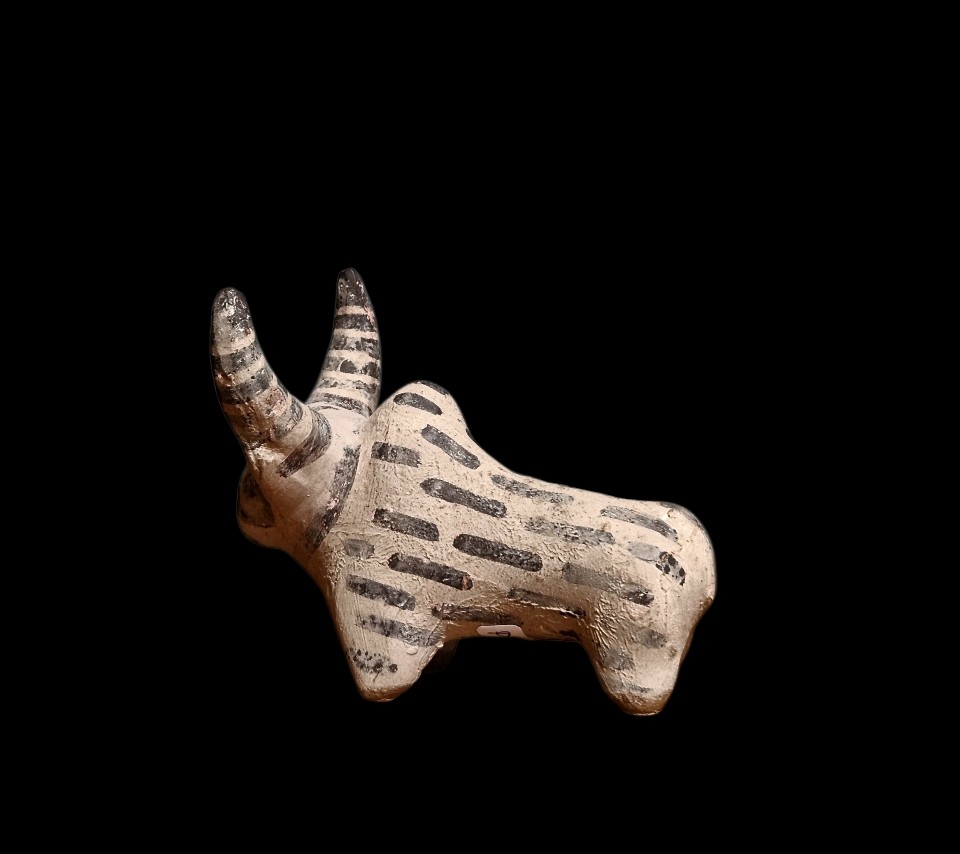
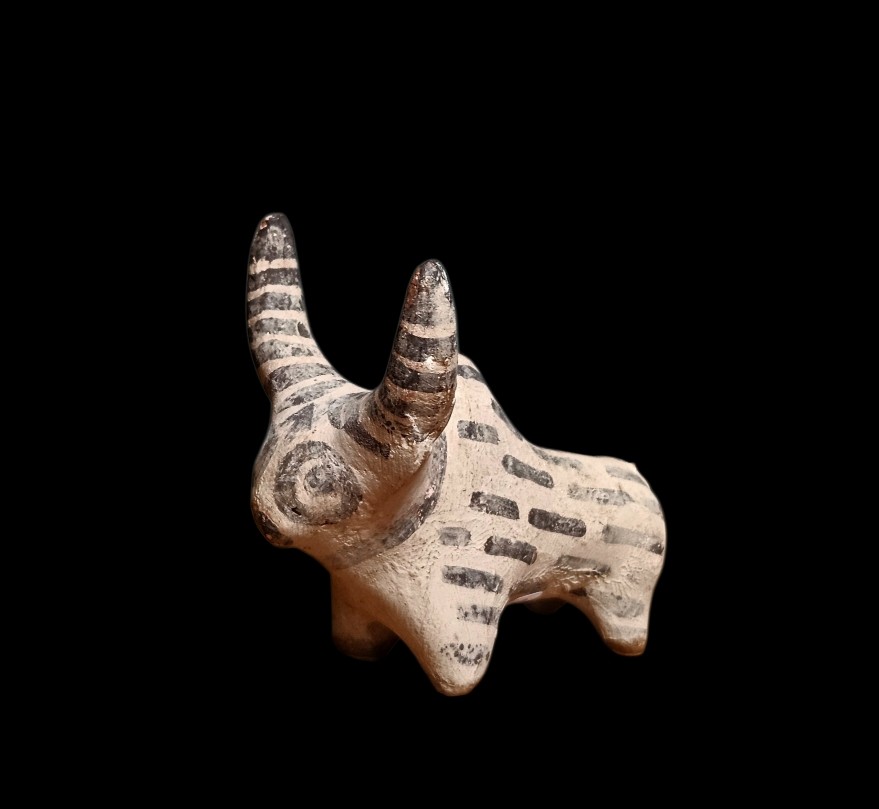
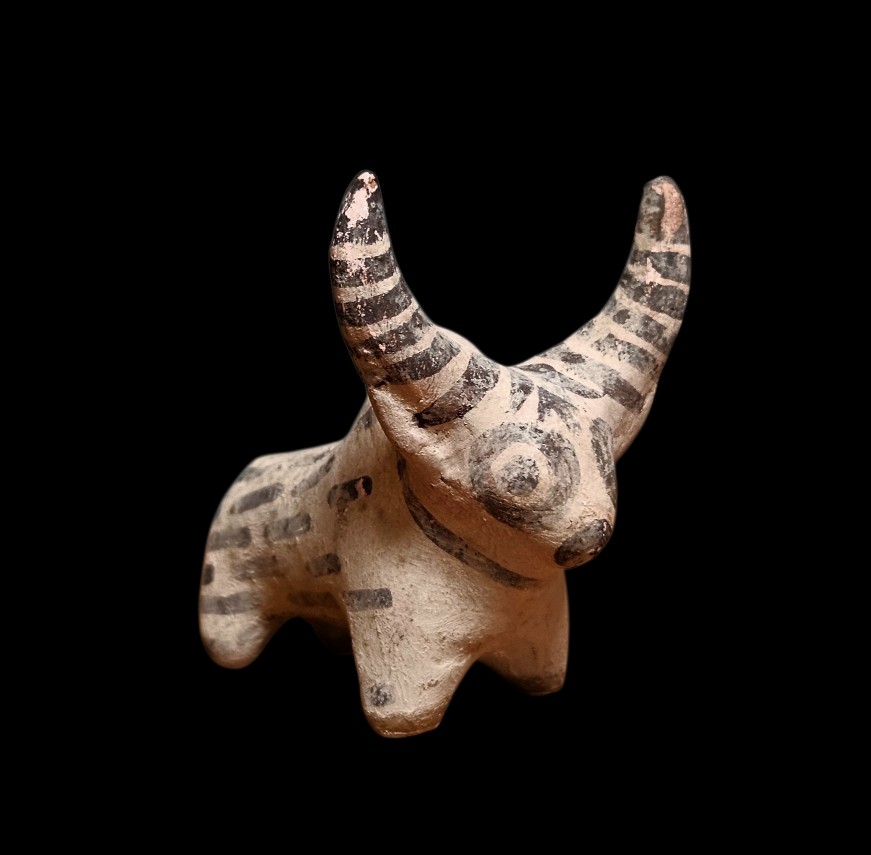


Animal figure representing a zebu-type bovine, identifiable by its dorsal hump and powerful, upward-pointing horns. The animal is rendered in a balanced stylization, with concentric eyes and a compact muzzle. An arrow incised in the center of the forehead directs the gaze towards the space formed by the horns. The naturalistic modeling emphasizes the compact volumes of the body, enlivened by dark brown painted bands arranged in registers on the coat and repeated on the horns. A collar suggested by a circular band underscores the animal's domesticated nature. Beige terracotta with brown decoration, showing signs of age. Good condition for its age. Nindohari culture, Indus Valley civilization, circa 2300–2000 BCE. Dimensions: 7.5 × 9 cm. Provenance: Formerly in the collection of Professor Morel, Paris. Thierry Desbenoit & Associés Auction, Drouot Paris, April 28, 2017, lot 13 in the catalog (expert Jean-Yves Nathan). Sold with a certificate from expert S. Reynes and an invoice from Galerie Ocarina.* SHIPPING COSTS UPON REQUEST VIA DHL CARRIER. "In the Nindowari culture, linked to the first agricultural communities of Balochistan and the beginnings of the Indus Valley Civilization, the zebu occupies a central place in the economy and symbolic imagination. An animal of labor and wealth, it embodies the fertility of the land and the prosperity of the household. Small terracotta figures like this one were probably intended for domestic or votive use, associated with protective practices linked to agricultural cycles. The painted decoration, the accentuated horns, and the presence of the collar reflect a valued representation of the animal, observed both in its daily reality and imbued with a magico-religious dimension characteristic of Neolithic societies and proto-urban settlements of the Indus Valley."
Explore similar pieces and discover your ideal find:
archeology