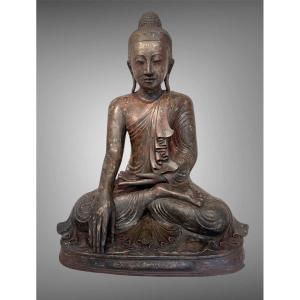


Bronze Buddha Mandalay
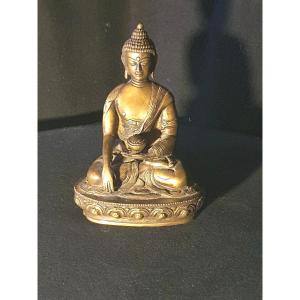
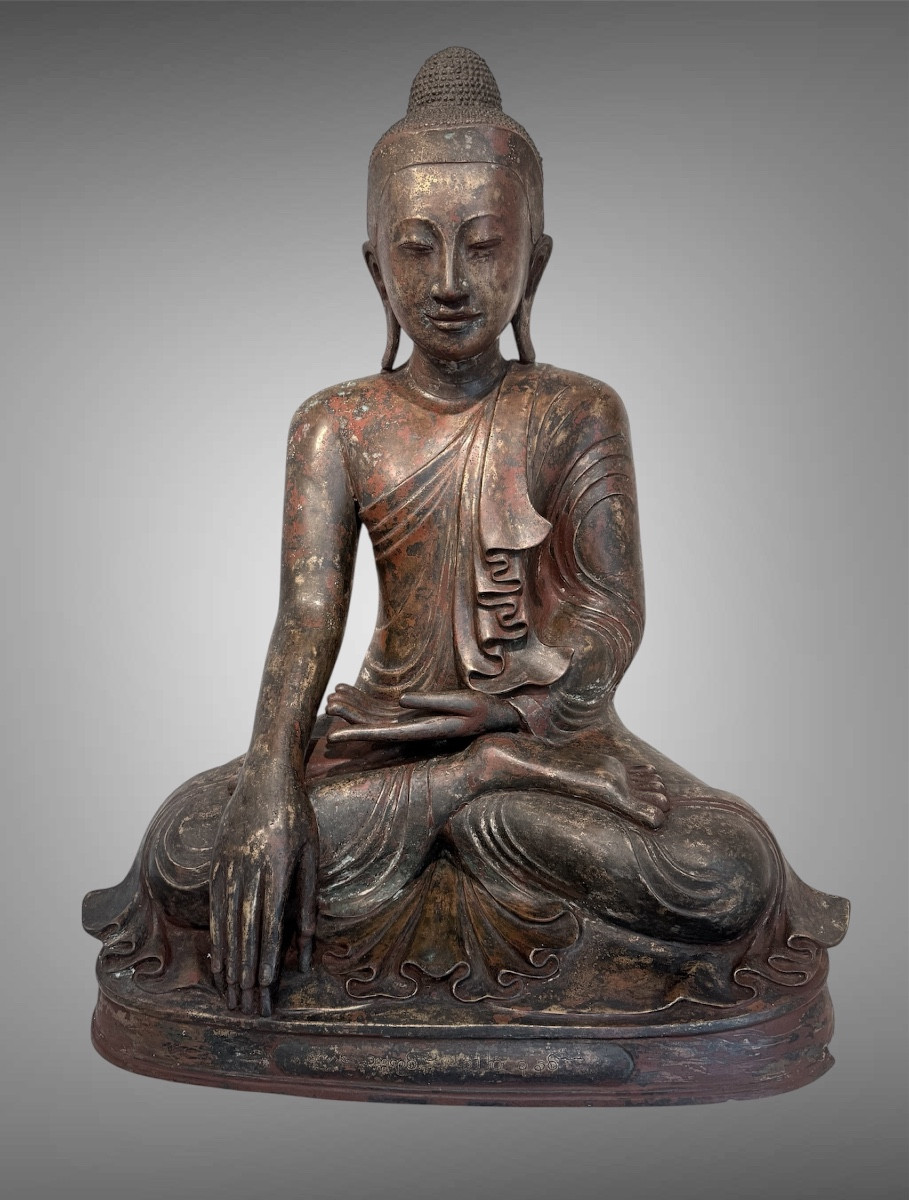
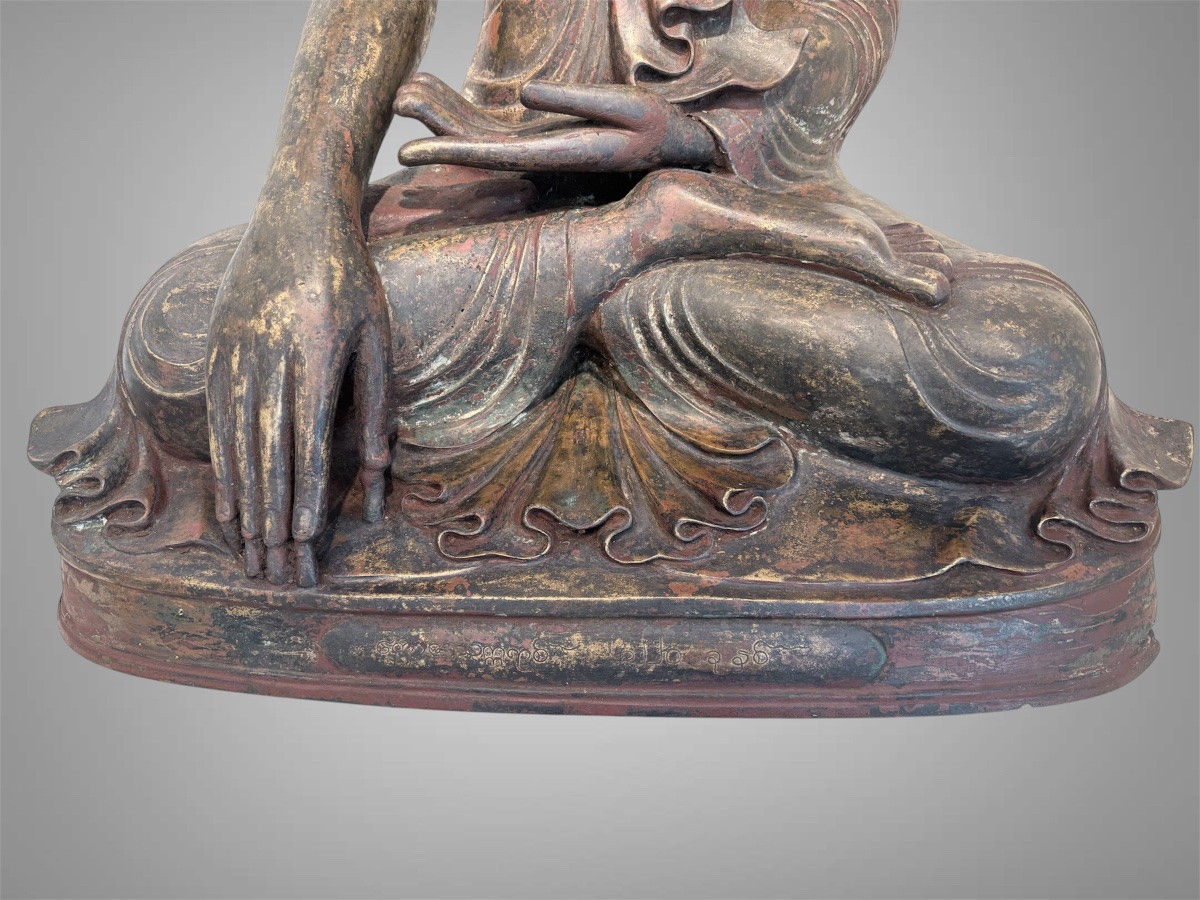
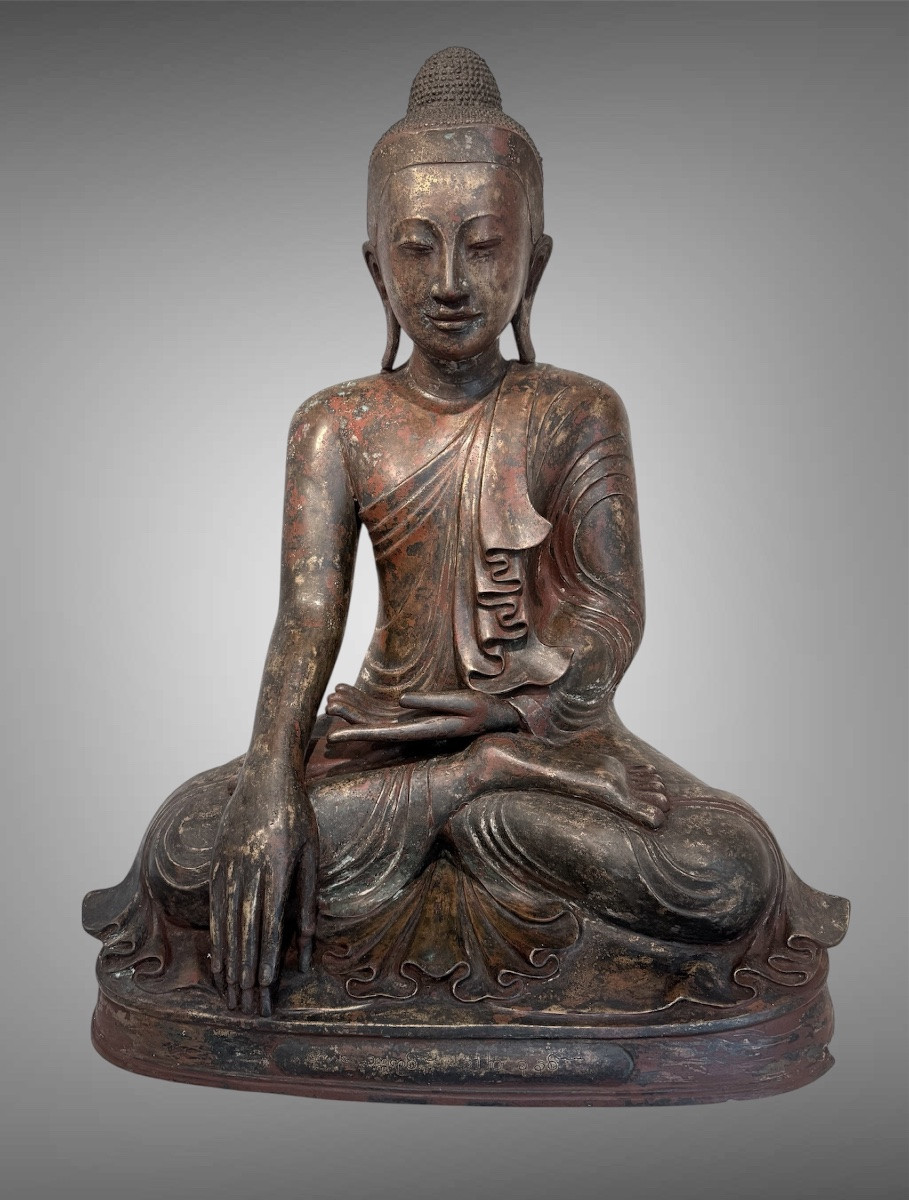
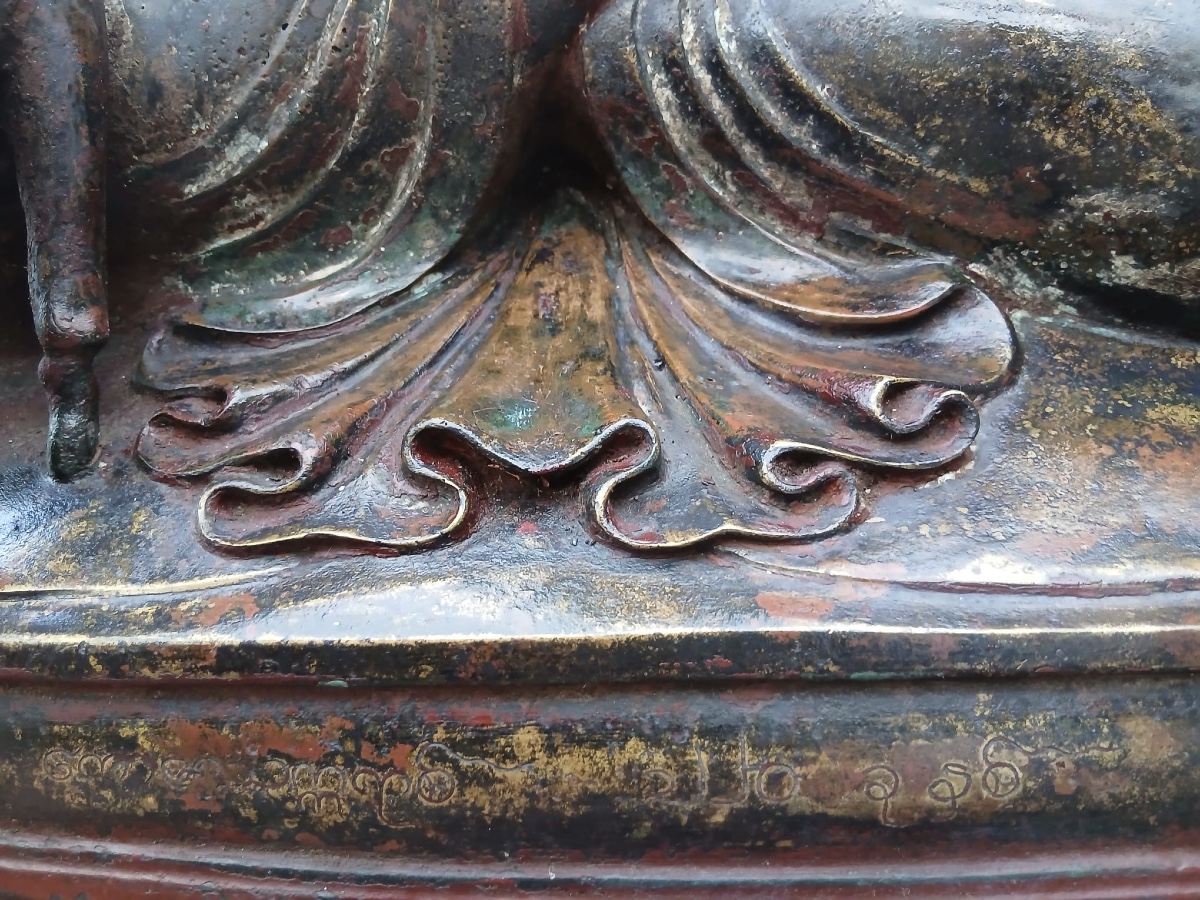
This finely cast image represents Shakyamuni Buddha and is dated 1858 on the base, placing it in the early phase of the Mandalay period (1853–1885), during the reign of King Mindon Min.
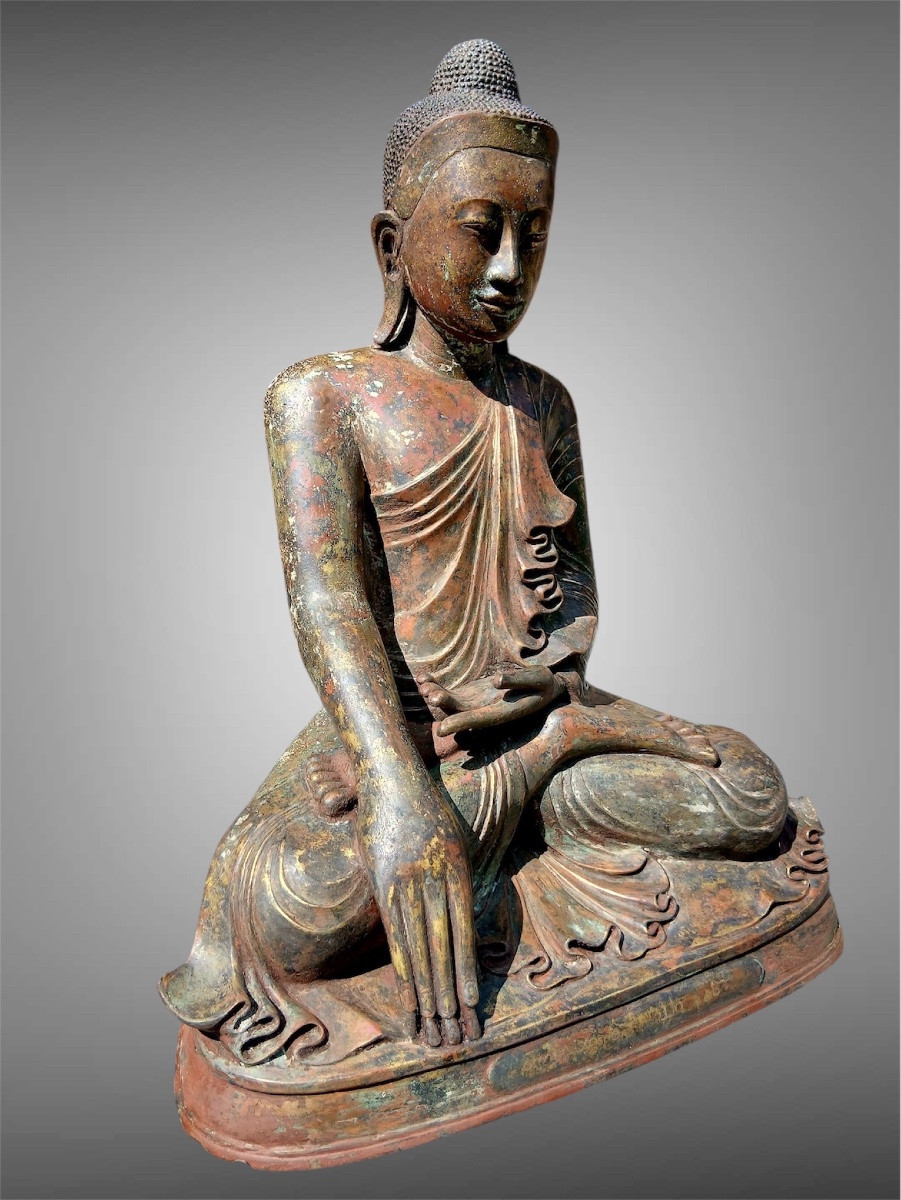
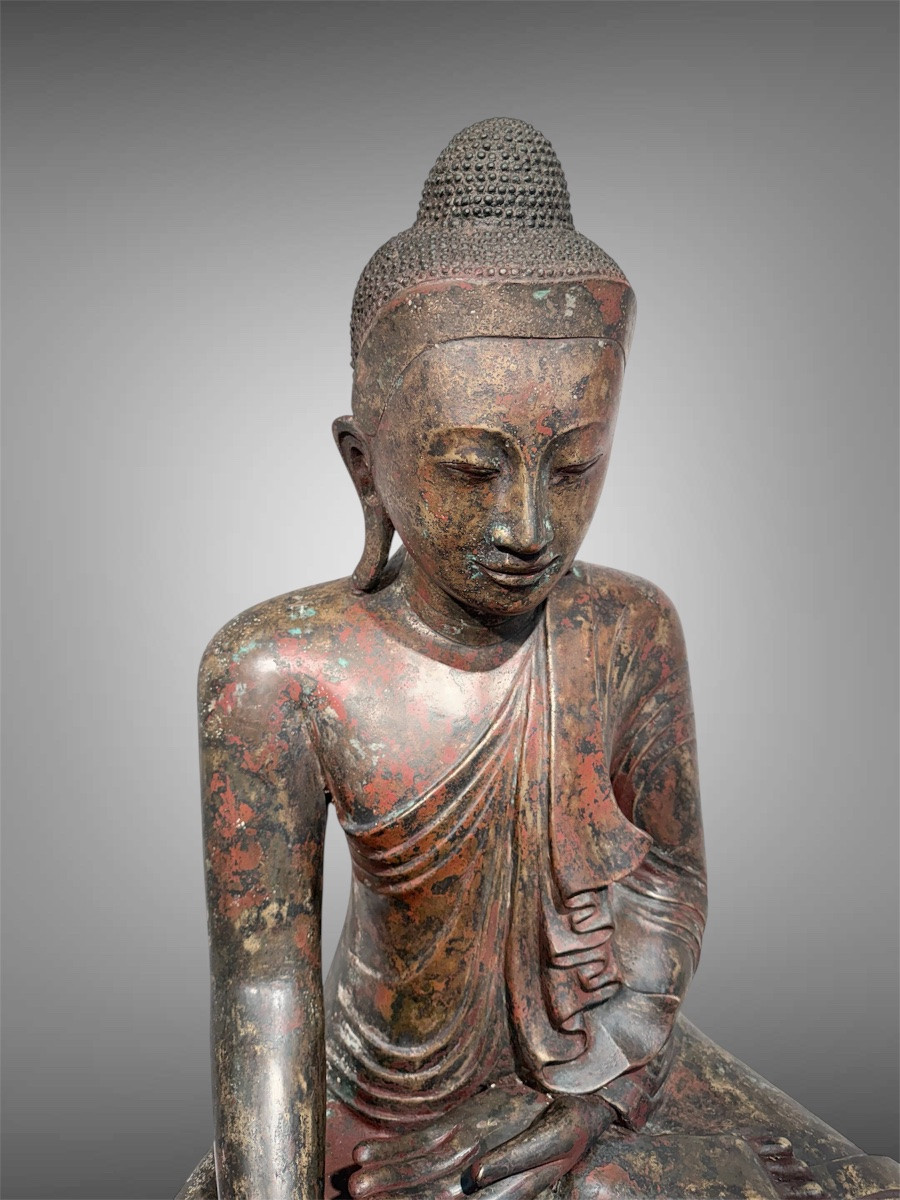
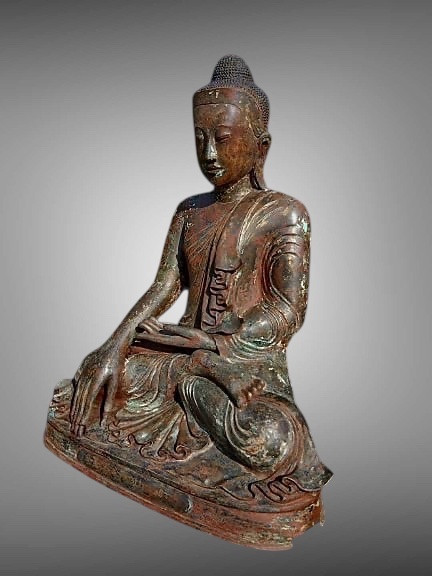
The sculpture is executed in the classical Mandalay style, characterized by a refined naturalism in the treatment of the facial features and monastic robes — an artistic development that emerged in the late eighteenth century and reached maturity in Mandalay. The Buddha is depicted at the moment of Enlightenment beneath the Bodhi Tree, seated in bhumisparsa mudra, the “earth-touching gesture,” symbolizing the calling of the Earth to witness his supreme virtue and spiritual attainment.
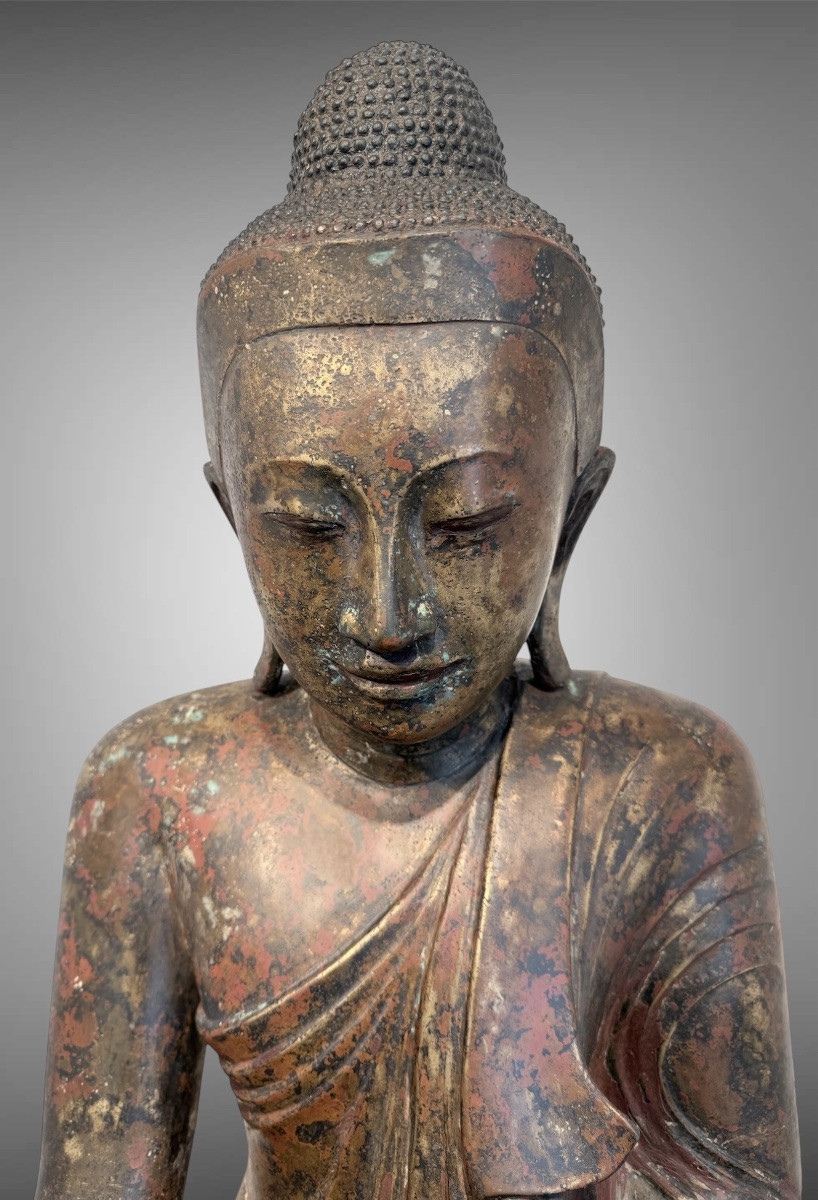
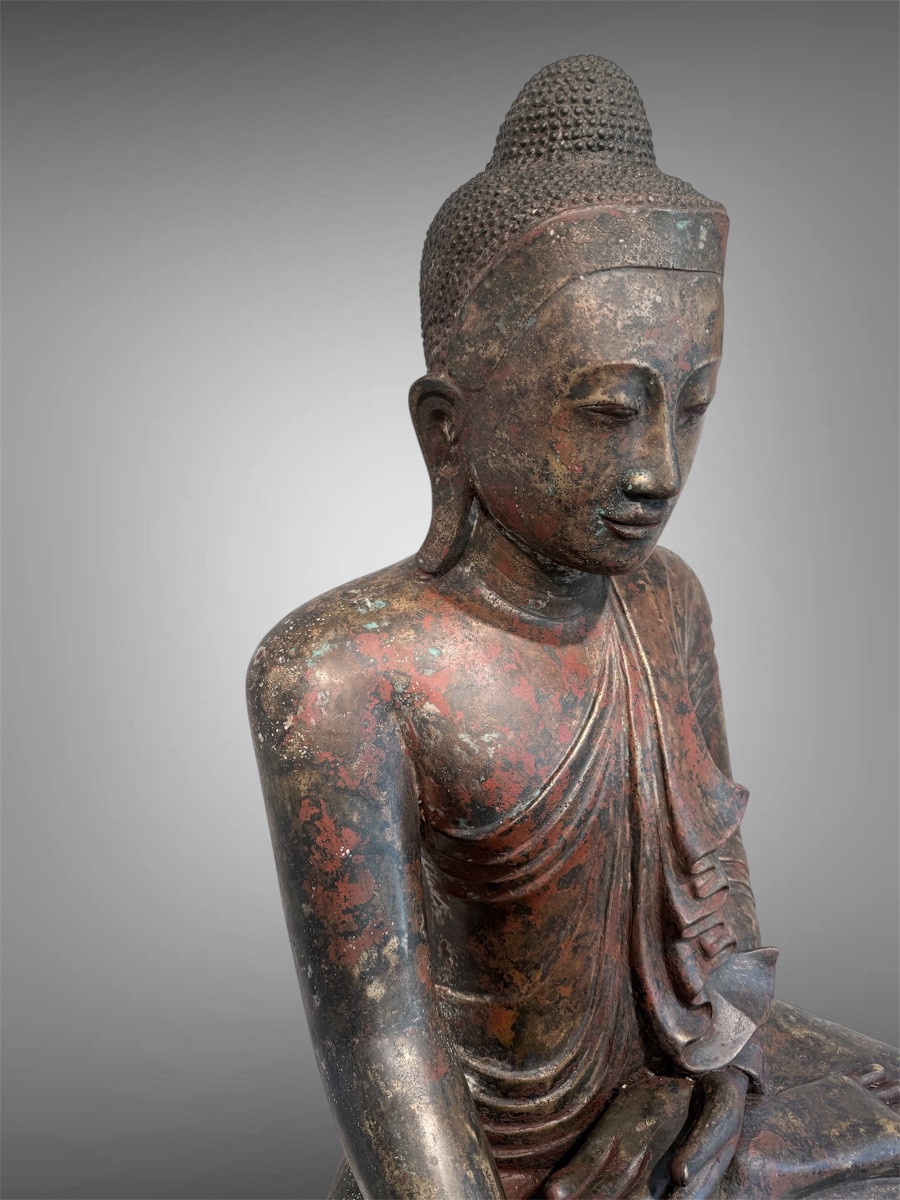
The expression conveys serenity and benevolence: the face is oval, softly modeled, with half-closed eyes, an aquiline nose, and delicately defined lips forming a subtle smile. The elongated earlobes extend gracefully toward the shoulders, in keeping with canonical iconography.
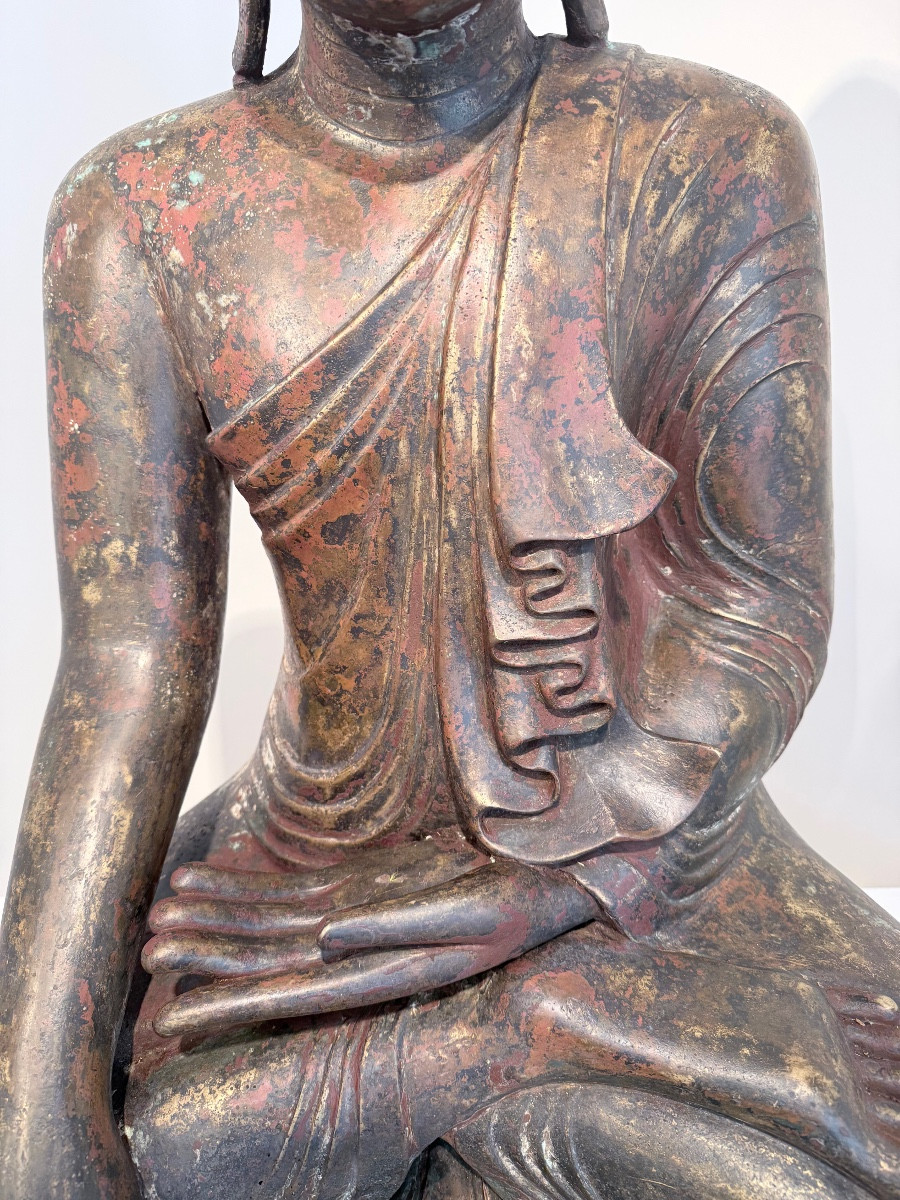
The figure is entirely enveloped in a monastic outer robe (uttarasanga) worn in the covered mode. The drapery is rendered in richly cascading, overlapping folds terminating in elegantly flared hems — a hallmark of Mandalay craftsmanship and its emphasis on realism in textile treatment. This mode of robe-wearing reflects the traditional manner adopted by monks in Myanmar when leaving the monastery for alms rounds or ceremonial occasions.
Mandalay, founded as the royal capital by King Mindon Min in 1857 after the transfer from Amarapura, was conceived as the spiritual and political center of Buddhist Myanmar. According to tradition, the historical Buddha (Gautama Buddha) is said to have visited Mandalay Hill with his disciple Ananda and foretold the future establishment of a great Buddhist metropolis on the plain below. The city itself was laid out in the symbolic geometric form of a mandala, reinforcing its cosmological significance.
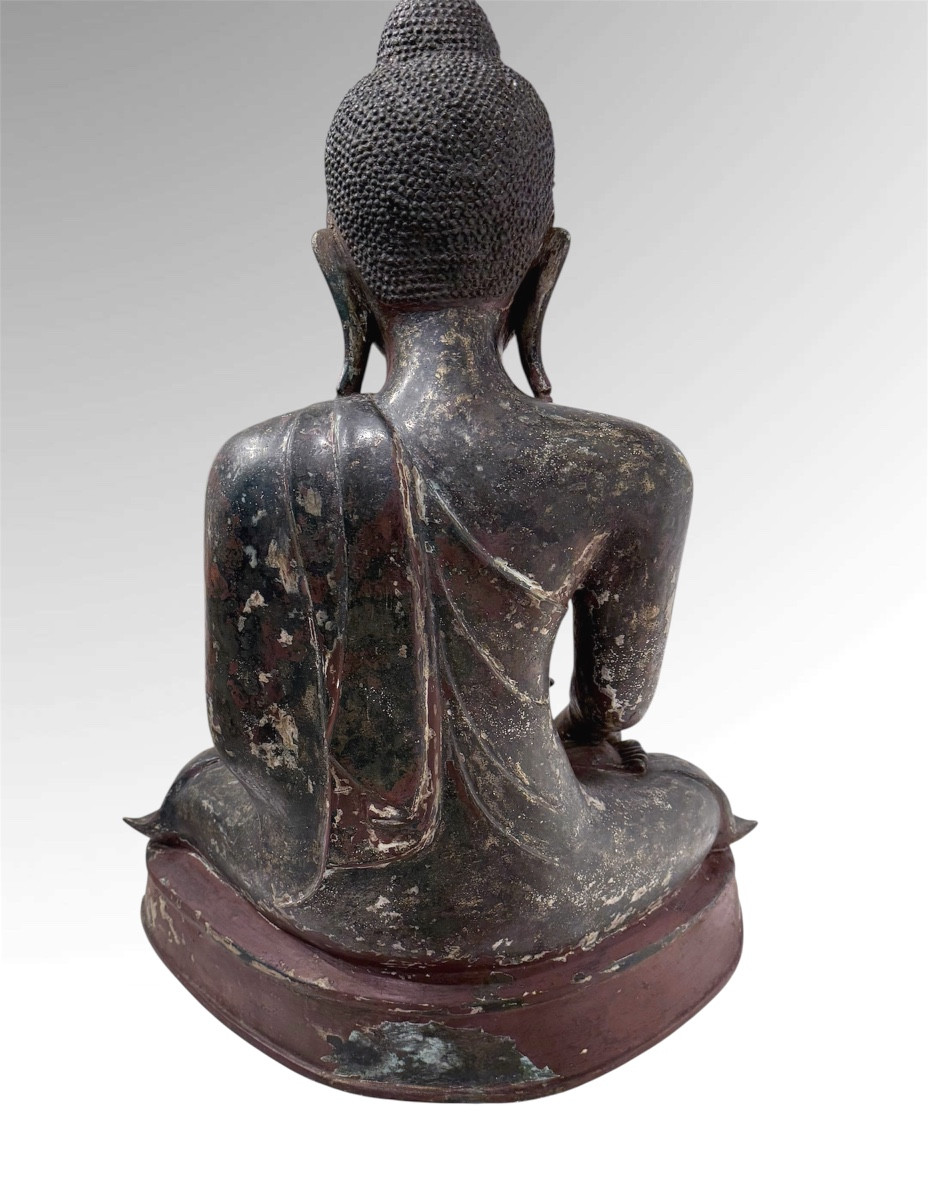
Mandalay art is regarded as the classical and “pure” artistic expression of Myanmar. Techniques were highly advanced for their time, and the iconography sophisticated. While many Mandalay images were lacquered, gilded, and embellished with glass inlays — sometimes crowned and adorned in royal regalia — this example is cast in bronze and notably lacks a halo, a feature sometimes associated with Arakan influence.
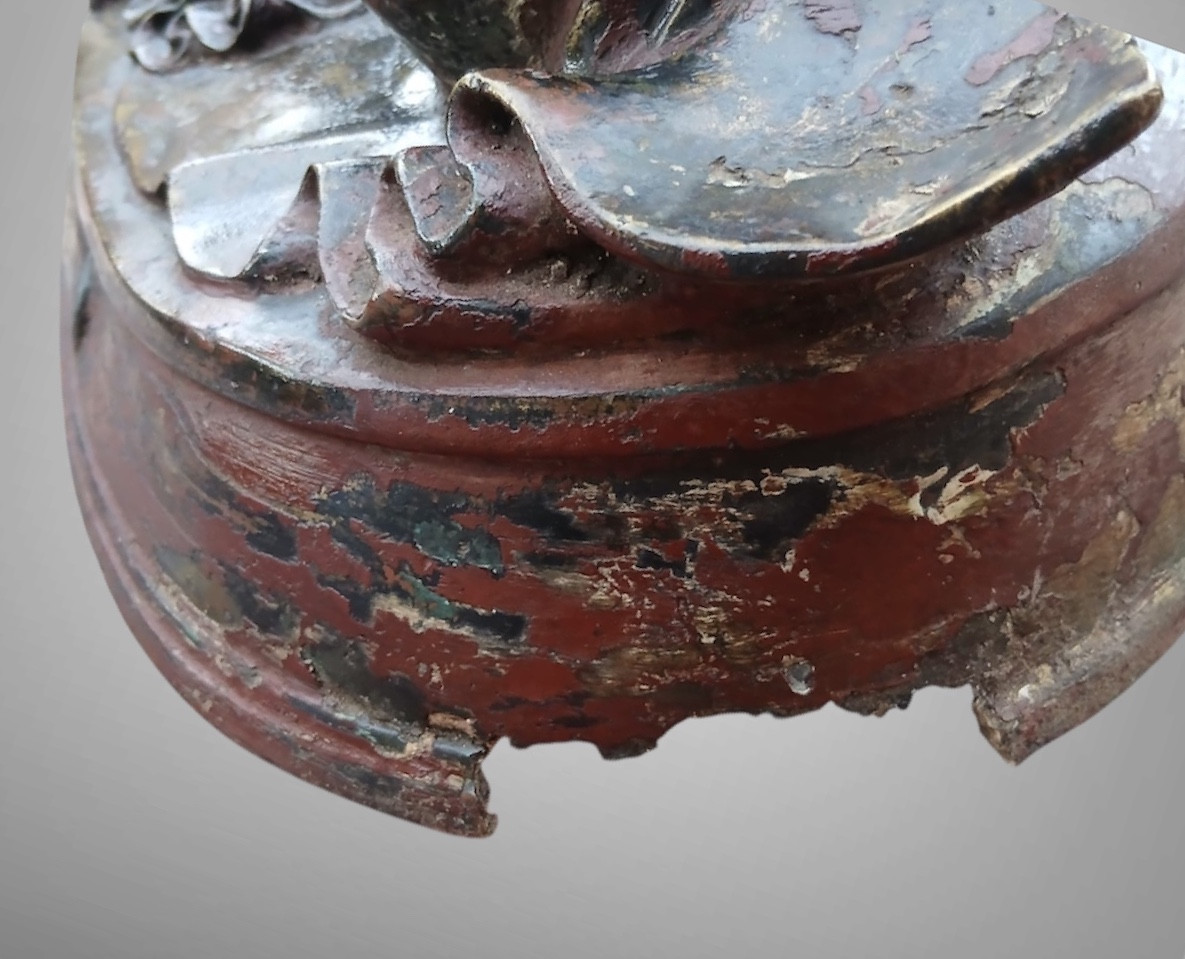
Visible layers of lacquer remain present, attesting to devotional use and ritual maintenance over time. A minor loss is visible beneath the base, consistent with age and handling.
This sculpture stands as an important example of early Mandalay bronze casting, embodying both the spiritual gravitas and refined aesthetic sensibility that distinguish mid-19th century Burmese Buddhist art.
Period: 19th century
Style: Asian art
Condition: Condition of use
Material: Bronze
Height: 89 cm
Reference (ID): 1708921
Availability: In stock