

Fernand Laval 1886–1966 - Le Lapin Agile, Rue Des Saules And The Fortifications - Oil On Canvas, Signed And Dated
Artist: Fernand Laval
Fernand Laval (1886–1966)
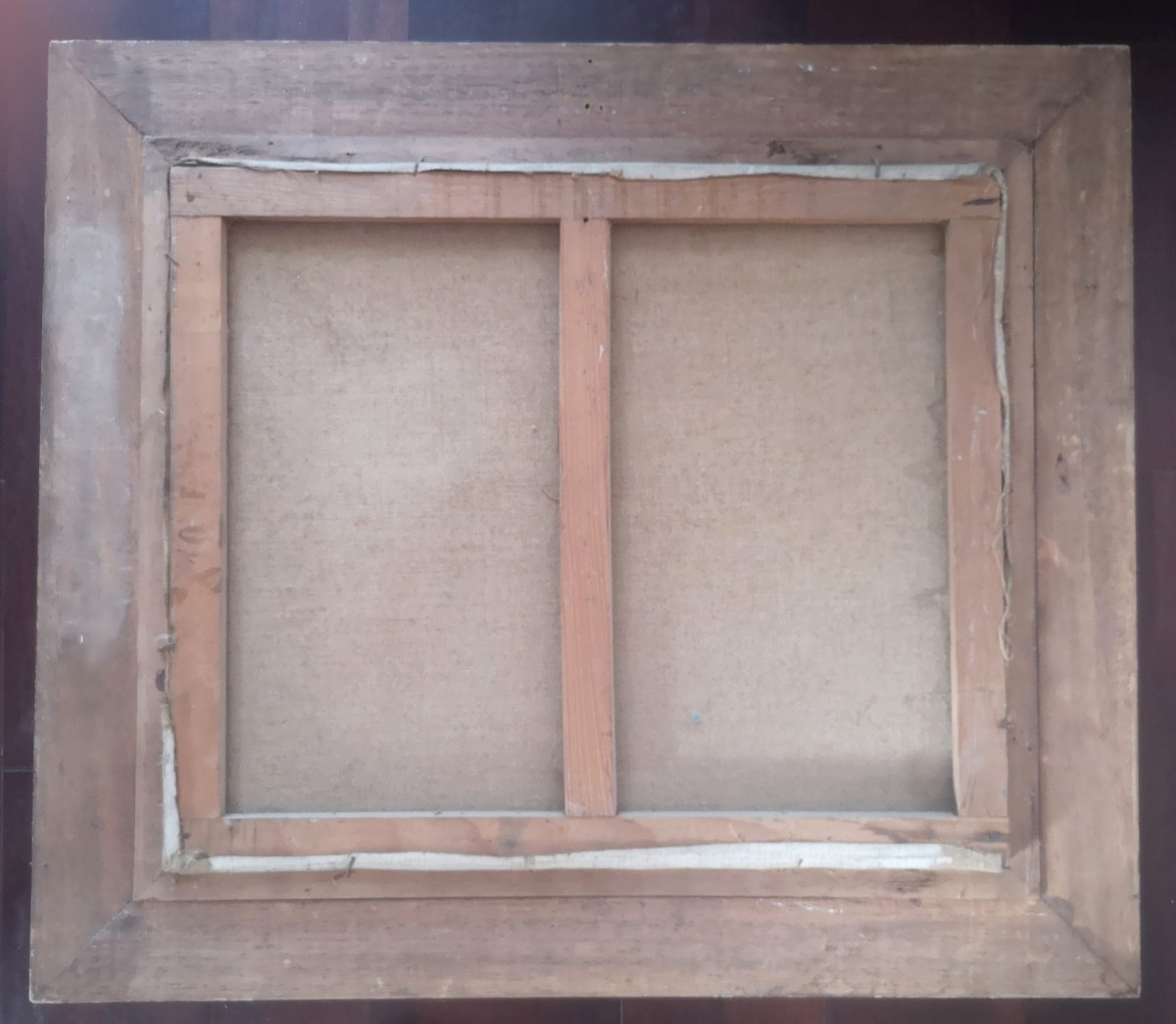
Oil on canvas, dimensions 46 x 55 cm
Le Lapin Agile Rue des Saules and the Fortifications
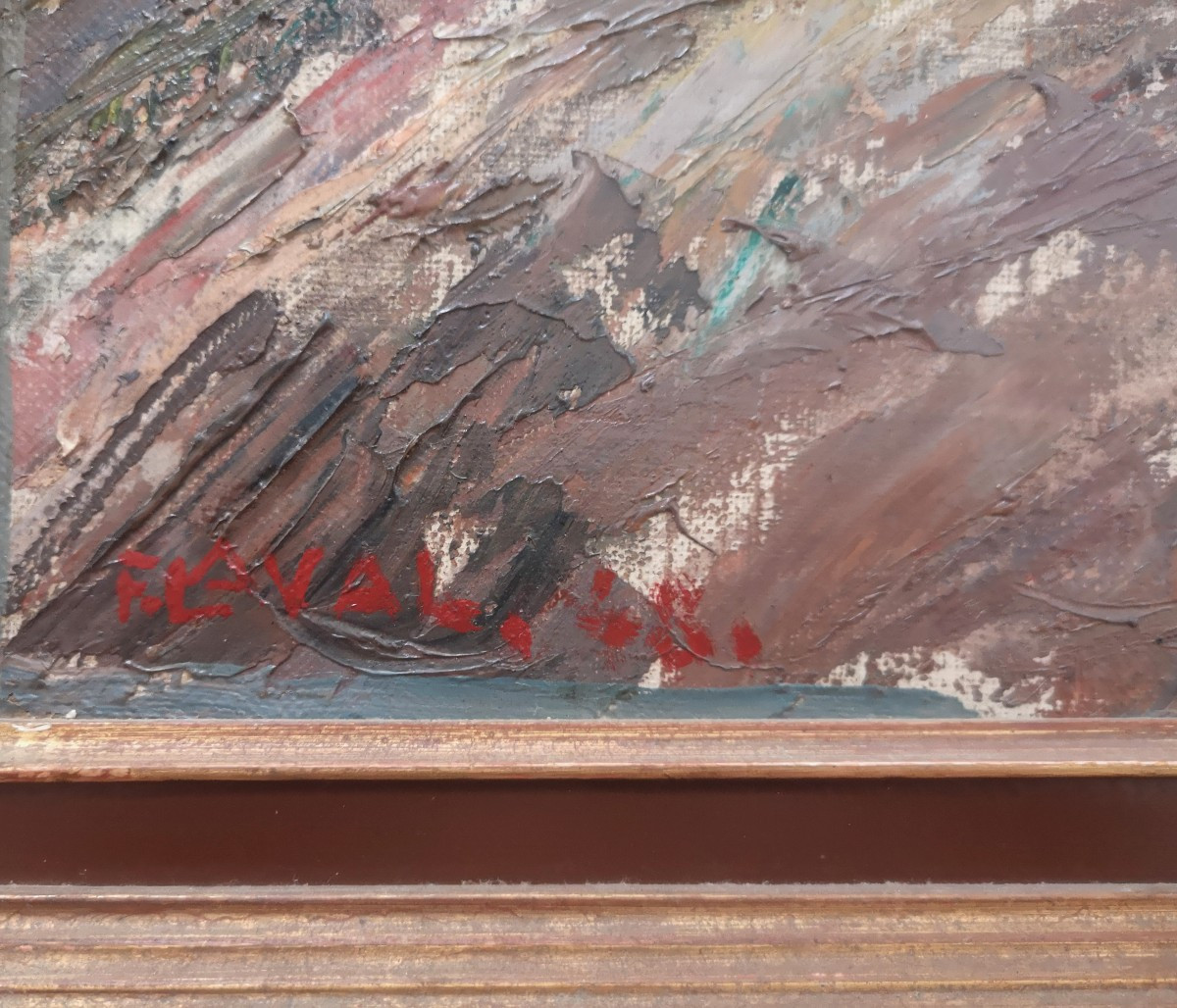
Signed lower left
Dated 48 (for 1948)
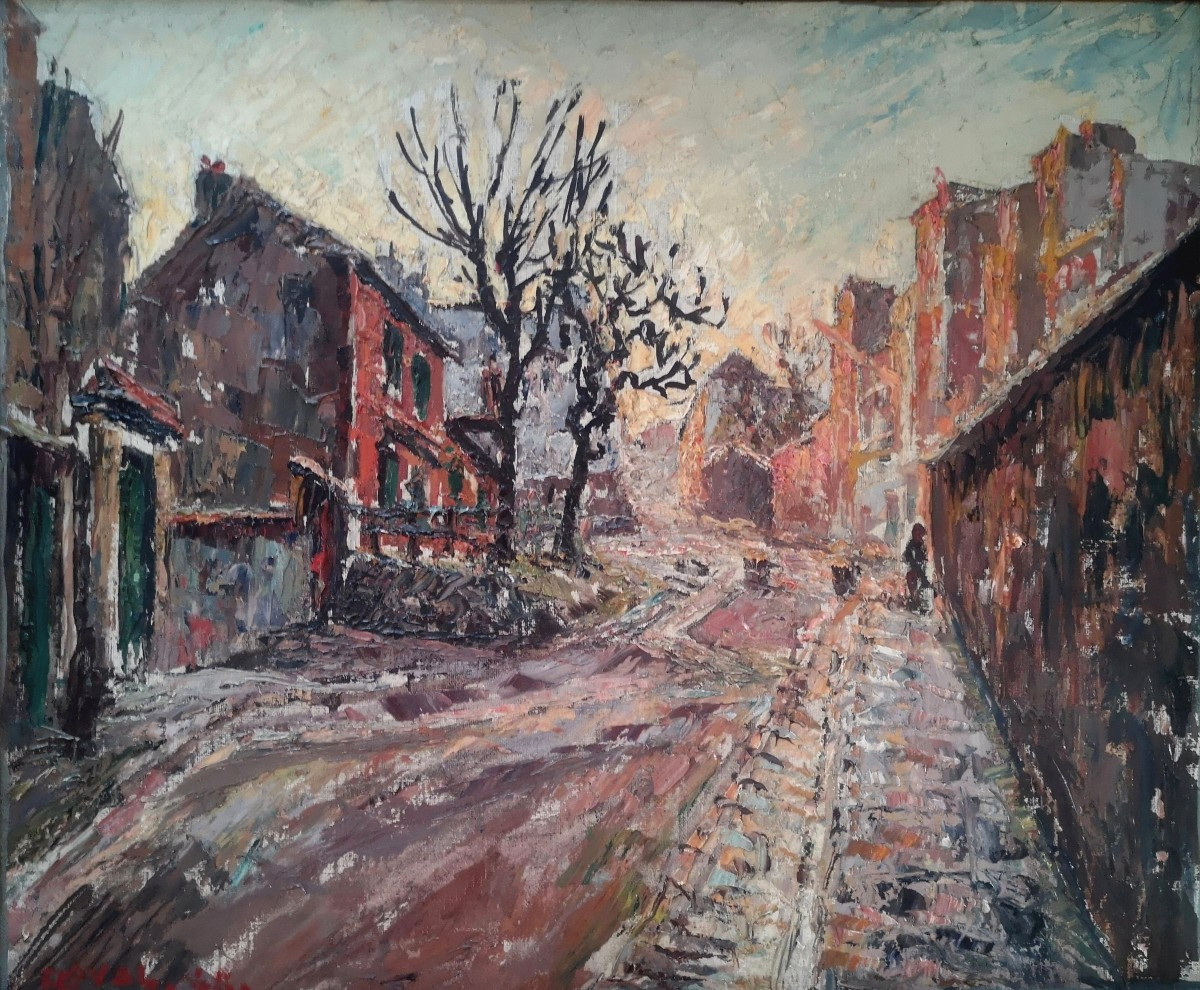
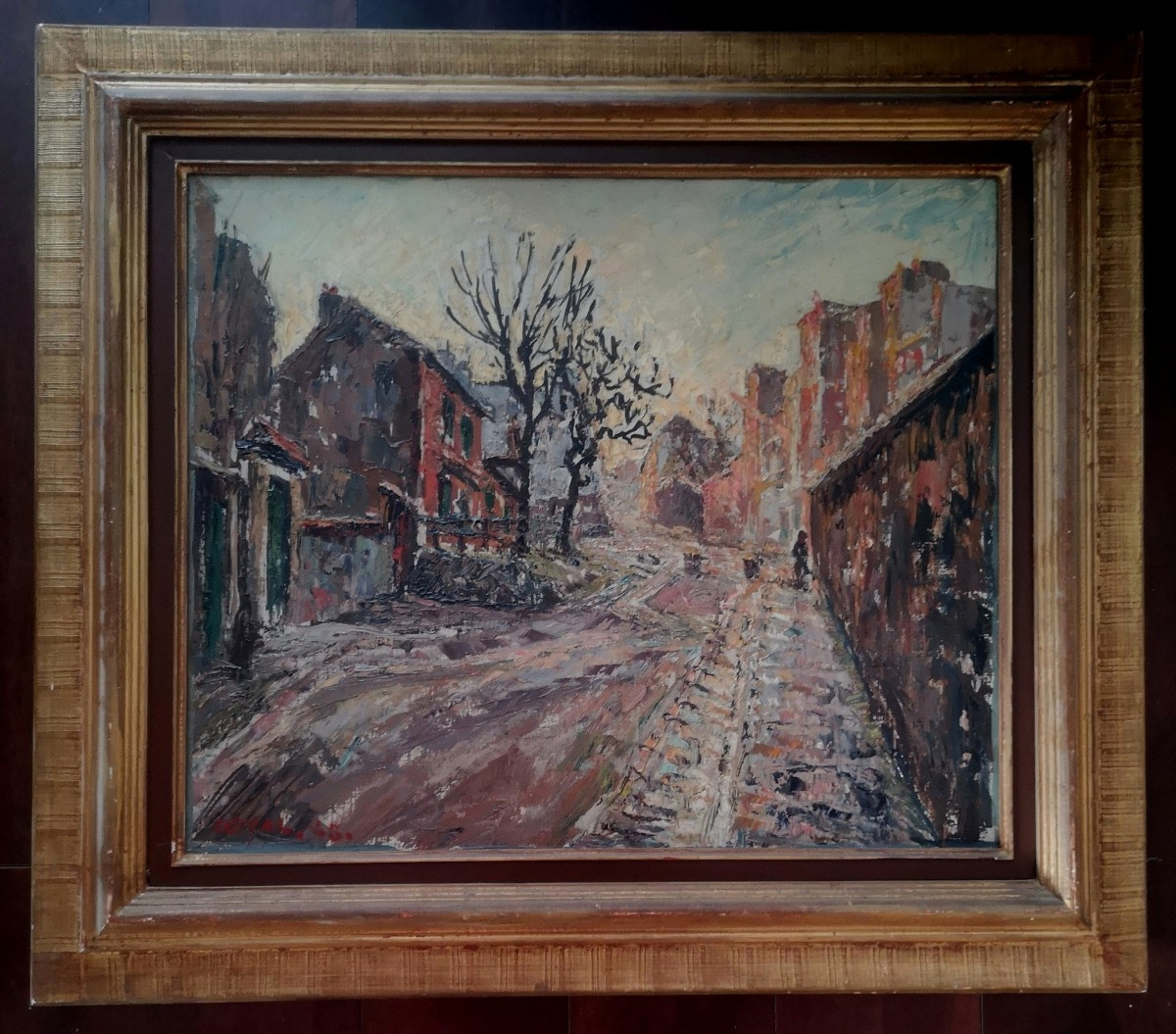
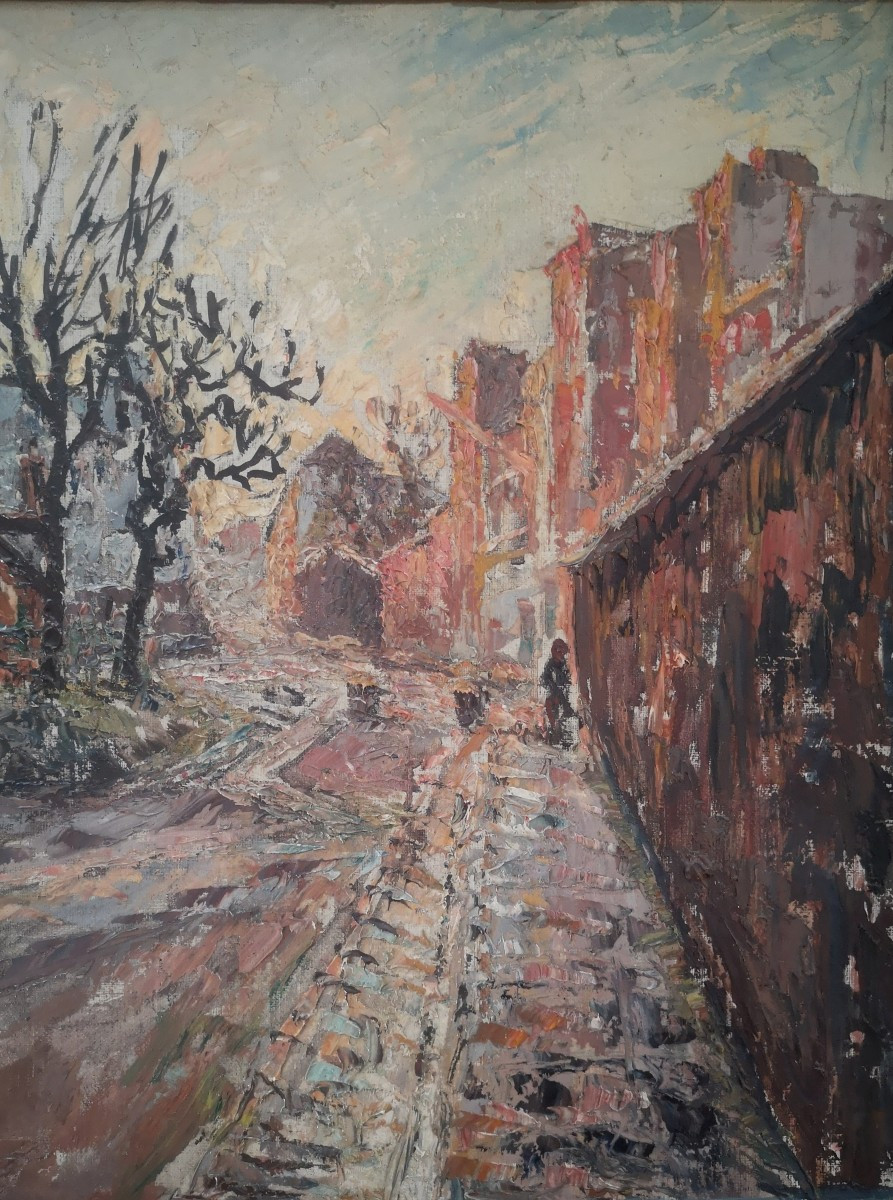
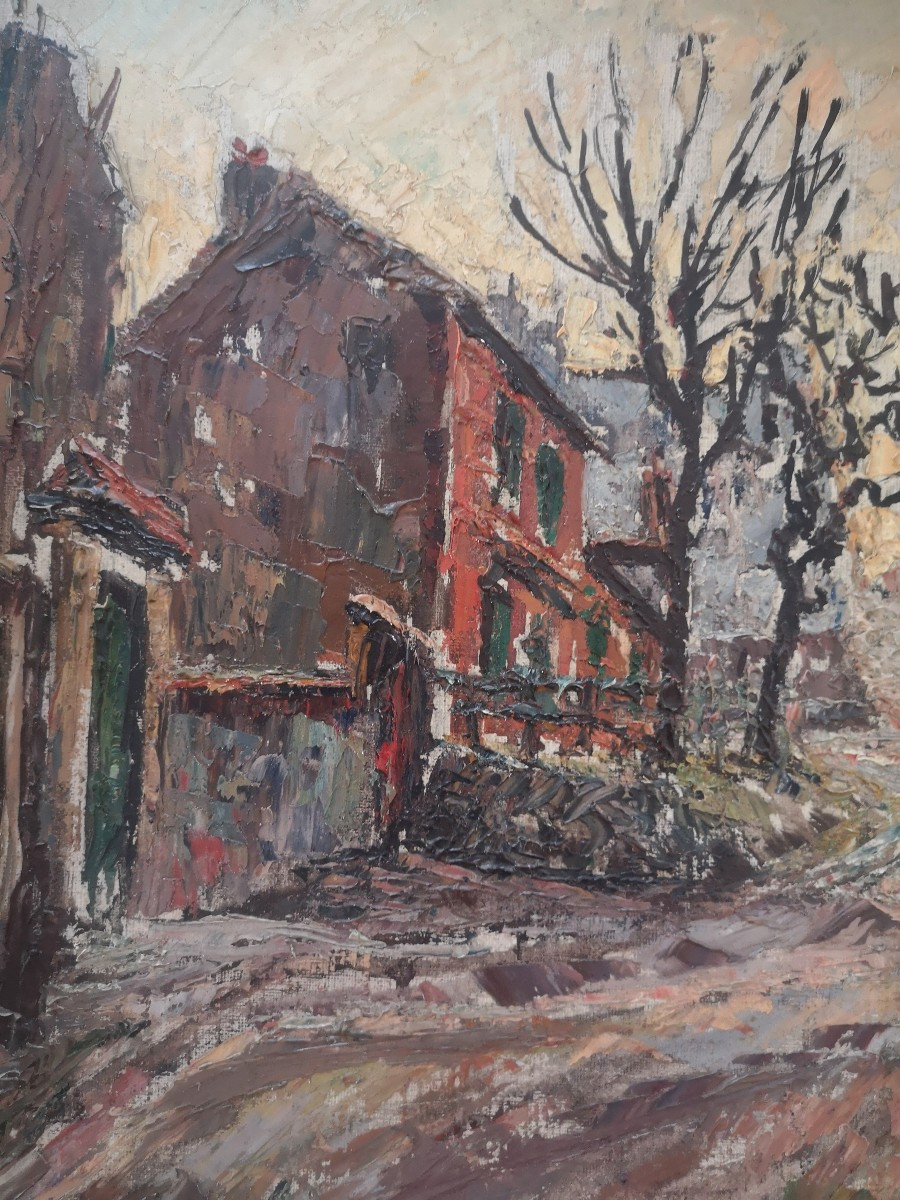
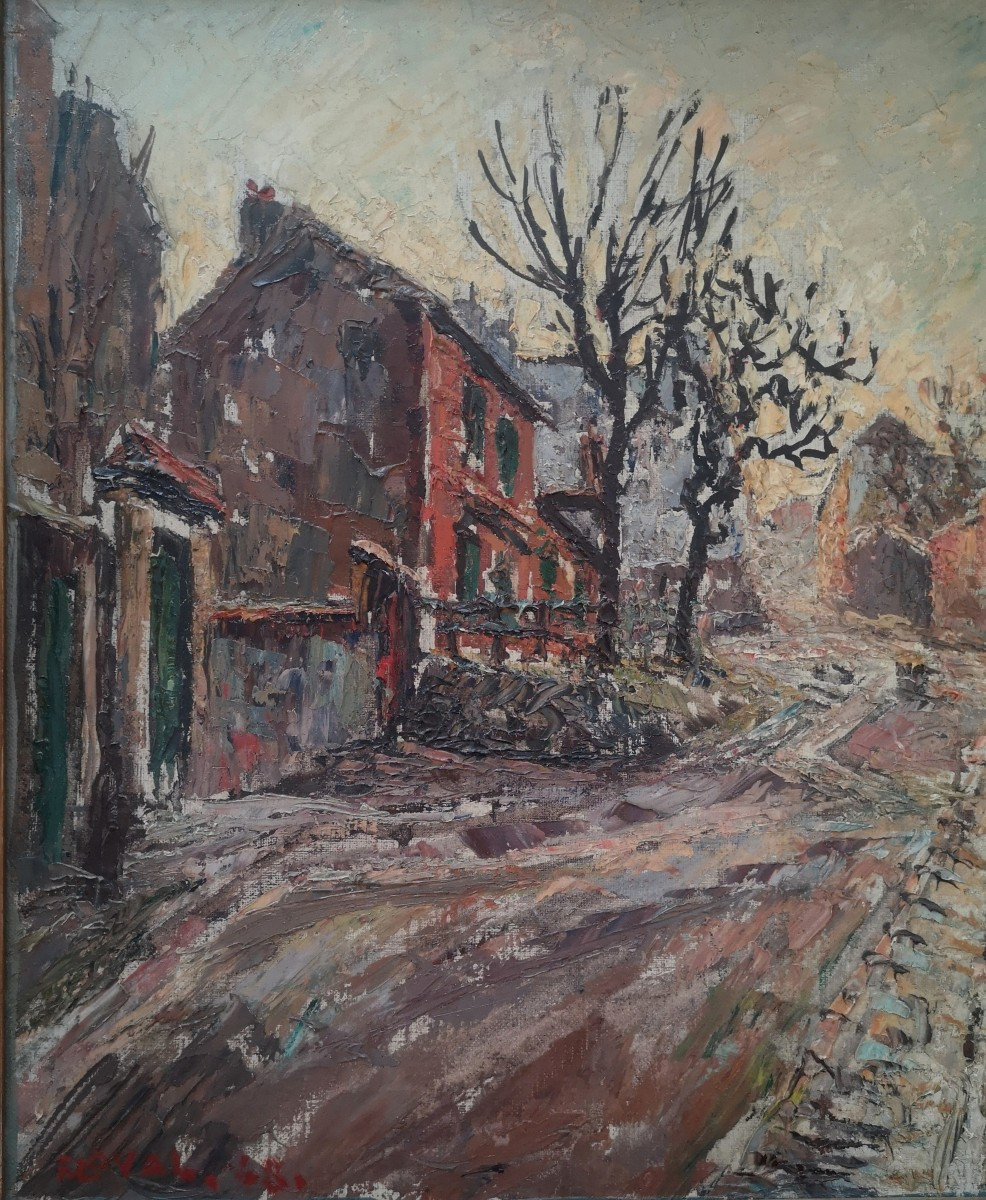
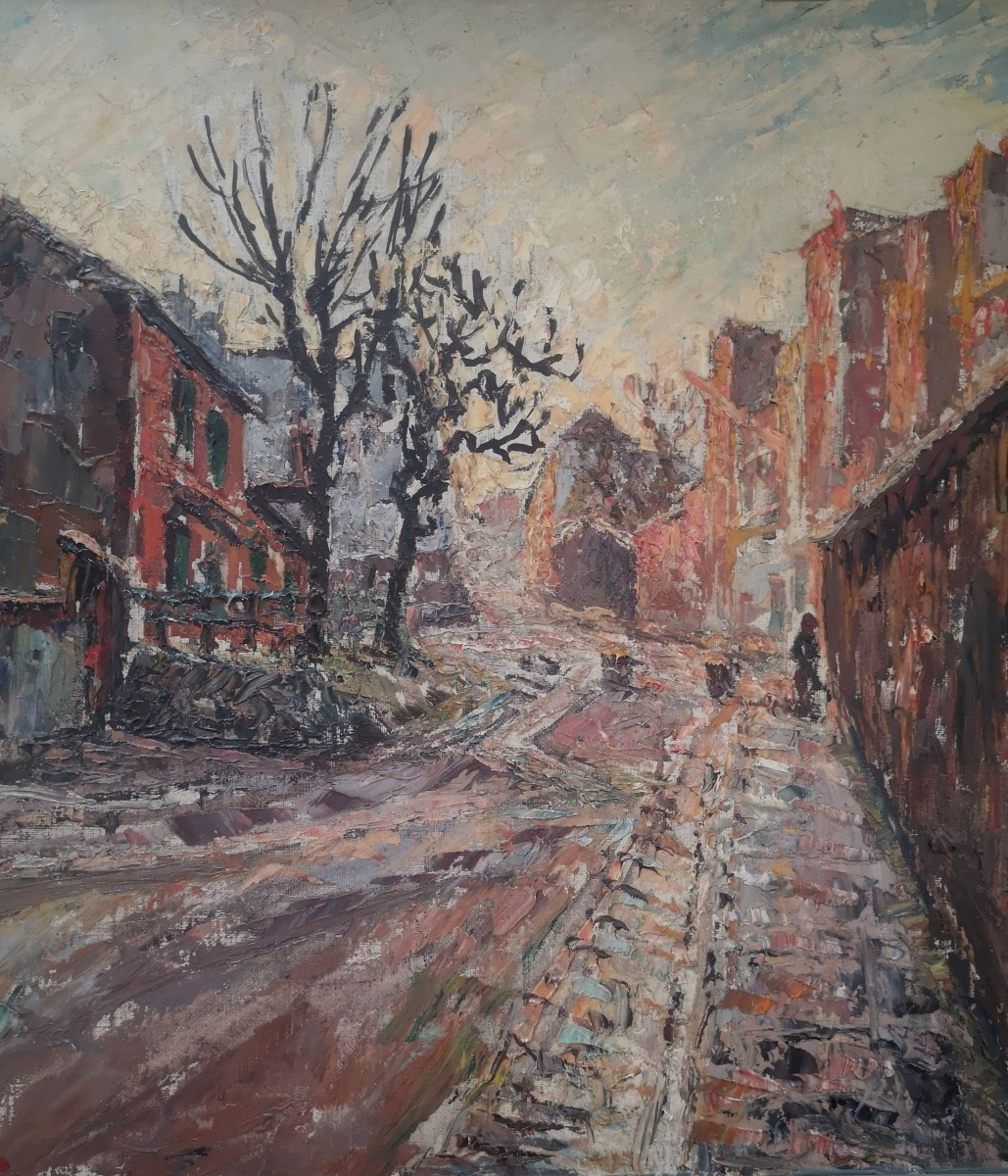
This view of the Rue des Saules depicts one of the major landmarks of Montmartre's history: the red façade with green shutters of the cabaret 'Le Lapin Agile' – roughly centered on the canvas – emblematic of early 20th-century Parisian bohemia.
Unlike later folklorized representations, Laval here portrays a Montmartre still peripheral, marked by the presence of the old fortifications and a fragile urbanity, in the immediate post-war period.
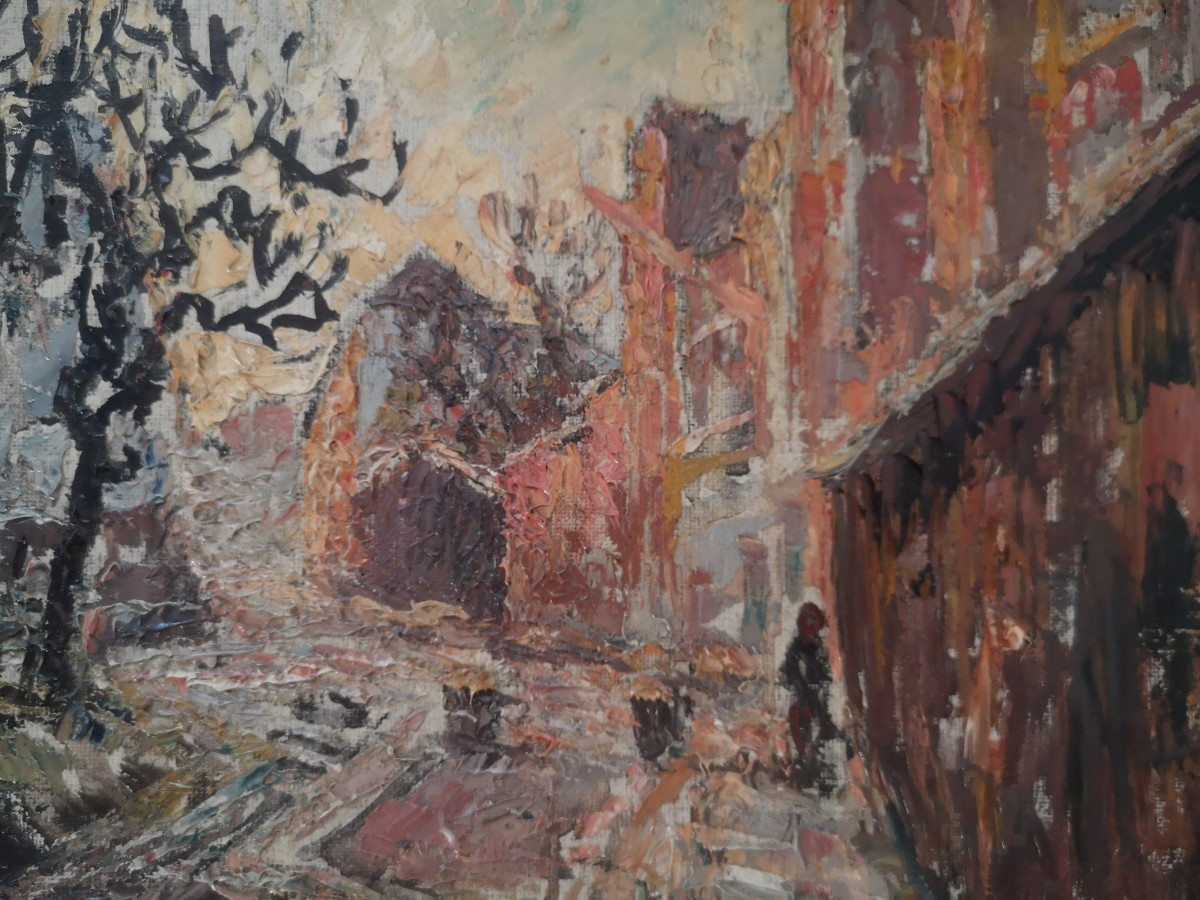
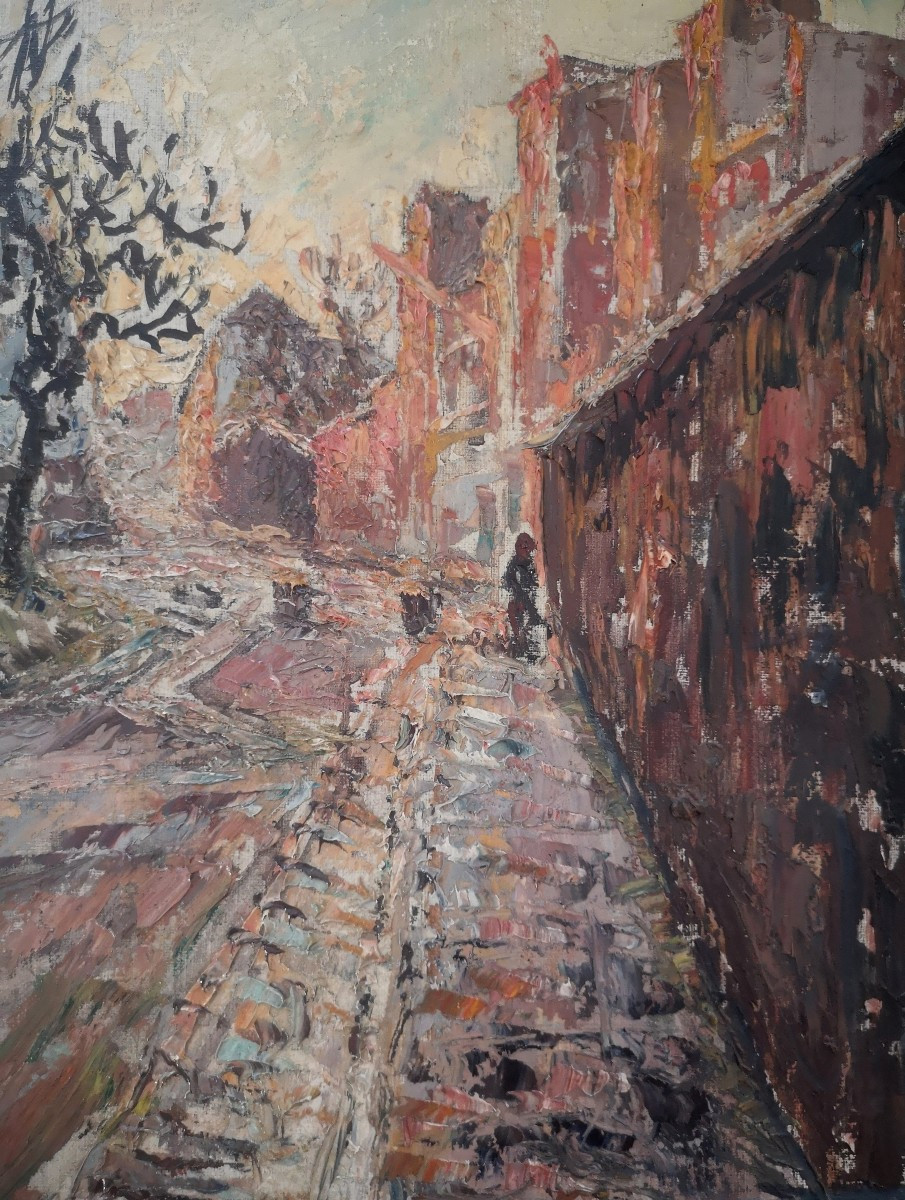
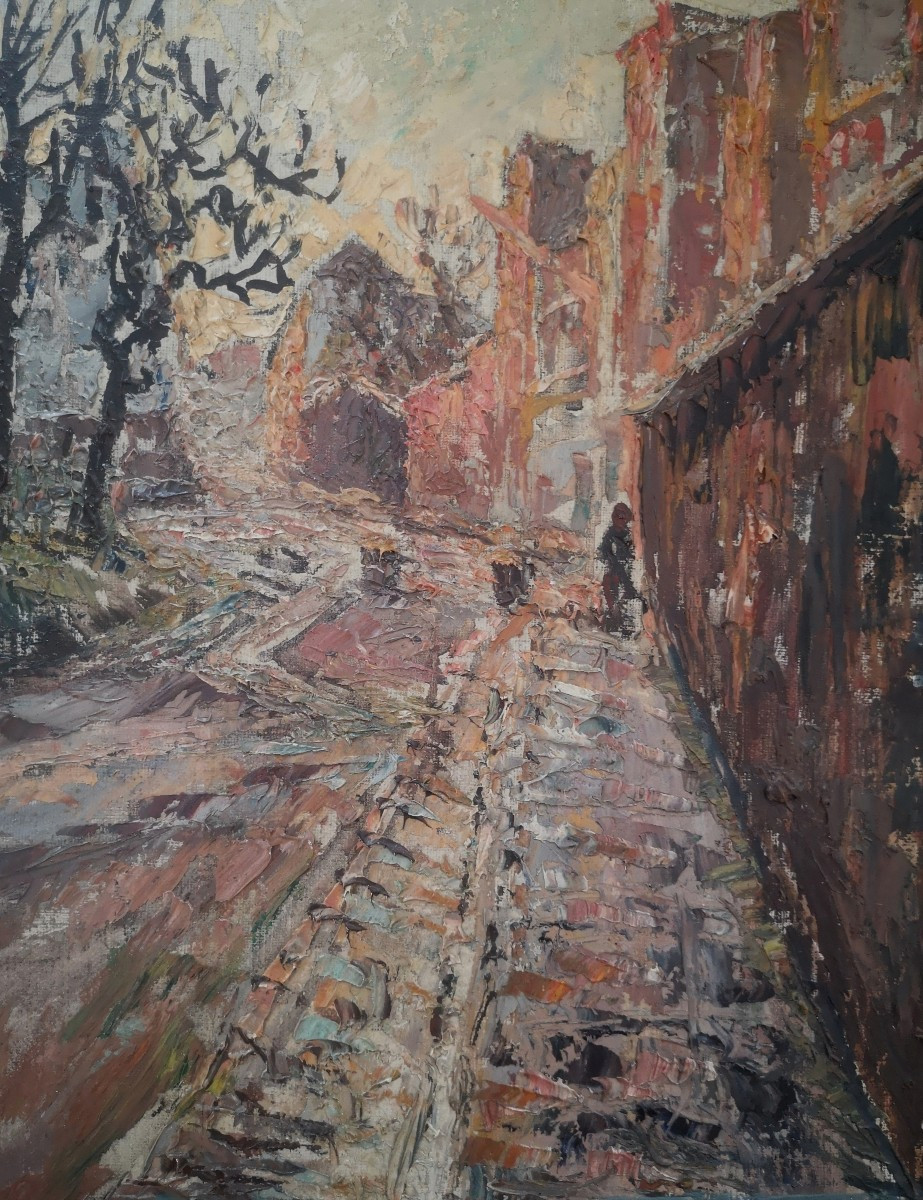
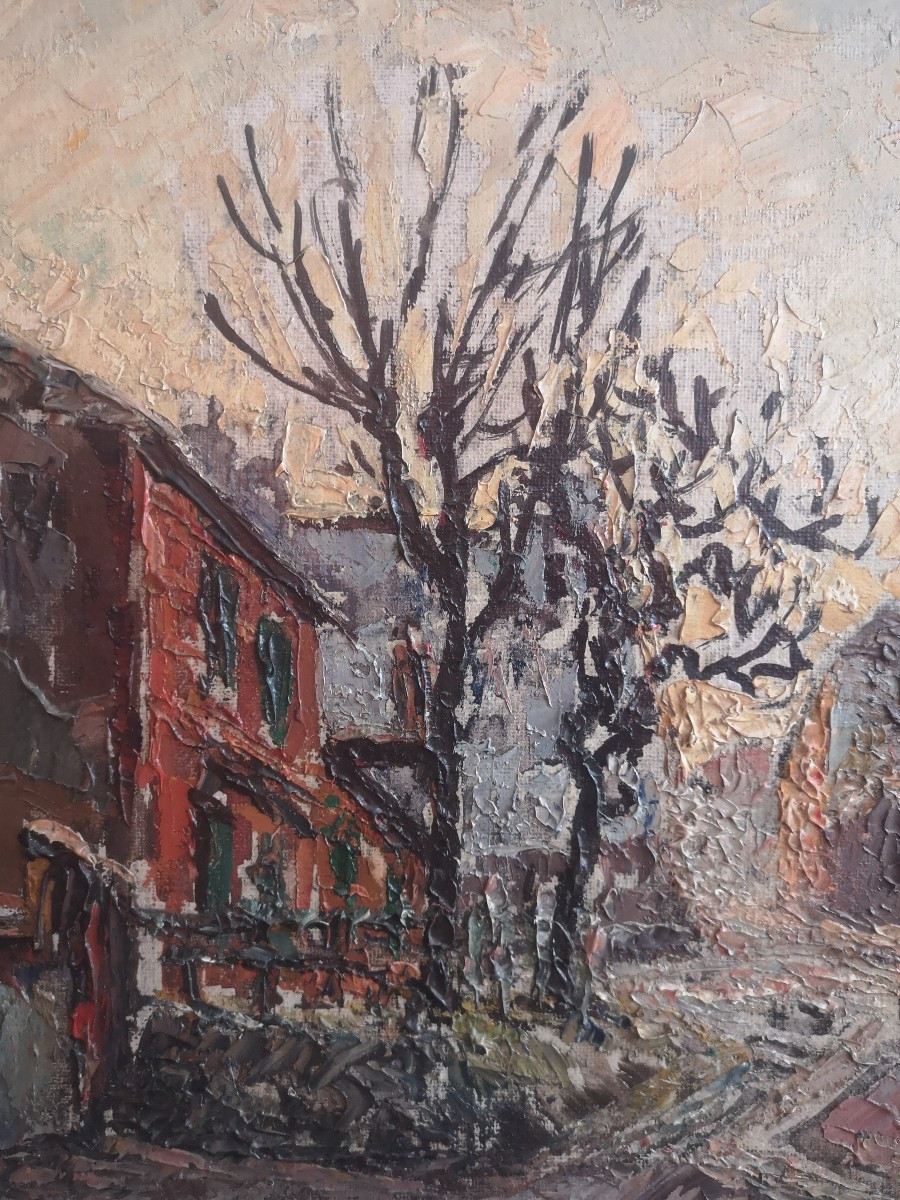
The sloping, uneven, almost eroded road occupies the foreground; the thick, matte façades are rendered with dense impasto. Two bare trees structure the vertical composition and accentuate the wintry tension of the scene. An isolated figure runs along the wall, discreet, almost absorbed by the paint.
This minimal presence humanizes the space without breaking its gravity.
Artistic Context:
Arriving in Paris in 1912, Fernand Laval frequented Montmartre and shared with Maurice Utrillo a deep attachment to the urban landscapes of the Butte. However, where Utrillo often favored chalky tones and whitewashed facades, Laval developed a more earthy and thicker texture, giving his views an almost tactile density. His work belongs to the constellation of the School of Paris, while maintaining a constant fidelity to working-class neighborhoods and the urban margins.
This canvas does not celebrate Montmartre; it observes it. The legendary cabaret LE LAPIN AGILE is not isolated as a monument. It is integrated into its modest, almost rugged environment.
Laval captures a moment of transition: that of a Montmartre still village-like, before its gradual transformation into a tourist and heritage symbol. The one tourists hoped for, as they gathered together from all over the world, becoming mere cash cows in a Disneyfied Montmartre.
The palette—ochres, browns, muted reds—and the wintry treatment of the sky convey an atmosphere of withdrawal, even meditation. The artist seems less interested in the anecdote than in the silent permanence of the place.
This work has a twofold interest: Iconographic, through the identifiable representation of the Lapin Agile in its original context. Historical, as a testament to a Montmartre in flux at the end of the 1940s. It contributes to a pictorial memory of the Butte, less spectacular than that popularized by the market, but essential to understanding its cultural identity.
If Laval were to enter a museum, it would not be as an epigone of Utrillo, but as a sincere witness to a Montmartre experienced from within.
Oil on canvas, dimensions 46 x 55 cm
Le Lapin Agile Rue des Saules and the Fortifications
Signed lower left
Dated 48 (for 1948)
This view of the Rue des Saules depicts one of the major landmarks of Montmartre's history: the red façade with green shutters of the cabaret 'Le Lapin Agile' – roughly centered on the canvas – emblematic of early 20th-century Parisian bohemia.
Unlike later folklorized representations, Laval here portrays a Montmartre still peripheral, marked by the presence of the old fortifications and a fragile urbanity, in the immediate post-war period.
The sloping, uneven, almost eroded road occupies the foreground; the thick, matte façades are rendered with dense impasto. Two bare trees structure the vertical composition and accentuate the wintry tension of the scene. An isolated figure runs along the wall, discreet, almost absorbed by the paint.
This minimal presence humanizes the space without breaking its gravity.
Artistic Context:
Arriving in Paris in 1912, Fernand Laval frequented Montmartre and shared with Maurice Utrillo a deep attachment to the urban landscapes of the Butte. However, where Utrillo often favored chalky tones and whitewashed facades, Laval developed a more earthy and thicker texture, giving his views an almost tactile density. His work belongs to the constellation of the School of Paris, while maintaining a constant fidelity to working-class neighborhoods and the urban margins.
This canvas does not celebrate Montmartre; it observes it. The legendary cabaret LE LAPIN AGILE is not isolated as a monument. It is integrated into its modest, almost rugged environment.
Laval captures a moment of transition: that of a Montmartre still village-like, before its gradual transformation into a tourist and heritage symbol. The one tourists hoped for, as they gathered together from all over the world, becoming mere cash cows in a Disneyfied Montmartre.
The palette—ochres, browns, muted reds—and the wintry treatment of the sky convey an atmosphere of withdrawal, even meditation. The artist seems less interested in the anecdote than in the silent permanence of the place.
This work has a twofold interest: Iconographic, through the identifiable representation of the Lapin Agile in its original context. Historical, as a testament to a Montmartre in flux at the end of the 1940s. It contributes to a pictorial memory of the Butte, less spectacular than that popularized by the market, but essential to understanding its cultural identity.
If Laval were to enter a museum, it would not be as an epigone of Utrillo, but as a sincere witness to a Montmartre experienced from within.
1 100 €
Period: 20th century
Style: Other Style
Condition: Excellent condition
Material: Oil painting
Length: 73 cm
Height: 64 cm
Reference (ID): 1707772
Availability: In stock
Print