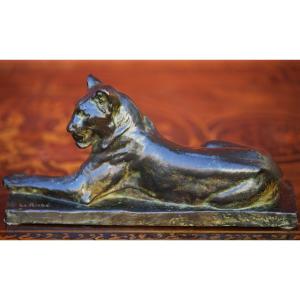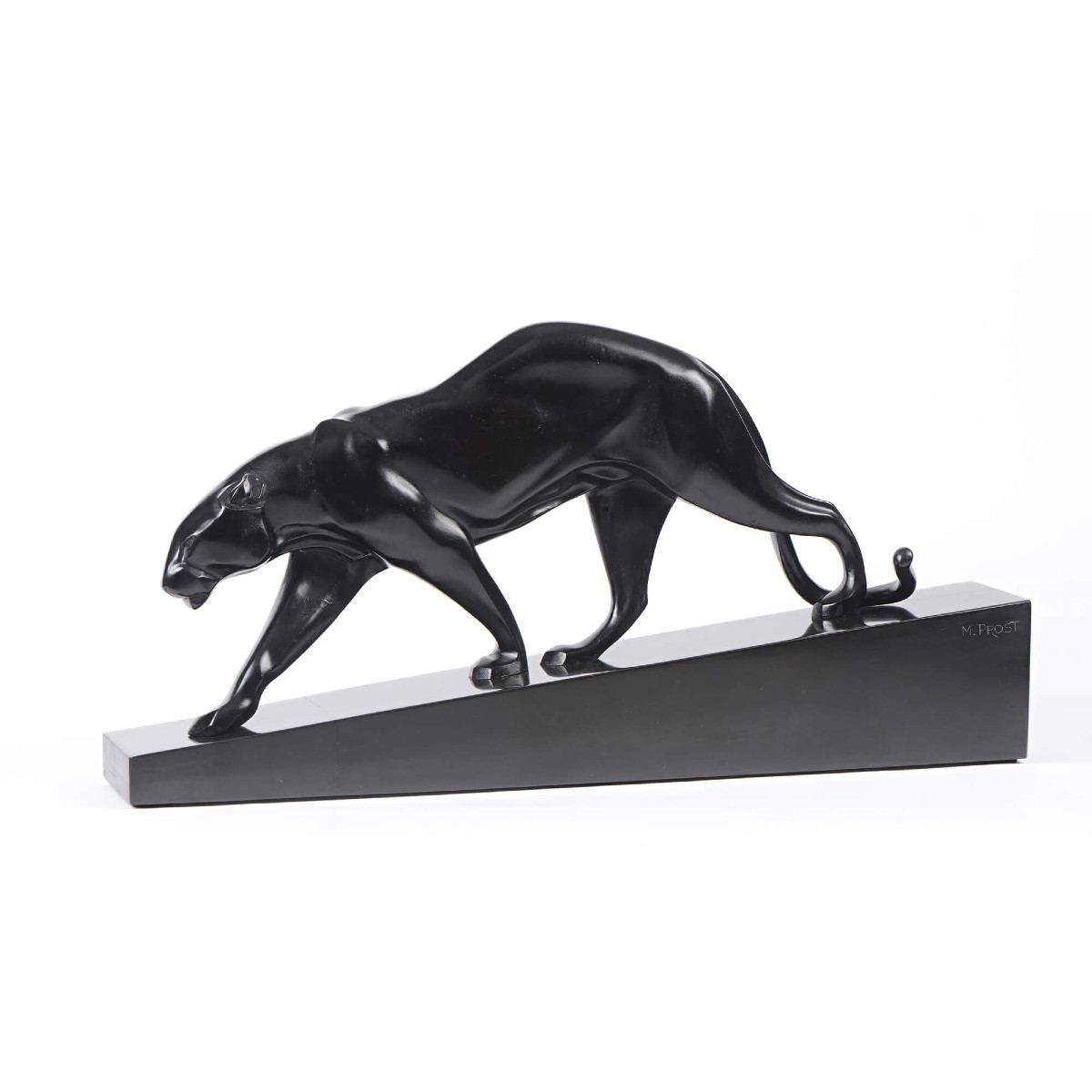

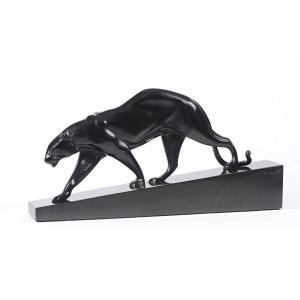


Maurice Prost (1894-1967) - "panther On The March"
Artist: Maurice Prost (1894-1967)
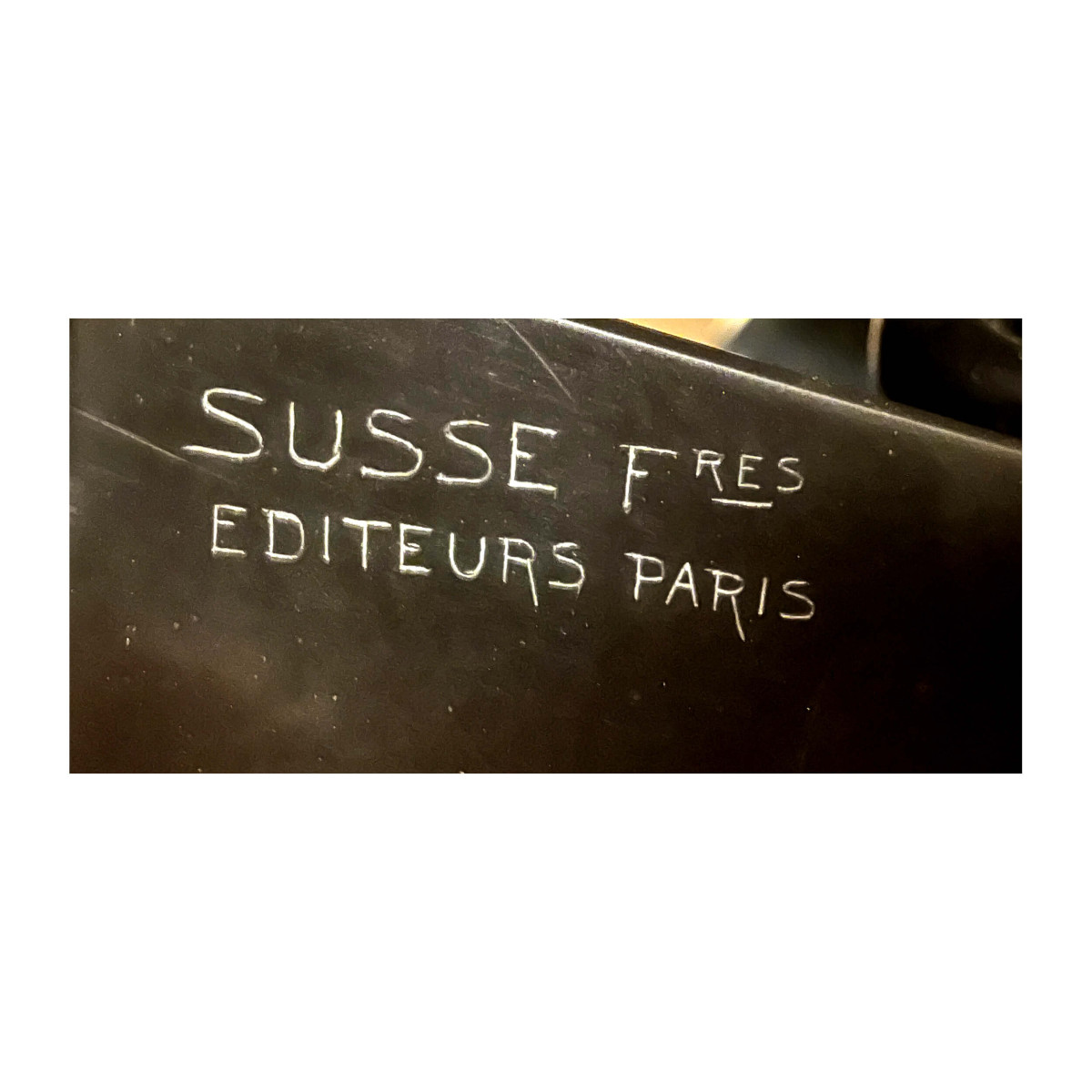
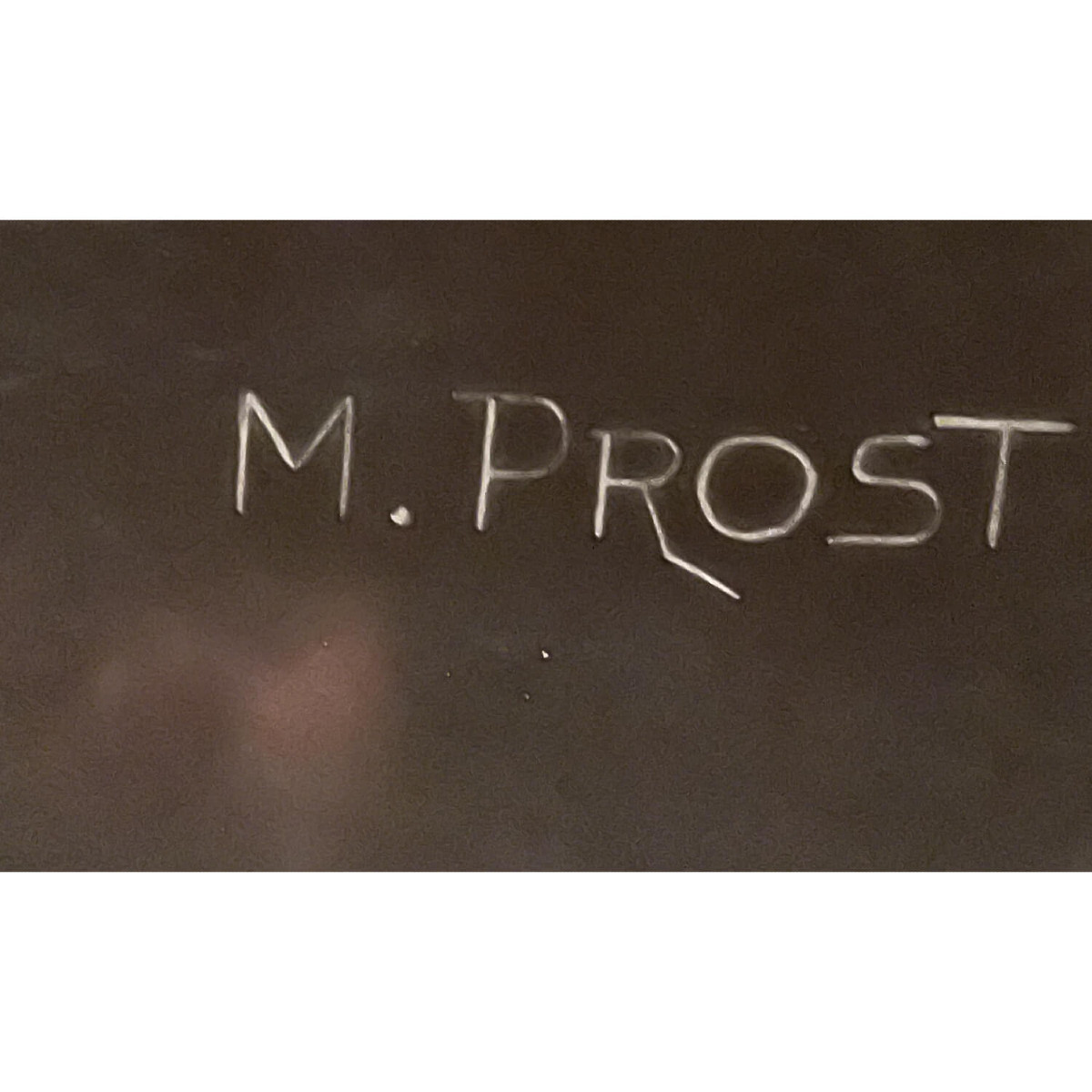
Bronze sculpture with a black patina. Signed "M. Prost" on the original Belgian black marble base. Lost-wax casting by the Susse Frères Foundry, Publisher, Paris. Foundry mark on the marble base on the back. Circa 1928/30. Dimensions with marble: Height: 31 cm, Length: 63 cm, Width: 10.5 cm. Bibliography: Model listed in the exhibition catalog "Maurice Prost – Sculptor and Animal Painter" – Brunoy Museum – April-September 2007, page 46, number 21. Paris-Manaus Gallery. Biography: Maurice Prost was born on May 13, 1894, in Paris. The family lived in the small furnished hotel managed by his parents, very close to Les Halles. He disliked school, preferring the bustle of the street, walks to the Abattoirs de la Villette, and Les Halles. Curious by nature, he took up drawing at a very young age and showed considerable talent. He studied under the sculptor Léopold Morice (1846-1919) and then Charles Valton (1851-1918), who undoubtedly inspired his vocation. His passion led young Prost to the Jardin des Plantes, where he observed and sketched the postures and anatomical details of the animals in the menagerie. At 14, he began an apprenticeship in the chasing workshop of the goldsmith Gauthier. His talent was recognized and quickly rewarded: second prize for enhanced chasing, then two gold medals. A few months later, war broke out, shattering the dreams of millions of men and teenagers. On December 17, 1914, he was caught in an attack and seriously wounded. He had his upper third of his humerus amputated and was discharged from the army. His career as a metal engraver was shattered. After a long convalescence, he settled with his young wife in Montpellier until the end of the war. He attended the École des Beaux-Arts, with only one goal in mind: to become a direct carving sculptor, the most thankless of the artistic professions. His courage, determination, and passion would overcome his disability and allow him to achieve the seemingly impossible. Immediately after the Armistice, he moved to Paris and obtained a position as a drawing instructor at the Paris Chamber of Commerce, where he would teach for 24 years. All his free time was devoted to his passion: sculpture. He set up his first studio in 1920 in the 14th arrondissement. Every day, he went to the Jardin des Plantes to observe the wild animals, sketching and drawing their poses before sculpting them. But his sculptures did not satisfy him. He still felt the same pull towards direct carving. In 1926, he bought land in Brunoy (91), had a house built, and then set up a workshop in his garden where he created the monumental sculptures commissioned by the municipality. In 1927, a glassworks equipped with a compressed air system gave him the idea for a tool that would free him from his disability: a pneumatic chisel, connected to a compressor developed with the support of the Prosthetics Services of the State Secretariat for Veterans Affairs. This device, resting on his left shoulder, allowed him to guide the steel chisel with his right hand: he was then free to sculpt alone. He demonstrated his talent through hardship and brought forth from the blocks of stone an unparalleled bestiary. His animals are never static; he depicts them in motion. His originality lies in the expressive power he gives to his animals, focusing on their instinctive nature. Highly regarded by juries, the public, and critics alike, Maurice Prost frequently received honors, medals, and various prizes (bronze, silver, and gold). He obtained numerous public commissions. He exhibited at the Salon des Artistes Français, the Salon d'Automne, and the Salon des Indépendants. In 1931, he also participated in the Colonial Exposition. In 1937, at the International Exposition of Arts and Crafts in Paris, he created a commissioned "Pegasus," over 4 meters high, for the Alma footbridge.
12 900 €
Period: 20th century
Style: Art Deco
Condition: Perfect condition
Length: 63 cm
Width: 10,5 cm
Height: 31 cm
Reference (ID): 1706271
Availability: In stock
Print