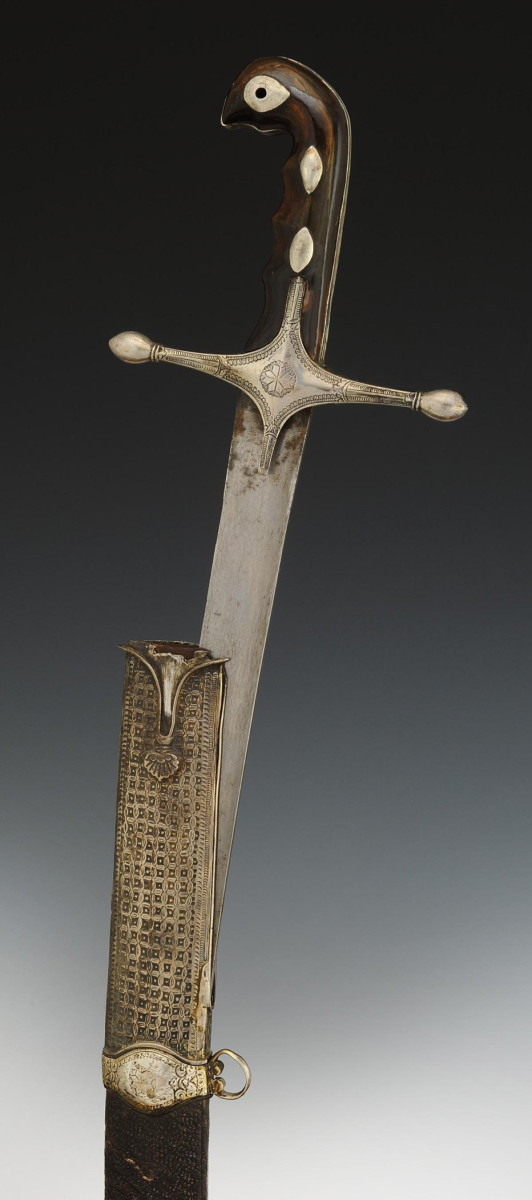
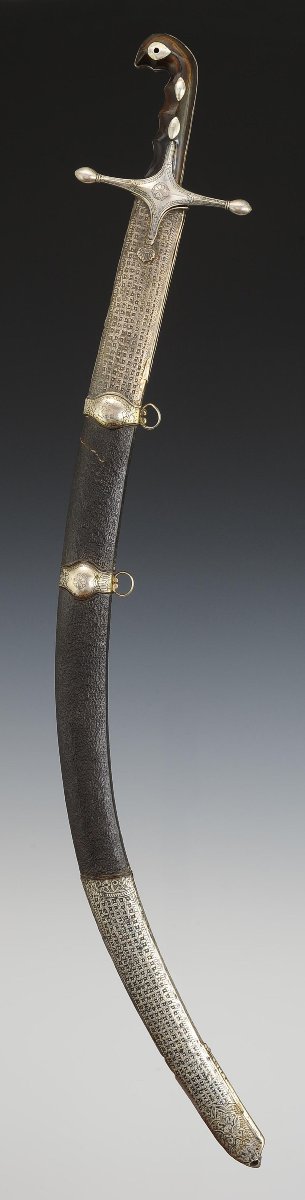
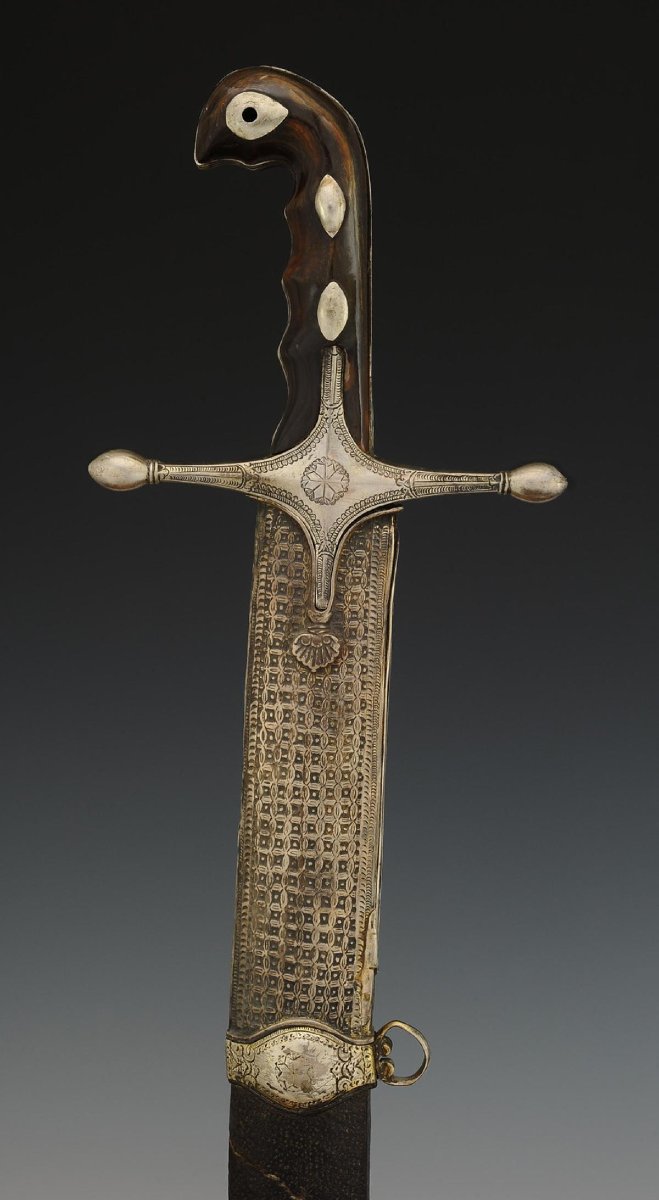
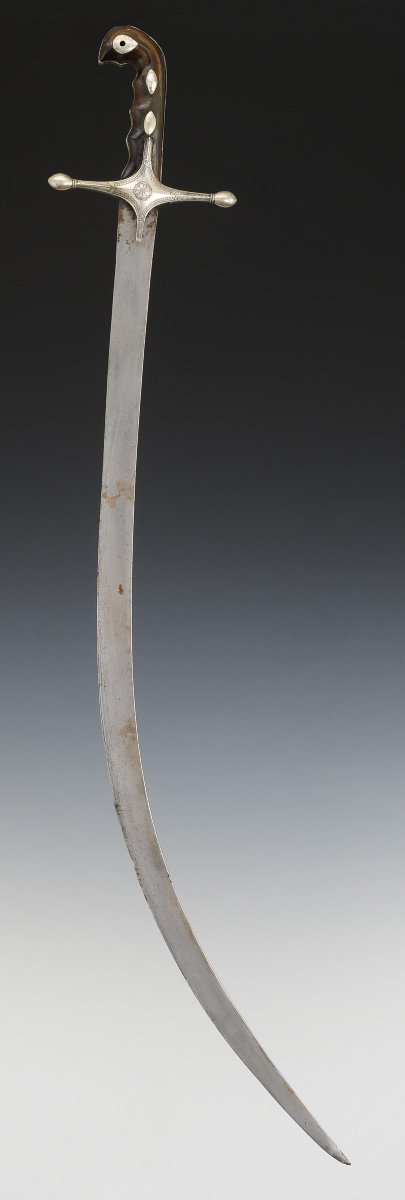
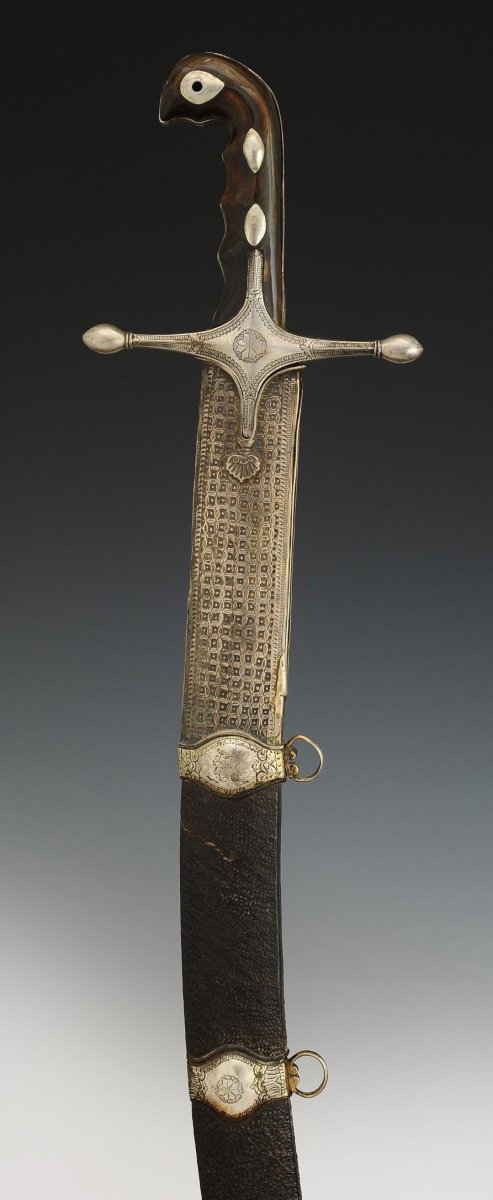
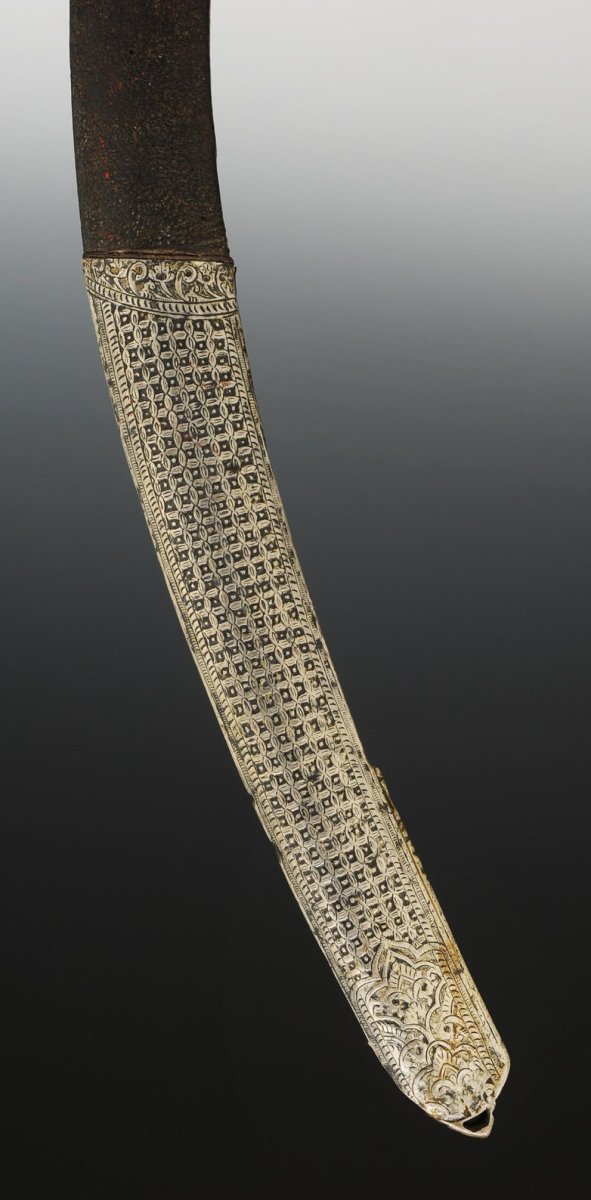
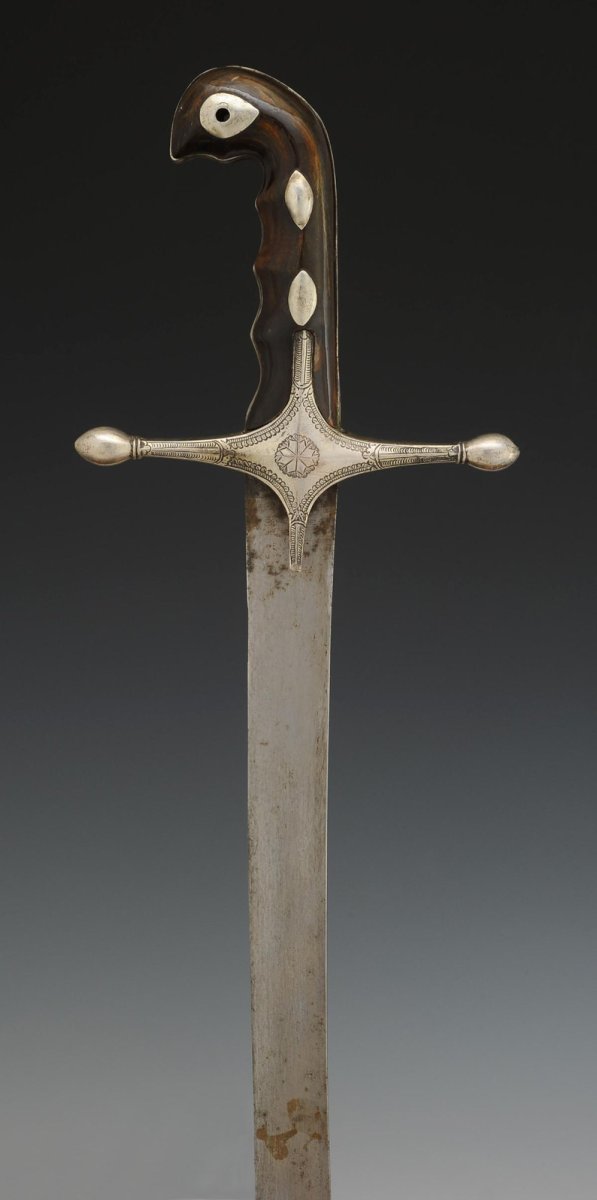
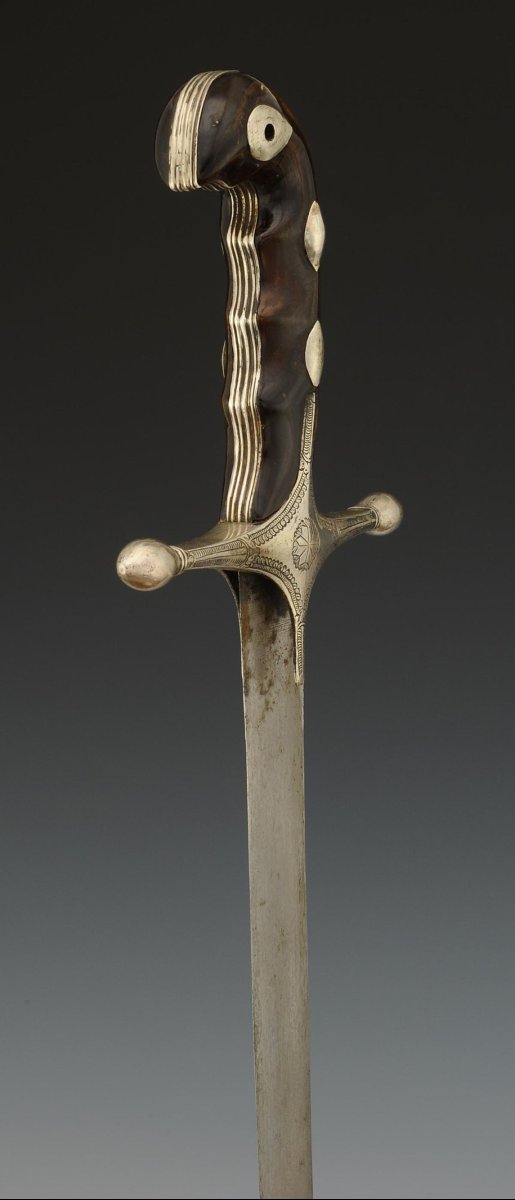
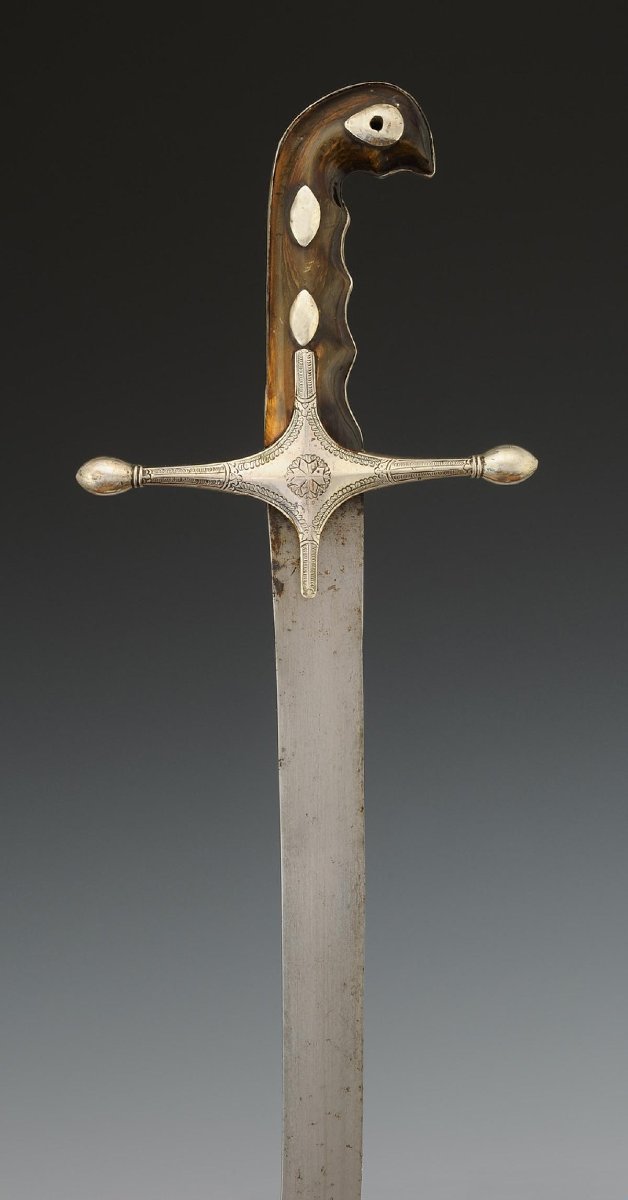
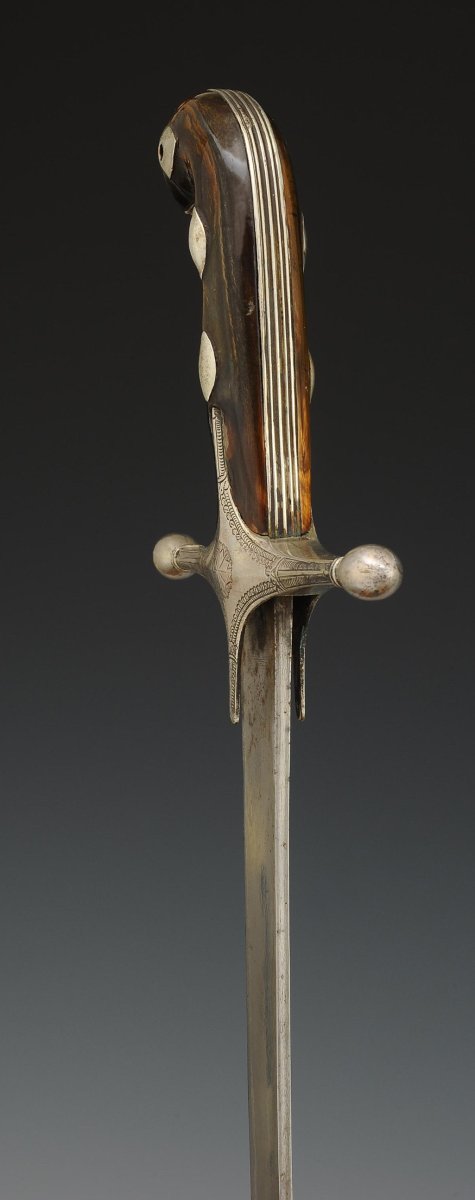
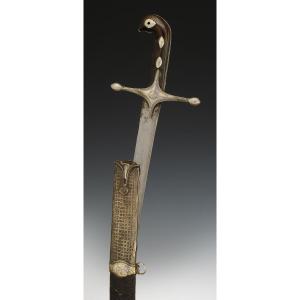


"Oriental-style Sabre Called "pala", First Third Of The 19th Century."
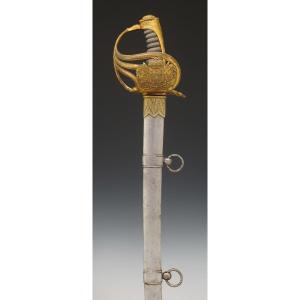
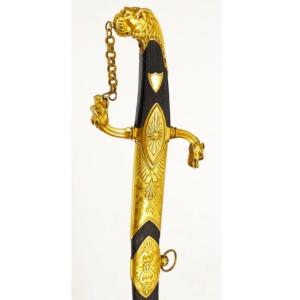
Oriental-style sword known as a "pala," first third of the 19th century. 32315. Silver hilt. Double horizontal quillon crossguard engraved in its center with a stylized flower imitating a star. Horn grip, sculpted for the hand, with two silver medallions and a third at the pommel with a transverse perforation for the lanyard. Silver side rail with five raised bands. Flat, curved blade of "Persian Wootz" Damascus steel (a type of Indian steel), 81.4 cm long, with a tang approximately 10 cm high. Wooden scabbard covered in black varnished shagreen with spring stitching in silver thread, with four silver mounts: Chape 18 cm high, 4.8 cm wide, stamped in relief with a grid of stylized flowers. Projecting throat decorated with a scallop shell in relief. The rear side edge is cut out to allow passage of the blade. Two slightly domed suspension rings, 2.8 cm high, are engraved with stylized flowers imitating a star, and have fixed rings. The scabbard tip is 29.5 cm high and similarly decorated, with a flat, silvered brass chape in the shape of a lyre. Originally without a protective rod for the back of the blade. First third of the 19th century. Very good condition, very slight wear to the blade, minor damage at the scabbard opening on one side, a small chip at the lateral end of the scabbard near the locket (2 cm), and a 4 cm tear in the scabbard's shagreen at the top. NOTE: A fine quality saber; the shape of the hilt evokes a bird's head. This type of weapon could have been carried by a cavalry or Mamluk officer during the First Empire. 













 Le Magazine de PROANTIC
 TRÉSORS Magazine
 Rivista Artiquariato