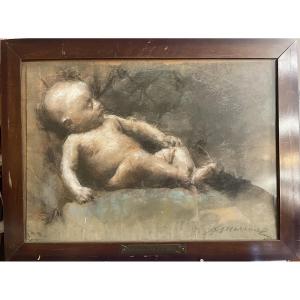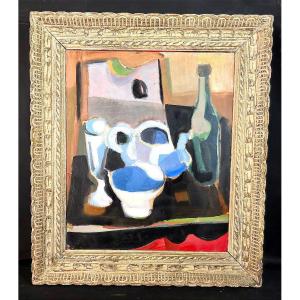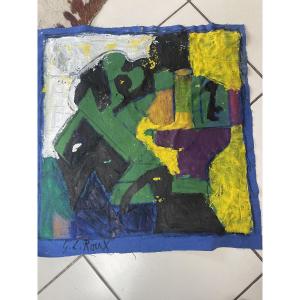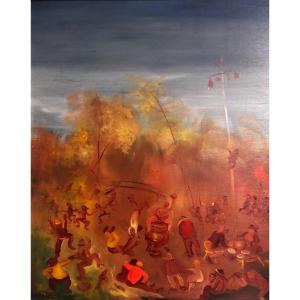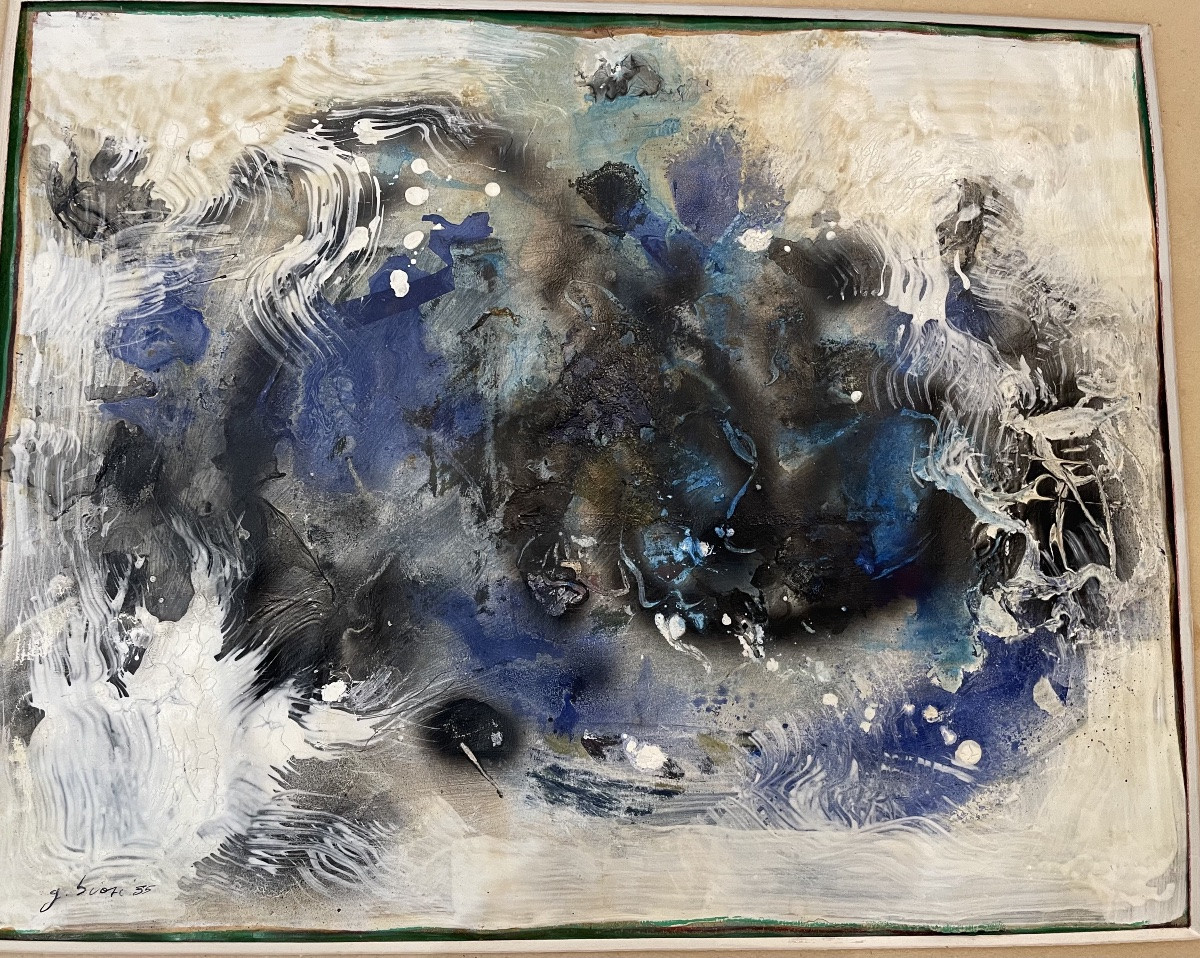
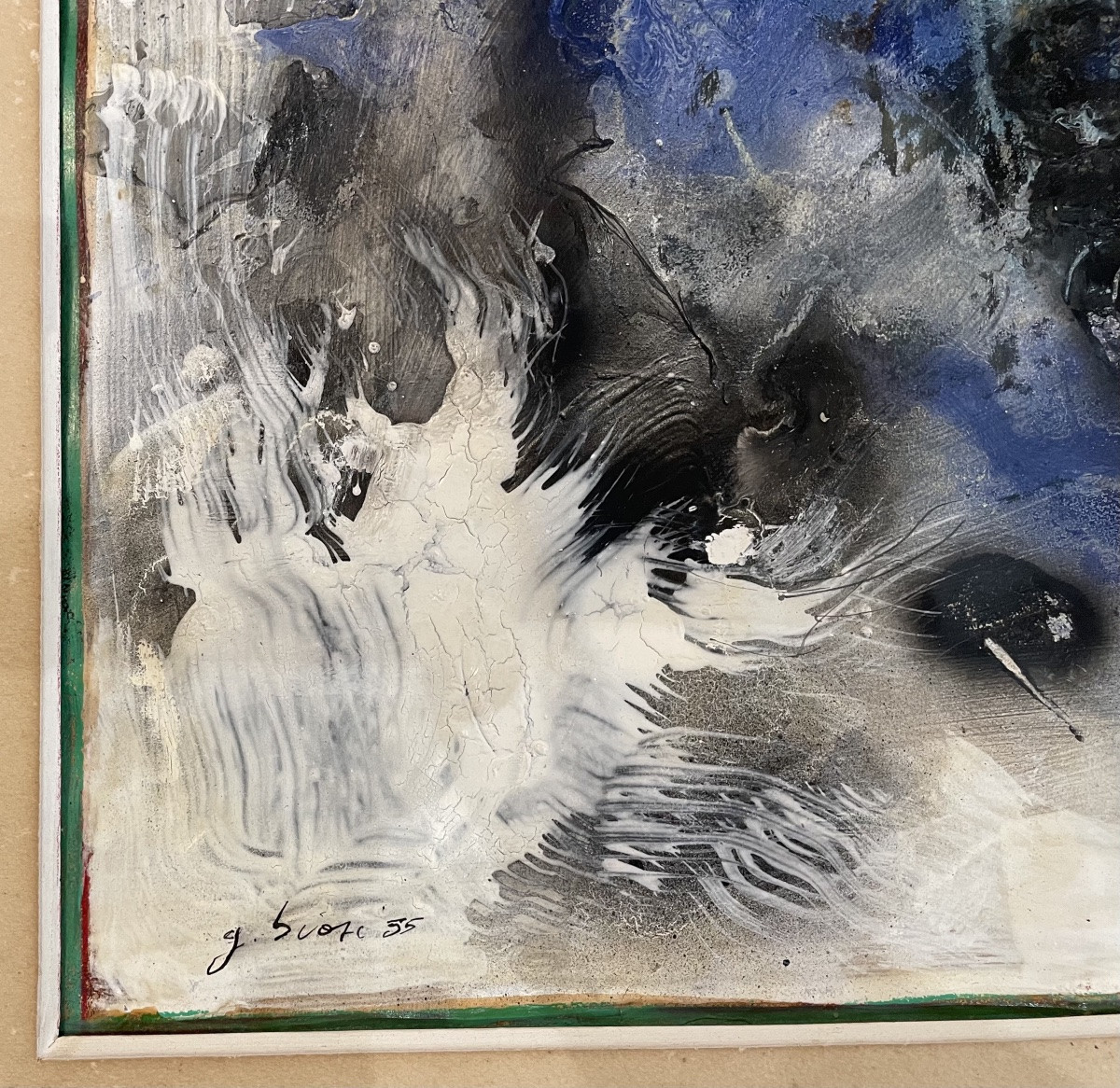
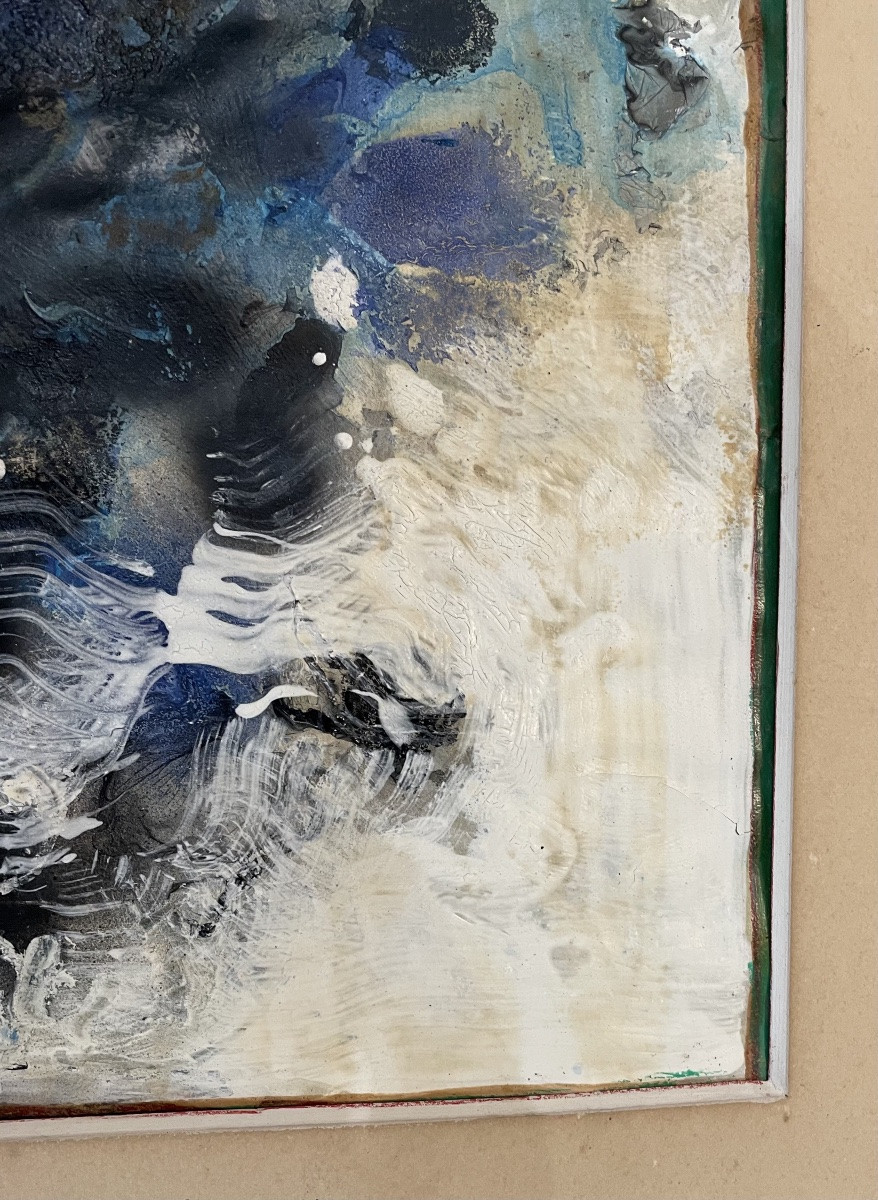
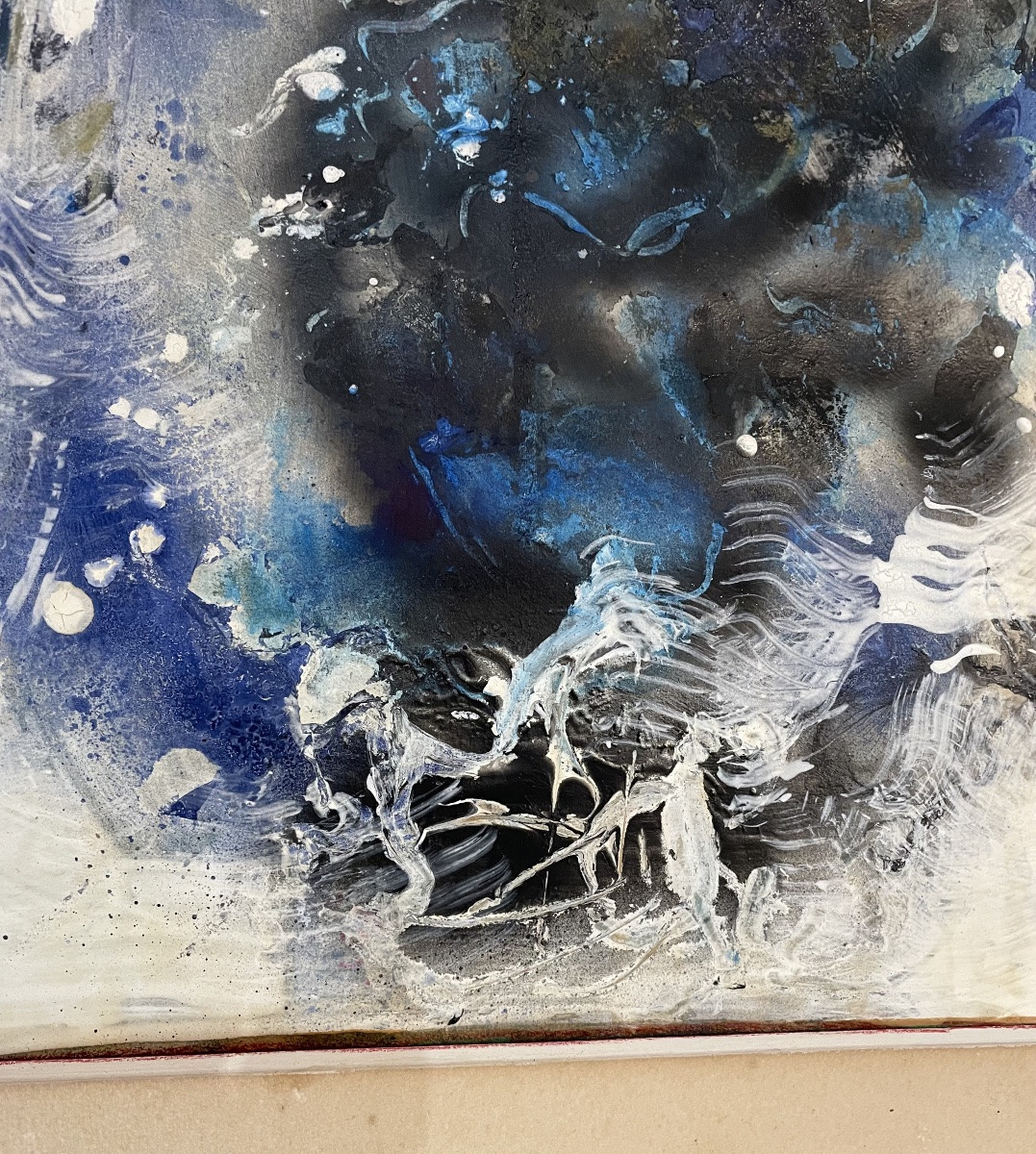
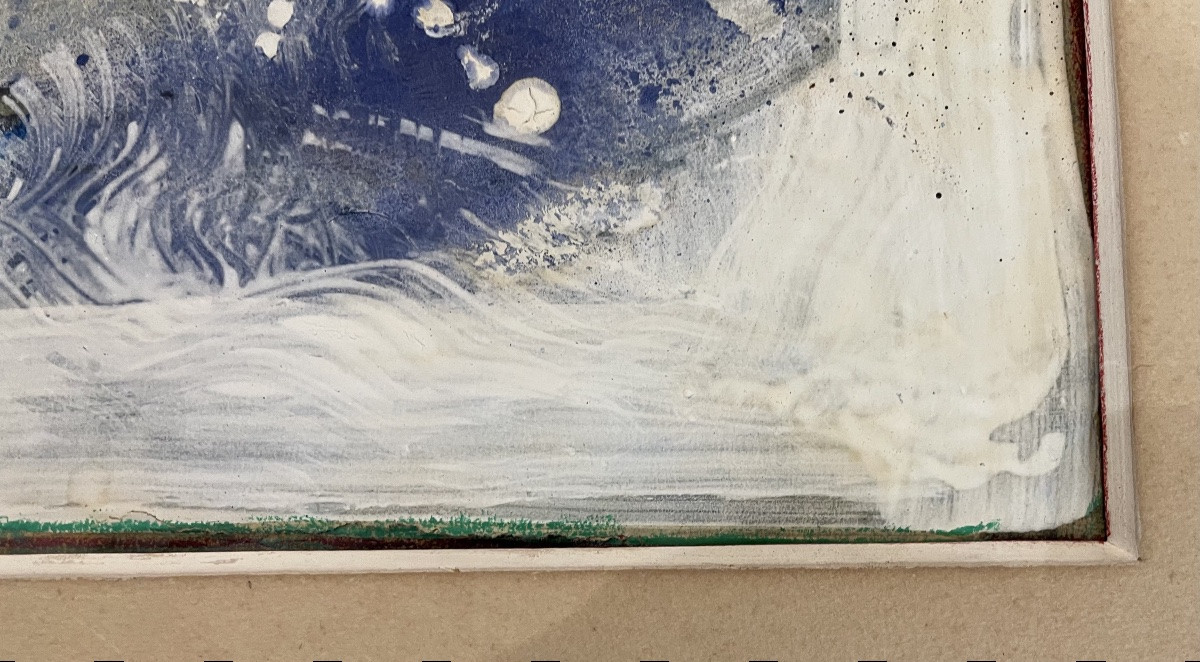
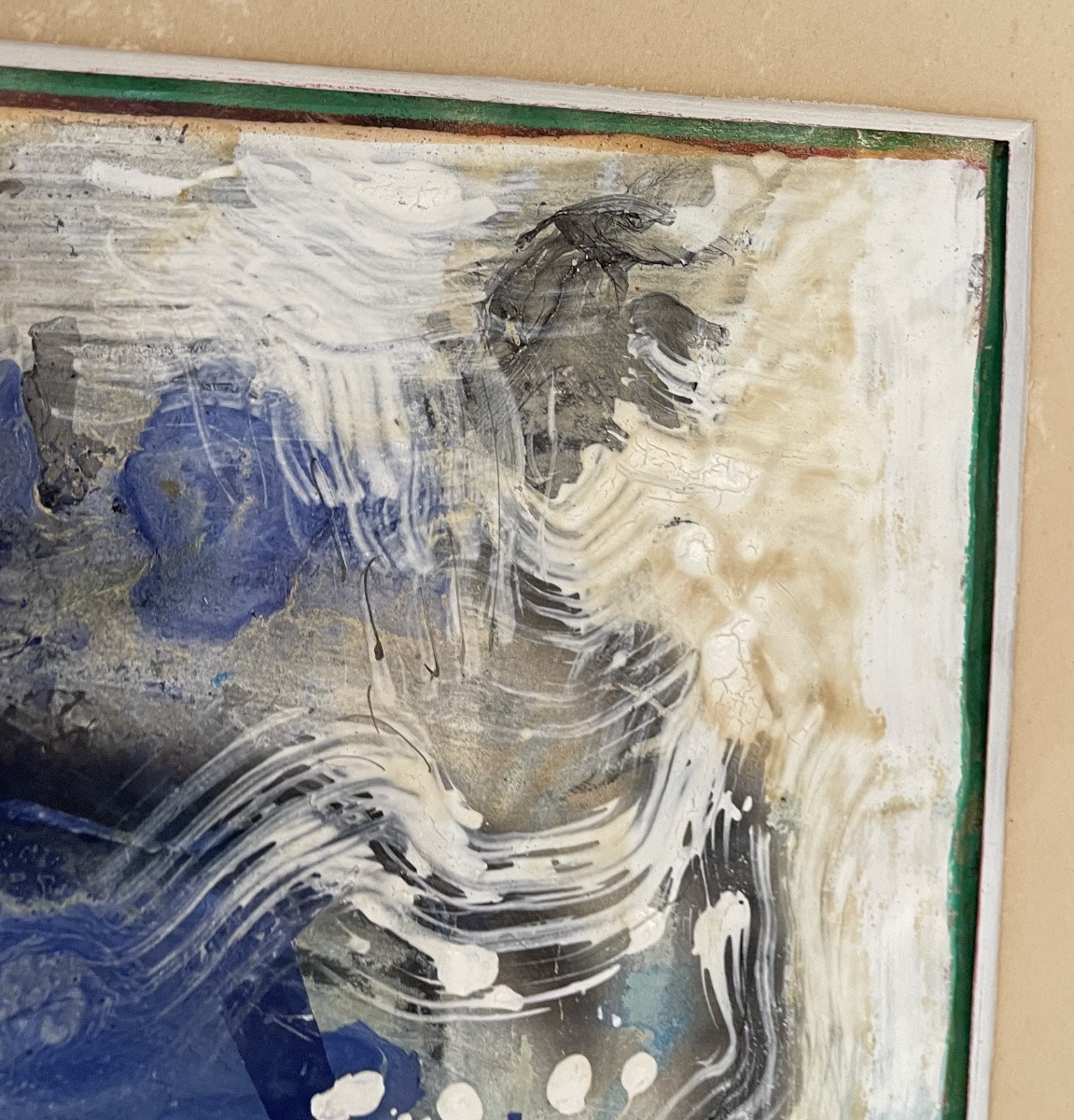
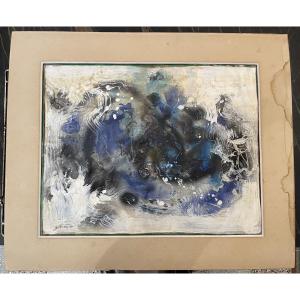


Oil On Paper By Guido Biasi, 20th Century
Artist: Guido Biasi
Biography:
(Naples 1933 - Paris 1982). He trained at the Academy of Fine Arts in Naples under the direction of Emilio Notte. In Naples, at a very young age, he was exposed to the local avant-garde movement, which at the time was close to the positions of Milanese Nuclear Painting. It was through this that Biasi came into direct contact with the Lombard group formed around Enrico Baj and, in 1957, he drafted the Manifesto for Organic Painting and the Manifesto of Albisola Marina together with Mario Colucci, Piero Manzoni, Ettore Sordini, and Angelo Verga. In 1958, he helped found Gruppo 58 with Luca (Luigi Castellano), Lucio Del Pezzo, Bruno Di Bello, and Sergio Fergola, and began collaborating with "Documento Sud," a Neapolitan avant-garde magazine directed by Luca himself. In the 1960s, he moved to Paris, while continuing to maintain close ties with Italy, particularly Naples and Milan. During these years, he participated in the activities of the Phases group, collaborating with the magazine of the same name, and wrote for the Belgian magazine "Edda." He exhibited in numerous prestigious group shows, such as Surrealist Intrusion in the Enchanters' Domain, curated in New York by André Breton and Marcel Duchamp in 1960, while holding solo exhibitions throughout Europe (Basel, Frankfurt, Hamburg, Cologne, London, Paris, Brussels, Amsterdam, Stockholm, Grenoble, Malmö). In 1972, he participated in the Venice Biennale and was also invited to exhibit at the Rome Quadrennial. That same year, he was invited to the São Paulo International Biennial. His art has been studied by critics such as Barilli (Bologna, Galleria De' Foscherari arte contemporanea, 1966; Le museologie di Guido Biasi, Milan, Galleria Blu, 1977), Crispolti (Turin, Galleria il Punto, 1963), Fagone (Milan, Galleria Blu, 1974; Brescia, Galleria San Michele, 1975), and Varga (Milan, Studio Palazzoli, 1975). With Edoardo Sanguineti, he wrote the poetic text Restaurazione e rivoluzione, included in the catalogue of the artist's first solo exhibition (Naples, Galleria Il Centro 1964). In several essays on twentieth-century painting, Sanguineti himself has attributed considerable importance to Guido Biasi's work.
(Naples 1933 - Paris 1982). He trained at the Academy of Fine Arts in Naples under the direction of Emilio Notte. In Naples, at a very young age, he was exposed to the local avant-garde movement, which at the time was close to the positions of Milanese Nuclear Painting. It was through this that Biasi came into direct contact with the Lombard group formed around Enrico Baj and, in 1957, he drafted the Manifesto for Organic Painting and the Manifesto of Albisola Marina together with Mario Colucci, Piero Manzoni, Ettore Sordini, and Angelo Verga. In 1958, he helped found Gruppo 58 with Luca (Luigi Castellano), Lucio Del Pezzo, Bruno Di Bello, and Sergio Fergola, and began collaborating with "Documento Sud," a Neapolitan avant-garde magazine directed by Luca himself. In the 1960s, he moved to Paris, while continuing to maintain close ties with Italy, particularly Naples and Milan. During these years, he participated in the activities of the Phases group, collaborating with the magazine of the same name, and wrote for the Belgian magazine "Edda." He exhibited in numerous prestigious group shows, such as Surrealist Intrusion in the Enchanters' Domain, curated in New York by André Breton and Marcel Duchamp in 1960, while holding solo exhibitions throughout Europe (Basel, Frankfurt, Hamburg, Cologne, London, Paris, Brussels, Amsterdam, Stockholm, Grenoble, Malmö). In 1972, he participated in the Venice Biennale and was also invited to exhibit at the Rome Quadrennial. That same year, he was invited to the São Paulo International Biennial. His art has been studied by critics such as Barilli (Bologna, Galleria De' Foscherari arte contemporanea, 1966; Le museologie di Guido Biasi, Milan, Galleria Blu, 1977), Crispolti (Turin, Galleria il Punto, 1963), Fagone (Milan, Galleria Blu, 1974; Brescia, Galleria San Michele, 1975), and Varga (Milan, Studio Palazzoli, 1975). With Edoardo Sanguineti, he wrote the poetic text Restaurazione e rivoluzione, included in the catalogue of the artist's first solo exhibition (Naples, Galleria Il Centro 1964). In several essays on twentieth-century painting, Sanguineti himself has attributed considerable importance to Guido Biasi's work.
1 200 €
Period: 20th century
Style: Design 50's and 60's
Condition: En l'etat
Material: Oil painting on paper
Width: cm 47 avec paspartou cm 60
Height: cm 37 avec paspartou cm 50
Reference (ID): 1700790
Availability: In stock
Print