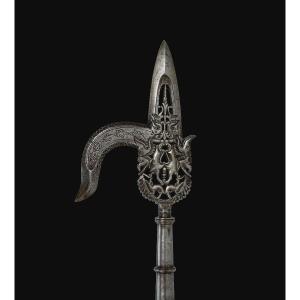





Punjab Elephant Goad
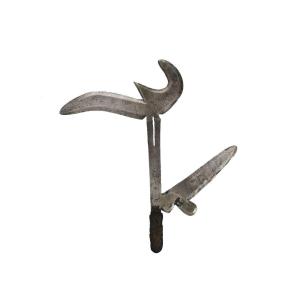
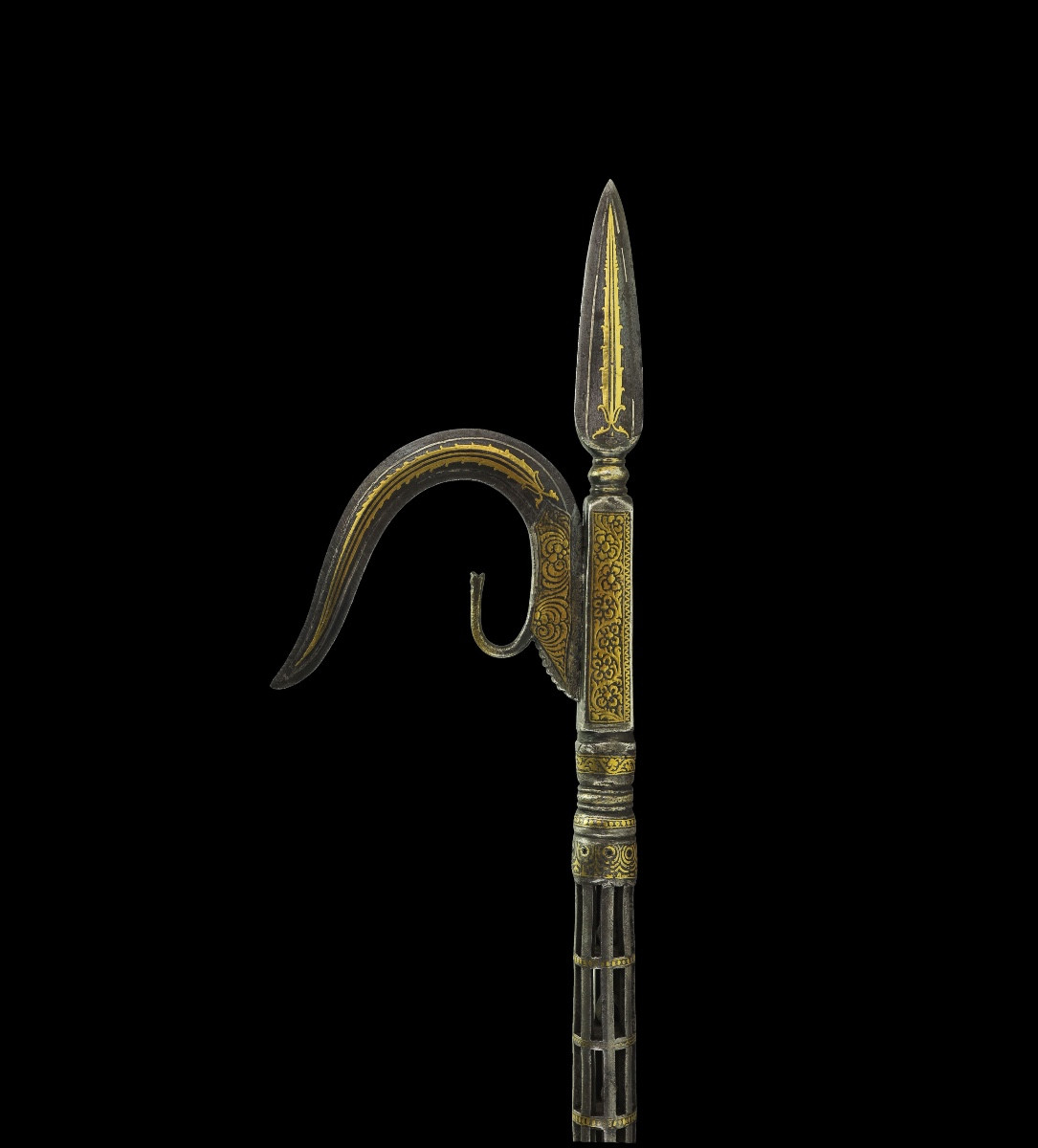
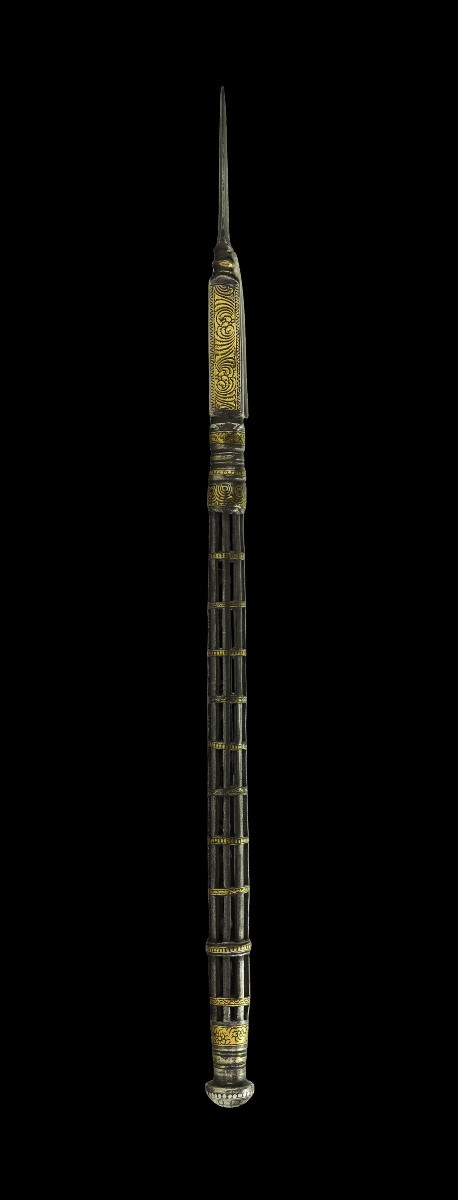
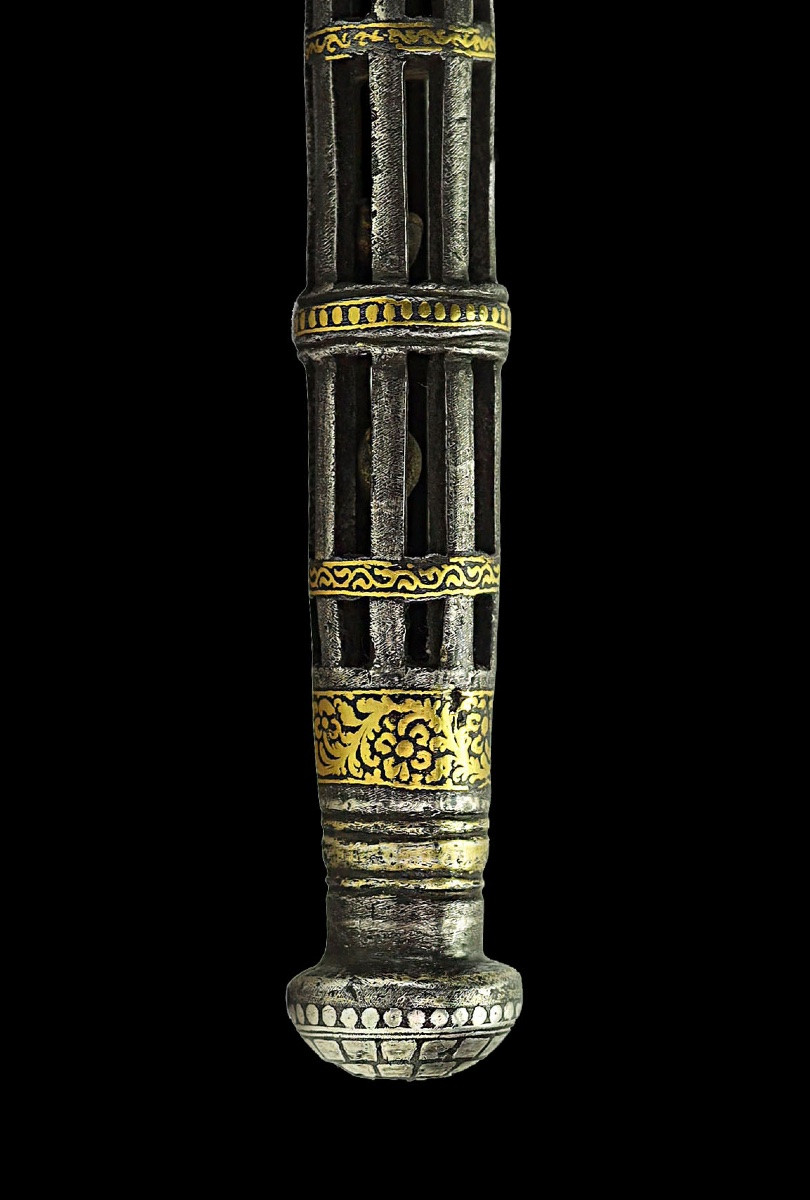
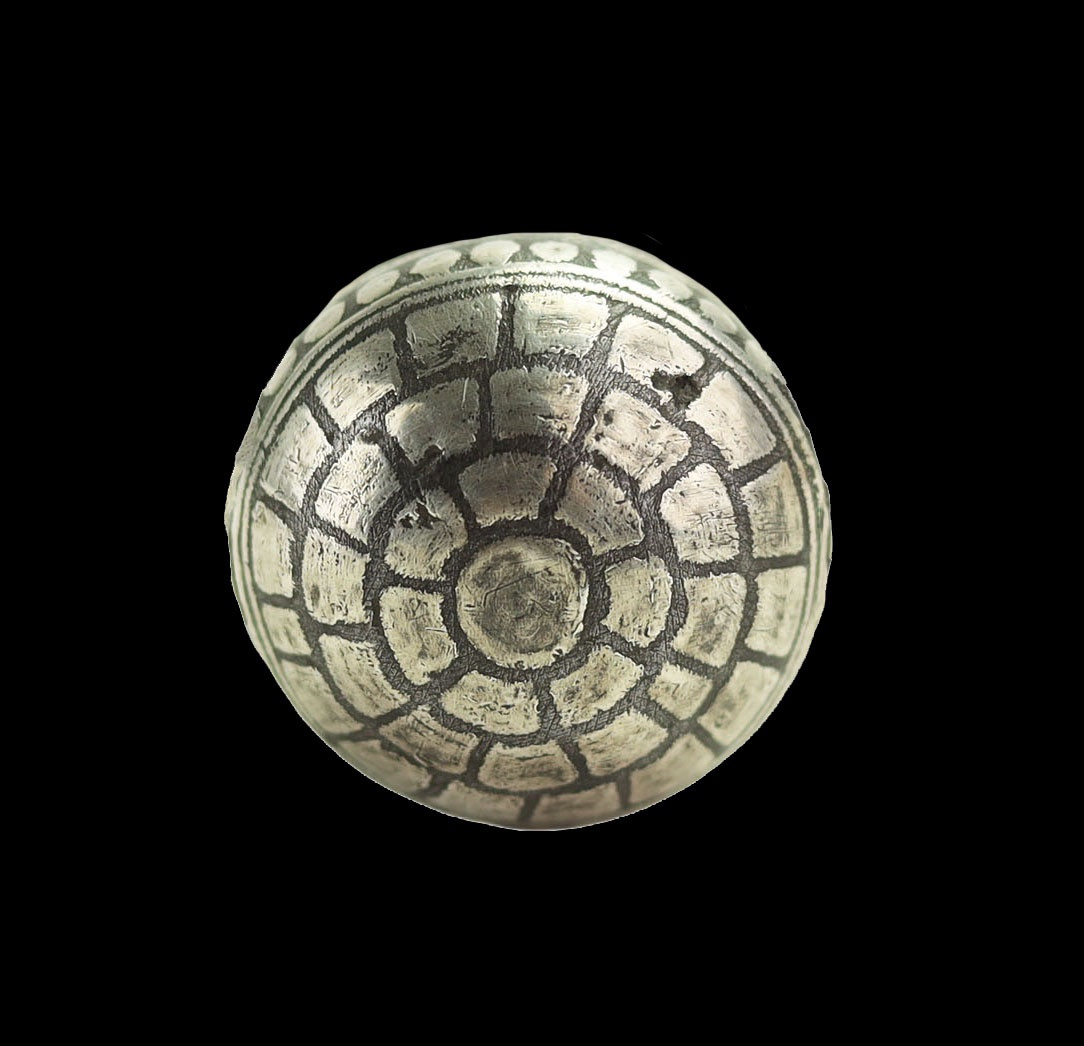
The use of elephants as an important means of transport is attested in India as early as 4000 BC, when the first elephants are believed to have been domesticated in the Indus Valley. The elephant is considered sacred by Hindus, who believe it to be an incarnation of Ganesh, the elephant-headed god. The "ankusa," a Sanskrit word for an elephant goad, is both a functional and ceremonial object. It is one of the eight sacred objects known as "Ashtamangala." It consists of a handle with a spear point and a sharp hook, often decorated with fine chisel engravings. This particular example, originating from northern India, specifically the Punjab region, is distinguished by the floral koftgari motifs that adorn it. Dating from the mid-19th century, it has a distinctive feature: the ankus handle is openwork and fitted with iron balls that produce a rattling sound when used. The koftgari decoration is flecked with gold and silver, characteristic of this region and locally called "ganga jamni," named after the confluence of the Ganges and Yamuna rivers, which differ markedly in color.
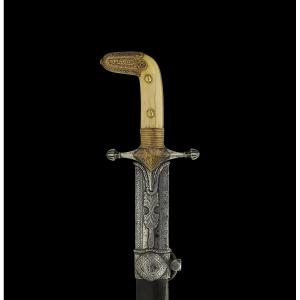
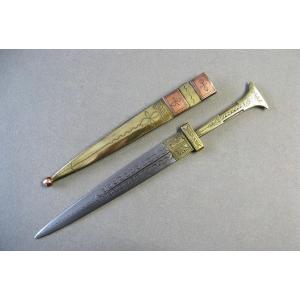
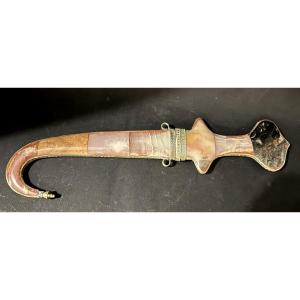
Another example:
– Victoria & Albert Museum London acc.nr. 3333(IS)
– The National Army Museum London acc.nr. NAM. 1952-05-7-1
Another example:
– Victoria & Albert Museum London acc.nr. 3333(IS)
– The National Army Museum London acc.nr. NAM. 1952-05-7-1
3 200 €
Period: 19th century
Style: Orientalism
Condition: Good condition
Material: Metal
Length: 54cm
Reference (ID): 1699739
Availability: In stock
Print