

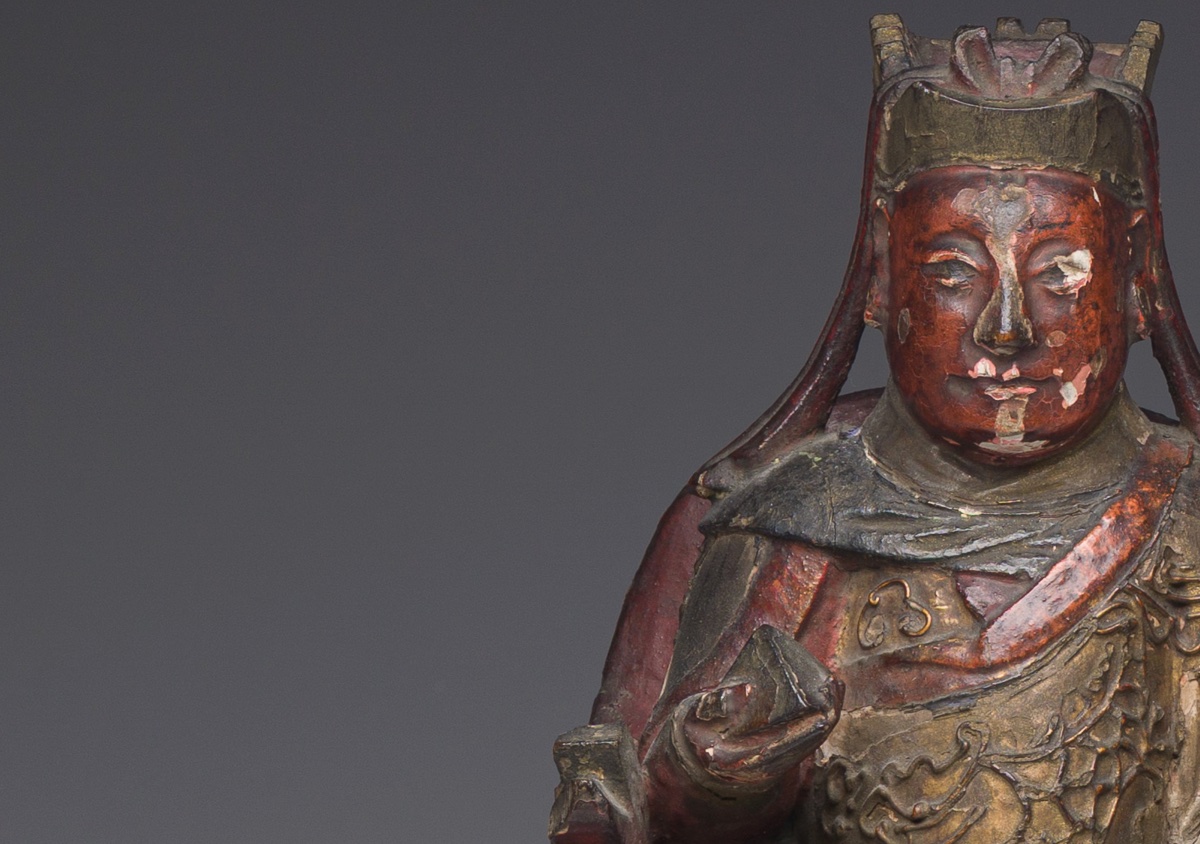


Chinese Lacquered And Gilded Wooden Sculpture Depicting A Dignitary (1800-1850)
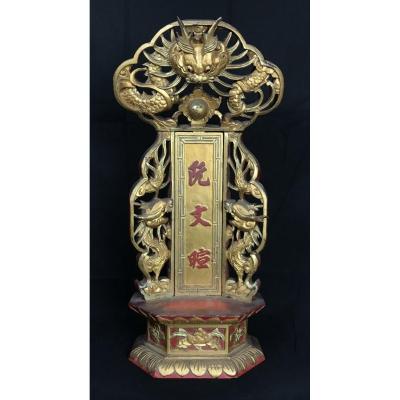
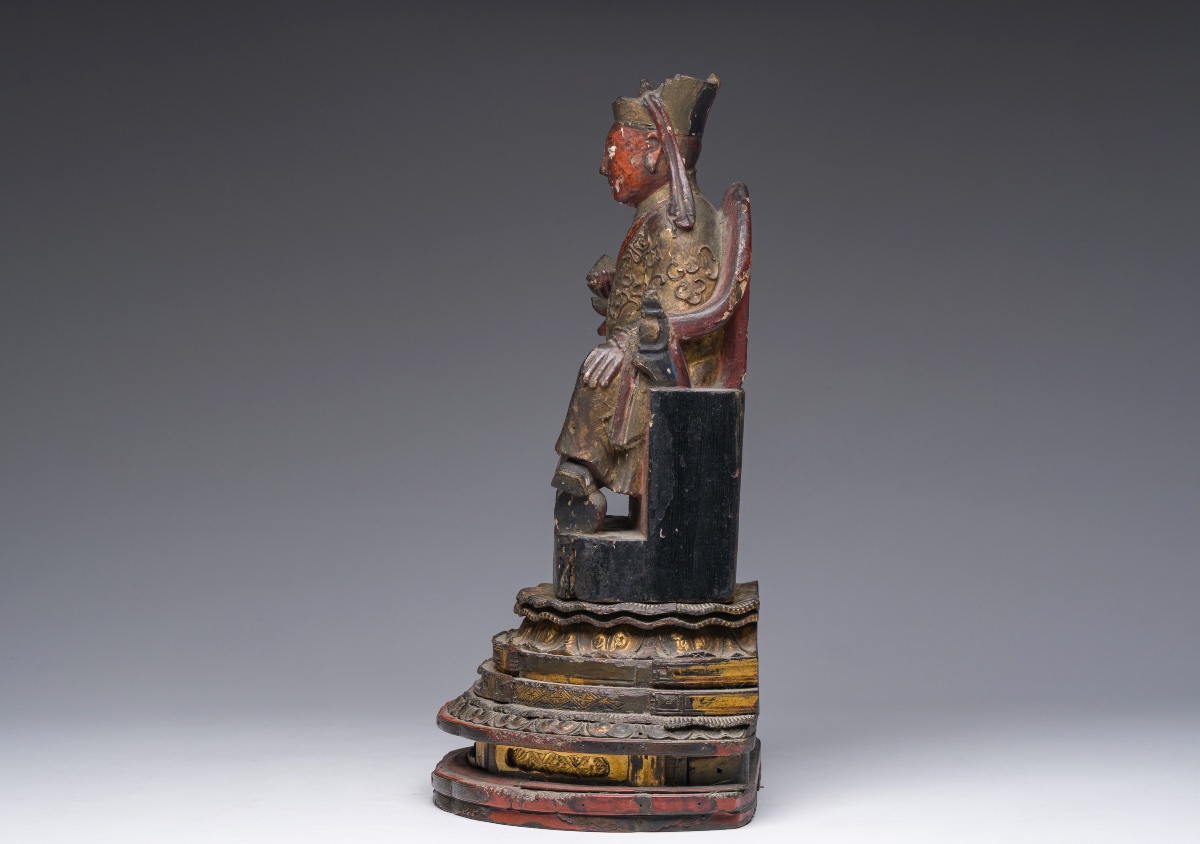
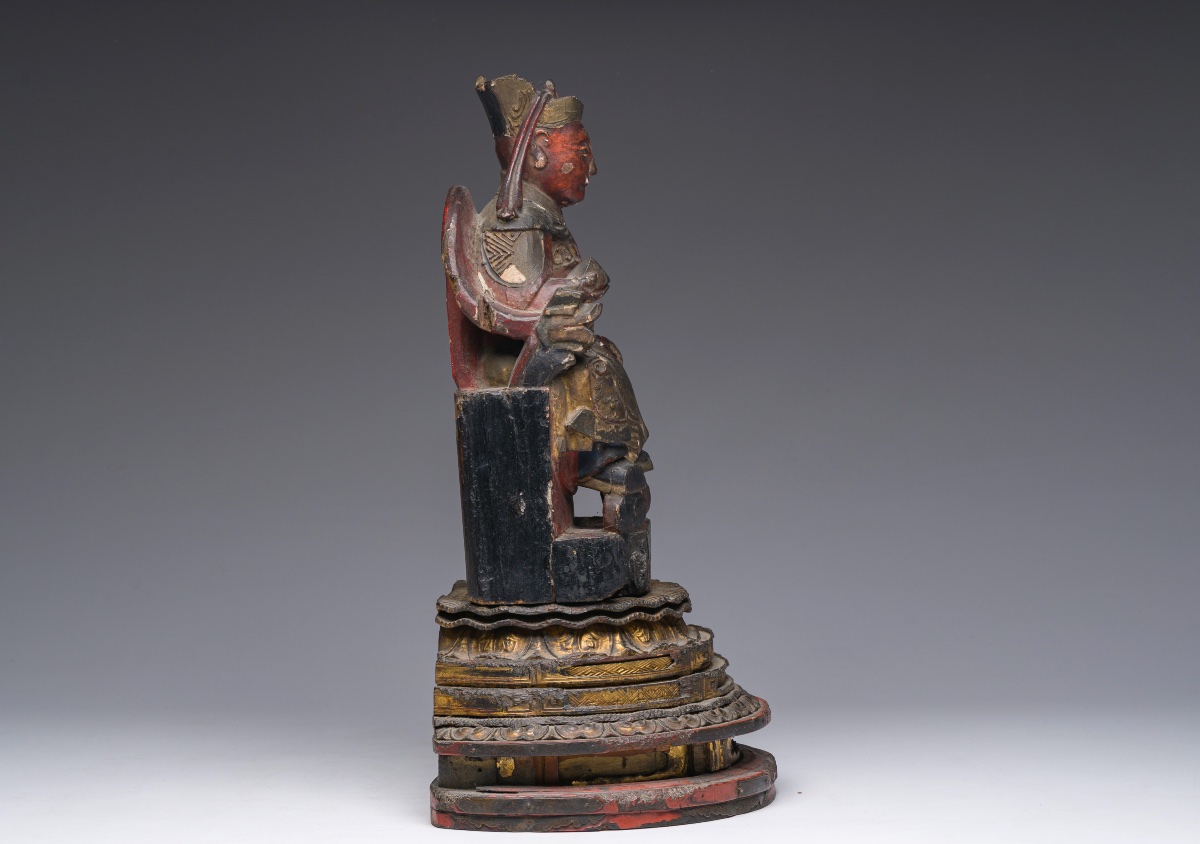
A decorative polychrome ancestral Chinese statue dating from the first half of the 19th century.
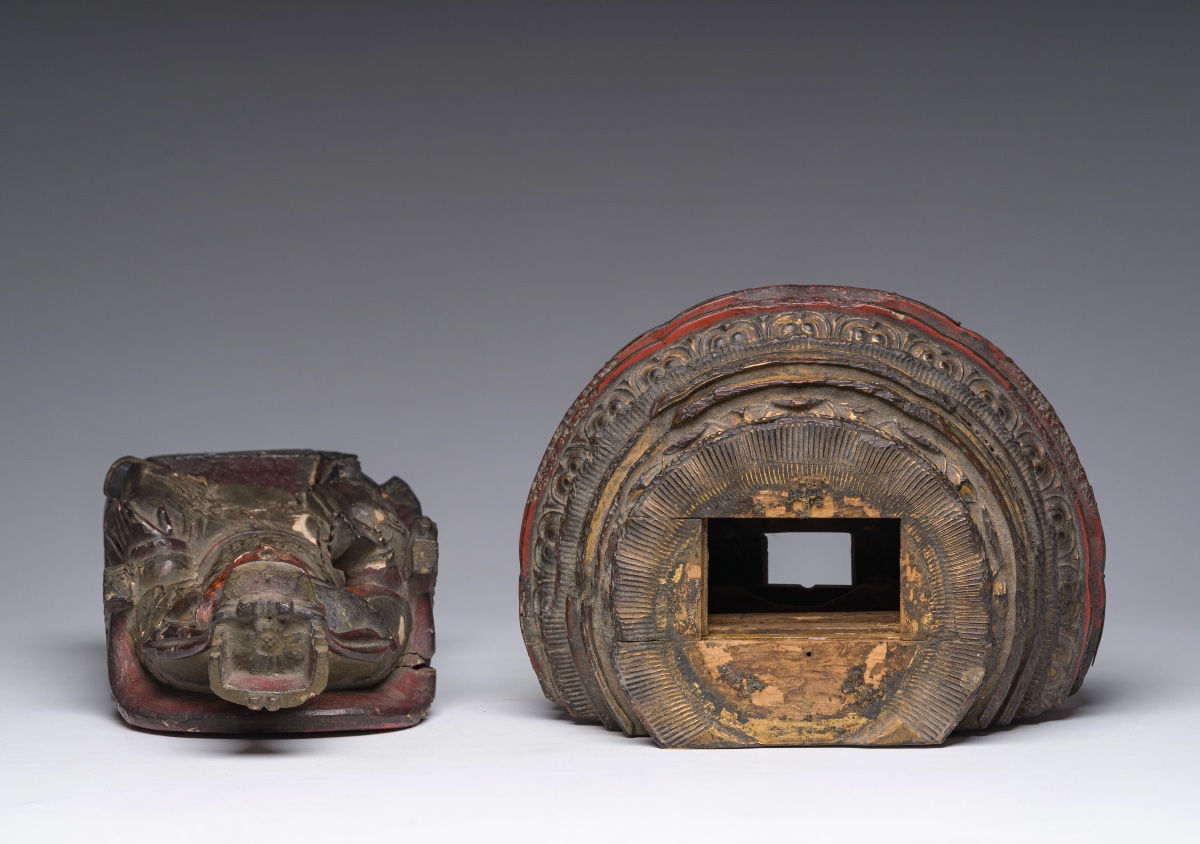
The statue was carved from a single piece of wood and then lacquered. This type of statue was often part of a household altar, where it symbolized ancestral authority and association. The paper scroll the figure holds under its right arm suggests that it was likely a high-ranking official from the late Ming dynasty. The figure also wears a futu, a black cap with two protruding ears that was worn at the Chinese imperial court. According to popular legend, Emperor Taizu introduced this distinctive headgear in the 10th century and ordered that the hoods be fitted with exceptionally long side wings.
The objective was purely strategic: during court hearings, wide-brimmed hats prevented officials from standing too close to one another to whisper and plot unnoticed. These ancestral statues were not intended to be works of art, but rather ritual objects placed in a household altar or a special ancestral temple. It was believed that by making offerings to the statue, the ancestor would bring happiness, wealth, and protection to the family.
The statue was carved from a single piece of wood and then lacquered. This type of statue was often part of a household altar, where it symbolized ancestral authority and association. The paper scroll the figure holds under its right arm suggests that it was likely a high-ranking official from the late Ming dynasty. The figure also wears a futu, a black cap with two protruding ears that was worn at the Chinese imperial court. According to popular legend, Emperor Taizu introduced this distinctive headgear in the 10th century and ordered that the hoods be fitted with exceptionally long side wings.
The objective was purely strategic: during court hearings, wide-brimmed hats prevented officials from standing too close to one another to whisper and plot unnoticed. These ancestral statues were not intended to be works of art, but rather ritual objects placed in a household altar or a special ancestral temple. It was believed that by making offerings to the statue, the ancestor would bring happiness, wealth, and protection to the family.
450 €
Period: 19th century
Style: Asian art
Condition: Good condition
Material: Painted wood
Height: 42,00cm
Reference (ID): 1699261
Availability: In stock
Print