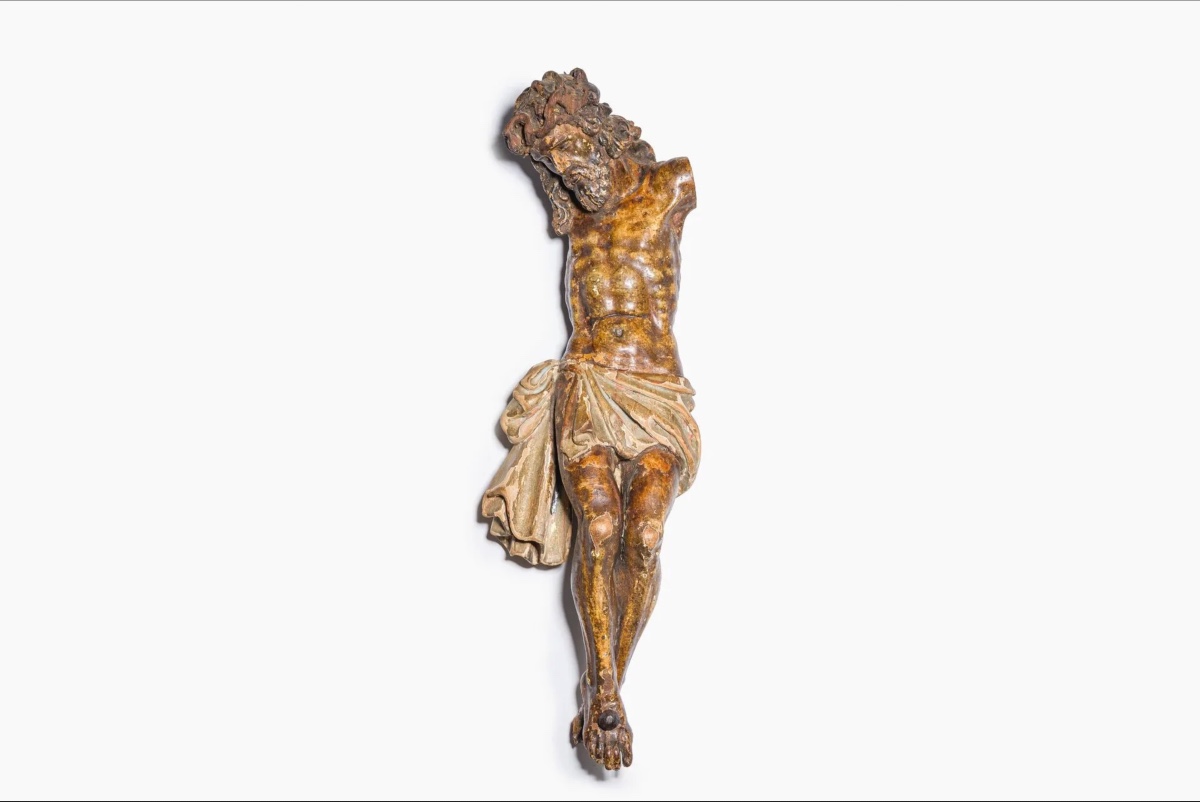




"Magnificent Polychrome Flemish Corpus Christi (1570-1600)"
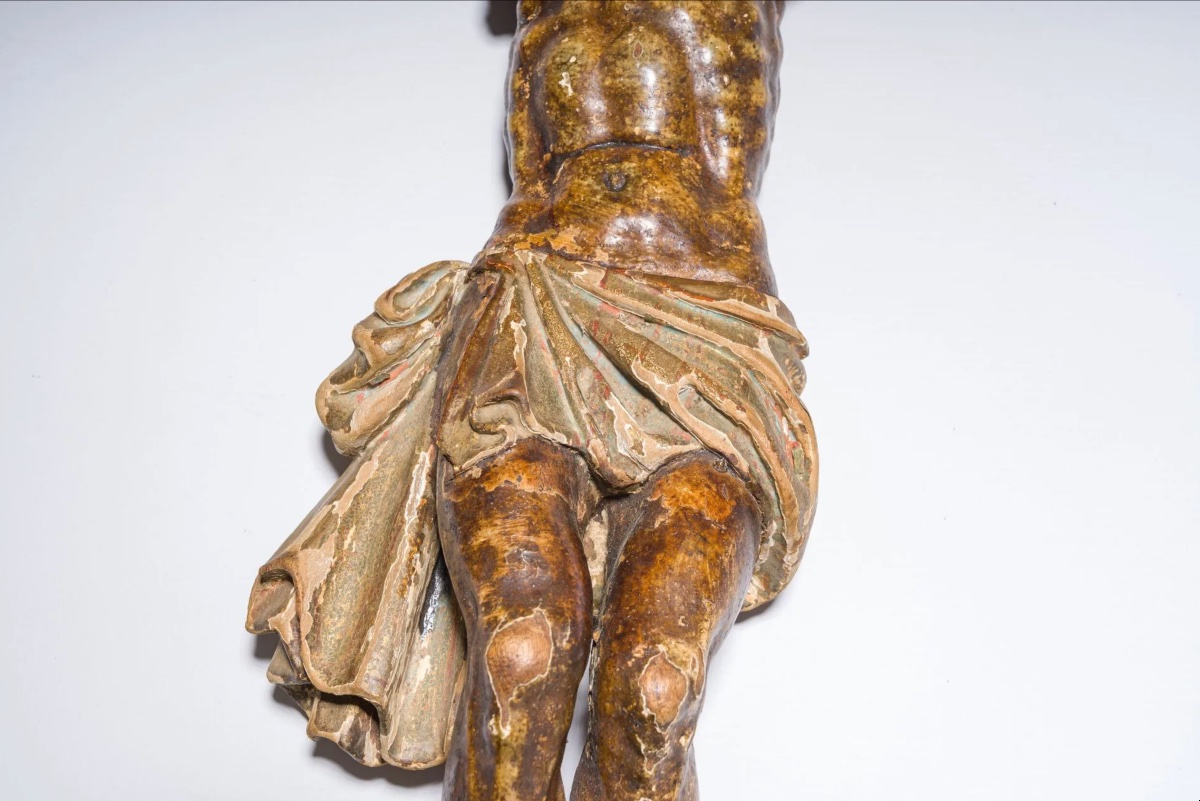
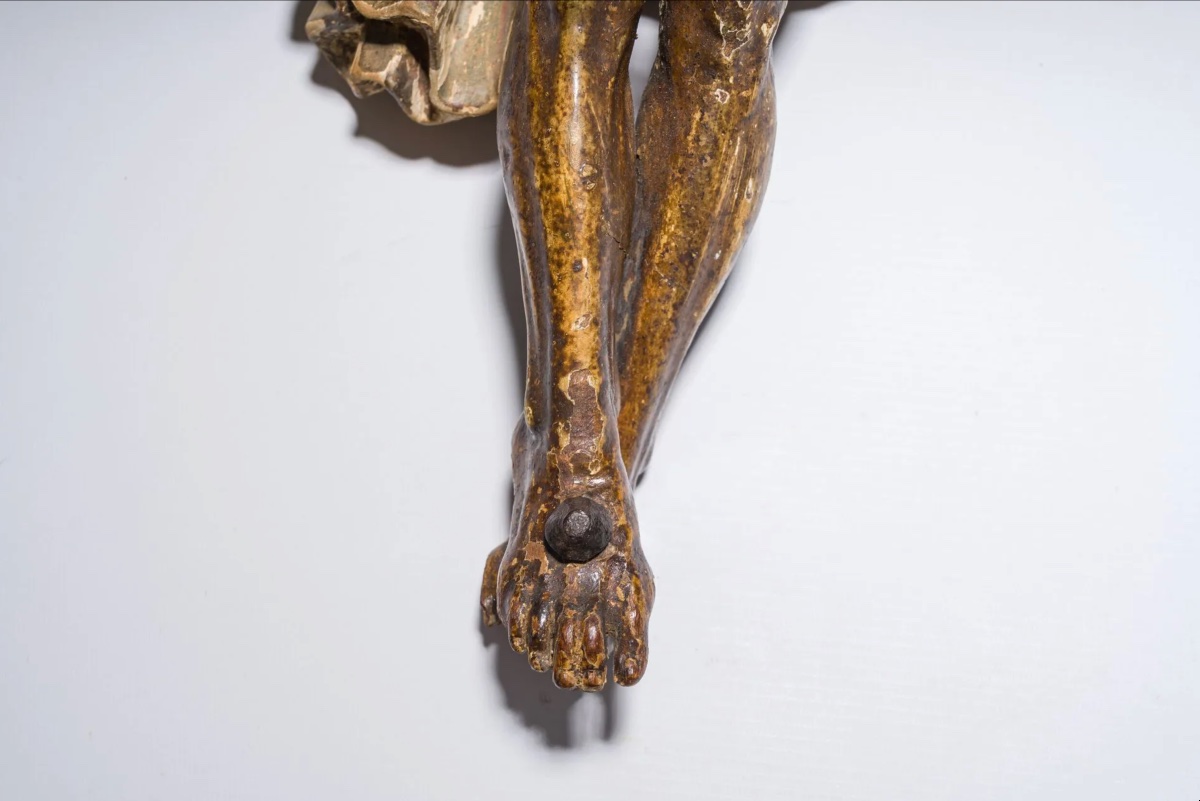
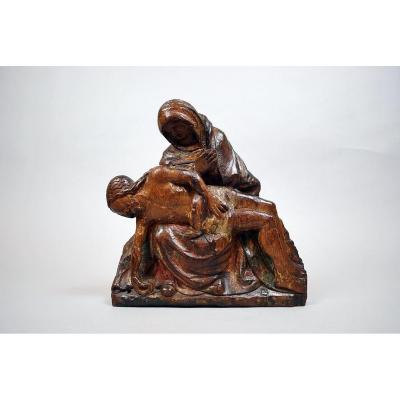
This magnificent 16th-century Corpus Christi is a superb example of late Renaissance Flemish craftsmanship. The statue was skillfully carved, probably from linden or boxwood, and features a detailed anatomical representation of Christ's tormented body, characteristic of the Flemish school of this period. Originally, the statue was painted in polychrome to create a realistic effect, but over the centuries, most of the paint layers have faded, allowing the warm, natural patina of the wood to show through. The sculpture depicts Christ in a serene yet dramatic pose, his head bowed and his eyes closed. His face is deeply marked by sorrow, and his body bears the scars of the Passion, such as the wound on his right side where the lance of fate pierced. The loincloth (perizonium) is tied at the side, and the folds are finely worked. The whole is a powerful and moving example of early modern devotional art, designed to inspire empathy and prayer in the viewer.














 Le Magazine de PROANTIC
 TRÉSORS Magazine
 Rivista Artiquariato