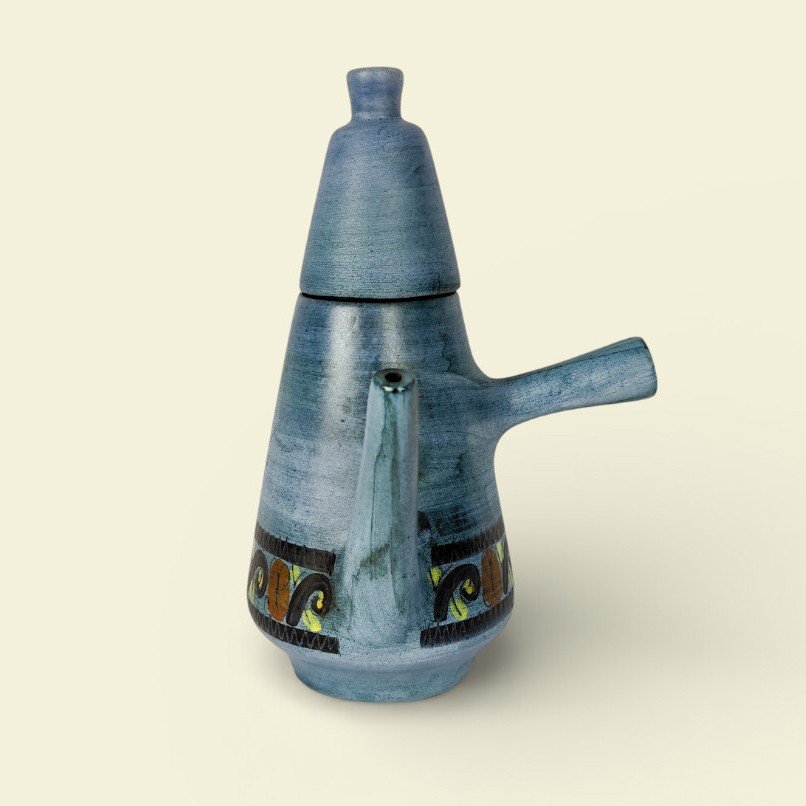
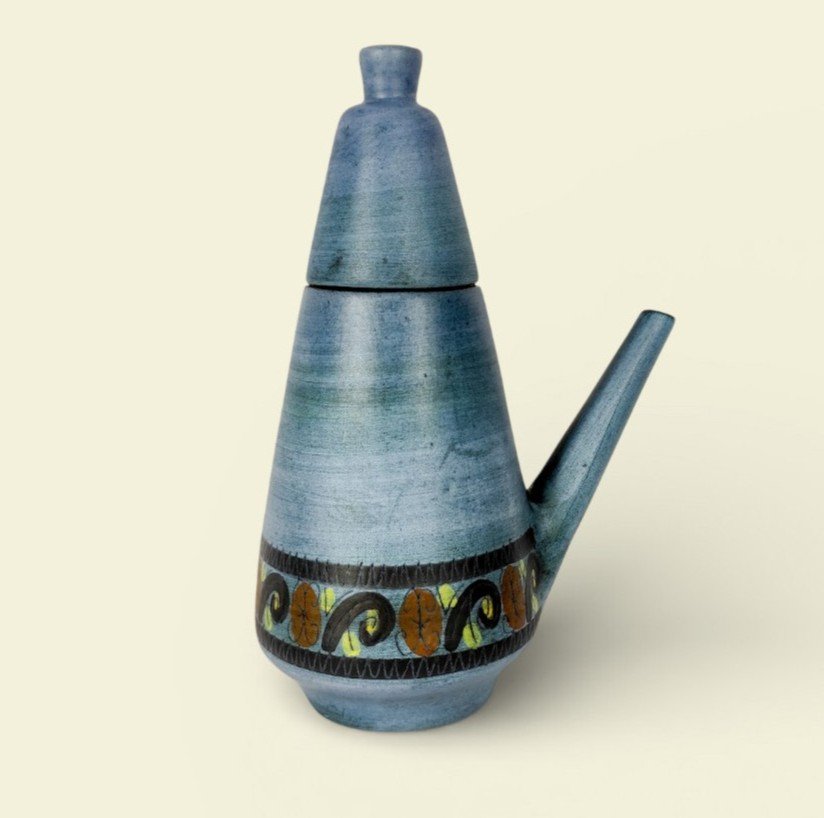





Large Coffee Pot With Matte Blue Glaze, By Jean De Lespinasse, 1950s/1960s
Artist: Jean De Lespinasse
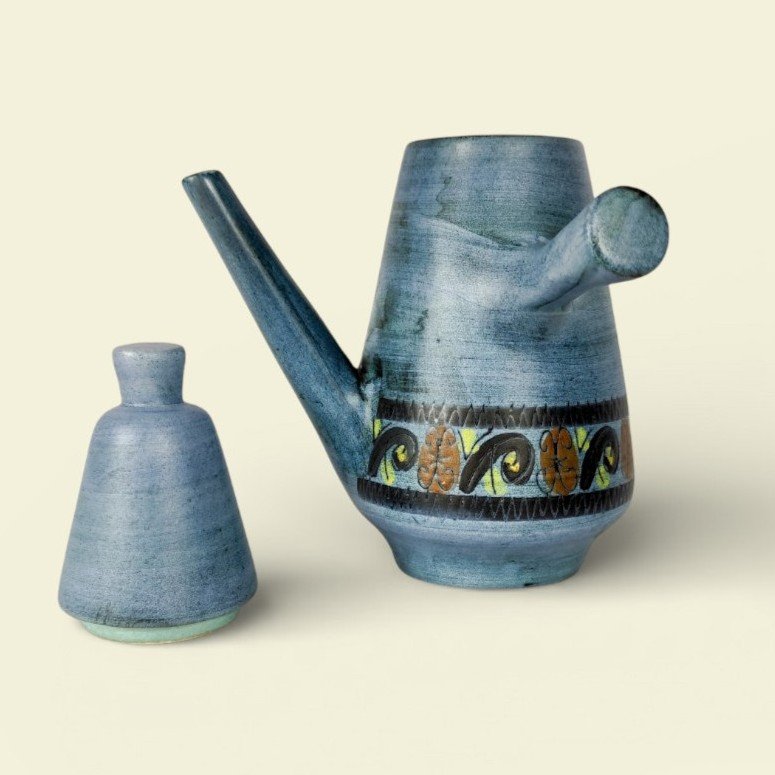
Large matte blue glazed ceramic coffee pot, made in Nice in the 1950s/1960s, signed by the artist Jean de Lespinasse (1896-1979) under the base "JDL".
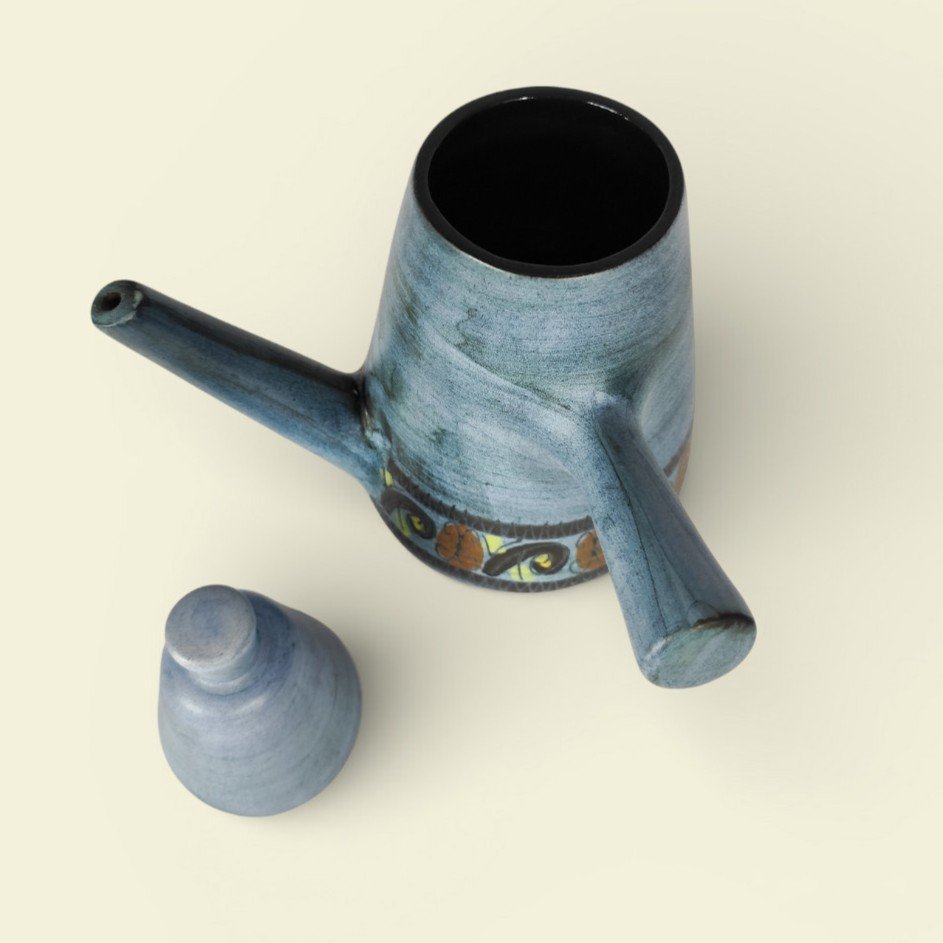
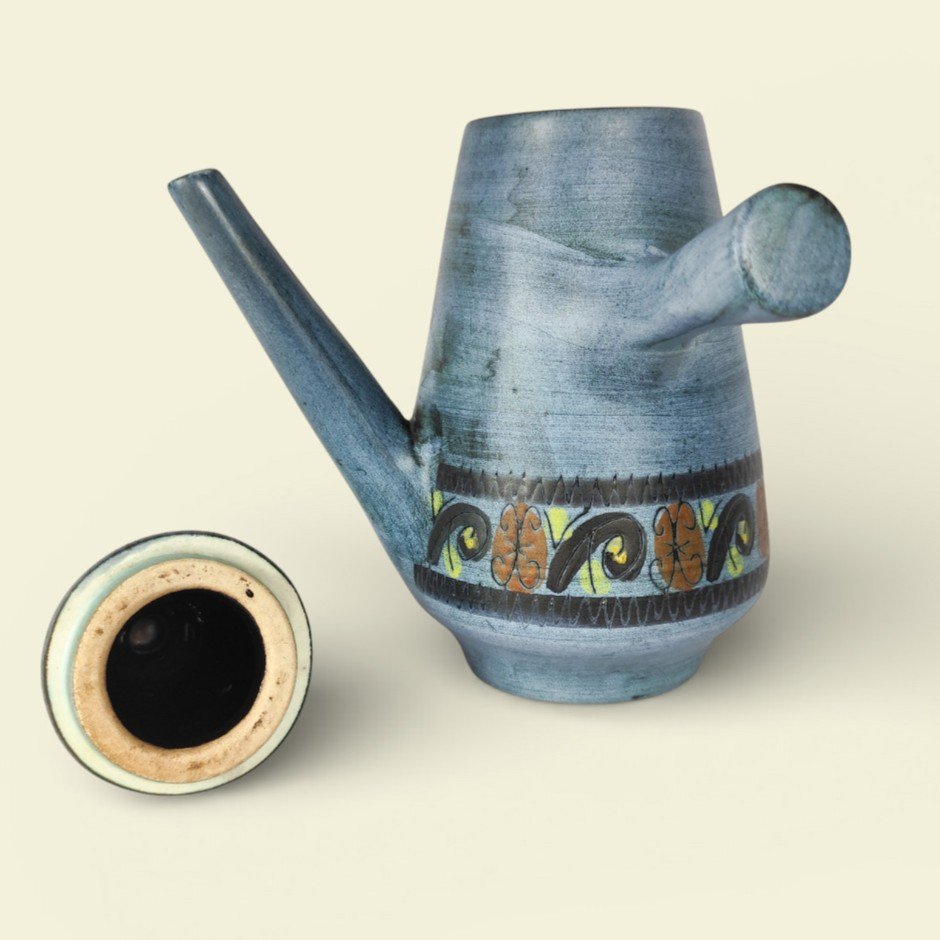
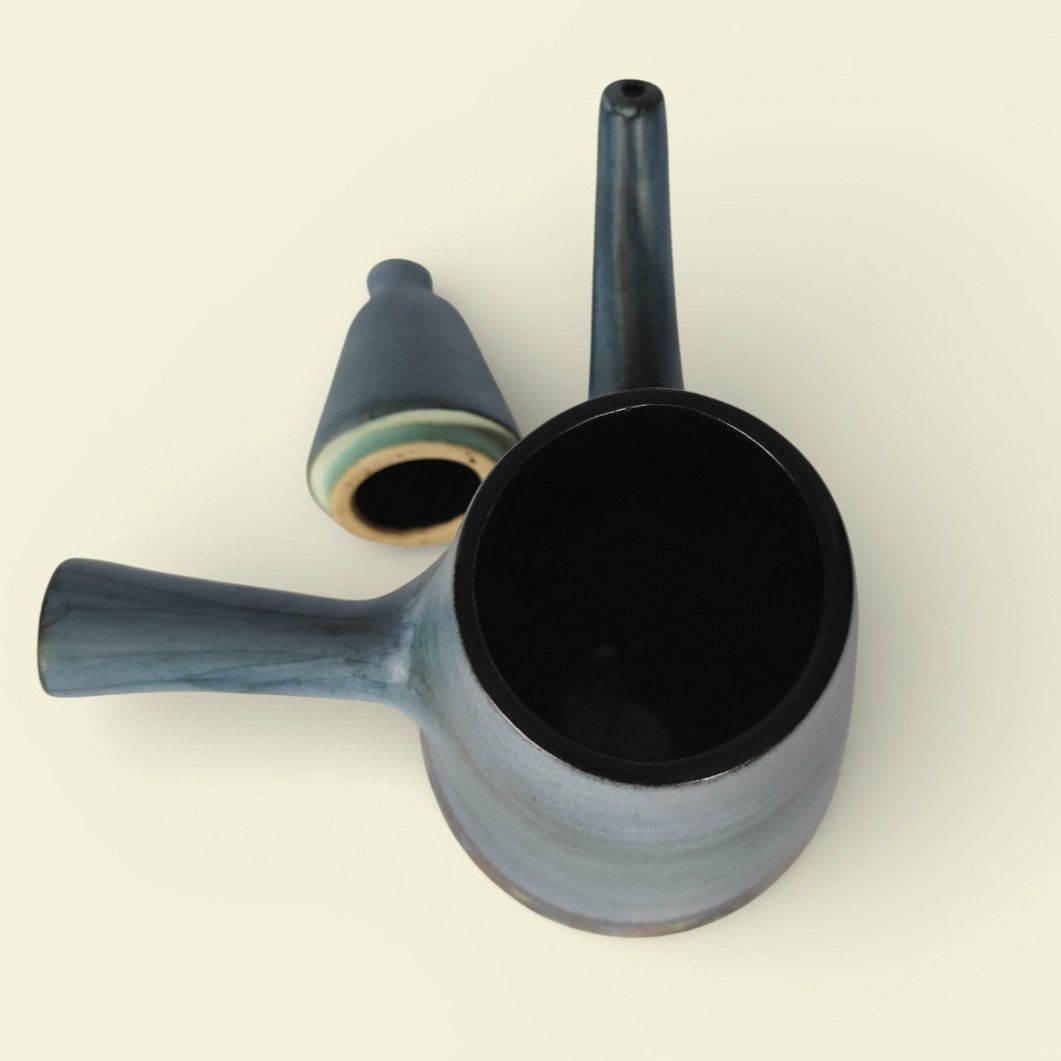
It features a magnificent organic decoration with contrasting colors on a matte blue background. Its asymmetrical shape, with the handle and spout angled in an original way, makes it a very decorative piece. The inside of the coffee pot is covered with a glossy black enamel that also contrasts with the soft, velvety matte blue exterior enamel.
A member of the French Resistance on the French Riviera during World War II, Jean de Lespinasse created a local craft business at the end of the conflict, then founded SOCFRA with his wife, producing ceramics from the late 1940s. Their path then crossed with that of Roger Capron and his wife Jacotte, of the Madoura workshops, Robert Picault, and Georges Tardieu.
The ceramics workshop, located in the Cimiez district of Nice, employs about ten people (molding, creating objects, firing bisque, decorating, glazing, cooking, etc.). The raw materials used for making the biscuits, and later for glazing the pieces, were purchased in Vallauris. The ceramics were initially sold in shops on the French Riviera, then throughout France and abroad.
Twice a year, the collections were presented at the Lyon Fair and the Salon des Arts du Feu in Paris. The workshop also rented shops during the summer season in Sainte-Maxime (from 1958 to 1961), Saint-Paul-de-Vence, and Vallauris (hence the presence of this town's name under some pieces), to sell its Nice-made production.
The pieces generally bear the acronym "jdl" as well as a number, corresponding to the catalog used by Lespinasse and his son-in-law during their sales tours. The workshop ceased operations in the early 1980s, after the founder's death.
Pieces signed by the Jean de Lespinasse workshop are generally large, dynamic, and highly structured. What stands out most is the superb enamel work, between matte and glossy, which testifies to a great mastery of ceramic art.
It features a magnificent organic decoration with contrasting colors on a matte blue background. Its asymmetrical shape, with the handle and spout angled in an original way, makes it a very decorative piece. The inside of the coffee pot is covered with a glossy black enamel that also contrasts with the soft, velvety matte blue exterior enamel.
A member of the French Resistance on the French Riviera during World War II, Jean de Lespinasse created a local craft business at the end of the conflict, then founded SOCFRA with his wife, producing ceramics from the late 1940s. Their path then crossed with that of Roger Capron and his wife Jacotte, of the Madoura workshops, Robert Picault, and Georges Tardieu.
The ceramics workshop, located in the Cimiez district of Nice, employs about ten people (molding, creating objects, firing bisque, decorating, glazing, cooking, etc.). The raw materials used for making the biscuits, and later for glazing the pieces, were purchased in Vallauris. The ceramics were initially sold in shops on the French Riviera, then throughout France and abroad.
Twice a year, the collections were presented at the Lyon Fair and the Salon des Arts du Feu in Paris. The workshop also rented shops during the summer season in Sainte-Maxime (from 1958 to 1961), Saint-Paul-de-Vence, and Vallauris (hence the presence of this town's name under some pieces), to sell its Nice-made production.
The pieces generally bear the acronym "jdl" as well as a number, corresponding to the catalog used by Lespinasse and his son-in-law during their sales tours. The workshop ceased operations in the early 1980s, after the founder's death.
Pieces signed by the Jean de Lespinasse workshop are generally large, dynamic, and highly structured. What stands out most is the superb enamel work, between matte and glossy, which testifies to a great mastery of ceramic art.
675 €
Period: 20th century
Style: Design 50's and 60's
Condition: Excellent condition
Material: Ceramic
Diameter: 23 cm
Height: 32 cm
Reference (ID): 1696071
Availability: In stock
Print