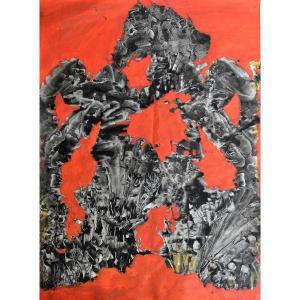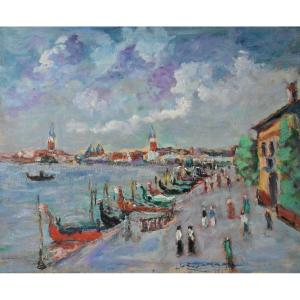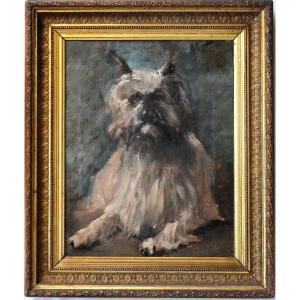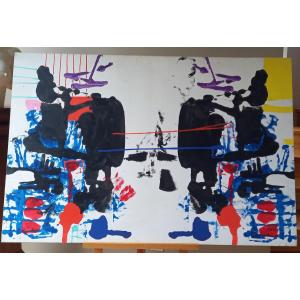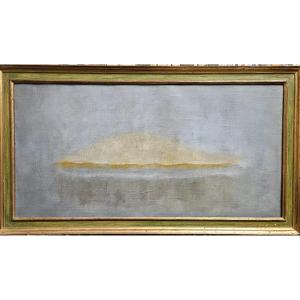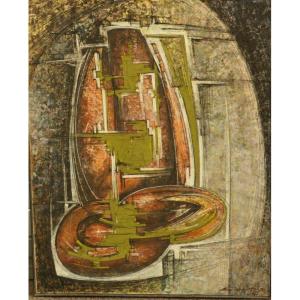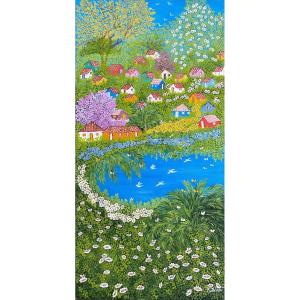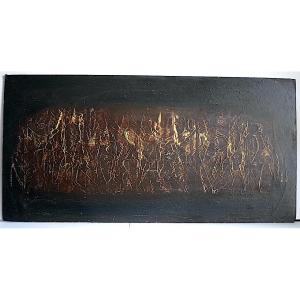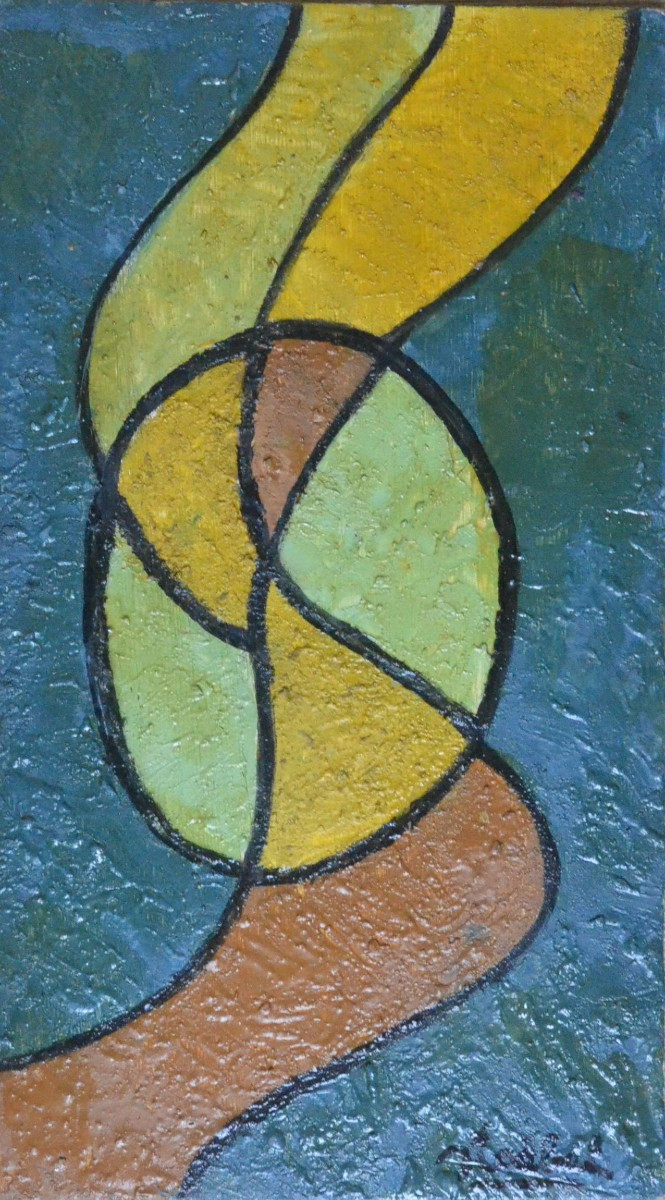
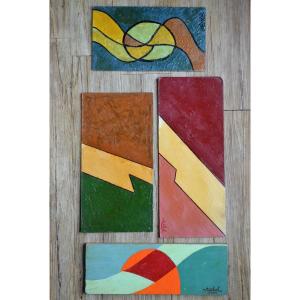


“set Of 4 Figura-synthesis” By Edgar Stoëbel (1909-2001)
Artist: Edgar Stoëbel (1909 -2001)
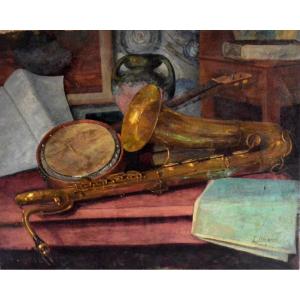
In 1960, Edgar Stoebel invented his own visual language, which he called "Figura-synthesis." Figura-synthesis is the image one forms of an object, not the object in its actual form as it appears to us: it is subjective and represents only an unreal form on all levels. The relationship between these forms constitutes Figura-synthesis.
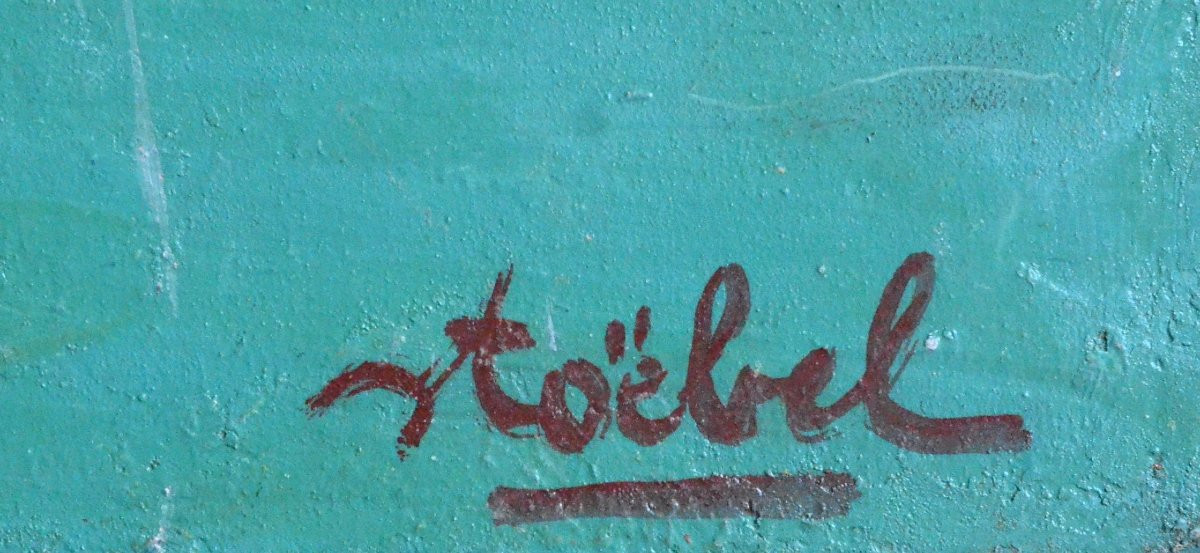
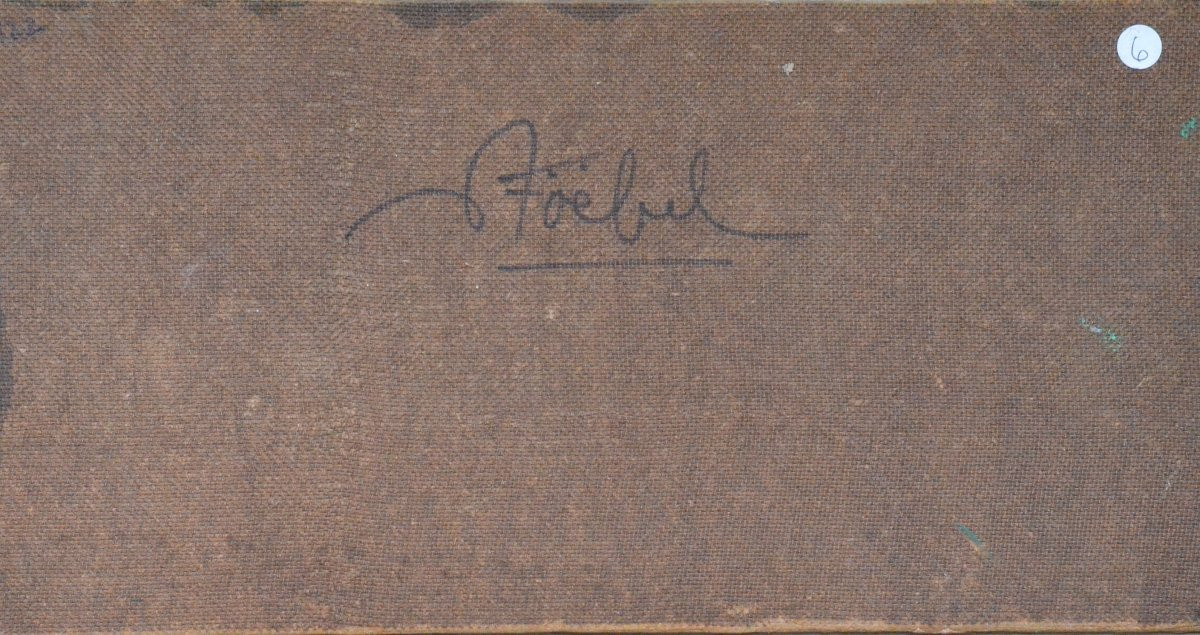
Set of four oil paintings on panel. Three are signed on the artwork, the fourth is signed on the back.
Dimensions of the works in centimeters: 21.5 x 42 / 20 x 48.5 / 34.5 x 19.5 / 14.5 x 42
Good condition.
Shipping: Secure packaging and delivery via Colissimo registered mail with insurance, for mainland France: €25 - Europe: €35. From a very young age, Edgar Stoëbel was drawn to music and the graphic arts, these art forms remaining closely intertwined throughout his life.
In Oran, he founded a small conservatory with seventeen musicians and conducted an orchestra.
In 1931, he moved to Paris to pursue his musical studies. He studied with Professor Léon Eugène Moreau (winner of the Grand Prix de Rome), who taught him harmony, counterpoint, fugue, and piano until 1939 and the outbreak of World War II. Mobilized, he joined his infantry unit.
In 1940, faced with the rise of Nazism, he returned to Algeria where he painted and drew, and later conducted an orchestra until 1942. Figurative works from this period can be found in collections in Algeria.
After the German surrender on May 8, 1945, he was repatriated to Paris. He then founded Éditions Stoëbel, wrote music and songs which he produced, touring extensively until the advent of the long-playing record.
From 1945-1946 onwards, he gradually abandoned music to devote himself entirely to painting and drawing.
Between 1946 and 1950, he notably created numerous figurative views of Parisian locations: Montmartre, Place Clichy, and Pigalle.
From 1950, he frequented the Montparnasse artists' scene and became friends with the sculptor Anton Prinner, as well as with Pierre Loeb and Picasso. He also connected with artists from the Rue de la Grange-Batelière: Henri Goetz, Mondzain, Michonze, and Meyer Lazar.
In the 1970s, he met an Irish woman in Montparnasse who introduced him to the Olympia pub. In the evenings, he sang his songs there: "Le Beau Paulo," "La Fille du marinero," and "La Joconde à Paulo," which were very successful. During these years, he drew and painted in the afternoons.
Jacques Martin made a film about the life of Stoëbel, painter and singer at the Pub Olympia.
In 1960, he invented his own style, which he called "Figura-synthesis." "Figura-synthesis" is the image one forms of an object, not the object in its actual form as it appears to us: it is subjective and represents only an unreal form on all levels. The relationship between the forms constitutes "Figura-synthesis."
This made Stoëbel a painter with a recognizable style. Emmanuel David, art dealer and collector, described it this way: "When faced with a canvas by this artist, one is struck by the personality in the conception and execution of the work." The sincerity of the emotion, the richness of the tone and color, the sensitivity and simplicity of the synthetic composition, create a balance of volumes, a poetry, where dream and musicality give this work its full originality and quality.
Stoëbel's painting of the 1960s belongs to the post-war concrete abstraction movement, or concrete art, also called Constructivist Art.
Long confined by art critics to what happened in painting in Paris and especially in New York, concrete abstraction was in reality a global movement that developed from South America to Northern Europe and could not be reduced solely to the French easel paintings of Bazaine, Manessier, Hartung, Estève, or Gischia.
This movement, as Véronique Wiesinger mentions in her introduction to Abstractions in France and Italy 1945-1975 around Jean Leppien, catalogue of the exhibition at the Strasbourg Museum from November 1999 to February 2000, "far from being the artificial echo of the pre-war School of Paris, or a response to American abstract expressionism, [...] is indeed, until the mid-1970s, the last firework of the modern movement, lighting all the fires that are still burning today."Museums:
• Musée du Montparnasse, Paris, France
• Beit Uri and Rami Nechustan Museum, Israel
• Dimona Museum, Israel
• Eilat Museum, Israel
Exhibitions and Salons:
• Member of the Association of Jewish Painters, Sculptors, and Engravers of France
• Salon des Artistes Français
• Salon d'Automne
• Salon de l'Art Libre
• 1955: Selected for the Grand Prix International de Deauville
• 1958: Solo Exhibition, Galerie Briard, Marseille
• 1960: Villa Robioni, Promenade des Anglais, Nice
• 36th Salon Berruyer, presided over by Lucien Lautrec, at the École Nationale des Beaux-Arts de Bourges
• 1963: Galerie Bernard Chêne, Paris
• Galerie Montpensier, Palais Royal, Paris
• Galerie Louisa Carrière, Paris
• Galerie Jory, Faubourg Saint-Honoré, Paris
• 1963: Galerie La Galère, Paris
• 1969: Waldorf Gallery, Copenhagen, Denmark
• 1972: Jewish Art Cultural Center, Paris
• 1973: Claude Jory Gallery, Faubourg Saint-Honoré, Paris
• Winner of the WIZO poster competition
• 1974: Beit Uri and Rami Nechusht Museum, Ashdot Ya'Aqov, Israel
• Hakibutz Hameuhad, Israel
• Emek Hajarden National Monument, Israel
• Dimona Museum, Israel
• Eilat Museum, Israel
• 1982: Silver Medal of the City of Paris for a Figura-synthesis
• 2001: Le Musée Privé Gallery, Paris
• 2006: Daniel Besseiche Gallery, Courchevel
• 2006: Montparnasse Museum, Paris
• 2007: Gérard Hadjer Gallery, Paris 8th arrondissement
• 2009 Karine Marquet Gallery, Paris
Bibliography:
• Edgar Stoebel, monograph on Lydia Harambourg, published by Cercle d'Art, 2007
• Bénézit, Dictionary of Painters, Sculptors, and Draughtsmen
Set of four oil paintings on panel. Three are signed on the artwork, the fourth is signed on the back.
Dimensions of the works in centimeters: 21.5 x 42 / 20 x 48.5 / 34.5 x 19.5 / 14.5 x 42
Good condition.
Shipping: Secure packaging and delivery via Colissimo registered mail with insurance, for mainland France: €25 - Europe: €35. From a very young age, Edgar Stoëbel was drawn to music and the graphic arts, these art forms remaining closely intertwined throughout his life.
In Oran, he founded a small conservatory with seventeen musicians and conducted an orchestra.
In 1931, he moved to Paris to pursue his musical studies. He studied with Professor Léon Eugène Moreau (winner of the Grand Prix de Rome), who taught him harmony, counterpoint, fugue, and piano until 1939 and the outbreak of World War II. Mobilized, he joined his infantry unit.
In 1940, faced with the rise of Nazism, he returned to Algeria where he painted and drew, and later conducted an orchestra until 1942. Figurative works from this period can be found in collections in Algeria.
After the German surrender on May 8, 1945, he was repatriated to Paris. He then founded Éditions Stoëbel, wrote music and songs which he produced, touring extensively until the advent of the long-playing record.
From 1945-1946 onwards, he gradually abandoned music to devote himself entirely to painting and drawing.
Between 1946 and 1950, he notably created numerous figurative views of Parisian locations: Montmartre, Place Clichy, and Pigalle.
From 1950, he frequented the Montparnasse artists' scene and became friends with the sculptor Anton Prinner, as well as with Pierre Loeb and Picasso. He also connected with artists from the Rue de la Grange-Batelière: Henri Goetz, Mondzain, Michonze, and Meyer Lazar.
In the 1970s, he met an Irish woman in Montparnasse who introduced him to the Olympia pub. In the evenings, he sang his songs there: "Le Beau Paulo," "La Fille du marinero," and "La Joconde à Paulo," which were very successful. During these years, he drew and painted in the afternoons.
Jacques Martin made a film about the life of Stoëbel, painter and singer at the Pub Olympia.
In 1960, he invented his own style, which he called "Figura-synthesis." "Figura-synthesis" is the image one forms of an object, not the object in its actual form as it appears to us: it is subjective and represents only an unreal form on all levels. The relationship between the forms constitutes "Figura-synthesis."
This made Stoëbel a painter with a recognizable style. Emmanuel David, art dealer and collector, described it this way: "When faced with a canvas by this artist, one is struck by the personality in the conception and execution of the work." The sincerity of the emotion, the richness of the tone and color, the sensitivity and simplicity of the synthetic composition, create a balance of volumes, a poetry, where dream and musicality give this work its full originality and quality.
Stoëbel's painting of the 1960s belongs to the post-war concrete abstraction movement, or concrete art, also called Constructivist Art.
Long confined by art critics to what happened in painting in Paris and especially in New York, concrete abstraction was in reality a global movement that developed from South America to Northern Europe and could not be reduced solely to the French easel paintings of Bazaine, Manessier, Hartung, Estève, or Gischia.
This movement, as Véronique Wiesinger mentions in her introduction to Abstractions in France and Italy 1945-1975 around Jean Leppien, catalogue of the exhibition at the Strasbourg Museum from November 1999 to February 2000, "far from being the artificial echo of the pre-war School of Paris, or a response to American abstract expressionism, [...] is indeed, until the mid-1970s, the last firework of the modern movement, lighting all the fires that are still burning today."Museums:
• Musée du Montparnasse, Paris, France
• Beit Uri and Rami Nechustan Museum, Israel
• Dimona Museum, Israel
• Eilat Museum, Israel
Exhibitions and Salons:
• Member of the Association of Jewish Painters, Sculptors, and Engravers of France
• Salon des Artistes Français
• Salon d'Automne
• Salon de l'Art Libre
• 1955: Selected for the Grand Prix International de Deauville
• 1958: Solo Exhibition, Galerie Briard, Marseille
• 1960: Villa Robioni, Promenade des Anglais, Nice
• 36th Salon Berruyer, presided over by Lucien Lautrec, at the École Nationale des Beaux-Arts de Bourges
• 1963: Galerie Bernard Chêne, Paris
• Galerie Montpensier, Palais Royal, Paris
• Galerie Louisa Carrière, Paris
• Galerie Jory, Faubourg Saint-Honoré, Paris
• 1963: Galerie La Galère, Paris
• 1969: Waldorf Gallery, Copenhagen, Denmark
• 1972: Jewish Art Cultural Center, Paris
• 1973: Claude Jory Gallery, Faubourg Saint-Honoré, Paris
• Winner of the WIZO poster competition
• 1974: Beit Uri and Rami Nechusht Museum, Ashdot Ya'Aqov, Israel
• Hakibutz Hameuhad, Israel
• Emek Hajarden National Monument, Israel
• Dimona Museum, Israel
• Eilat Museum, Israel
• 1982: Silver Medal of the City of Paris for a Figura-synthesis
• 2001: Le Musée Privé Gallery, Paris
• 2006: Daniel Besseiche Gallery, Courchevel
• 2006: Montparnasse Museum, Paris
• 2007: Gérard Hadjer Gallery, Paris 8th arrondissement
• 2009 Karine Marquet Gallery, Paris
Bibliography:
• Edgar Stoebel, monograph on Lydia Harambourg, published by Cercle d'Art, 2007
• Bénézit, Dictionary of Painters, Sculptors, and Draughtsmen
180 €
Period: 20th century
Style: Modern Art
Condition: Good condition
Material: Oil painting on wood
Reference (ID): 1693103
Availability: In stock
Print