

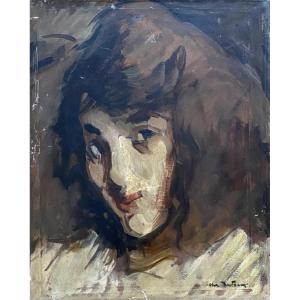


Portrait Of A Young Girl - Oil On Canvas Signed Abel Bertram (1871-1954)
Artist: Abel Bertram (1871-1954)
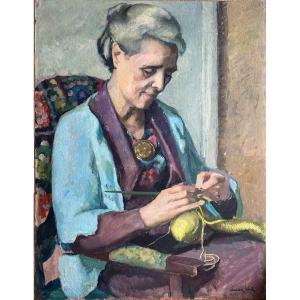
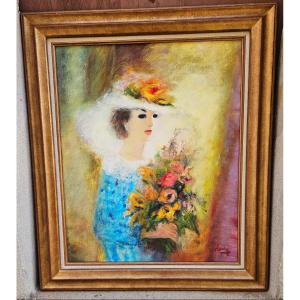
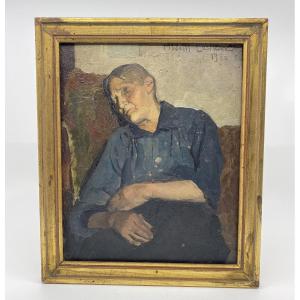
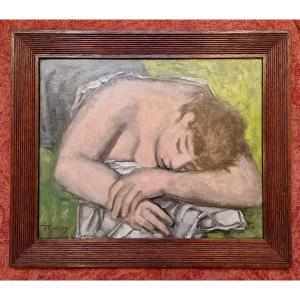
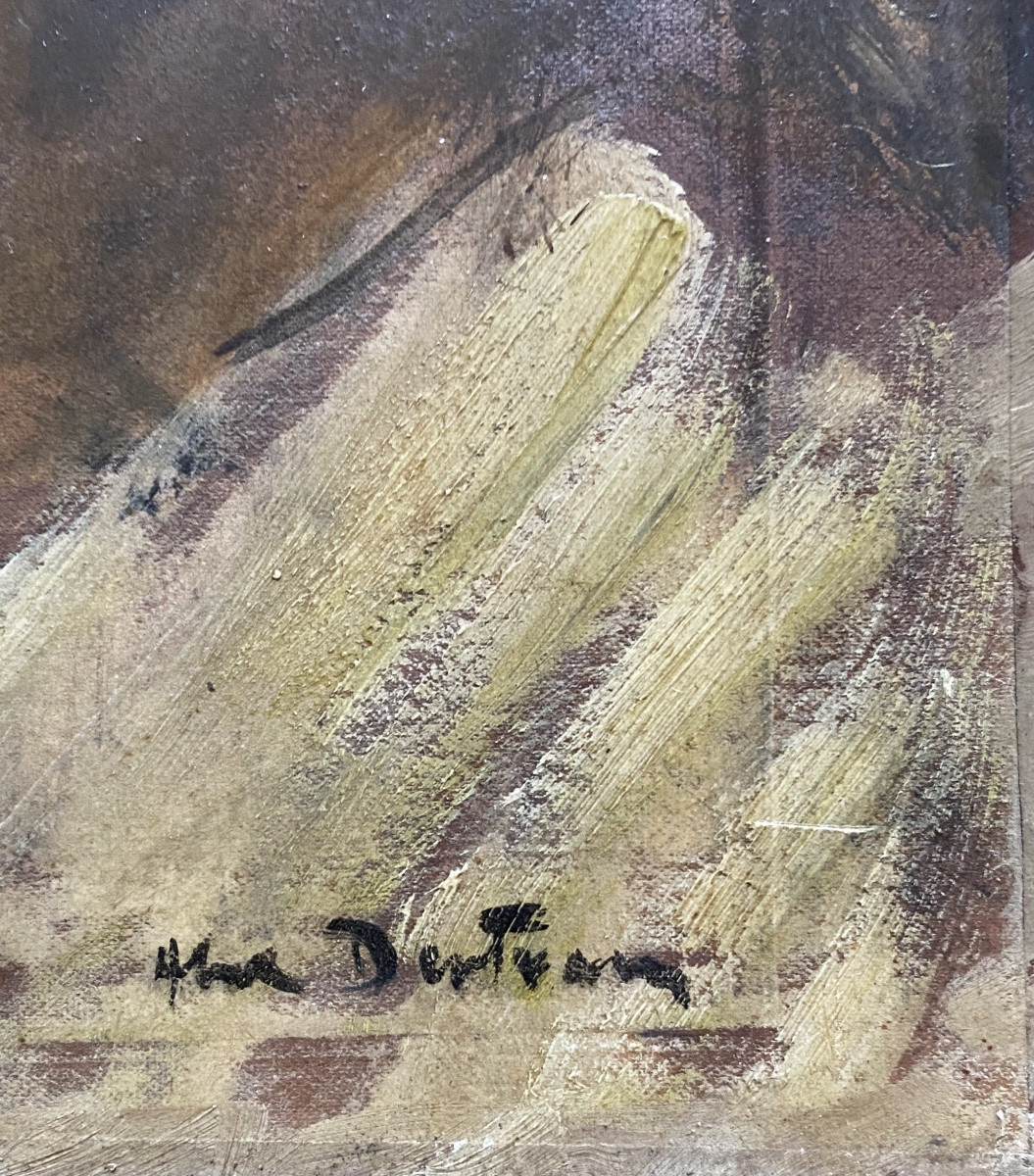
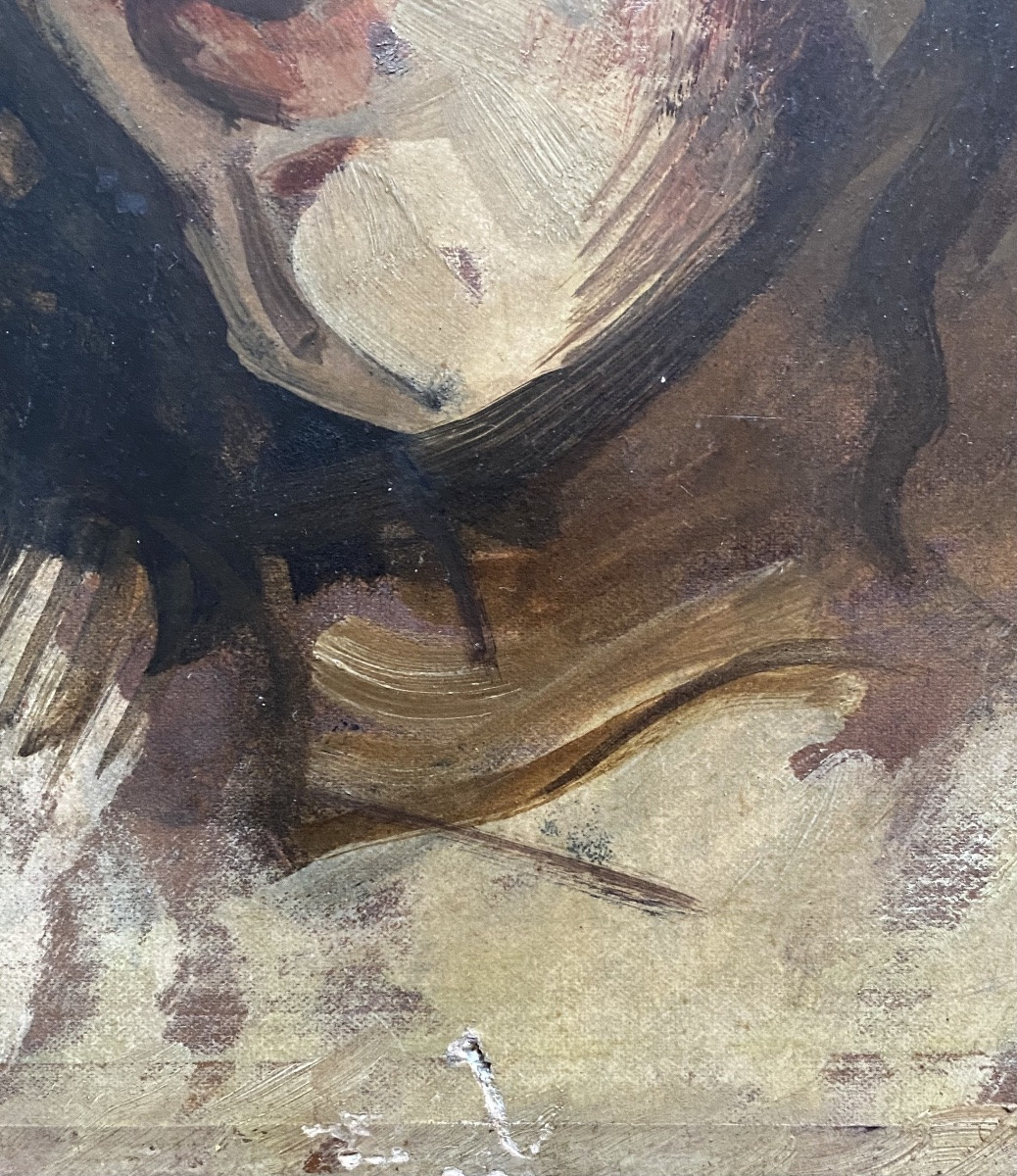
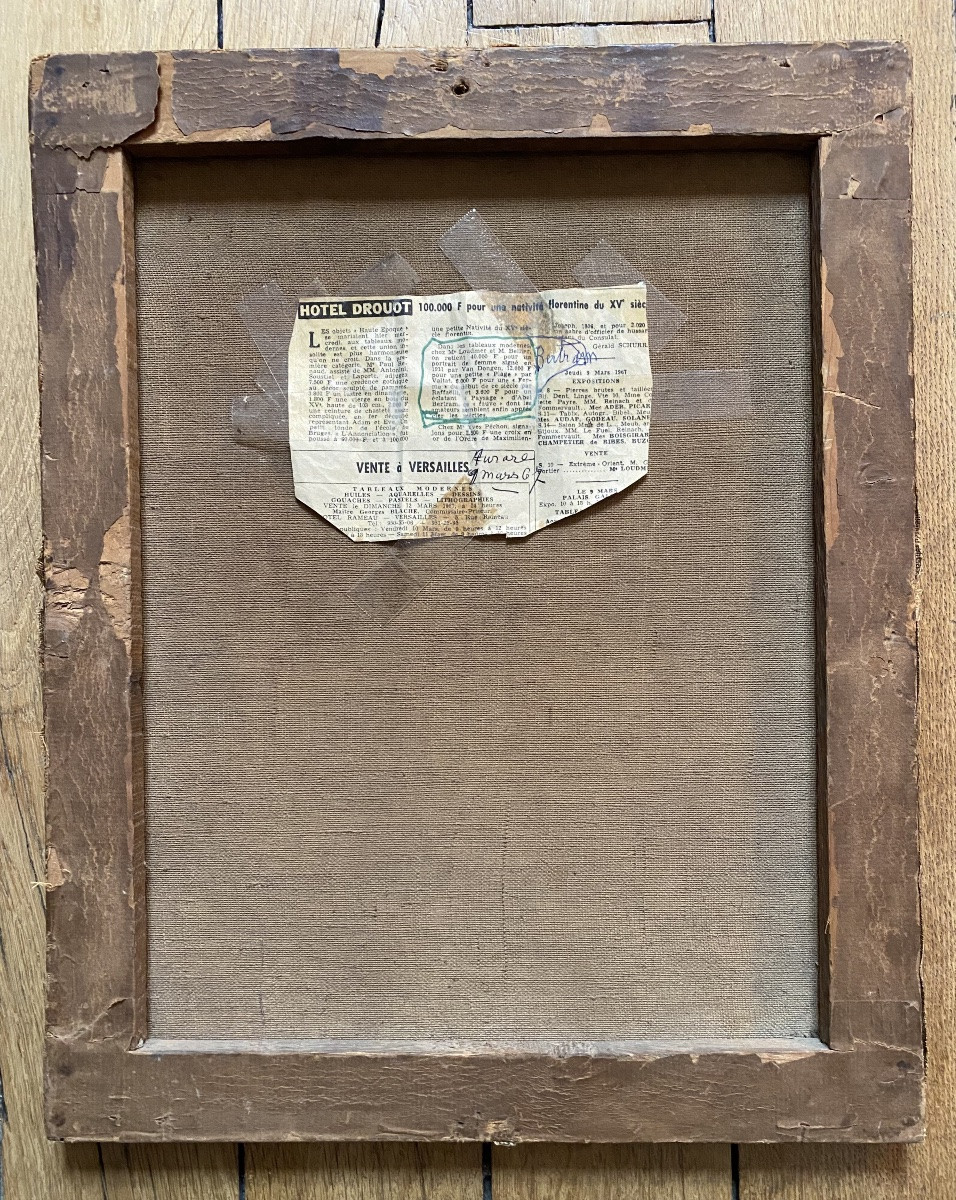
Oil on canvas, signed lower right Abel Bertram (1871-1954), depicting a portrait of a young girl from the early 20th century. The canvas is old and in good condition, despite some minor losses (see photos). Dimensions: 41 x 33 cm
Abel Bertram was born in Saint-Omer in 1871 into a middle-class family. The son of a transport contractor, Louis Bertram, he spent his childhood peacefully with his two sisters and his mother, Léonie, in the old 17th-century quarters of Saint-Omer, a city he held dear throughout his life. His artistic sensibility undoubtedly developed through his contact with nature in Clairmarais. The sight of the marshes, the light, the canals, the wind, the birds: everything came together to define his vocation.
He began his studies at the School of Fine Arts in Saint-Omer under the direction of Auguste Pollet. He wrote these few words about his teacher: “As a student at the Saint-Omer School of Fine Arts, I received excellent advice from him because he had a broad vision and was an enemy of detail, for, in my opinion, detail is the antithesis of Art. The Impressionists were a salutary influence on modern art.”
From 1888 to 1891, he attended the Lille School of Fine Arts, without his parents’ objections. Under the tutelage of Pharaon de Winter, he submitted to a rigorous discipline and developed his drawing skills. In 1889, he won a third prize for painting (still life). In 1890, he left for Paris and, in October 1891, successfully passed the entrance exam for the Paris School of Fine Arts. He entered the studio of Bonnat, a famous and fashionable artist at the time. He was accepted there on the advice of Pharaon de Winter. His primary goal was to acquire solid technical skills under the guidance of a demanding master. Having earned Bonnat's trust, he was appointed head of his studio. He thus represented his fellow students and managed the pooled funds used for the group's expenses and each member's training. He worked there alongside Frietz and Dufy.
In 1892, he exhibited a portrait of his mother in Saint-Omer and, shortly after, a portrait of two children. In 1896, at the annual studio competition, he won a second prize and a first medal for painted figures. In 1897, he received an honorable mention. In 1898, he achieved further success at the School's competition, winning a third prize and a first medal for painted sketches. Bonnat, like all the professors at the École des Beaux-Arts in Paris, was obsessed with the Prix de Rome competition. Bertram was admitted three times on his first attempt: first place on his first try, then sixth place on his second, and tenth on his third; it should be noted that only 20 out of 250 candidates were admitted. In 1898, he decided to break free from his classical training. He asserted his independence by abruptly ending his studies and leaving Paris. He took refuge in Saint-Omer, and his first submission to the Salon des Artistes Français dates from 1899. There he exhibited "Le Soir" (Evening), a work in a classical style.
In early 1900, he settled in Morlaix, in the Ponthieu region, and then in Noyelles-sur-Mer. He submitted numerous works to the Salon des Artistes Français. In 1900, the artist exhibited a full-length portrait. In 1901, two new works were shown at the Salon: *Les Maraichères Flamandes* (The Flemish Market Gardeners) and *En Flandre* (In Flanders) (medal of honor). The latter was purchased by the State for the Arras Museum. Around this time, he met the landscape painter Antoine Guillemet, whose invaluable advice allowed Abel Bertram to develop and achieve greater mastery in his plein air painting. He won the gold medal at the Lille Fine Arts Exhibition with *Soir en Flandre* (Evening in Flanders).
In 1906, he became a member of the Salon of the Société des Beaux-Arts. He exhibited two paintings there: *Le Batelier* (The Boatman), purchased by the State and exhibited at the Carnegie Institute in Pittsburgh, and *Chaumière d’Artois* (Thatched Cottage in Artois), which was in the drawing room of the President of the Senate at that time. In 1908, he exhibited two works: "Bonjour" (out of competition) and "Le Berger" (The Shepherd). In 1909, two more works: "Un Nouvel Ami" (out of competition) and "Fillette au Soleil" (Little Girl in the Sun). That same year, he received a significant commission from the State: a decorative panel, actually a triptych, for the Prefecture of Châteauroux. At the 1910 Salon, this latter work earned him critical acclaim from the entire Parisian and provincial press and definitively established him among the most refined painters of plein air figures. In 1911, he exhibited at the Galerie Georges Petit. The State purchased "Le Batelier" (The Boatman) for the Musée du Luxembourg and "Les Capucines" (The Nasturtiums) for the Musée de Cannes. In 1912, Abel left the Société des Artistes Français and exhibited at the Salon of the Société Nationale des Beaux-Arts. He exhibited regularly at the Salon d'Automne until 1938, becoming a member of the latter in 1920, as well as at the Salon des Tuileries from 192
Abel Bertram was born in Saint-Omer in 1871 into a middle-class family. The son of a transport contractor, Louis Bertram, he spent his childhood peacefully with his two sisters and his mother, Léonie, in the old 17th-century quarters of Saint-Omer, a city he held dear throughout his life. His artistic sensibility undoubtedly developed through his contact with nature in Clairmarais. The sight of the marshes, the light, the canals, the wind, the birds: everything came together to define his vocation.
He began his studies at the School of Fine Arts in Saint-Omer under the direction of Auguste Pollet. He wrote these few words about his teacher: “As a student at the Saint-Omer School of Fine Arts, I received excellent advice from him because he had a broad vision and was an enemy of detail, for, in my opinion, detail is the antithesis of Art. The Impressionists were a salutary influence on modern art.”
From 1888 to 1891, he attended the Lille School of Fine Arts, without his parents’ objections. Under the tutelage of Pharaon de Winter, he submitted to a rigorous discipline and developed his drawing skills. In 1889, he won a third prize for painting (still life). In 1890, he left for Paris and, in October 1891, successfully passed the entrance exam for the Paris School of Fine Arts. He entered the studio of Bonnat, a famous and fashionable artist at the time. He was accepted there on the advice of Pharaon de Winter. His primary goal was to acquire solid technical skills under the guidance of a demanding master. Having earned Bonnat's trust, he was appointed head of his studio. He thus represented his fellow students and managed the pooled funds used for the group's expenses and each member's training. He worked there alongside Frietz and Dufy.
In 1892, he exhibited a portrait of his mother in Saint-Omer and, shortly after, a portrait of two children. In 1896, at the annual studio competition, he won a second prize and a first medal for painted figures. In 1897, he received an honorable mention. In 1898, he achieved further success at the School's competition, winning a third prize and a first medal for painted sketches. Bonnat, like all the professors at the École des Beaux-Arts in Paris, was obsessed with the Prix de Rome competition. Bertram was admitted three times on his first attempt: first place on his first try, then sixth place on his second, and tenth on his third; it should be noted that only 20 out of 250 candidates were admitted. In 1898, he decided to break free from his classical training. He asserted his independence by abruptly ending his studies and leaving Paris. He took refuge in Saint-Omer, and his first submission to the Salon des Artistes Français dates from 1899. There he exhibited "Le Soir" (Evening), a work in a classical style.
In early 1900, he settled in Morlaix, in the Ponthieu region, and then in Noyelles-sur-Mer. He submitted numerous works to the Salon des Artistes Français. In 1900, the artist exhibited a full-length portrait. In 1901, two new works were shown at the Salon: *Les Maraichères Flamandes* (The Flemish Market Gardeners) and *En Flandre* (In Flanders) (medal of honor). The latter was purchased by the State for the Arras Museum. Around this time, he met the landscape painter Antoine Guillemet, whose invaluable advice allowed Abel Bertram to develop and achieve greater mastery in his plein air painting. He won the gold medal at the Lille Fine Arts Exhibition with *Soir en Flandre* (Evening in Flanders).
In 1906, he became a member of the Salon of the Société des Beaux-Arts. He exhibited two paintings there: *Le Batelier* (The Boatman), purchased by the State and exhibited at the Carnegie Institute in Pittsburgh, and *Chaumière d’Artois* (Thatched Cottage in Artois), which was in the drawing room of the President of the Senate at that time. In 1908, he exhibited two works: "Bonjour" (out of competition) and "Le Berger" (The Shepherd). In 1909, two more works: "Un Nouvel Ami" (out of competition) and "Fillette au Soleil" (Little Girl in the Sun). That same year, he received a significant commission from the State: a decorative panel, actually a triptych, for the Prefecture of Châteauroux. At the 1910 Salon, this latter work earned him critical acclaim from the entire Parisian and provincial press and definitively established him among the most refined painters of plein air figures. In 1911, he exhibited at the Galerie Georges Petit. The State purchased "Le Batelier" (The Boatman) for the Musée du Luxembourg and "Les Capucines" (The Nasturtiums) for the Musée de Cannes. In 1912, Abel left the Société des Artistes Français and exhibited at the Salon of the Société Nationale des Beaux-Arts. He exhibited regularly at the Salon d'Automne until 1938, becoming a member of the latter in 1920, as well as at the Salon des Tuileries from 192
750 €
Period: 20th century
Style: Modern Art
Condition: Some scratches and chips
Material: Oil painting
Width: 33 cm
Height: 41 cm
Reference (ID): 1692213
Availability: In stock
Print