


Silver And Crystal Mechanical Sweetmeat Dish With Camellia By Debain, Louis-philippe Period
Artist: François-alphonse Debain
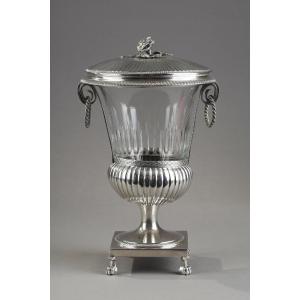
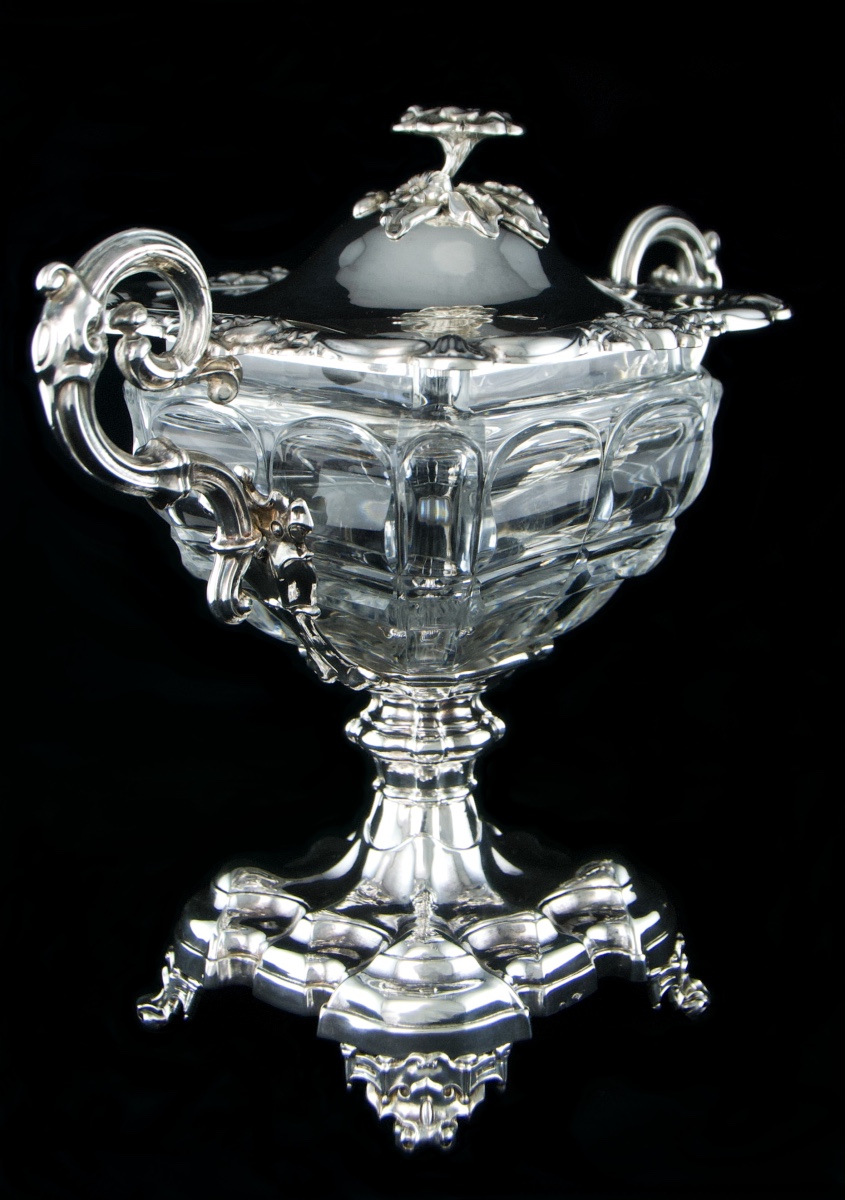
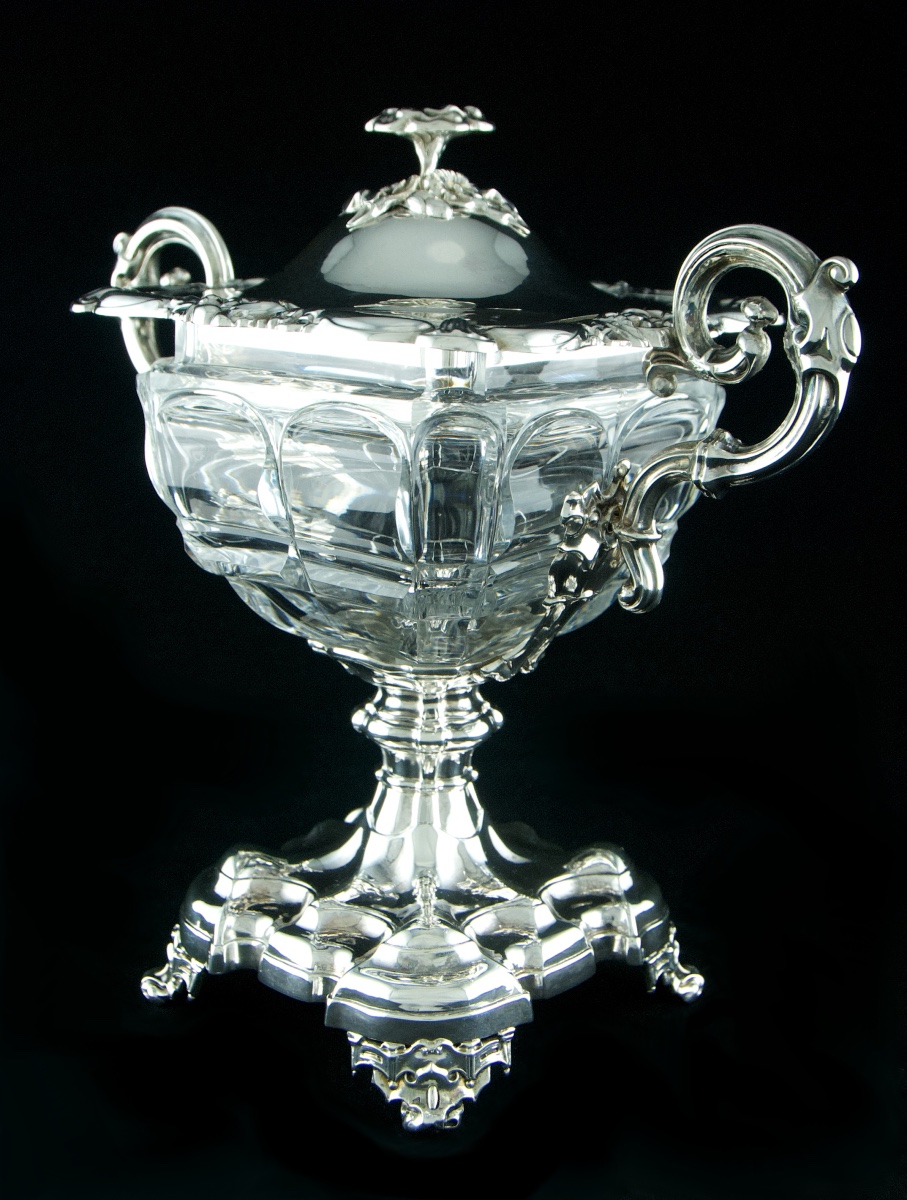
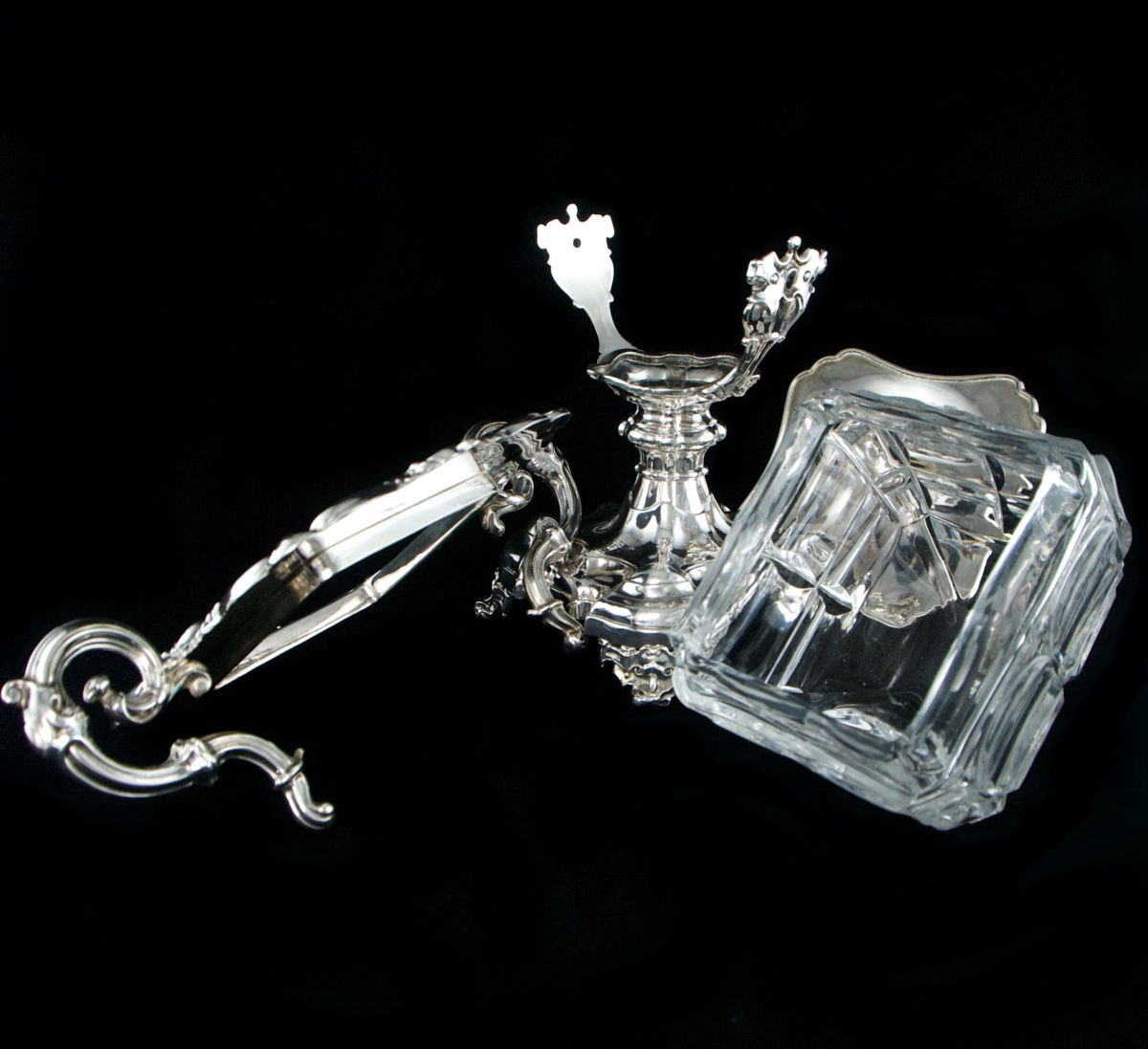
Superb covered sweetmeat dish in solid silver (first standard 950 per 1000) and moulded cut crystal.
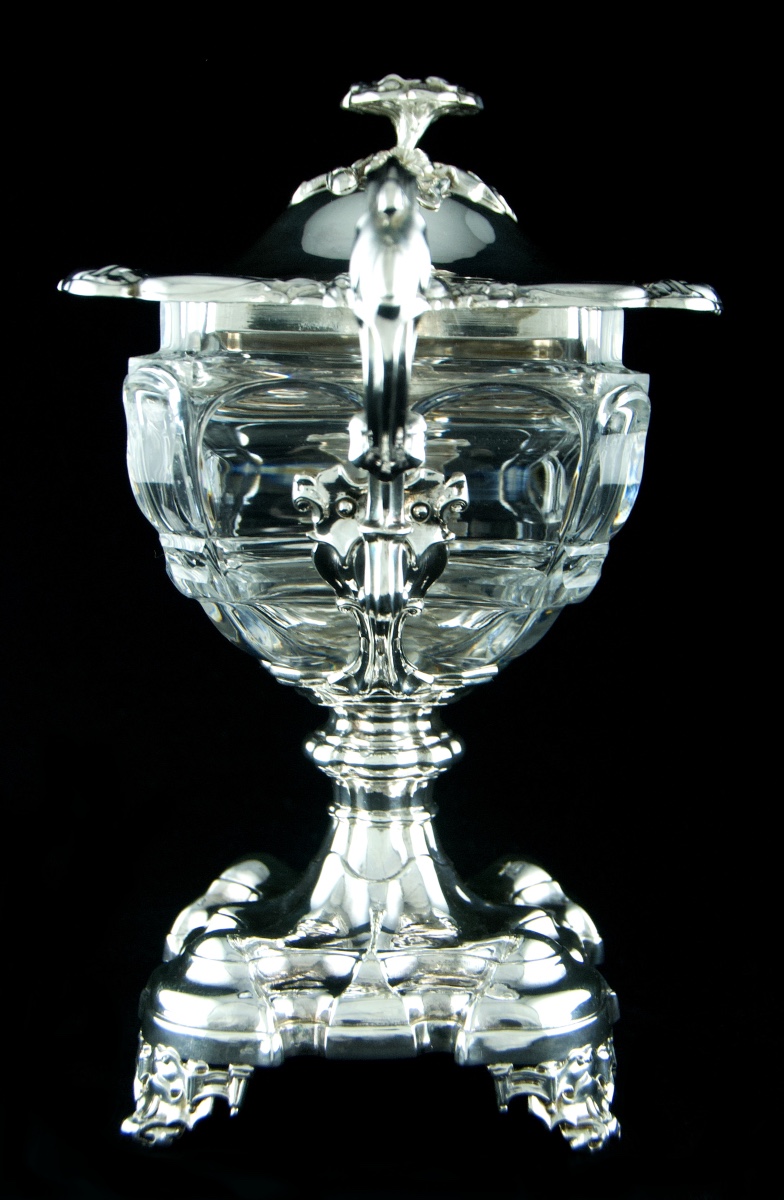
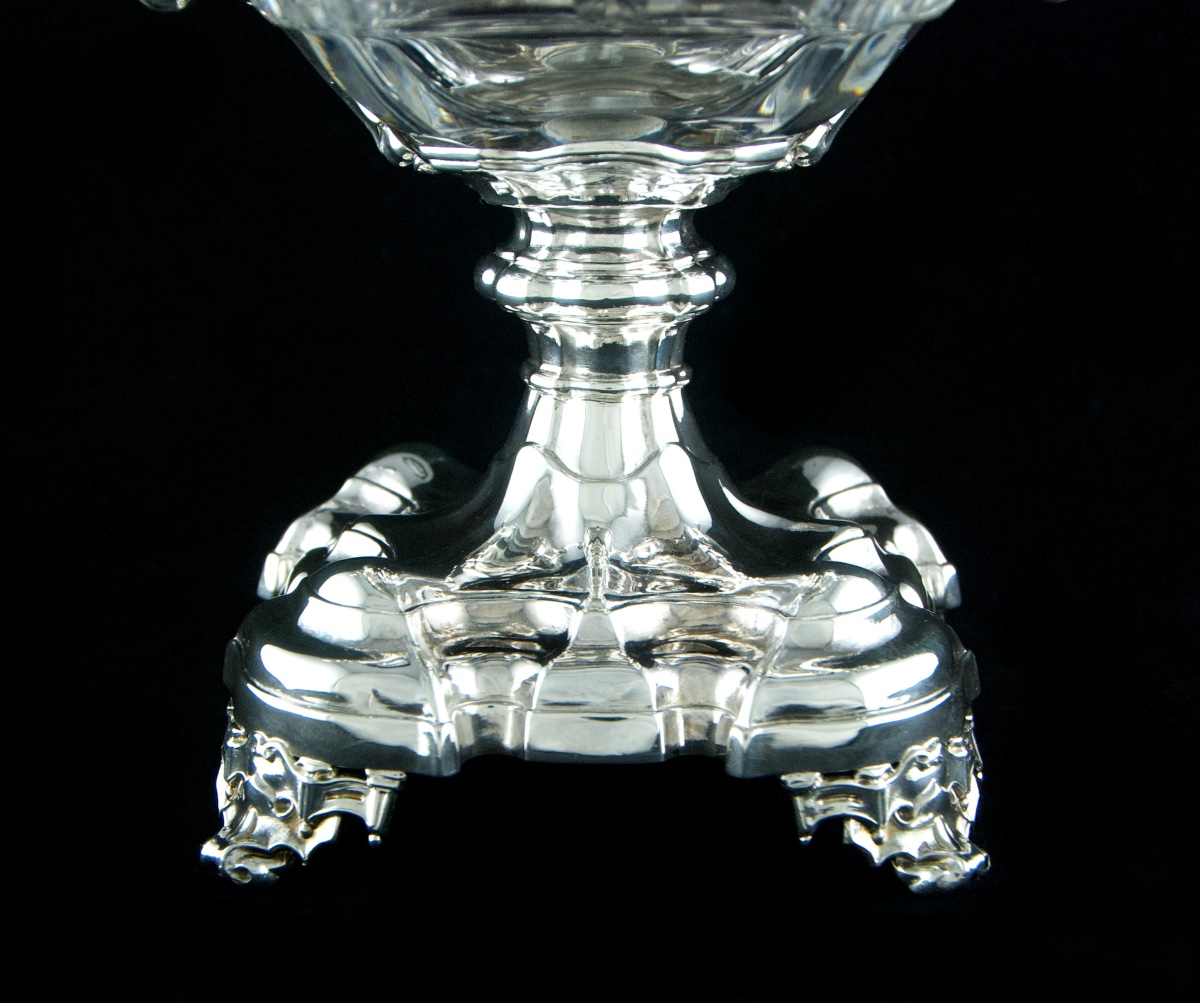
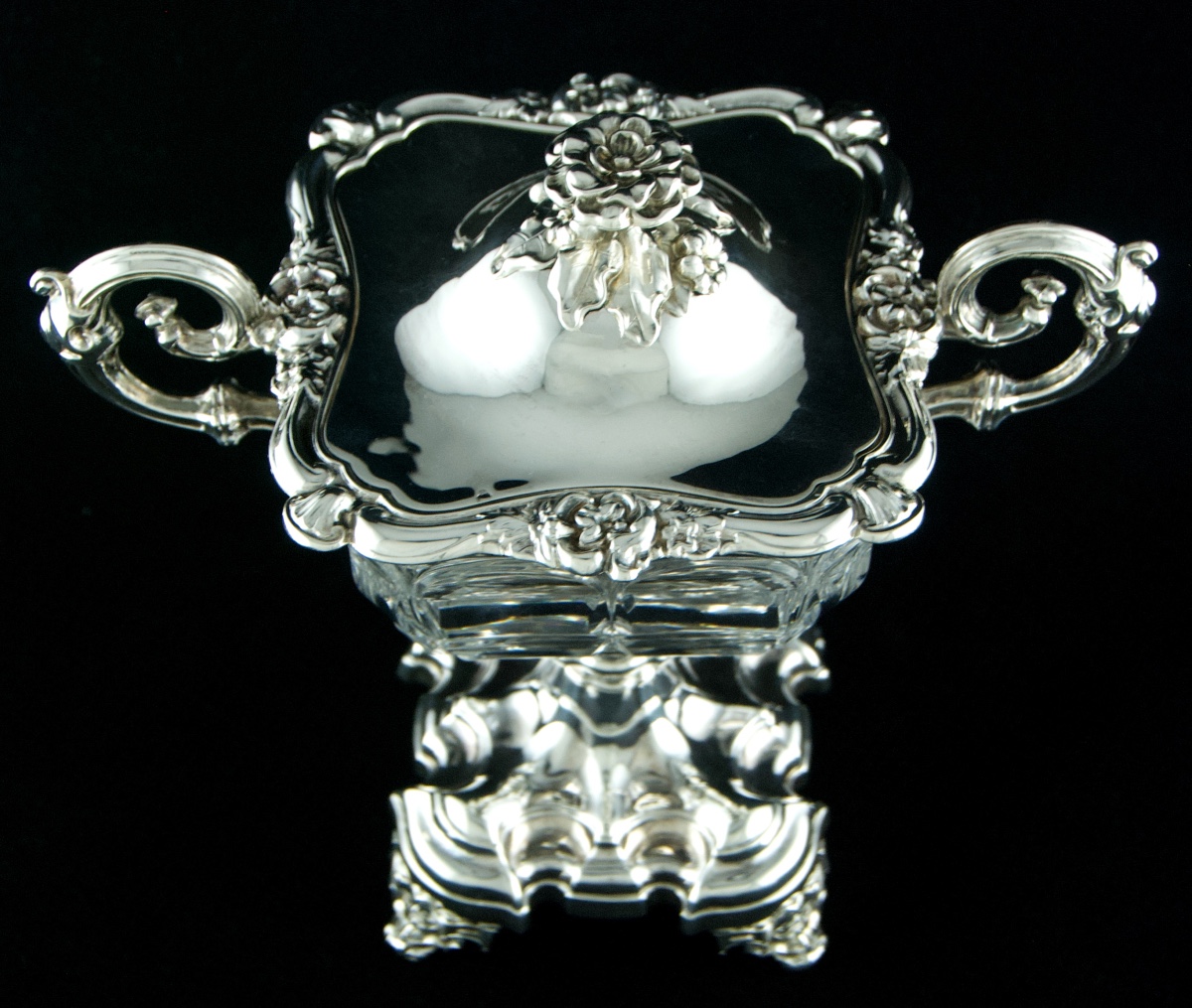
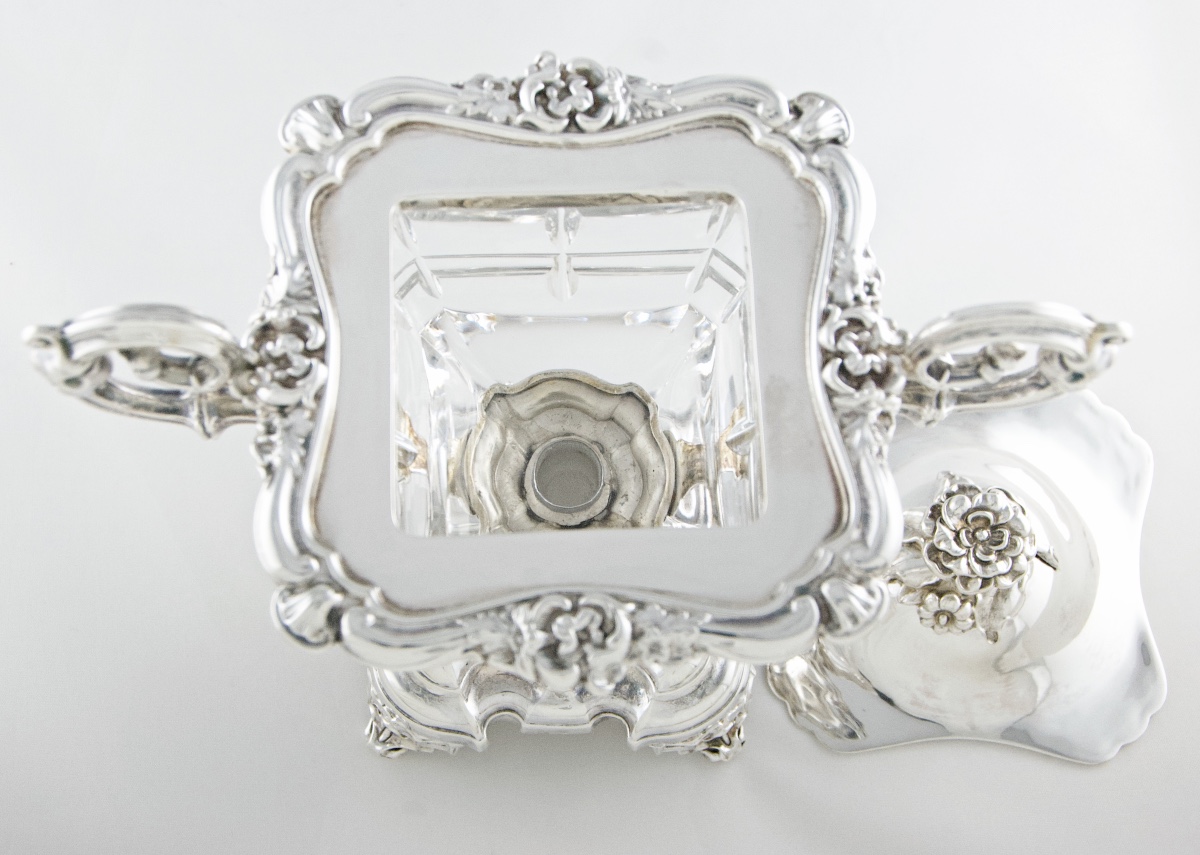
The silver mount displays a rich historicist decorative repertoire known as troubadour, composed of scrolling foliage, cut leather motifs, flowers and finely chased leaves. The base, articulated with bold mouldings and pronounced projections, illustrates with great mastery this refined ornamental vocabulary characteristic of the Louis-Philippe period.
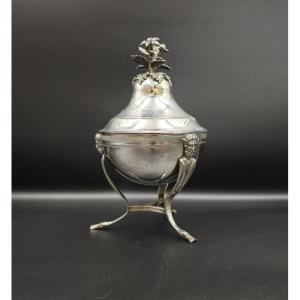
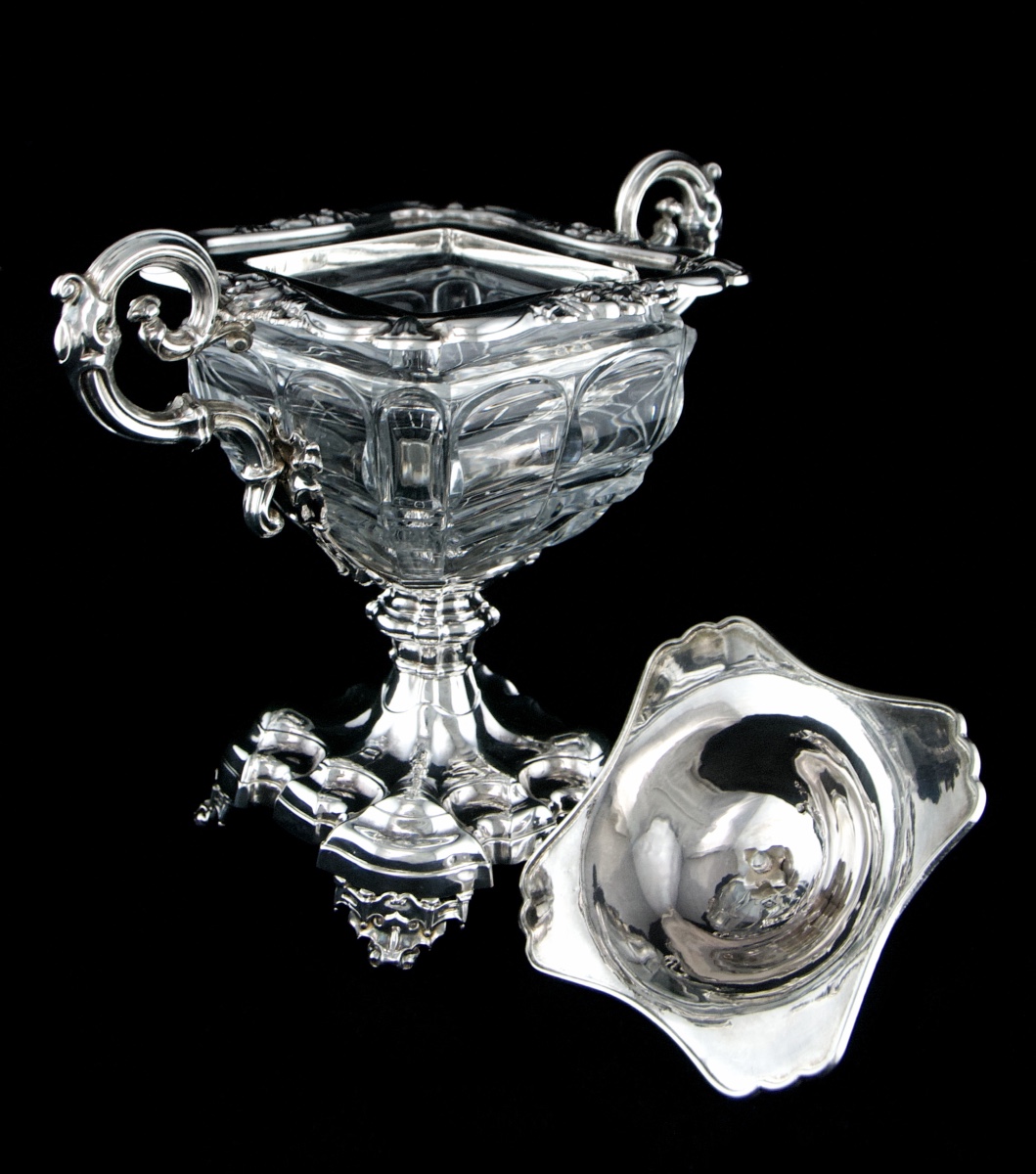
The ensemble is surmounted by a domed cover with cavetto profile and inner grooved rim, fitting perfectly into the mount. It is crowned by a remarkable finial in the form of a camellia rendered naturalistically, rising on its stem and resting partially on a floral and leafy mound, executed with great delicacy.
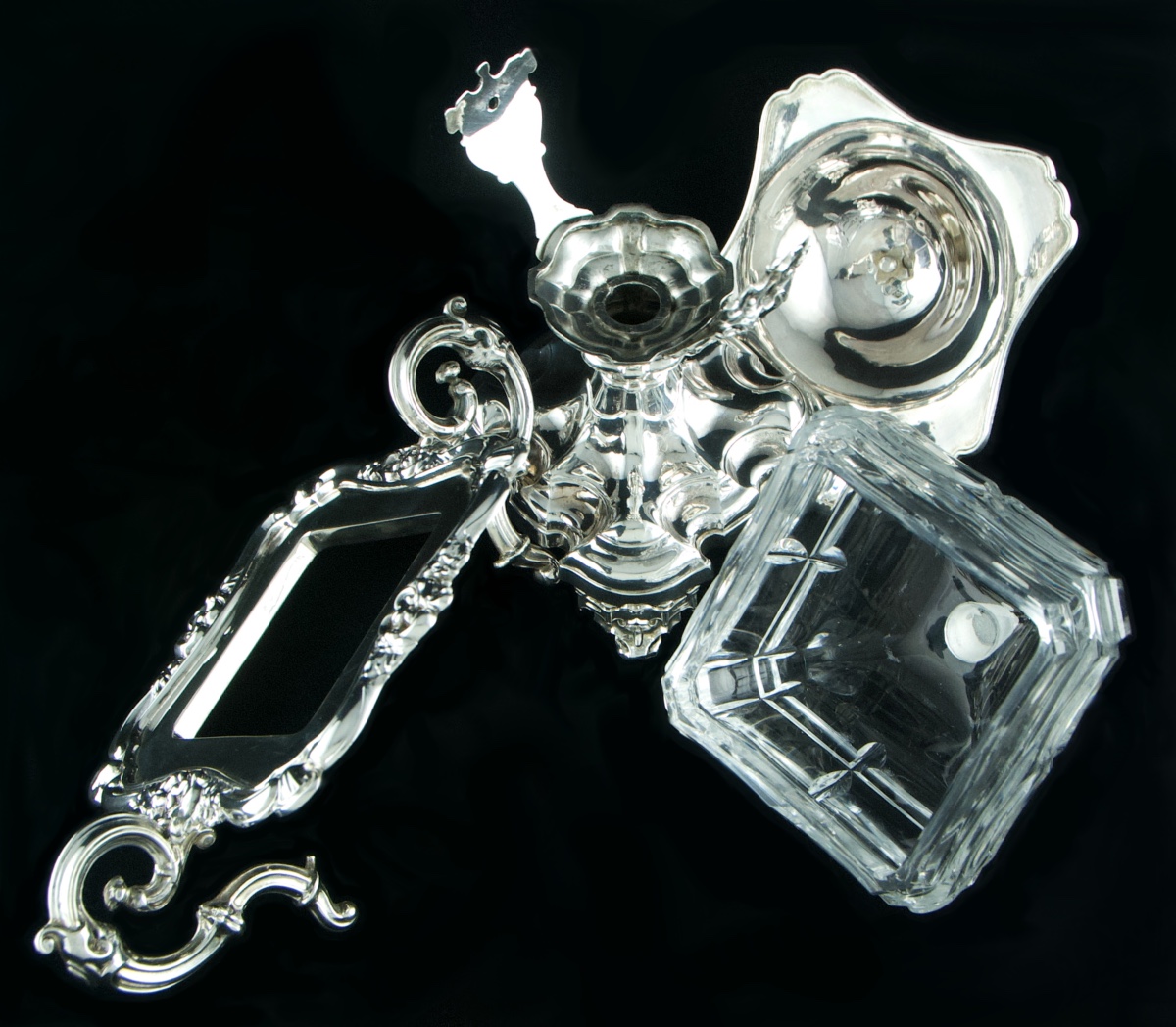
The inner liner in moulded crystal with leaf motifs and cut decoration, probably produced by the BACCARAT or SAINT-LOUIS glassworks, is perfectly fitted to the silver mount.
This covered sweetmeat dish presents the rare feature of an ingenious mechanical system allowing the separation of the silver mount from the crystal liner, thus facilitating cleaning. This technical solution reflects the attention given to practical use and the mechanical culture characteristic of Parisian silversmithing in the nineteenth century, fully consistent with the profile of François-Alphonse DEBAIN.
Hallmarks (cover and mount)
Dimensions
Gross weight 887 g.
Silver weight 352 g.
Through the quality of its conception, the richness of its decorative repertoire, the finesse of its chasing and the rarity of its mechanical system, this covered sweetmeat dish stands as a particularly fine example of Parisian silversmithing during the Louis-Philippe period.
FRANÇOIS-ALPHONSE DEBAIN
François-Alphonse DEBAIN establishes his workshop at 140 rue du Temple in Paris and registers his maker’s mark, featuring a barge and two small figures, on 15 January 1847. The mark is renewed on 19 July 1851 and struck off on 27 May 1864.
He is succeeded by his son Alphonse-Édouard DEBAIN, who retains the same emblem and associates with Louis-Frédéric FLAMANT, working under the name Debain & Flamant.
In 1883, Alphonse DEBAIN, son of Alphonse-Édouard DEBAIN, succeeds the silversmith Philippe BERTHIER. He adopts the woodcock emblem formerly used by BERTHIER for his own maker’s mark, inscribed as AD with a woodcock, registered on 19 March 1883. He establishes himself at 79 rue du Temple, while Louis-Frédéric FLAMANT takes over the premises at 140 rue du Temple. The mark is struck off on 8 March 1911.
MUSEUMS AND PUBLIC INSTITUTIONS
The silver mount displays a rich historicist decorative repertoire known as troubadour, composed of scrolling foliage, cut leather motifs, flowers and finely chased leaves. The base, articulated with bold mouldings and pronounced projections, illustrates with great mastery this refined ornamental vocabulary characteristic of the Louis-Philippe period.
The ensemble is surmounted by a domed cover with cavetto profile and inner grooved rim, fitting perfectly into the mount. It is crowned by a remarkable finial in the form of a camellia rendered naturalistically, rising on its stem and resting partially on a floral and leafy mound, executed with great delicacy.
The inner liner in moulded crystal with leaf motifs and cut decoration, probably produced by the BACCARAT or SAINT-LOUIS glassworks, is perfectly fitted to the silver mount.
This covered sweetmeat dish presents the rare feature of an ingenious mechanical system allowing the separation of the silver mount from the crystal liner, thus facilitating cleaning. This technical solution reflects the attention given to practical use and the mechanical culture characteristic of Parisian silversmithing in the nineteenth century, fully consistent with the profile of François-Alphonse DEBAIN.
Hallmarks (cover and mount)
- Minerva first standard hallmark, solid silver 950 per 1000
- Maker’s mark: DEBAIN in full, with a barge and two small figures
Dimensions
- Height 21 cm.
- Length 21 cm.
- Depth 13.5 cm.
Gross weight 887 g.
Silver weight 352 g.
Through the quality of its conception, the richness of its decorative repertoire, the finesse of its chasing and the rarity of its mechanical system, this covered sweetmeat dish stands as a particularly fine example of Parisian silversmithing during the Louis-Philippe period.
FRANÇOIS-ALPHONSE DEBAIN
François-Alphonse DEBAIN establishes his workshop at 140 rue du Temple in Paris and registers his maker’s mark, featuring a barge and two small figures, on 15 January 1847. The mark is renewed on 19 July 1851 and struck off on 27 May 1864.
He is succeeded by his son Alphonse-Édouard DEBAIN, who retains the same emblem and associates with Louis-Frédéric FLAMANT, working under the name Debain & Flamant.
In 1883, Alphonse DEBAIN, son of Alphonse-Édouard DEBAIN, succeeds the silversmith Philippe BERTHIER. He adopts the woodcock emblem formerly used by BERTHIER for his own maker’s mark, inscribed as AD with a woodcock, registered on 19 March 1883. He establishes himself at 79 rue du Temple, while Louis-Frédéric FLAMANT takes over the premises at 140 rue du Temple. The mark is struck off on 8 March 1911.
MUSEUMS AND PUBLIC INSTITUTIONS
- MUSÉE HÉBERT, Paris - Partial table service in silver, crystal and porcelain, Paris, 1789 to 1914. Inventory numbers OAP433, OAP437, OAP432, MNEH1992.5.2.5, MNEH1992.5.2.4, OAP389
- CATHÉDRALE NOTRE-DAME DE L’ASSOMPTION, Ajaccio - Pair of candlesticks in silver, Paris, 1883 to 1911.
1 250 €
Period: 19th century
Style: Louis Philippe, Charles 10th
Condition: Good condition
Material: Sterling silver
Length: 21 cm
Height: 21 cm
Depth: 13,5 cm
Reference (ID): 1684845
Availability: In stock
Print