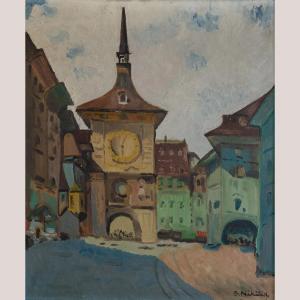
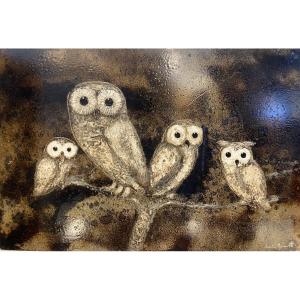
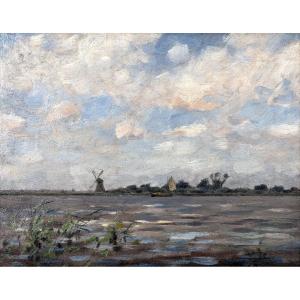
Impressionist Painting, Couple In Bed, Early 20th Century, Attributed To Lovis Corinth?
Artist: Initiale Liée Dans Le Coin Inférieur Droit, Nombreux Tampons, Annotations à L’encre Et Signatures Au Verso De La Toile, Malheureusement Illisibles
Impressionist painting, couple in bed, turn of the 20th century, by Lovis Corinth?
Could this be Lovis Corinth's work? Below is a link to one of his works, very similar; the last photo is similar.
https://upload.wikimedia.org/wikipedia/commons/a/a7/Lovis_Corinth_Frauengruppe_1904.jpg
Lovis Corinth, born Franz Heinrich Louis Corinth (IPA: [′ko:nnt]; born July 21, 1858 in Tapiewo, died July 17, 1925 in Zandvoort) was a German painter and printmaker, a representative of Impressionism, who influenced German Expressionism. He painted mythological and religious themes, landscapes, nudes, portraits, and still lifes. He also worked in graphic arts, etchings, lithographs, and book illustrations.[1]
Biography
He was the son of a tanner, one of five siblings. From 1866 to 1873, he studied at the renowned Königsberg Gymnasium, and then (from 1876) at the Academy of Fine Arts there, where he studied under Otto Günther, with whom he acquired the foundations of history painting. He furthered his studies in Berlin and Weimar.
In 1880, he began his studies at the Academy of Fine Arts in Munich. After volunteering for military service, he studied genre painting with Paul Gorge for three months in Antwerp (1884). His painting "Das Komplott" (The Conspiracy), which won a bronze medal in London, was also exhibited at the Paris Salon in 1885. Until 1887, he continued his studies in the Paris studio of Academician Bouguereau and at the Académie Julian, where he particularly excelled in nude painting.[2][1] In 1891, he settled in Munich, where he was inspired by the influence of Max Klinger and Franz von Stuck. In the autumn of 1901, he moved to Berlin and, in his new environment, became involved in progressive art, becoming close to Max Liebermann and Max Slevogt, among others. There, he founded a "school of painting for women," and in 1903, he married his first student and model, Charlotte Berend. He became a member of the Berlin Secession, and in 1915, he was elected its chairman.[3][1]
Under Armed Protection (1915)
A stroke in 1911 left him paralyzed on his left side.
He ideologically approved of the outbreak of World War II, creating paintings glorifying it (e.g., the propaganda piece Under Armed Protection, 1915). Its end, along with the defeat of the Kaiser's Reich, dashed his hopes of initiating a "renewal of German painting" and giving it world-class status.[4]
In 1918, he was awarded the title of professor at the Berlin Academy of Art. On March 15, 1921, he received an honorary doctorate from the University of Königsberg. In 1925, he became an honorary member of the Bavarian Academy of Art. In 1896, he co-founded the existing Masonic lodge In Treue fest.[5]
He was the author of writings devoted to the art of painting, including the autobiographical Legenden aus dem Künstlerleben and the textbook Das Erlernen der Malerei (1908); He also wrote a biography of Leistikow (1910) and an autobiography, begun in 1906 and published posthumously in 1926.
From 1918, he spent every summer at his Bavarian estate in Urfeld on Lake Walchensee, the main subject of his numerous mountain landscapes. He died at the age of 67 from pneumonia during an artistic trip to Amsterdam.[2][3]
Works
Alongside Slevogt and Liebermann, Corinth significantly represents the distinctive German Impressionism, simultaneously being a pioneer of a new movement, paving the way for German Expressionism.[2][6]
Educated at the Königsberg Academy, his work was initially influenced by the paintings of the Old Flemish and Dutch Masters (Frans Hals, Rembrandt, especially Rubens, and Velázquez) and the landscapes of J.-F. Millet[6][7]. His painting, characterized by a heavy and sensual naturalism, tended toward orgiastic themes and rather shallow heroic allegories.[2] From the mid-1880s, during his studies in Paris, the artist moved away from his original idealization of representation (e.g., the study of suffering in the portrait of his dying father, 1888), but formally and thematically, he still maintained a classicizing tendency (Susanna and the Elders, Diogenes)[6].
Pietà (1889; lost)
In 1895, he received a gold medal in Paris for his painting The Descent from the Cross, which earned him the reputation of a contemporary Rubens (previously exhibited at the Glaspalast in Munich and being the first painting to be sold). Taking up a religious motif so popular in art, he attracted attention with his vivid depiction of a naked body in an almost materialized manner and the intensification of the scene's tragedy through its unusual illumination in the surrounding darkness.[8] He employed this approach in his earlier work, Pietà (1890), exhibited and awarded a distinction at the Paris Salon but lost during the Second World War. From 1892, he also created an expressive series of slaughterhouse paintings, surprising both in their approach and subject matter.
At this time, Corinth experimented with painting techniques, moving towards Impressionism, which became evident in his Self-Portrait with a Skeleton, including in his treatment of detail and the distribution of lighting accents. The combination of a classicist theme with an innovative form in the painting Salome with the Head of St. John
(1900), in addition to increasing popularity, drew attention to the volatile and provocative nature of his artistic personality.[2]
Psychological shock and the permanent loss of health led to a radical transformation in the artist's technique and style from 1911 onwards. Corinth moved away from superficial sensuality and the search for three-dimensional perspective, rendering the entire space in a powerful movement of colored matter with a bolder perspective.[2] A new, expressive and more spontaneous manner of painting, characterized by stronger brushstrokes, also employs darker, sharply contrasting colors.[3][7] During this time, the artist also devoted himself to illustration.[1]
The Expressive Movement also saw the creation of religious representations, provoking in their aggressive treatment of the subject (Blinded Samson 1912, Cain and Abel 1917, Red Christ 1922). Among them, the controversial Ecce Homo (1925) stands out, depicting a woman tied between a doctor and an armed executioner. The Great Self-Portrait before Walchensee (1924) displays outstanding expressionist traits.[3]
At Walchensee, Corinth continued to hone his expressive style until the very end. Besides still lifes (flowers), he preferred painting landscapes with strong color contrasts and a blurring of his previous precision of detail. This same tendency is evident in his portrait painting, which later became more emotional. A highly regarded portraitist, he painted, among others, politician Friedrich Ebert, Admiral von Tirpitz, painters Leistikow and Liebermann, and critic Meier-Graefe. In numerous self-portraits created throughout his life, he documented the changes in his personal appearance.[2][3] Beautiful Empires (1925) was classified as "degenerate"
Later Reception
During the Nazi era, Corinth's early works were met with approval, while his later, expressionist works were stigmatized as "degenerate art." 295 of his works were confiscated (including paintings from the collections of the National Gallery and the Hamburg Kunsthalle); some were included in the 1937 Munich exhibition of so-called degenerate art, while most of the paintings were sold abroad, primarily to Switzerland.
From the mid-20th century to the present, his popularity and growing interest in his paintings have been observed, as evidenced by numerous exhibitions of Corinth's work and the number of publications devoted to him.
Portrait of Anna Schaumberg with a Doll
In Polish collections
Polish museums possess the following paintings by Lovis Corinth:
National Museum in Warsaw: Anna Schaumberg with a Doll (1886)
National Museum in Wrocław: Forest. Flood on Lake Starnberg (1896)
National Museum in Szczecin: Portrait of the writer Georg Hirschfeld and his wife Ella (1903)
National Museum in Gdańsk: Female Nude (1909)
National Museum in Poznań: Self-Portrait as a Standard-Bearer (1911)
Highly decorative
Method: oil on canvas
Condition: very good
Signature: lower right corner, initial tied, numerous stamps, ink notes, and signatures on the reverse of the canvas, unfortunately illegible
Dimensions: canvas 32 cm by 32 cm, with frame approximately 42 cm by 42 cm
Provenance: private collection
The Gallery issues a certificate for each item.
Could this be Lovis Corinth's work? Below is a link to one of his works, very similar; the last photo is similar.
https://upload.wikimedia.org/wikipedia/commons/a/a7/Lovis_Corinth_Frauengruppe_1904.jpg
Lovis Corinth, born Franz Heinrich Louis Corinth (IPA: [′ko:nnt]; born July 21, 1858 in Tapiewo, died July 17, 1925 in Zandvoort) was a German painter and printmaker, a representative of Impressionism, who influenced German Expressionism. He painted mythological and religious themes, landscapes, nudes, portraits, and still lifes. He also worked in graphic arts, etchings, lithographs, and book illustrations.[1]
Biography
He was the son of a tanner, one of five siblings. From 1866 to 1873, he studied at the renowned Königsberg Gymnasium, and then (from 1876) at the Academy of Fine Arts there, where he studied under Otto Günther, with whom he acquired the foundations of history painting. He furthered his studies in Berlin and Weimar.
In 1880, he began his studies at the Academy of Fine Arts in Munich. After volunteering for military service, he studied genre painting with Paul Gorge for three months in Antwerp (1884). His painting "Das Komplott" (The Conspiracy), which won a bronze medal in London, was also exhibited at the Paris Salon in 1885. Until 1887, he continued his studies in the Paris studio of Academician Bouguereau and at the Académie Julian, where he particularly excelled in nude painting.[2][1] In 1891, he settled in Munich, where he was inspired by the influence of Max Klinger and Franz von Stuck. In the autumn of 1901, he moved to Berlin and, in his new environment, became involved in progressive art, becoming close to Max Liebermann and Max Slevogt, among others. There, he founded a "school of painting for women," and in 1903, he married his first student and model, Charlotte Berend. He became a member of the Berlin Secession, and in 1915, he was elected its chairman.[3][1]
Under Armed Protection (1915)
A stroke in 1911 left him paralyzed on his left side.
He ideologically approved of the outbreak of World War II, creating paintings glorifying it (e.g., the propaganda piece Under Armed Protection, 1915). Its end, along with the defeat of the Kaiser's Reich, dashed his hopes of initiating a "renewal of German painting" and giving it world-class status.[4]
In 1918, he was awarded the title of professor at the Berlin Academy of Art. On March 15, 1921, he received an honorary doctorate from the University of Königsberg. In 1925, he became an honorary member of the Bavarian Academy of Art. In 1896, he co-founded the existing Masonic lodge In Treue fest.[5]
He was the author of writings devoted to the art of painting, including the autobiographical Legenden aus dem Künstlerleben and the textbook Das Erlernen der Malerei (1908); He also wrote a biography of Leistikow (1910) and an autobiography, begun in 1906 and published posthumously in 1926.
From 1918, he spent every summer at his Bavarian estate in Urfeld on Lake Walchensee, the main subject of his numerous mountain landscapes. He died at the age of 67 from pneumonia during an artistic trip to Amsterdam.[2][3]
Works
Alongside Slevogt and Liebermann, Corinth significantly represents the distinctive German Impressionism, simultaneously being a pioneer of a new movement, paving the way for German Expressionism.[2][6]
Educated at the Königsberg Academy, his work was initially influenced by the paintings of the Old Flemish and Dutch Masters (Frans Hals, Rembrandt, especially Rubens, and Velázquez) and the landscapes of J.-F. Millet[6][7]. His painting, characterized by a heavy and sensual naturalism, tended toward orgiastic themes and rather shallow heroic allegories.[2] From the mid-1880s, during his studies in Paris, the artist moved away from his original idealization of representation (e.g., the study of suffering in the portrait of his dying father, 1888), but formally and thematically, he still maintained a classicizing tendency (Susanna and the Elders, Diogenes)[6].
Pietà (1889; lost)
In 1895, he received a gold medal in Paris for his painting The Descent from the Cross, which earned him the reputation of a contemporary Rubens (previously exhibited at the Glaspalast in Munich and being the first painting to be sold). Taking up a religious motif so popular in art, he attracted attention with his vivid depiction of a naked body in an almost materialized manner and the intensification of the scene's tragedy through its unusual illumination in the surrounding darkness.[8] He employed this approach in his earlier work, Pietà (1890), exhibited and awarded a distinction at the Paris Salon but lost during the Second World War. From 1892, he also created an expressive series of slaughterhouse paintings, surprising both in their approach and subject matter.
At this time, Corinth experimented with painting techniques, moving towards Impressionism, which became evident in his Self-Portrait with a Skeleton, including in his treatment of detail and the distribution of lighting accents. The combination of a classicist theme with an innovative form in the painting Salome with the Head of St. John
(1900), in addition to increasing popularity, drew attention to the volatile and provocative nature of his artistic personality.[2]
Psychological shock and the permanent loss of health led to a radical transformation in the artist's technique and style from 1911 onwards. Corinth moved away from superficial sensuality and the search for three-dimensional perspective, rendering the entire space in a powerful movement of colored matter with a bolder perspective.[2] A new, expressive and more spontaneous manner of painting, characterized by stronger brushstrokes, also employs darker, sharply contrasting colors.[3][7] During this time, the artist also devoted himself to illustration.[1]
The Expressive Movement also saw the creation of religious representations, provoking in their aggressive treatment of the subject (Blinded Samson 1912, Cain and Abel 1917, Red Christ 1922). Among them, the controversial Ecce Homo (1925) stands out, depicting a woman tied between a doctor and an armed executioner. The Great Self-Portrait before Walchensee (1924) displays outstanding expressionist traits.[3]
At Walchensee, Corinth continued to hone his expressive style until the very end. Besides still lifes (flowers), he preferred painting landscapes with strong color contrasts and a blurring of his previous precision of detail. This same tendency is evident in his portrait painting, which later became more emotional. A highly regarded portraitist, he painted, among others, politician Friedrich Ebert, Admiral von Tirpitz, painters Leistikow and Liebermann, and critic Meier-Graefe. In numerous self-portraits created throughout his life, he documented the changes in his personal appearance.[2][3] Beautiful Empires (1925) was classified as "degenerate"
Later Reception
During the Nazi era, Corinth's early works were met with approval, while his later, expressionist works were stigmatized as "degenerate art." 295 of his works were confiscated (including paintings from the collections of the National Gallery and the Hamburg Kunsthalle); some were included in the 1937 Munich exhibition of so-called degenerate art, while most of the paintings were sold abroad, primarily to Switzerland.
From the mid-20th century to the present, his popularity and growing interest in his paintings have been observed, as evidenced by numerous exhibitions of Corinth's work and the number of publications devoted to him.
Portrait of Anna Schaumberg with a Doll
In Polish collections
Polish museums possess the following paintings by Lovis Corinth:
National Museum in Warsaw: Anna Schaumberg with a Doll (1886)
National Museum in Wrocław: Forest. Flood on Lake Starnberg (1896)
National Museum in Szczecin: Portrait of the writer Georg Hirschfeld and his wife Ella (1903)
National Museum in Gdańsk: Female Nude (1909)
National Museum in Poznań: Self-Portrait as a Standard-Bearer (1911)
Highly decorative
Method: oil on canvas
Condition: very good
Signature: lower right corner, initial tied, numerous stamps, ink notes, and signatures on the reverse of the canvas, unfortunately illegible
Dimensions: canvas 32 cm by 32 cm, with frame approximately 42 cm by 42 cm
Provenance: private collection
The Gallery issues a certificate for each item.
4 200 €
Period: 19th century
Style: Other Style
Condition: Good condition
Material: Oil painting
Length: 32
Height: 32
Reference (ID): 1683386
Availability: In stock
Print