





Bronze Sculpture "woman On A Carp" By Kern
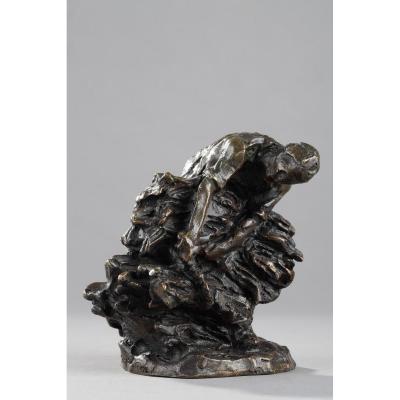
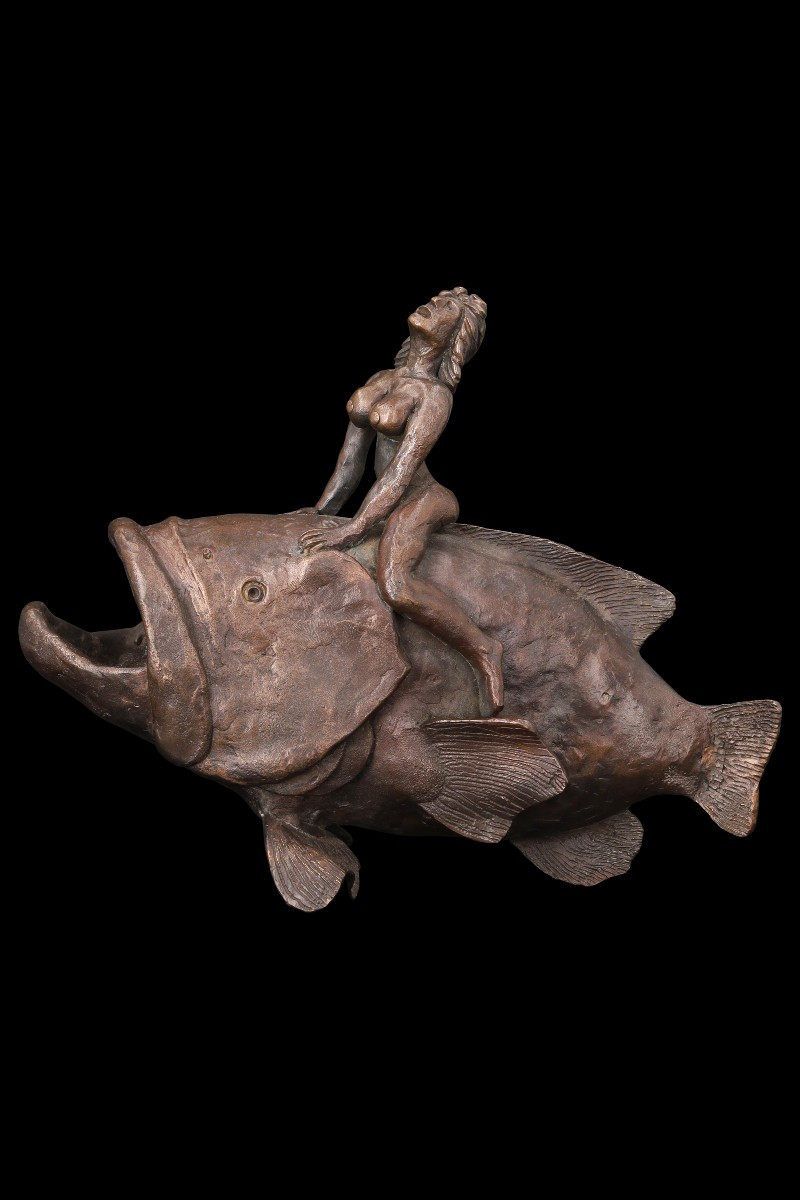
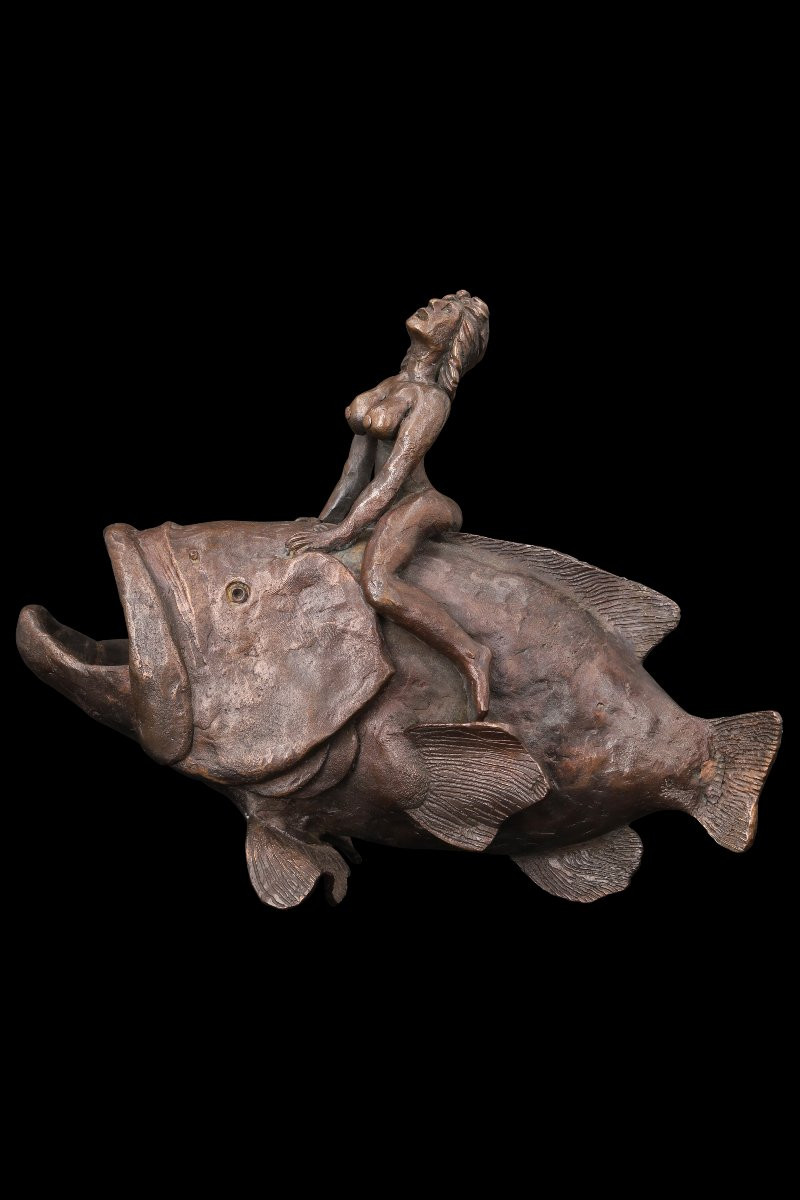
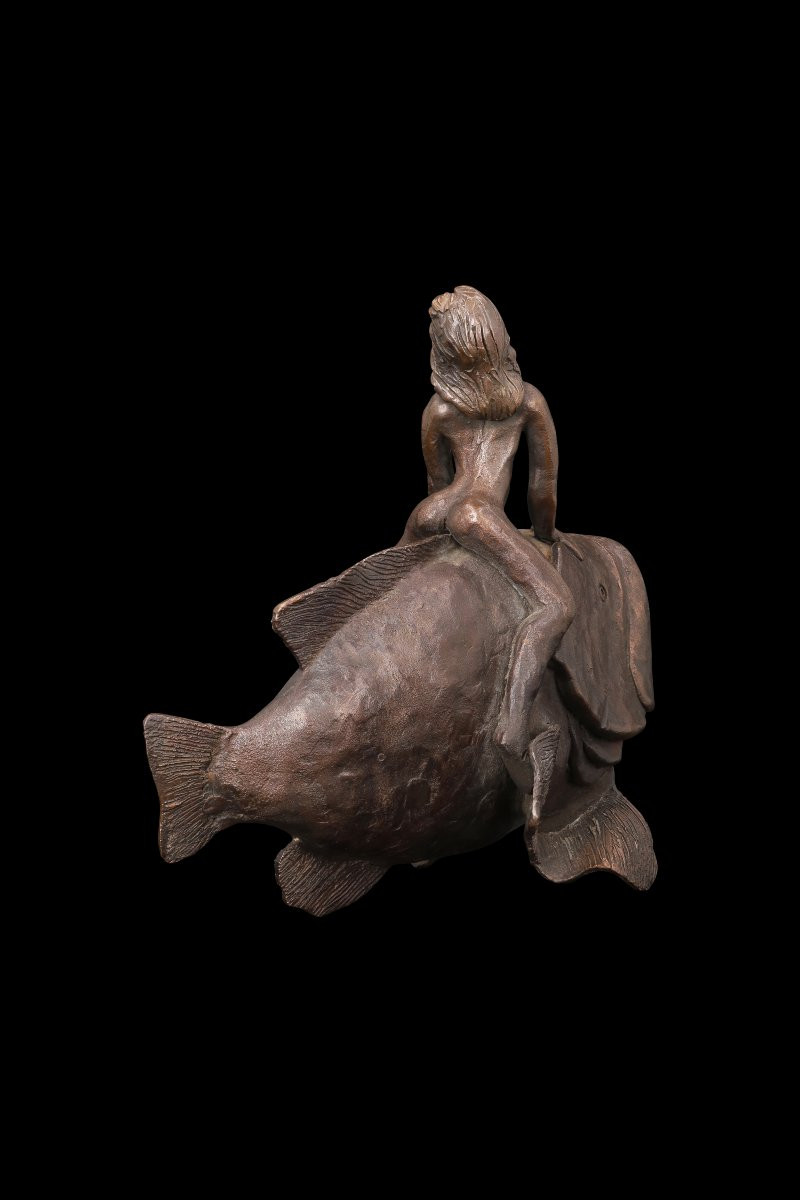
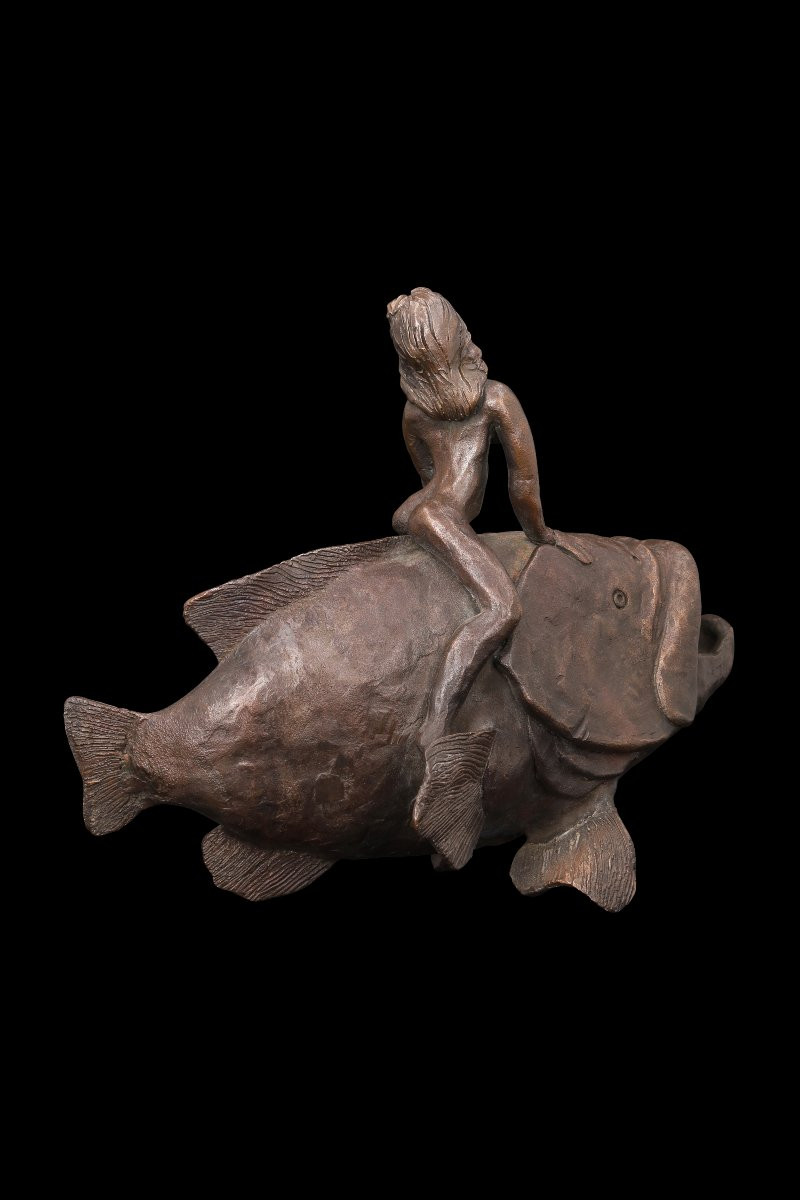
This bronze sculpture with a copper-brown patina depicts a fantastic and dynamic scene, where a female figure is perched upon a massive fish.
The Subject and Composition:The Woman: She is represented nude, sitting astride the fish's back. Her body is slender, modeled in a figurative way but with a certain stylization.
Movement: The woman's posture is expressive and dramatic. Her back is arched, her head is raised and thrown back, and her gaze is directed upwards, suggesting a moment of ecstasy, surrender, or triumph. Her arms and hands grip the fish's body firmly, conveying the intensity of the ride.
The Fish (Carp/Grouper): The marine animal is rendered with impressive strength and massiveness. Its body is voluminous and highly textured, evoking scales and rough skin. Its mouth is agape, as if it is in full action, surging or swimming powerfully.
Interconnection: The junction between the human and the animal is the central point of the composition, creating a unified and intense movement. The whole gives a strong impression of speed and communion.
Raw Modeling (Modelé Brut): The artist uses a modeling style that is not smooth. The surfaces are rough, textured, and bear the visible trace of the work done in wax or clay before casting. This stylistic choice reinforces the energy and the primitive character of the scene.
Patina: The patina is a warm, rich, and slightly copper-toned brown, which highlights the muscular volumes of the female body and the rough texture of the fish, adding a sense of warmth and antiquity.
Strong Rationale:
Mythological/Dreamlike Reinterpretation: The subject is an assembly of natural and mythical elements (the nude woman riding a marine creature). This type of composition, which displaces human figures into a dreamlike, allegorical, or surreal context, is a hallmark of Fantasy Art (using figuration to explore the unconscious or personal myths). The work suggests themes of freedom, control over nature, or feminine power.
Post-Rodin Technique: The artist rejects the perfectly polished surface (typical of classicism). The use of a raw, visible, and energetic modeling is a technique inherited from the modernist tradition, particularly from Auguste Rodin and his successors. This approach gives immediate expressiveness to the material.
Expressive Figuration: The strong emotional charge conveyed by the woman's posture and facial expression (the strained neck, the ecstatic gaze) places the work within a current of figuration that prioritizes expression and sensation over anatomical idealization.
The work is located at the intersection of classical figurative sculpture (through the study of the human body) and modern expressionism (through the treatment of the surface), which results in a fully contemporary expression via the fantastical subject matter.
Period: 20th century
Style: Other Style
Condition: Good condition
Material: Bronze
Length: 30
Height: 25
Depth: 10
Reference (ID): 1671943
Availability: In stock