THIS OBJECT WAS SOLD
Bronze Sculpture "rapace" By Milo:
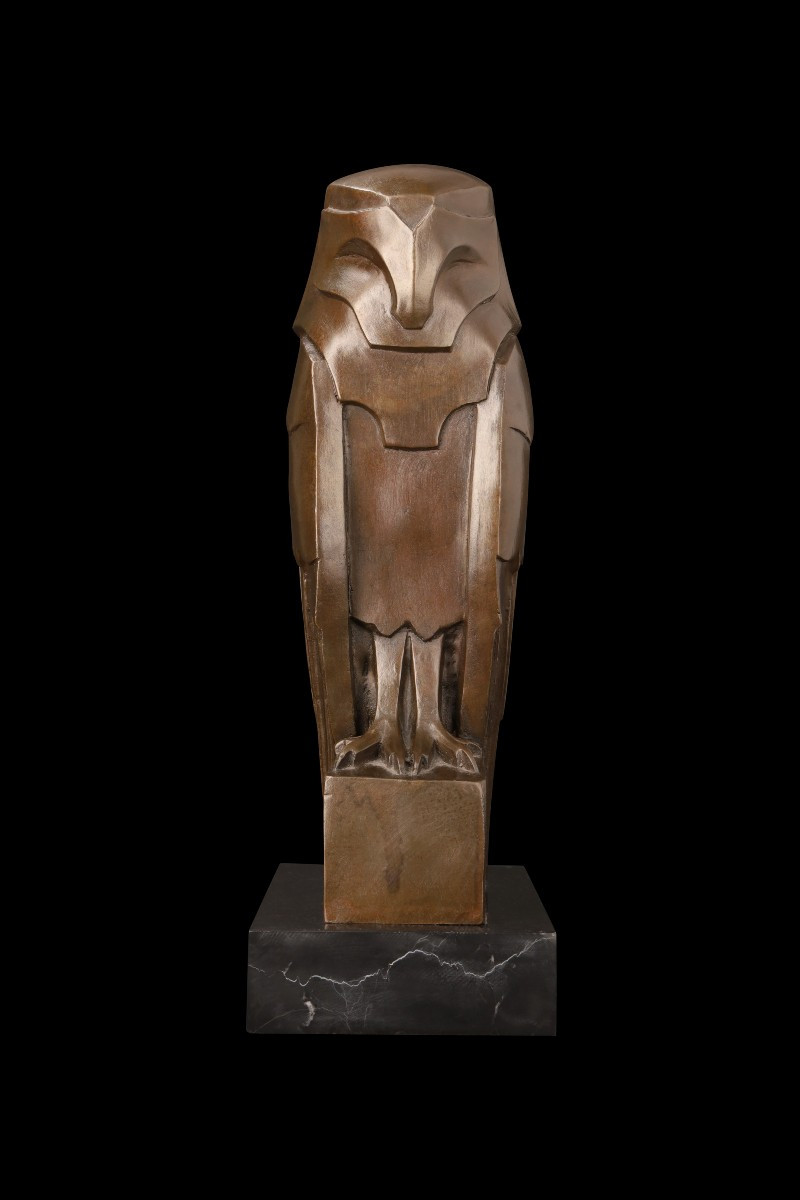

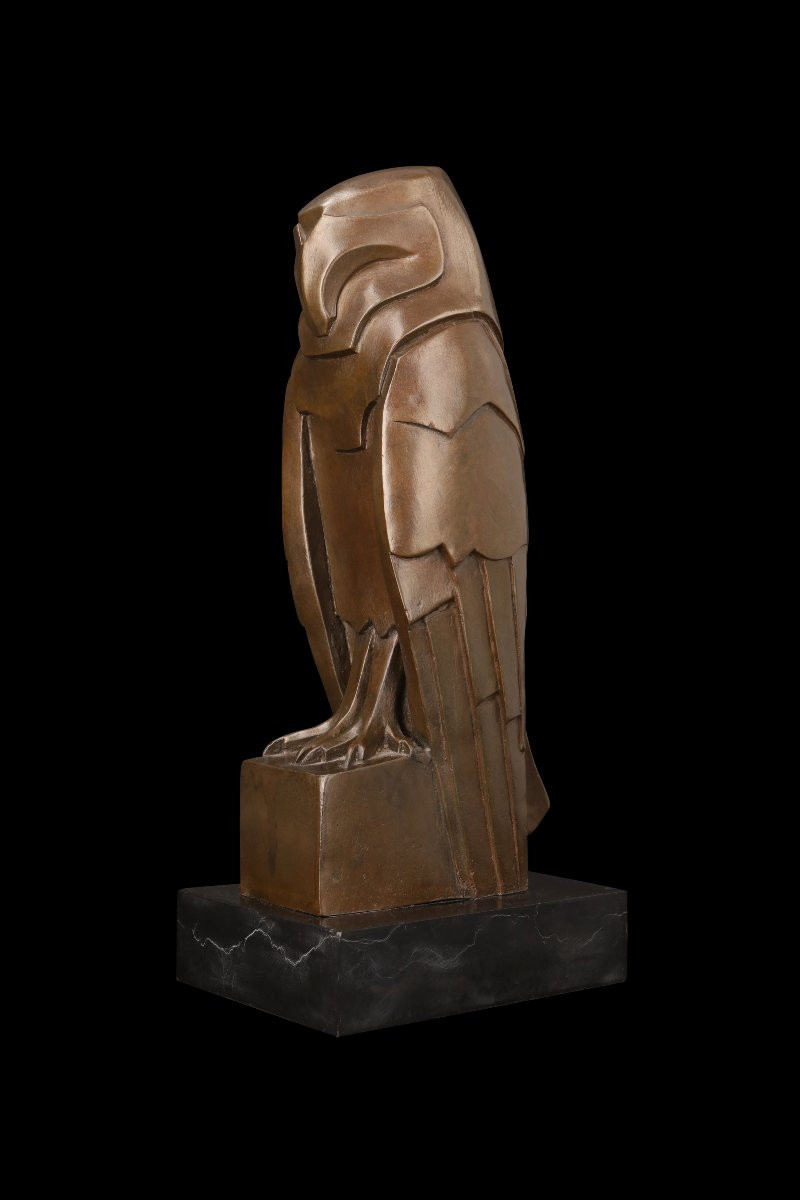


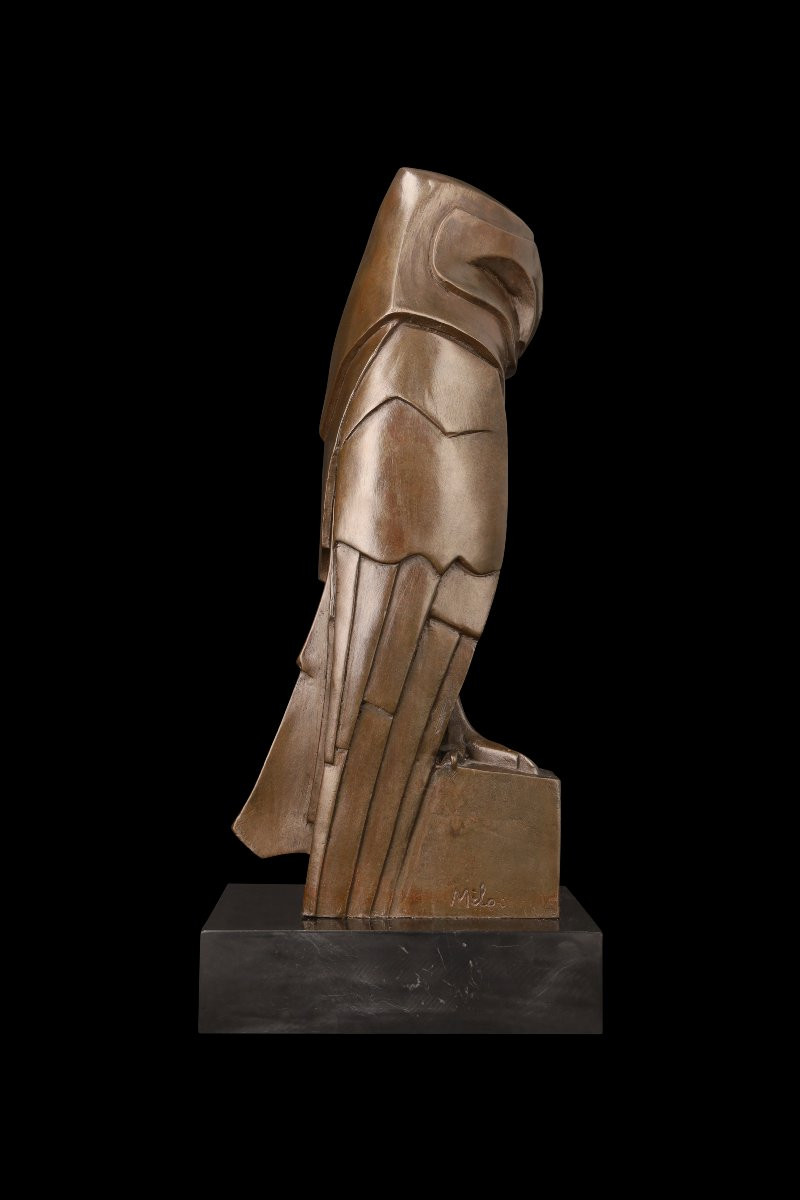

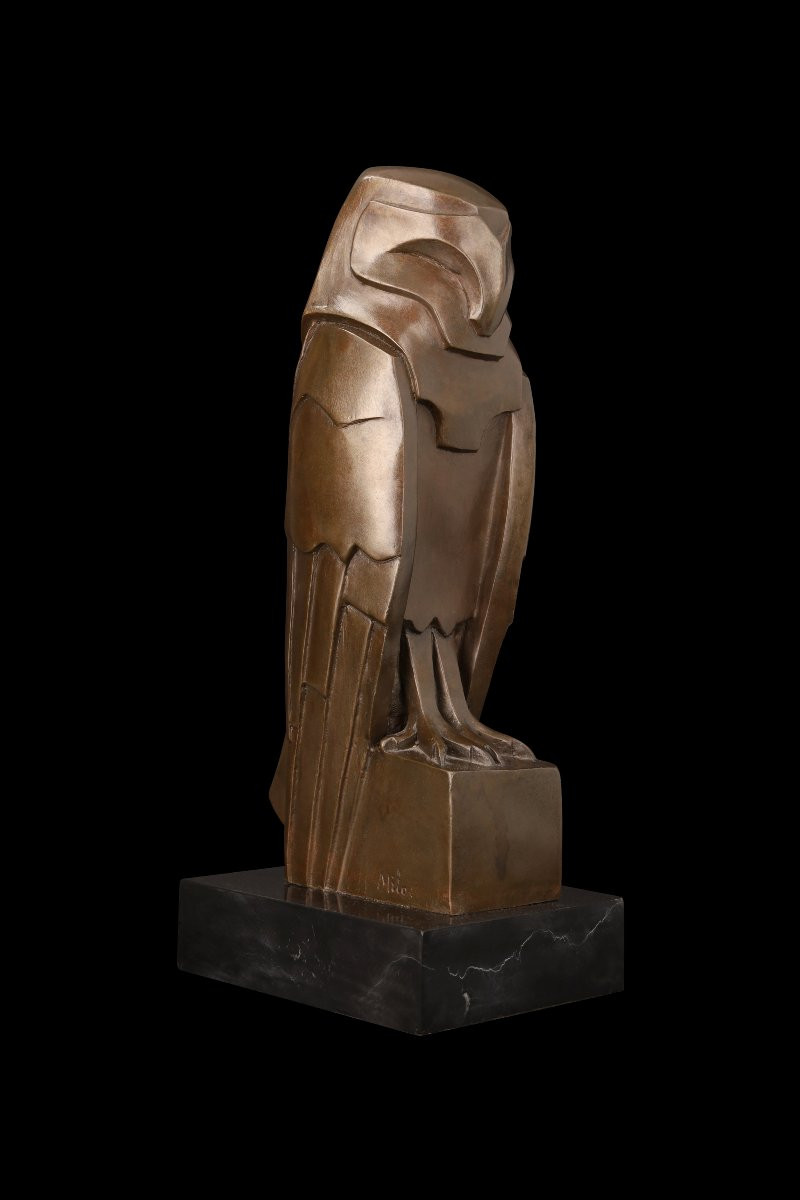

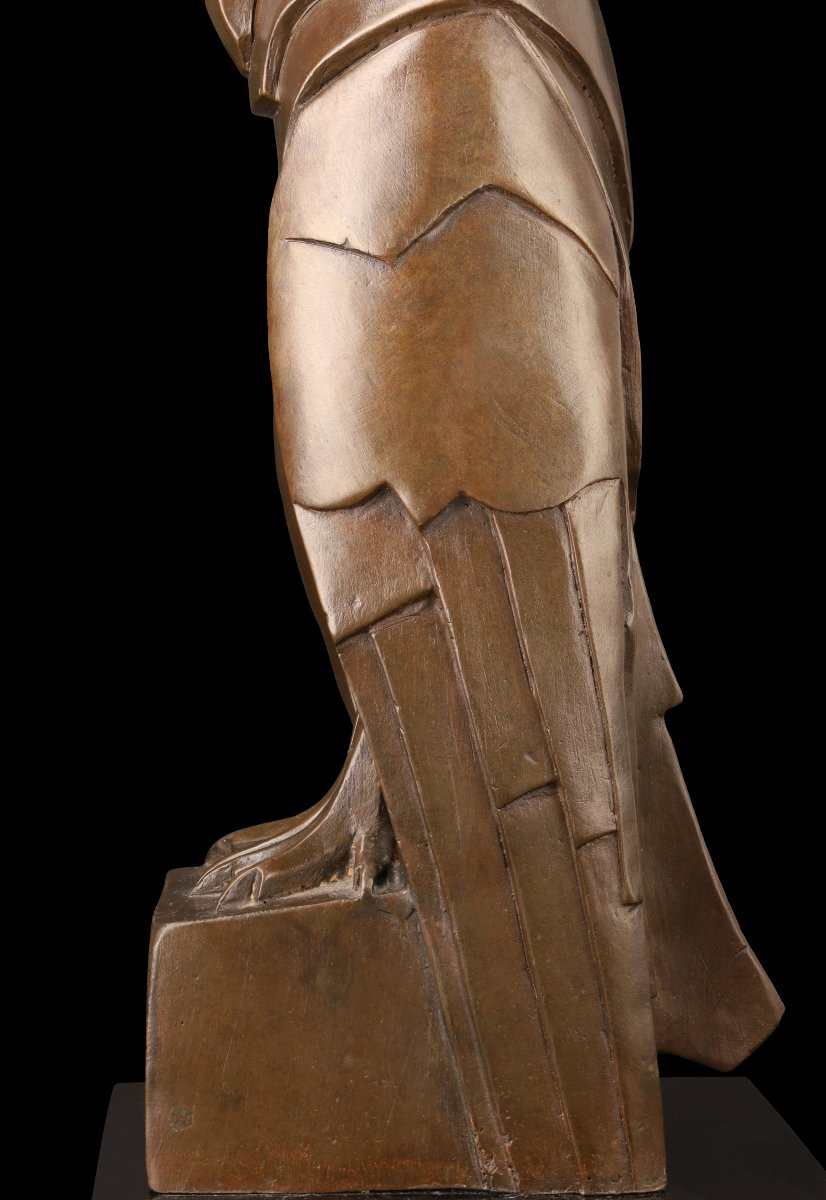


The sculpture represents a bird of prey, probably a raptor or an owl, in a stylized, rigid, and static pose.
Form and Lines: The work is characterized by a pronounced geometrization. The bird's natural shapes have been simplified into angular planes, facets, and superimposed forms that evoke feathers, wings, and the body. The whole is very vertical, giving an impression of monumentality and contained power. The lines are sharp, precise, and architectural.
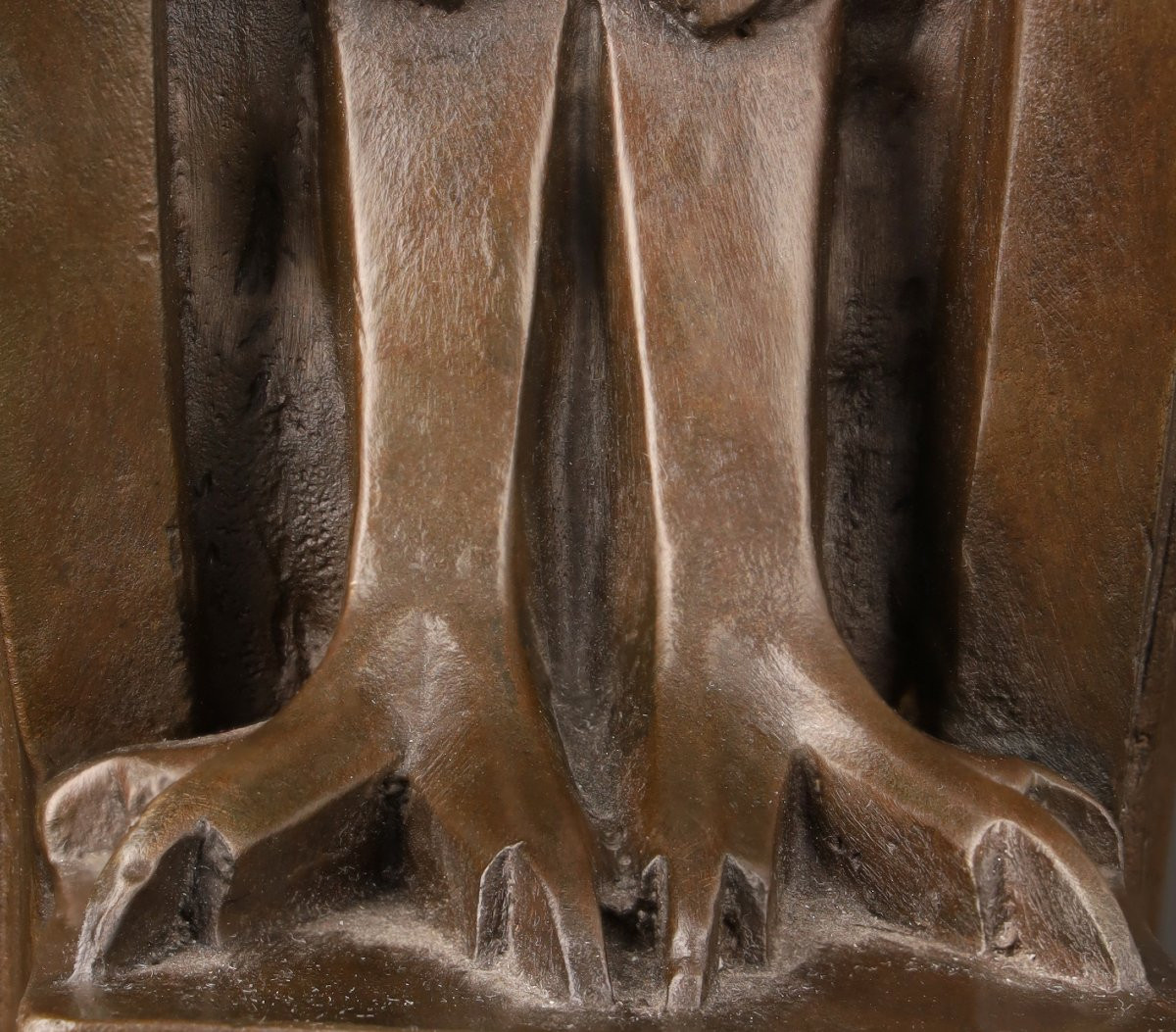
Details: The face is reduced to the essential, with a pointed beak and simplified eye contours that give it a serious and enigmatic expression. The legs are minimally detailed, supporting the body on a small, integrated cubic base.
Material and Patina: The sculpture is made of bronze, featuring a warm, uniform brown patina. The surface is smooth in places but marked by the lines of the stylization.
Base: The bird rests on a simple black or dark marble base, whose veins slightly contrast with the rigidity of the bronze, ensuring a solid and elegant foundation.
General Impression: The work exudes an impression of dignity, symbolic strength, and a decidedly modern aesthetic.
The artistic style of Milo's "RAPACE" sculpture is clearly Art Deco.
Justification:Geometrization and Simplification: Art Deco, which appeared in the 1910s and peaked in the 1920s and 1930s, is famous for rejecting the sinuous curves of Art Nouveau in favour of pure geometric shapes (cubes, cylinders) and straight lines. Milo's "Rapace" perfectly illustrates this trend by reducing the bird's anatomy to a series of faceted planes, sharp angles, and superimposed volumes, giving it an almost mechanical or architectural appearance.
Monumentality and Symmetry: Art Deco sculptures often favour a solid, balanced, and symmetrical structure, even for animal subjects. This work is perfectly vertical and frontal, embodying an aesthetic of power and modernity.
Favourite Subjects: Art Deco sculptors enjoyed representing animal figures (panthers, gazelles, dogs, birds) treated with great stylization, often in bronze or spelter, for decorative use.
Materials: The use of bronze for the main sculpture and black (or dark-coloured) marble for the base is a classic and luxurious material combination very typical of Art Deco.
The work is thus at the heart of the Art Deco aesthetic due to its radical simplification of forms serving a geometric and monumental elegance.
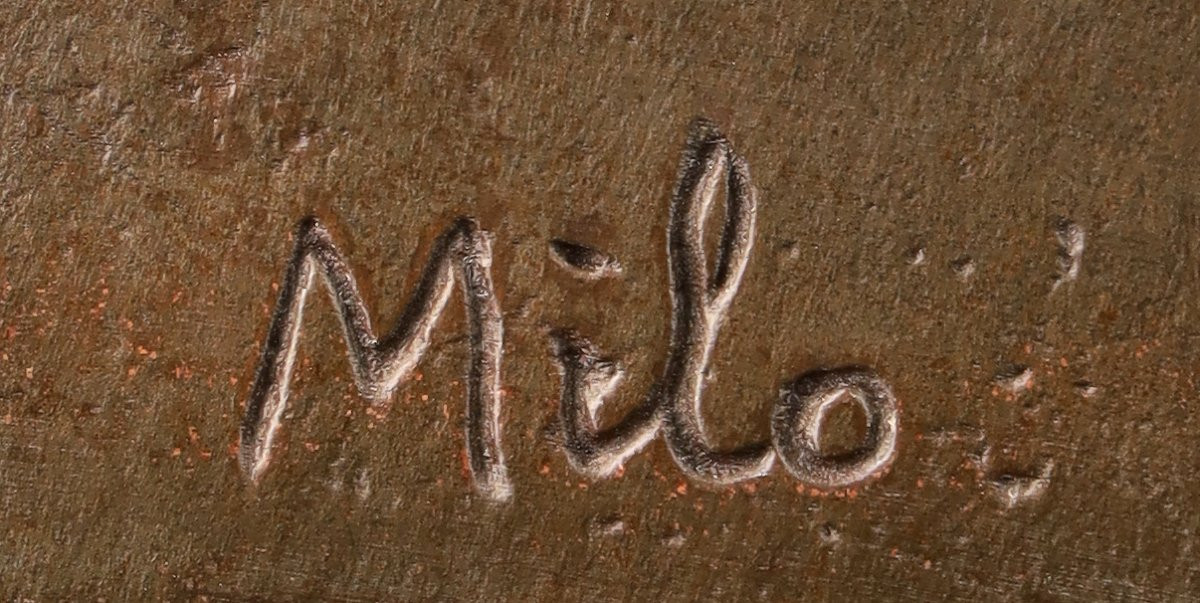
3. Artist Biography: MiloThe artist signing "Milo" (often with a stylized script as seen in some visuals, for instance on the image MILO_RAPACE_010.jpg) is a contemporary sculptor known for his works in the Art Deco/Modern style, often commercialized and widely appreciated for their decorative elegance.
Here is the information available about this artist, considering that Art Deco is a style he perpetuates:
Full Name: Miguel Fernando López (or L. M.)
Artist Name: Milo
Nationality: Portuguese (according to some sources), although he has had an international career.
Period of Activity: A contemporary artist, active mainly from the second half of the 20th century to the present day. He is not one of the original sculptors of the Art Deco period (1920s-1930s) but is an artist who has produced many pieces in the vein and style of Art Deco.
Work: Milo is very prolific and specializes in the production of decorative bronzes and spelter sculptures that pay homage to the aesthetic of the early 20th century. His favourite subjects include nude or draped female figures in the Art Deco style and, as here, highly stylized and geometrised animal subjects.
Art Market: His works are widely distributed and very popular in the decoration and modern antique market. They are valued for their quality finish and fidelity to the Art Deco style.
In summary, Milo is a contemporary master of the Art Deco style, whose work helps keep the aesthetic of the 1920s-1930s alive and accessible.
Explore similar pieces and discover your ideal find:
bronze sculptures