THIS OBJECT WAS SOLD
Late Bronze Sculpture "face Of A Woman With Flowers" By Milo
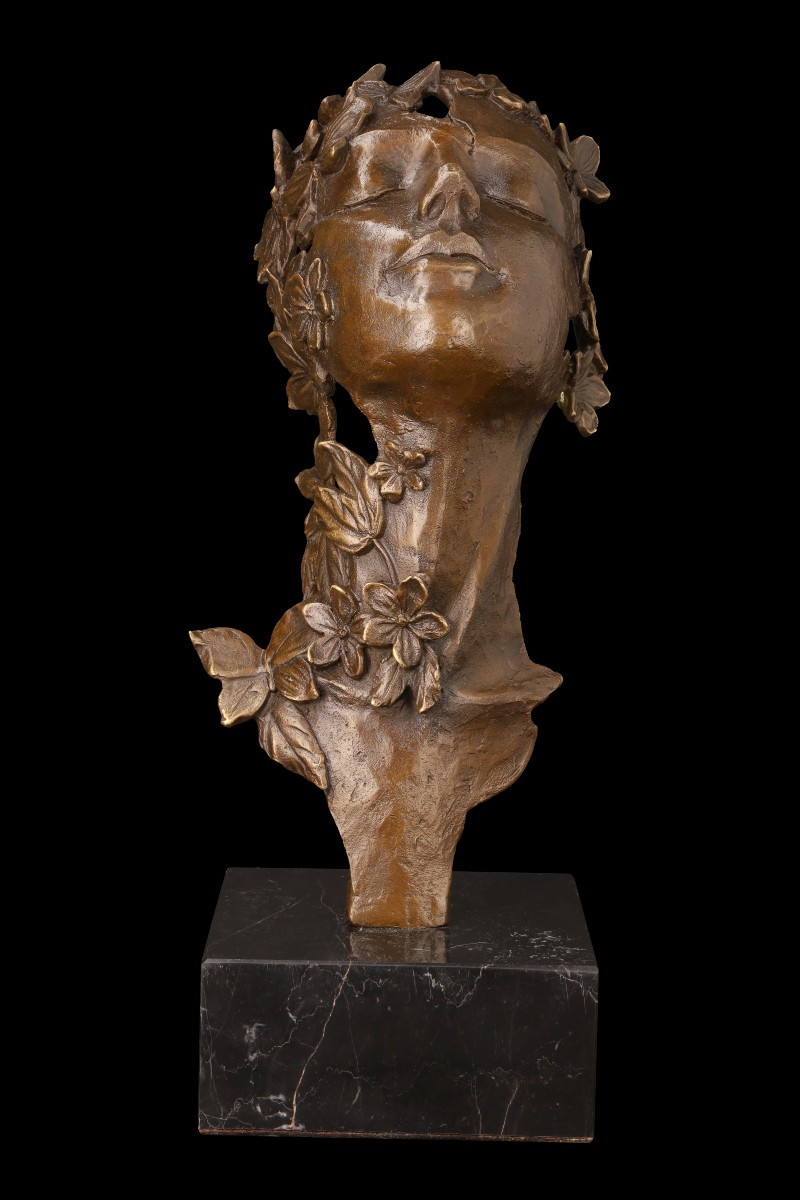


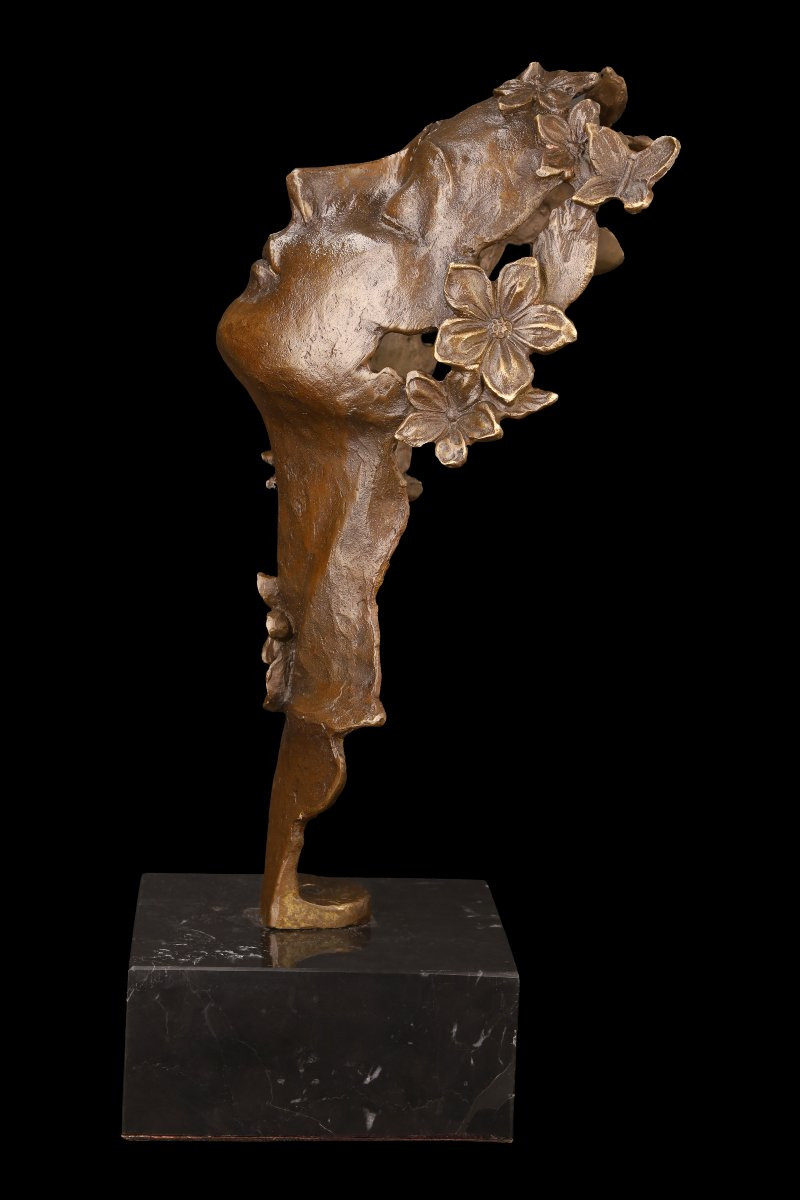


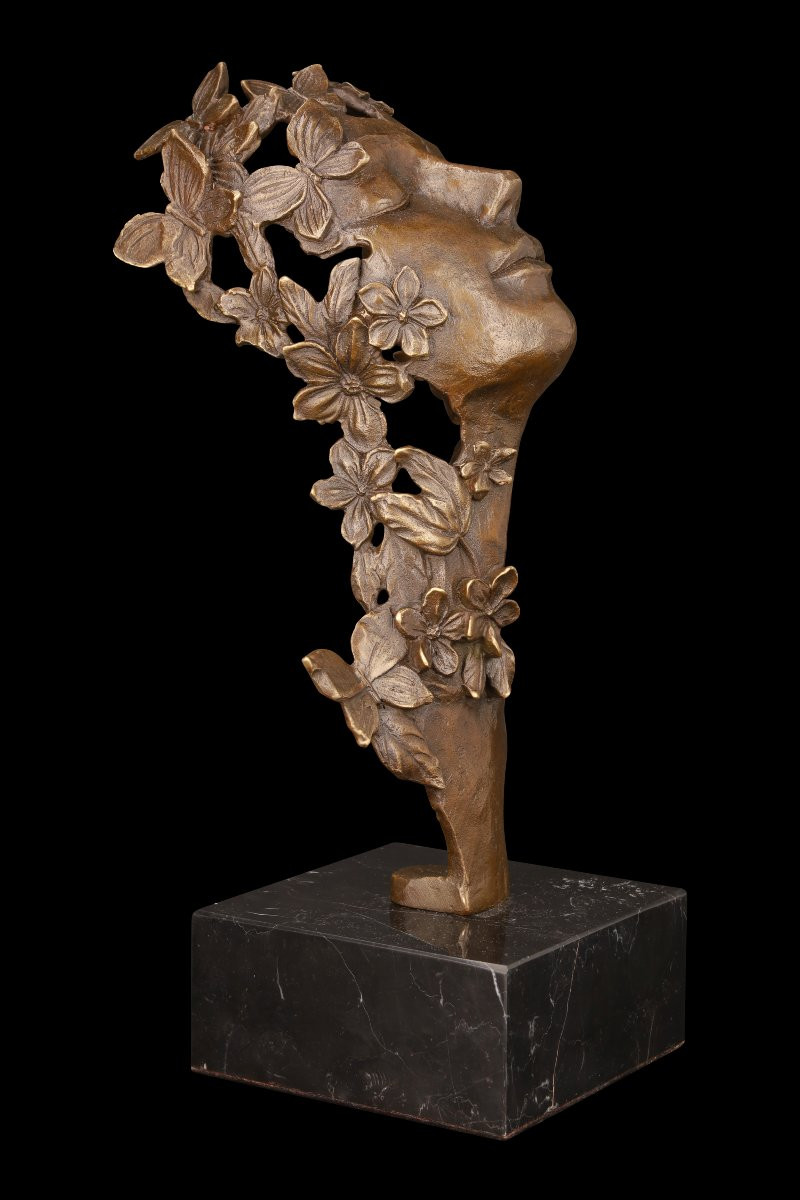
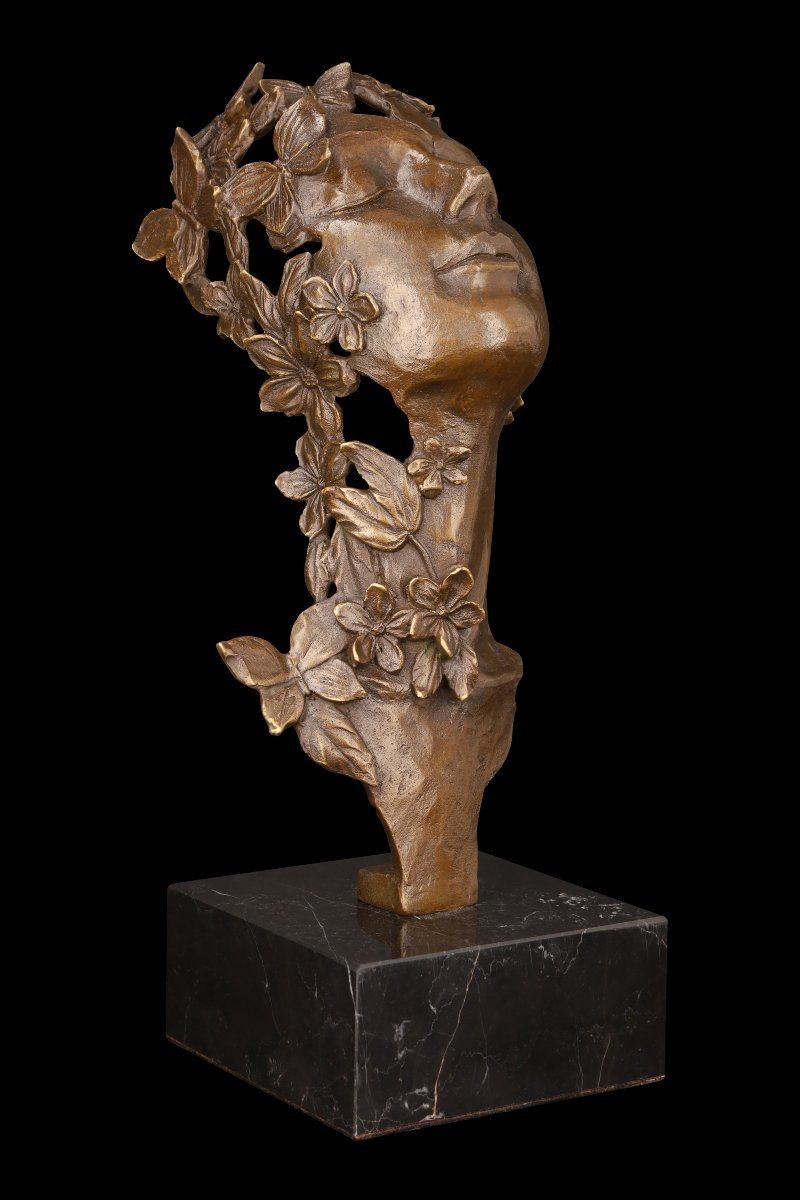



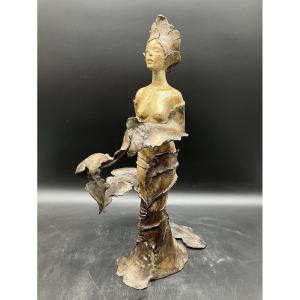
The sculpture is a female bust in brown patina bronze, resting on a black veined marble cubical base. It is characterized by a dual nature: a figurative representation of the human form and a lyrical abstraction of nature.
The Subject: An idealistic and serene woman's face is depicted with closed eyes, the head slightly tilted up towards the sky. This pose evokes a state of meditation, ecstasy, or a dreamlike sleep, a theme dear to Symbolism and Art Nouveau.
The Form: The right side of the bust and neck is rendered in a rather realistic and smooth manner, while the left side appears to disintegrate or blossom into vegetal motifs. This asymmetry lends the piece great dynamism and a sense of movement and transformation.
The Motifs: The hair, neck, and profile are magnificently adorned with flowers and foliage (resembling stylized clematis or hydrangea motifs) in relief. These organic elements appear to grow out of the face, emphasizing the union of the human figure and nature.
The Technique: The lost-wax casting technique is used. The surface finish is sometimes smooth for the face and sometimes textured and rough for the transitional areas and the back of the bust (as seen in the profile and rear photos), adding a sense of modernity and expressiveness to the piece.
Milo's sculpture is an excellent example of modern figurative sculpture that pays homage to historical styles, creating a stylistic synthesis:
Art Nouveau Heritage (c. 1890-1910):
Organic Motifs: Art Nouveau is defined by its appreciation of curving lines, natural forms, and flora. The predominance of flowers and foliage merging with the female figure is the most obvious hallmark of this style.
Symbolist Themes: Inner expression, dreams, and the soul (often symbolized by the closed-eyed face) are themes directly inherited from the Symbolist movement that fueled Art Nouveau.
Art Deco Heritage (c. 1920-1939):
Synthesis and Stylization: Although the motifs are floral, their representation is not naturalistic but stylized (the petals are sharply drawn and somewhat geometric), which recalls the Art Deco trend toward simplification and geometrization.
Materials and Finish: The use of bronze on a black marble base (often Portoro-type) is a classic Art Deco choice for its robustness, elegant contrast, and decorative value.
Rather than being an Art Nouveau or Art Deco piece itself, this sculpture is a modern edition bronze that uses the aesthetic language of these two movements to create a timeless and decorative work.
It is typical of the production of luxury art sculptures from the late 20th and early 21st centuries, where artists like Milo revisit classic themes (the bust, the female figure) and historical aesthetics (Art Nouveau) by modernizing them through finishing techniques and contemporary expression (the fragmented or merging aspect of the form).
For modern, figurative sculpture often issued under the signature "Milo," the most relevant artist is Miguel Fernando Lopez.
Full Name: Miguel Fernando Lopez.
Signature: Often signed simply Milo.
Nationality: Portuguese.
Born: June 12, 1955, in Lisbon, Portugal.
Period of Activity: Contemporary artist, active primarily from the 1970s/1980s to the present day.
Training and Career: After studying art in Lisbon, he focused on sculpture. He is best known for his mastery of the lost-wax casting technique and his ability to create small to medium-sized edition bronzes for decorative and collection purposes.
Dominant Style: His style is decidedly figurative and classical, with a strong preference for:
The female nude.
Allegorical figures.
Subjects inspired by Greek and Roman mythology.
Works that incorporate elements of Art Nouveau and Art Deco into a modern context.
Explore similar pieces and discover your ideal find:
bronze sculptures