THIS OBJECT WAS SOLD
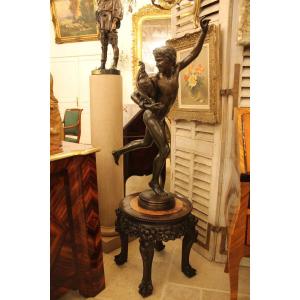
Bronze Sculpture "woman With Faun" By Leopold Oudry (1854-1882)

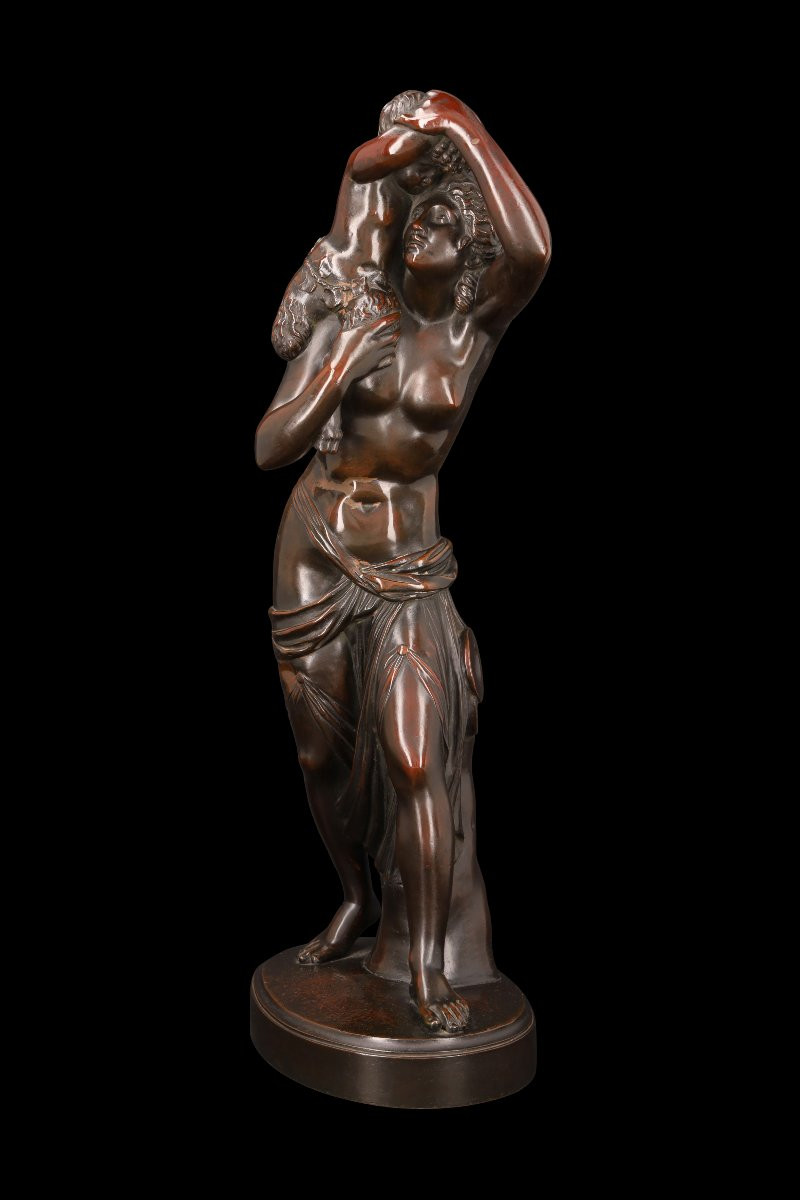
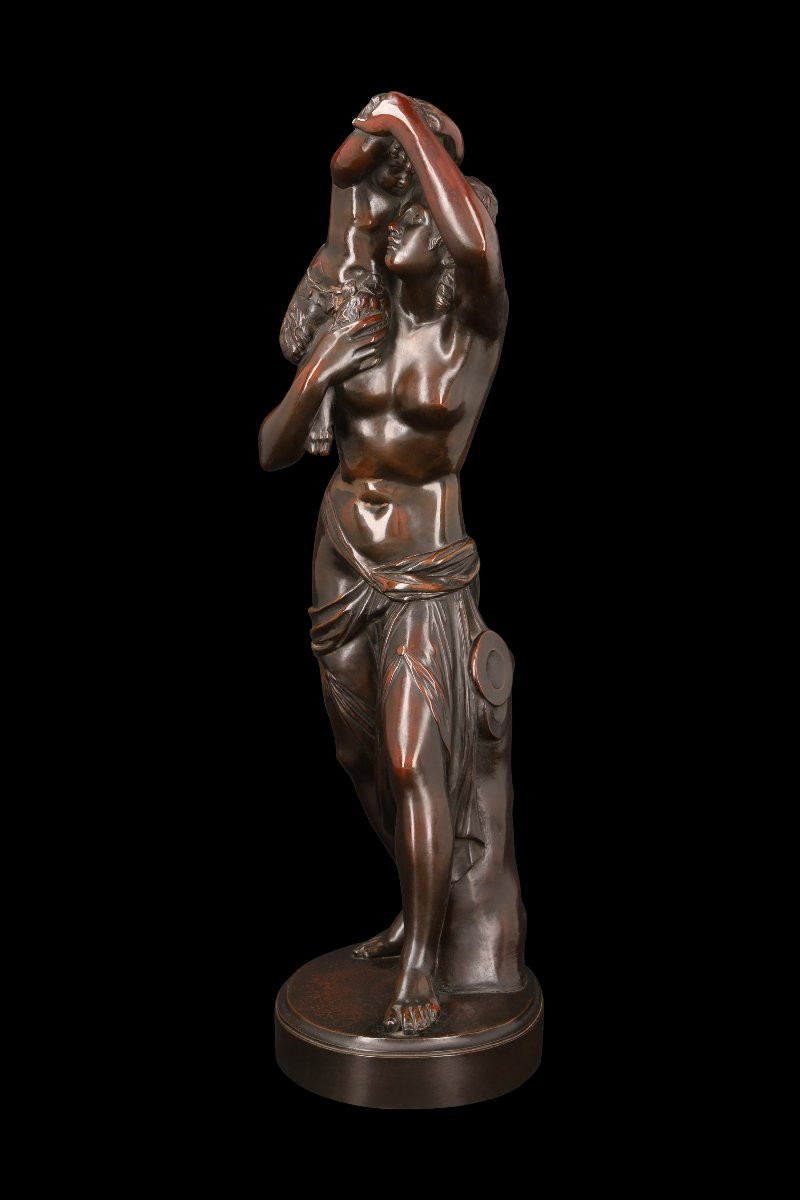
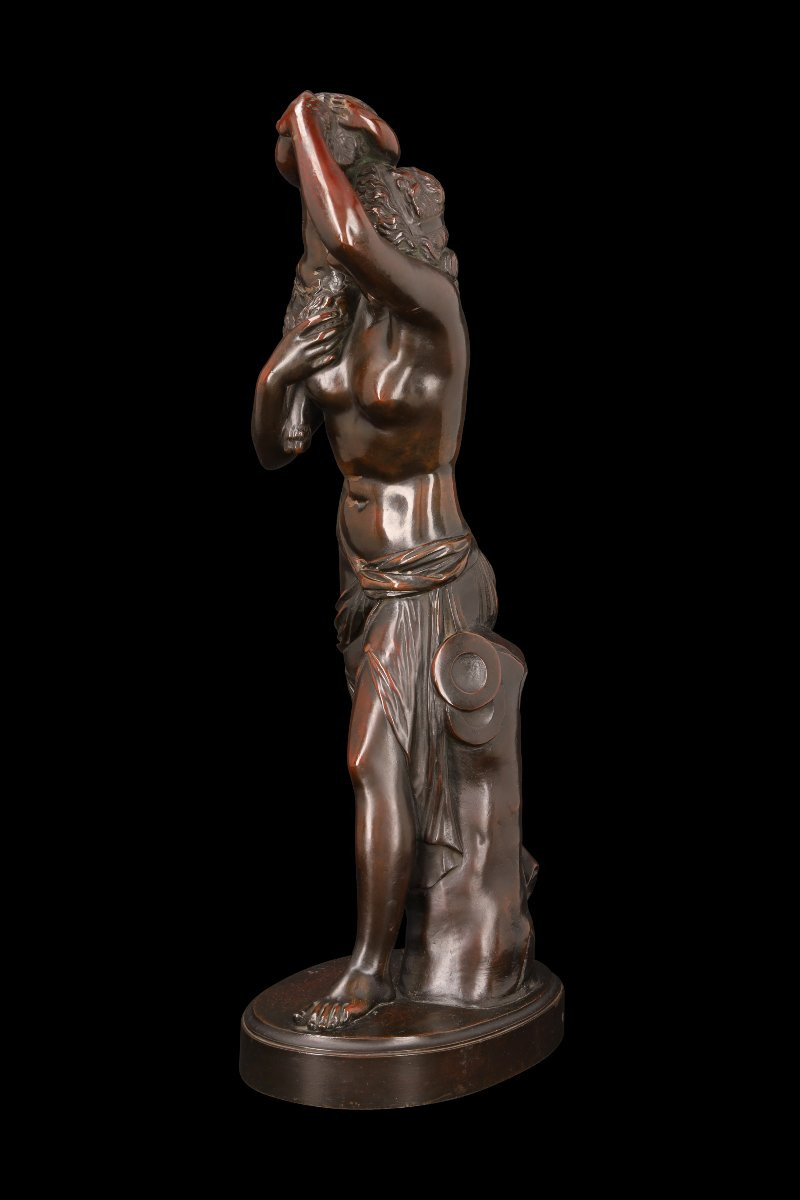
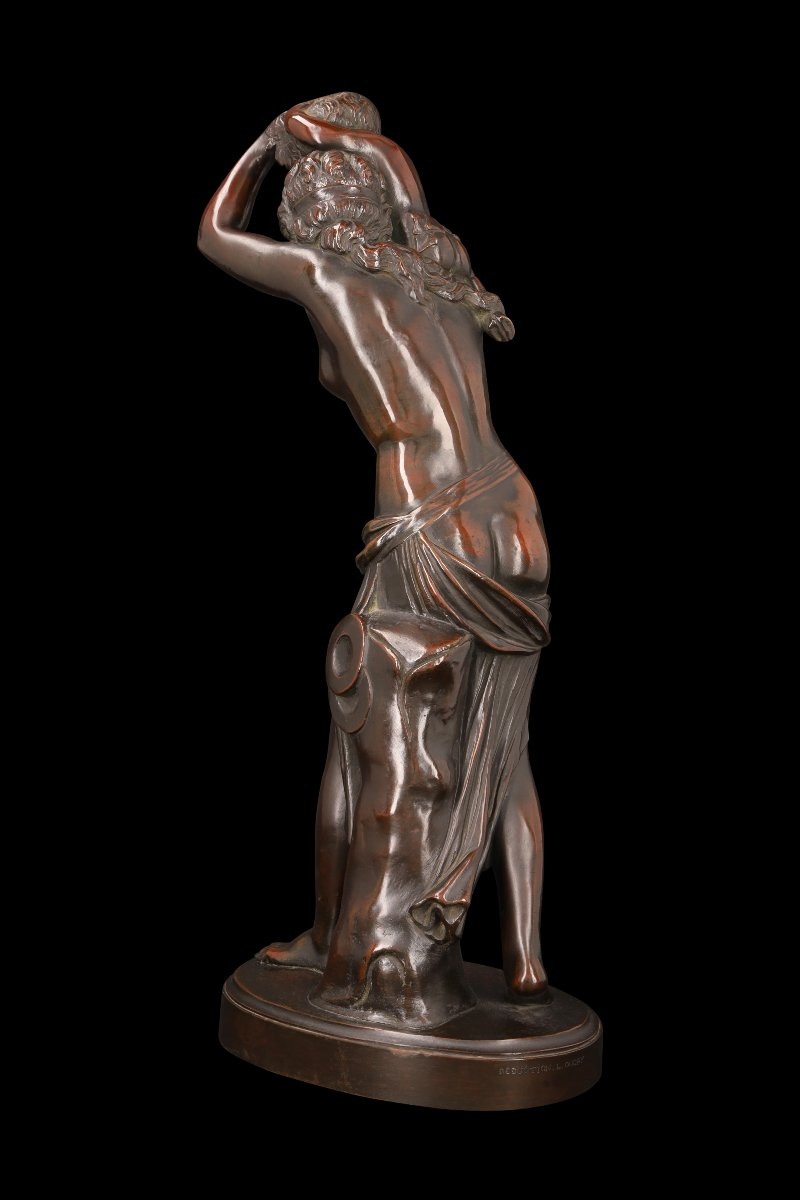
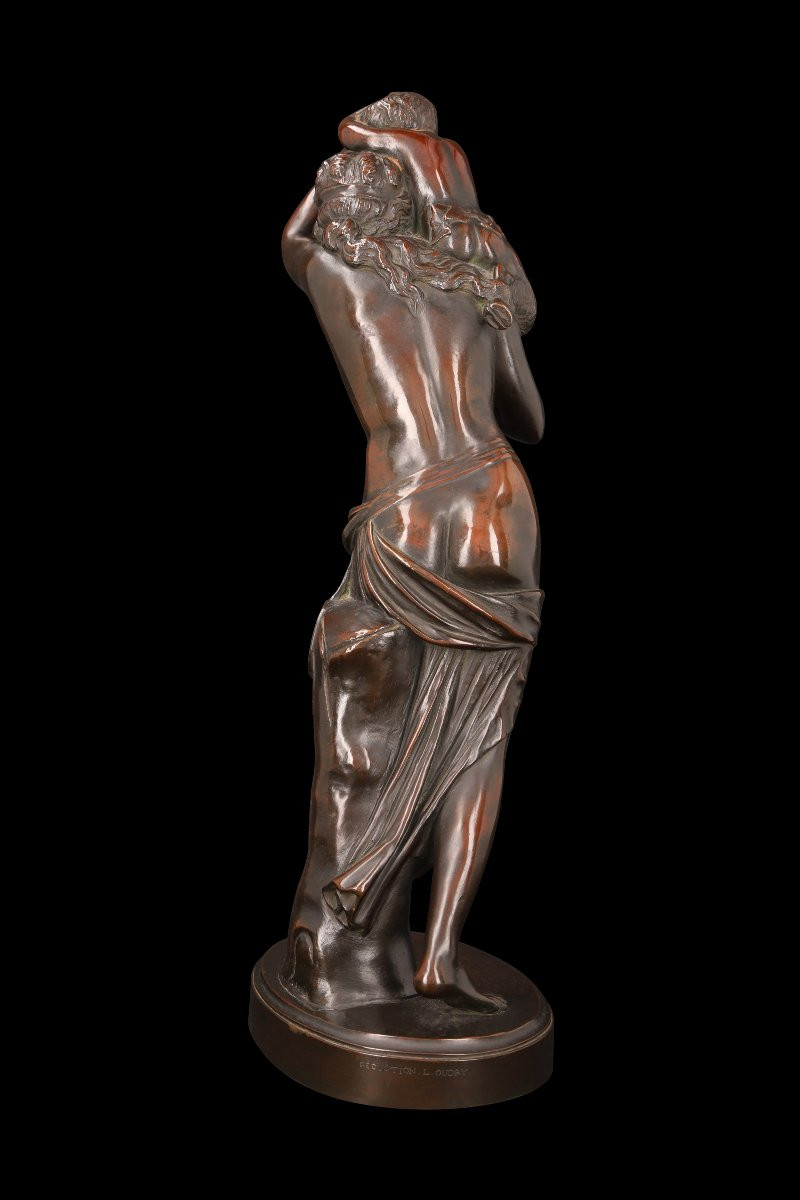
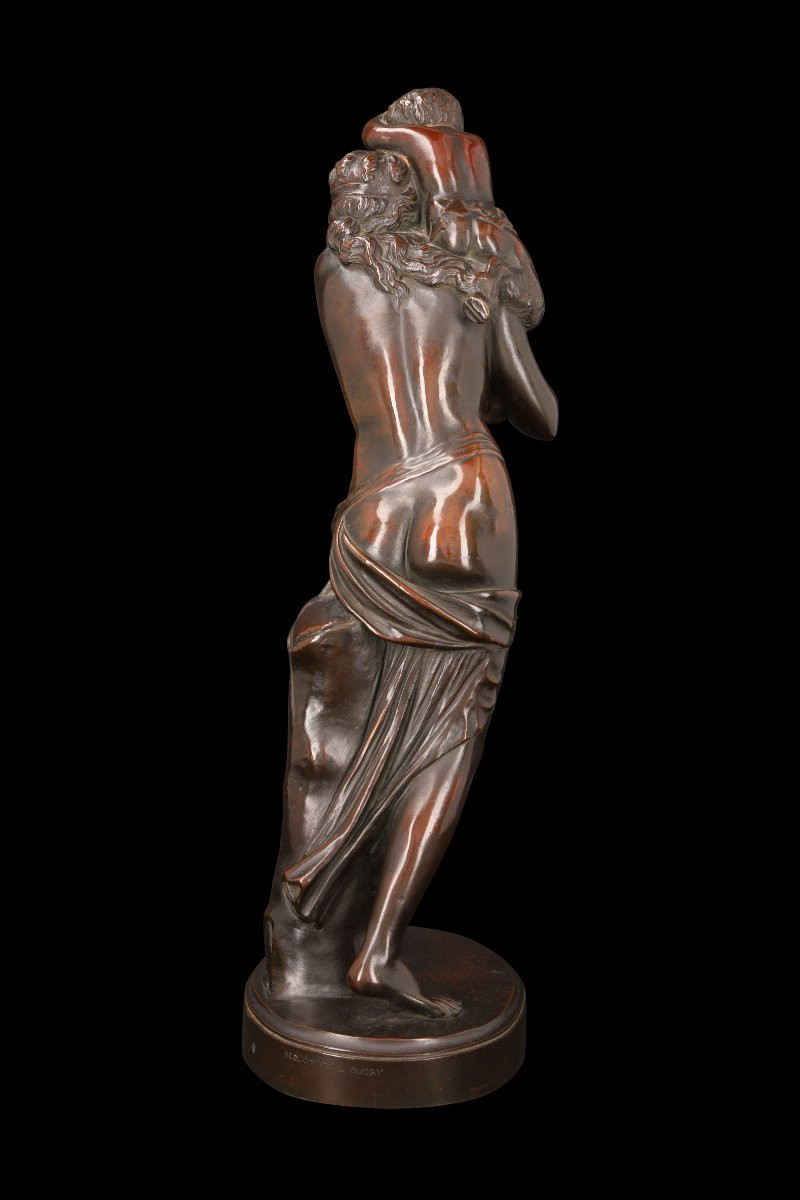
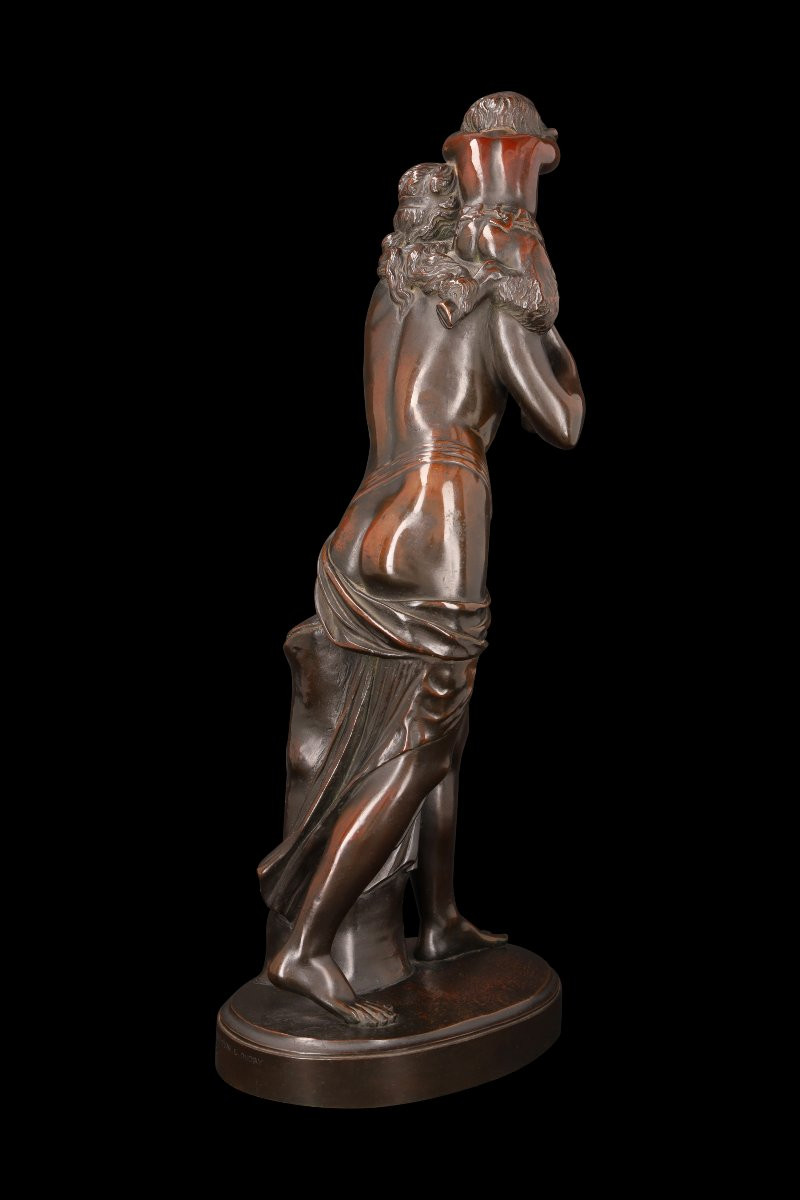
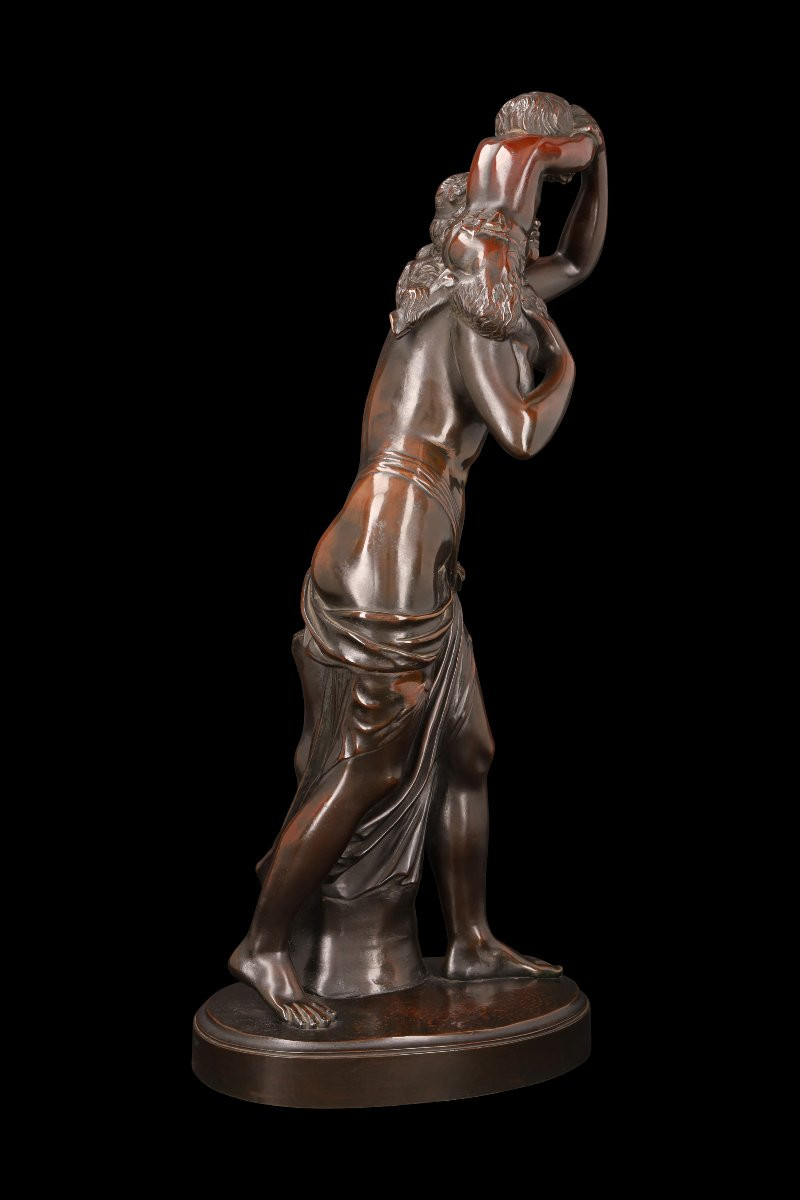
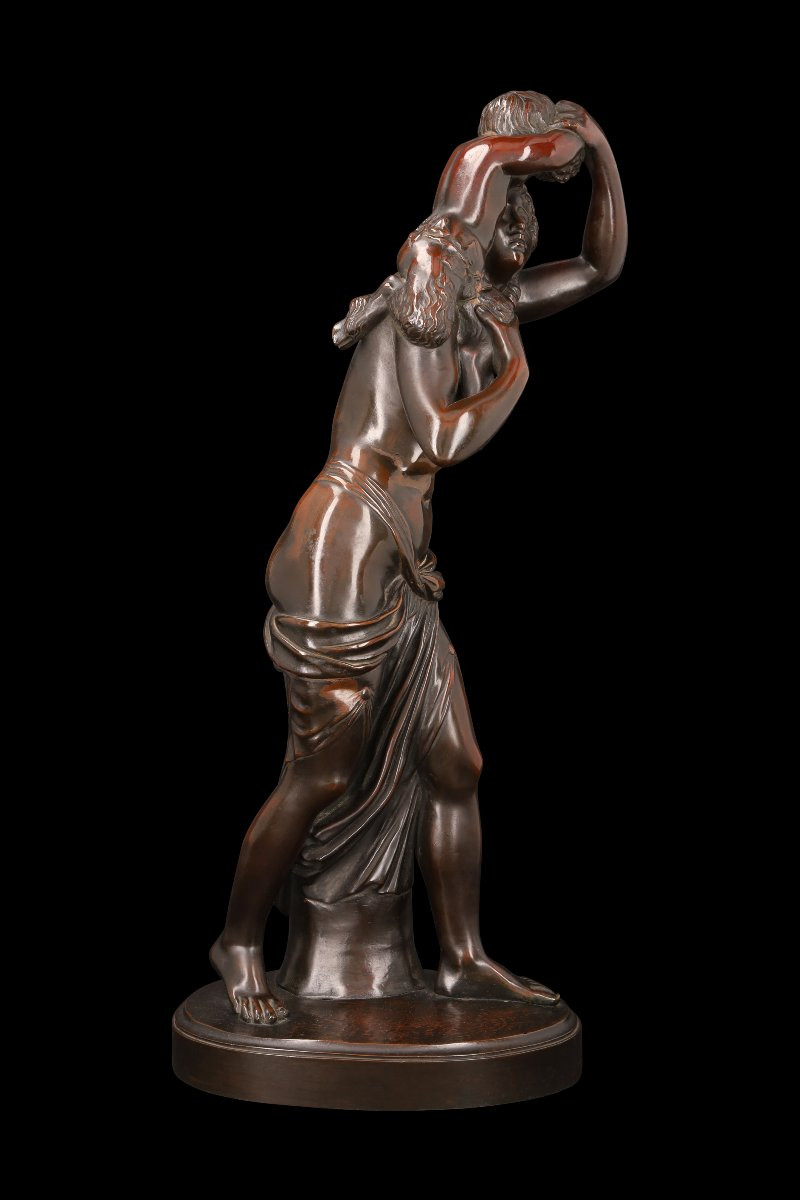
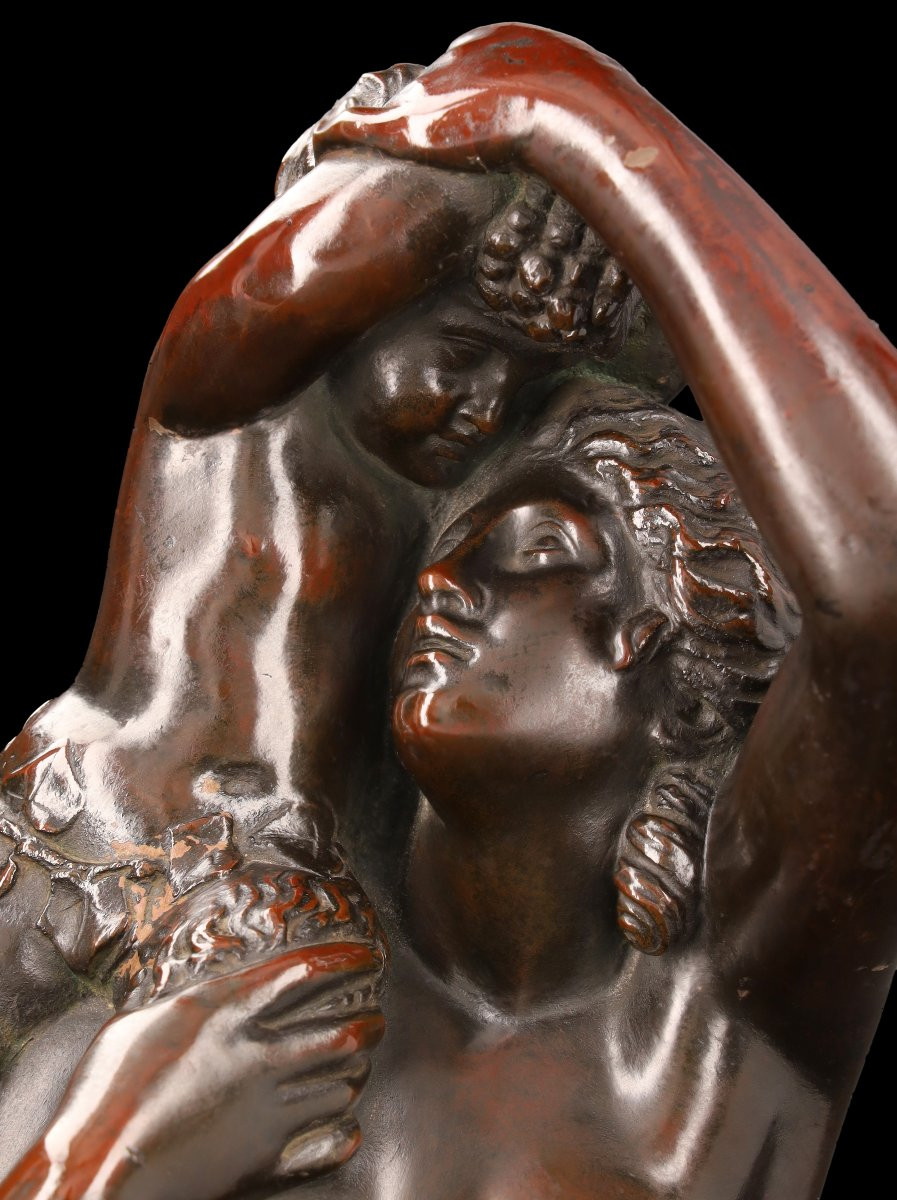
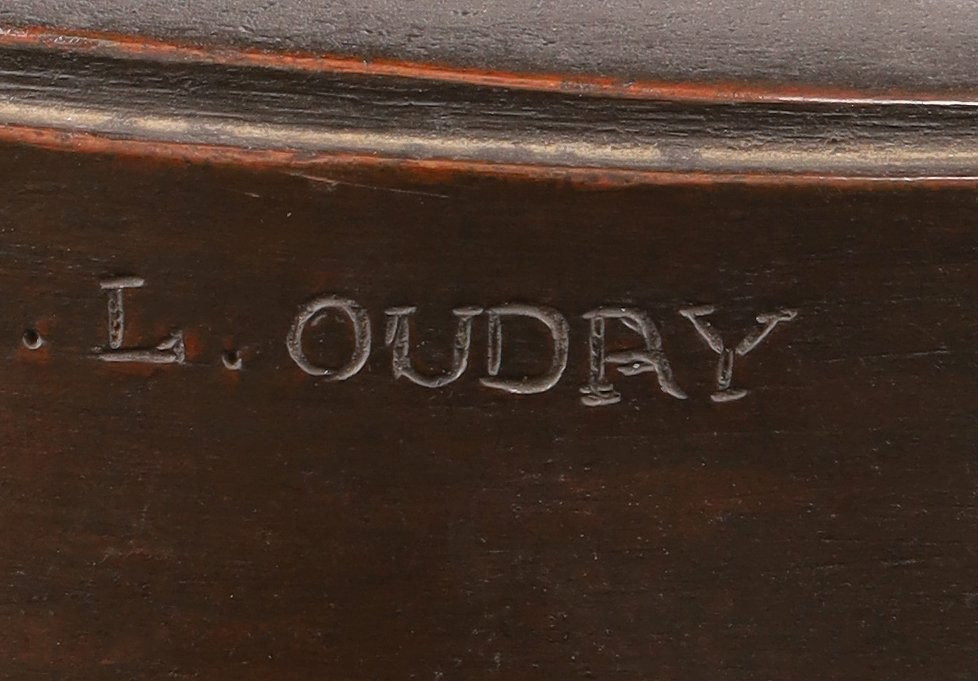
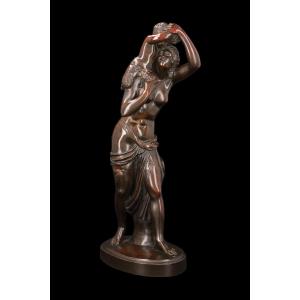


The bronze sculpture depicts a mythological female figure, likely a nymph or bacchante, carrying a young faun on her shoulders.
Subject and Composition: The work captures a moment of tenderness or intimacy between the woman and the mythological creature. The woman, leaning slightly forward, uses her arms to support the small faun (or a Bacchus child) on her neck and shoulders.
Anatomy and Modeling: The modeling of the bodies is highly naturalistic and sensual. The artist emphasizes the musculature and curves, particularly visible on the female torso, legs, and bare back (vignettes 07, 08, 09). This attention to anatomical detail imparts great vitality and classical lyricism to the figure.
Garment and Drapery: The woman is partially draped in a light fabric that wraps around her waist and descends along a support (a tree stump or rock, visible to the figure's right). The treatment of the drapery is fluid and realistic, contrasting with the polished skin of the nude and adding an element of movement to the static composition.
Material and Finish: Executed in bronze, the sculpture features a rich, shiny brown patina, typical of art castings from the period, which enhances the softness of the forms and the play of light on the polished surface.
Léopold Oudry's work fits within the Academic current and the Neo-Baroque (or Late Neo-Classical) style, which was predominant in official French sculpture in the 19th century, before the rise of modern sculpture (Rodin, etc.).
2.1.1. Applied Principles of the Movement:Mythological Reference: The choice of mythological subjects (nymphs, fauns, Bacchus) is a hallmark of academic art.
Idealization of the Nude: The female body is idealized, following classical canons of beauty, while retaining a certain naturalism and sensuality inherited from the Baroque.
Technical Mastery: The casting technique and the modeling exhibit great virtuosity, underscoring the artist's formal expertise.
"Woman with a Faun" is a perfect example of late 19th-century Salon sculpture:
It demonstrates the persistence of classical themes and forms despite the emergence of more radical movements (Impressionism, early Symbolism).
The work resembles the productions of major sculptors of the era, such as Carrier-Belleuse or Falguière, who favored a refined, elegant art often intended for the decoration of bourgeois interiors.
It illustrates the art market's demand for medium-sized bronze works, which were easily reproducible and prized for their decorative quality.
Biographical information concerning a sculptor named Léopold Oudry (1854-1882) is very scarce and can be confused with the chemist and electroplater also named Léopold Oudry (active mid-19th century).
However, based on attributions of works such as "Woman with a Faun" and "Diane au bain" signed "L. Oudry" with the dates 1854-1882, the following information can be compiled about the sculptor:
Dates of Life: 1854 – 1882. (A short artistic life, suggesting an early death).
Nationality and Period: Artist of the French School of the 19th century.
Style: His known work, such as "Diane au Bain" or "Woman with a Faun" (like the one presented), places him in the Academic/Figurative style of the second half of the century.
Production: His sculptures of nudes and mythological subjects were generally executed in bronze.
Context of Confusion (Important Note):
The name Léopold Oudry is more commonly associated with the chemist inventor who established an electrochemical workshop in Auteuil around 1854.
This Léopold Oudry (the chemist) was famous for his galvanic copper-plating process applied to large metal pieces, including Parisian monuments (Concorde fountains, candelabra).
It is possible that the sculptor Léopold Oudry (1854-1882) is a distinct figure, perhaps a relative or namesake, or that the name was used by the foundry company to sign artworks. However, the existence of works signed "L. Oudry" with the life dates 1854-1882 is attested.
Explore similar pieces and discover your ideal find:
bronze sculptures