THIS OBJECT WAS SOLD
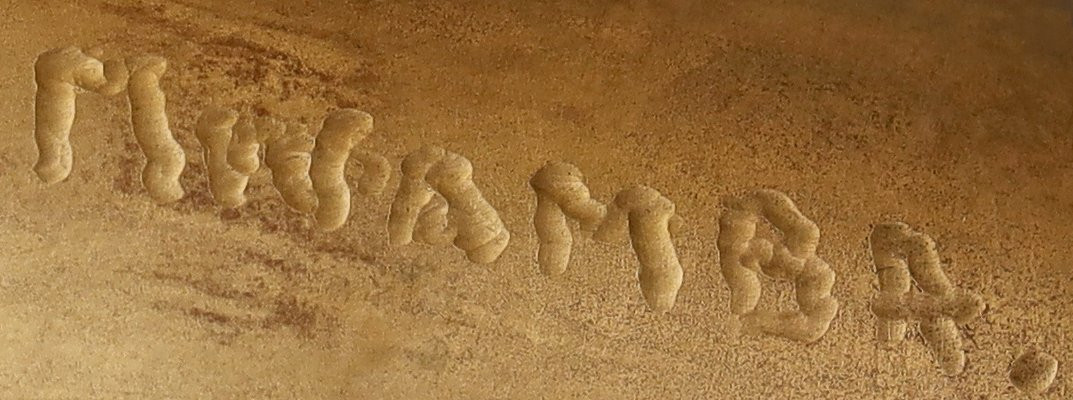
Bronze Sculpture "woman's Body" By Mwamba A.


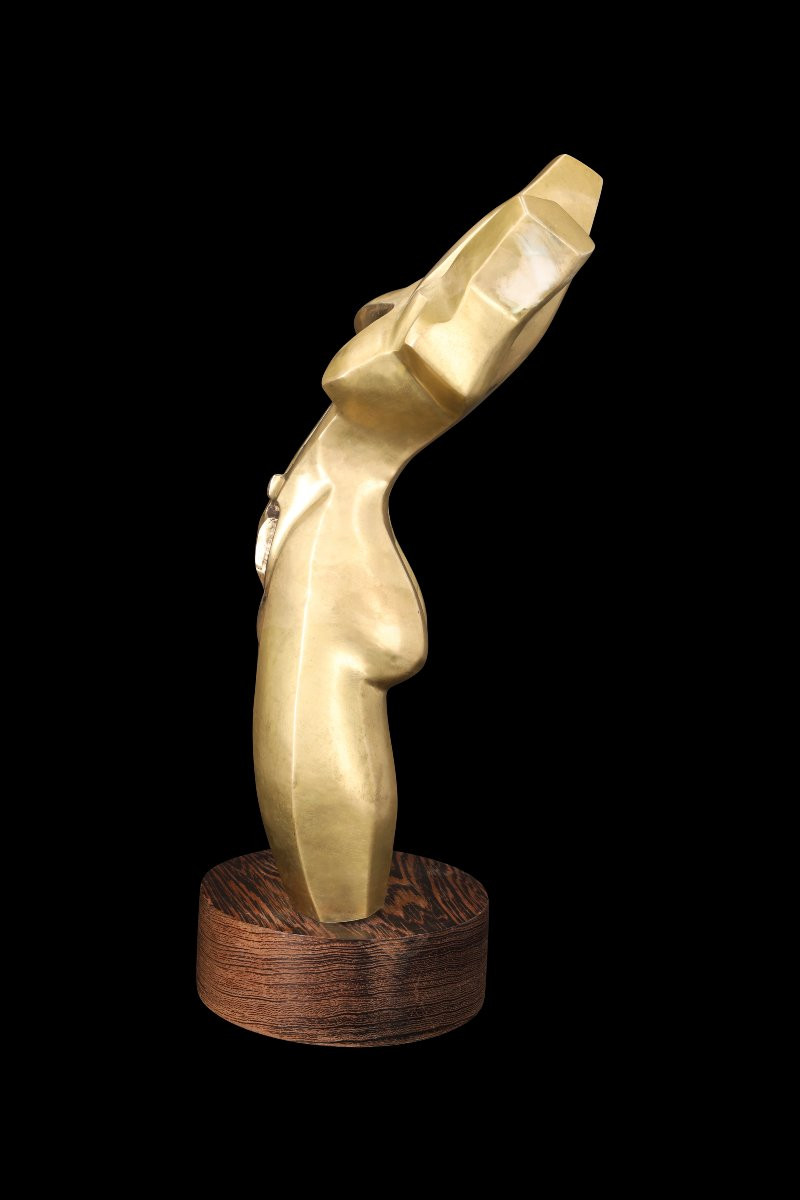
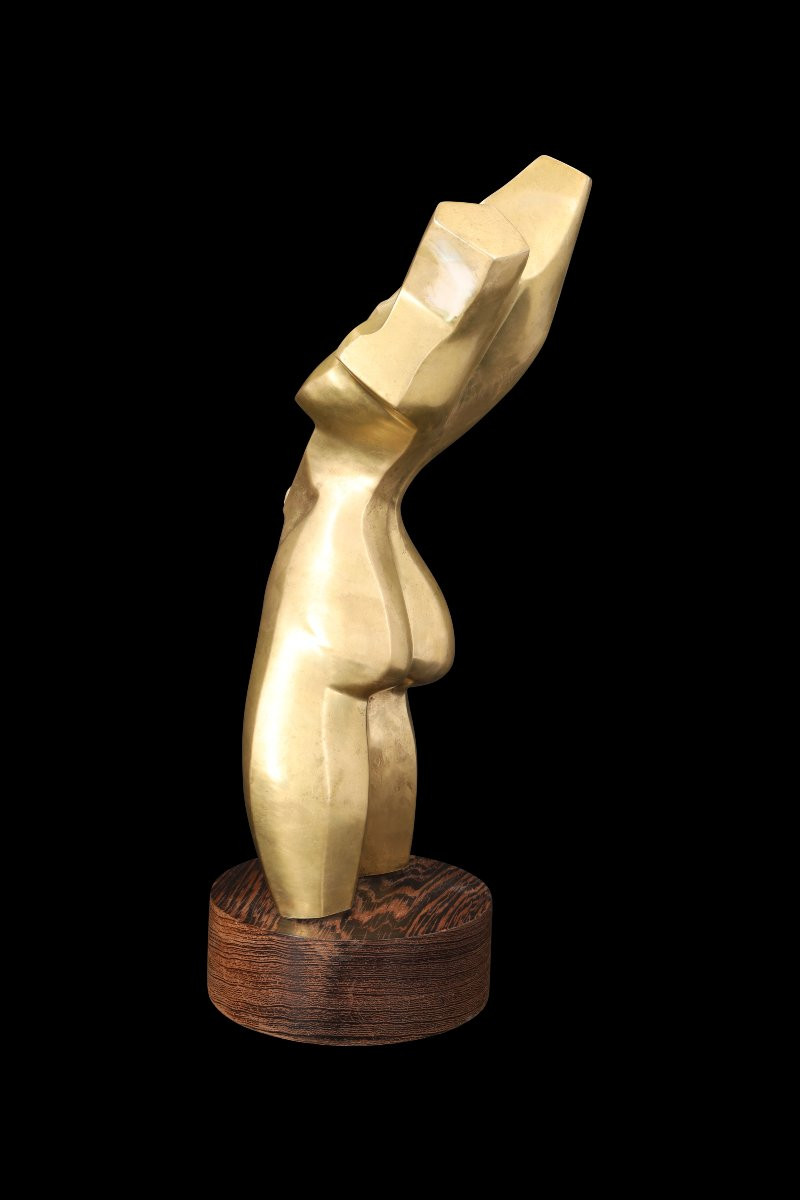
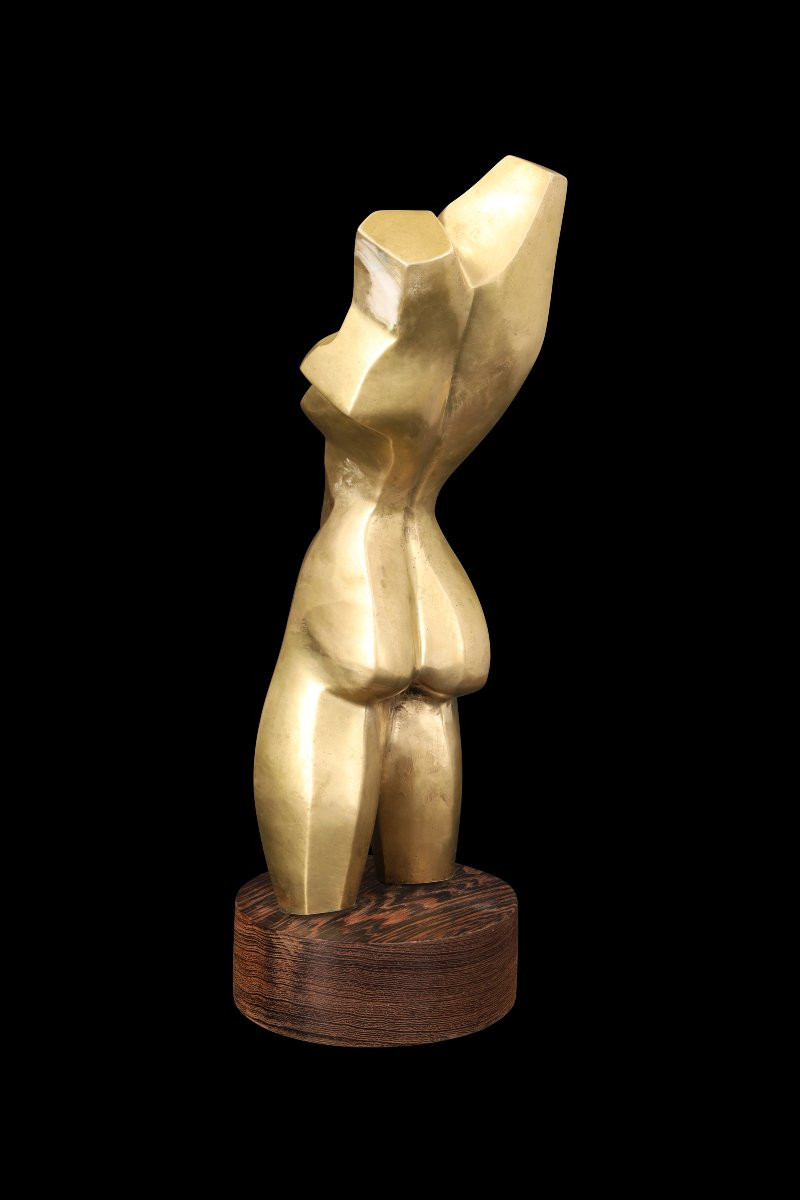
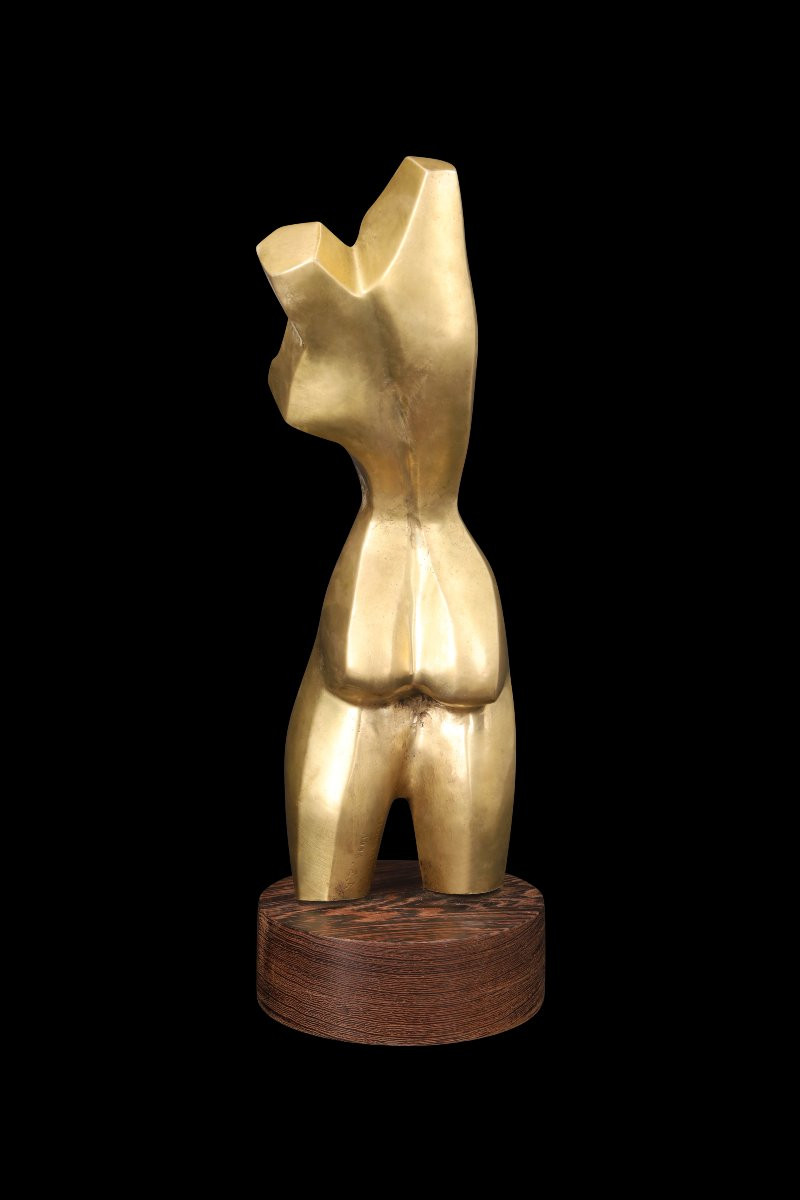
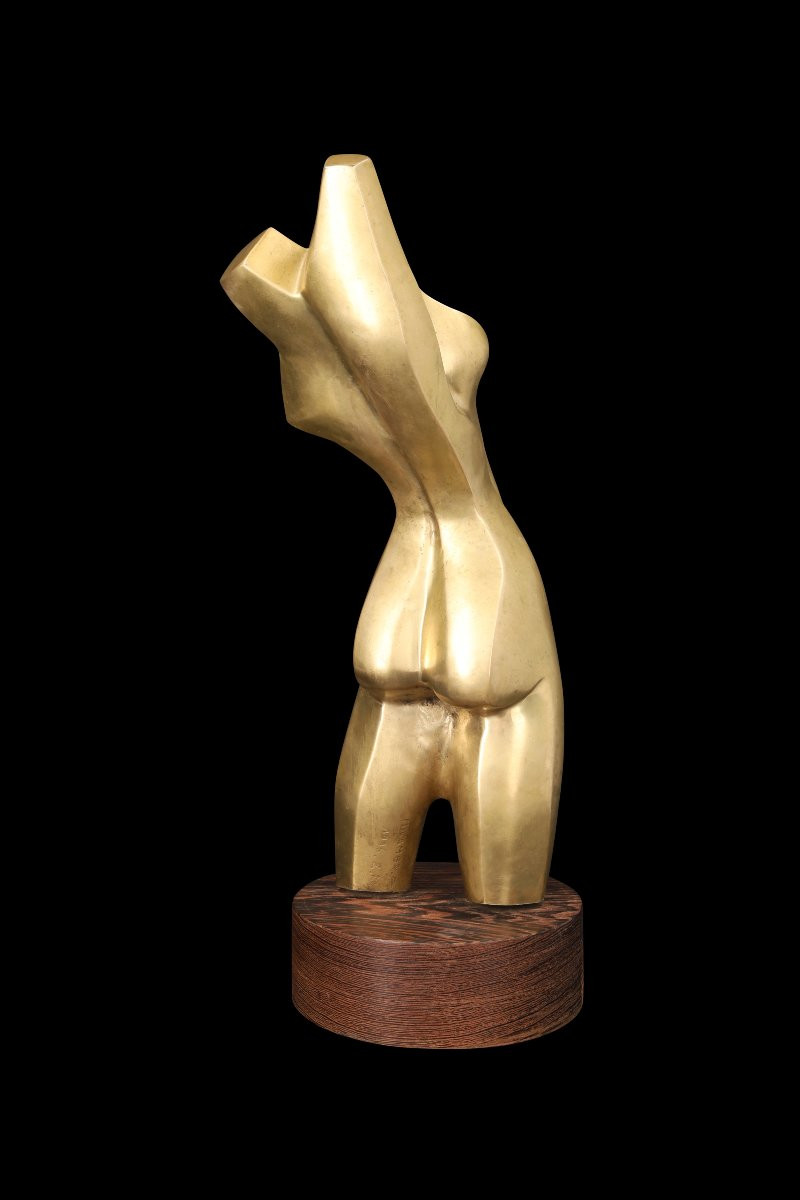
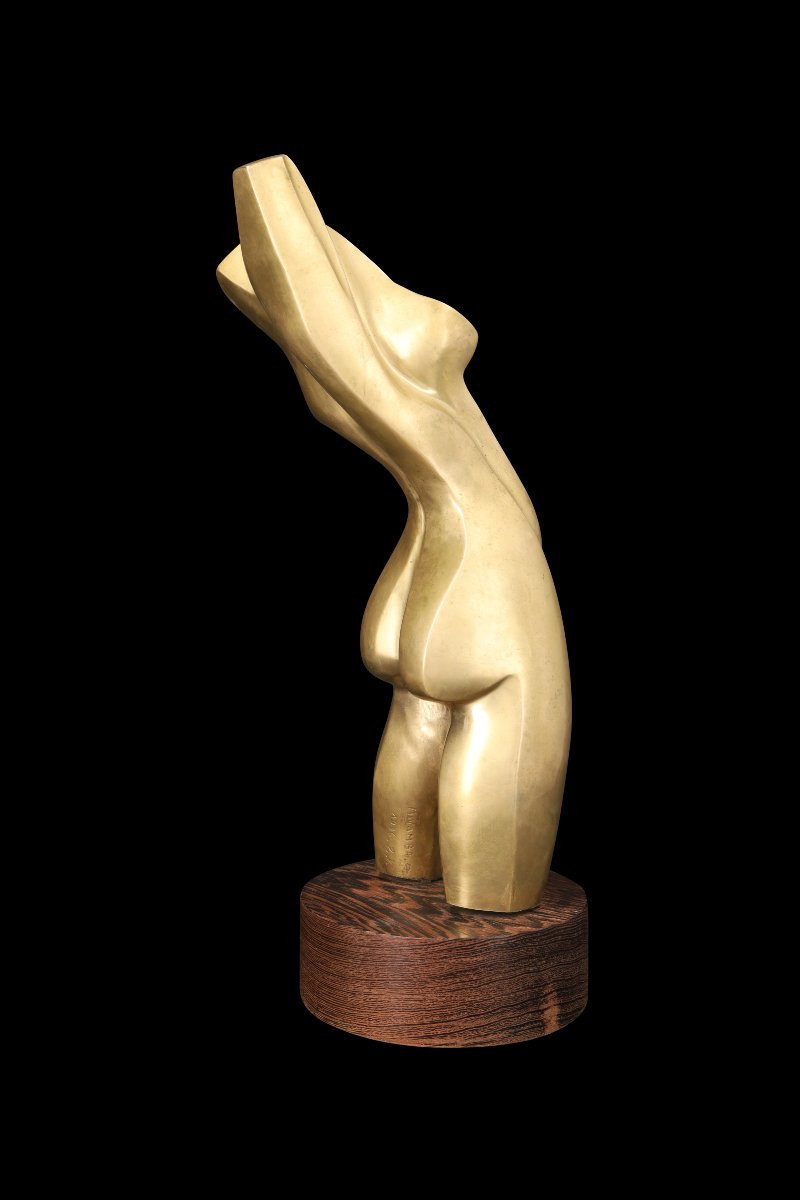




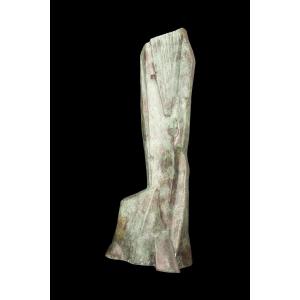
The sculpture is a stylized female torso, cast in bronze and mounted on a cylindrical plinth of dark wood (likely ebony or a similar exotic wood).
Material and Finish: The use of bronze lends the work a solid and timeless presence, enhanced by a polished, golden finish that captures and reflects the light. The brilliance of the metal highlights the form's volumes and contours.
Form and Style: The work is situated at the intersection of figuration and geometric abstraction. Although it clearly represents a female body (the torso, hips, and sketched breasts), the form is not naturalistic. It is characterized by:
Simplicity of Lines: The artist has synthesized the human form by eliminating anatomical details in favor of powerful and fluid curves (seen in profile) and faceted, quasi-crystalline planes (particularly visible on the "head" or upper torso, and the back).
Dynamism and Posture: The posture is remarkably dynamic, with the torso arched backward and stretched upward, in a movement of elevation or ecstatic tension. This suggests vitality, freedom, or a celebration of the form.
Surface Treatment: In certain views, one notices incisions or rougher textures , which contrast with the polished smoothness of the rest of the bronze. These elements could be stylized scarifications or symbolic markings, adding a narrative or ritualistic dimension to the work.
Theme: The work is a meditation on the female form, perceived as a symbol of strength, beauty, and primal energy. The tension between the softness of the curves and the faceted hardness of the material creates a fascinating duality.
To discuss this work while avoiding any reference to contemporary art, it must be related to the formal and thematic principles of Primary Art (or Traditional Arts, Ancestral Arts). Mwamba A.'s its style draws deeply from the aesthetics and functions of non-Western sculptural traditions.
Relevant Characteristics of Primary Art:Simplification and Synthesis of Forms:
Primary Art (especially African art) does not seek a faithful imitation of reality but the representation of the essence or spirit of the subject.
Here, the body is not sculpted with academic realism but is stylized into simplified geometric and organic shapes. This formal synthesis is a hallmark of traditional ritual masks and statues (e.g., Baule or Fang figures that synthesize the body into cylinders and planes).
Symbolic Power and Spiritual Charge:
In Primary Art, a human figure or a mask is often a vessel for forces, spirits, or social/religious concepts.
This sculpture, through its vertical dynamism and exalted posture, emits a strong symbolic power, recalling the function of ritual figures intended to embody ancestors or deities. The nudity and movement suggest fertility, creation, or a connection to the earth.
The Importance of Line and Mass:
As in ancestral sculptural traditions, the emphasis is placed on the massive volume (the bronze), the tension of lines (the curvature of the back), and the balance of masses. The sculpture is designed to be viewed from all angles, with each view revealing a new interplay of light and shadow on the facets and curves.
The Use of Ritual Marks (Scarifications):
If the incisions on the belly are interpreted as bodily marks (scarifications), this establishes a direct link with traditional African arts, where such marks are crucial social, aesthetic, or ritual codes. They are not mere decorations but essential elements of the figure's identity.
In summary, "Corps de Femme" by Mwamba A. is a work that celebrates the human form through a language of synthesis and formal symbolism. Its aesthetic of powerful lines, assertive geometry, and expressive charge places it in continuity with the great non-Western sculptural traditions, where form is subordinate to the expression of essence and spiritual strength.
Explore similar pieces and discover your ideal find:
bronze sculptures