THIS OBJECT WAS SOLD
Clock XVIIIème 1790 Watchmaker : Jean-baptiste Baillon III


A
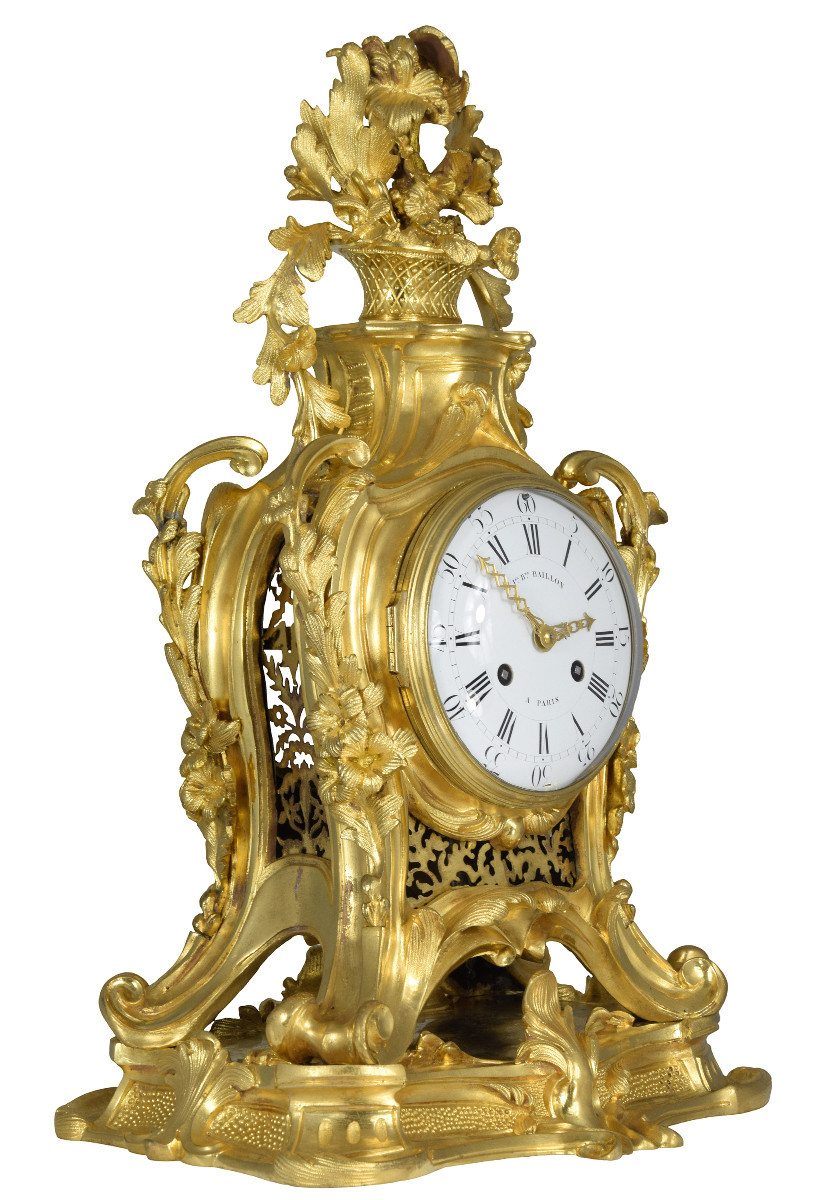
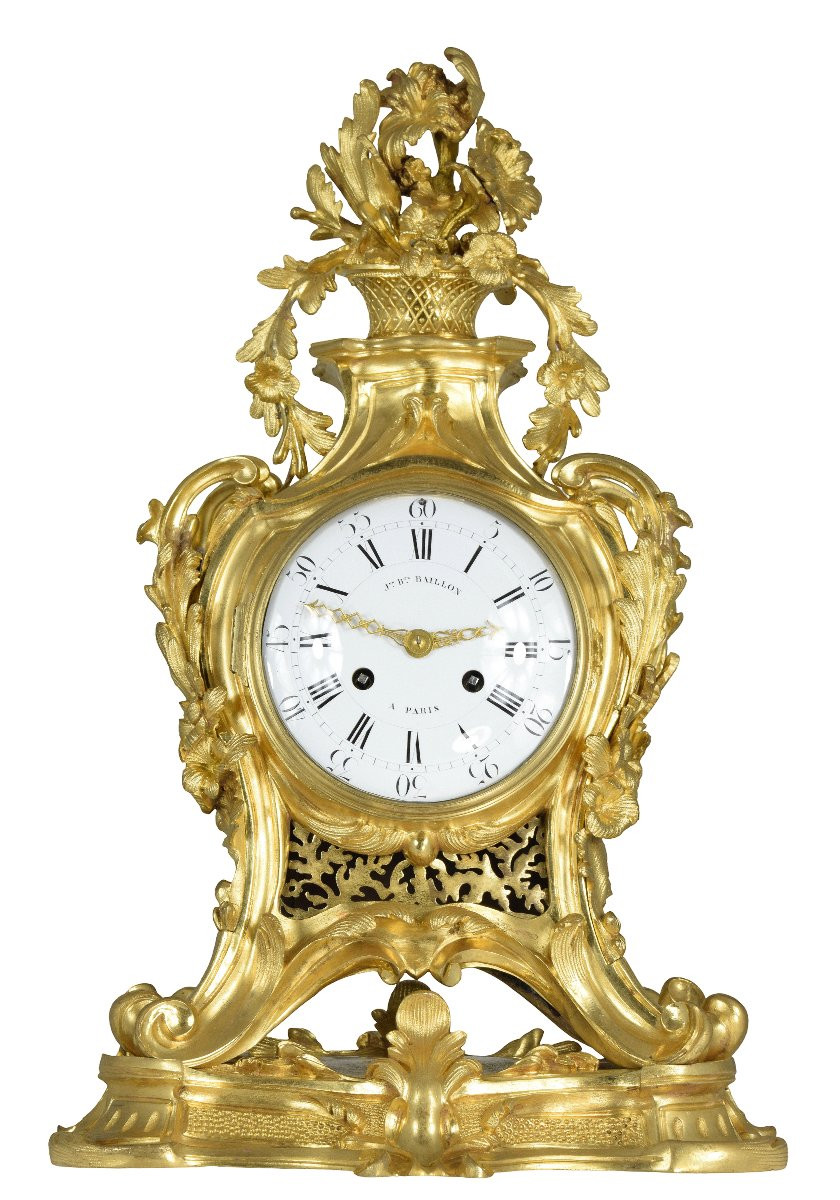
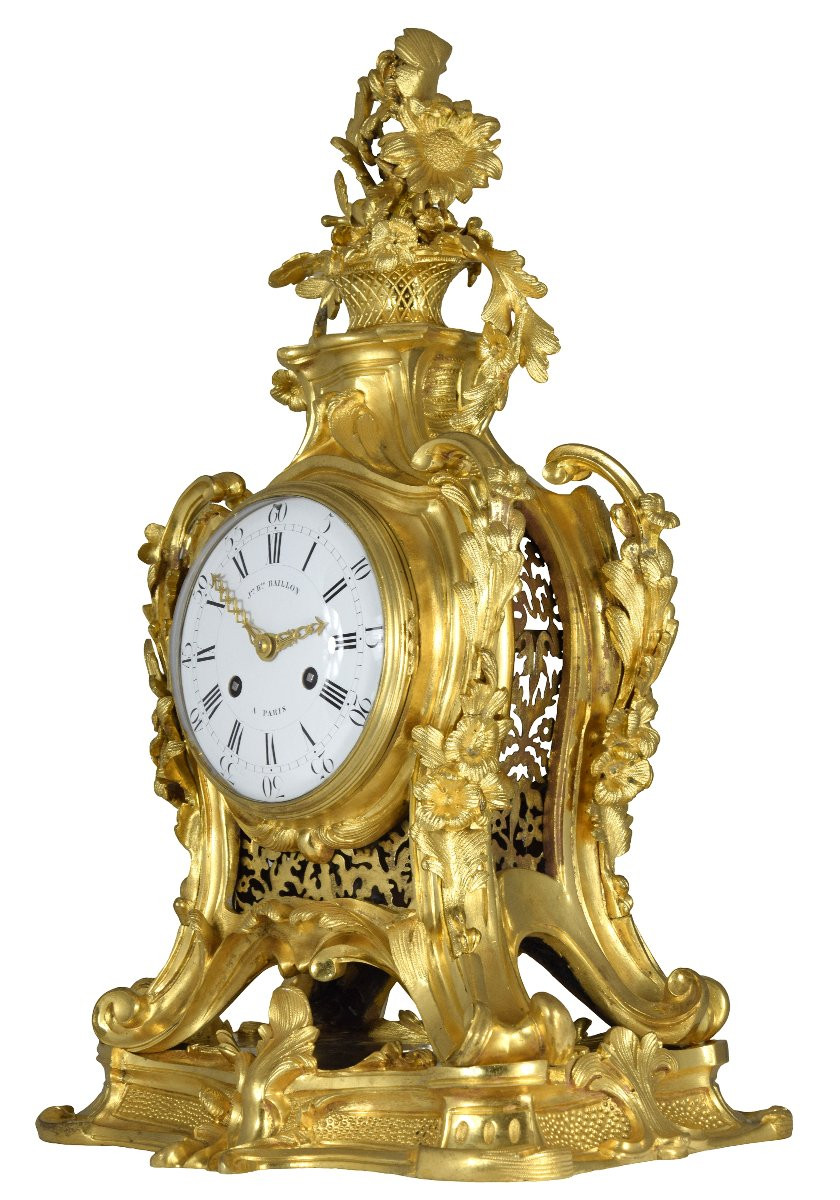
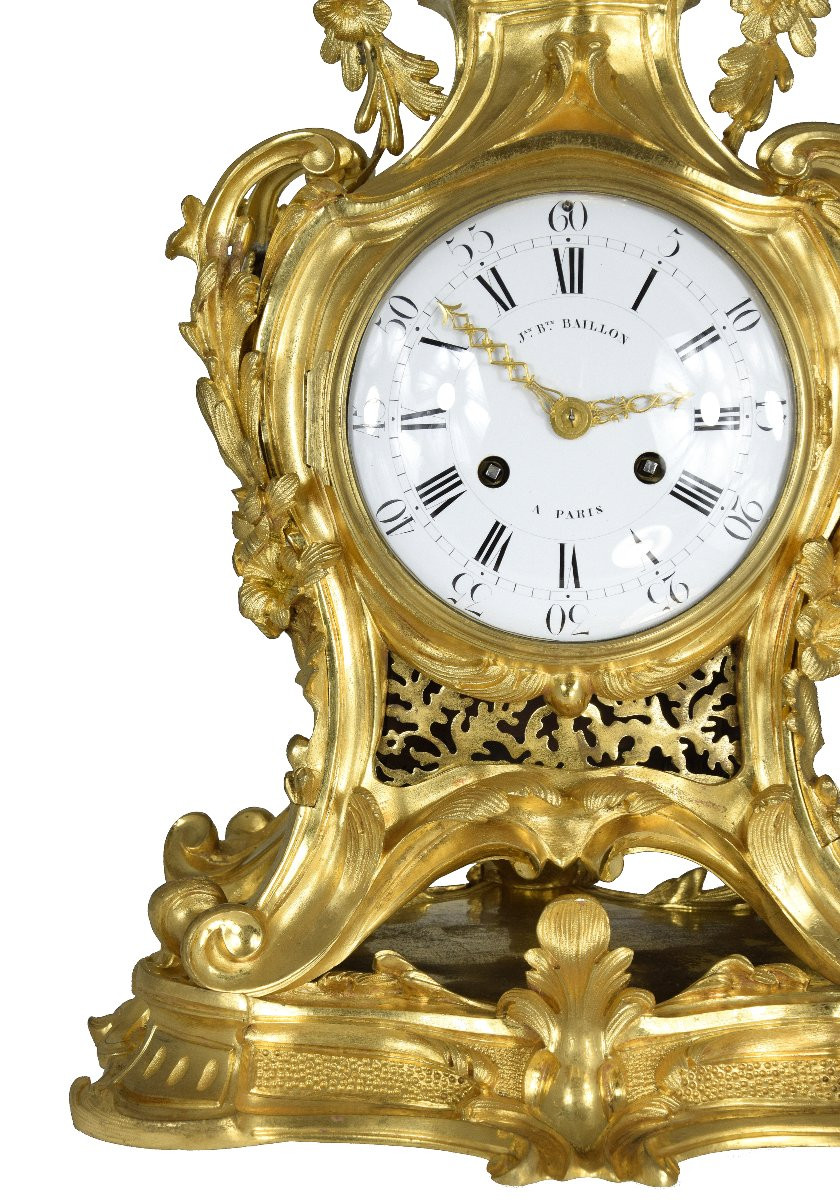
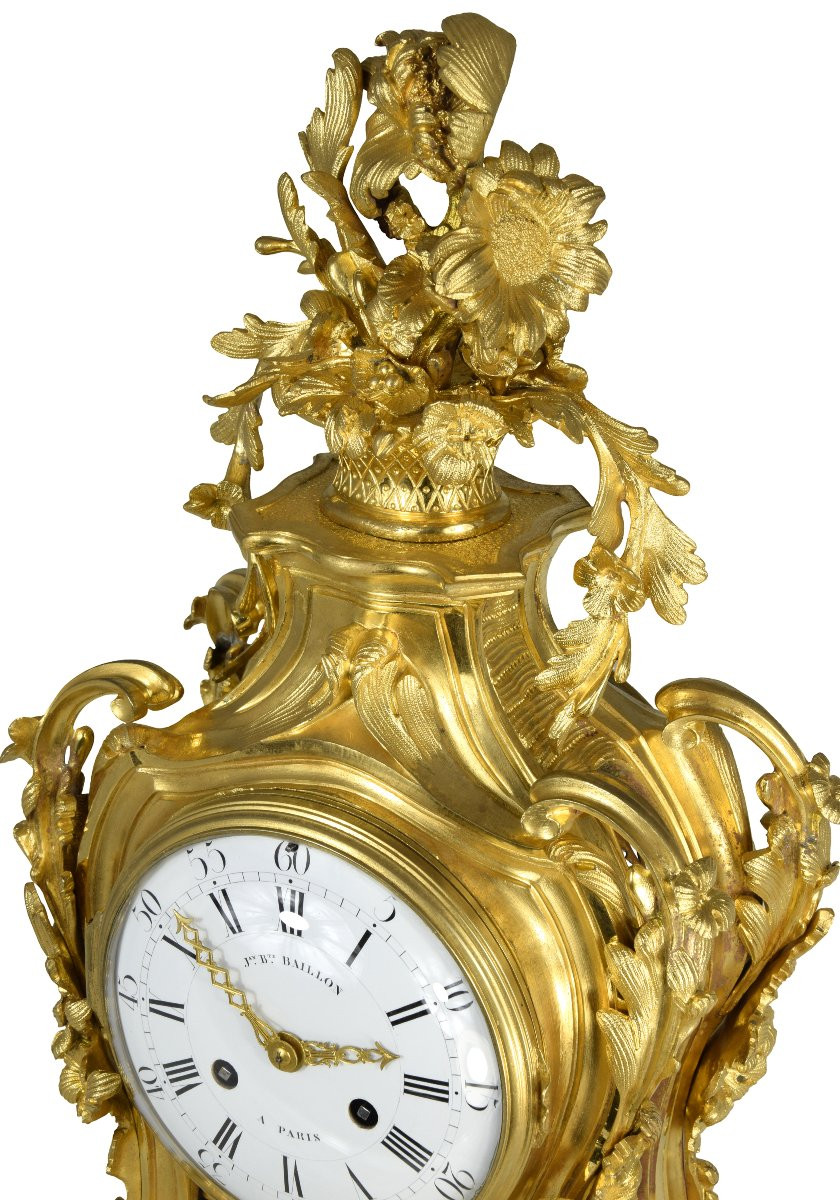
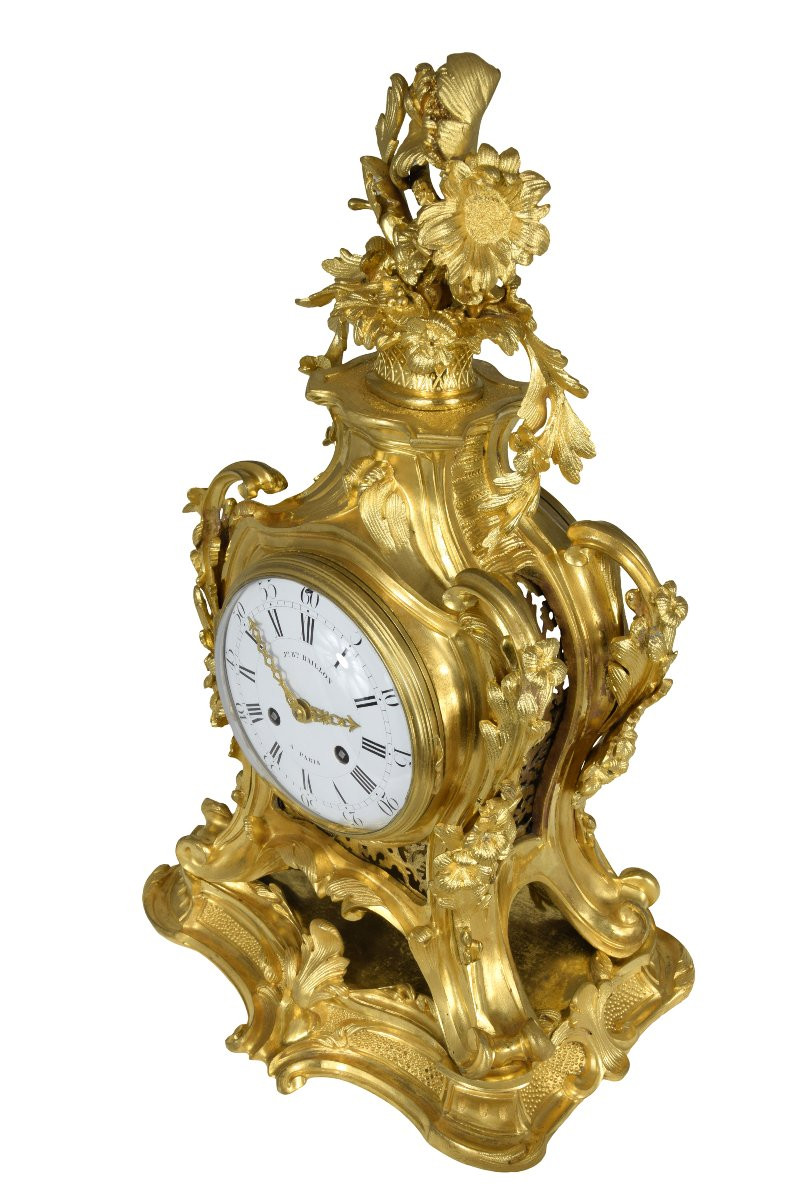
powerfully proportioned clock in mercury-gilt bronze. Its curved,
architectural Rococo structure takes the form of a console resting on
four elegantly flared and spiraled feet. The whole evokes a small
decorative structure with sinuous lines.
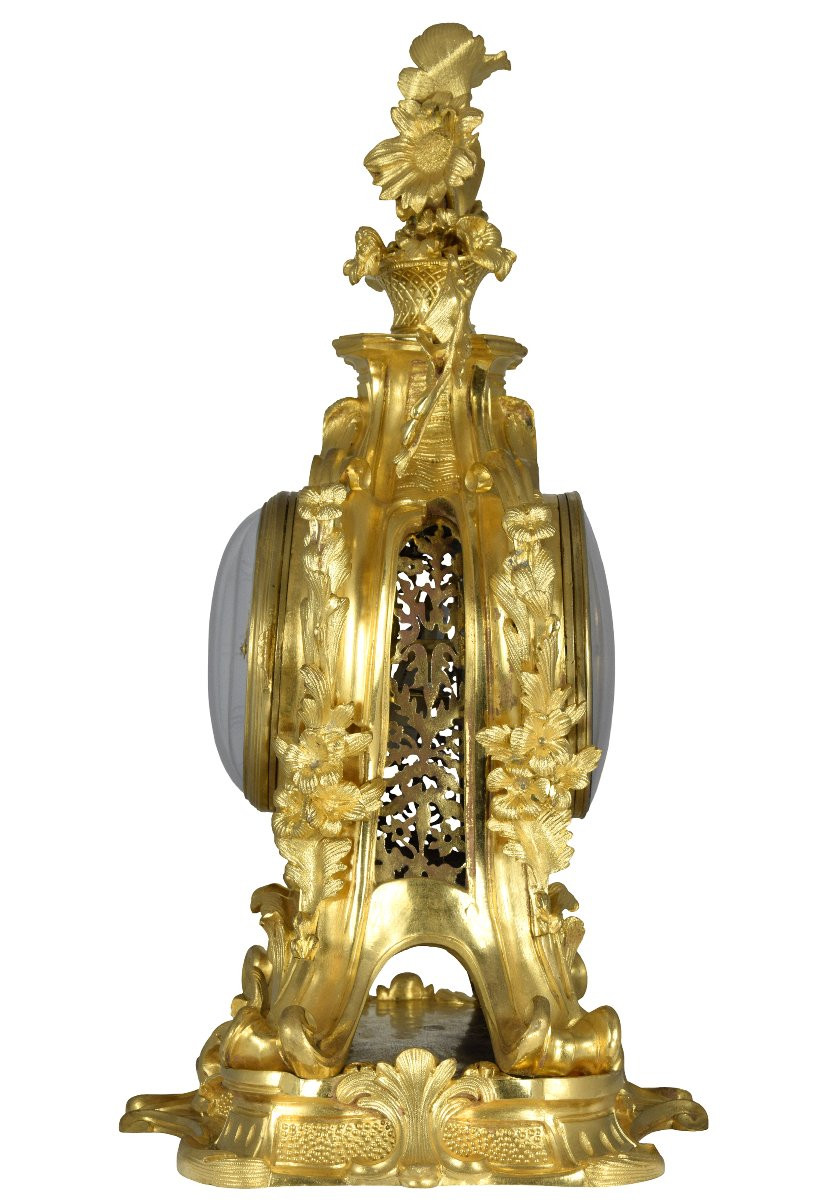
At the top, it is adorned with a woven basket, chased with a diamond-shaped grid imitating delicate caning, from which finely sculpted flowers bloom. The species depicted include sunflowers, bellflowers, and veined foliage. The basket does not appear simply placed there: it integrates with the vertical thrust of the decoration, as if it were emerging naturally from the structure, embodying the aristocratic refinement of the 18th century.
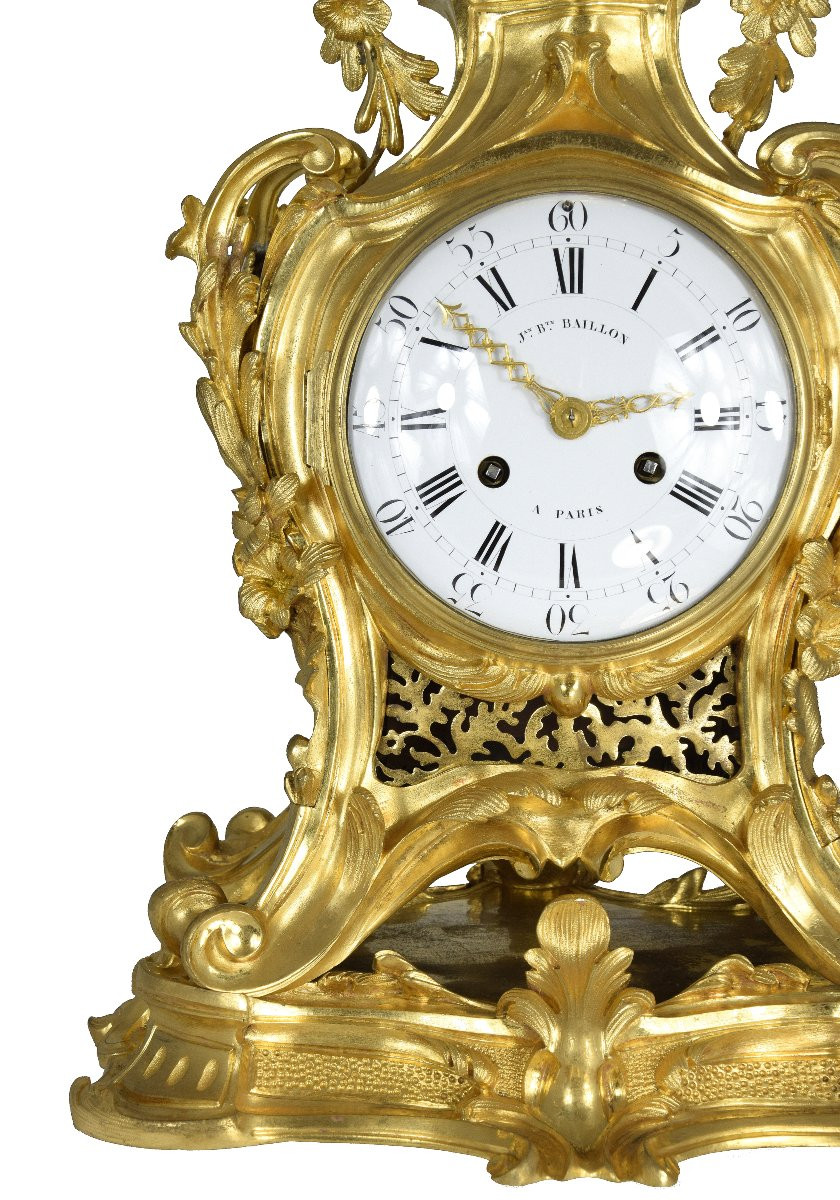
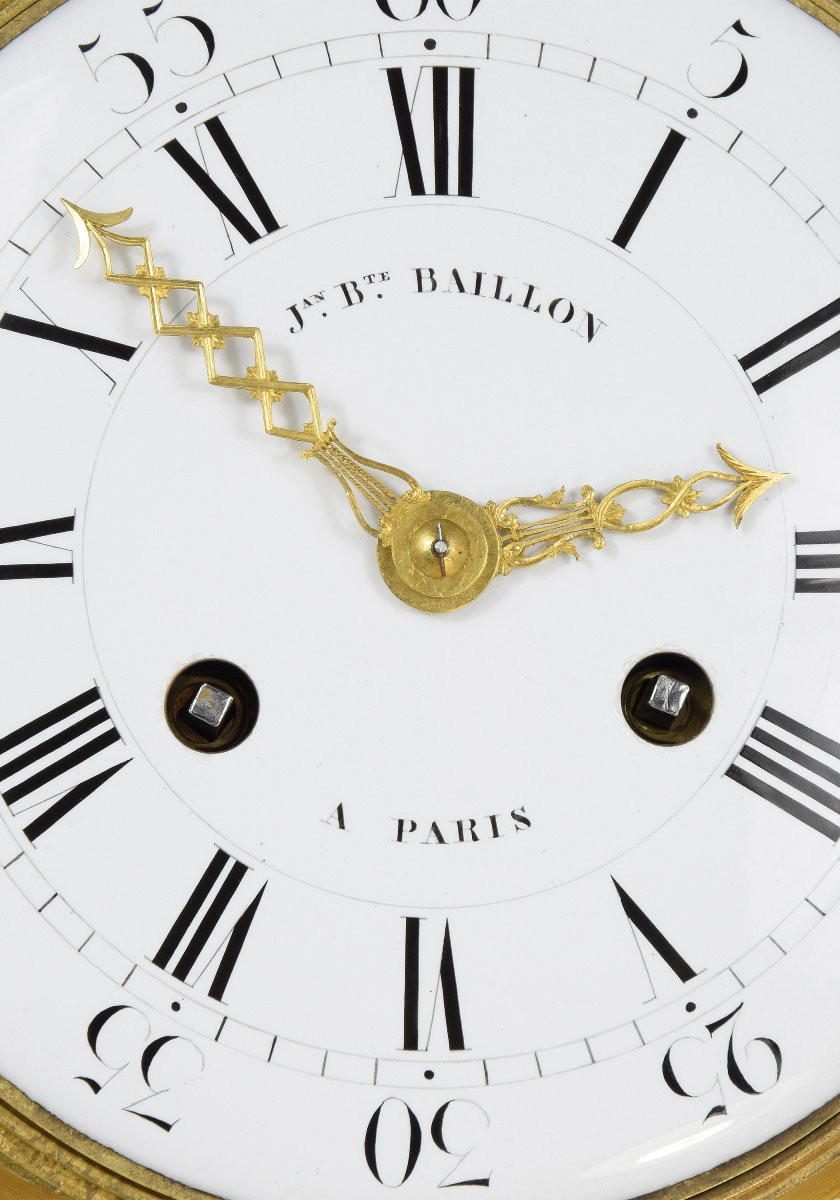
The white enamel dial is set within a circular opening perfectly integrated into the curve of the case. It is enhanced by a frame of four lateral uprights in ascending scrolls, resembling plant stems. These also enclose three exquisitely openwork panels, veritable bronze lacework adorned with tendrils, arabesques, and foliage. These openwork decorations visually lighten the whole and allow light to filter through.
The base, composed of scrolls and acanthus leaves, adopts an asymmetrical and undulating form, constructed of successive curves that spiral and unfurl outwards.
There were three generations of Baillon clockmakers. The Baillon name designates one of the most important dynasties of French clockmakers of the 18th century. Their reputation was such that they became suppliers to the French Court, and their works are now found in the greatest European museums.
- Jean-Baptiste Baillon I († 1753), master clockmaker before 1727.
- Jean-Baptiste Baillon II † 1772, the most famous of the line. Received his master's certificate in 1751, he was very prolific and collaborated with the greatest bronze casters (Caffieri, Osmond, Saint-Germain). He was clockmaker to the Dauphine, then to the Queen.
- Jean-Baptiste Baillon III (active c. 1775–1795).
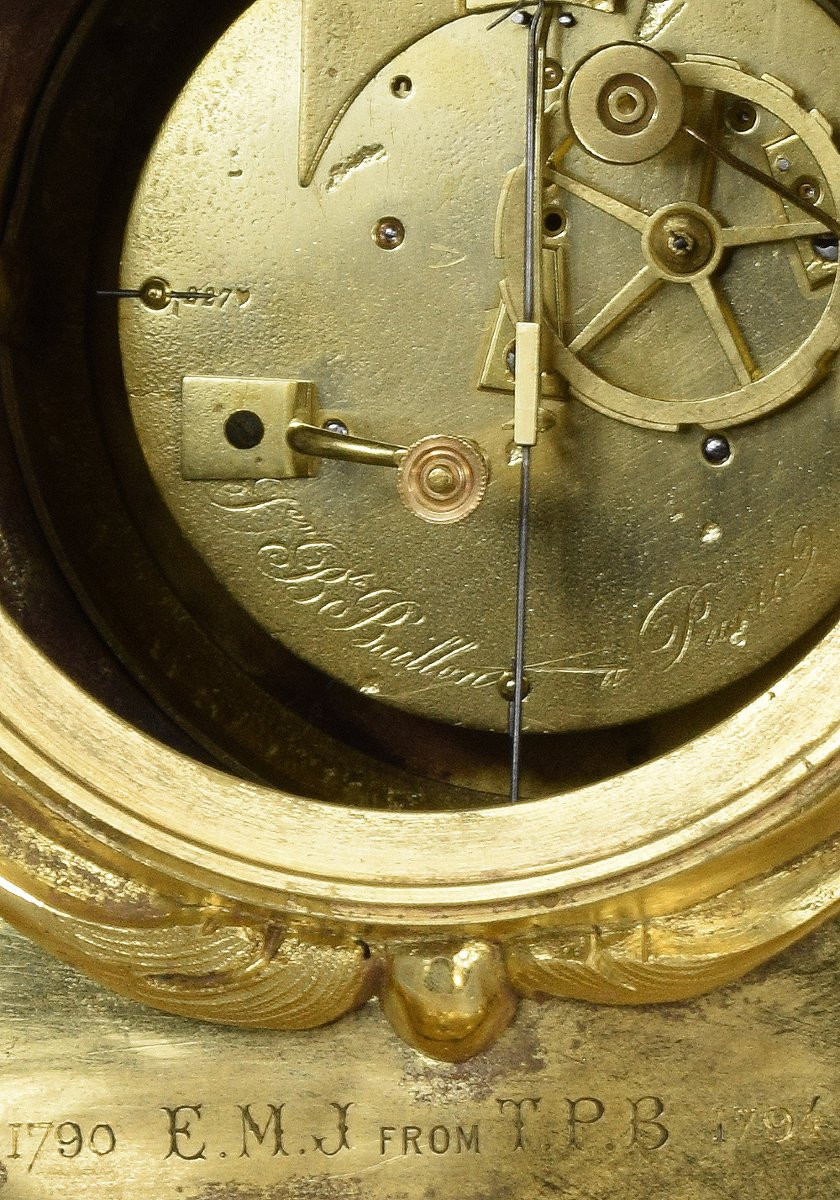
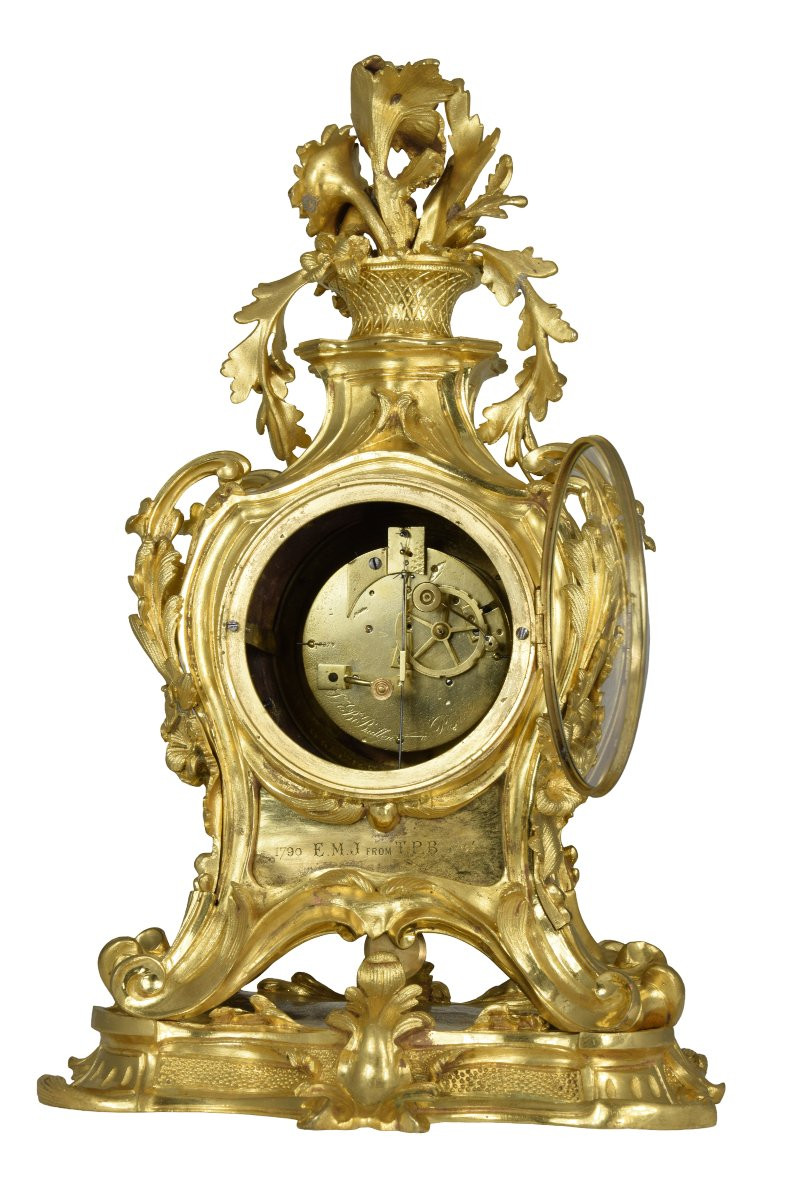
Mechanism signed "Jn Bte Baillon à Paris," original and unmodified. Wire suspension. Striking on the hours and half-hours on an antique bell.
Engraving: 1790 — E.M.J from T.P.B 1794. This inscription is a dedication, not a workshop mark. It probably corresponds to a gift, E.M.J. being very likely the person for whom it was intended.
ORDERING AND ADDITIONAL INFORMATION FROM OUR WEBSITE
At the top, it is adorned with a woven basket, chased with a diamond-shaped grid imitating delicate caning, from which finely sculpted flowers bloom. The species depicted include sunflowers, bellflowers, and veined foliage. The basket does not appear simply placed there: it integrates with the vertical thrust of the decoration, as if it were emerging naturally from the structure, embodying the aristocratic refinement of the 18th century.
The white enamel dial is set within a circular opening perfectly integrated into the curve of the case. It is enhanced by a frame of four lateral uprights in ascending scrolls, resembling plant stems. These also enclose three exquisitely openwork panels, veritable bronze lacework adorned with tendrils, arabesques, and foliage. These openwork decorations visually lighten the whole and allow light to filter through.
The base, composed of scrolls and acanthus leaves, adopts an asymmetrical and undulating form, constructed of successive curves that spiral and unfurl outwards.
There were three generations of Baillon clockmakers. The Baillon name designates one of the most important dynasties of French clockmakers of the 18th century. Their reputation was such that they became suppliers to the French Court, and their works are now found in the greatest European museums.
- Jean-Baptiste Baillon I († 1753), master clockmaker before 1727.
- Jean-Baptiste Baillon II † 1772, the most famous of the line. Received his master's certificate in 1751, he was very prolific and collaborated with the greatest bronze casters (Caffieri, Osmond, Saint-Germain). He was clockmaker to the Dauphine, then to the Queen.
- Jean-Baptiste Baillon III (active c. 1775–1795).
Mechanism signed "Jn Bte Baillon à Paris," original and unmodified. Wire suspension. Striking on the hours and half-hours on an antique bell.
Engraving: 1790 — E.M.J from T.P.B 1794. This inscription is a dedication, not a workshop mark. It probably corresponds to a gift, E.M.J. being very likely the person for whom it was intended.
ORDERING AND ADDITIONAL INFORMATION FROM OUR WEBSITE
Explore similar pieces and discover your ideal find:
Mantel Clocks