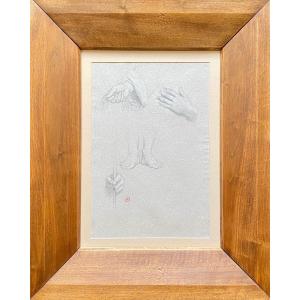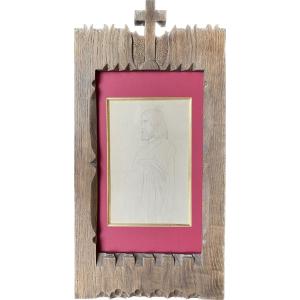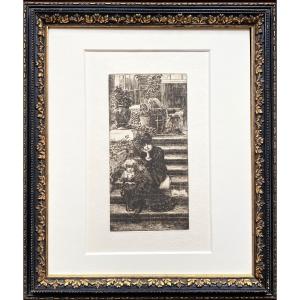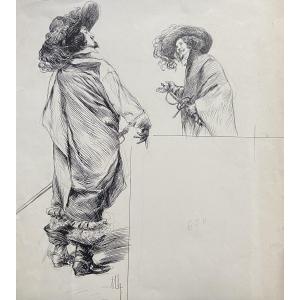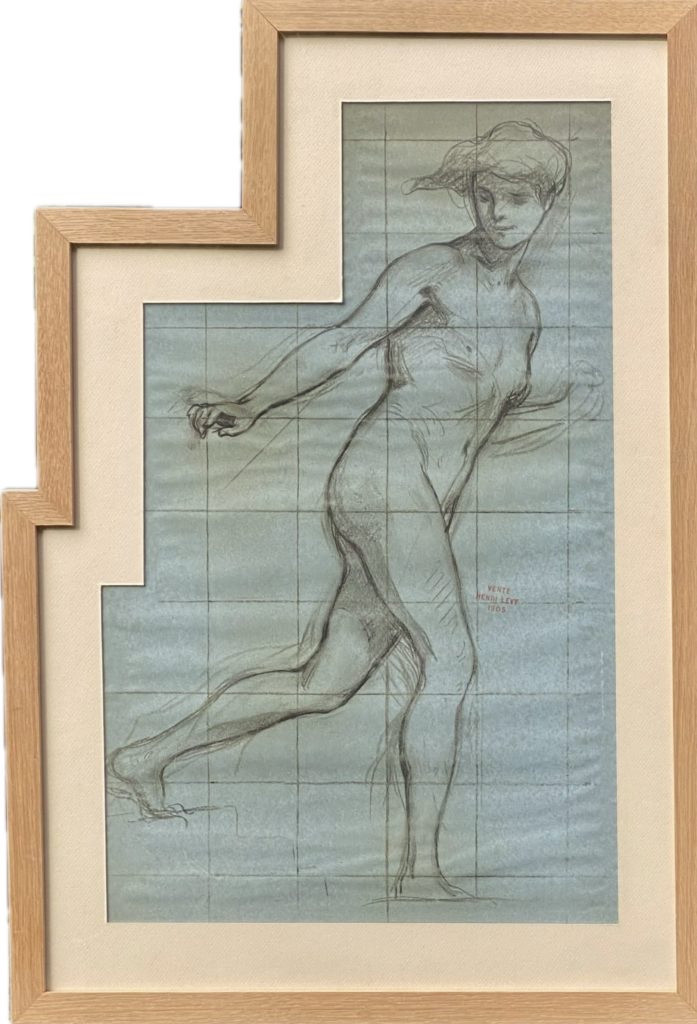
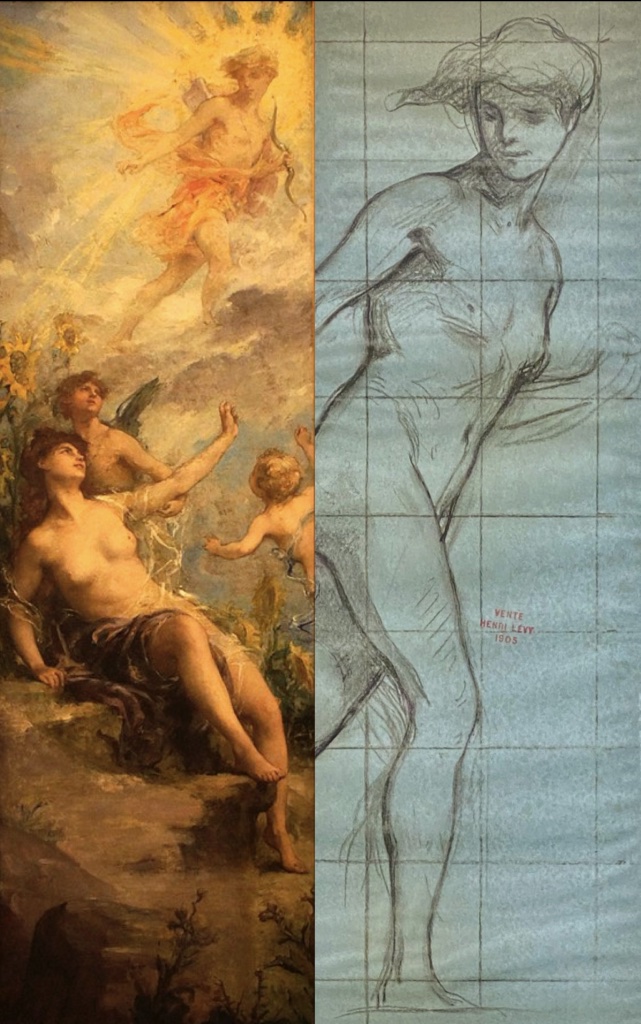
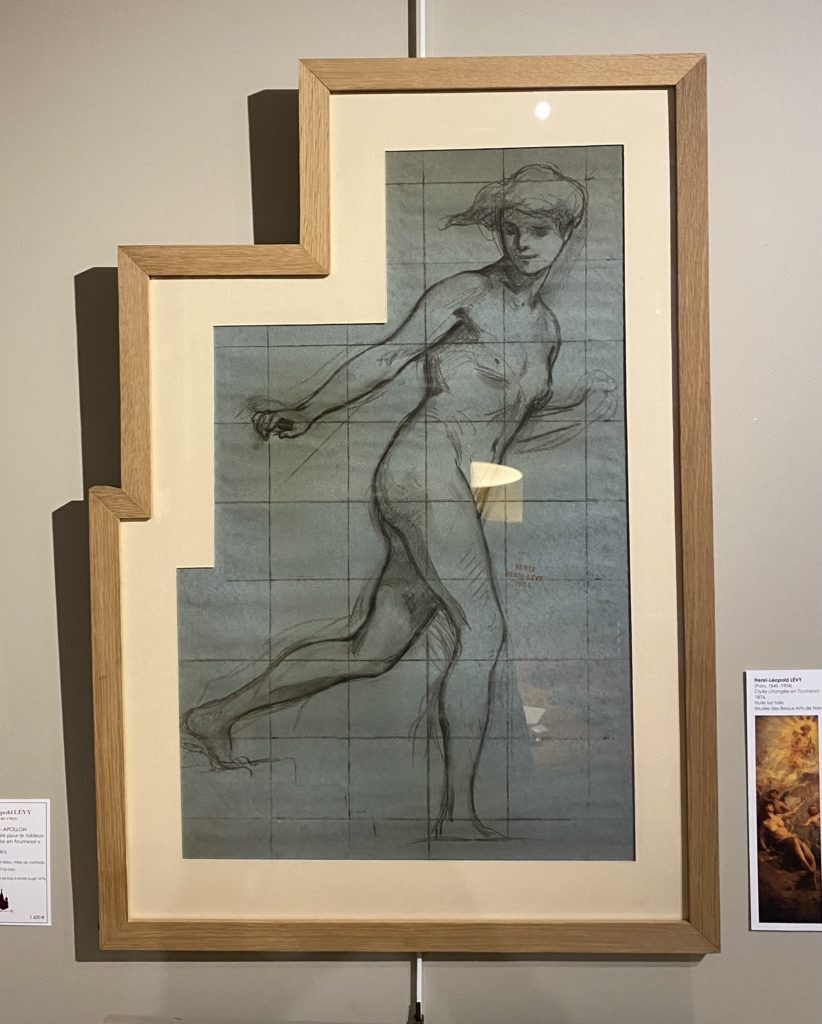


Henri Léopold Lévy - Preparatory Figure Of The Sun-apollo
Artist: Henri Léopold Lévy (paris, 1840 – 1904)
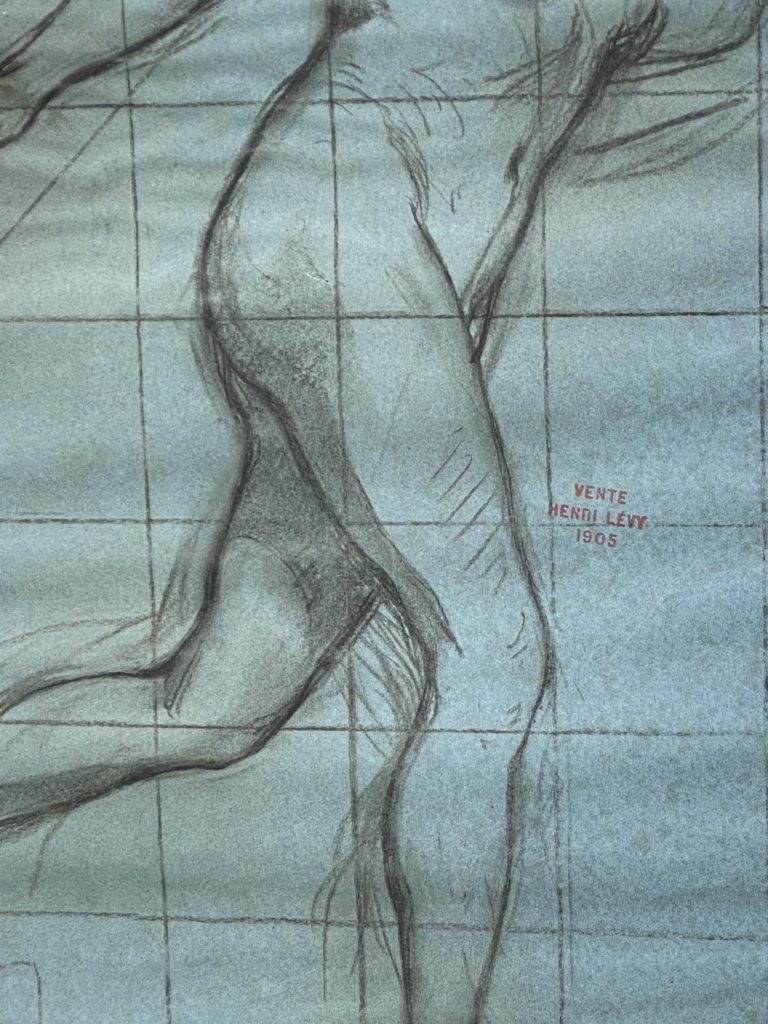
Artist's studio stamp on the right (Lugt 1675). Born in Nancy, Henri-Léopold Lévy studied at the École des Beaux-Arts in Paris under François-Édouard Picot, Alexandre Cabanel, and Eugène Fromentin. A history painter, decorator, and portraitist, he is known for his works on historical, biblical, and mythological themes, combining academic rigor with an imagination akin to symbolism (as in The Young Girl and Death). Lévy exhibited at the Salon des Artistes Français from 1865 until his death and won several medals (1865, 1867, 1869). He also distinguished himself as a decorative painter, notably for the Panthéon in Paris. Lévy's interpretation is characteristic of the academic painting of the period, but with a melancholic and symbolist dimension. The composition, entirely vertical, accentuates the ascending aspect of the metamorphosis and the elongated silhouette of the nymph. Clytie is depicted at the very moment of her transformation. Her body is still human, but leaves and stems are beginning to intertwine with her limbs and hair. Her eyes, raised towards the sun, express both sorrow and eternal devotion. The work embodies the theme of unrequited love and absolute fidelity that persists even after death. Our drawing, squared off and preparatory to the figure of Apollo, testifies to the artist's creative process. Bibliography – Georges Desandrouin, “Ten Decorative Compositions by Henri Lévy,” L'Art, illustrated weekly review, 1907, pp. 119–126, ill. p. 119. Exhibition – Henri Lévy and the Symbolist Temptation. Paintings, drawings, Nancy, Museum of Fine Arts, July 29 – September 30, 1996. p.42, ill. p.41
1 650 €
Period: 19th century
Style: Art Nouveau
Condition: Perfect condition
Material: Paper
Length: 480 x 710 mm
Reference (ID): 1665012
Availability: In stock
Print