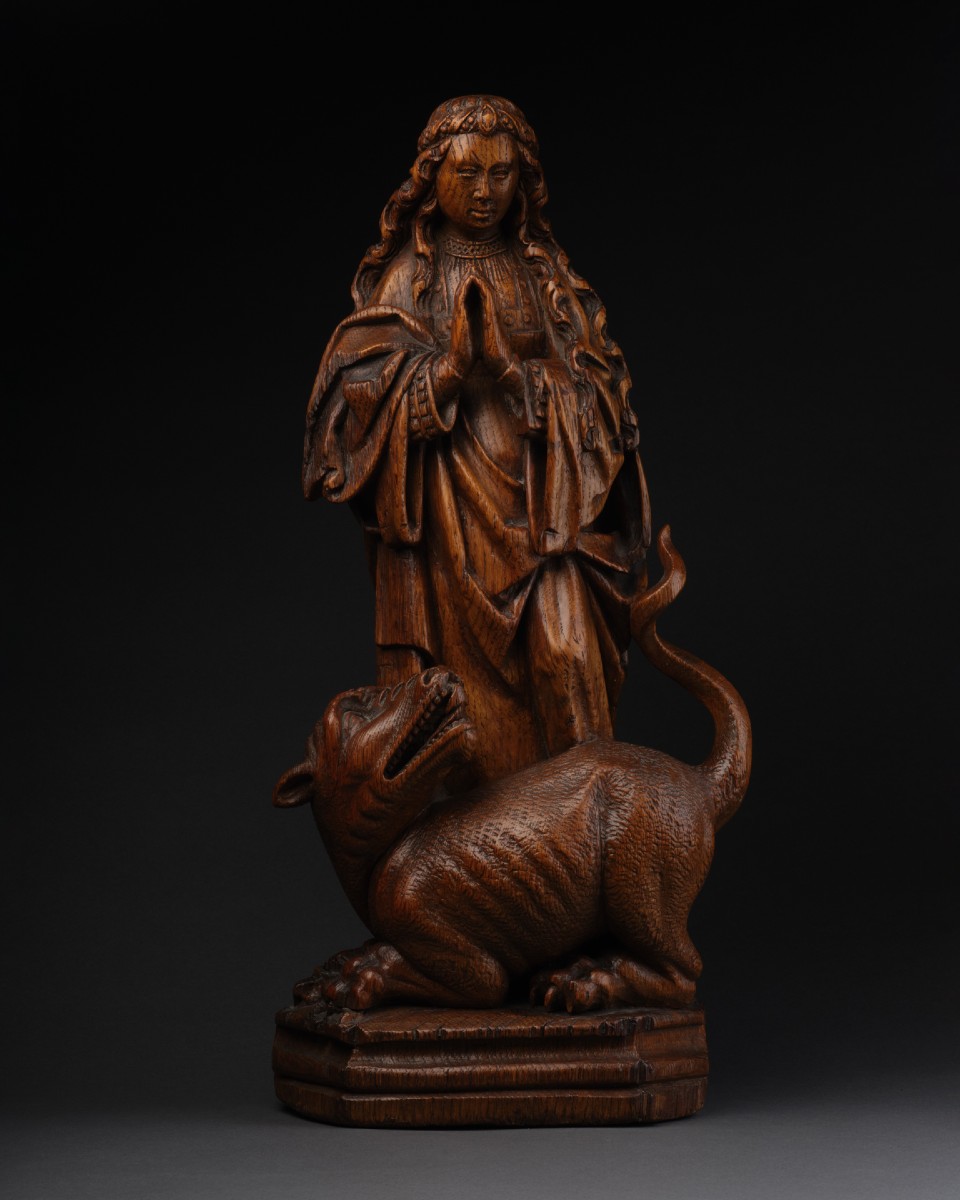


Saint Margaret - Oak, Southern Netherlands, First Quarter Of The 16th Century
At the turn of the 16th century, the former Southern Netherlands emerged as one of the most fertile centers of European sculpture. The workshops of Bruges, Brussels, and Antwerp developed a highly sophisticated formal language. Monumental altarpieces, isolated devotional figures, narrative compositions, and liturgical groups were created there, reflecting a particularly thriving artistic activity. This prosperous artistic constellation includes the present statuette, whose elegance and precision of execution directly evoke the finest Flemish productions of the early 16th century.
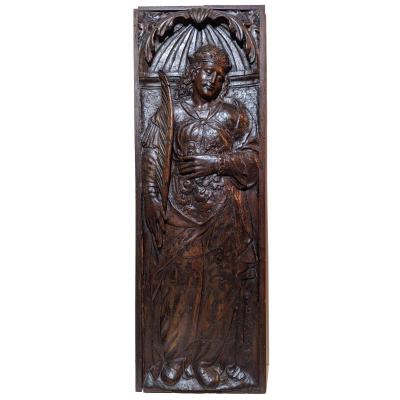
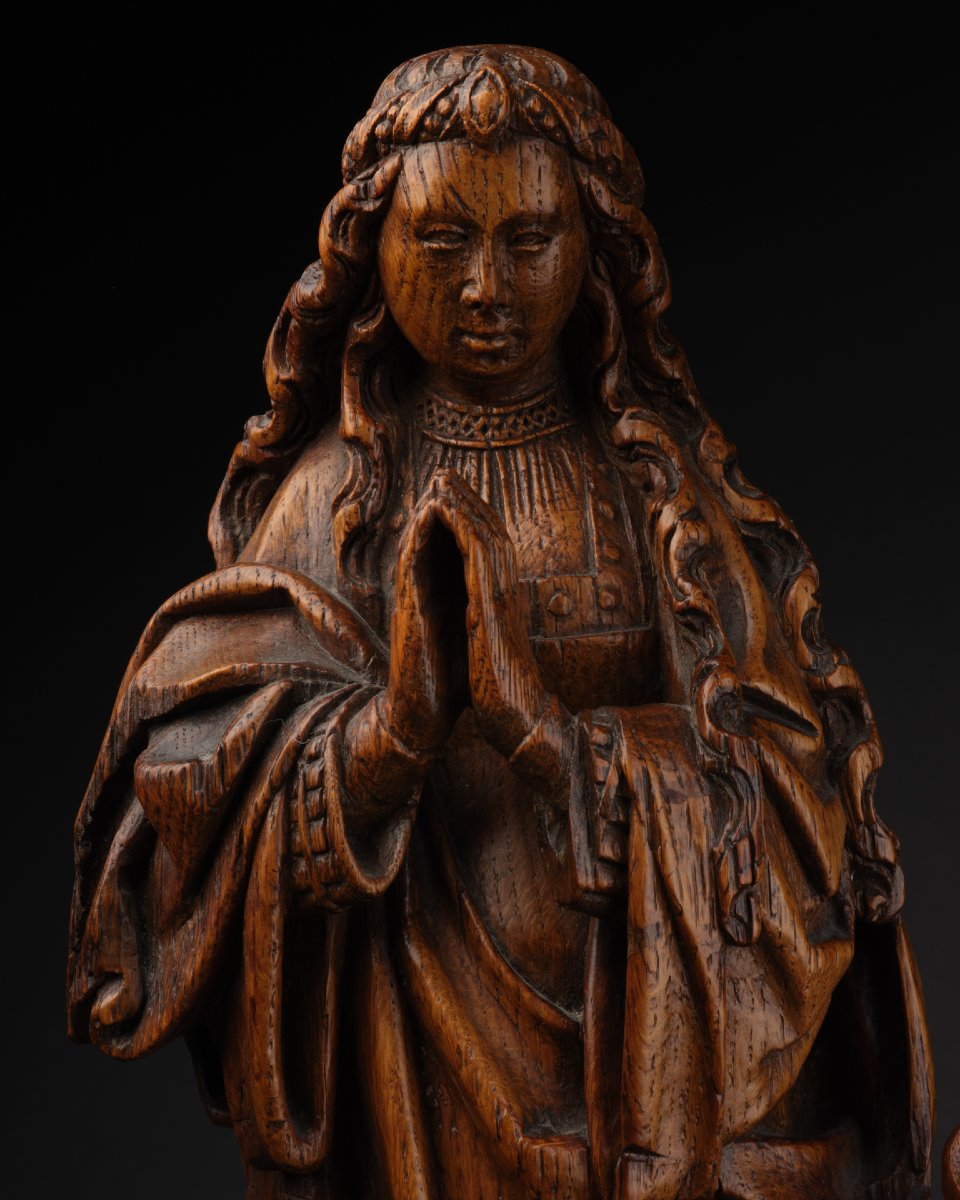
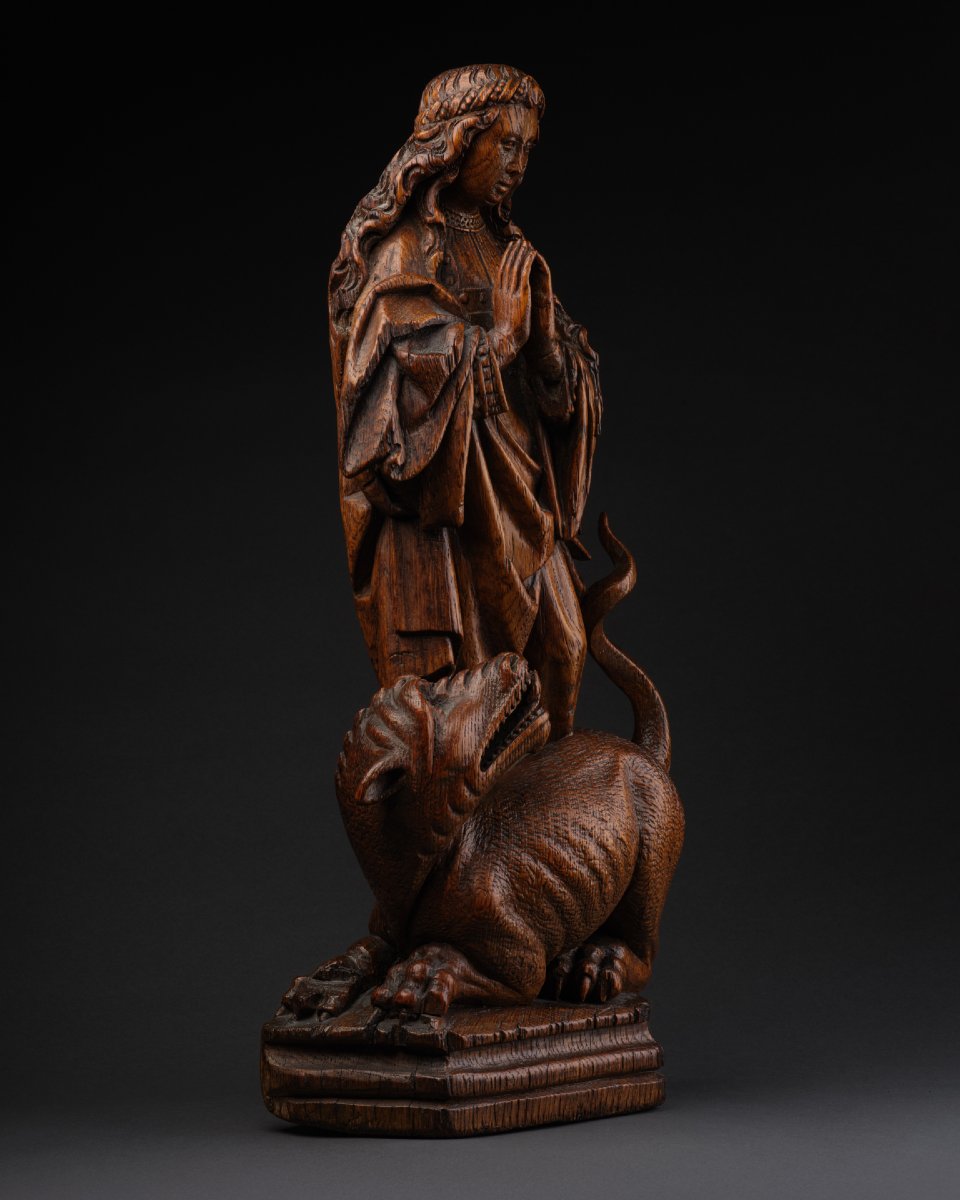
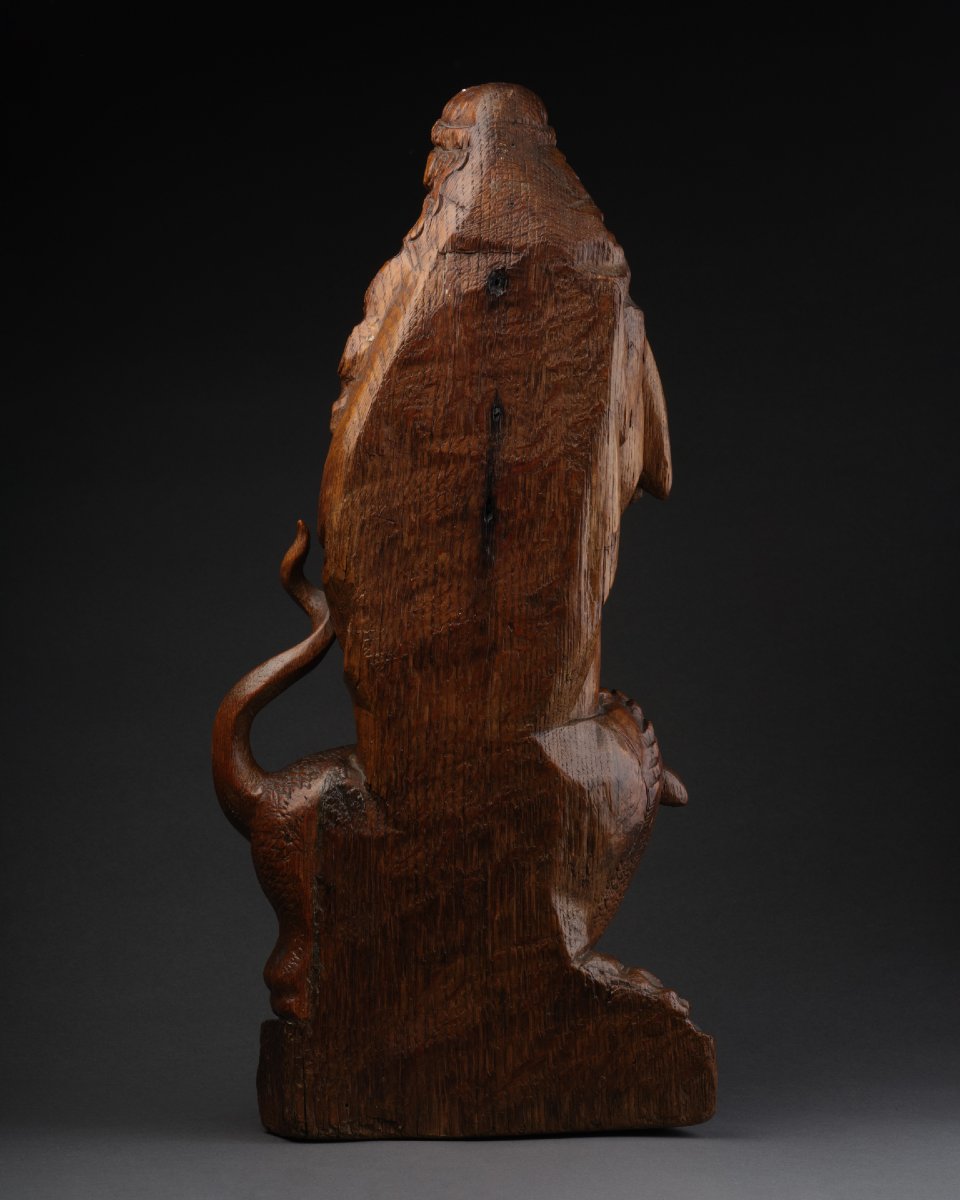
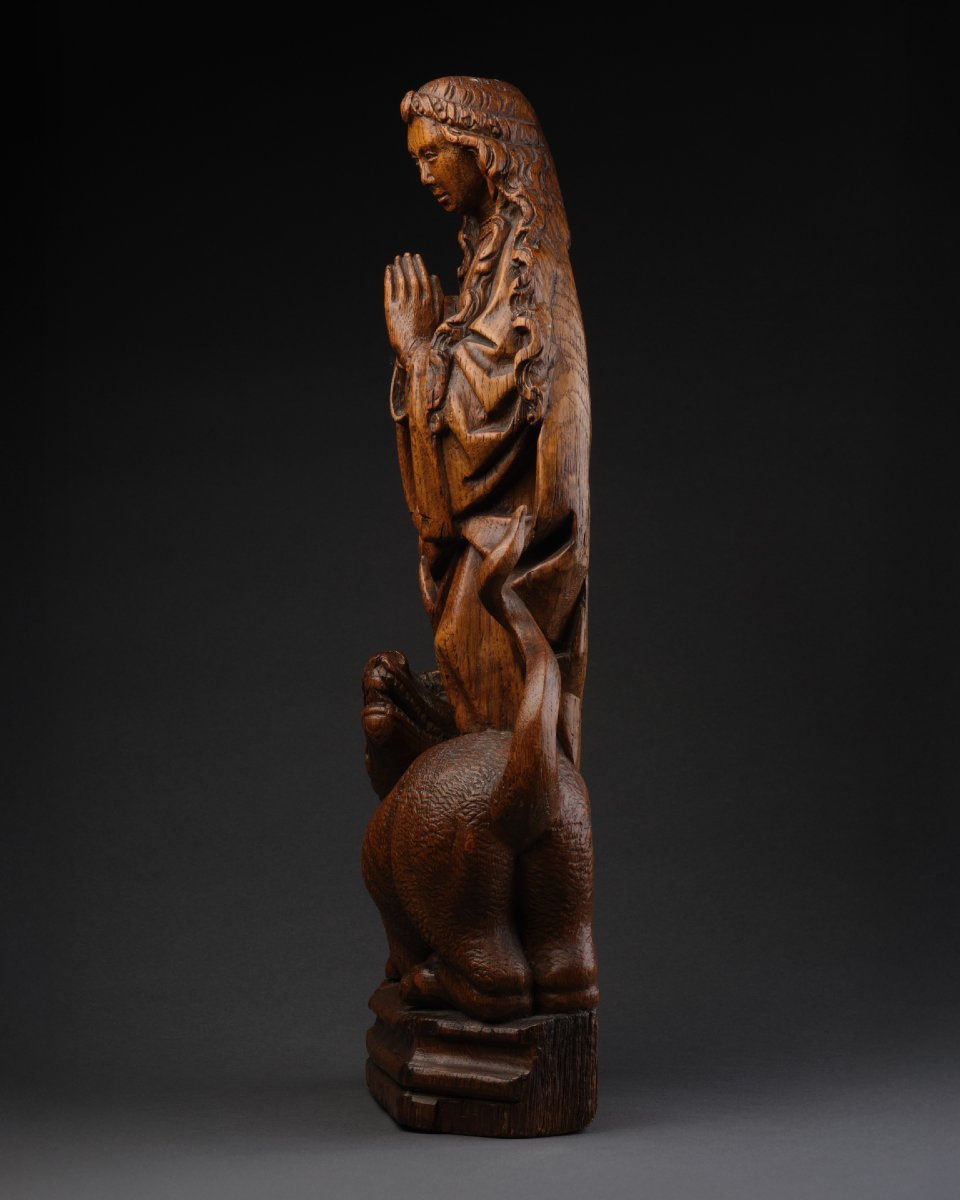
The work depicts Saint Margaret of Antioch, one of the most popular heroines of medieval piety. As a virgin martyr, she triumphs over the dragon sent to devour her - a spectacular emblem of Evil from which she miraculously escapes. Here, the saint is portrayed in an attitude of silent prayer, her hands clasped and her face bowed in an expression of serene introspection. The dragon, an essential attribute for identifying the saint, lies at her feet - a subtle yet crucial reminder of her spiritual victory. This iconographic restraint favors the contemplative dimension over the narrative episode.
Stylistically, the work fully embodies the characteristics of the Brabantine style. The drapery, animated by angular and deeply carved folds, forms a skillfully ordered textile architecture; the wavy locks of hair unfold in a supple, rhythmic relief; and the face, with its restrained gentleness, reflects the emotional sensitivity typical of Brussels and Flemish workshops in the first half of the 16th century.
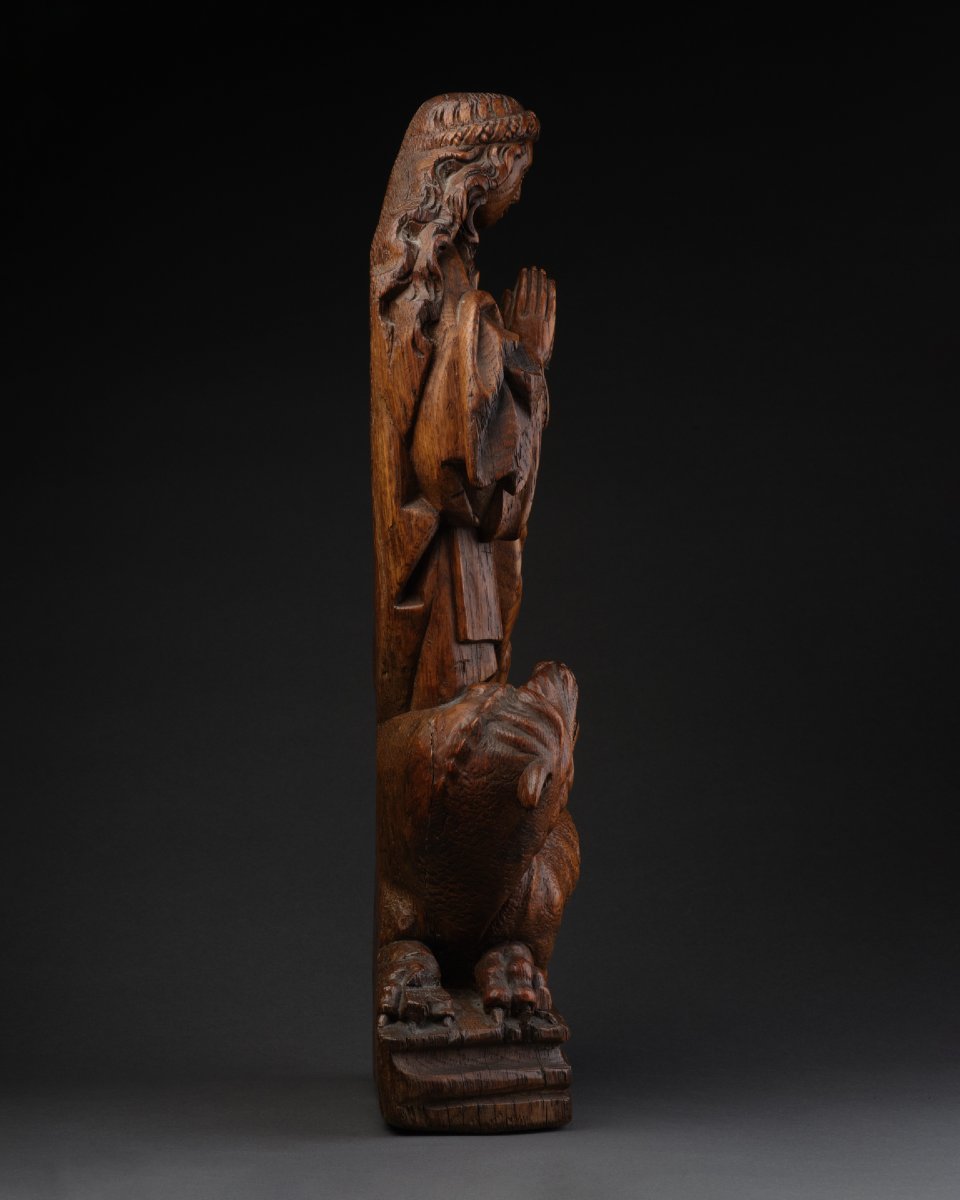
The dragon now visible at the saint’s feet is a remarkable 19th-century addition, replacing a lost element essential for the sculpture’s iconographic clarity. The intervention showcases exceptional craftsmanship. The restoration, particularly masterful, integrated the new piece with great subtlety, respecting the original volumes, wood tone, and compositional spirit - almost perfectly creating the illusion of a monoxyle sculpture. This work thus illustrates the 19th century’s heritage sensitivity, which, aware of the historical and spiritual value of these statuettes, sought to preserve them for future generations.
In this way, this Saint Margaret appears as an object of rare quality, enriched by a fascinating material history. As a devotional sculpture from one of Europe’s most brilliant artistic centers, its ancient restoration reflects the esteem it has enjoyed through the centuries. With its intimate presence, the beauty of its modeling, and the depth of its material history, it stands as a prime choice for any collector seeking authentic, sensitive, and vibrant works.
The work depicts Saint Margaret of Antioch, one of the most popular heroines of medieval piety. As a virgin martyr, she triumphs over the dragon sent to devour her - a spectacular emblem of Evil from which she miraculously escapes. Here, the saint is portrayed in an attitude of silent prayer, her hands clasped and her face bowed in an expression of serene introspection. The dragon, an essential attribute for identifying the saint, lies at her feet - a subtle yet crucial reminder of her spiritual victory. This iconographic restraint favors the contemplative dimension over the narrative episode.
Stylistically, the work fully embodies the characteristics of the Brabantine style. The drapery, animated by angular and deeply carved folds, forms a skillfully ordered textile architecture; the wavy locks of hair unfold in a supple, rhythmic relief; and the face, with its restrained gentleness, reflects the emotional sensitivity typical of Brussels and Flemish workshops in the first half of the 16th century.
The dragon now visible at the saint’s feet is a remarkable 19th-century addition, replacing a lost element essential for the sculpture’s iconographic clarity. The intervention showcases exceptional craftsmanship. The restoration, particularly masterful, integrated the new piece with great subtlety, respecting the original volumes, wood tone, and compositional spirit - almost perfectly creating the illusion of a monoxyle sculpture. This work thus illustrates the 19th century’s heritage sensitivity, which, aware of the historical and spiritual value of these statuettes, sought to preserve them for future generations.
In this way, this Saint Margaret appears as an object of rare quality, enriched by a fascinating material history. As a devotional sculpture from one of Europe’s most brilliant artistic centers, its ancient restoration reflects the esteem it has enjoyed through the centuries. With its intimate presence, the beauty of its modeling, and the depth of its material history, it stands as a prime choice for any collector seeking authentic, sensitive, and vibrant works.
8 000 €
Period: 16th century
Style: Renaissance, Louis 13th
Condition: Good condition
Material: Oak
Height: 48 cm
Reference (ID): 1660512
Availability: In stock
Print