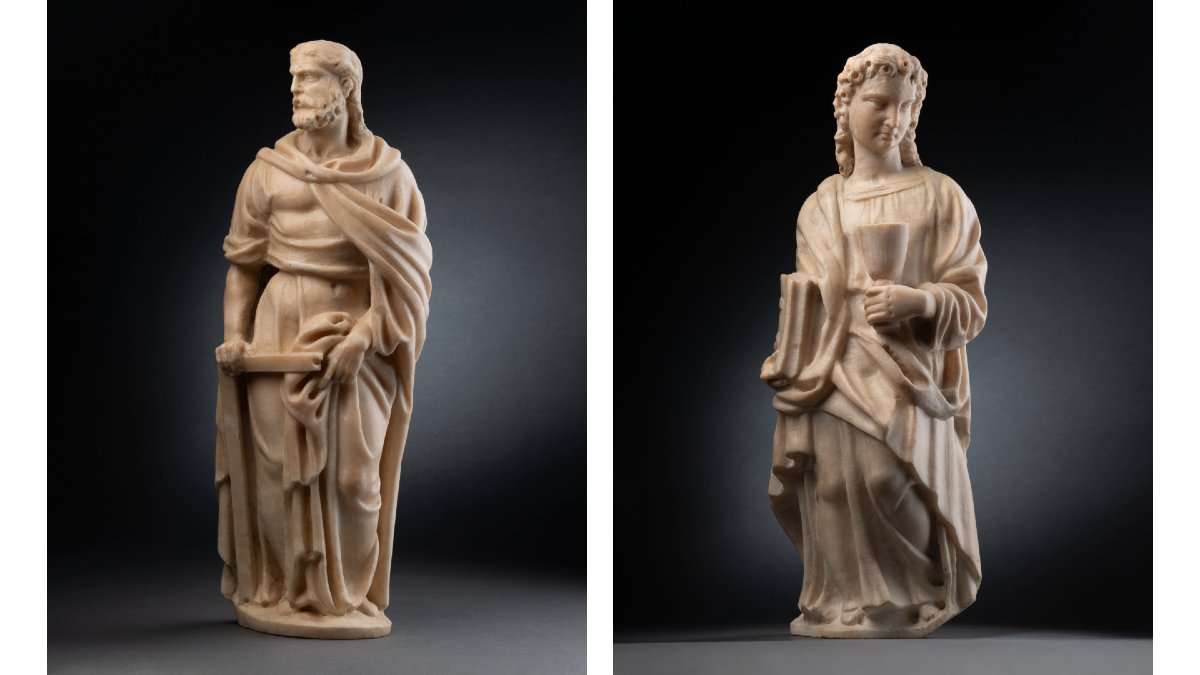


Saint Thomas And Saint John, White Marble, Northern Italy, Veneto? — 1520–1530
Two marble figures from an Apostolic college
Saint Thomas and Saint John
White marble
Northern Italy, Veneto?
1520–1530
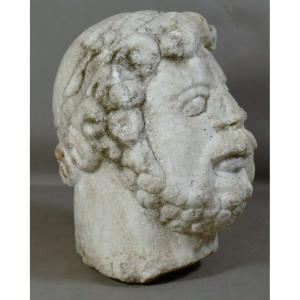
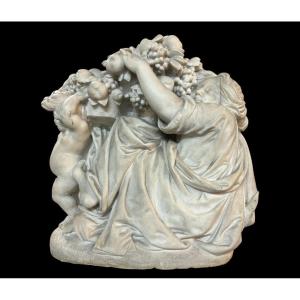
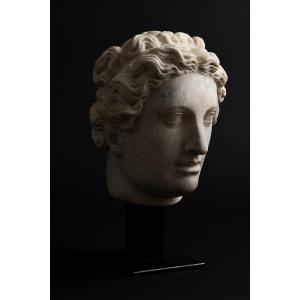
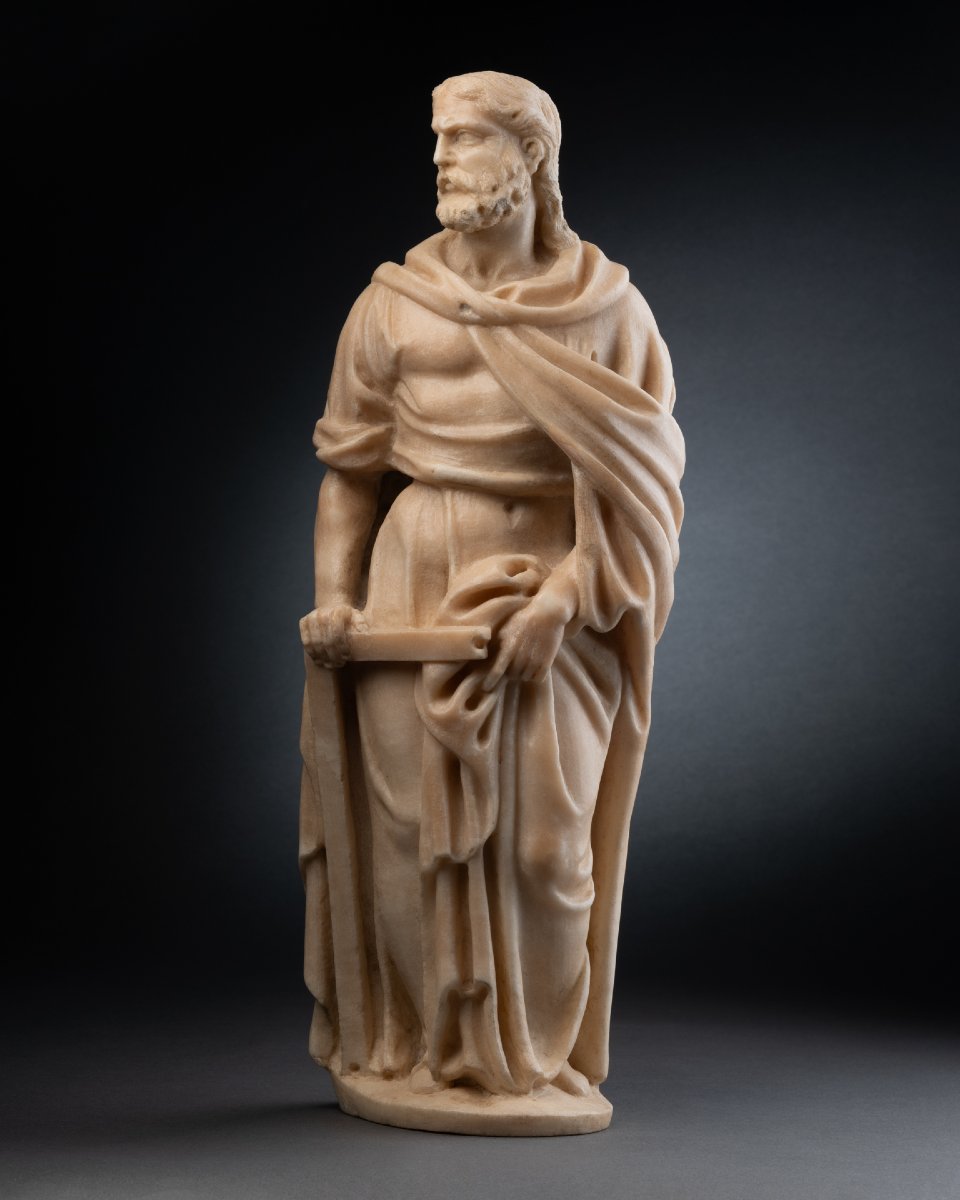
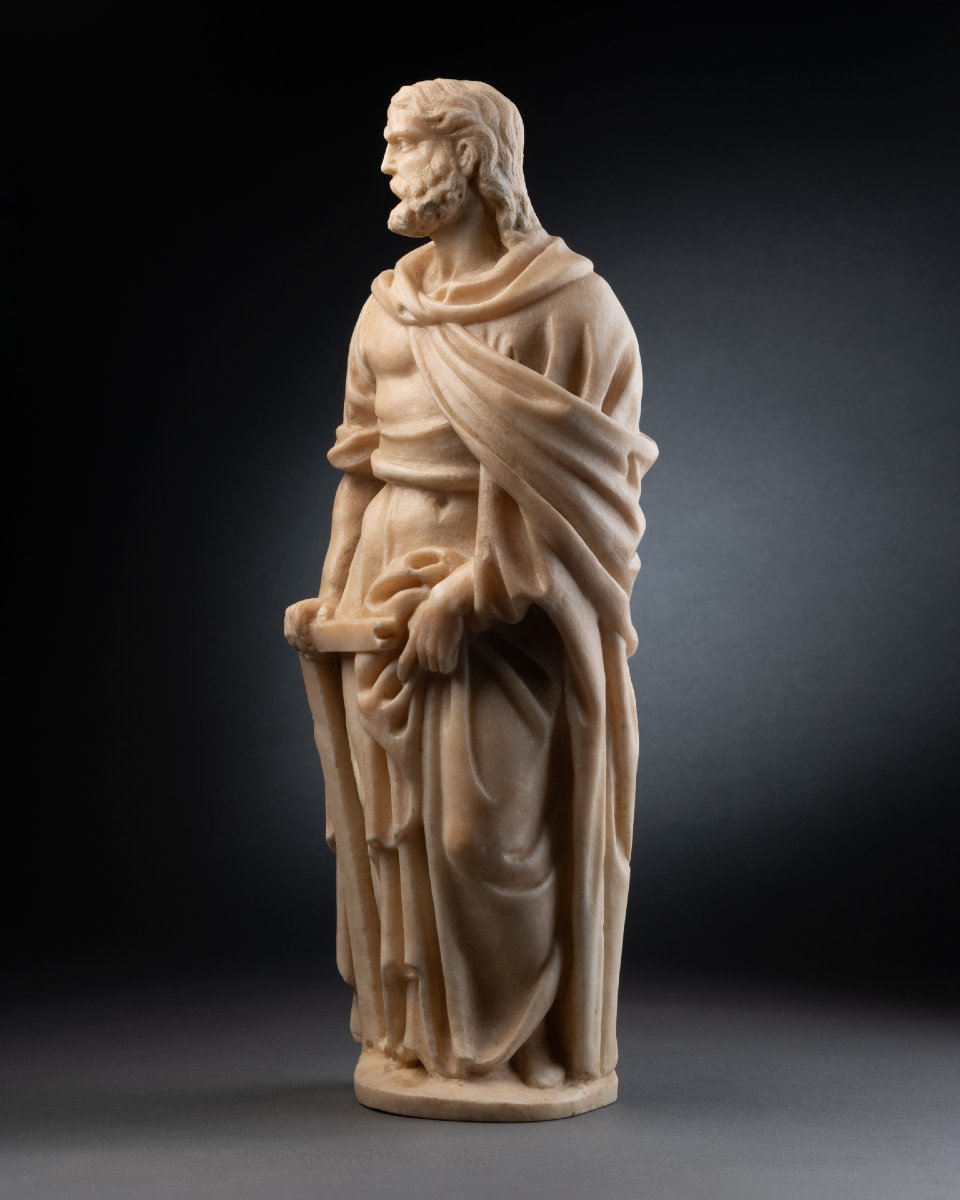
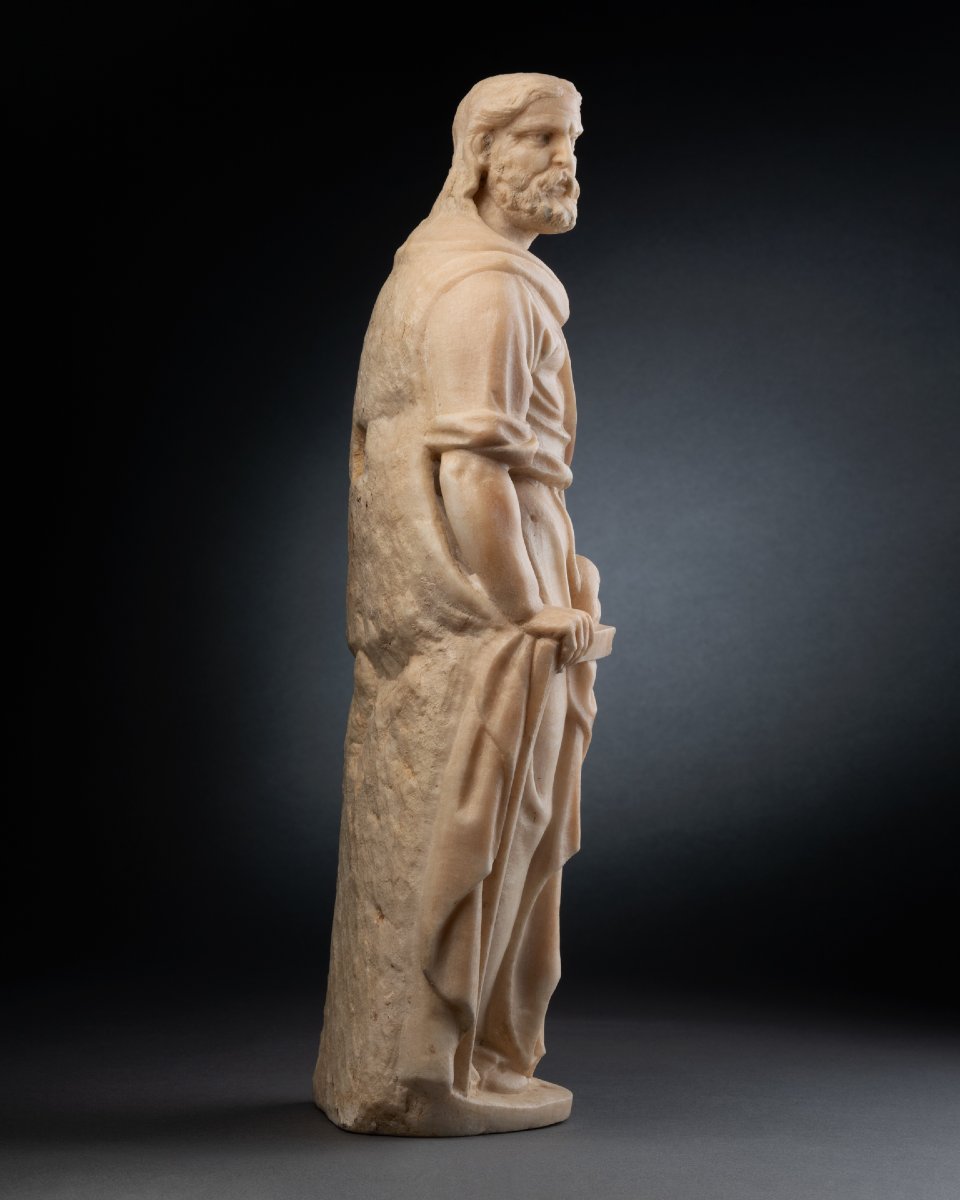
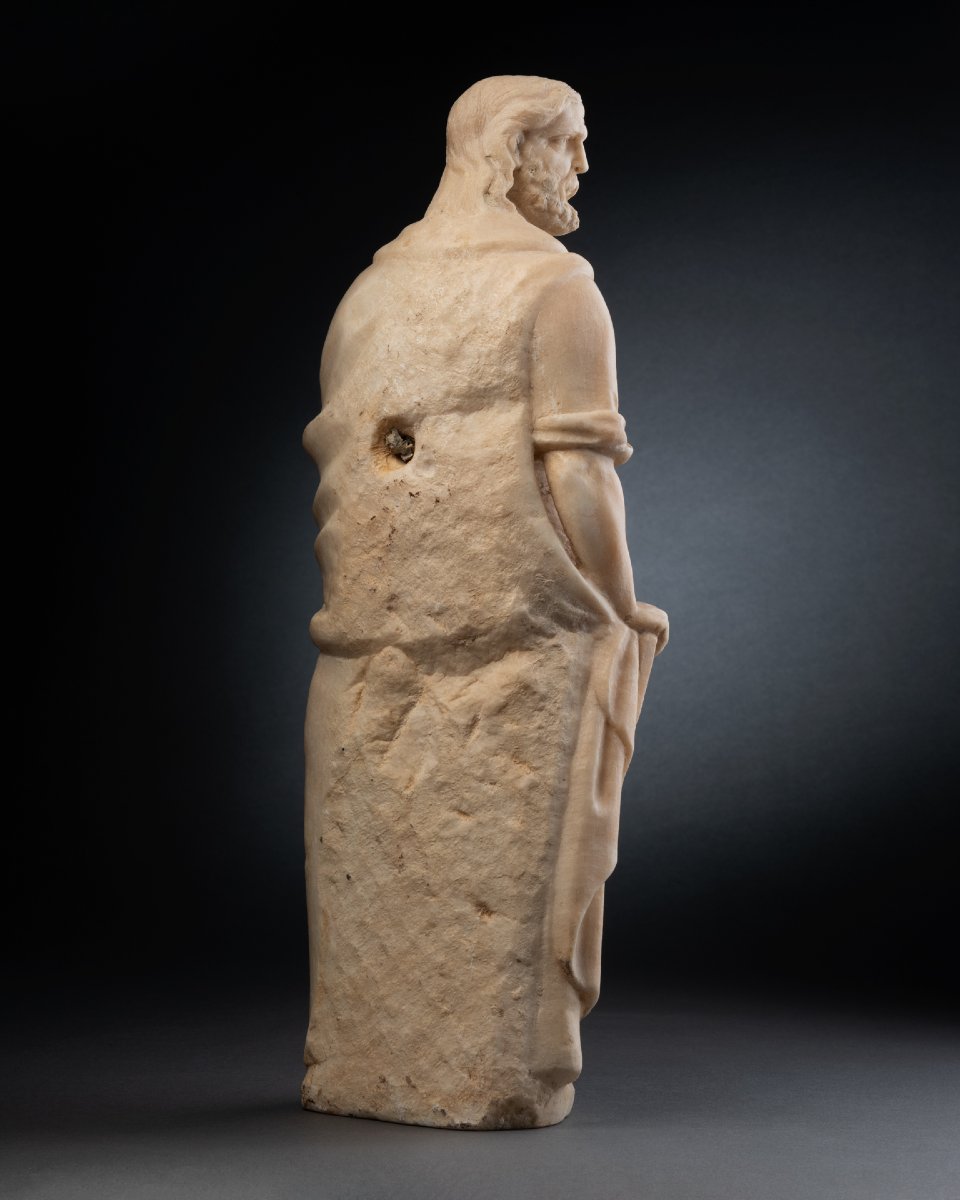
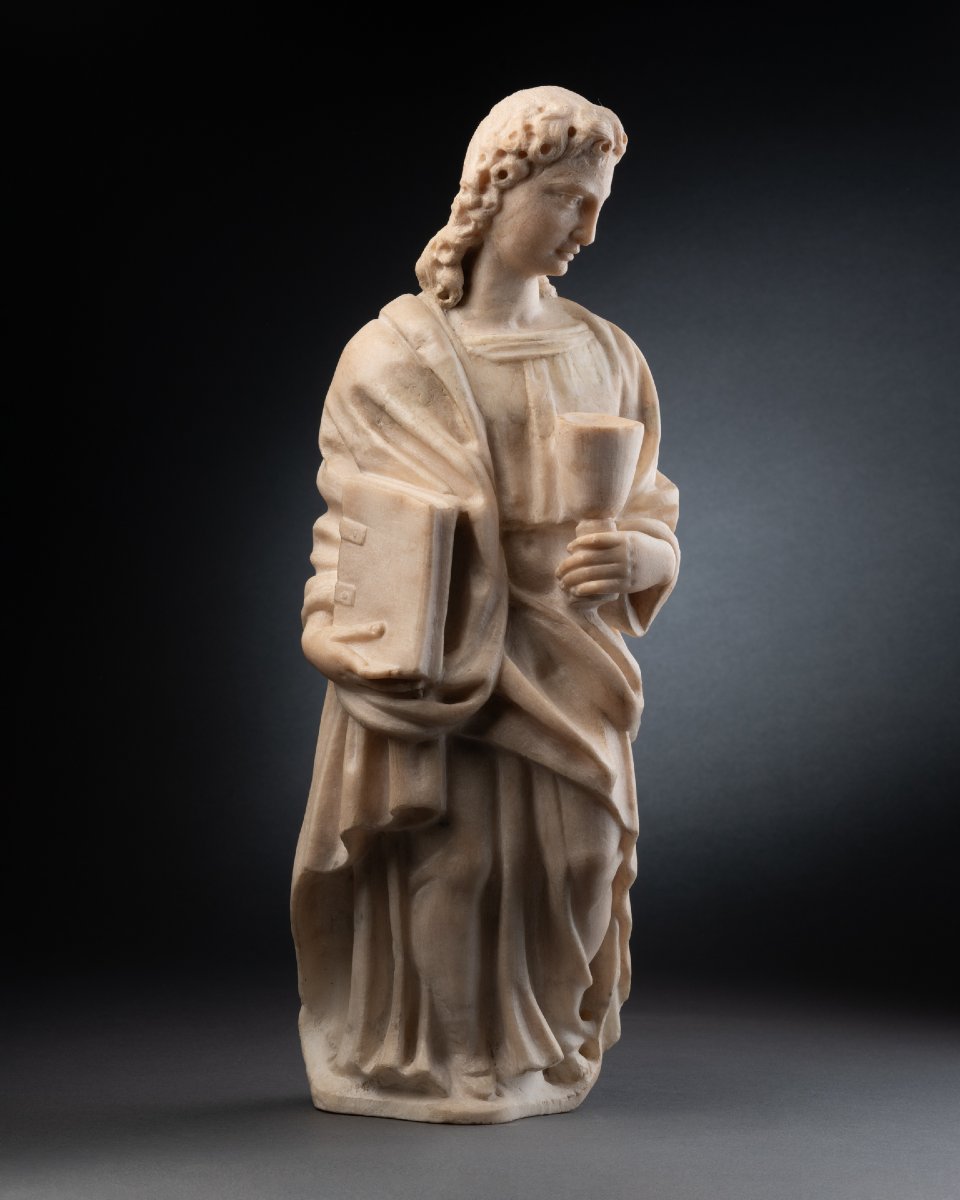
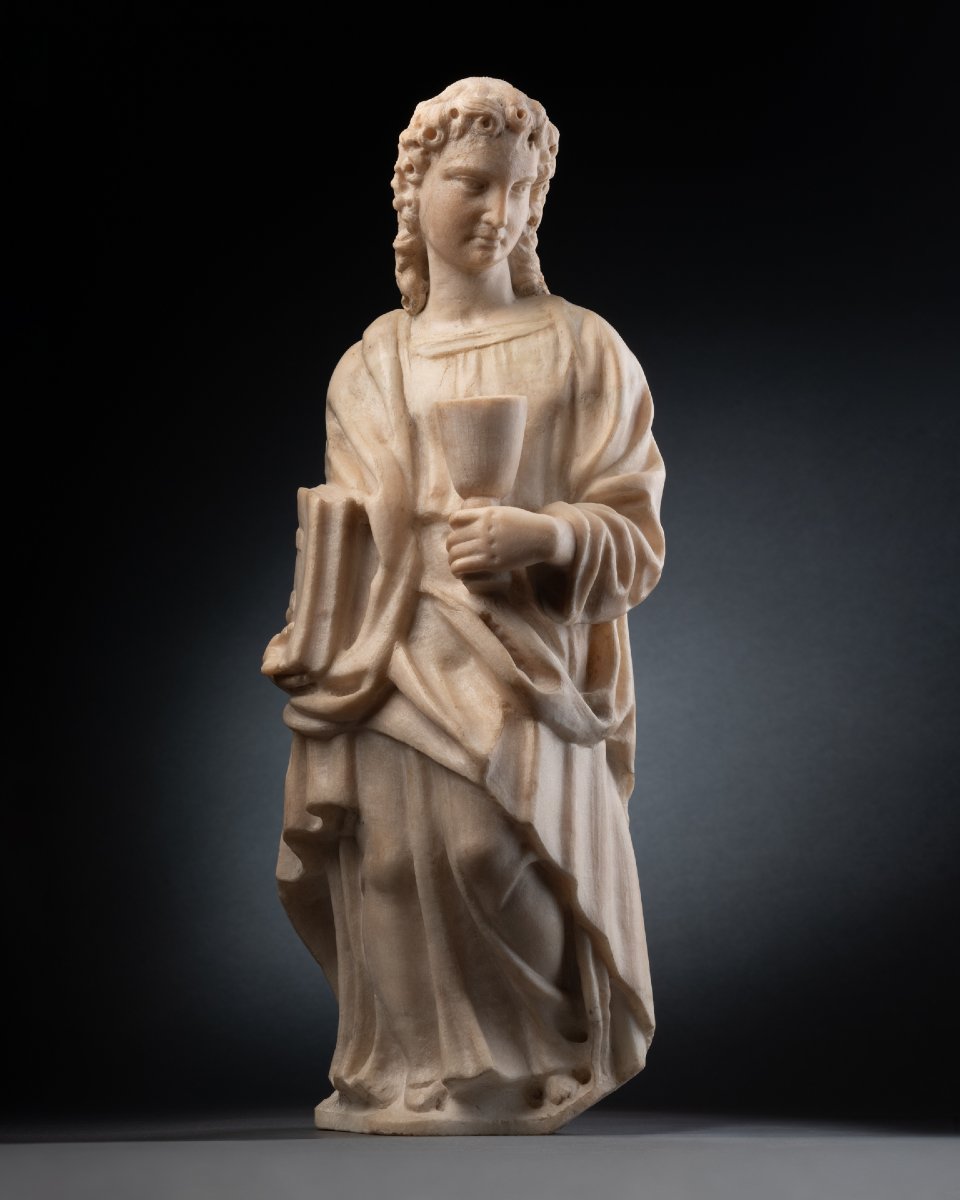
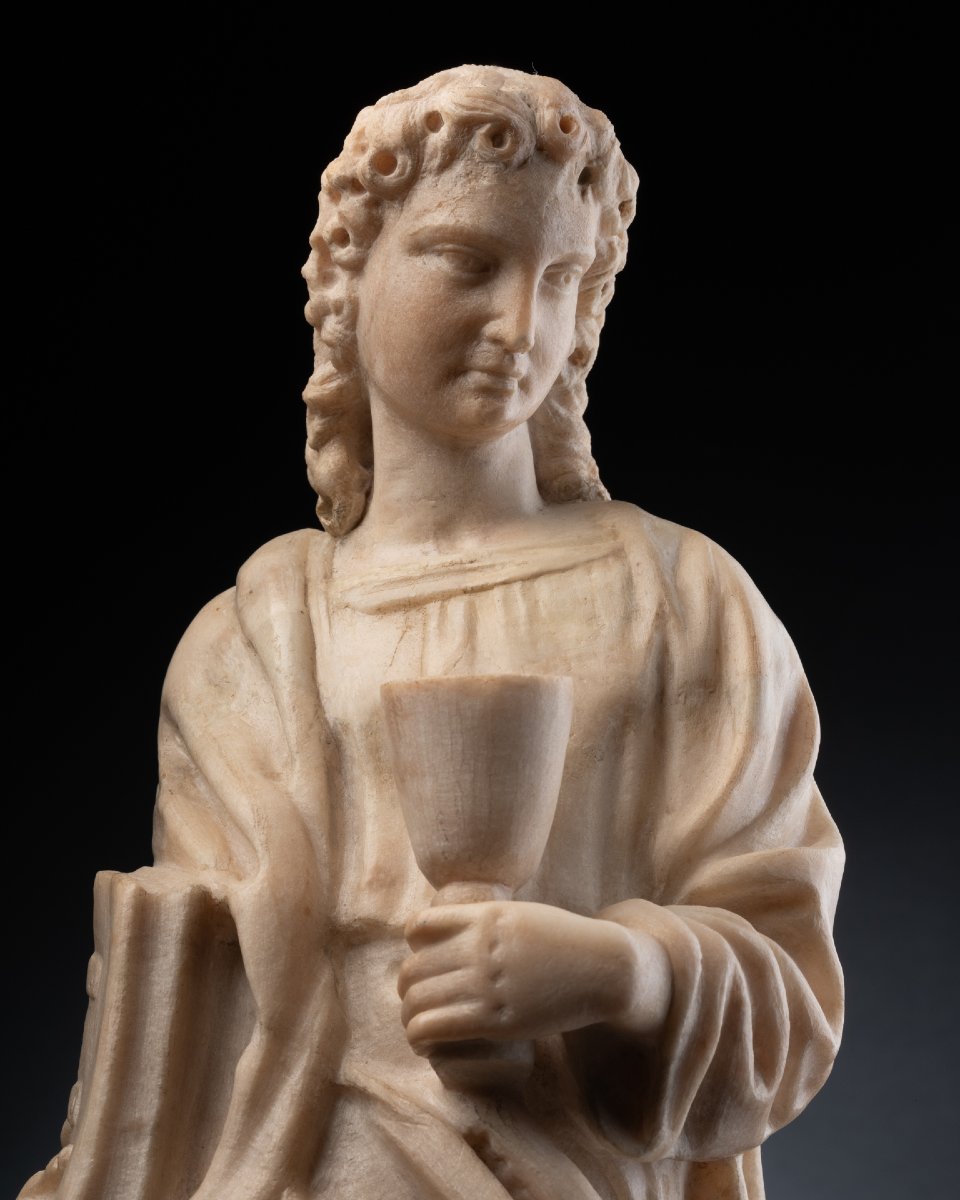
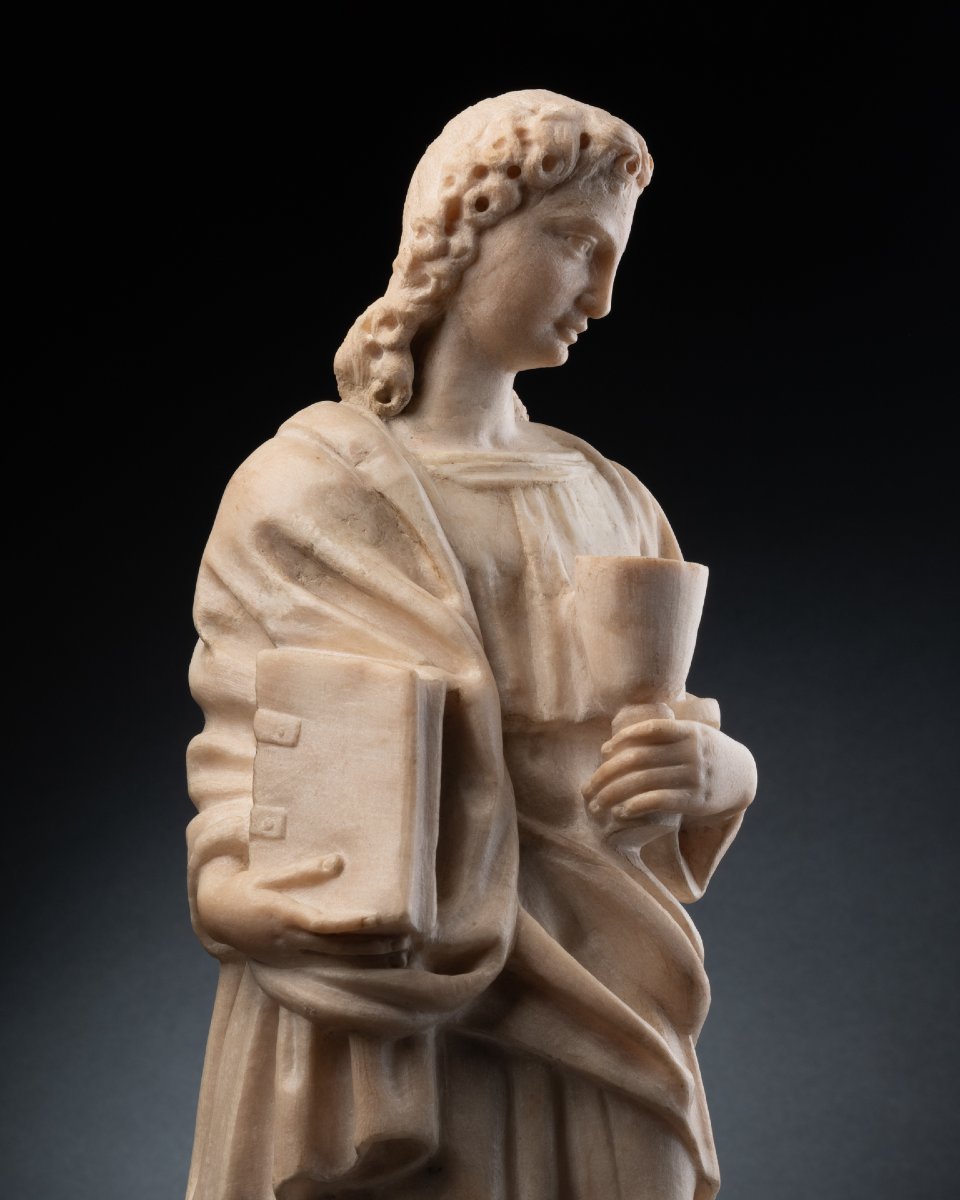
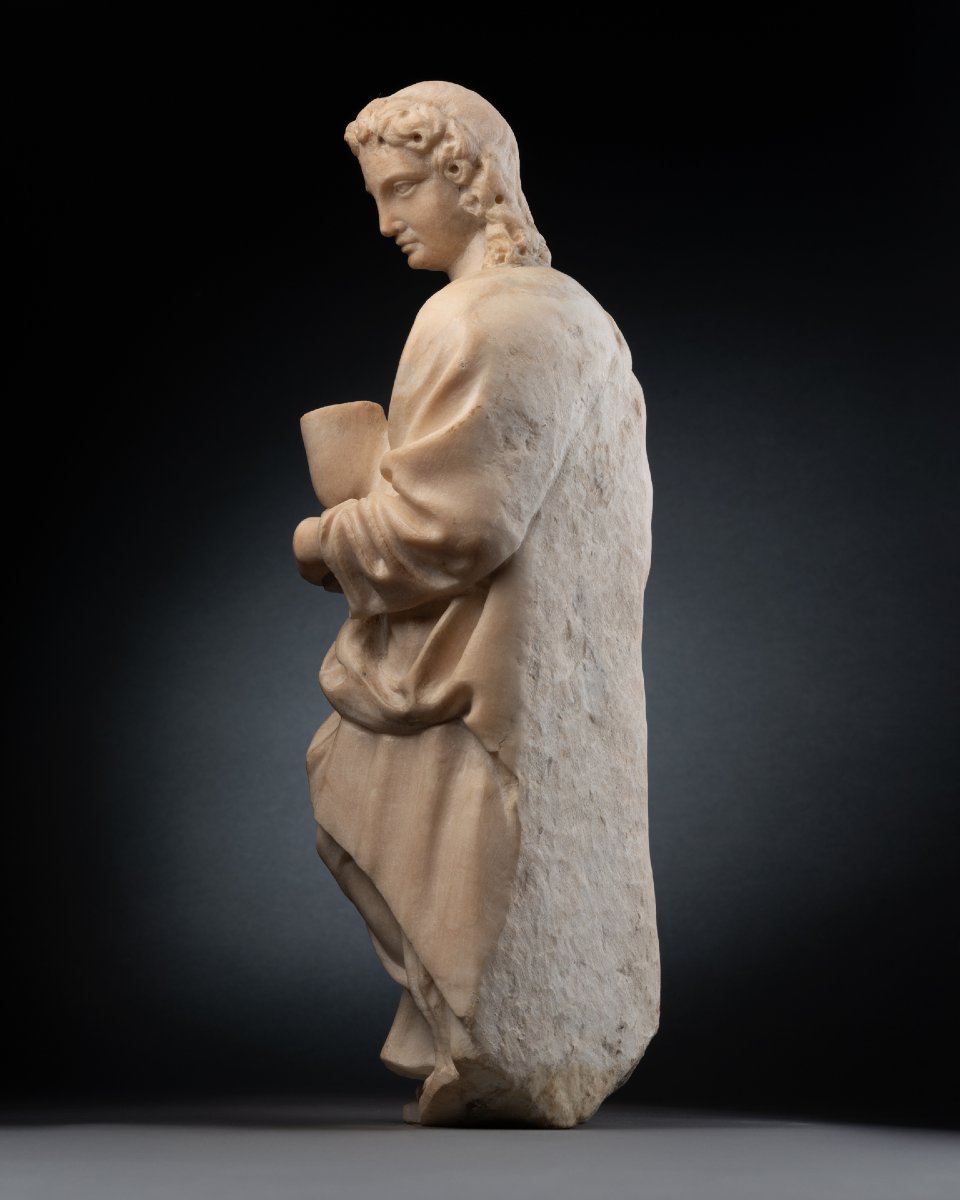
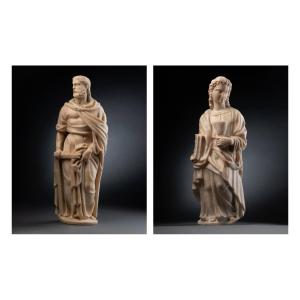
Between the second half of the 15th century and the early 16th century, Venice was a major centre of artistic activity. Most of the sculptors working at the time were also architects and carried out numerous commissions for the doges. It was against this historical backdrop that these two sculptures, intended to form part of a wider architectural ensemble, were conceived. Here, Saint Thomas is recognisable by the set square he is holding, which alludes to his profession as an architect. This depiction is quite rare, as the most common representation of this saint is the moment when, sceptical about Christ’s resurrection, Jesus invites him to touch his wounds. We may therefore conclude that this small marble figure, undoubtedly part of a complex architectural ensemble, pays an indirect tribute to the architect behind the project. Saint Thomas’s virile face, turned to one side, is reminiscent of early 16th-century Venetian works, such as those by Andrea Bregno (1431–1506), who established a style of depicting male saints with a virile and powerful profile. His torso, shaped by the drapery, reveals his pectoral muscles and brings to mind another Venetian sculptor, Tullio Lombardo (1455–1522), known for his figures of warriors. The supple, close-fitting drapery of our sculpture appears in the subsequent period, from the 1520s onwards, before giving way to the Mannerist movement that spread from 1540 and brought more movement to the figures and their drapery. Saint John, for his part, is recognisable by his youthful appearance: he has gentle features, is beardless, and is holding his characteristic attribute, the chalice, a Eucharistic symbol evoking the blood of Christ. He belongs to the same apostolic circle as Saint Thomas but is rendered in a slightly different style. His hair is long and curly, again drawing on the models of Tullio Lombardo or his contemporaries. As for his drapery, it is straight and rather flowing, very much in the style of the 1520s and largely inspired by antiquity. Thus, these two figures illustrate the evolution of artistic canons in Venice in the early 15th century, under the influence of masters such as Andrea del Bregno and Tullio Lombardo.
Saint Thomas and Saint John
White marble
Northern Italy, Veneto?
1520–1530
Between the second half of the 15th century and the early 16th century, Venice was a major centre of artistic activity. Most of the sculptors working at the time were also architects and carried out numerous commissions for the doges. It was against this historical backdrop that these two sculptures, intended to form part of a wider architectural ensemble, were conceived. Here, Saint Thomas is recognisable by the set square he is holding, which alludes to his profession as an architect. This depiction is quite rare, as the most common representation of this saint is the moment when, sceptical about Christ’s resurrection, Jesus invites him to touch his wounds. We may therefore conclude that this small marble figure, undoubtedly part of a complex architectural ensemble, pays an indirect tribute to the architect behind the project. Saint Thomas’s virile face, turned to one side, is reminiscent of early 16th-century Venetian works, such as those by Andrea Bregno (1431–1506), who established a style of depicting male saints with a virile and powerful profile. His torso, shaped by the drapery, reveals his pectoral muscles and brings to mind another Venetian sculptor, Tullio Lombardo (1455–1522), known for his figures of warriors. The supple, close-fitting drapery of our sculpture appears in the subsequent period, from the 1520s onwards, before giving way to the Mannerist movement that spread from 1540 and brought more movement to the figures and their drapery. Saint John, for his part, is recognisable by his youthful appearance: he has gentle features, is beardless, and is holding his characteristic attribute, the chalice, a Eucharistic symbol evoking the blood of Christ. He belongs to the same apostolic circle as Saint Thomas but is rendered in a slightly different style. His hair is long and curly, again drawing on the models of Tullio Lombardo or his contemporaries. As for his drapery, it is straight and rather flowing, very much in the style of the 1520s and largely inspired by antiquity. Thus, these two figures illustrate the evolution of artistic canons in Venice in the early 15th century, under the influence of masters such as Andrea del Bregno and Tullio Lombardo.
15 000 €
Period: 16th century
Style: Renaissance, Louis 13th
Condition: Good condition
Height: 37,5
Reference (ID): 1789561
Availability: In stock
Print