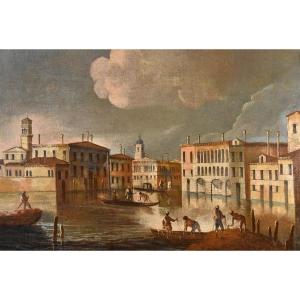
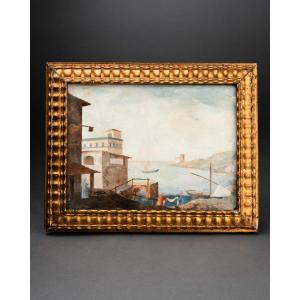

View Of An Italian Port, Panel In Scagliole, Italy, Mid-18th Century
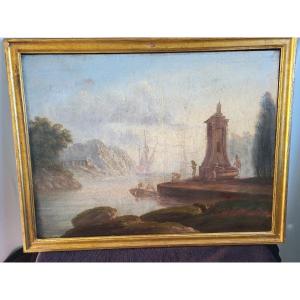
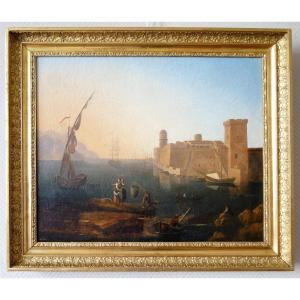
This exquisite port scene in
scagliola, created in the 18th century in Italy, embodies the refined
aesthetics of Grand Tour art and the technical excellence of Italian workshops
of the period. Blending decorative art with illusionistic painting, the
composition presents a sunlit harbor animated by picturesque figures, coastal
architecture, and graceful sailing vessels. The balanced composition, delicate
treatment of light, and harmonious tonal palette lend the scene both a lively
rhythm and a contemplative atmosphere. Such idealized visions of the
Mediterranean world were highly prized by 18th-century European collectors,
inspired by a classical and pastoral imagination.
Scagliola—a decorative technique
developed in Italy in the 17th century—was devised to imitate marble and
hardstone inlays using a mixture of plaster, glue, and natural pigments, then
polished to achieve a lustrous, stone-like finish. The technique allows for
remarkably pictorial effects, offering a richness of detail, subtle coloration,
and luminosity that neither painting nor traditional marquetry can fully
replicate. In the hands of highly skilled artisans, scagliola reached a
striking level of refinement here: the perspective, the figures, and the water
reflections all point to the expertise of a masterful workshop.
The flourishing of scagliola in
Tuscany is closely linked to the activity of the Opificio delle Pietre Dure,
founded in Florence in 1588 by Grand Duke Ferdinando I de’ Medici. While the
institution was originally established for the intricate inlay work of
hardstones (commesso di pietre dure), it also fostered the development
of scagliola as a more affordable but equally virtuosic alternative. By the
mid-17th century, artists such as Enrico Hugford—a Camaldolese monk and
pioneering figure in the field—had introduced a painterly visual language into
scagliola, combining architectural motifs, idealized landscapes, and
allegorical scenes. These works were destined for a cultivated aristocratic
clientele, both Italian and international, often connected to the cultural
circuit of the Grand Tour. The style, subject matter, and craftsmanship of the
present panel suggest a strong link to this Florentine tradition, which reached
its artistic zenith between 1720 and 1780.
Such panels were typically intended
to decorate aristocratic interiors, often incorporated into tabletops,
consoles, or presented as independent works of art, as in this case. They
reflect the elite taste for visual illusion, the evocation of travel, and the
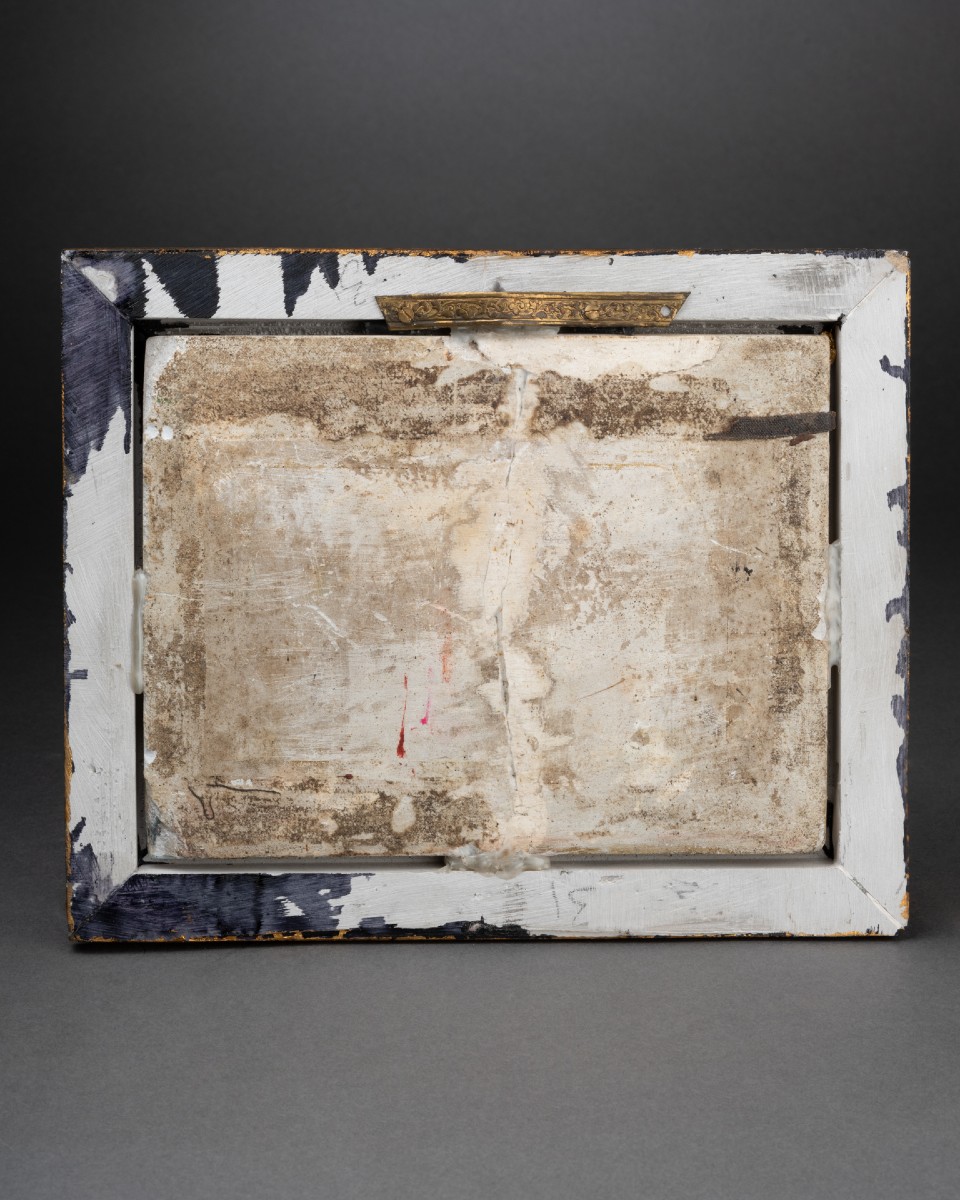
celebration of the Italian landscape. Remarkably well preserved, this piece
offers a window onto the idealized and picturesque world of Mediterranean
ports—hubs of trade, culture, and exchange.
5 500 €
Period: 18th century
Style: Louis 16th, Directory
Condition: Excellent condition
Material: Other
Width: 22 cm
Height: 18 cm
Reference (ID): 1623755
Availability: In stock
Print