THIS OBJECT WAS SOLD
Italianate Landscape Circa 1840, Durand-ruel Gallery.
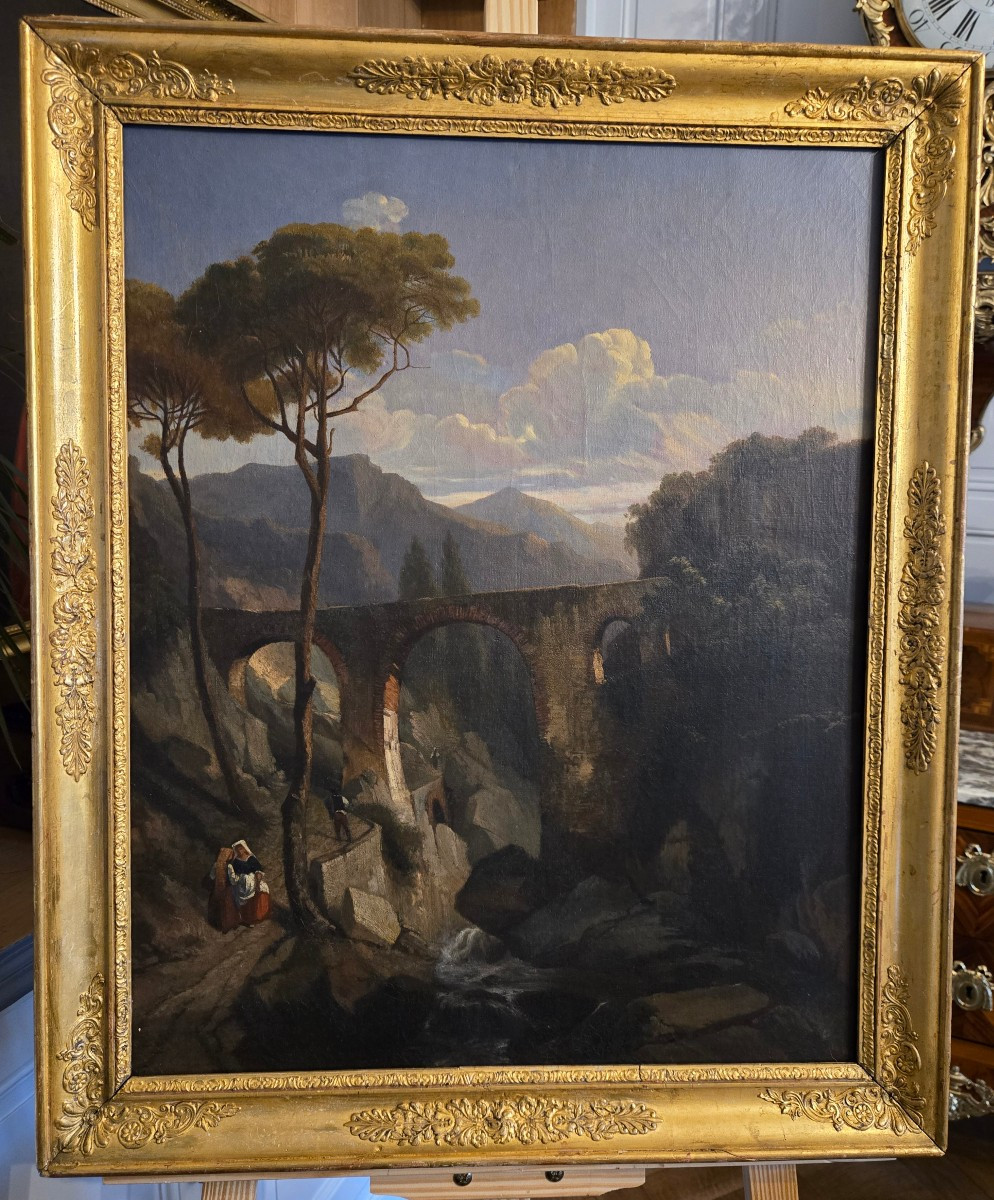
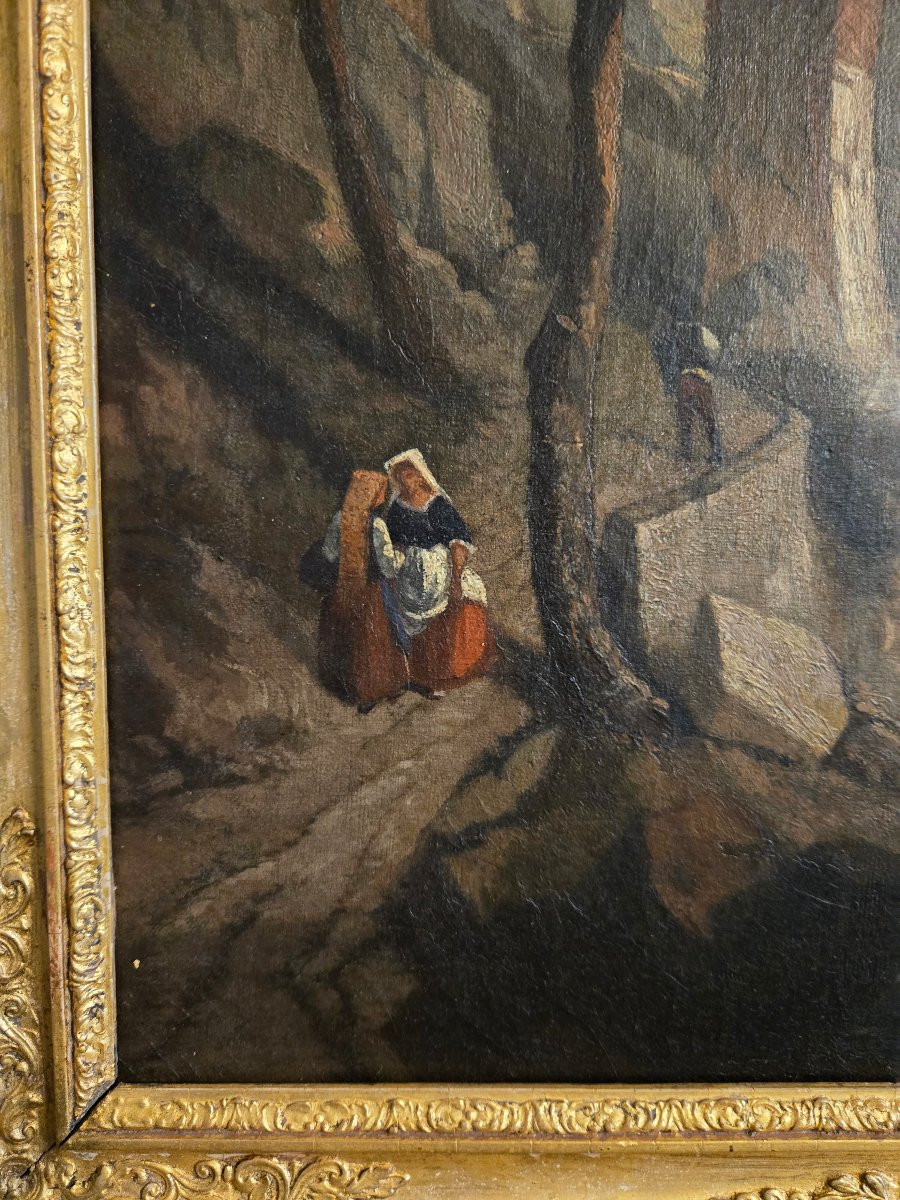
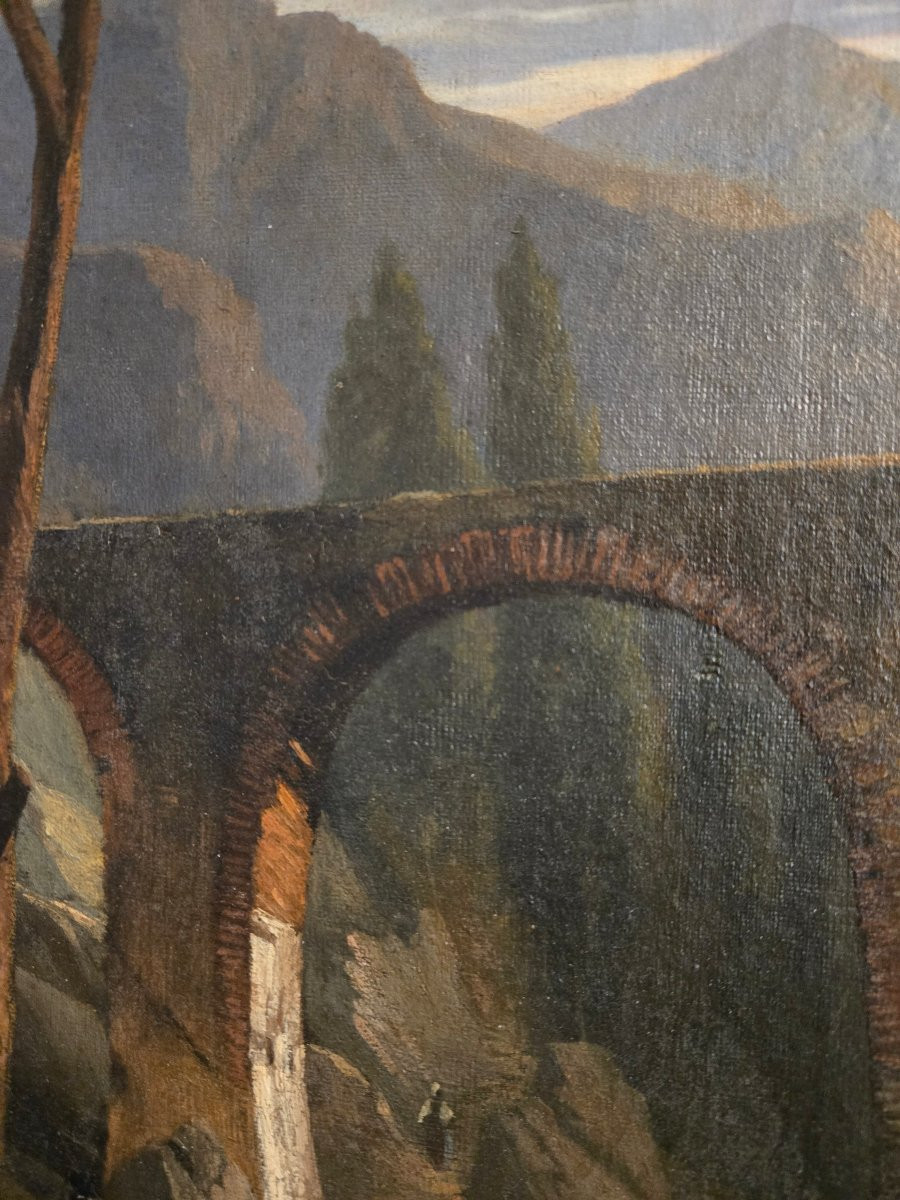
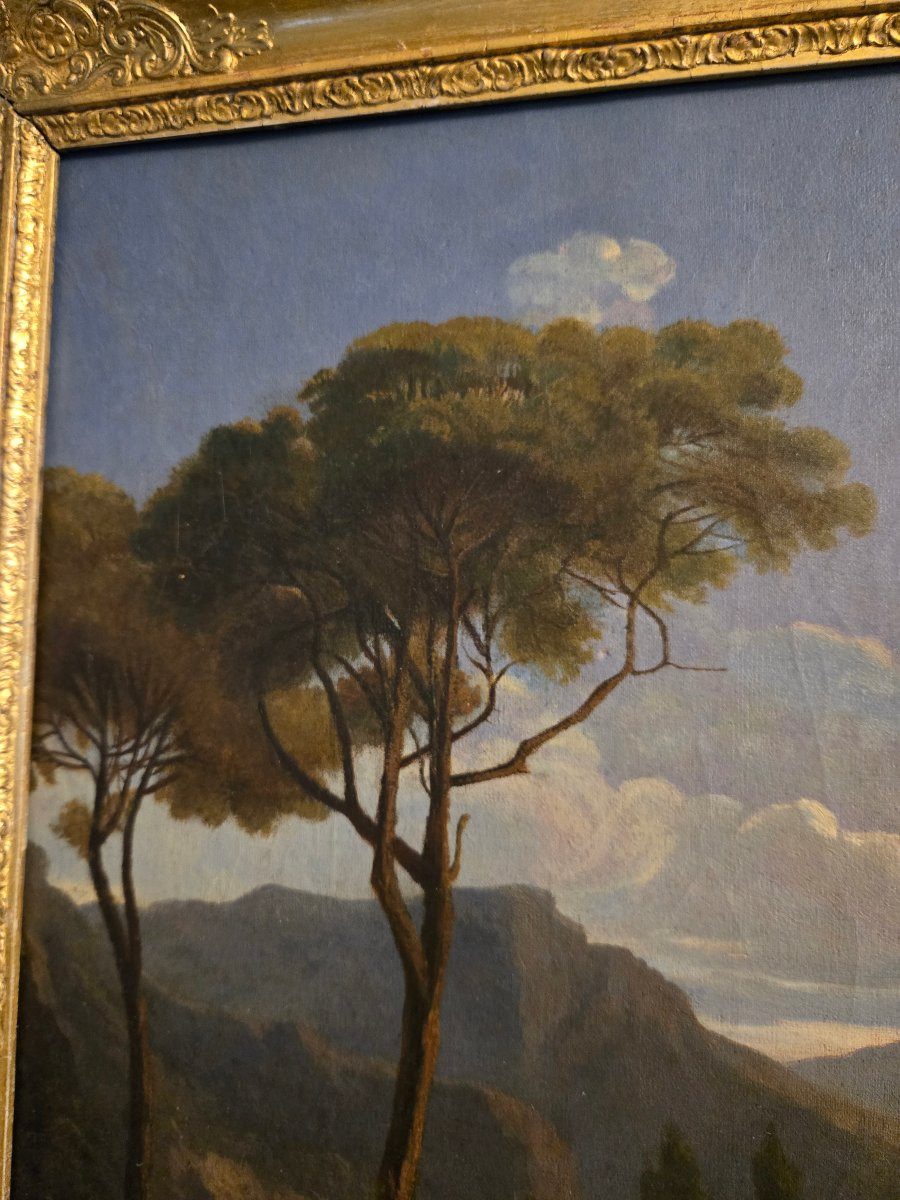
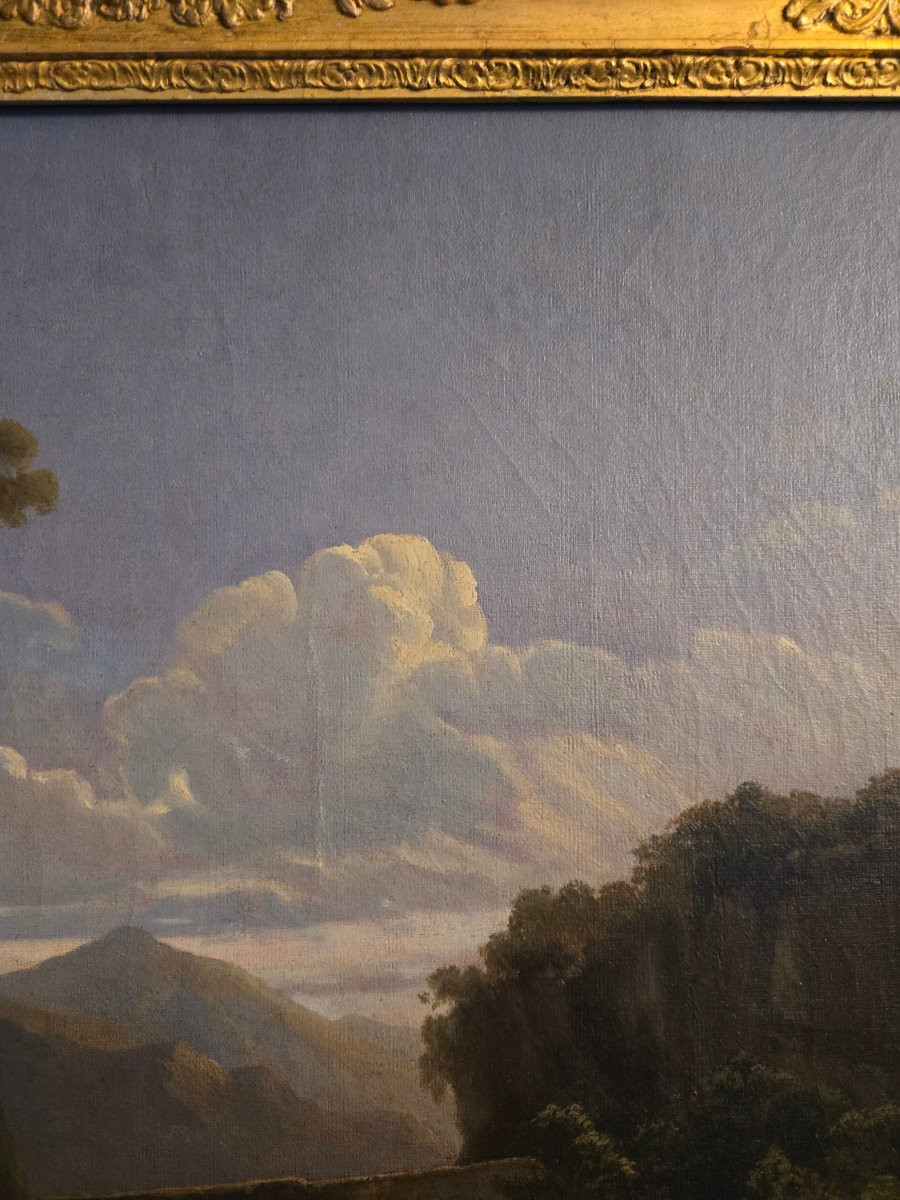
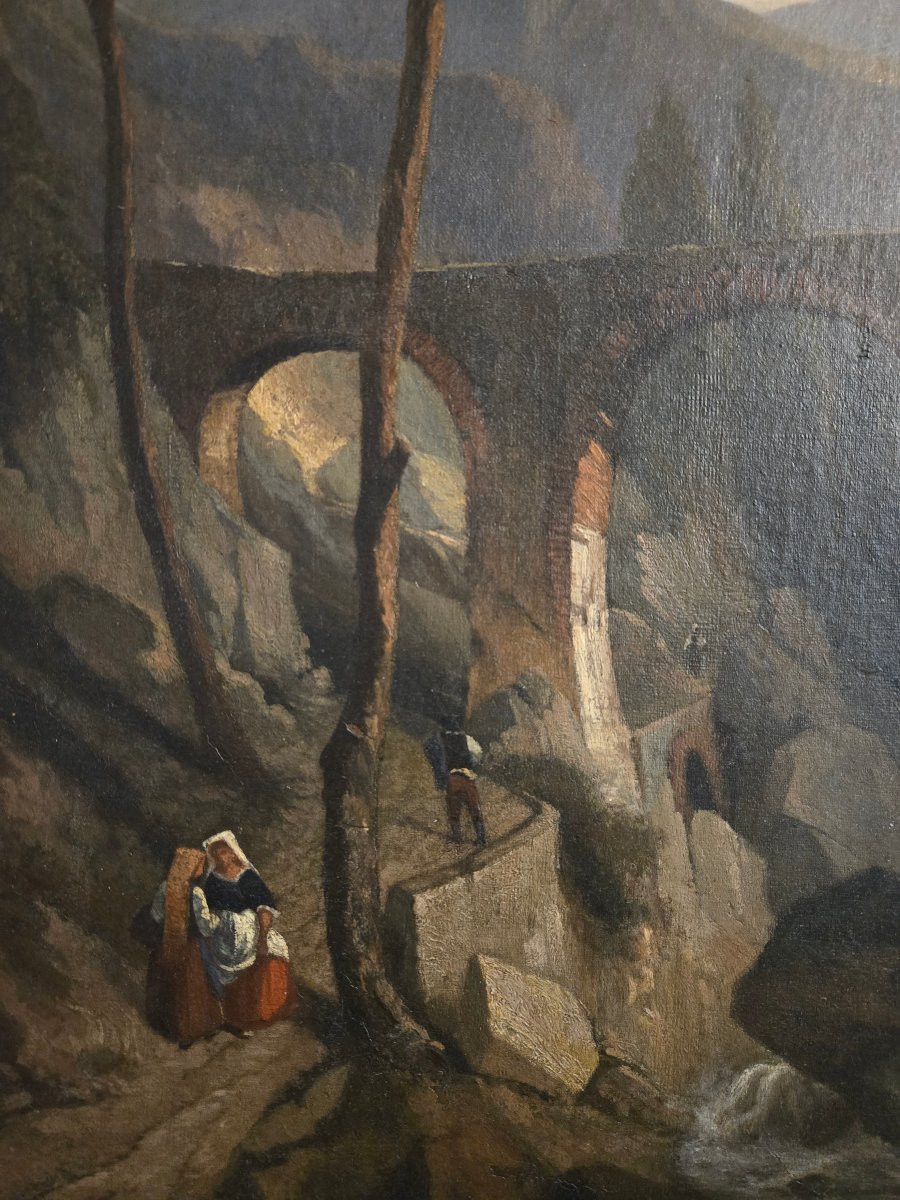
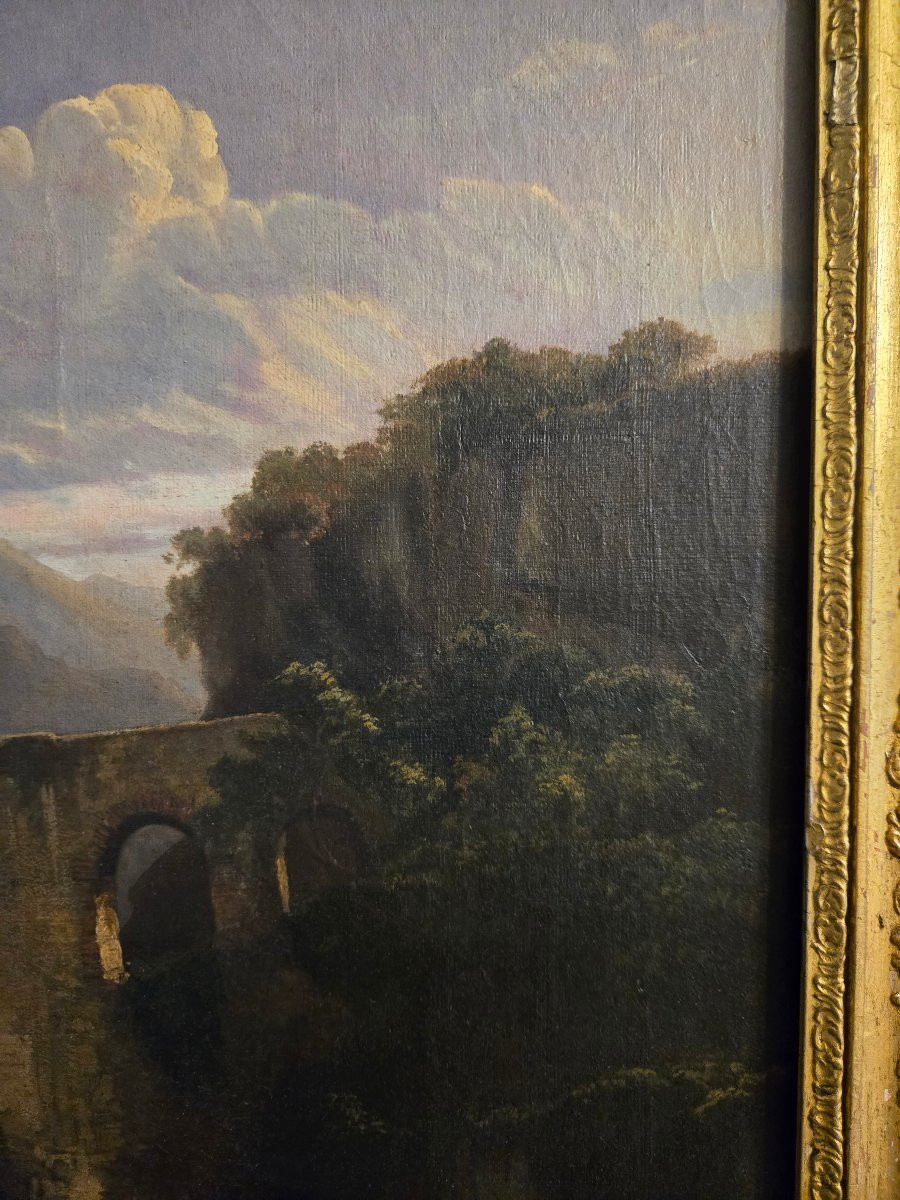
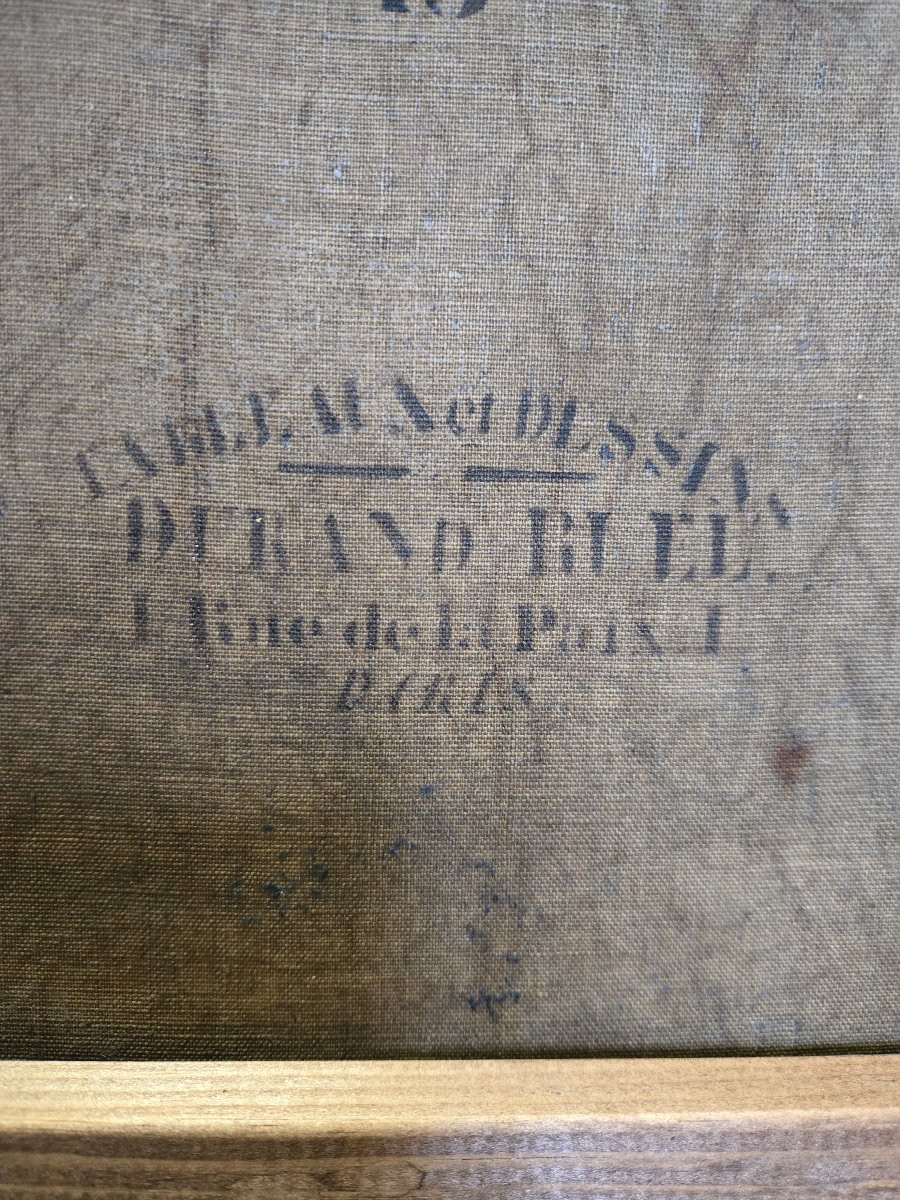
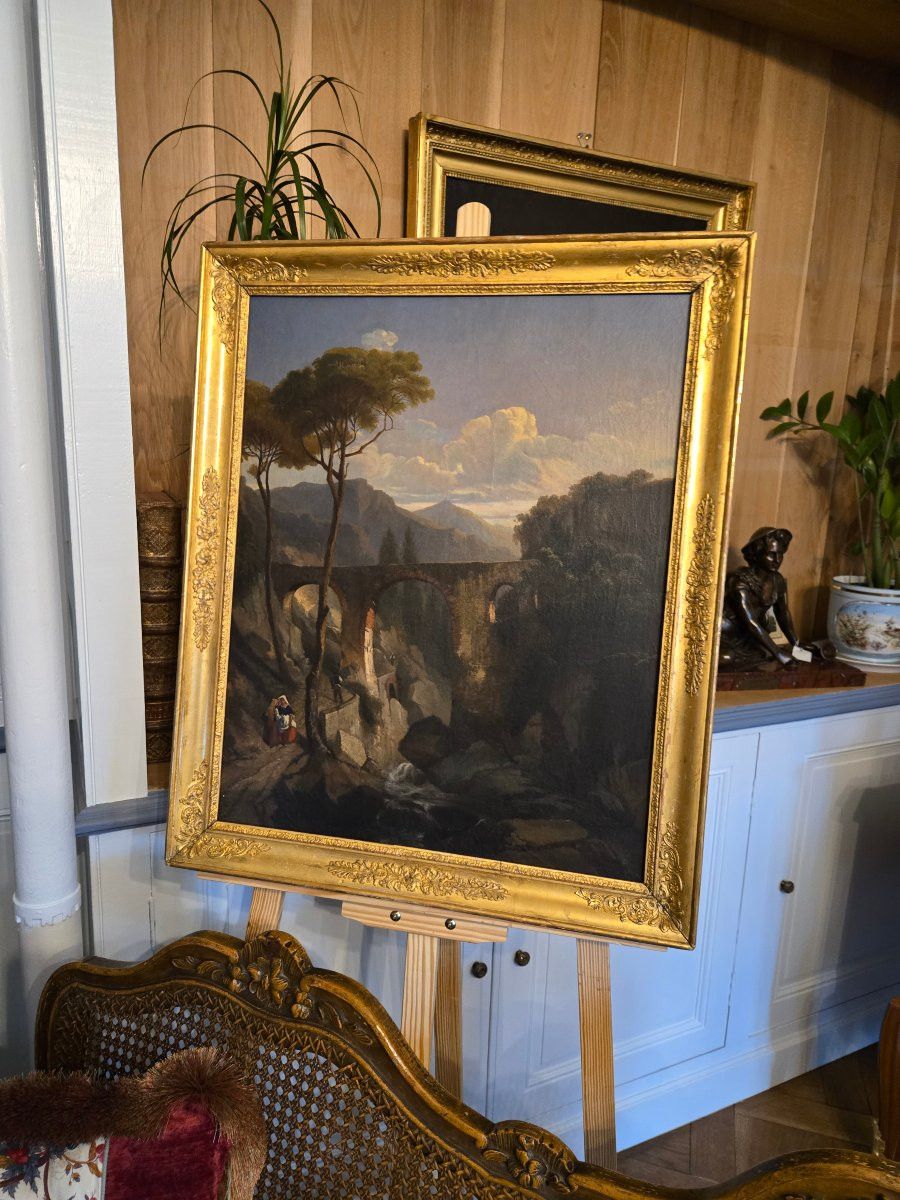
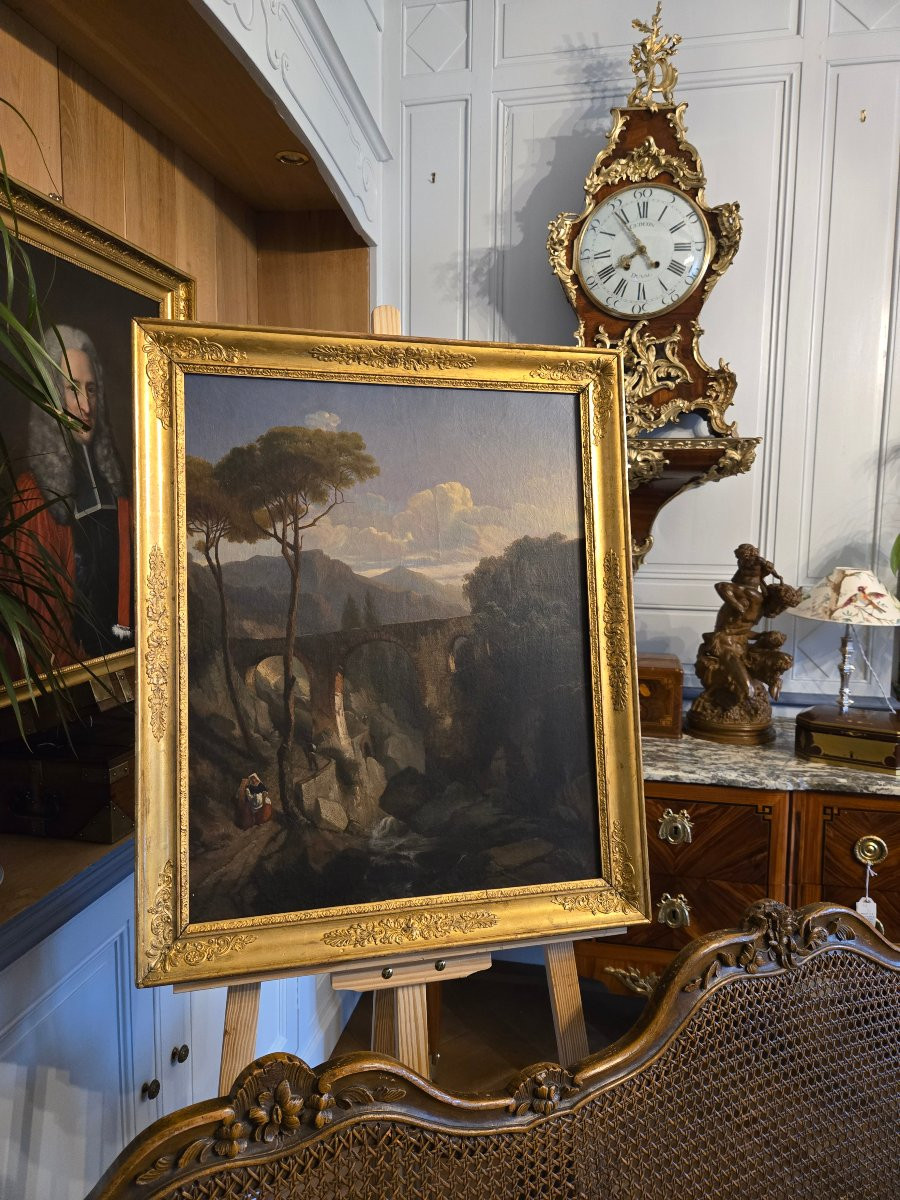


This romantic landscape, painted around 1835–1845, depicts a steep-sided ravine spanned by a brick and stone bridge, beneath an Italian sky with golden and violet hues. Dominated by tall umbrella pines, the scene unfolds a profoundly Italianate landscape, inspired by the valleys of Lazio, Abruzzo, or the area around Tivoli and Subiaco, key destinations for the “Voyage en Italie” (Journey to Italy) in the 19th century. In the foreground, two women in traditional Italian costumes enliven the path alongside a rushing stream. Their picturesque presence adds to the spirit of travel and ethnographic observation that characterized French painters during their sojourns in Italy. Provenance: Durand-Ruel Gallery, Rue de la Paix (1839–1846). On the reverse of the canvas is the rare stamp: “PAINTINGS AND DRAWINGS – DURAND-RUEL – Rue de la Paix – Paris”. This marking does not correspond to stationery or artist's supplies, but to a gallery inventory stamp, used only between 1839 and 1846, when Jean Durand-Ruel set up his gallery on the corner of Rue de la Paix, in one of the most elegant and artistically active districts of Paris. As family documentation recalls (communication from Flavie Durand-Ruel, Académie des Beaux-Arts, 2013): > “In 1839, the painting business was quite profitable and Paul's father decided to sell the stationery business to devote himself entirely to his gallery, which he had already established in the more fashionable districts, in the heart of Paris, on the corner of Rue de la Paix.” This stamp is therefore proof that the painting: passed through the Durand-Ruel Gallery, was part of its stock or deposits, and was presented or offered for sale at the gallery on Rue de la Paix in the 1840s. This is a rare and historically important provenance, linked to the early years of what would become the most influential art dealership of the 19th century. Style and artistic influences: With its silvery light, highly ordered composition, and Mediterranean hues, this painting belongs to the Romantic Neoclassical landscape movement, which developed in France between 1825 and 1845. It evokes the works of: Jean-Victor Bertin, for its structure and clarity; Achille-Etna Michallon, for its atmospheric poetry; Corot (first stay in Italy), for its silvery blues; and Aligny, Paul Flandrin, or Granet, for its Italian sensibility and sense of the picturesque. The brushwork is delicate and varied: transparent glazes in the sky, denser texture in the rocks, foliage modeled with small, energetic strokes, and figures rendered with elegance and precision. Technique, condition, and restoration: Original oil on canvas, bearing the Durand-Ruel stamp. Recent and high-quality restoration: tension strips, replacement stretcher (the previous one was warped), gentle and respectful cleaning. Sound surface, fresh colors, beautiful overall balance. Frame: The painting is presented in a giltwood and stucco frame from the Empire-Restoration period, adapted to the size by reshaping the rabbet. It shows some minor wear and losses, consistent with its age, but remains highly ornamental and perfectly in harmony with the work. Canvas dimensions: 60 × 48 cm. Frame dimensions: 71 × 59 cm. Conclusion: A romantic, Italianate landscape, perfectly representative of the French taste for travel to Italy in the 1830s and 1840s, executed with poetic sensibility and evident academic mastery. Its Durand-Ruel inventory stamp, Rue de la Paix, gives it a prestigious and documented provenance, rare for this type of work.
Explore similar pieces and discover your ideal find:
Landscapes