

Jean François Marie Bellier (1745-1836) Portrait Of A Man
Artist: Jean François Marie Bellier
Jean François Marie BELLIER
(Paris 1745 – Paris 1836)
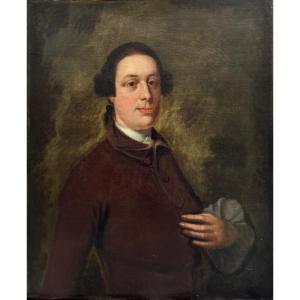
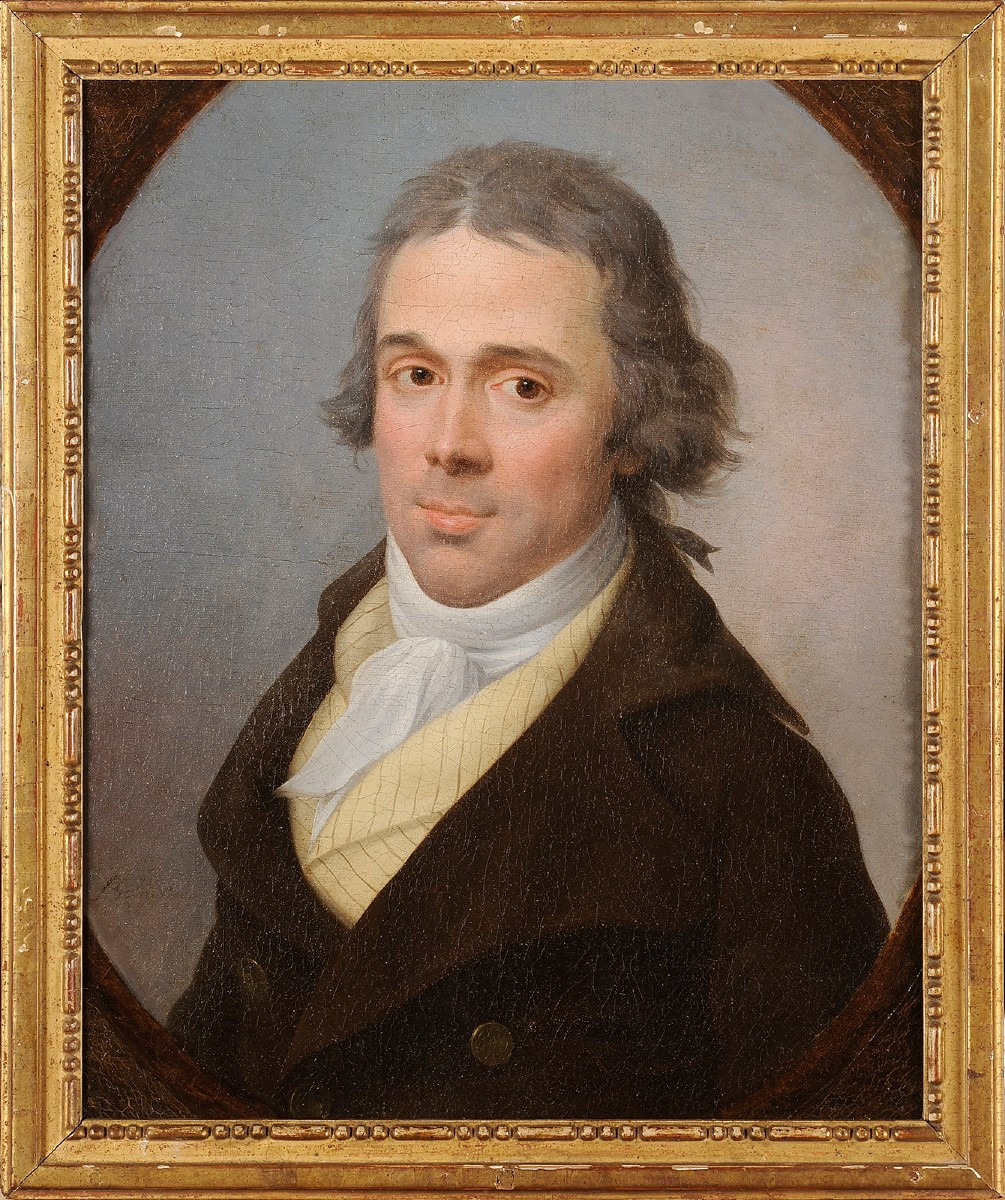
Portrait of a Man
Oil on oval canvas, rectangular
H. 55 cm; W. 45 cm
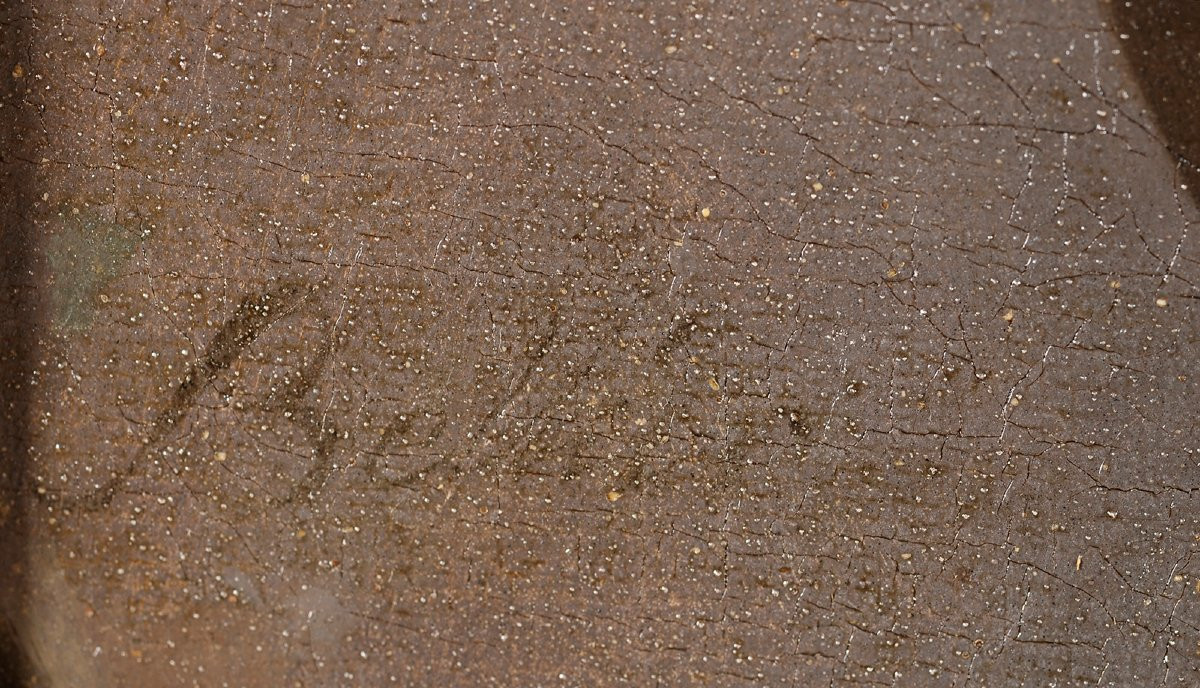
Signed on the left
Circa 1790
Jean François Marie Bellier occupies a unique place among painters active between the end of the Ancien Régime and the first decades of the 19th century. Both a portraitist and a landscape painter, he distinguished himself through a career that combined official commissions, decorative works, and portraits for an aristocratic and bourgeois clientele. A valued artist at court, he was notably the official painter of Marie Antoinette, which allowed him to participate in several prestigious projects. Bellier took part in the decoration of Louis XVI's carriage at the time of his coronation, demonstrating a sure mastery of ornamental painting. He also contributed to the execution of some ceilings in the Louvre, attesting to his recognition within artistic circles connected to the monarchy. These works, rarely preserved, underscore the breadth of his skill beyond portraiture. His paintings are characterized by keen observation and a taste for restraint. Bellier favored delicate modeling, measured lighting, and a muted palette, lending his portraits a quiet, almost introspective presence. One of his best-known paintings depicts a young girl in Norman costume: the attention paid to the fabrics, the posture, and the gentleness of the face perfectly illustrates his sensitive and precise style. The Revolution did not end his career: he continued his work in a transformed context, maintaining the classical clarity of his style while adapting to a clientele less connected to the old court. He continued to execute portraits and formal compositions until the early decades of the 19th century. Bellier died in 1836, leaving behind a discreet yet coherent body of work, where the legacy of the Enlightenment, the refinement of courtly art, and the beginnings of a more intimate sensibility converge. Today, his paintings—though rare—are sought after for their quality of execution and for the insight they provide into the evolution of French portraiture between two pivotal centuries.
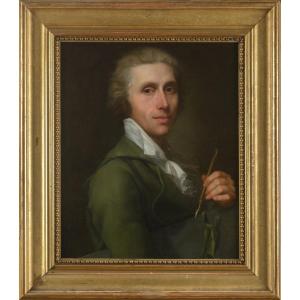
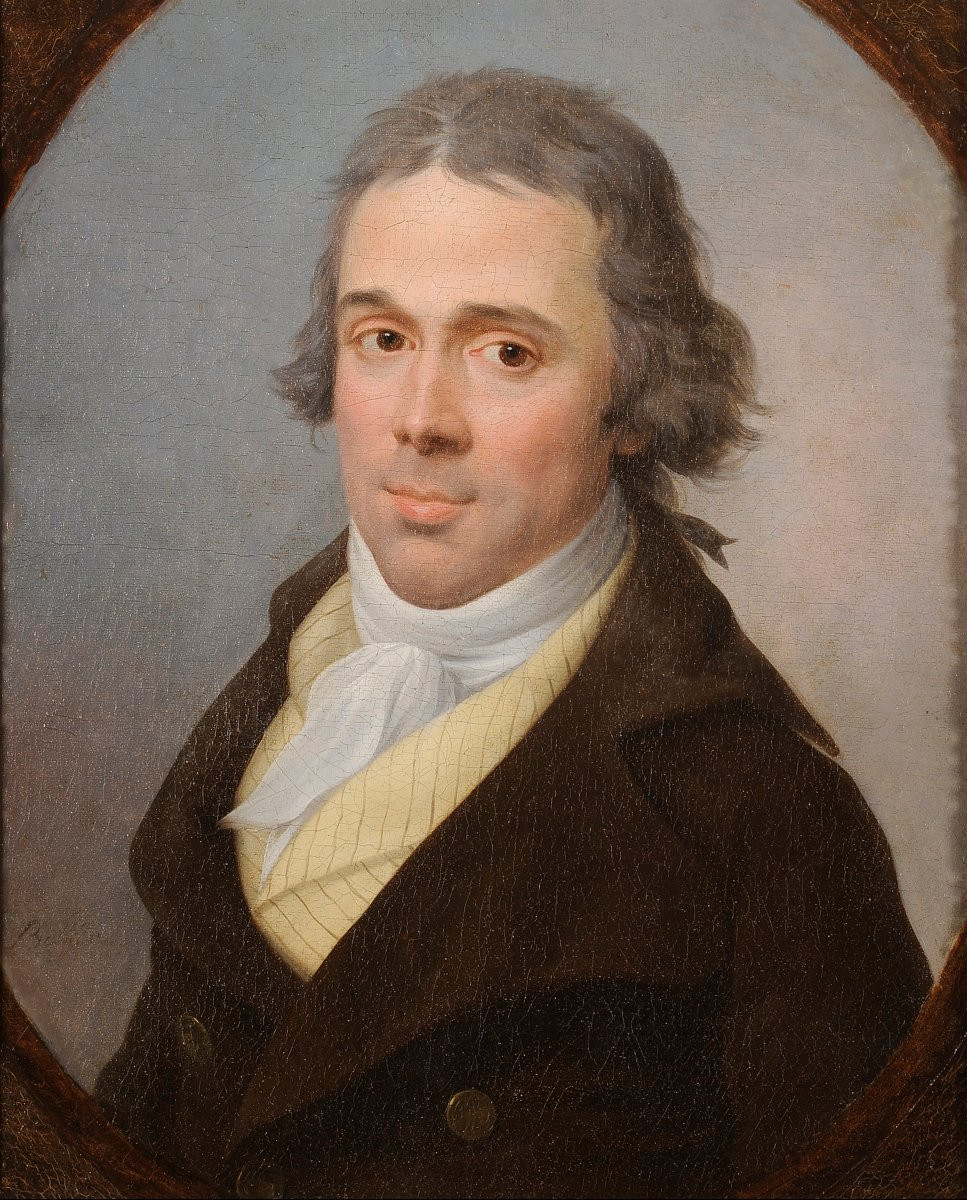
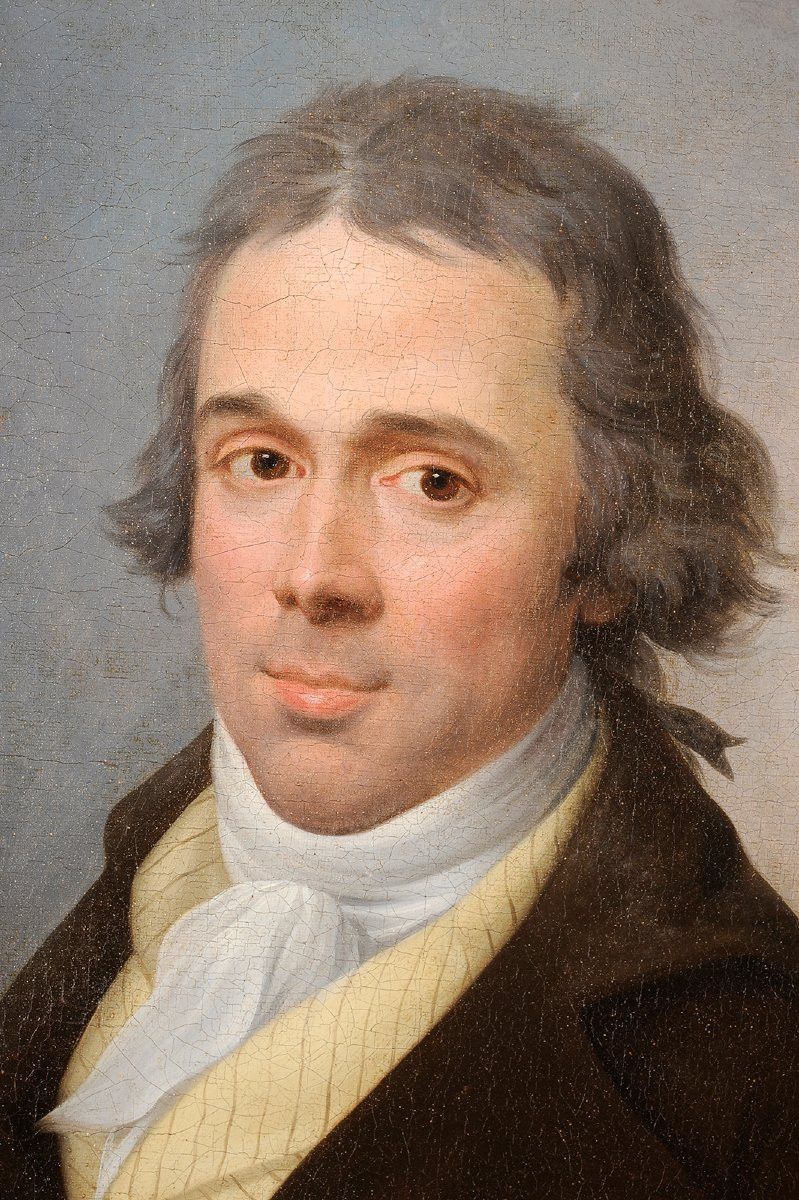
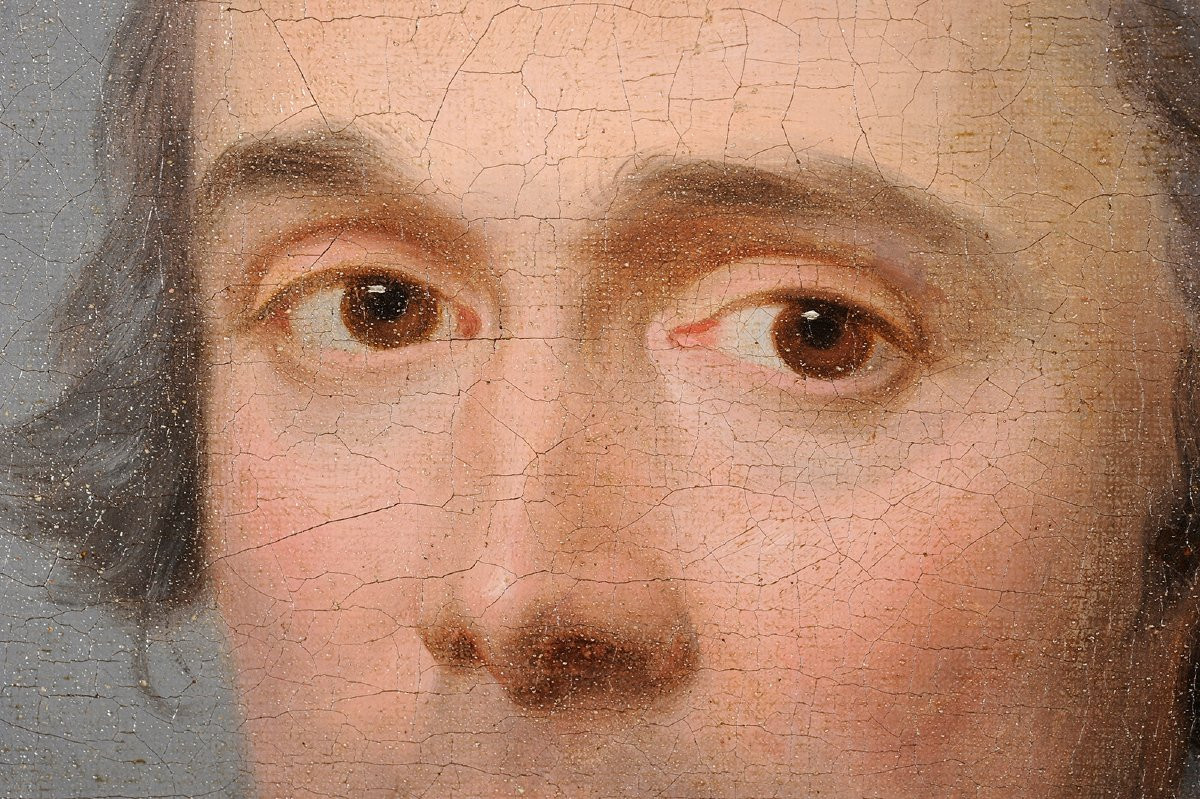
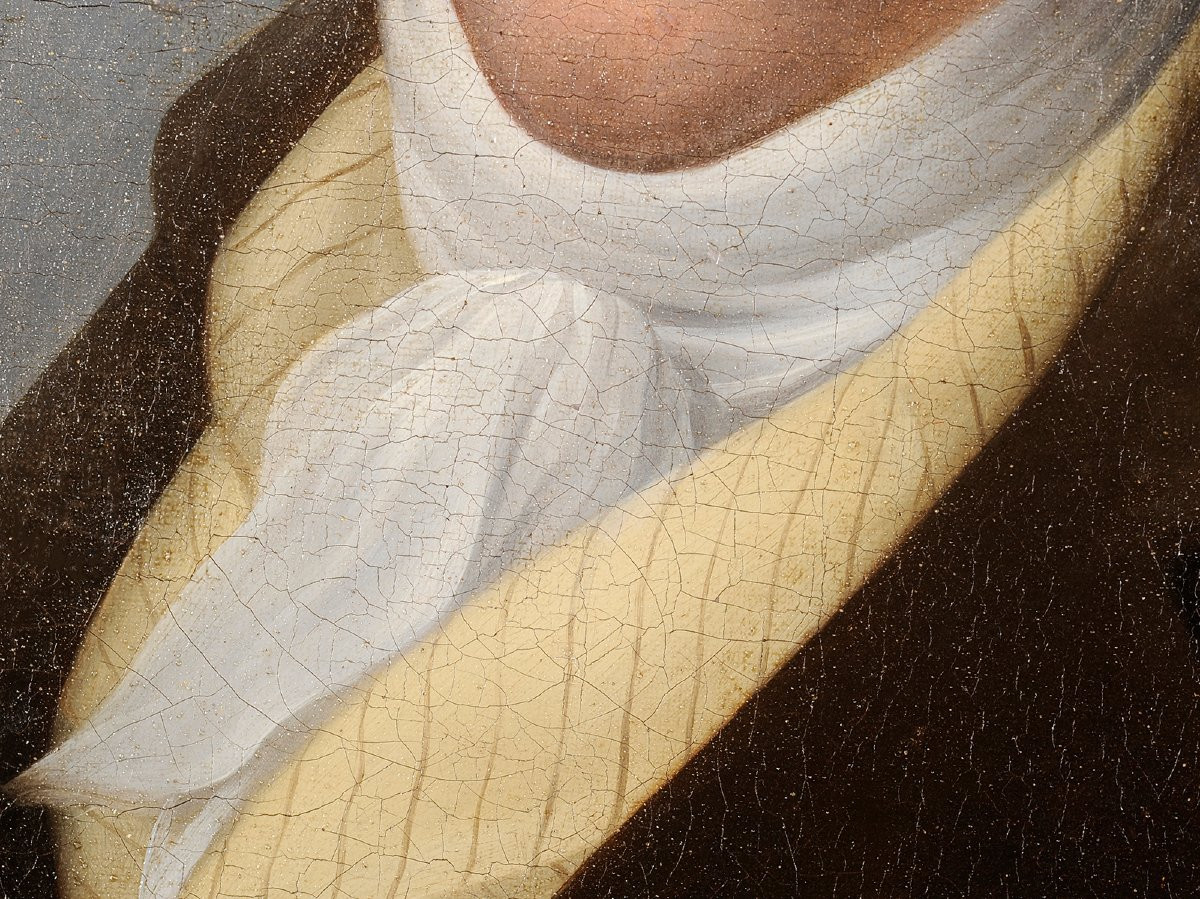
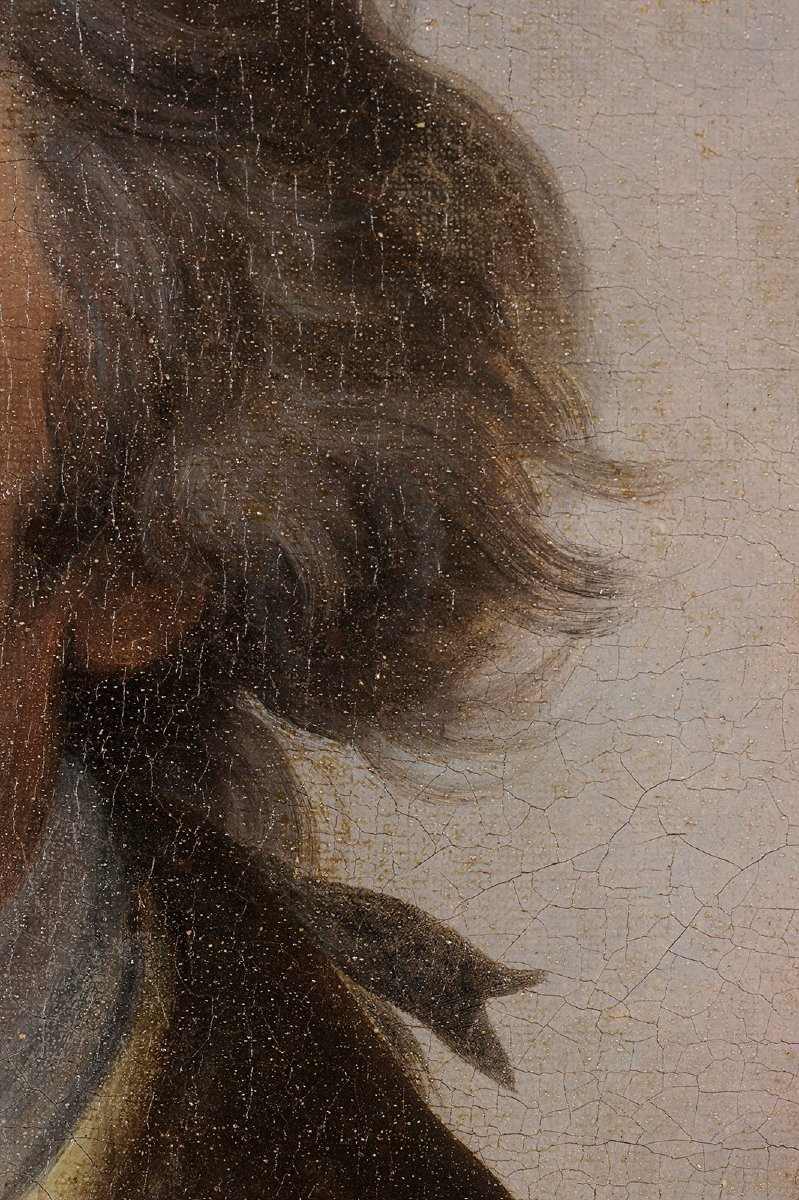
Our portrait, accurately placed at the end of the 18th century, is an old oval canvas that was rectangularized in the following century. A handsome dandy still wearing a wig, this gentleman is dressed in a pale yellow jacket with fine brown stripes, over which he wears a double-breasted, fitted frock coat of fine taupe canvas.
(Paris 1745 – Paris 1836)
Portrait of a Man
Oil on oval canvas, rectangular
H. 55 cm; W. 45 cm
Signed on the left
Circa 1790
Jean François Marie Bellier occupies a unique place among painters active between the end of the Ancien Régime and the first decades of the 19th century. Both a portraitist and a landscape painter, he distinguished himself through a career that combined official commissions, decorative works, and portraits for an aristocratic and bourgeois clientele. A valued artist at court, he was notably the official painter of Marie Antoinette, which allowed him to participate in several prestigious projects. Bellier took part in the decoration of Louis XVI's carriage at the time of his coronation, demonstrating a sure mastery of ornamental painting. He also contributed to the execution of some ceilings in the Louvre, attesting to his recognition within artistic circles connected to the monarchy. These works, rarely preserved, underscore the breadth of his skill beyond portraiture. His paintings are characterized by keen observation and a taste for restraint. Bellier favored delicate modeling, measured lighting, and a muted palette, lending his portraits a quiet, almost introspective presence. One of his best-known paintings depicts a young girl in Norman costume: the attention paid to the fabrics, the posture, and the gentleness of the face perfectly illustrates his sensitive and precise style. The Revolution did not end his career: he continued his work in a transformed context, maintaining the classical clarity of his style while adapting to a clientele less connected to the old court. He continued to execute portraits and formal compositions until the early decades of the 19th century. Bellier died in 1836, leaving behind a discreet yet coherent body of work, where the legacy of the Enlightenment, the refinement of courtly art, and the beginnings of a more intimate sensibility converge. Today, his paintings—though rare—are sought after for their quality of execution and for the insight they provide into the evolution of French portraiture between two pivotal centuries.
Our portrait, accurately placed at the end of the 18th century, is an old oval canvas that was rectangularized in the following century. A handsome dandy still wearing a wig, this gentleman is dressed in a pale yellow jacket with fine brown stripes, over which he wears a double-breasted, fitted frock coat of fine taupe canvas.
6 800 €
Period: 18th century
Style: Louis 16th, Directory
Condition: Perfect condition
Material: Oil painting
Length: 55 cm hors cadre
Width: 45 cm hors cadre
Reference (ID): 1658477
Availability: In stock
Print