



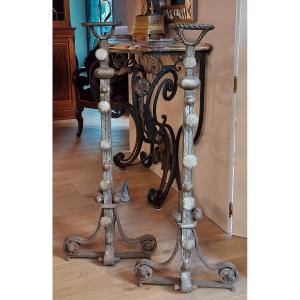


Pair Of Andirons
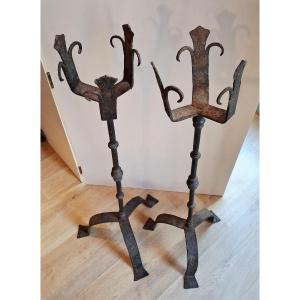
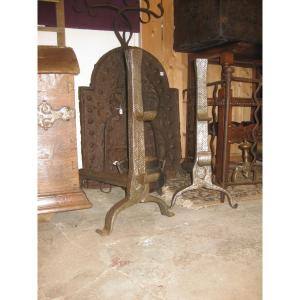
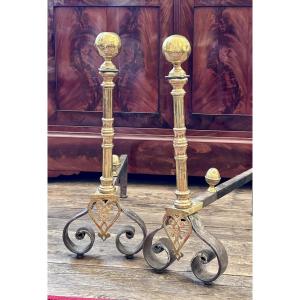
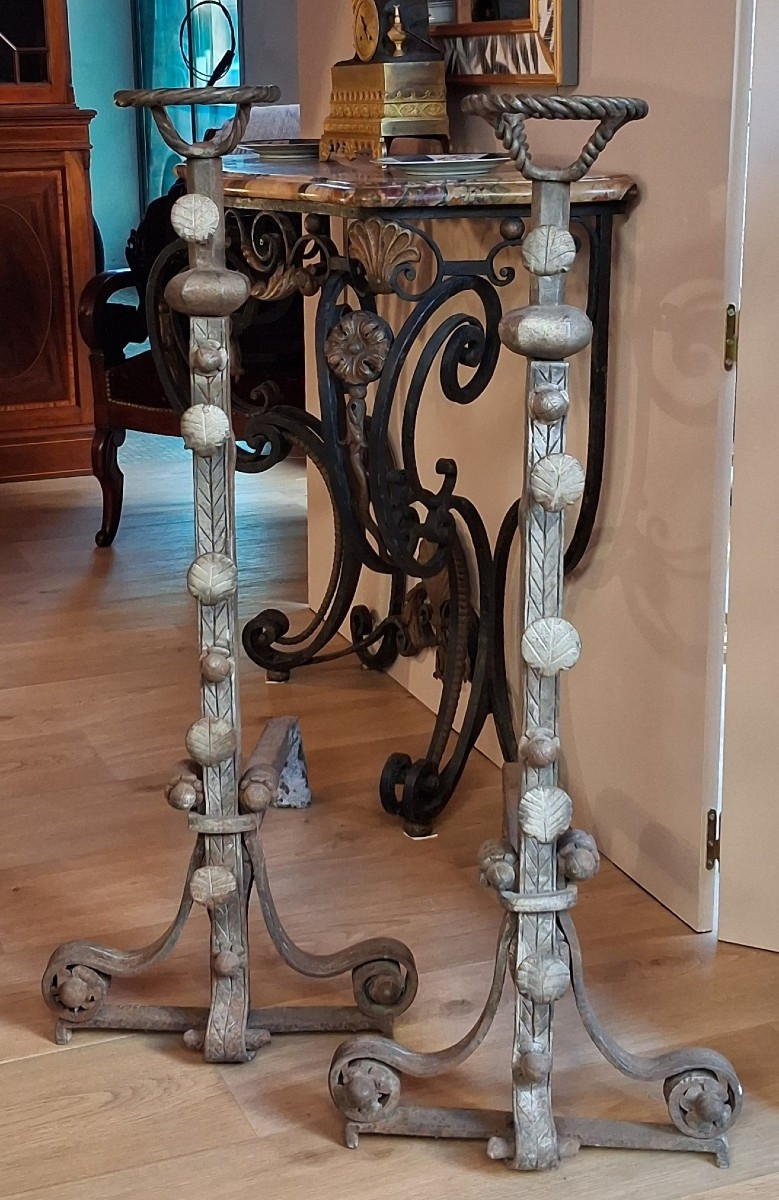
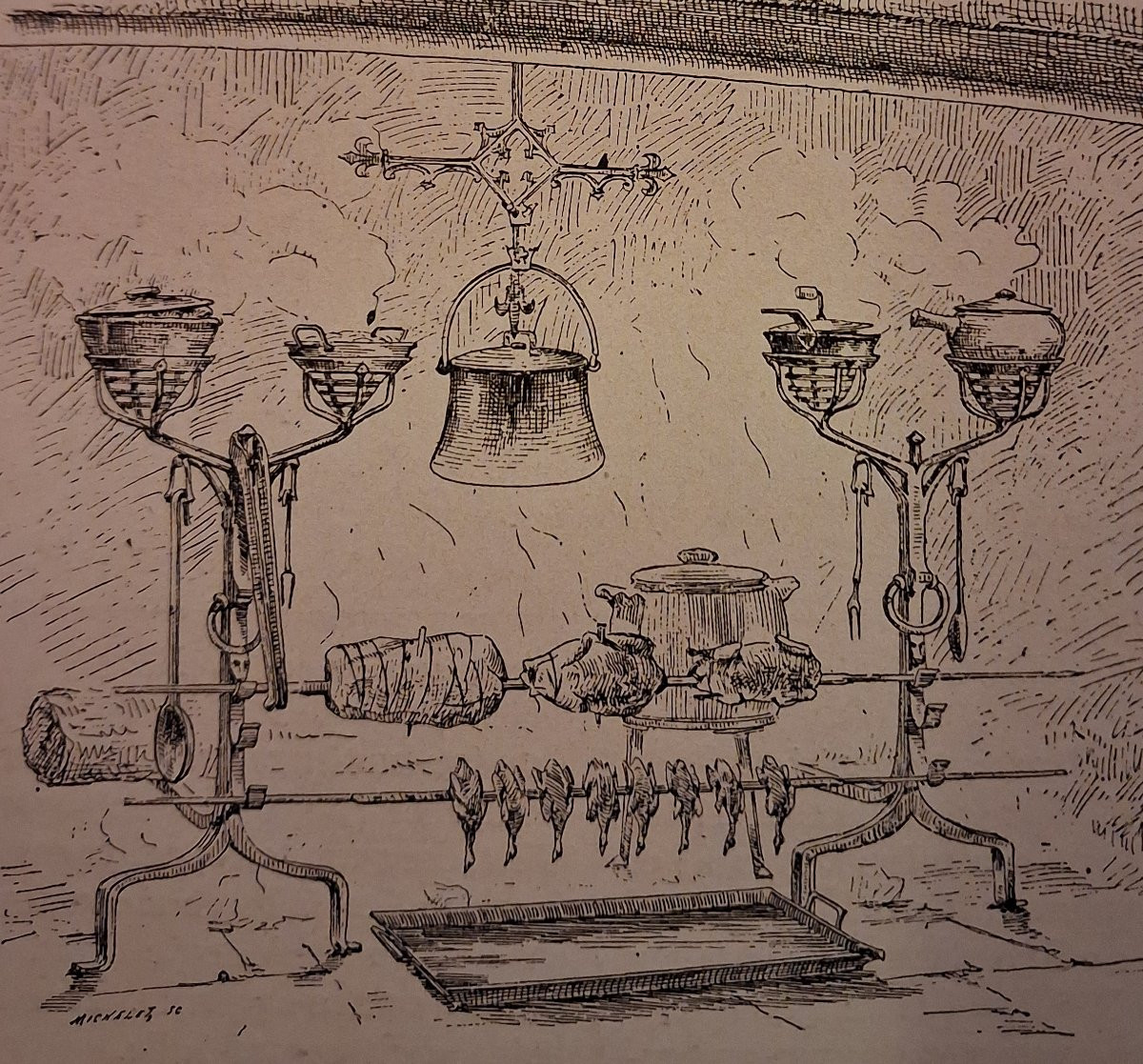
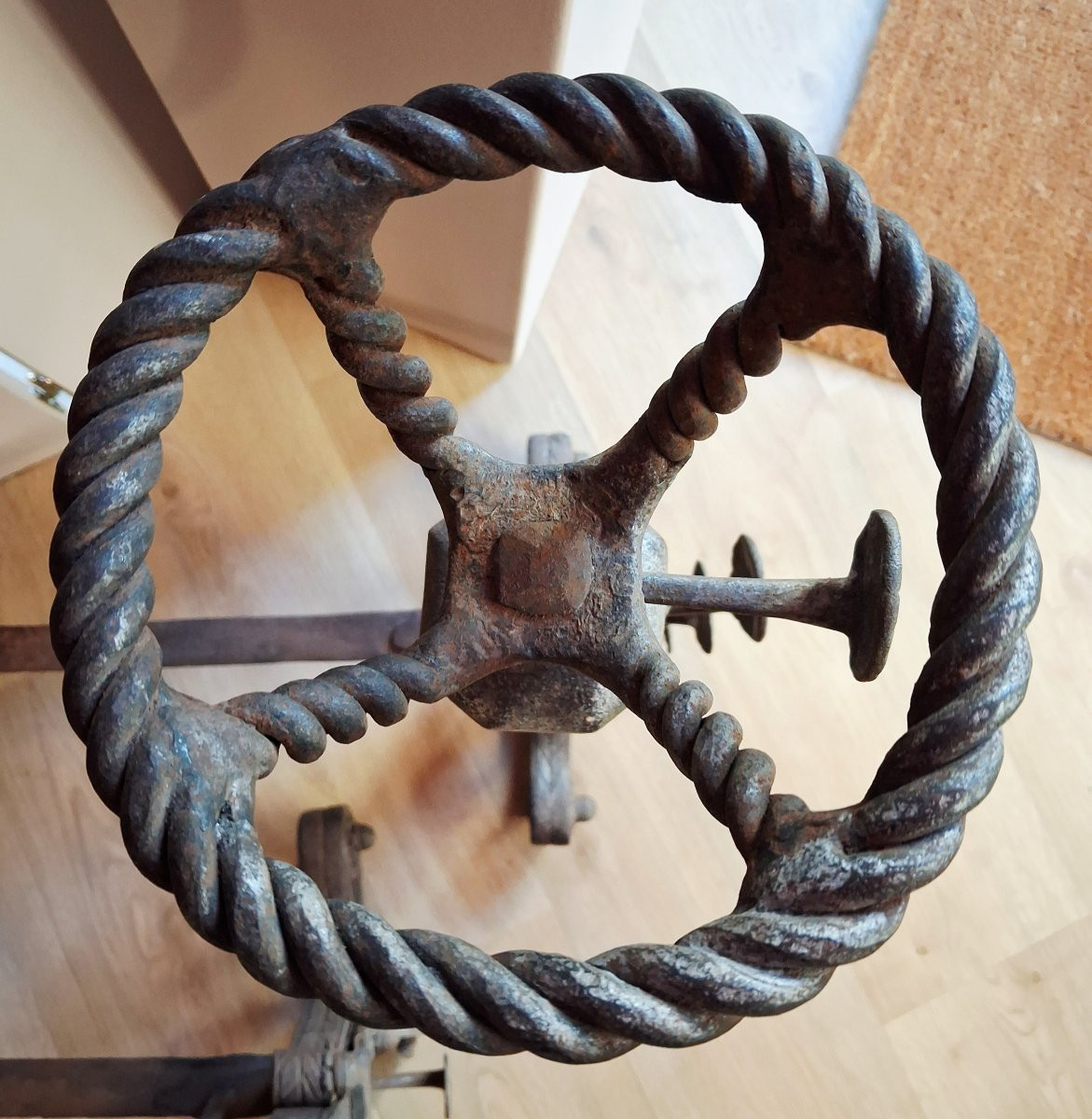
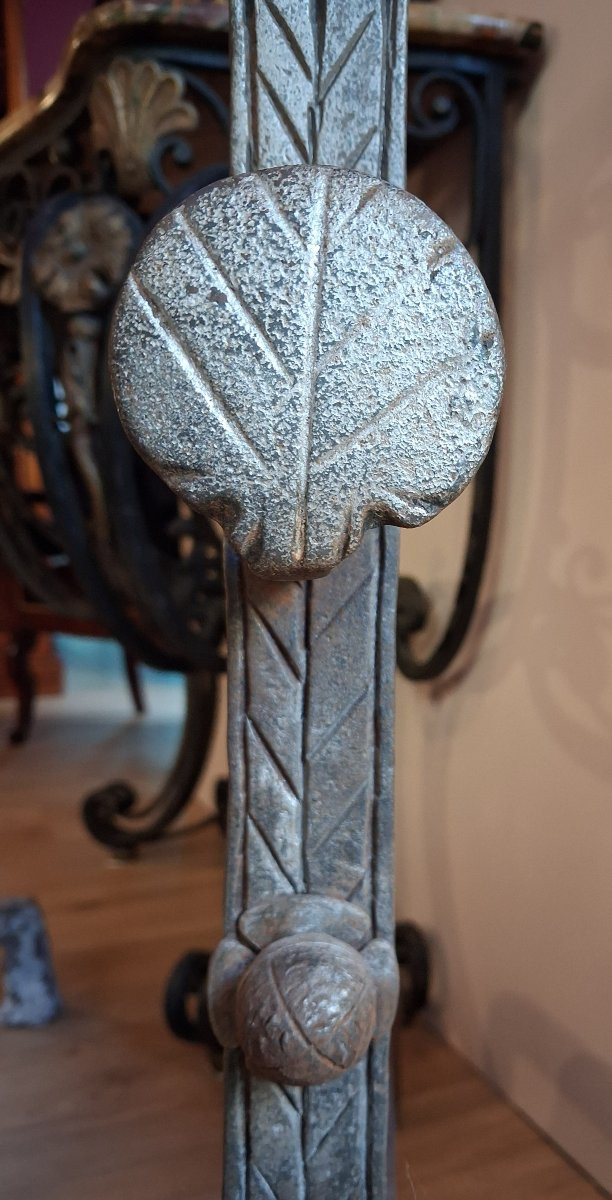
A cast iron and wrought iron firepan resting on feet composed of bases supporting stylized, scrolled blades decorated with feathers, the upper part adorned with pine cones and hooks representing scallop shells and surmounted by supports. A regional 19th-century work in the 15th-century style. Height: 104 cm / Width: 41 cm / Depth: 81 cm (a pair of iron tongs and a shovel, 100 and 103 cm long, are included). Called "landey" in Gascony and the Bordeaux region, "lander" in Brittany, and "landiei" in Limousin, this utensil, which dates back to at least the 13th century, is generally called a "landier" in France. Its large size made it essential for balancing the logs, trunks, and bundles of kindling that were once used to furnish large fireplaces. While the name "landier" has become widespread, the true name of this structure is "hastier," described in Havard as follows: "...armed with hooks and often topped with a kind of stove, which served two purposes: 1) and carried, along with roasting spits, the pots in which stews simmered" (I have included a reproduction of the engraving illustrating the article), glazed earthenware pots or pans... The name comes from the "haste," or spit, which they were designed to carry on the hooks with which they were equipped" (ibid.). The "landier," lacking hooks, was therefore used for heating living spaces, while the "hastier" was used in the vast rooms or kitchens of medieval castles... 1) heating and cooking. On the Way of St. James, Bordeaux, a port city, welcomed pilgrims arriving by land as well as those arriving by boat from England, Brittany, and Normandy. Three monuments in Bordeaux are emblematic of different periods in the history of the pilgrimage to Santiago de Compostela: - the Basilica of Saint-Seurin, mentioned in the Codex Calixtinus (12th century) as a major stop thanks to its relics; - the Cathedral of Saint-André, which from the 12th century onwards became an important stopping point for pilgrims, thus reinforcing its spiritual and institutional role; - the Basilica of Saint-Michel, representative of the modern era, which maintains a living link with the pilgrimage thanks to its chapel dedicated to Saint James and its confraternity. It is therefore not surprising to find in the region this type of work or other art objects, sculptures, etc., from all periods adorned with the attributes of the Saint.
750 €
Period: 19th century
Style: Renaissance, Louis 13th
Condition: Good condition
Reference (ID): 1655356
Availability: In stock
Print