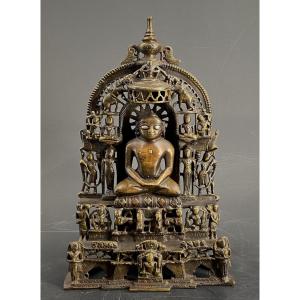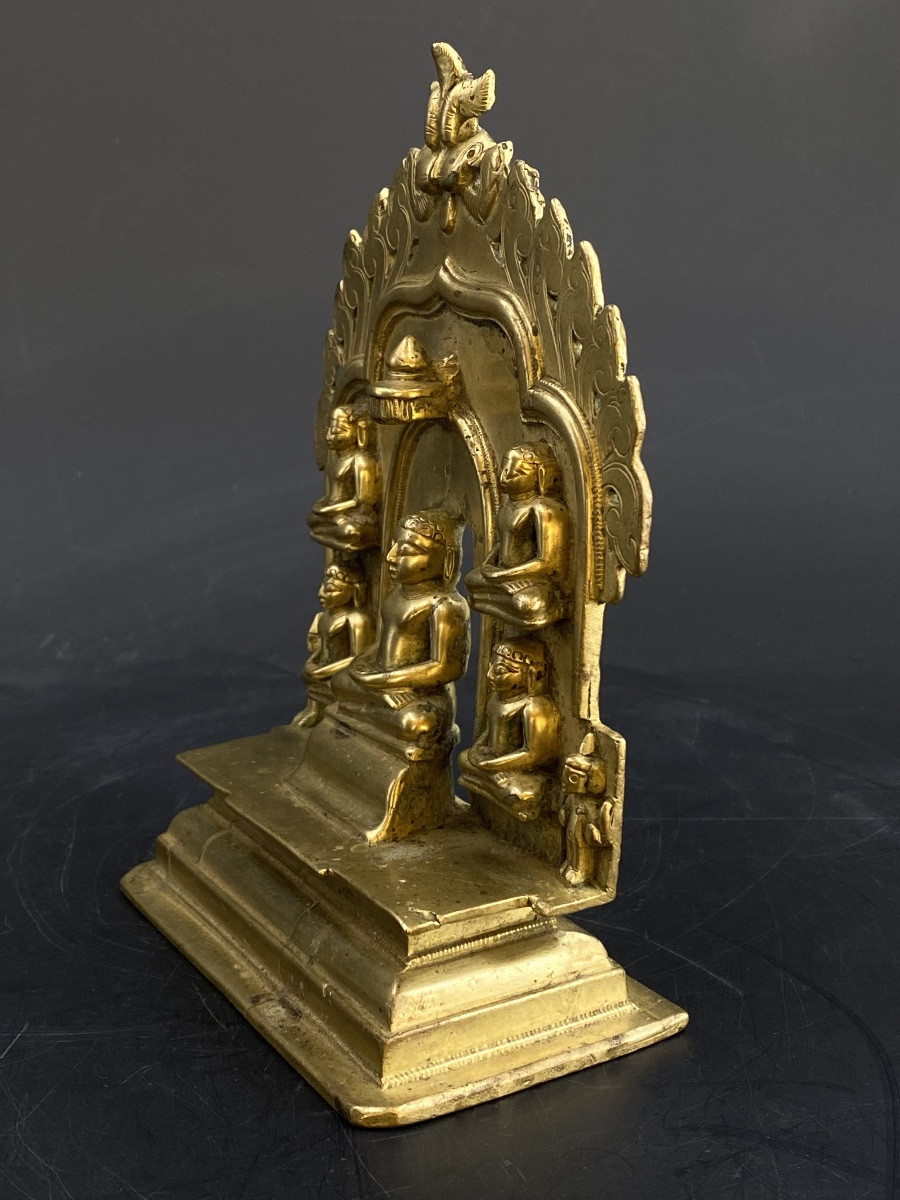


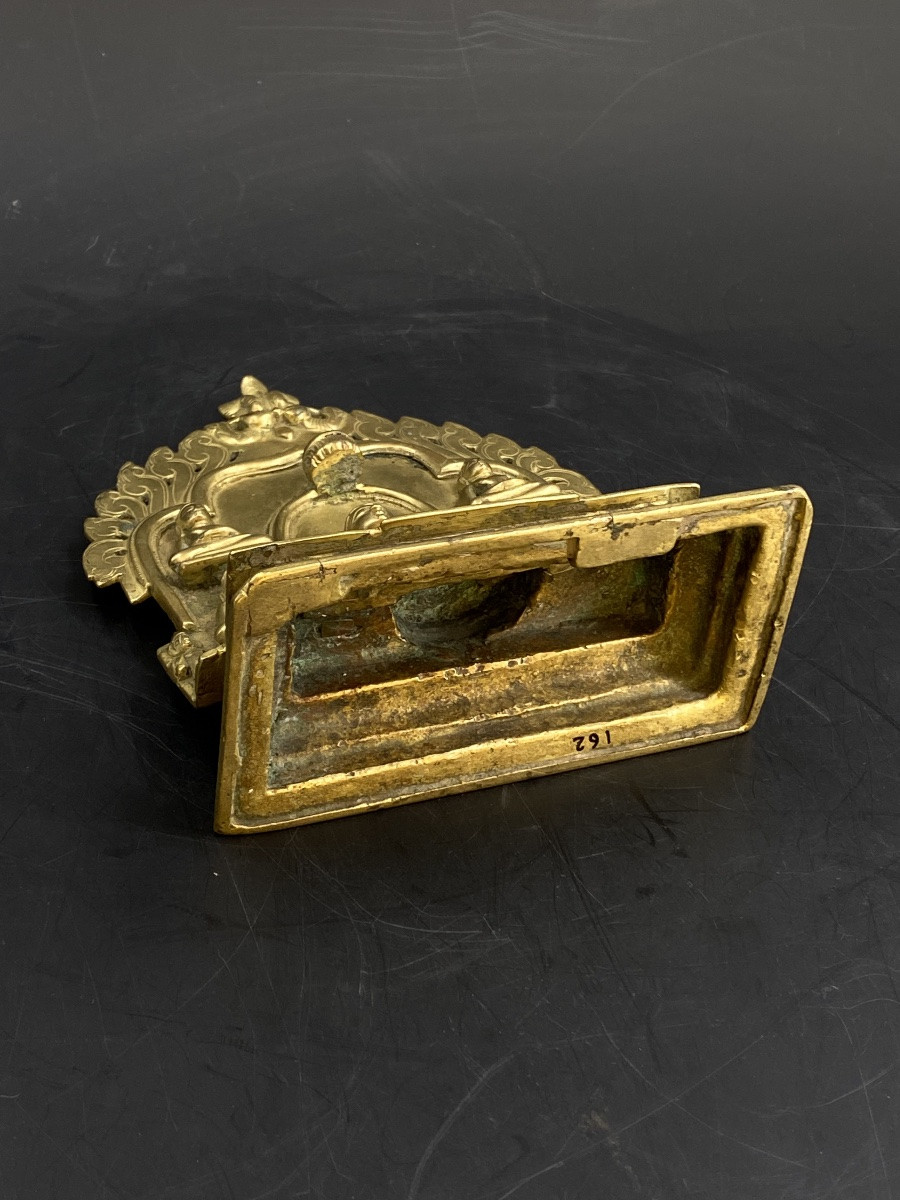


Jain Altar, India, 17th-18th Century
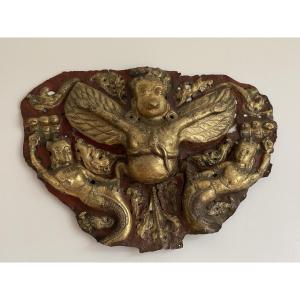
This brass or bronze Jain Tirthankara altar is a Jain votive plaque (Ayagapata). The central figure, seated in the meditation posture of Padmasana, is one of the 24 Tirthankaras, the spiritual teachers of Jainism. The smaller figures surrounding the central deity represent other Tirthankaras or auxiliary deities. The arch decorated with leaf motifs is typical of Jain art in western India, particularly Rajasthan or Gujarat, and could date to around the 17th/18th century, depending on style and wear. Portable shrines of this type were used for domestic worship or as votive offerings, embodying the Jain ideal of spiritual serenity and devotion. The balanced composition, stylized plant details, and compact form demonstrate the craftsmanship characteristic of Gujarat or Rajasthan in the 17th and 18th centuries CE. Similar Jain brass altarpieces are held in the following collections:-Victoria and Albert Museum, London (Inventory No. IS.60-1973)-Los Angeles County Museum of Art, Los Angeles (Inventory No. M.86.345.1)-Bharat Kala Bhavan, Varanasi Private Collection.
3 200 €
Period: 18th century
Style: Asian art
Condition: Excellent condition
Height: 18 cm
Reference (ID): 1639703
Availability: In stock
Print