
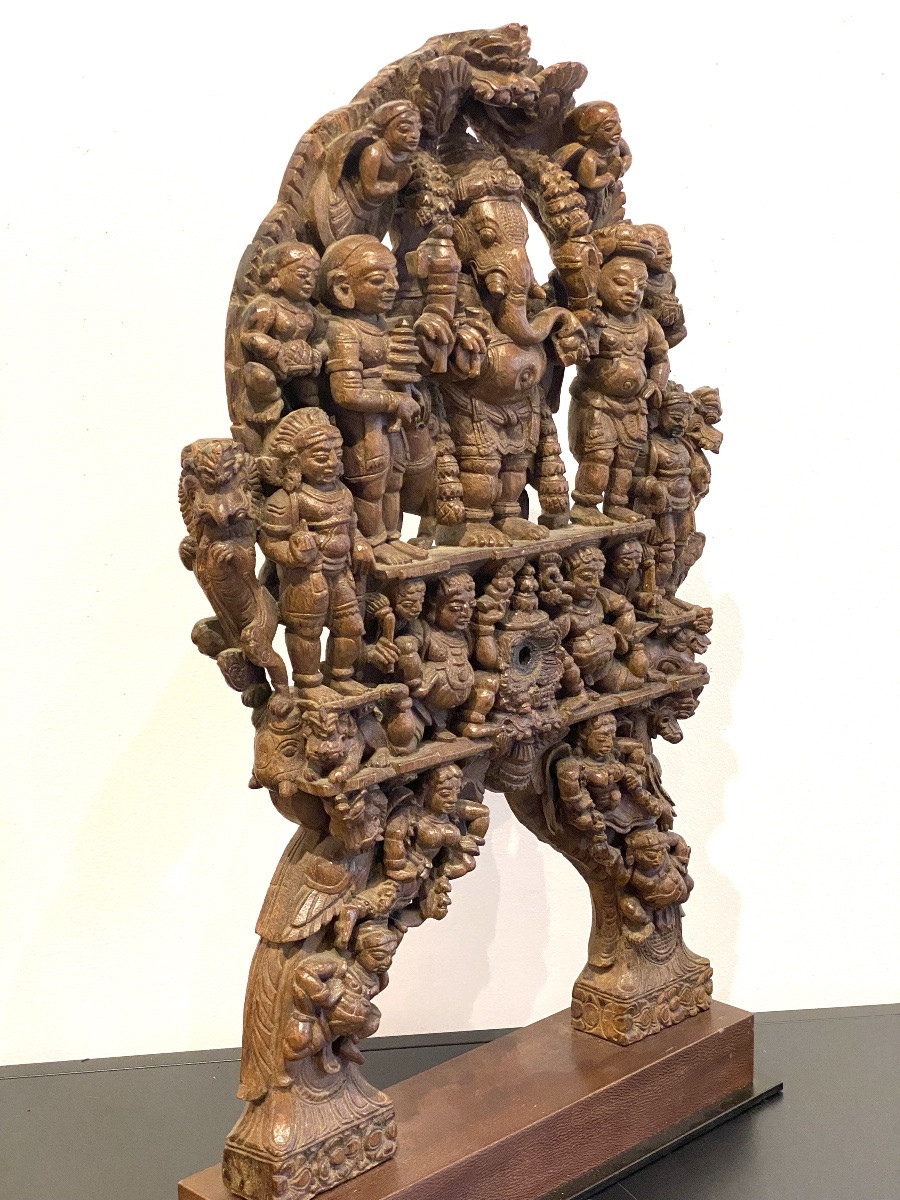


Kavadi, Traditional Sculpture From South India, Late 19th Century
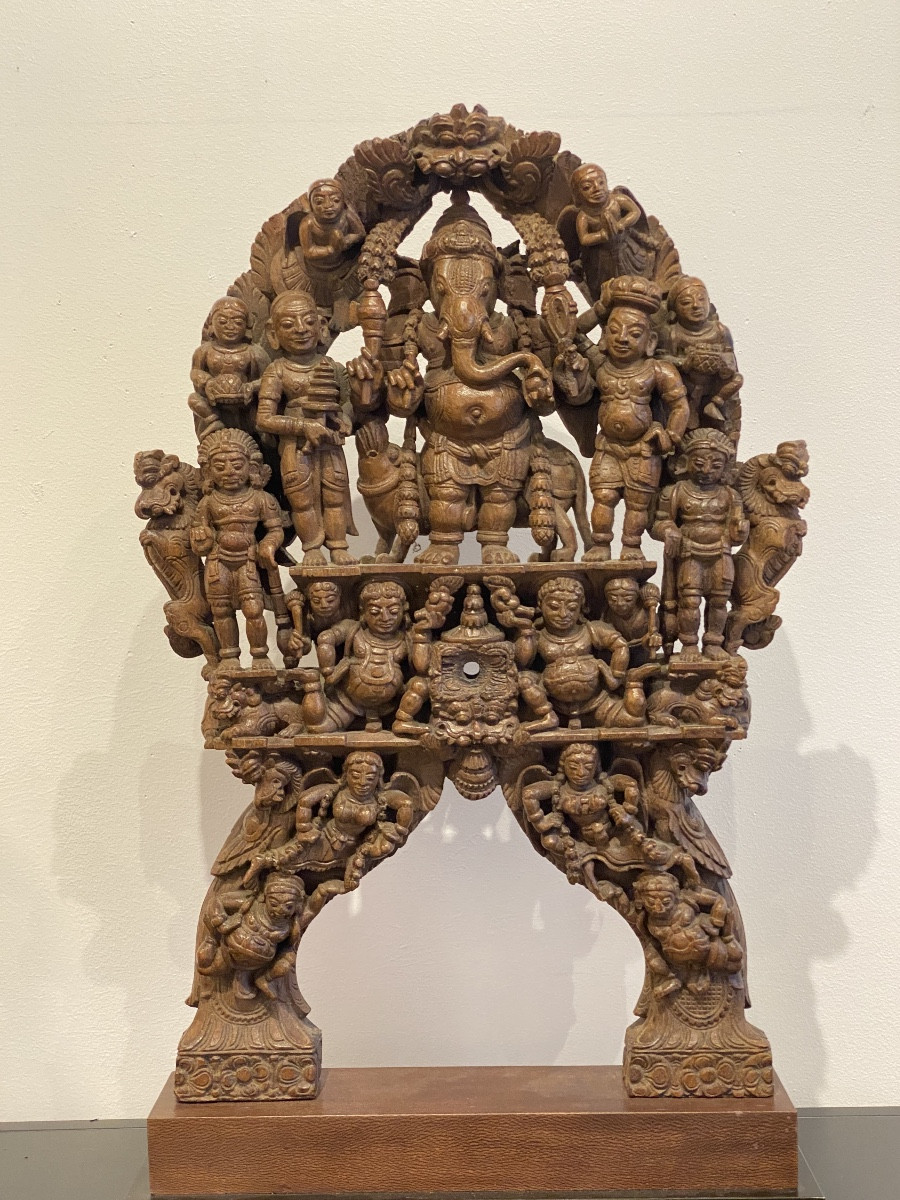
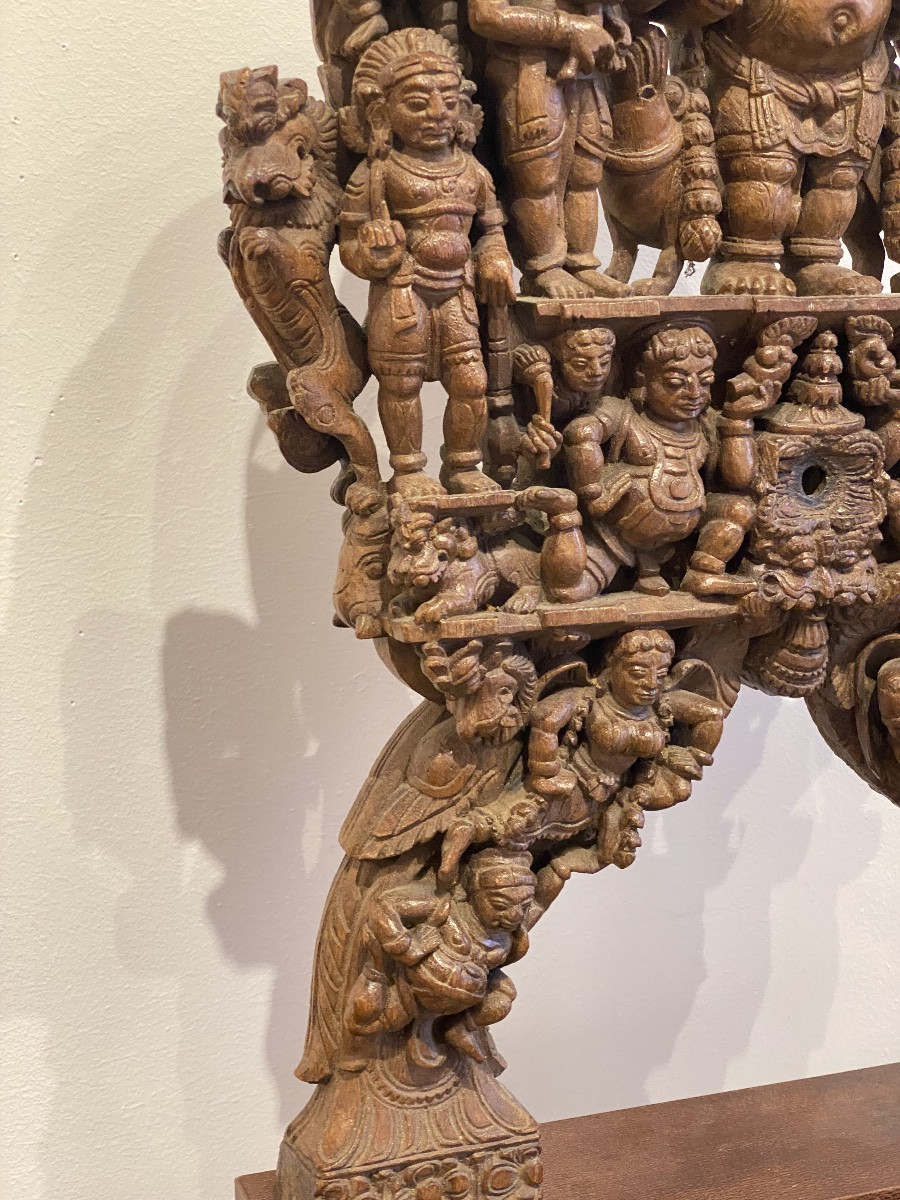
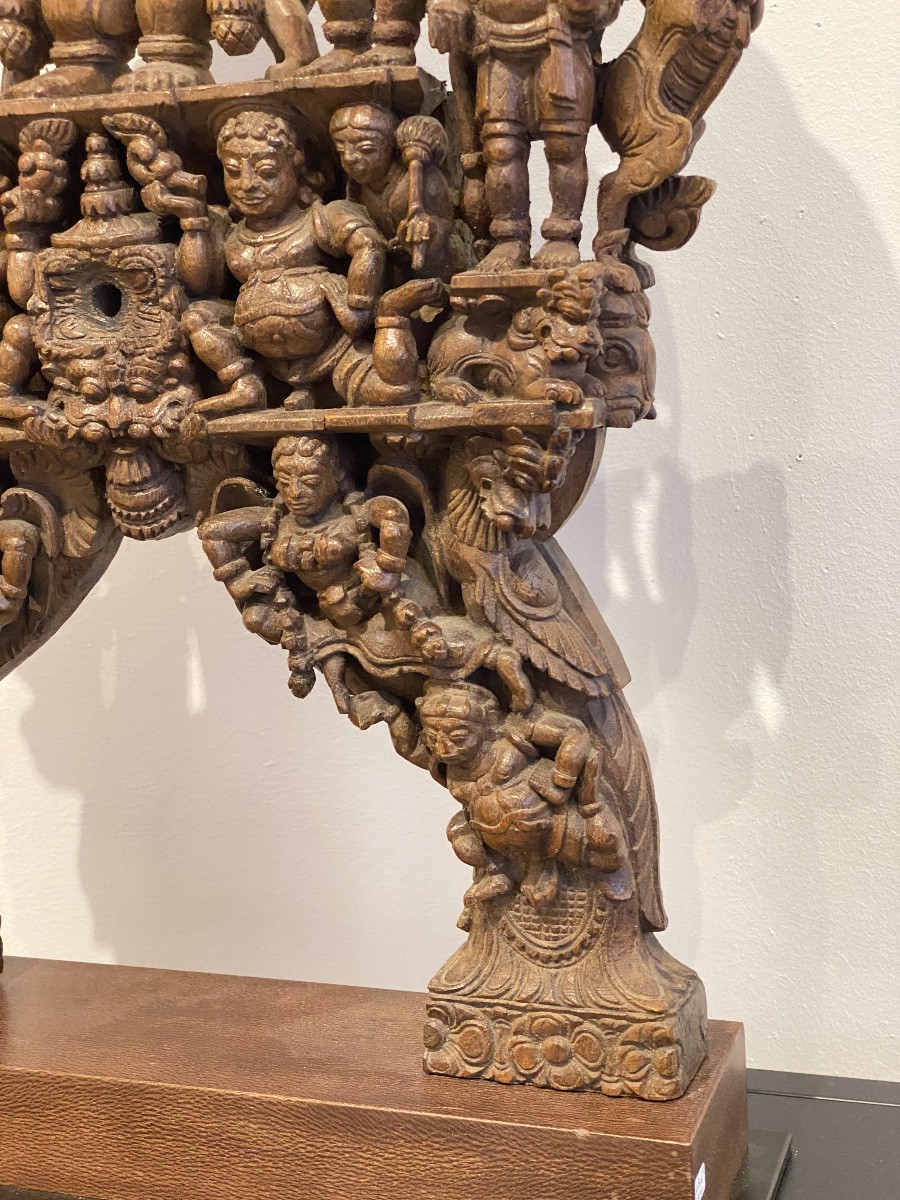
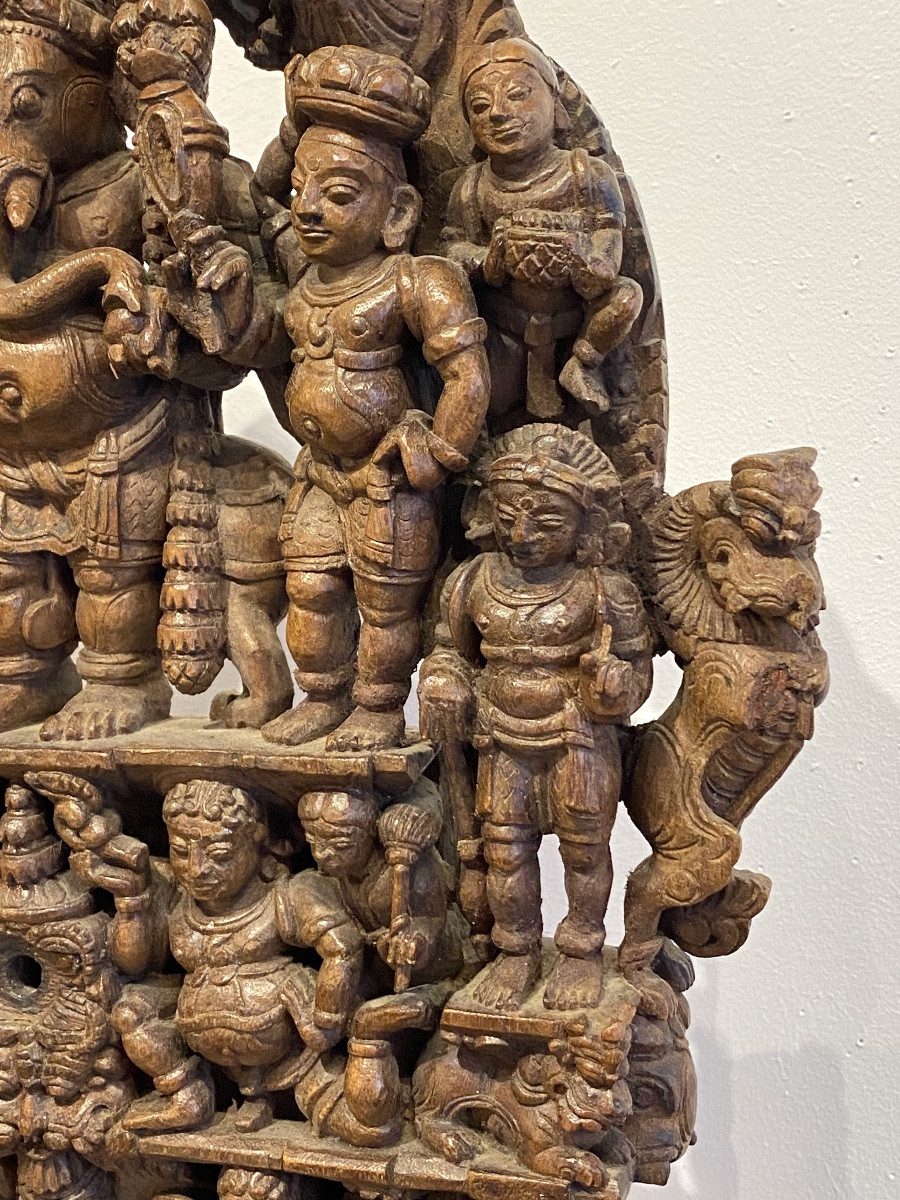
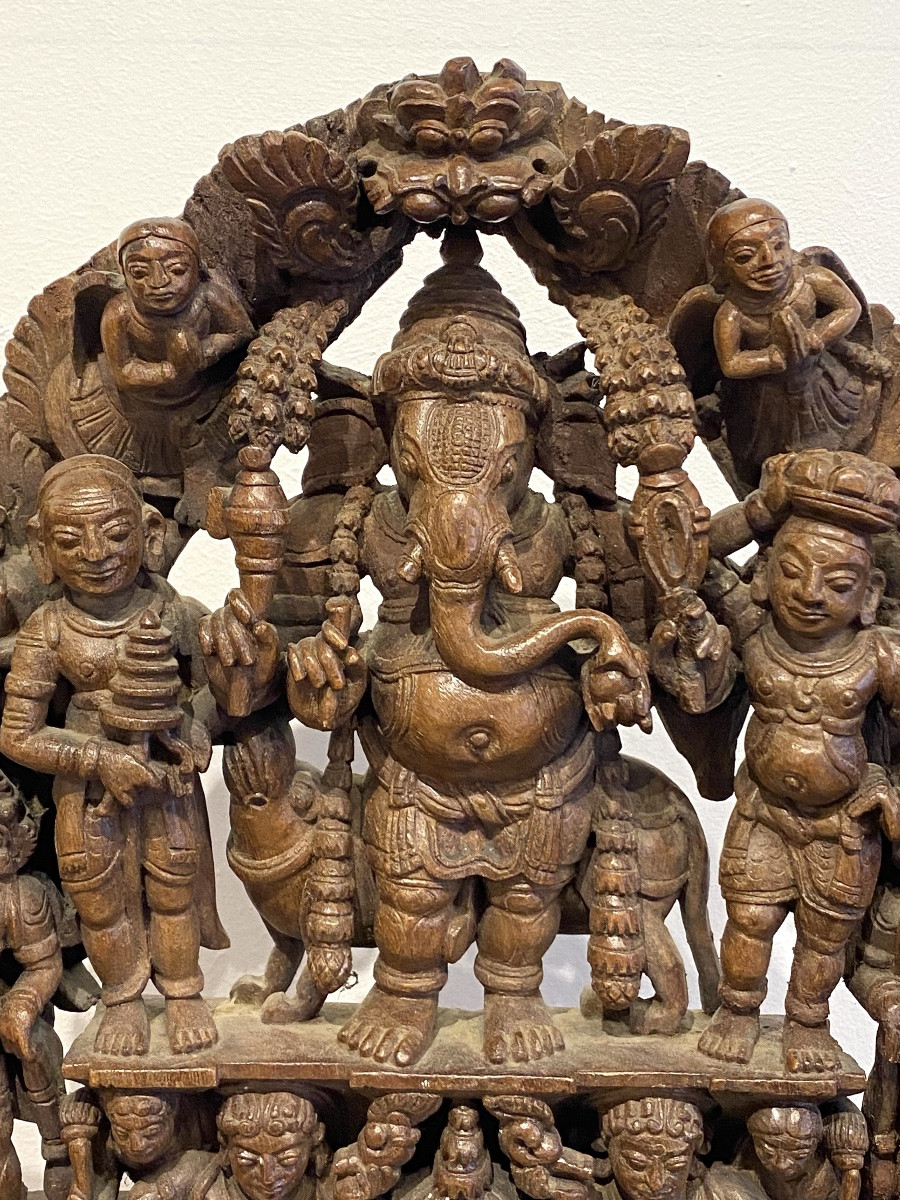
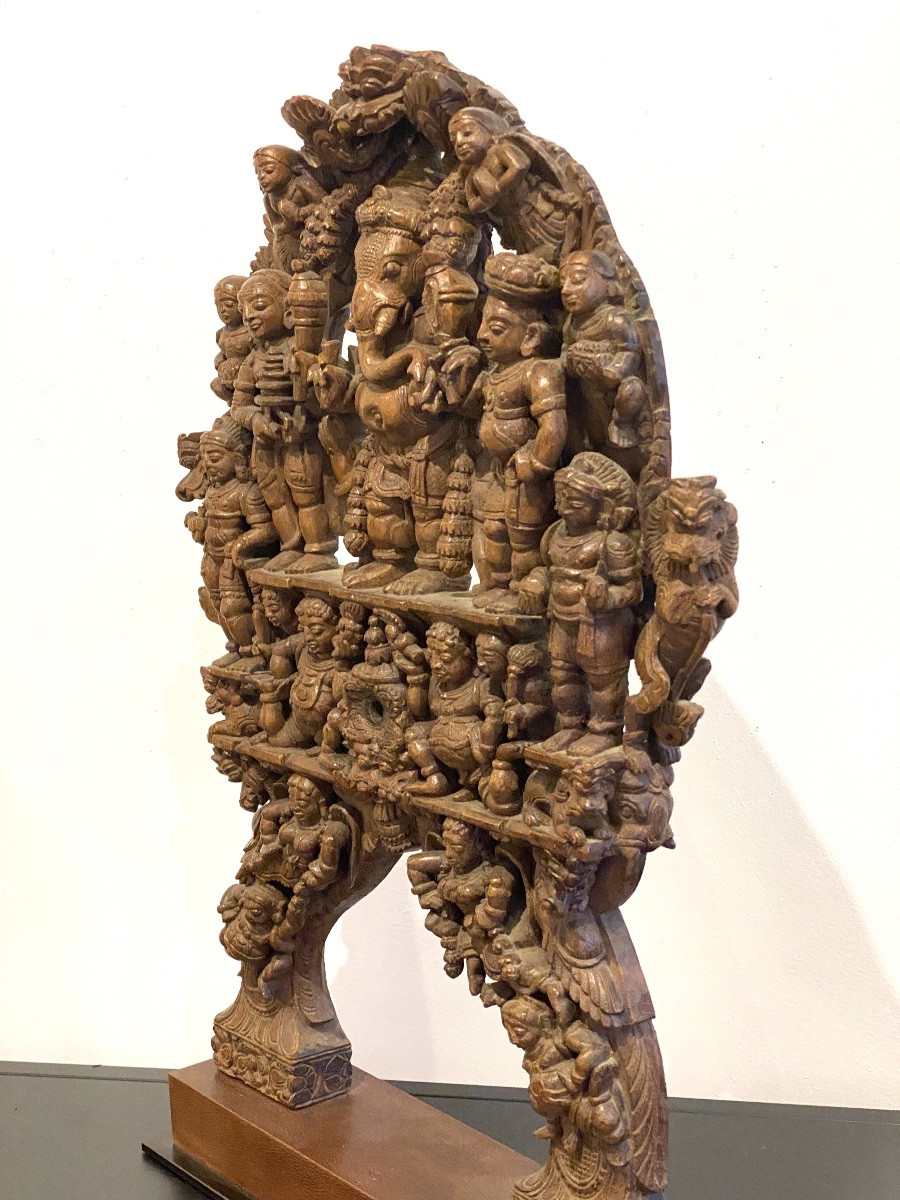
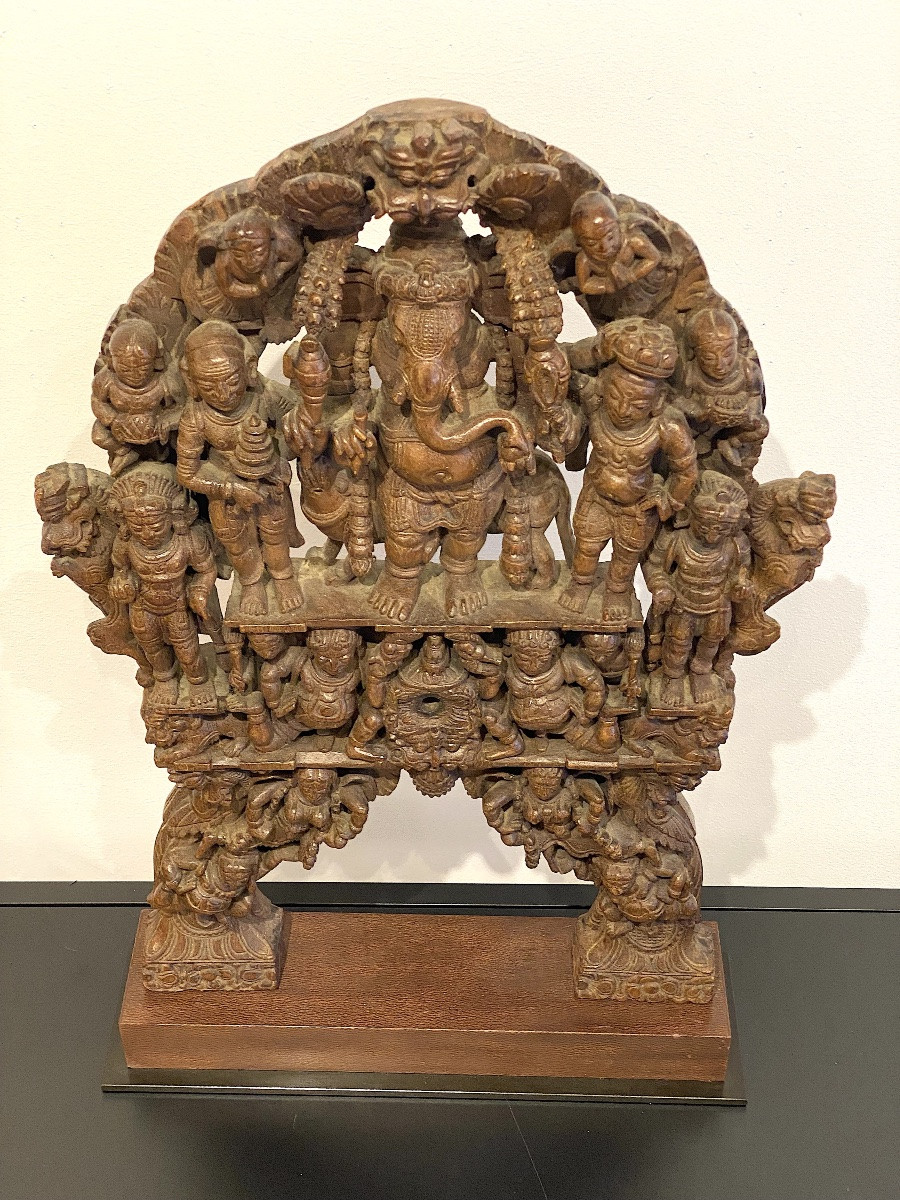
The depiction is very rich, featuring numerous figures: makaras, lions, dancers, bearers, and also suggesting a protective role. Used during religious festivals and processions, this ancient wooden panel carved in bas-relief is of Indian origin, more specifically from Tamil Nadu (South India). It is a piece of a Kavadi (also called a Kavati). This is a Tamil term for a pole (often a simple bamboo pole) supported on the shoulder or neck, from which balanced loads are suspended at its ends. Kavati also derives from Kavata in Sanskrit, meaning a door (specifically the door leaf). Indeed, this element resembles an archway, or even a Prabhavali arch, sheltering a deity within its center. It was placed on either side of a central beam, the whole forming the Kavadi. Here, Ganesh is honored. While the etymology refers to a common domestic use as a load-bearer, this type of Kavadi was intended for a purely religious function: the Hindu procession in honor of Sri Murugan. This practice continues today; however, these expensive and rare wooden panels are replaced by repoussé metal images or effigies. Thus, devotees carry their burdens during a long walk to the altar of the god. On this occasion, they test their faith and express their complete devotion. Tamil Nadu, jackfruit wood, dense style, solid arches. Height: 50 cm, 54.5 cm with a high-quality exotic wood base.
2 300 €
Period: 19th century
Style: Asian art
Condition: Excellent condition
Material: Solid wood
Height: 50 cm ( avec socle 54,5 cm )
Reference (ID): 1722156
Availability: In stock
Print