

Verdure Cérès Tapestry, Flemish Workshop In Oudenaarde, 1st Half Of The 17th Century
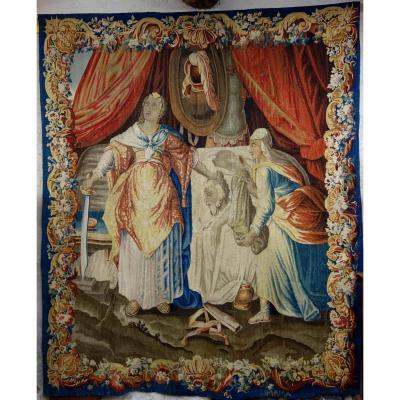
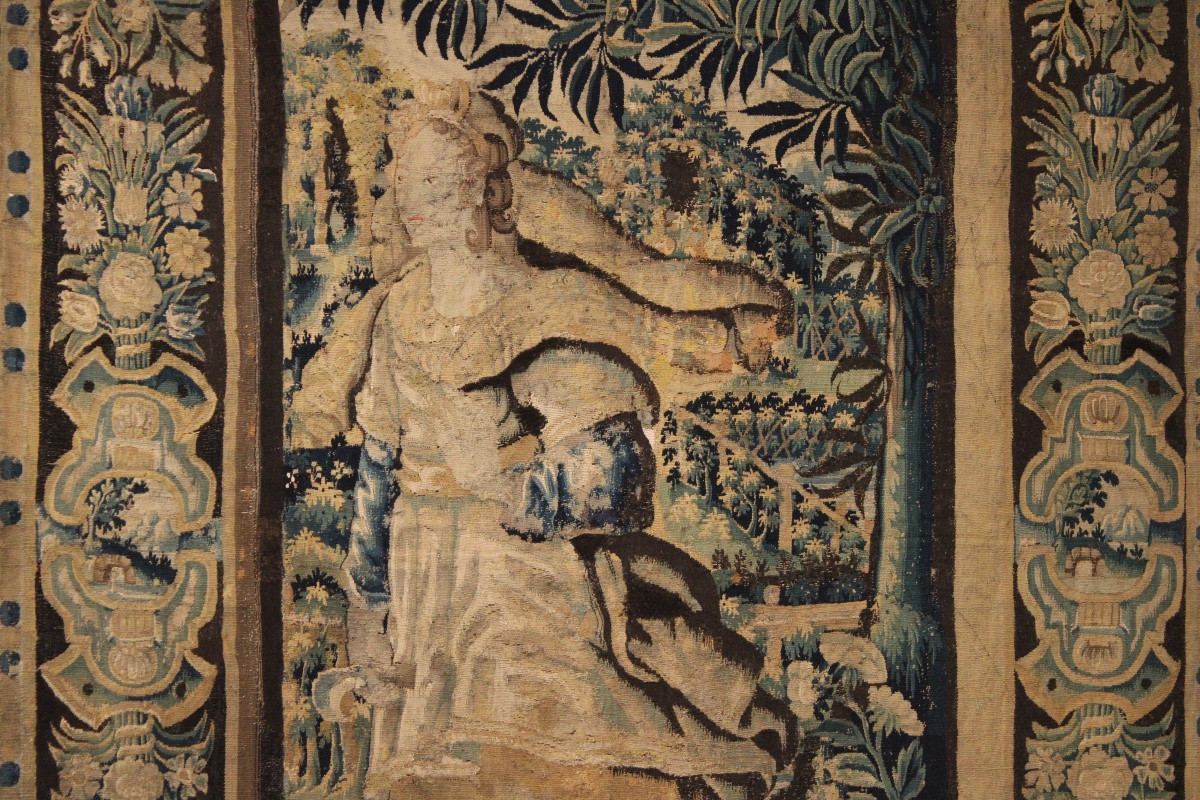
- Wool and silk tapestry animated by the goddess Ceres, work woven in a Flemish workshop in Oudenaarde in the first half of the 17th century.
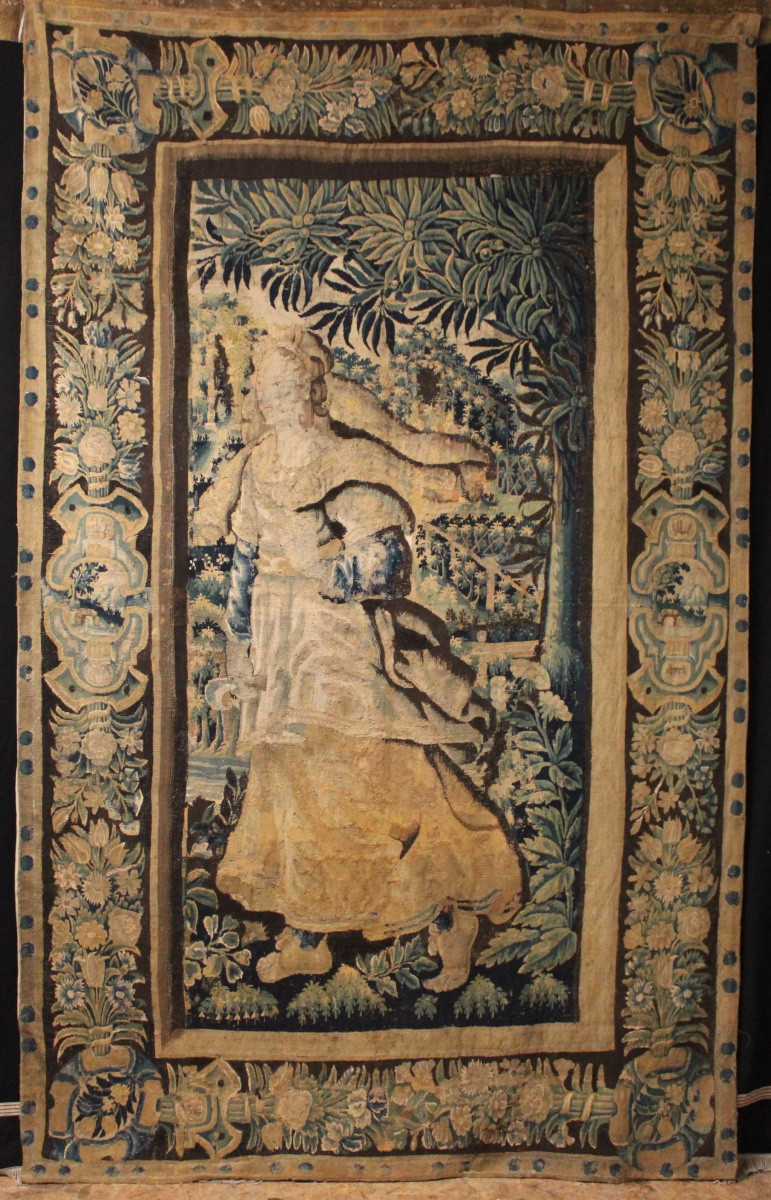
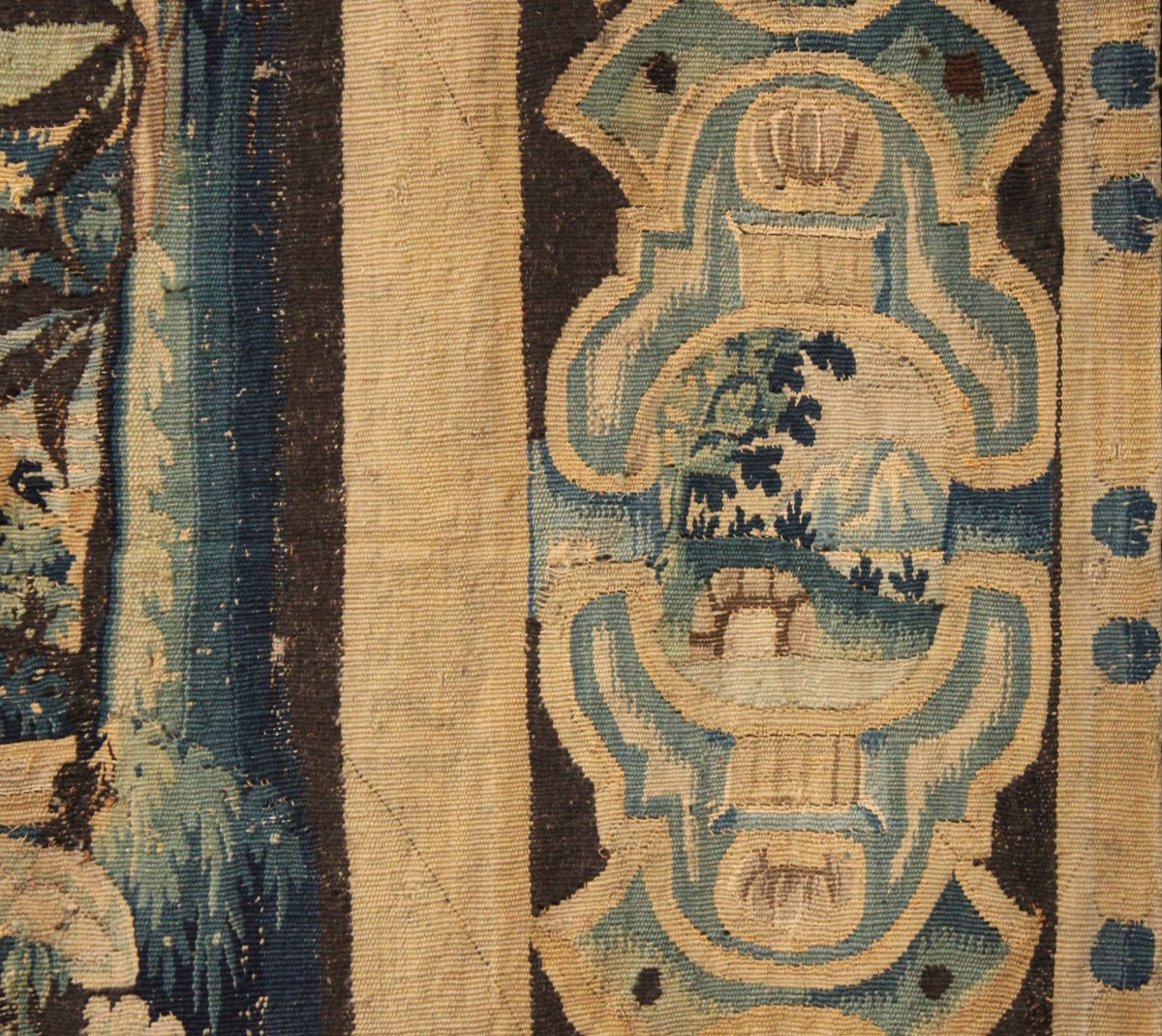
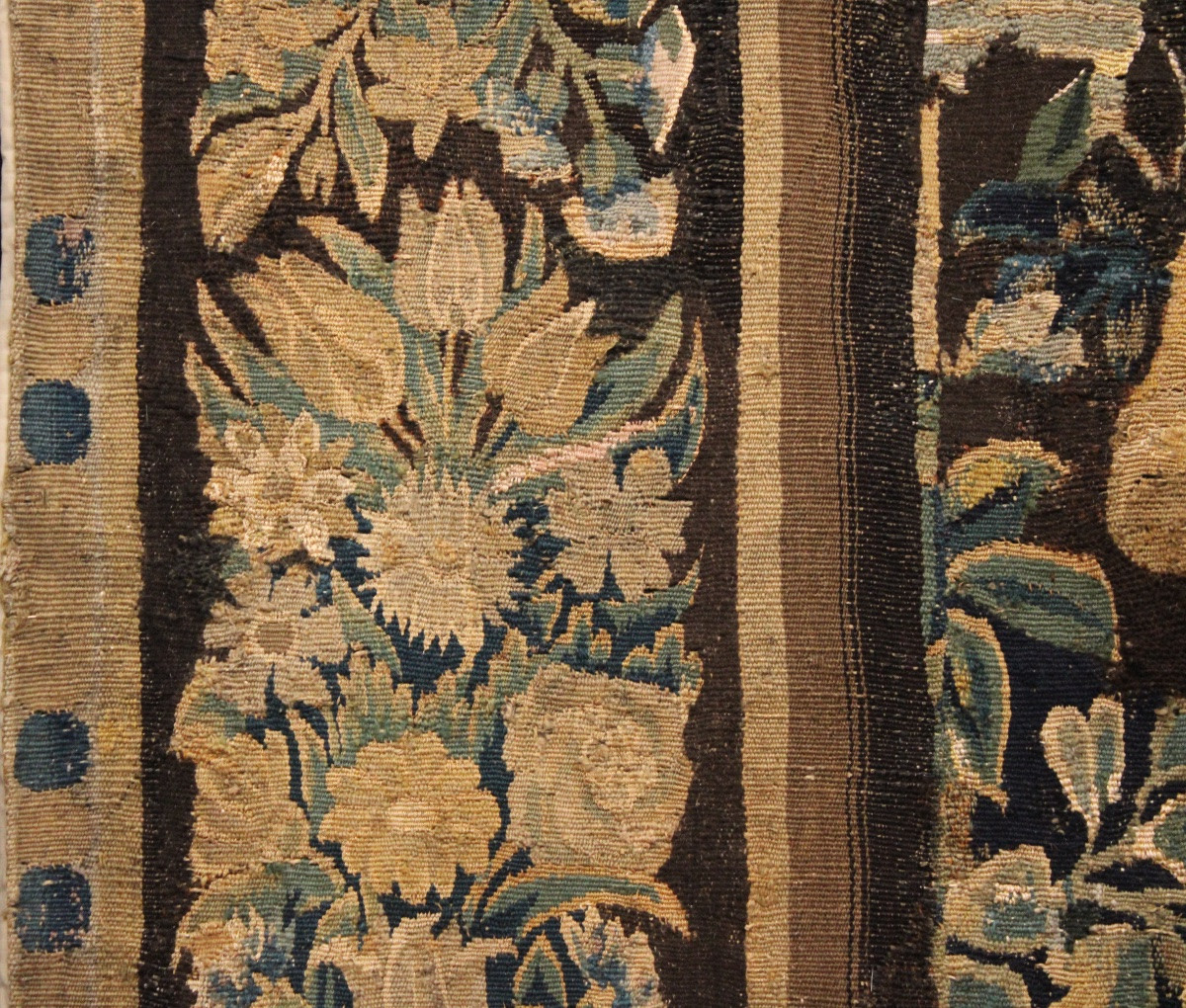
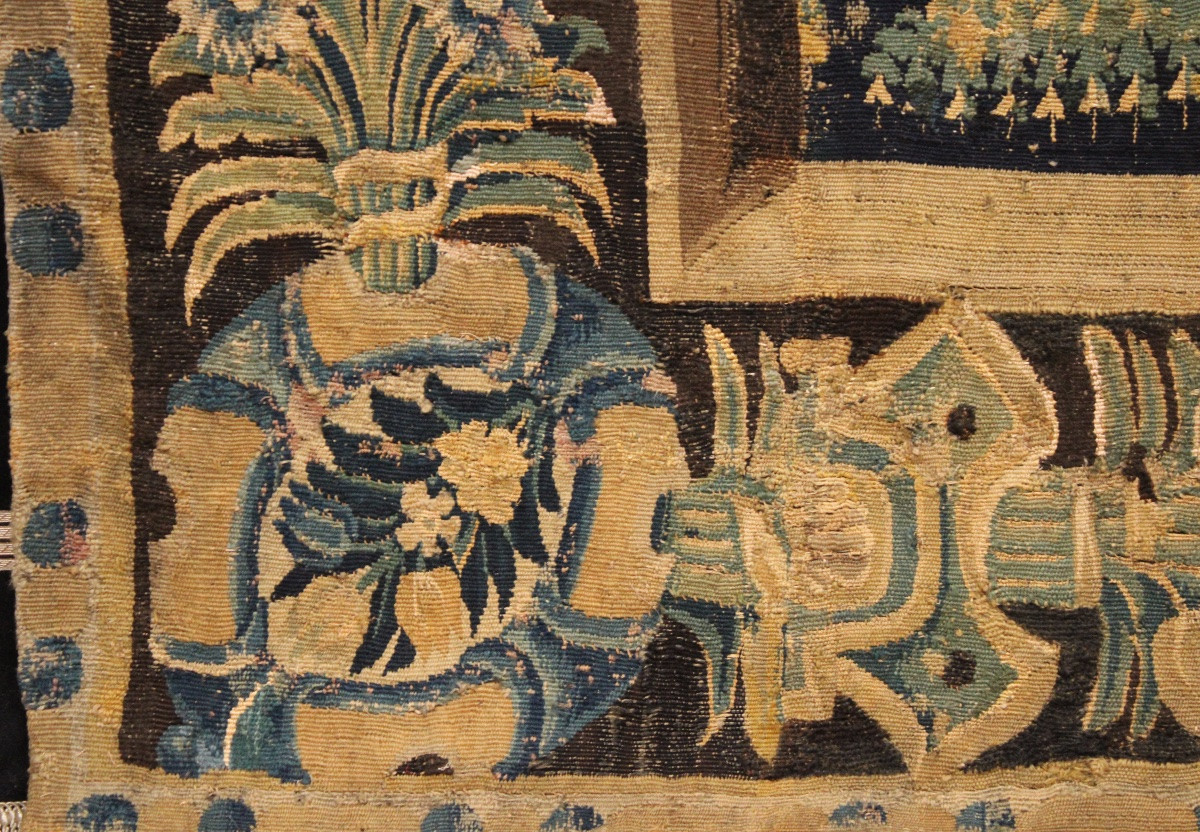
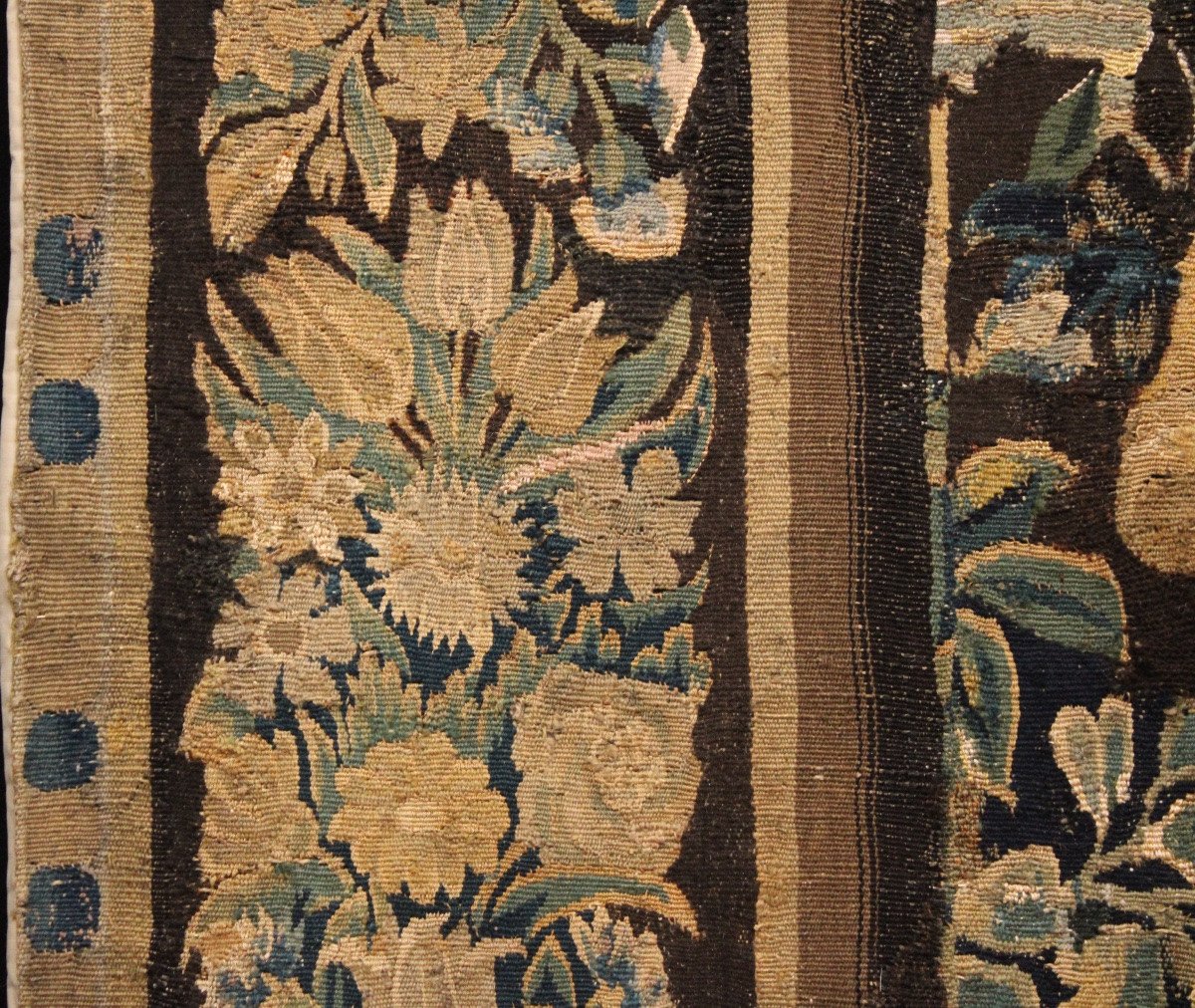
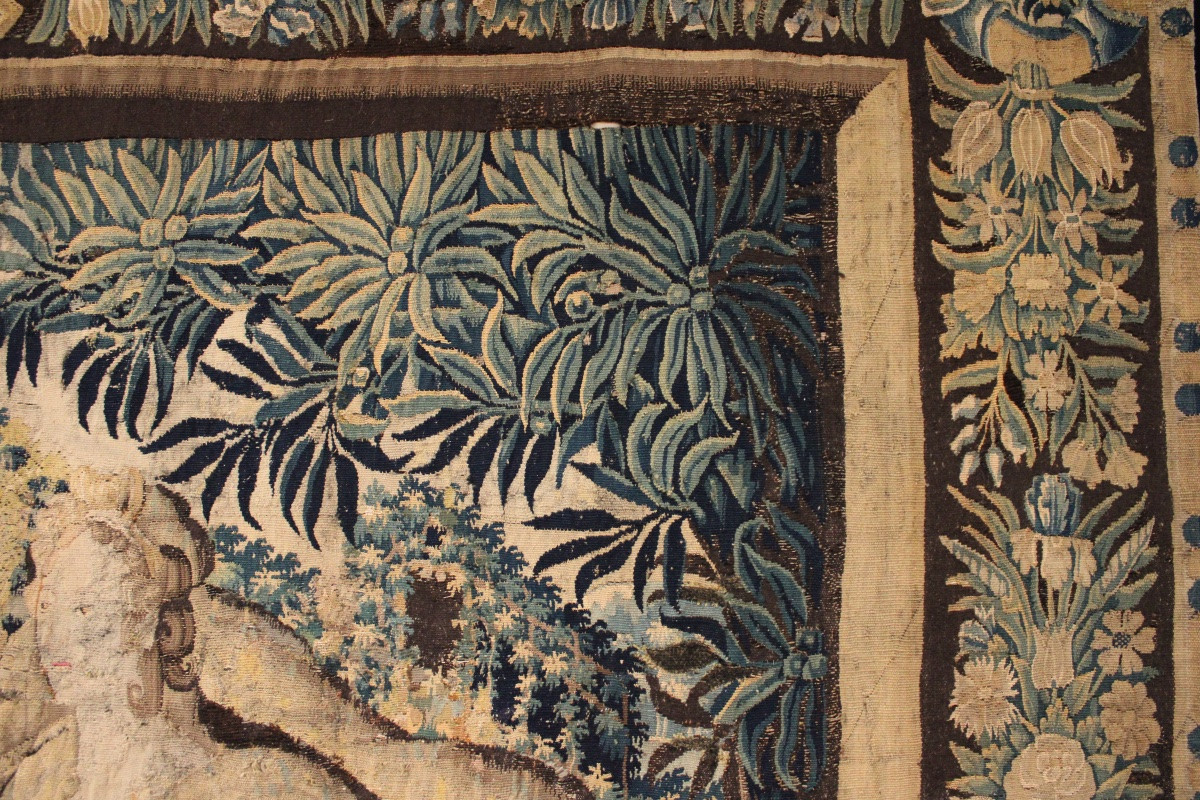
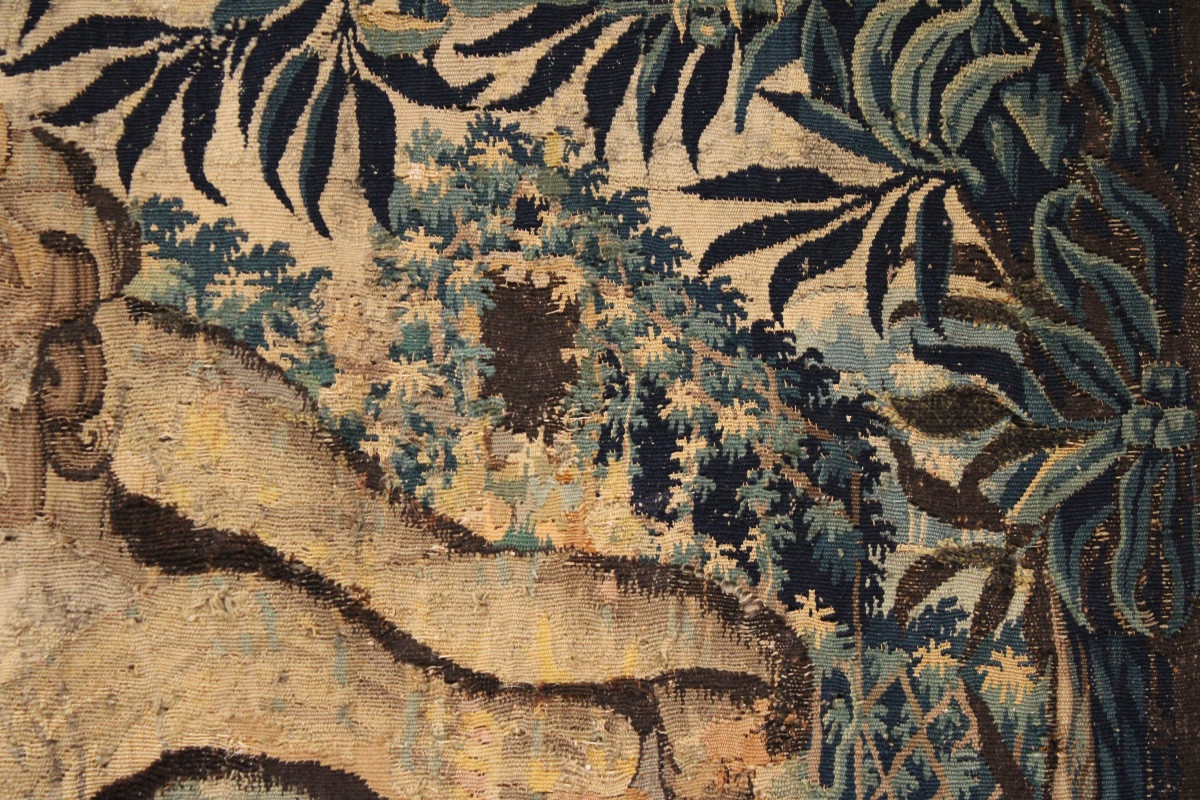
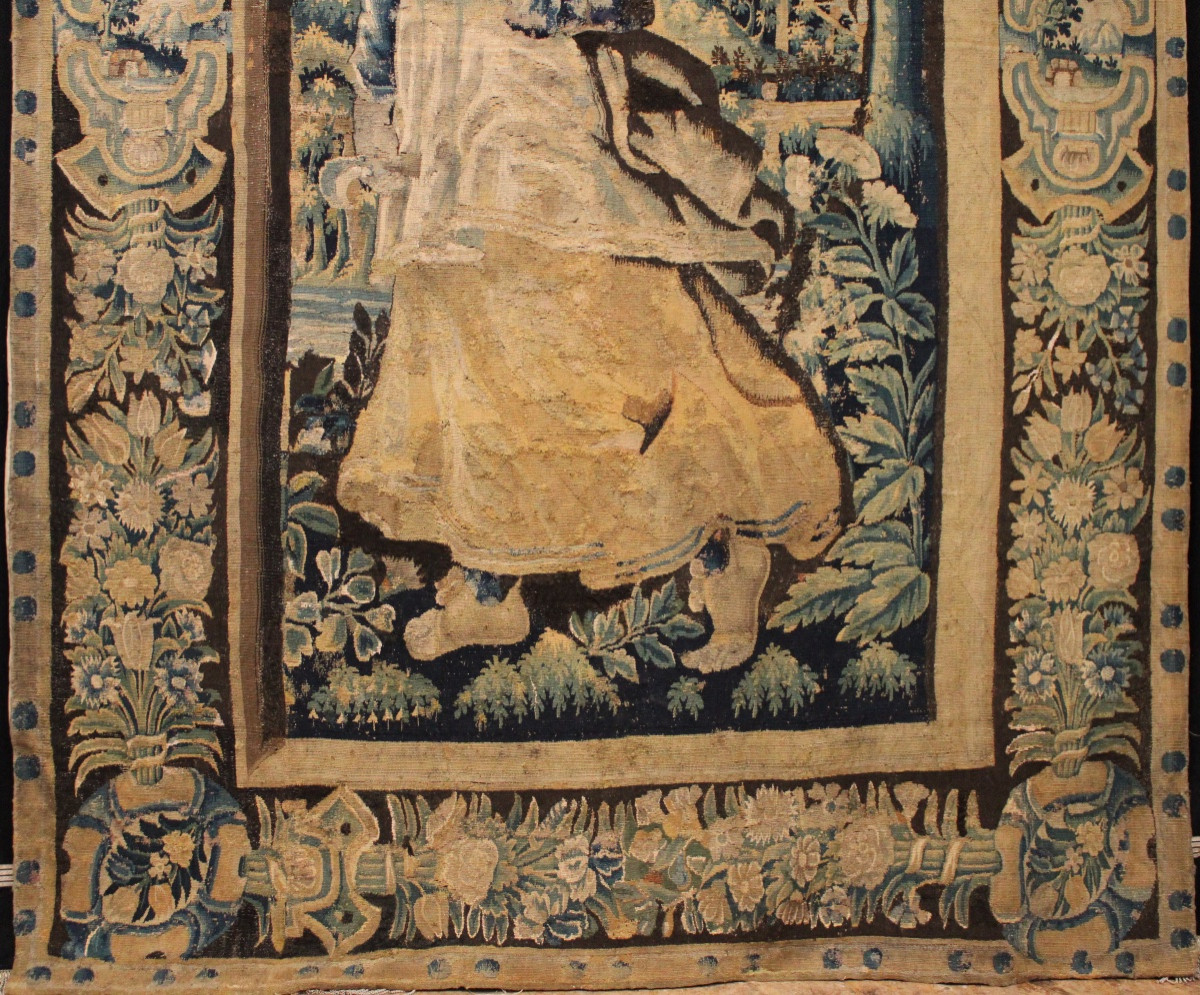
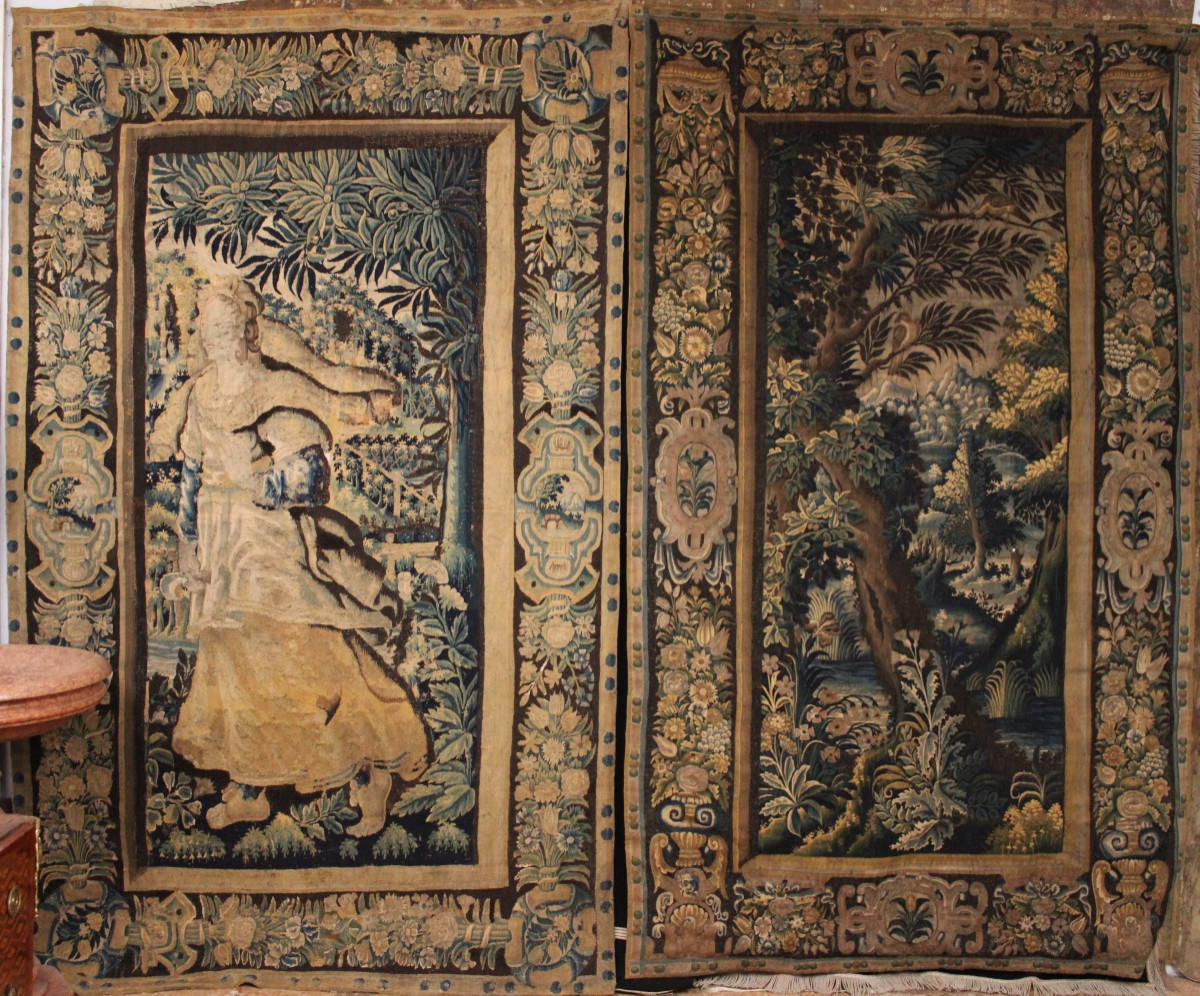
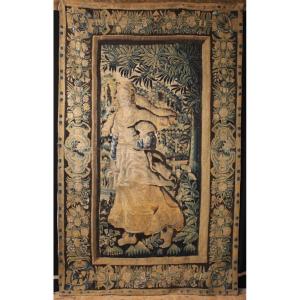
- The decoration illustrated by this weaving shows us a human-sized female figure walking through lush vegetation. This is the goddess Ceres, identifiable by the billhook she holds in her right hand. The exposed vegetation is stylized and spreads vividly across the entire central field. - The decorative aspect of this tapestry is enhanced by its border. This type of framing is characteristic of 17th-century weavings which, under the influence of Flanders, adopted a border that became increasingly important. Delicately drawn, the border is here decorated with bouquets, garlands and falling flowers (roses, tulips, etc.) and goldsmith elements, all on a brown background. The frame features elegant cartouches imitating wrought metal. Those at the four corners contain a medallion in which flowers bloom, while those in the middle of the side borders serve as a setting for miniature picturesque landscapes. The border itself is framed by a beaded frieze of the fusarolle type, completing the highly decorative character of this tapestry.
- The attribution to a Flemish workshop in Oudenaarde from the first half of the 17th century is attested by other weavings in a similar style referenced, such as the one present in the royal collections of England (The Royal Collection Trust) visible at this link.
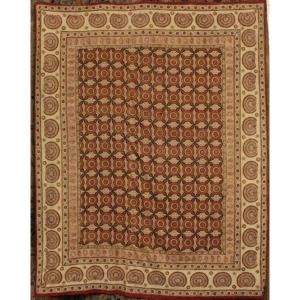
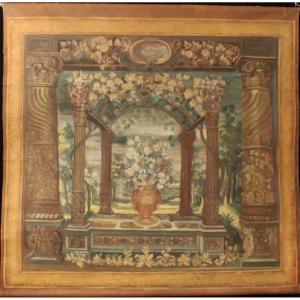
- Its format, its Flemish origin, its dating, its border are to be compared to another weaving presented by our Gallery. The two weavings can form a pair (see last photo, ID: 1434547).
- Good condition of conservation, wear and restorations are to be noted. Lined on the reverse, cord attachment system. Ready to hang.
- Dimensions: Height: 294 cm, Width: 184.5 cm
- The decoration illustrated by this weaving shows us a human-sized female figure walking through lush vegetation. This is the goddess Ceres, identifiable by the billhook she holds in her right hand. The exposed vegetation is stylized and spreads vividly across the entire central field. - The decorative aspect of this tapestry is enhanced by its border. This type of framing is characteristic of 17th-century weavings which, under the influence of Flanders, adopted a border that became increasingly important. Delicately drawn, the border is here decorated with bouquets, garlands and falling flowers (roses, tulips, etc.) and goldsmith elements, all on a brown background. The frame features elegant cartouches imitating wrought metal. Those at the four corners contain a medallion in which flowers bloom, while those in the middle of the side borders serve as a setting for miniature picturesque landscapes. The border itself is framed by a beaded frieze of the fusarolle type, completing the highly decorative character of this tapestry.
- The attribution to a Flemish workshop in Oudenaarde from the first half of the 17th century is attested by other weavings in a similar style referenced, such as the one present in the royal collections of England (The Royal Collection Trust) visible at this link.
- Its format, its Flemish origin, its dating, its border are to be compared to another weaving presented by our Gallery. The two weavings can form a pair (see last photo, ID: 1434547).
- Good condition of conservation, wear and restorations are to be noted. Lined on the reverse, cord attachment system. Ready to hang.
- Dimensions: Height: 294 cm, Width: 184.5 cm
6 800 €
Period: 17th century
Style: Renaissance, Louis 13th
Condition: Condition of use
Material: Wool
Width: 184,5 cm
Height: 294 cm
Reference (ID): 1632102
Availability: In stock
Print