THIS OBJECT WAS SOLD
Moud Iran Rug 249 X 199 Cm

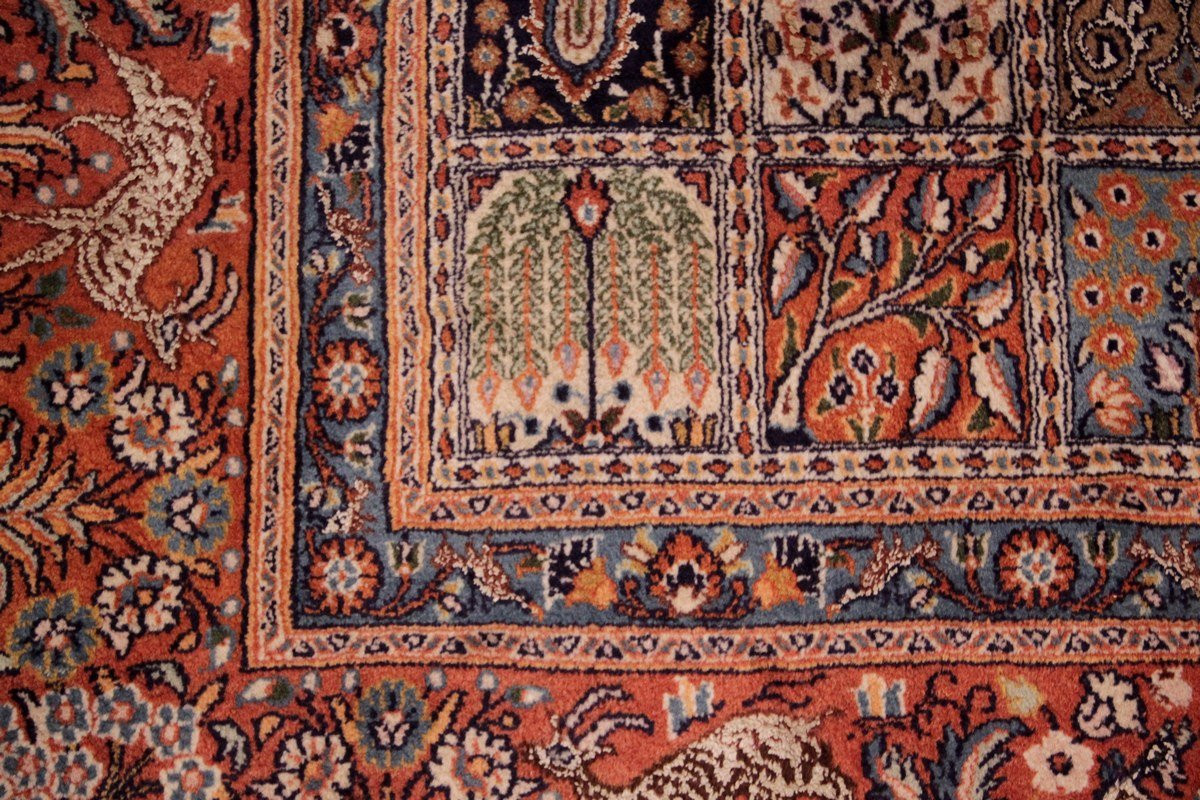

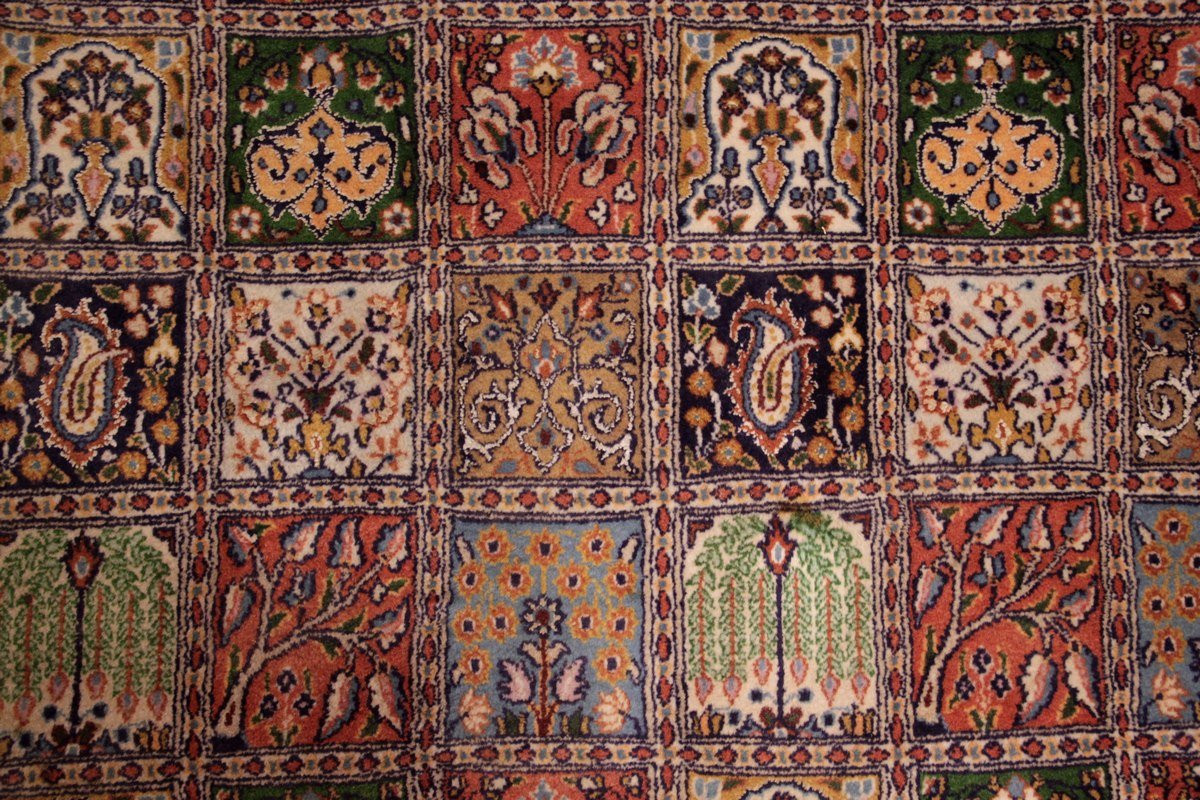




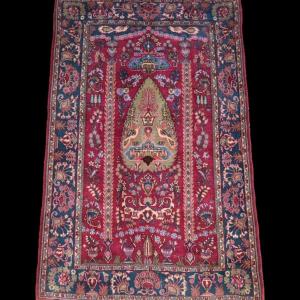
Iranian wool and silk rug (1%), circa 1980. Very good condition. Beautifully made. Nuances in the colors and patina.
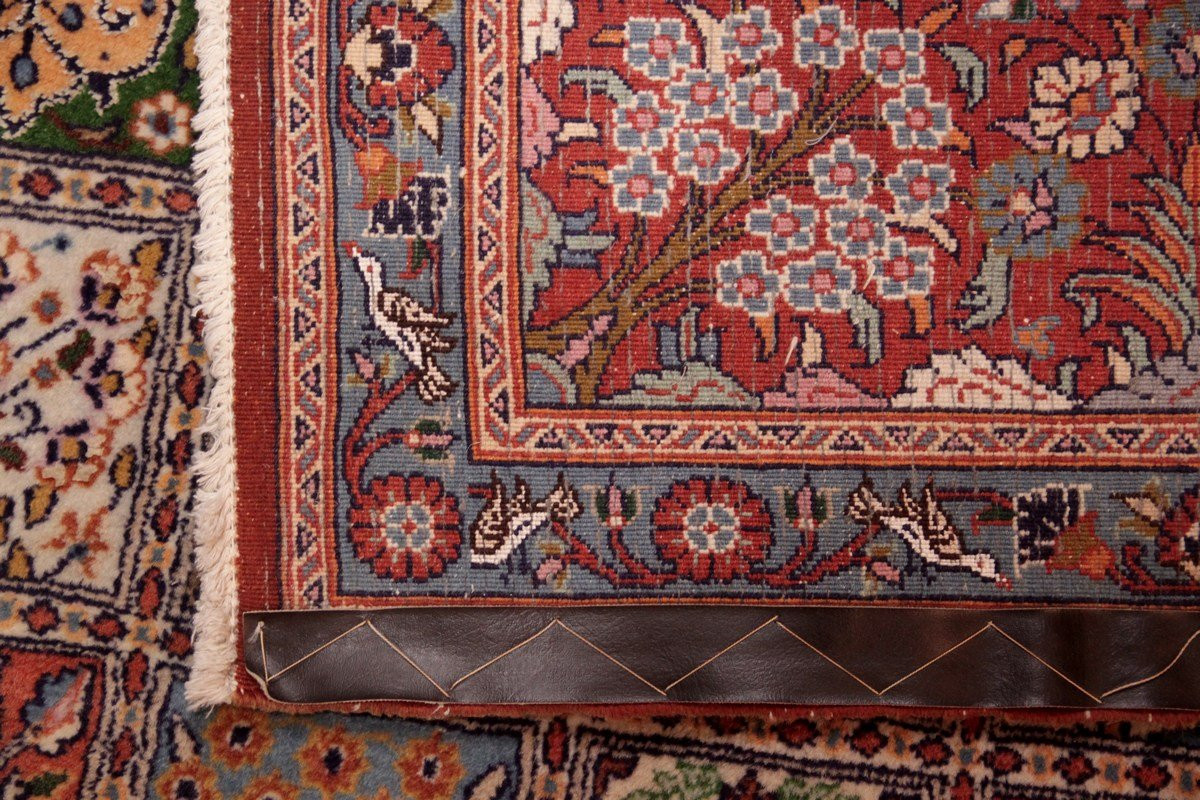
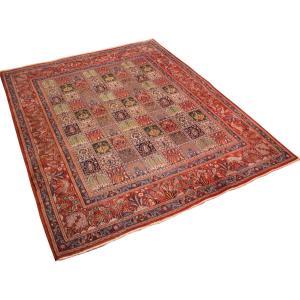
Traditional box-weave moud, inserting elegant motifs such as weeping willows, trees, botehs*. The main border, on an orange background, features motifs of birds, butterflies and deer. The göl-e-bölbül motif (the nightingale and the flower) is found in the small blue borders, which surround the main border. A lot of attention has been paid to the making of this rug. Please note: two small, discreet stains (see photos).
Rugs from Khorasan, Northeast Iran, are among the most appreciated creations by rug lovers. The "garden" or "four seasons" motif, which was originally made on the "tabriz" during the Safavid dynasty (1501-1732), and more precisely during the reign of Shah Abbas (1588-1629), is found on the "bakthiar", the "ghoum" as well as on the "moud".
*Boteh: An ancient motif with different meanings. It can represent the transformation of Zoroaster into a cypress, symbol of eternity, but also into a drop of water, a palm tree, or a tree. The term 'boteh' means "flowering bush" in Persian. There is a similarity with yin and yang.
Free delivery by Chronopost for France and Europe. Do not hesitate to contact us by phone or email. (We ship our rugs and kilims by Chronopost or Colissimo, at our expense (up to 30 kg) in mainland France and Europe).
Traditional box-weave moud, inserting elegant motifs such as weeping willows, trees, botehs*. The main border, on an orange background, features motifs of birds, butterflies and deer. The göl-e-bölbül motif (the nightingale and the flower) is found in the small blue borders, which surround the main border. A lot of attention has been paid to the making of this rug. Please note: two small, discreet stains (see photos).
Rugs from Khorasan, Northeast Iran, are among the most appreciated creations by rug lovers. The "garden" or "four seasons" motif, which was originally made on the "tabriz" during the Safavid dynasty (1501-1732), and more precisely during the reign of Shah Abbas (1588-1629), is found on the "bakthiar", the "ghoum" as well as on the "moud".
*Boteh: An ancient motif with different meanings. It can represent the transformation of Zoroaster into a cypress, symbol of eternity, but also into a drop of water, a palm tree, or a tree. The term 'boteh' means "flowering bush" in Persian. There is a similarity with yin and yang.
Free delivery by Chronopost for France and Europe. Do not hesitate to contact us by phone or email. (We ship our rugs and kilims by Chronopost or Colissimo, at our expense (up to 30 kg) in mainland France and Europe).
Explore similar pieces and discover your ideal find:
Rugs, Carpets