



Mignon: 18th Century Gold, Mother-of-pearl And Steel Folding Knife. Orléans, Louis XVI
Artist: Mignon
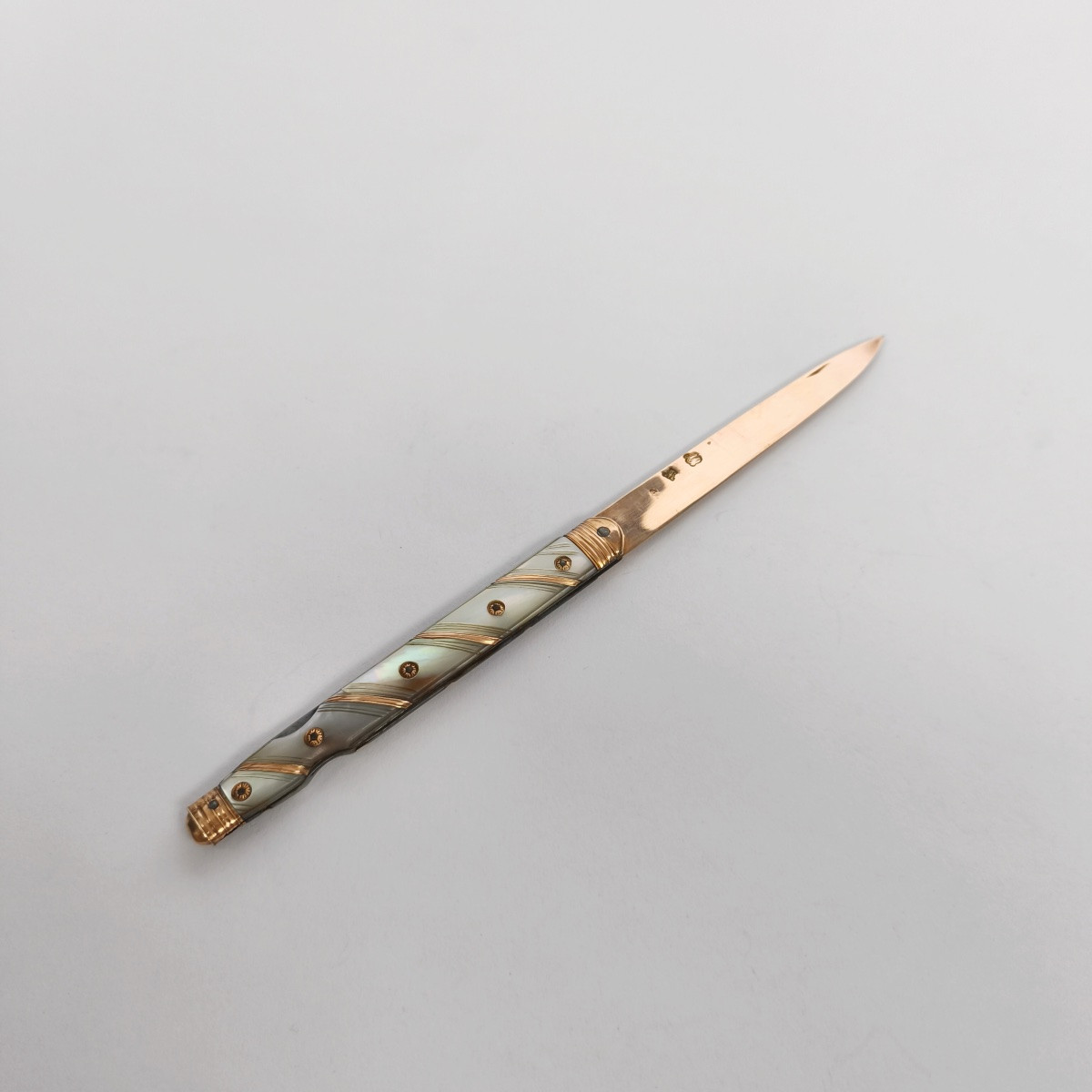
Magnificent 18th-century double-bladed travel knife.
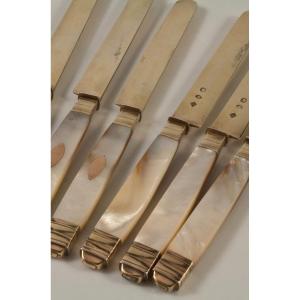
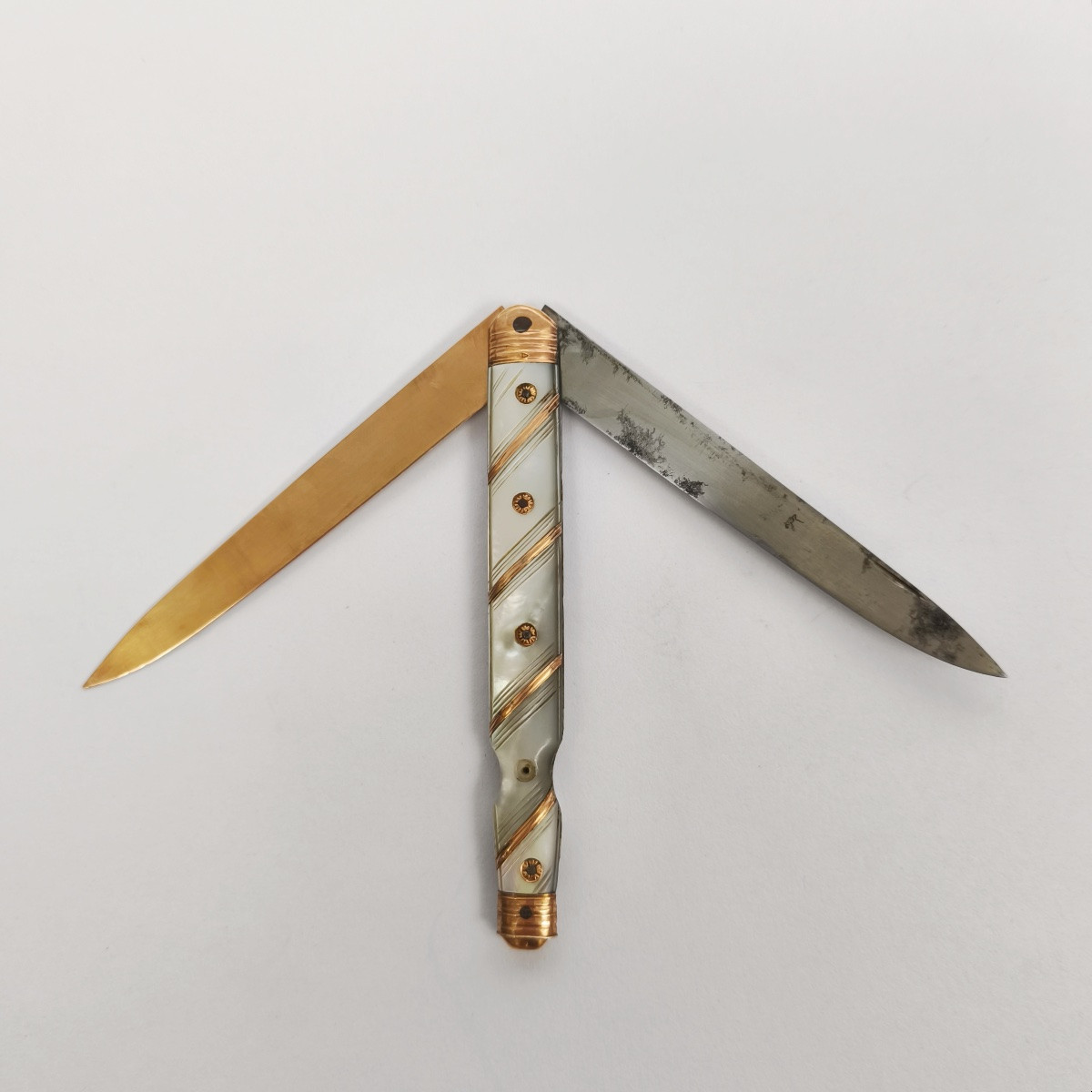
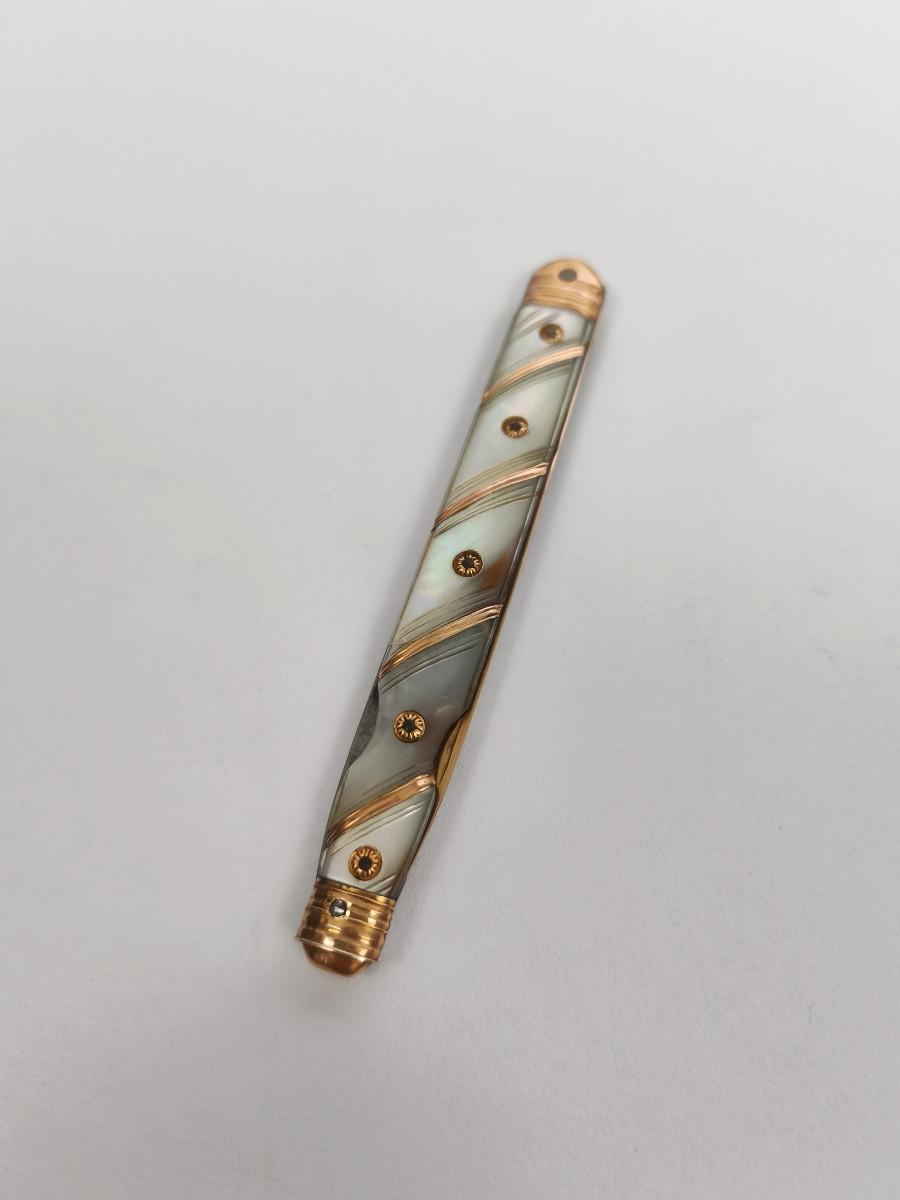
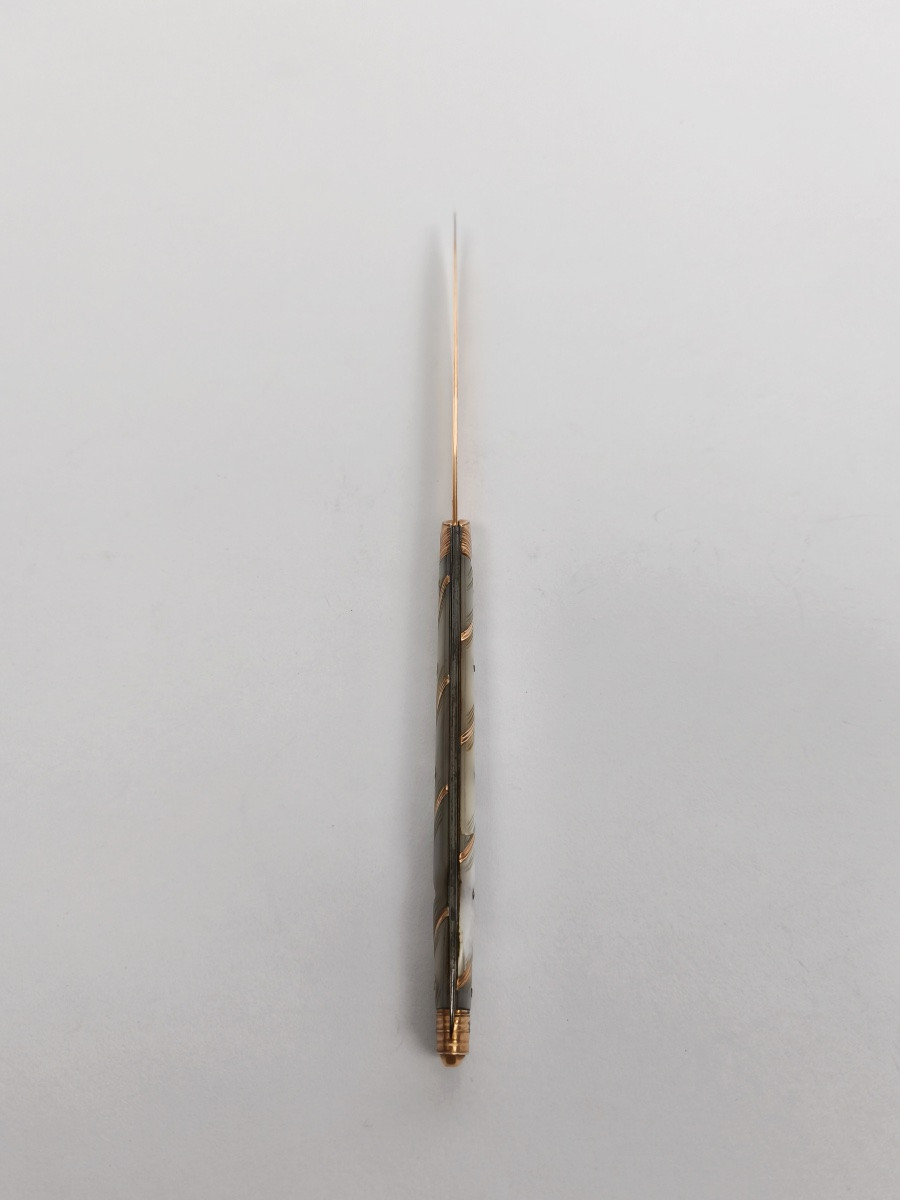
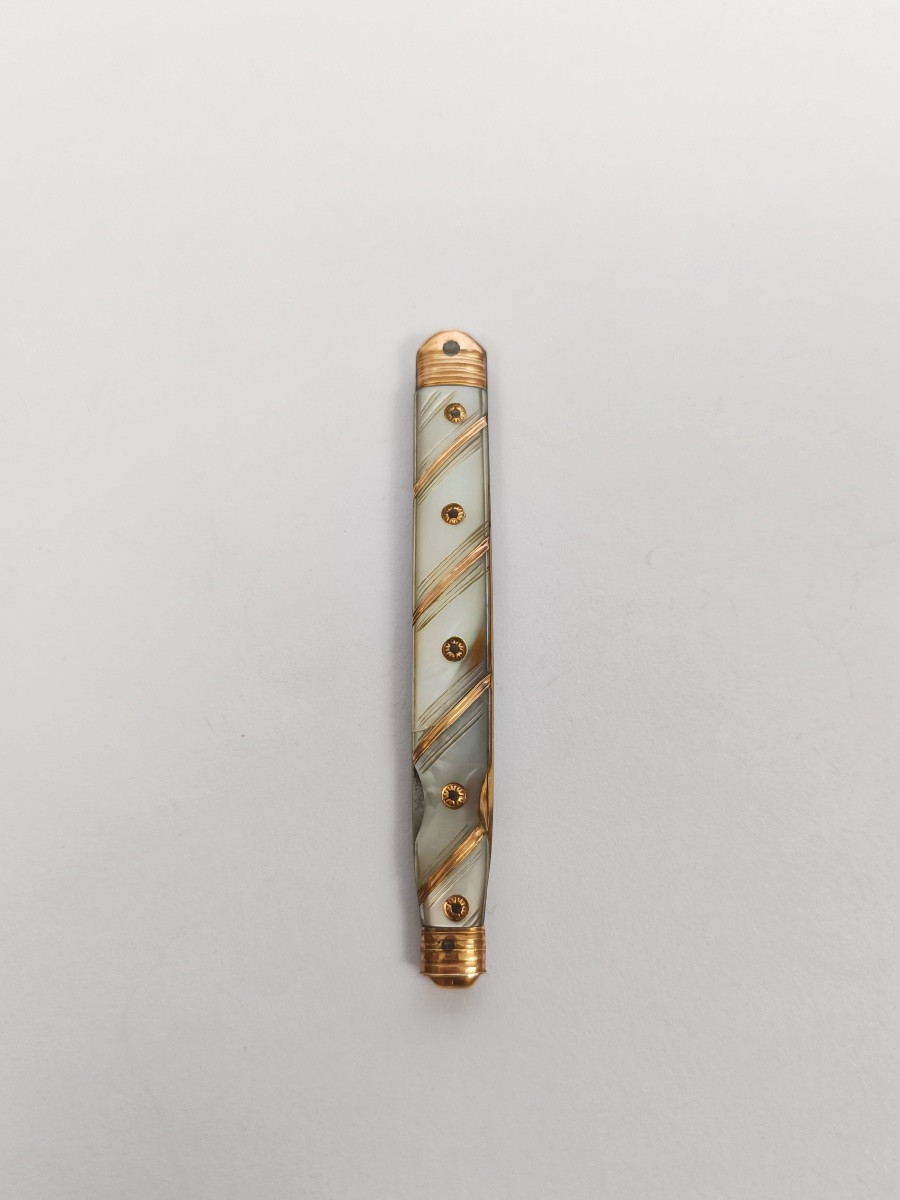
The handle is made of mother-of-pearl, richly trimmed in gold: with alternating rivets decorated with gold flowers.
The 14k gold bolsters have an unusual, more geometric shape, heralding the 19th century's departure from the classic shell shapes.
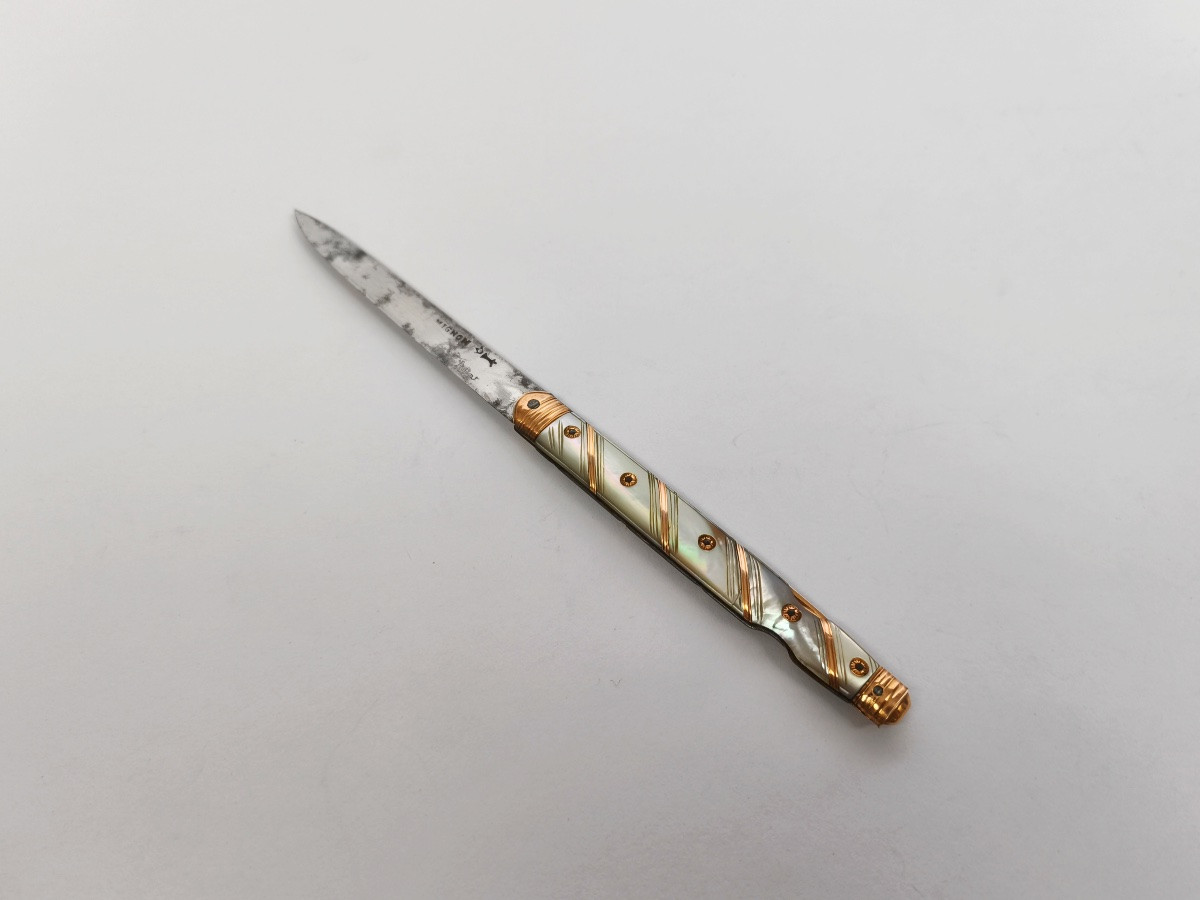
The knife has two blades, one steel for serving dishes, the other gold for fruit. Steel was not used for fruit because it oxidized and blackened with acidity. The spine of the blades is finely grooved.
The blades open like a compass, on either side of the handle. The name of this knife comes from Monsieur Berge, inventor of this system, which appears simple but requires great skill to adjust the blades relative to each other in the handle.
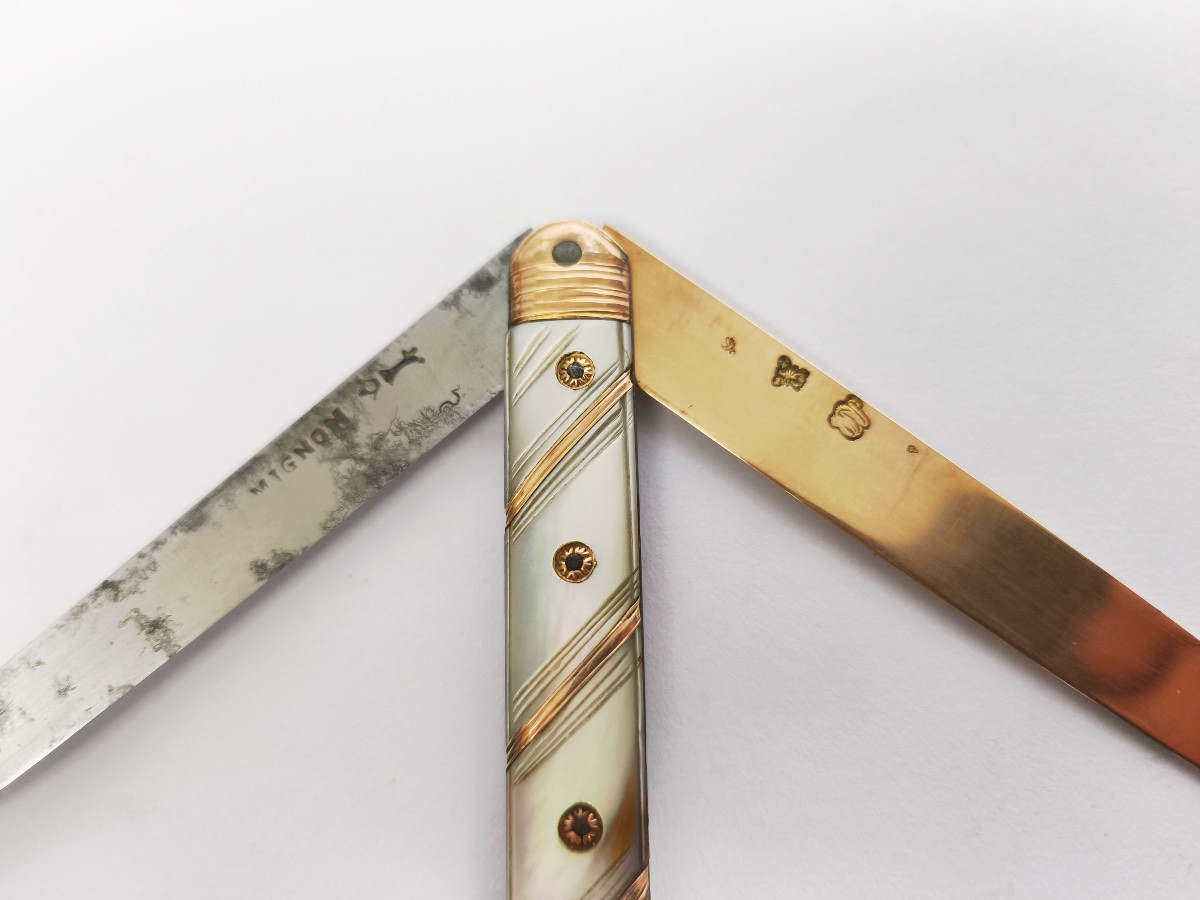
The steel blade is marked with the cutler's name "Mignon" along with his trademark, a crowned boot.
The knife is hallmarked on the gold blade:
. Charge mark for small gold works in Orléans: intertwined letters M and O.
. Jurande mark from the 1784 reform, a crayfish (?) with the year 84. I have not been able to identify the corresponding community.
. Discharge mark for very small gold works, used in Paris between 1780 and 1789: an eyelet. This Parisian mark probably served as a countermark. It is also found on the rear bolster.
. A small fly-shaped mark, probably a Parisian countermark mark inscribed in 1789.
This is a superb piece, entirely original, made from precious materials, a testament to the art of living in the 18th century. The mother-of-pearl has a beautiful iridescence that contrasts wonderfully with the gold fittings. Such knives with a gold blade are rare and sought-after.
11.5 cm closed
21.5 cm open gold blade
40.67 grams
Superb condition. A hairline flaw in the mother-of-pearl, and one rosette is missing.
Hand-delivered in Paris or shipped by insured Colissimo.
France: €15
Europe: €20
Worldwide: €35
The handle is made of mother-of-pearl, richly trimmed in gold: with alternating rivets decorated with gold flowers.
The 14k gold bolsters have an unusual, more geometric shape, heralding the 19th century's departure from the classic shell shapes.
The knife has two blades, one steel for serving dishes, the other gold for fruit. Steel was not used for fruit because it oxidized and blackened with acidity. The spine of the blades is finely grooved.
The blades open like a compass, on either side of the handle. The name of this knife comes from Monsieur Berge, inventor of this system, which appears simple but requires great skill to adjust the blades relative to each other in the handle.
The steel blade is marked with the cutler's name "Mignon" along with his trademark, a crowned boot.
The knife is hallmarked on the gold blade:
. Charge mark for small gold works in Orléans: intertwined letters M and O.
. Jurande mark from the 1784 reform, a crayfish (?) with the year 84. I have not been able to identify the corresponding community.
. Discharge mark for very small gold works, used in Paris between 1780 and 1789: an eyelet. This Parisian mark probably served as a countermark. It is also found on the rear bolster.
. A small fly-shaped mark, probably a Parisian countermark mark inscribed in 1789.
This is a superb piece, entirely original, made from precious materials, a testament to the art of living in the 18th century. The mother-of-pearl has a beautiful iridescence that contrasts wonderfully with the gold fittings. Such knives with a gold blade are rare and sought-after.
11.5 cm closed
21.5 cm open gold blade
40.67 grams
Superb condition. A hairline flaw in the mother-of-pearl, and one rosette is missing.
Hand-delivered in Paris or shipped by insured Colissimo.
France: €15
Europe: €20
Worldwide: €35
2 140 €
Period: 18th century
Style: Louis 16th, Directory
Condition: Excellent condition
Material: Gold
Length: 21,5 cm
Reference (ID): 1575532
Availability: In stock
Print