


Rostrum/narwhal Tooth, 20th Century, Greenland
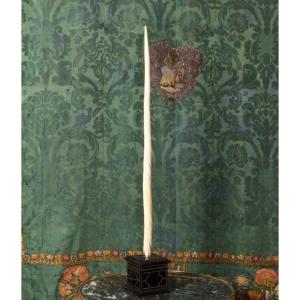
- Narwhal rostrum dating from the 20th century, country of origin: Greenland
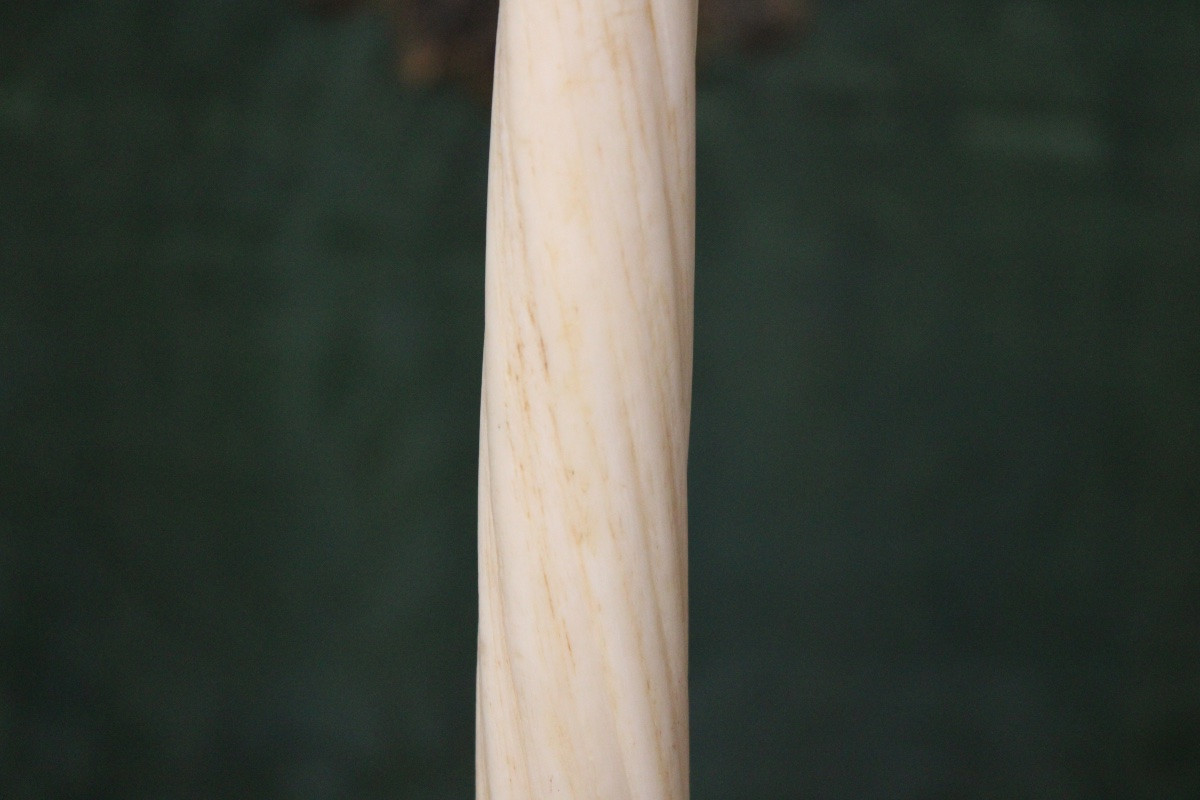
-This rostrum comes from a Narwhal, a cetacean living in the icy waters of the Arctic Ocean, rarely observed and known by the scientific name of "Monodon monoceros". The male of the species has a single tusk; it is a tooth, a modified upper left incisor. This helical tusk, describes a spiral turning to the left, which can reach up to seven meters long. This tusk, long and twisted, has given rise to many legends for centuries and became one of the centerpieces of cabinets of curiosities during the Renaissance. Nicknamed the "unicorn of the seas", the Narwhal was seen as an animal endowed with magical powers and many virtues were attributed to its tusk.
- Length: 88.5 cm. Base sold separately.
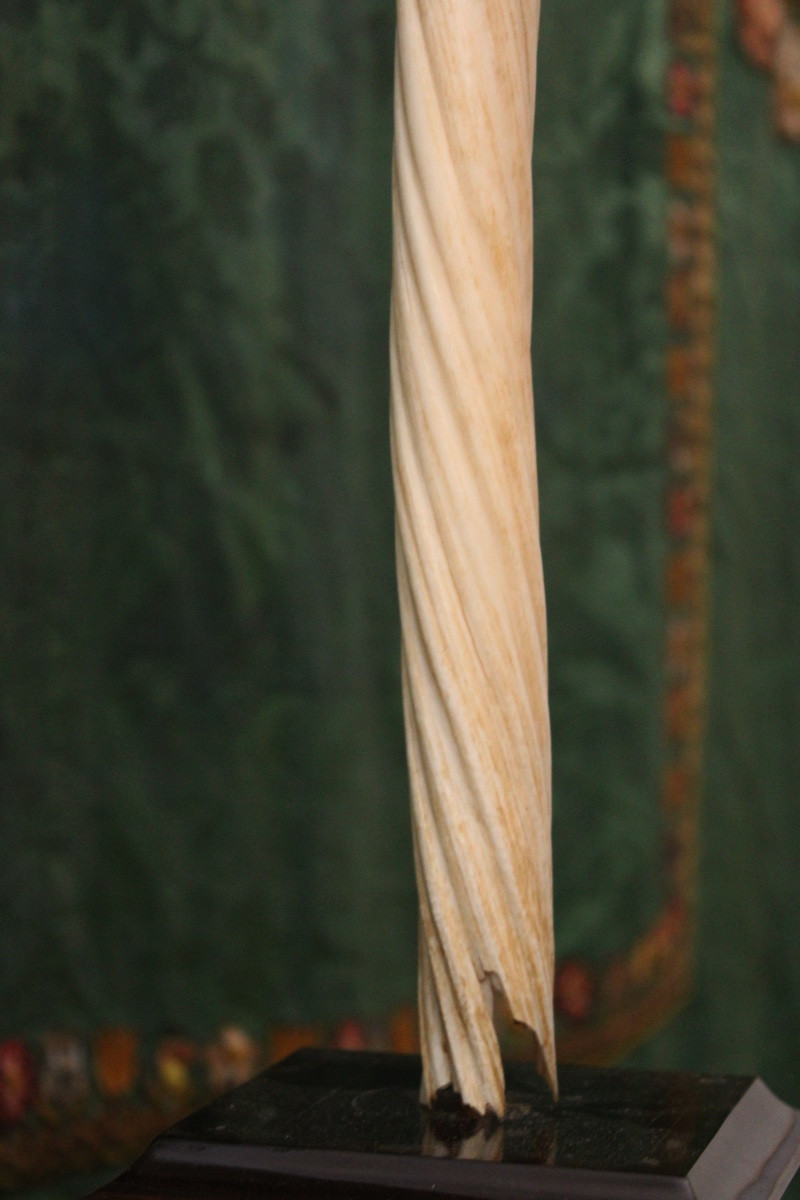
-A chip is noted in the lower part (see photo).
- Specimen authorized for sale in the EU by the Danish Ministry of the Environment
-This rostrum comes from a Narwhal, a cetacean living in the icy waters of the Arctic Ocean, rarely observed and known by the scientific name of "Monodon monoceros". The male of the species has a single tusk; it is a tooth, a modified upper left incisor. This helical tusk, describes a spiral turning to the left, which can reach up to seven meters long. This tusk, long and twisted, has given rise to many legends for centuries and became one of the centerpieces of cabinets of curiosities during the Renaissance. Nicknamed the "unicorn of the seas", the Narwhal was seen as an animal endowed with magical powers and many virtues were attributed to its tusk.
- Length: 88.5 cm. Base sold separately.
-A chip is noted in the lower part (see photo).
- Specimen authorized for sale in the EU by the Danish Ministry of the Environment
11 000 €
Period: 20th century
Style: Renaissance, Louis 13th
Condition: Condition of use
Material: Bone
Length: 88,5 cm
Reference (ID): 1536213
Availability: In stock
Print