THIS OBJECT WAS SOLD
Koto Tanto, Momoyama Period (1573-1603)

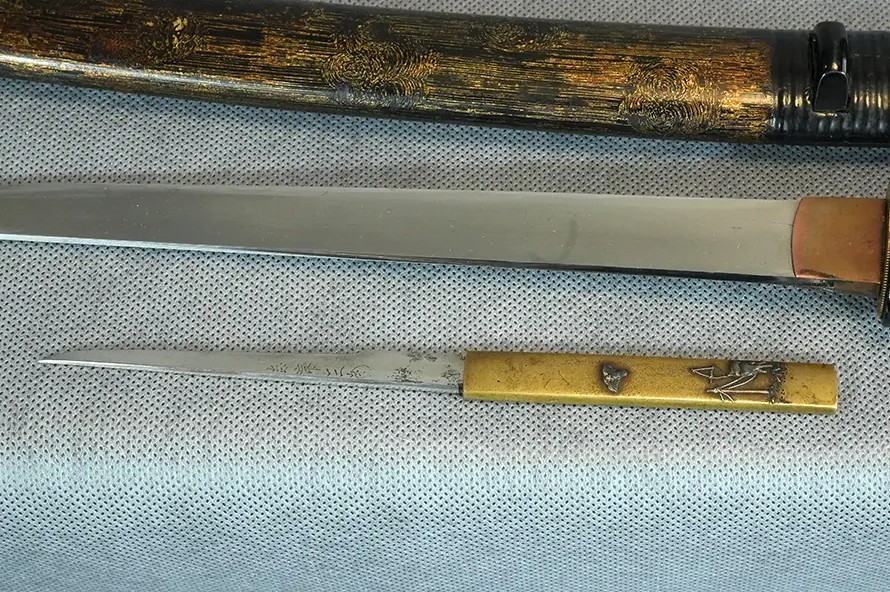
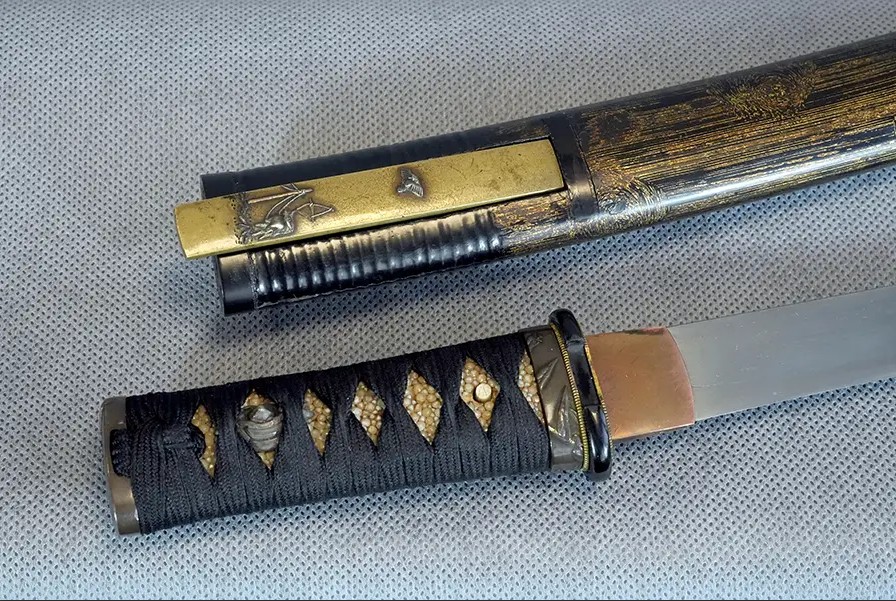
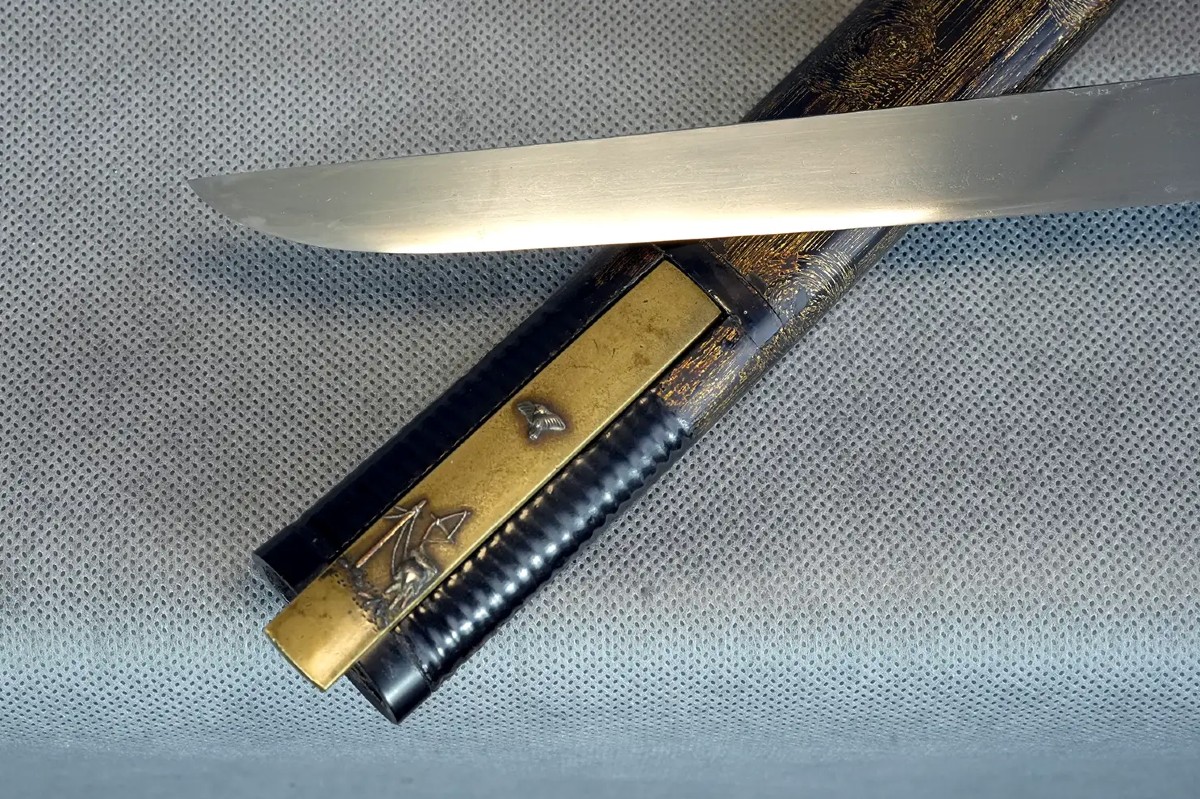
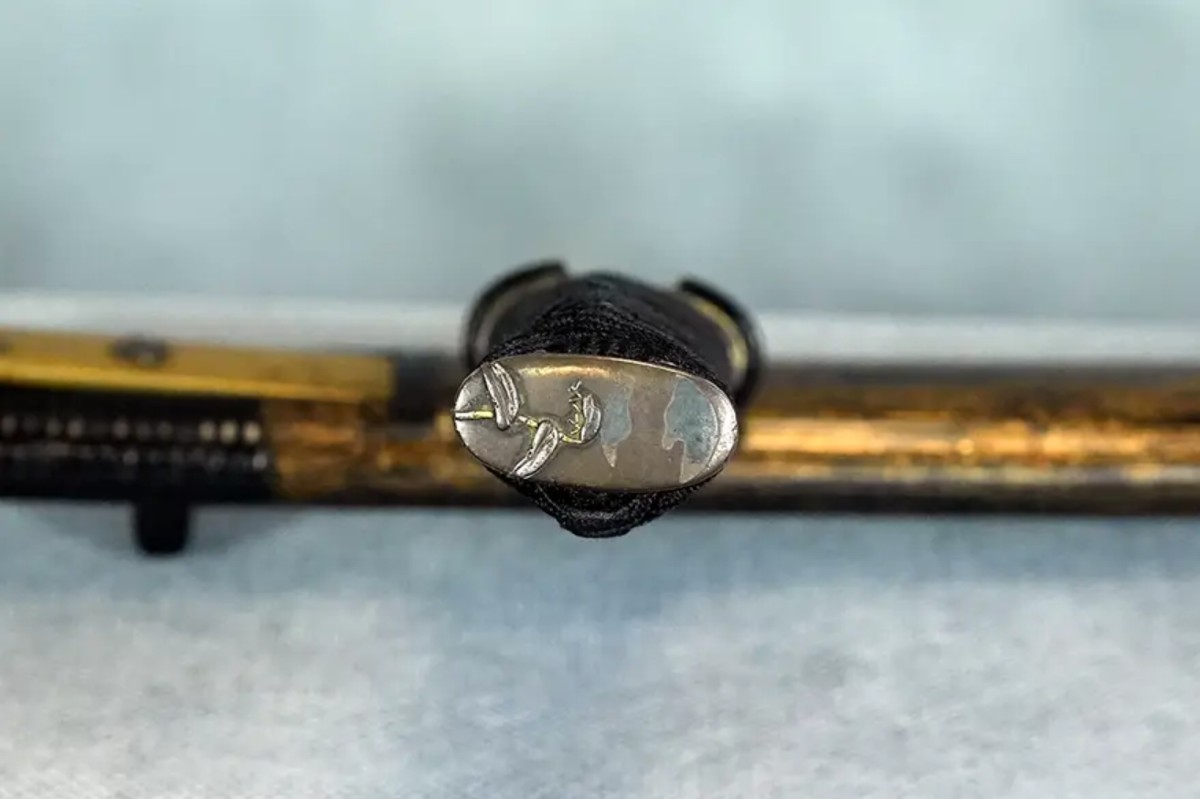
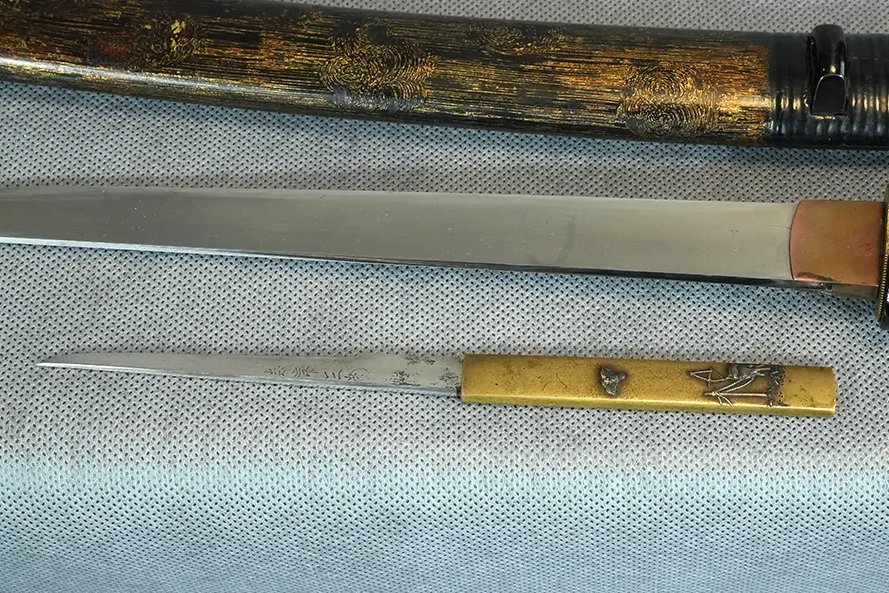


Unsigned (mumei)Blade (sugata): hira zukuri, iori muneForging pattern (hada): itameTempering (hamon): suguhaFuse (nakago): ubu keitai, kuri nakagojiri, a mekugi anaLength (nagasa): 25.5 cmMounting (koshira-e) tsuba: nagamaru gata in black lacquered woodfuchi kashira: hibuichi depicting turtleskozuka: in shibuichi and gilded copper depicting Hotei Fukurokuju and EbisuScabbard (saya) in gold and black lacquerA glimpse of the Momoyama period through this Koto Tanto: The Momoyama period (1573-1603) marks the transition between the tumultuous Sengoku and Edo periods. It is synonymous with profound social, artistic and cultural upheavals. This period was characterized by the emergence of new artistic trends, influenced by the search for refinement and splendor of the daimyo seeking to assert their power in a Japan in full unification. This koto tanto perfectly illustrates the aesthetic and technical values of this period. Analysis of the blade: The 25.5 cm blade (nagasa) is designed in the hira zukuri style. It is characterized by a short and elegant blade, often associated with ceremonial or prestige weapons. The simplicity of the suguha (straight line) tempering pattern (hamon) testifies to a search for balance and purity, echoing the Zen philosophy influencing many aspects of Momoyama art. The itame hada forge, with its patterns resembling wood grain, reflects great technical mastery, typical of the blacksmiths of this period.The mount: an ode to Momoyama craftsmanship The koshira-e (mount) of this tanto highlights the extraordinary refinement of the craftsmen of the time: The tsuba, minimalist and in black lacquered wood, highlights a sober aesthetic, leaving all the space for the elegance of the blade. The fuchi kashira decorated with turtle motifs symbolizes longevity and wisdom, virtues particularly prized in samurai and Buddhist culture. The kozuka, magnificently made of shibuichi and gilded copper, depicts the benevolent figures of Hotei, Fukurokuju and Ebisu, three of the Seven Deities of Happiness (Shichifukujin). Their presence suggests that this weapon was not only utilitarian, but also carried protective and spiritual significance.The scabbard: wealth and sophistication The scabbard (saya), in gold and black lacquer, testifies to the height of lacquer techniques during the Momoyama period. The use of gold underlines the richness and importance of this object, without descending into ostentation.A reflection of the times This koto tanto, with its finely executed elements, embodies the spirit of the Momoyama period. A blend of aesthetic sophistication, warrior tradition, and spirituality. More than a weapon, it is a work of art intended for a high-ranking samurai or a wealthy patron, testifying to the dynamism and refinement of this pivotal period in Japanese history.
Explore similar pieces and discover your ideal find:
Edged Weapons