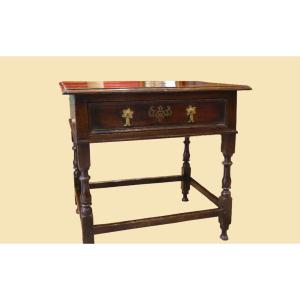
A robust and characterful example of early Spanish craftsmanship, this 17th-century side table in solid oak embodies the rustic elegance and architectural sensibility of Iberian furniture from the Bar[...]
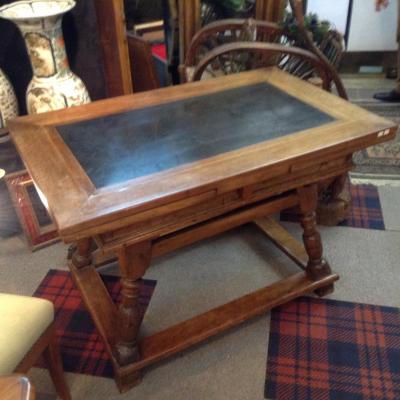
This Swiss table is made of walnut and walnut veneer. It rests on four turned legs joined by a rotating stretcher. It has a drawer in the apron, and the top is inlaid with geometric patterns around th[...]
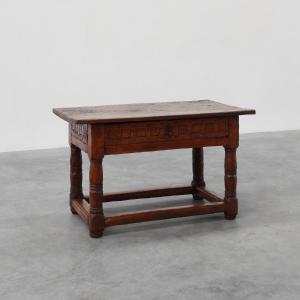
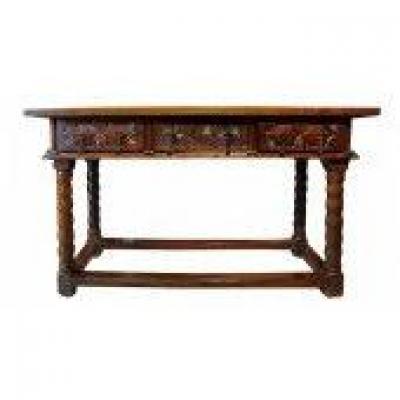
Spain / 17th century / Side Table / oak / Spanish / Rustic / wabi sabi / French ProvincialAntique side table in solid oak with beautiful geometric carvings and patina. Hand made in the 17th century in[...]
Ebonized walnut table, truncated pyramidal legs with carved leaf capitals, joined to a curved cross-vaulted base with a central plume. The tabletop features a beautiful scagliola panel depicting a cen[...]
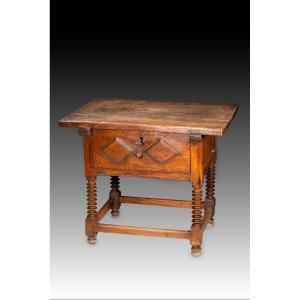
Table. Walnut wood. 17th century. Table with a smooth rectangular top and two drawers at the front, decorated with simple geometric shapes on their fronts, leaving a strip of tongues between them. The[...]
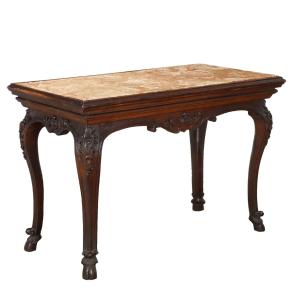
Baroque walnut table, wavy legs and apron carved with leaf motifs and scrolls, goat feet. Breccia macchia vecchia marble top. Italy, early 17th century.
Table with fork braces. Walnut wood, wrought iron. Spain, 17th century. Table made of carved and turned walnut wood with four A-shaped legs, two wrought iron hairpin fasteners and drawers on both fron[...]
Table. Walnut wood, iron. Spanish School, Guadalajara, 17th century.
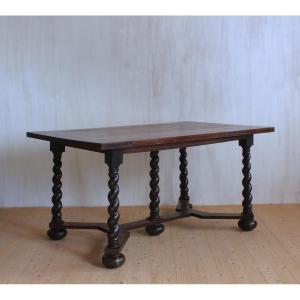
Table with a smooth rectangular top, four spheres under the four legs (joined by chamfers starting from rectangular cubes and carv[...]
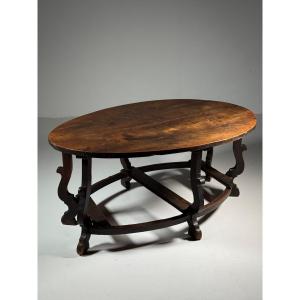
17th century lyre-legged table.
In walnut, with wrought iron brackets and a single-piece top. Baroque-style lyre table, made entirely of walnut, with carved profile legs and a rectangular top with a [...]
Proantic uses a cookie to analyze traffic and improve its service by using Google Analytics. Data sent to Google Analytics (frequency of visits to the site and pages visited) are anonymous. No other cookie tracks your activity, your personal data is not collected. Thank you for helping us to have better understanding how Proantic is used.