THIS OBJECT WAS SOLD
Bi-anode Focus Ion X-ray Tube C. 1900-1910
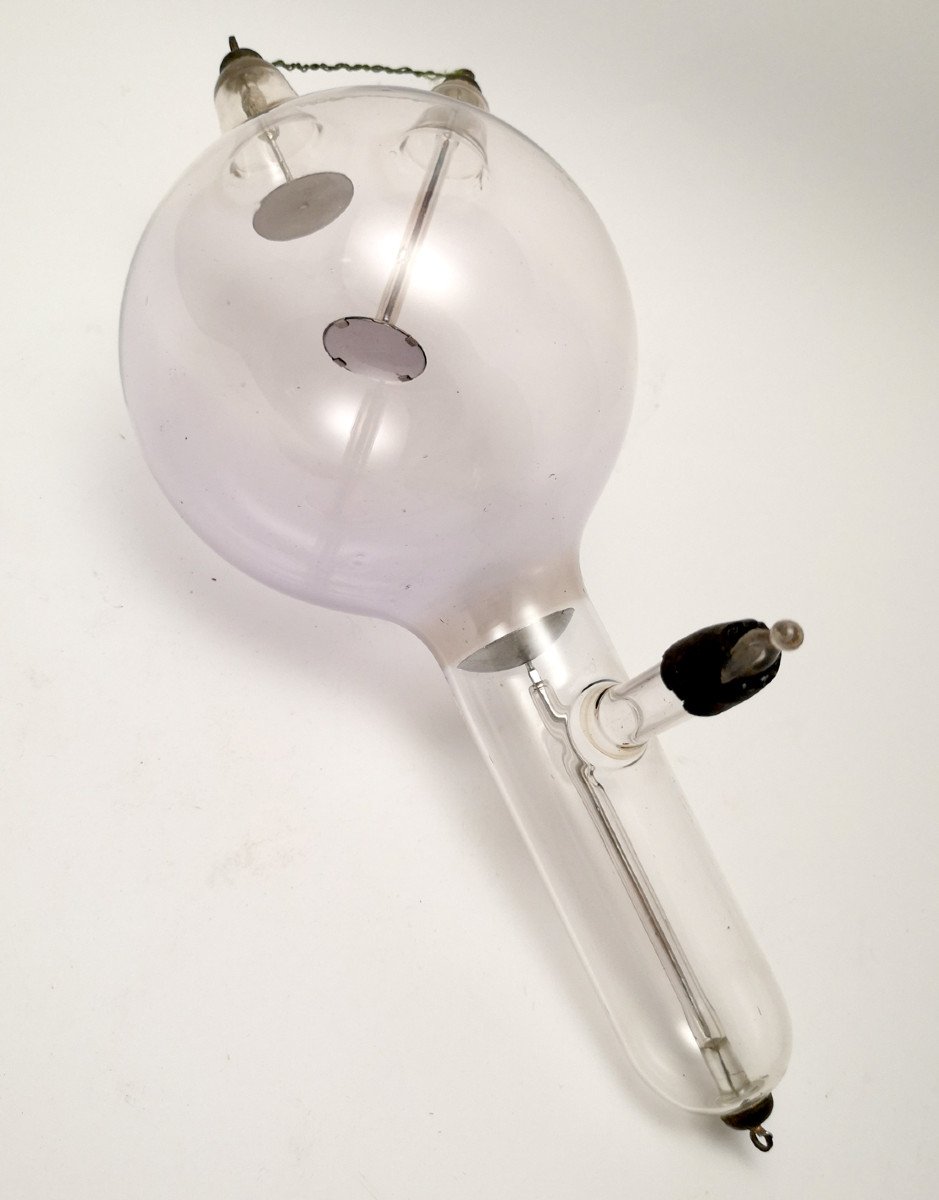
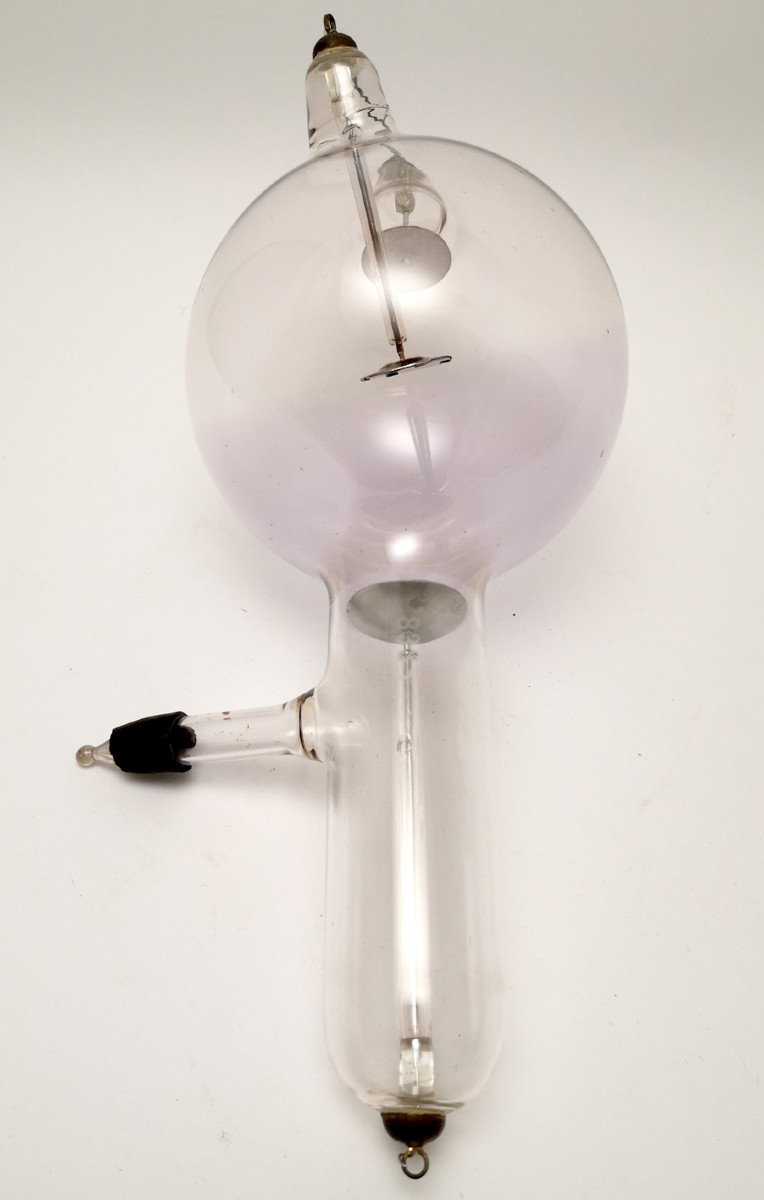

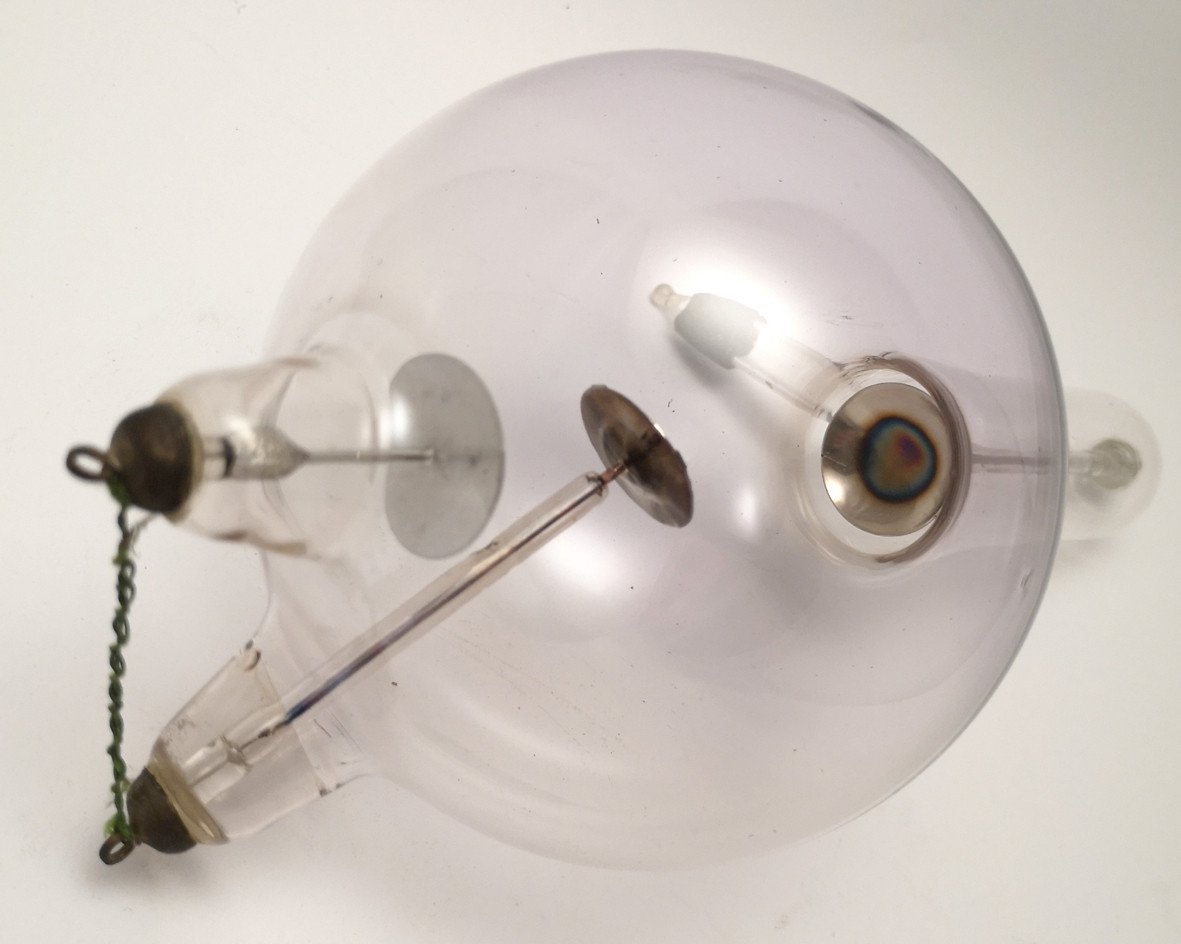


This X-ray tube or bi-anodic X-ray bulb was used in the early days of radioscopy and radiography. Portable and compact, it provided a medical X-ray imaging device and allowed the very first clear X-ray pictures to be taken.
The model consists of the following components: A cathode (made of aluminium) emitting electrons. The cathode rays are directed onto a thin round target made of platinum metal, embedded in the anticathode and held in place by 4 small metal claws and tilted at 45° on the axis. A second anode (made of aluminium), called an accessory anode, was used to better maintain the internal pressure of the tube and thus compensate for the hardening of the tube. The two anodes are joined by an external connection, a device that ensured the production of slightly more penetrating X-rays and thus a significant improvement in the definition of the images. No regeneration device (osmo-regulator).
A nice early model of the first generation of X-ray tube used in radiology, which has kept its vacuum and its purplish tint of the glass due to metallic deposits by reverse current flow and which testifies to its good use. The manufacturer is unknown but the bulb has a patent number.
The model consists of the following components: A cathode (made of aluminium) emitting electrons. The cathode rays are directed onto a thin round target made of platinum metal, embedded in the anticathode and held in place by 4 small metal claws and tilted at 45° on the axis. A second anode (made of aluminium), called an accessory anode, was used to better maintain the internal pressure of the tube and thus compensate for the hardening of the tube. The two anodes are joined by an external connection, a device that ensured the production of slightly more penetrating X-rays and thus a significant improvement in the definition of the images. No regeneration device (osmo-regulator).
A nice early model of the first generation of X-ray tube used in radiology, which has kept its vacuum and its purplish tint of the glass due to metallic deposits by reverse current flow and which testifies to its good use. The manufacturer is unknown but the bulb has a patent number.
Explore similar pieces and discover your ideal find:
scientific instruments