Biga Mossi Doll From Burkina Faso
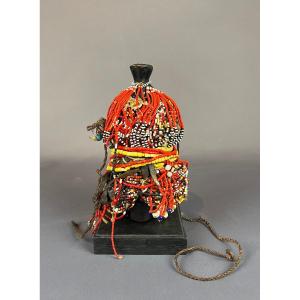
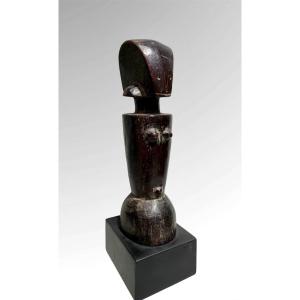
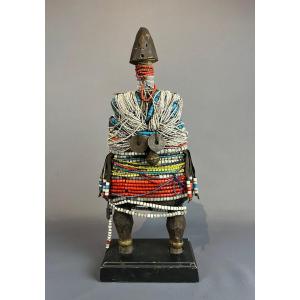
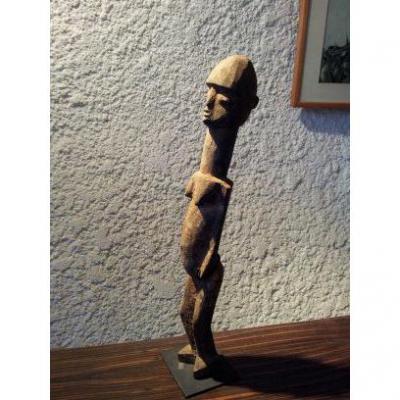
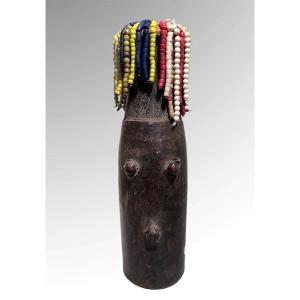
This is a “fertility doll” called a Biga or “raog’biga”(wooden child, or in theMossi language).
Here we have a very beautiful example of mossi biga (childwood) from the Yatenga region, Sao village, in the style of the Sawadogo workshop or Sawadugu Four other examples of the same style appear in the ahdrc archives(african heritage) by guy van rijn. It is therefore a fairly rare style.face is more three-dimensional than other Boulsa styles
Their traditional hairstyle, emblematic of the Mossi people (Burkina Faso), is characterized by a high braided crest in the middle of the head, often accompanied by thin braids on the sides.
Biga dolls were given to little girls to bring themhappiness, prosperity, and fertility.These small sculptures were cared for with great attention. They wereadorned with beaded necklaces and bracelets, and were symbolicallyfed and washed.As noted by the Smithsonian National Museum of African Art, these stylized female figures were carved by Mossi blacksmiths. Parents gave them to their daughters, who used them not only for play but also tolearn how to care for children. Later, the biga could play a rolein initiation rites and during childbirth. If a woman had difficulty conceiving, she could request that anenlarged version of her childhood doll be made.
This example has an unusual headdress, a glossy patina, and is one of the finest examples of these dolls corpus
Provenance: German collection
550 €
Period: 20th century
Style: Tribal Art
Condition: Good condition
Material: Solid wood
Height: 24,5 sans socle
Reference (ID): 1865090
Availability: In stock
Print