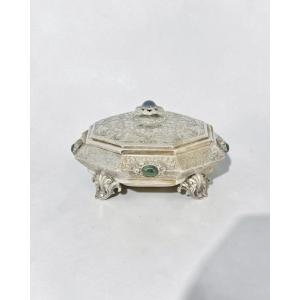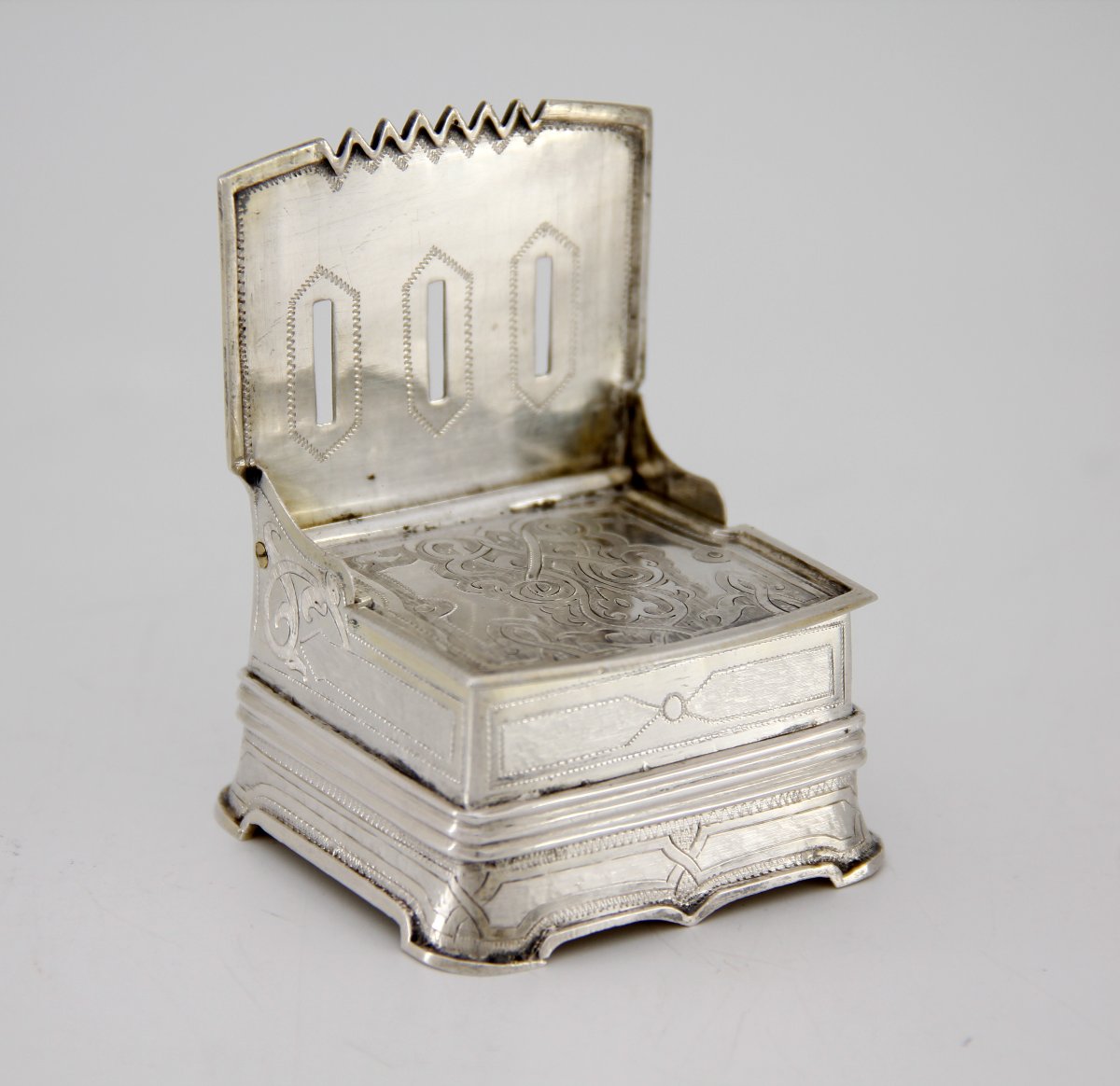
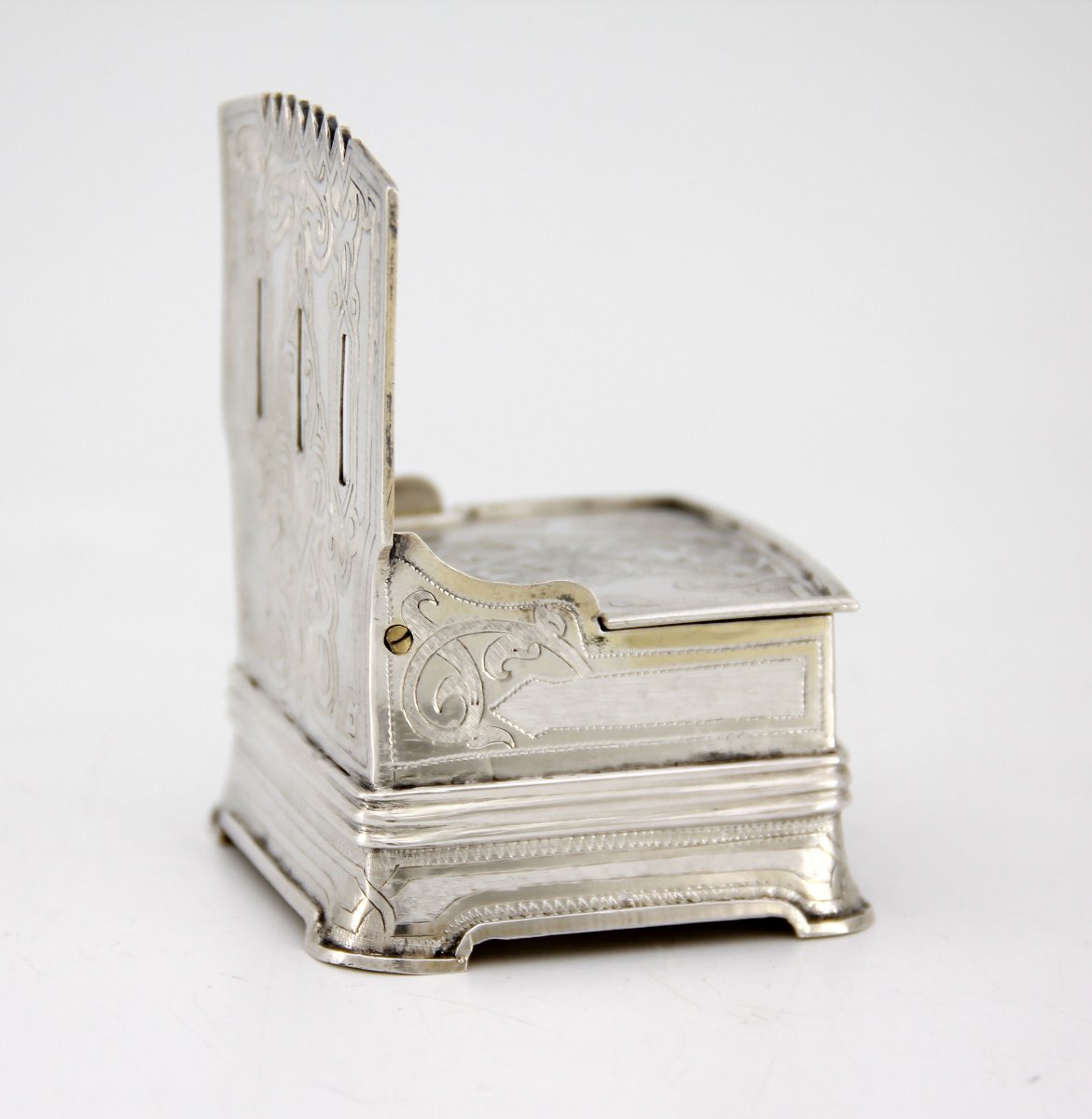
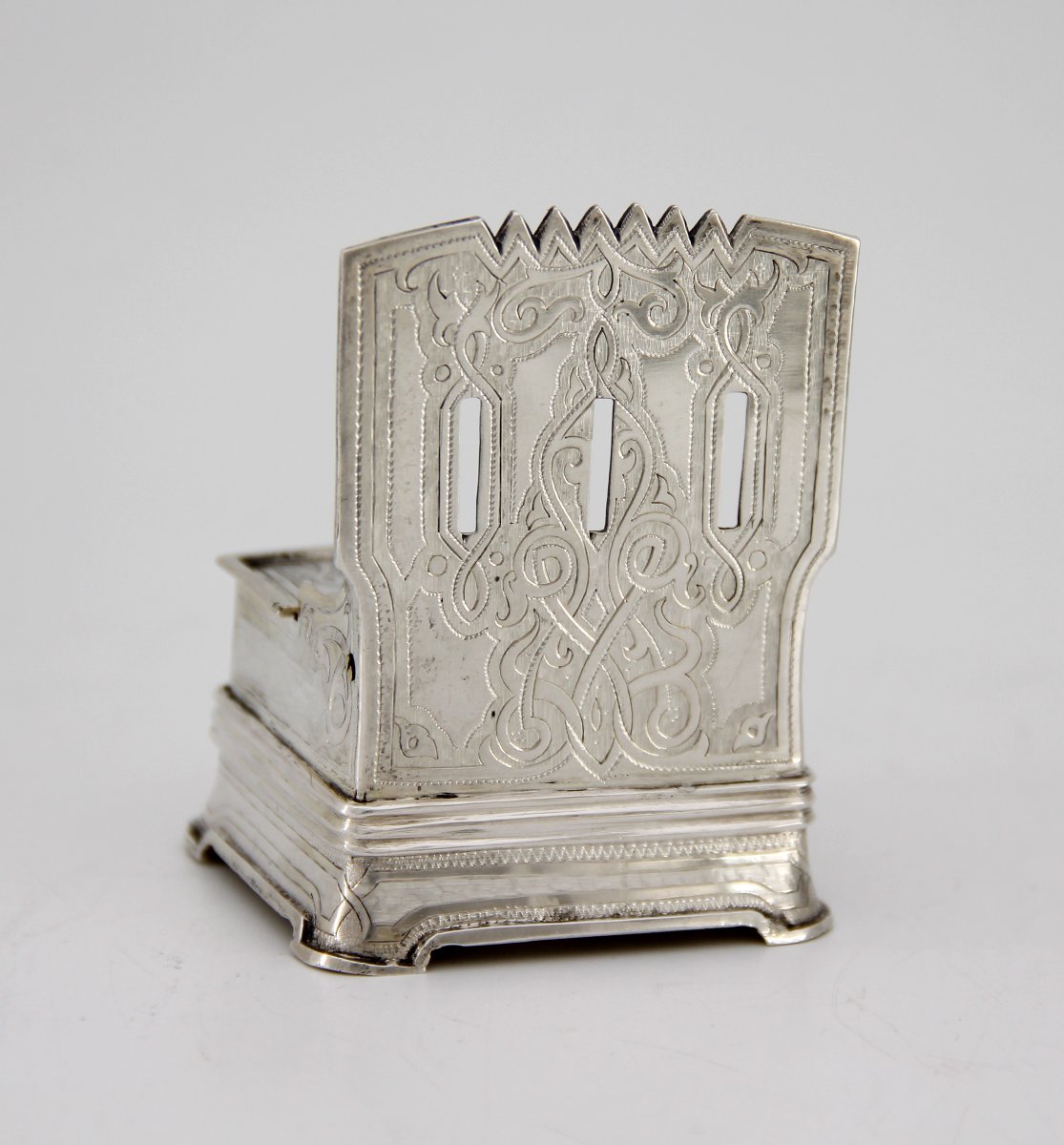
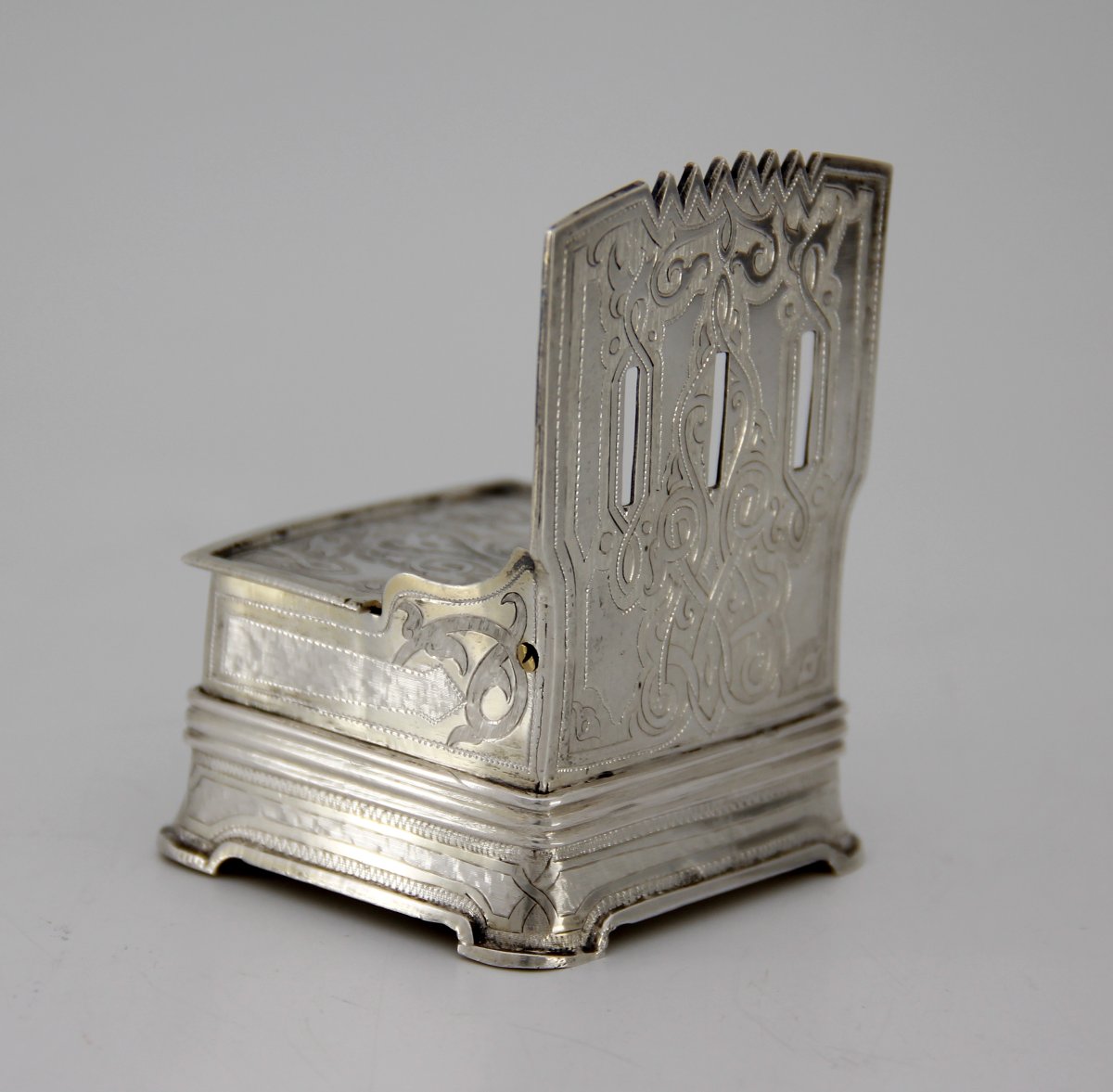
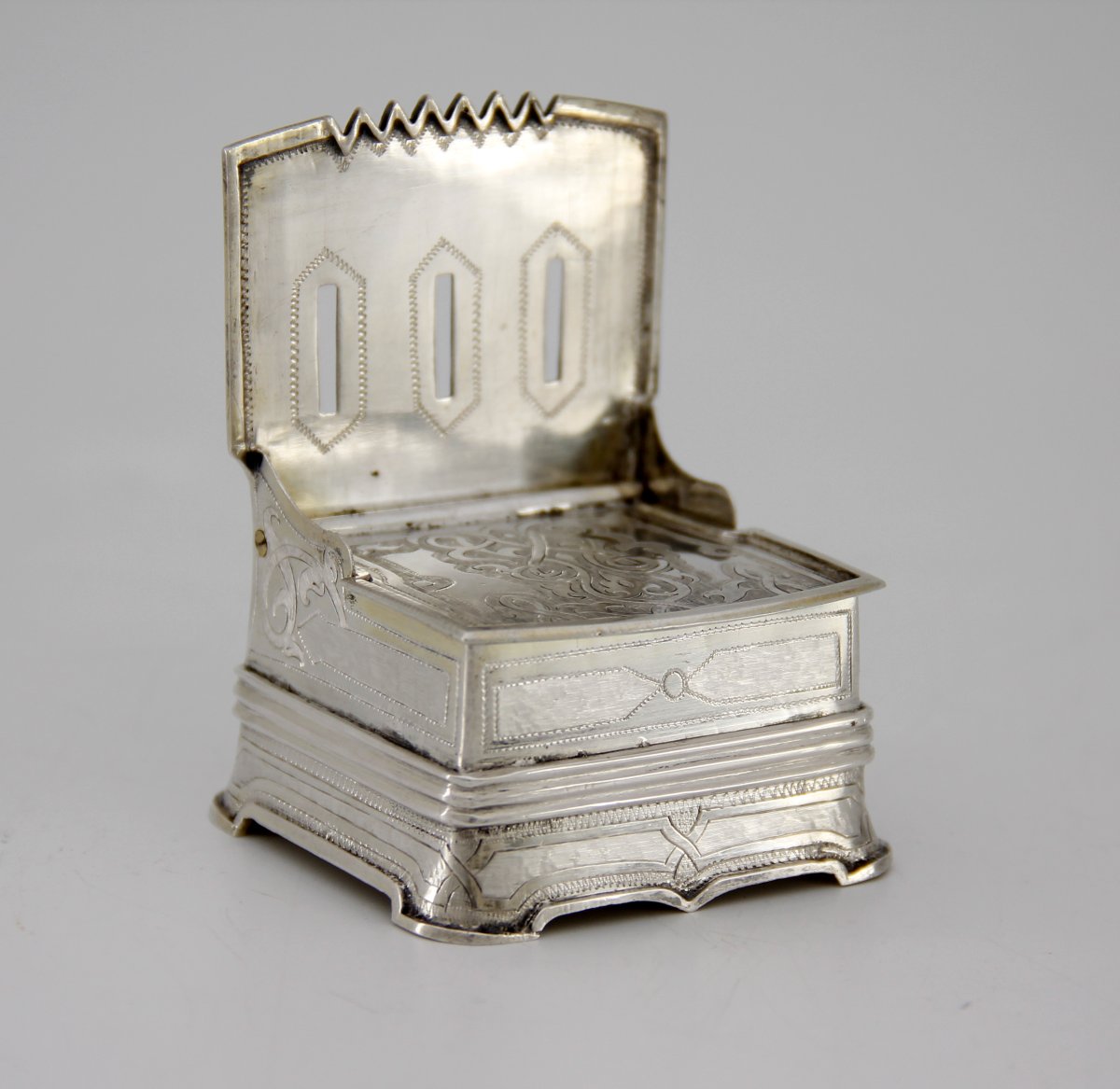
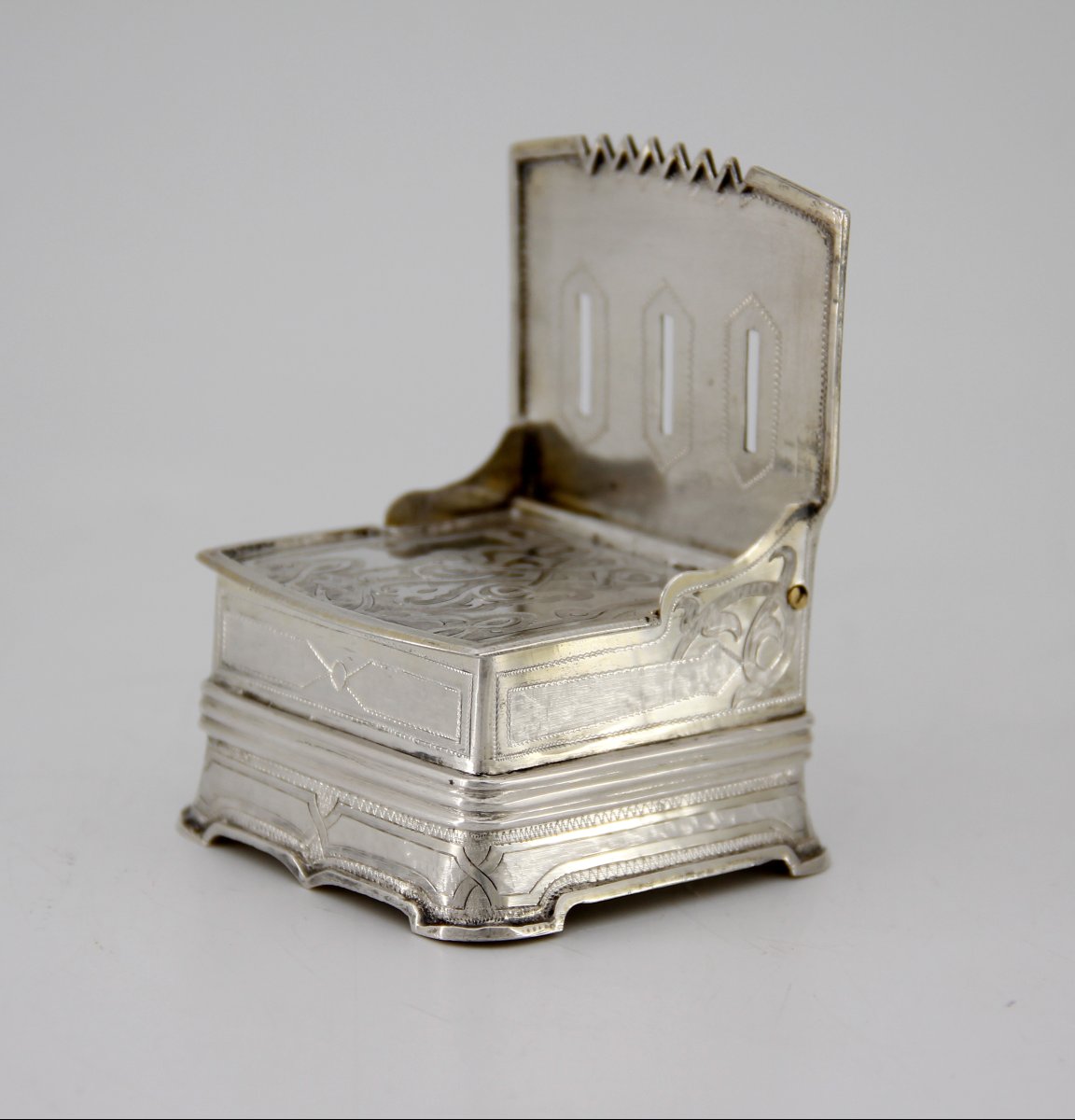
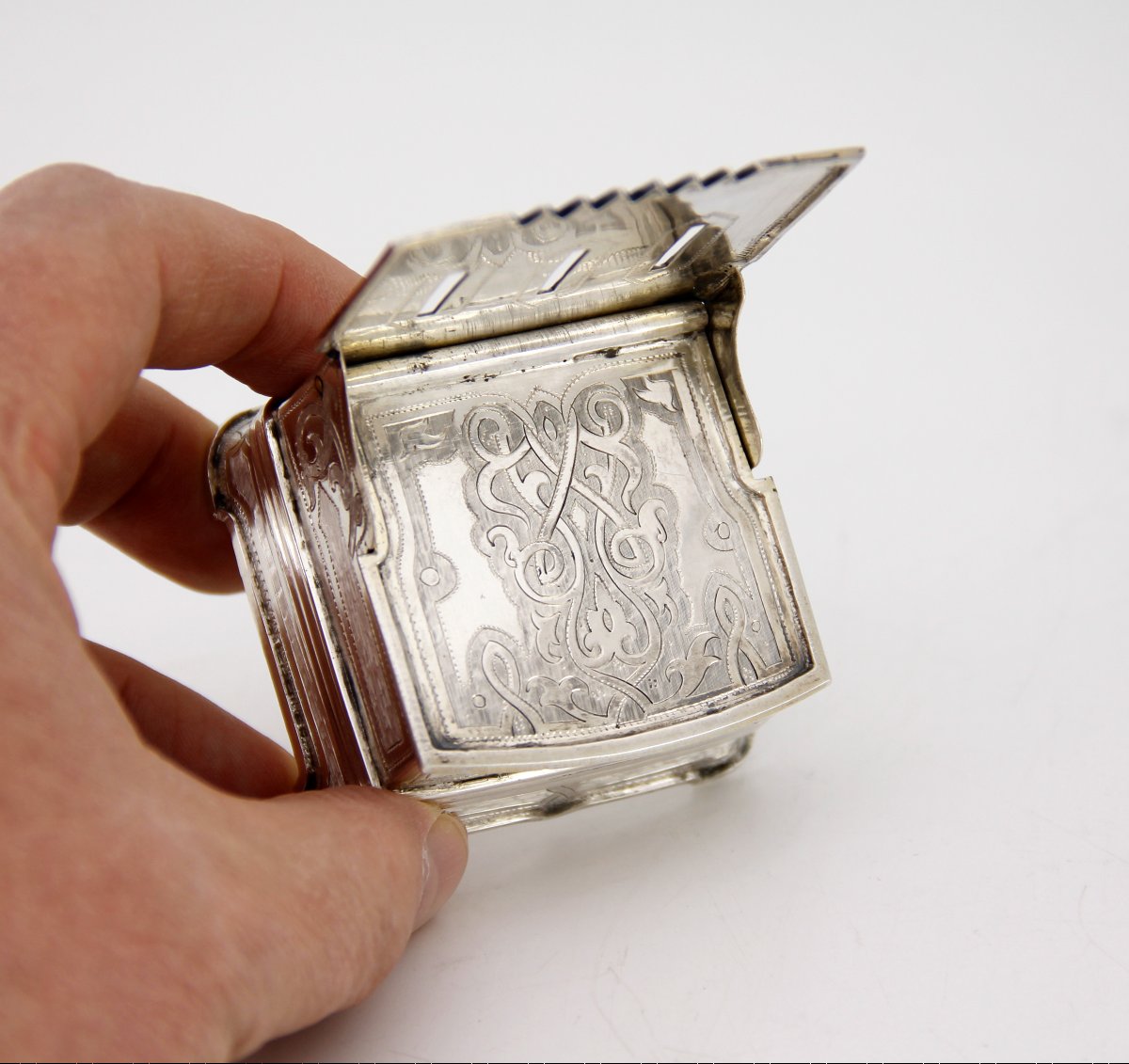
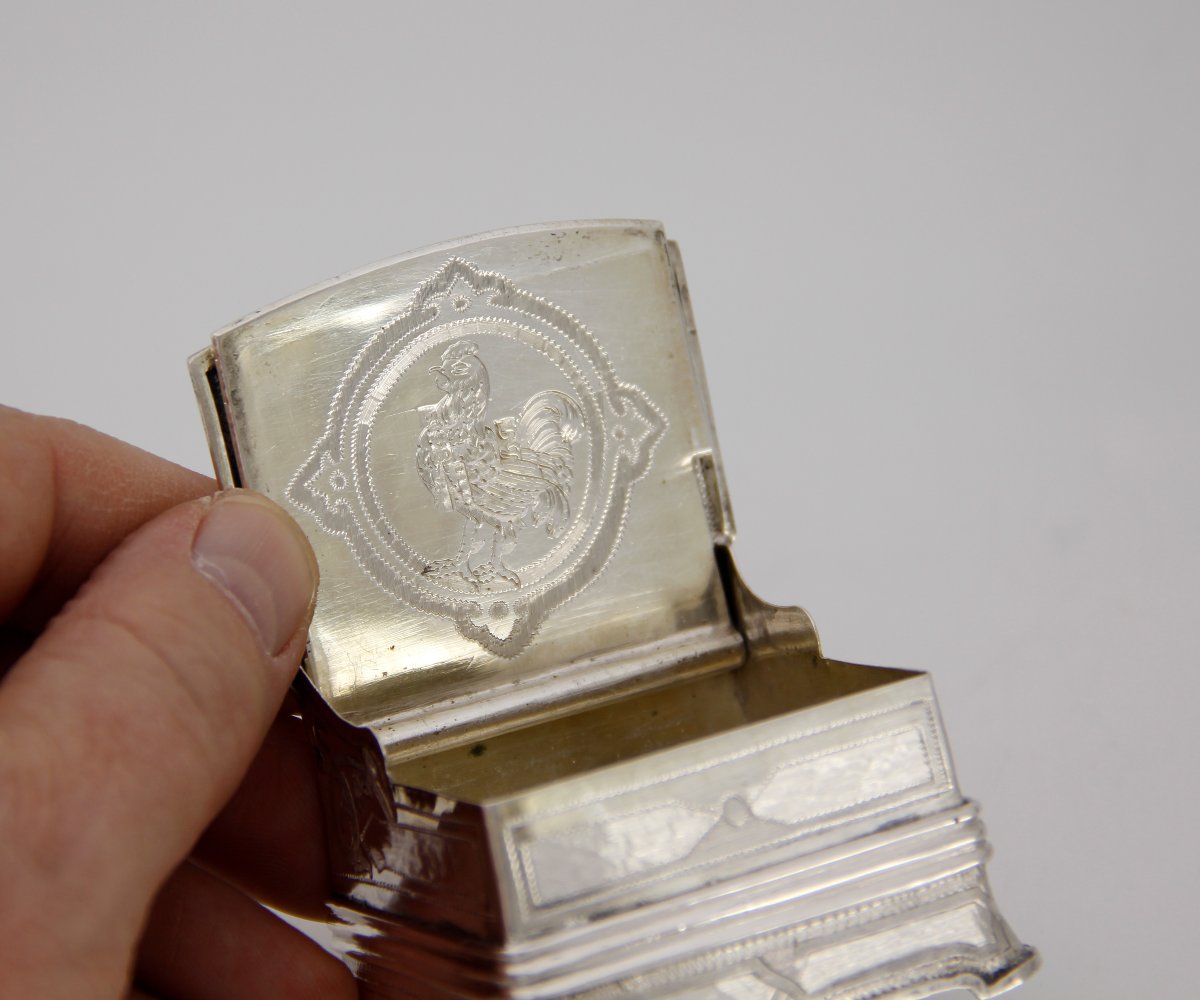
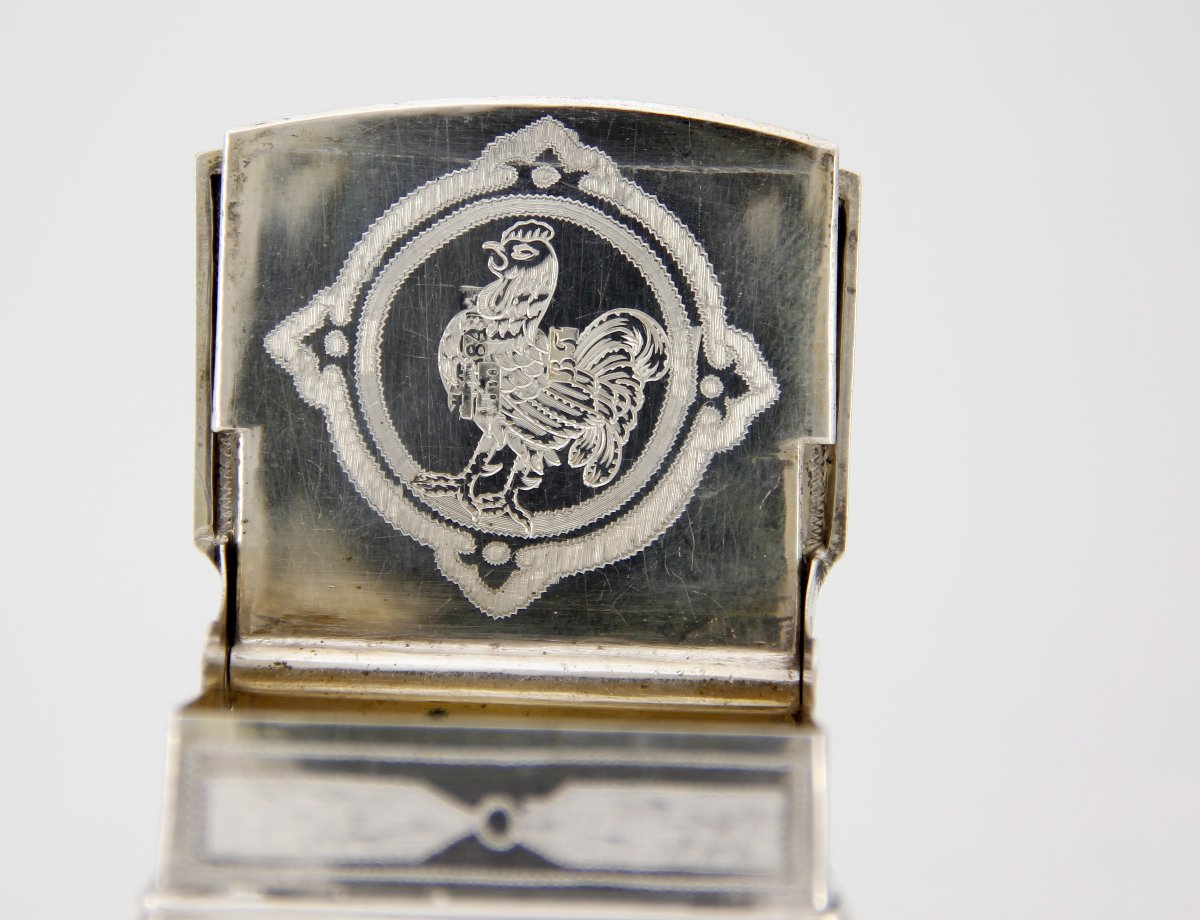
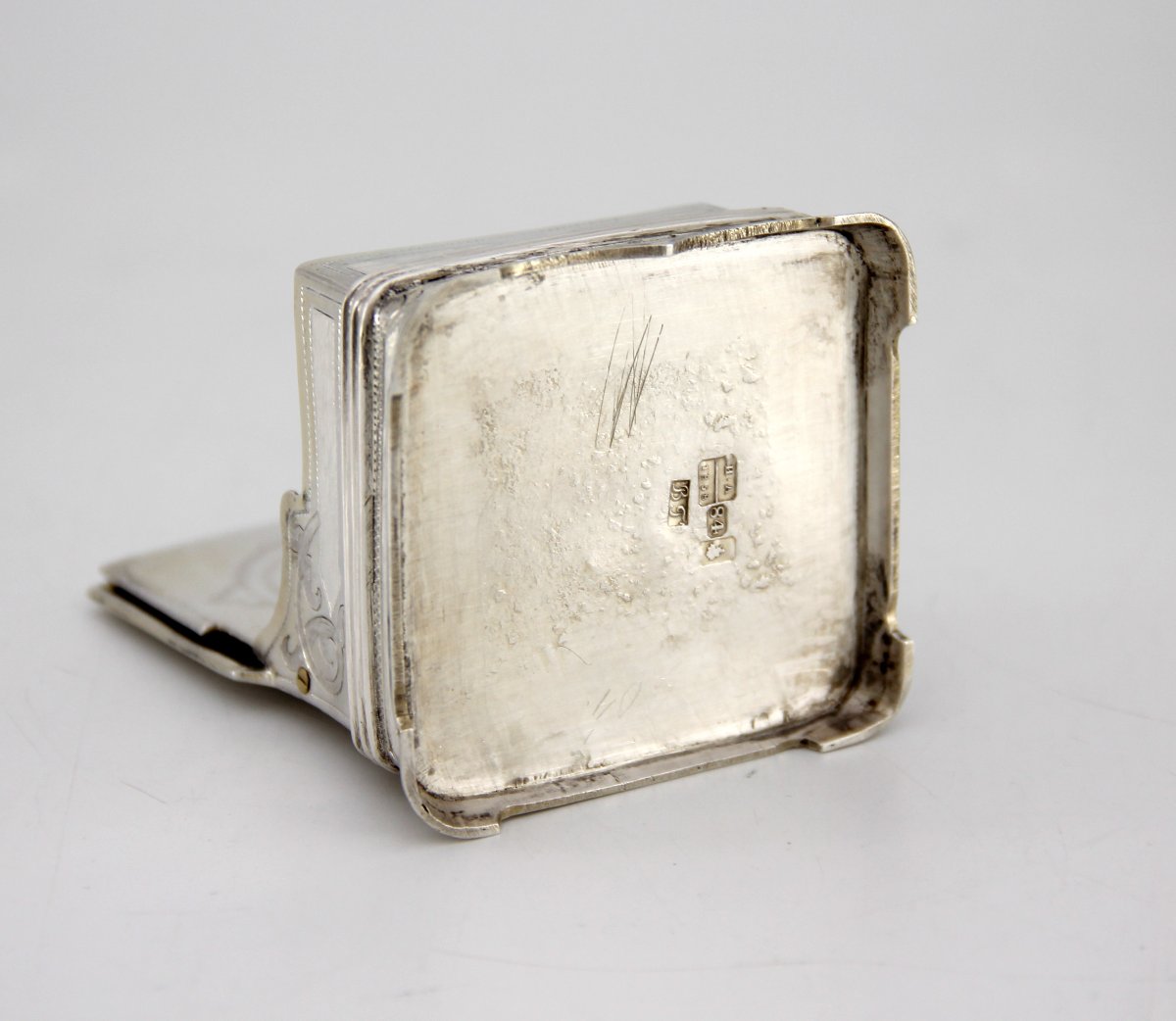
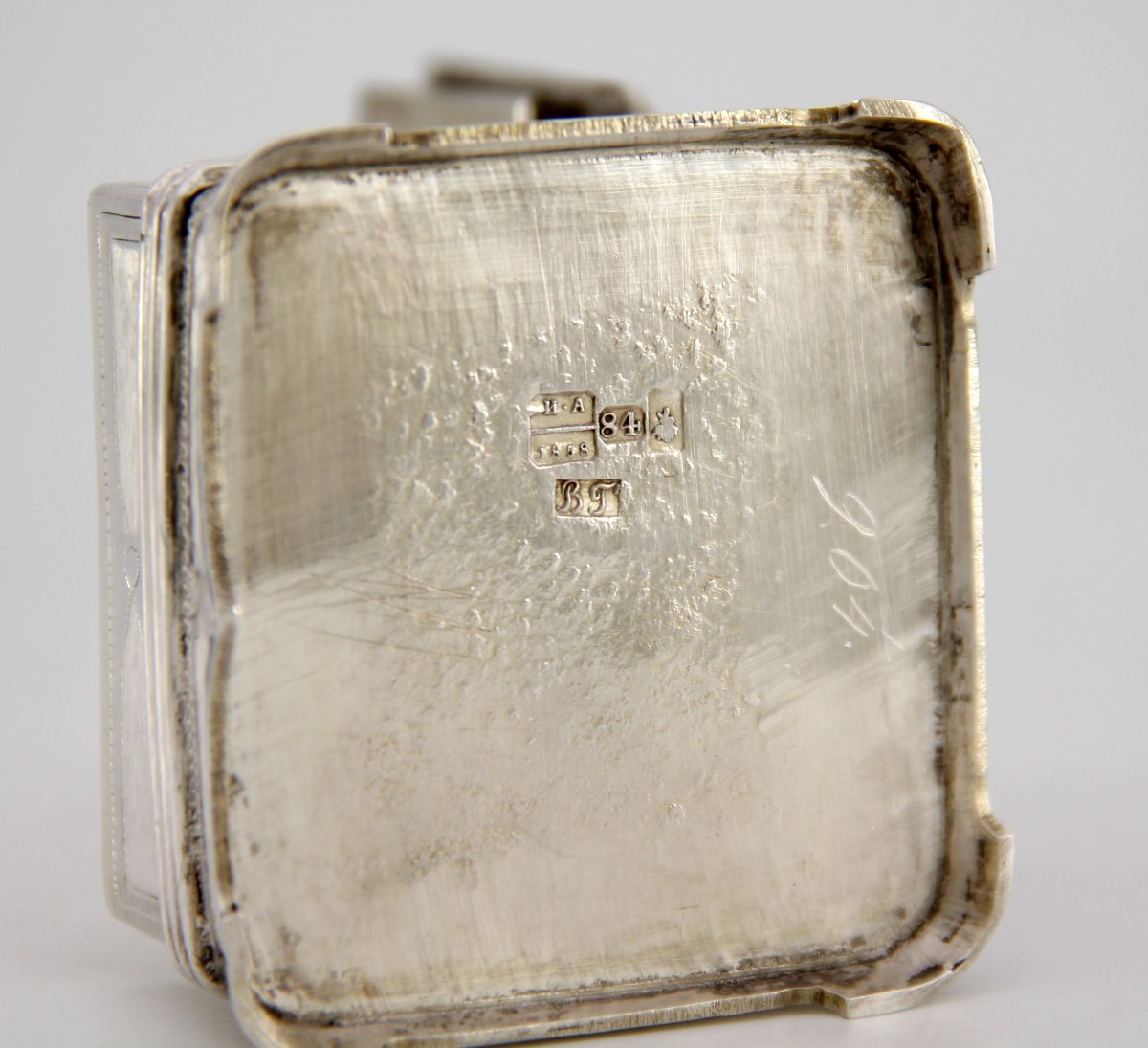
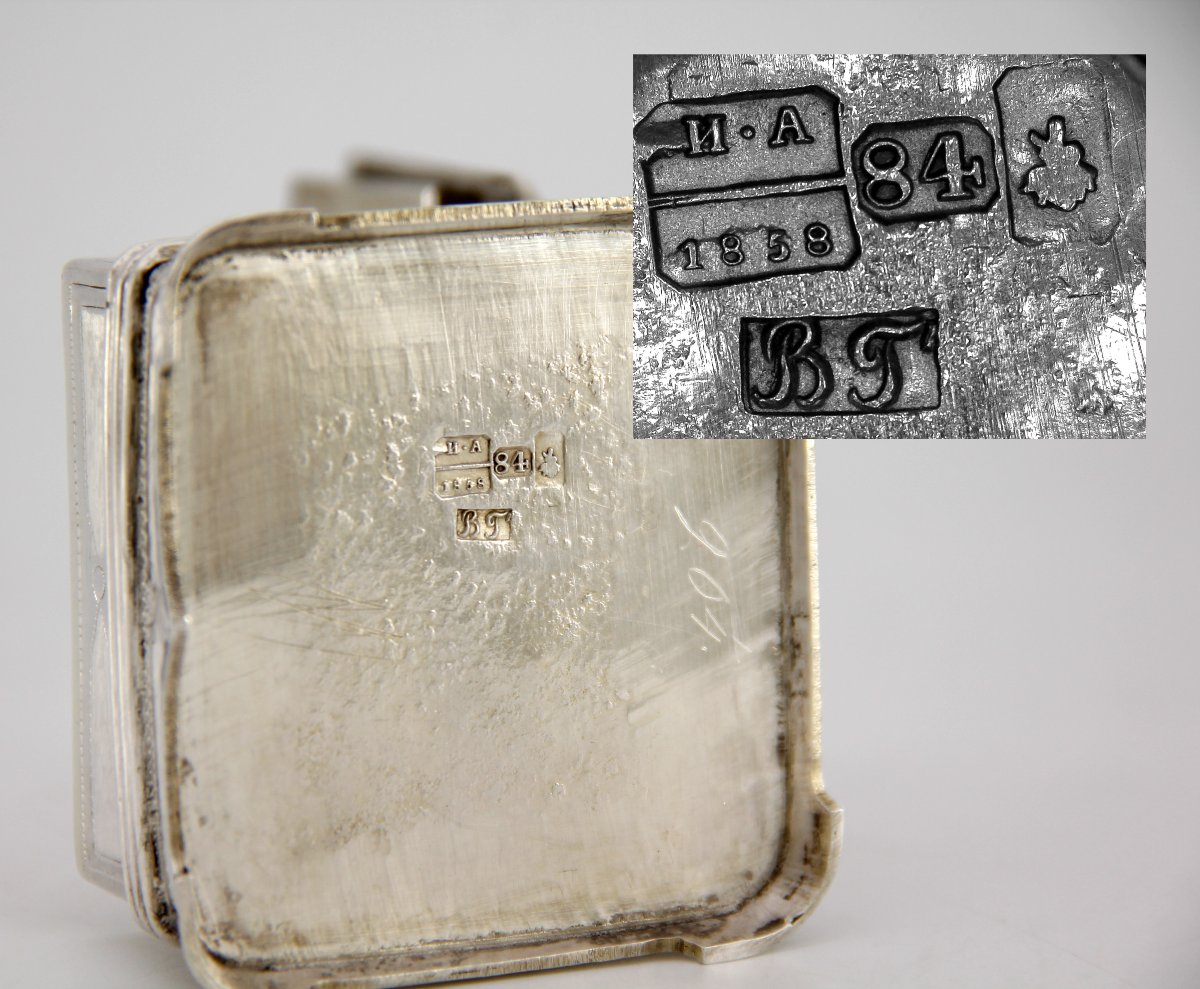
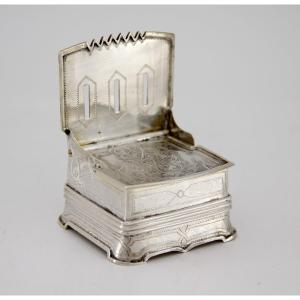


Solid Silver "throne" Salt Cellar — Moscow, 1858 — Rare Early Model
Throne Salt Cellar
made of solid silver, 84 zol. [~875/1000]
Unidentified silversmith BT
Assayer Ivan Vassilievich Avdeev
Moscow, 1858
-----
~5.5 x ~5 x ~7.5 [L x W x H]
86 g
-----
Throne salt cellars first appeared around 1845–1850 and disappeared with the fall of the tsarist regime during the 1917 Revolution.
They symbolize traditional Russian hospitality, which dictated that a piece of bread dipped in salt be offered to a guest. They were frequently given as gifts to newlyweds.
Ours is decorated with magnificent interlacing patterns on an amati background.
Under the lid, the rooster symbolizes love and fertility.
A rare early model. Most date from the late 19th century.
840 €
Period: 19th century
Style: Other Style
Condition: Excellent condition
Material: Sterling silver
Length: 5,5
Width: 5
Height: 7,5
Reference (ID): 1864655
Availability: In stock
Print