



Louis XIV-era Doorbell Made Of Gilded Wood
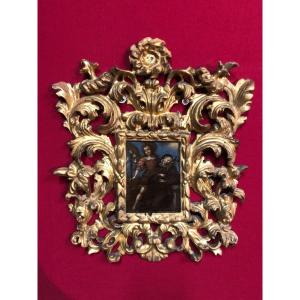
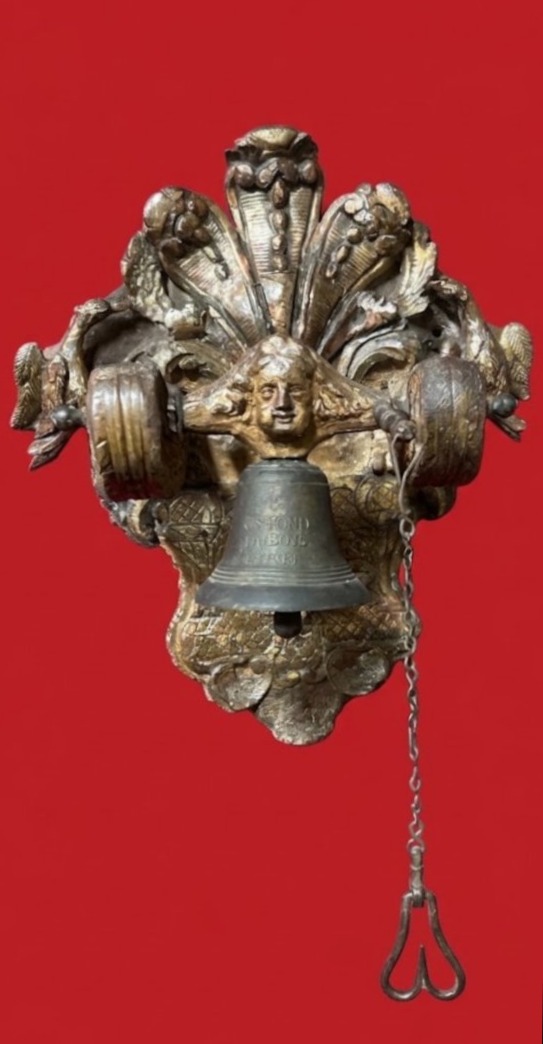
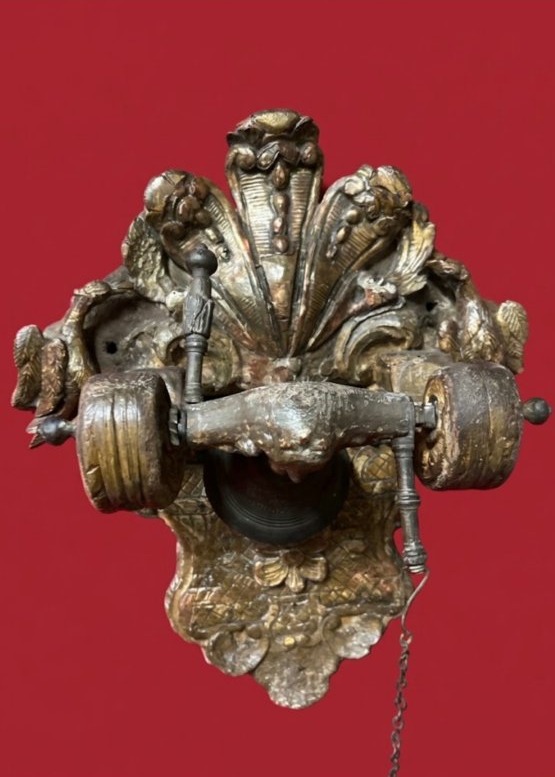
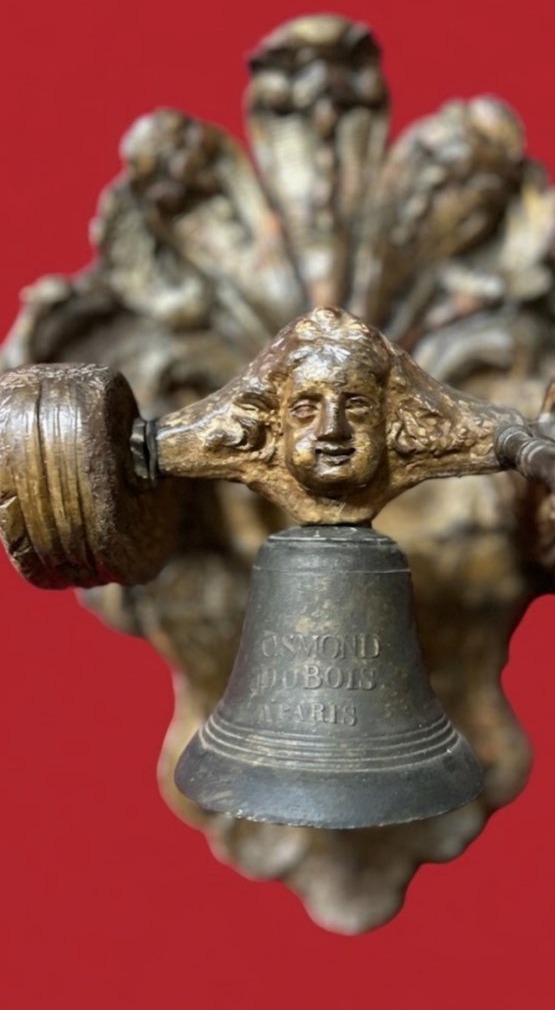
An exceptional and rare servant's call bell, intended for a living room or bedroom.
A remarkable work of decorative art, this elegant bell reflects the refinement of aristocratic interiors and grand estates; it was used to discreetly summon servants from a living room or bedroom.
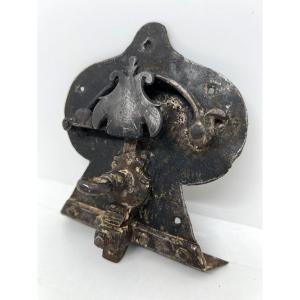
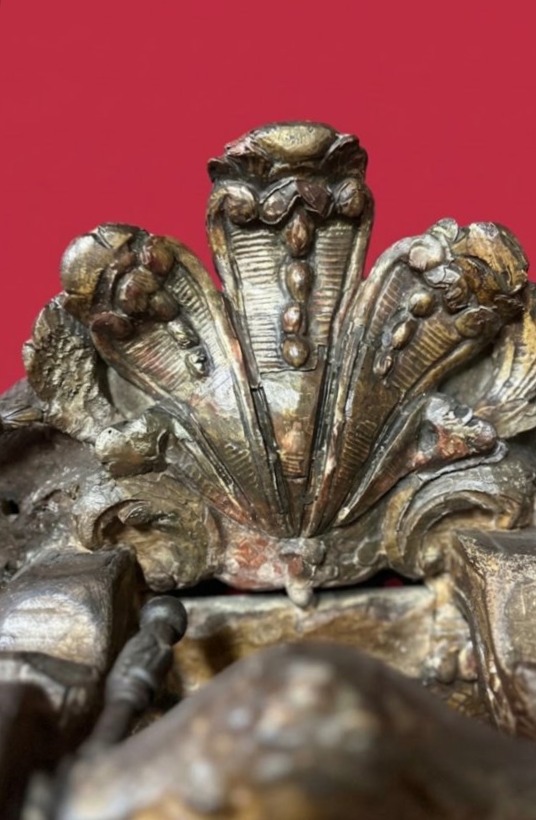
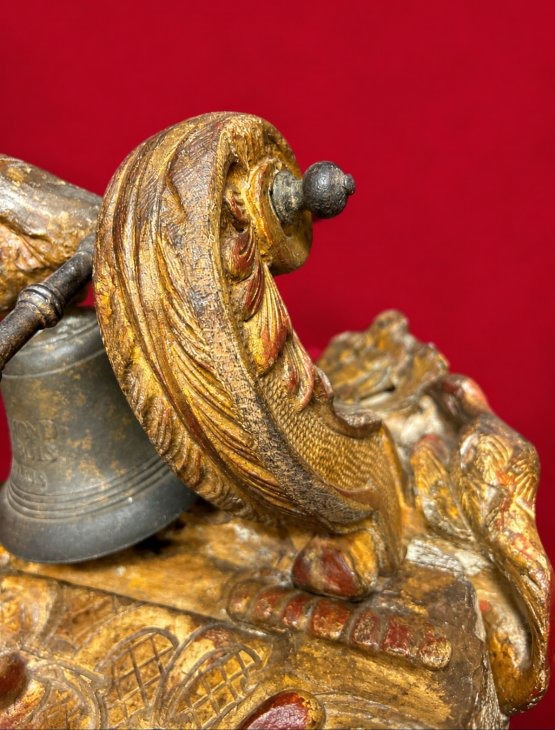
The piece is distinguished by a richly detailed sculptural composition, entirely carved from a single block of metal, featuring a profusion of finely chiseled and relief-carved ornamental motifs.
The antique patina, enhanced by its original gilding, lends the piece a particularly captivating presence and depth.
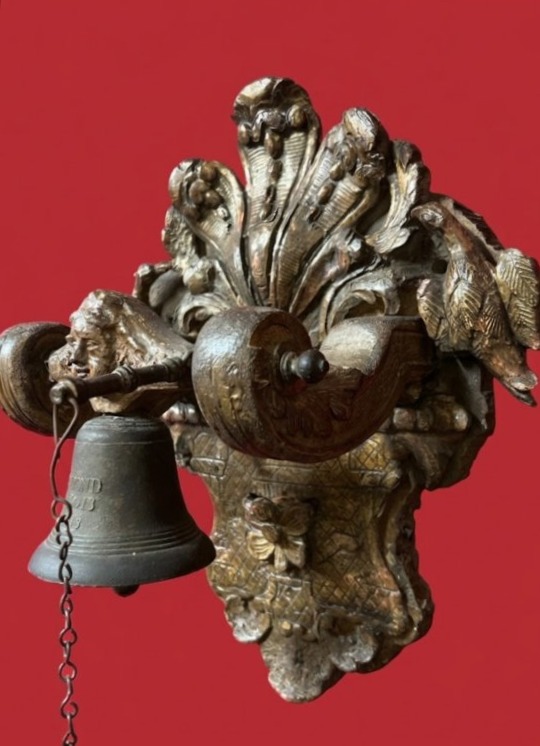
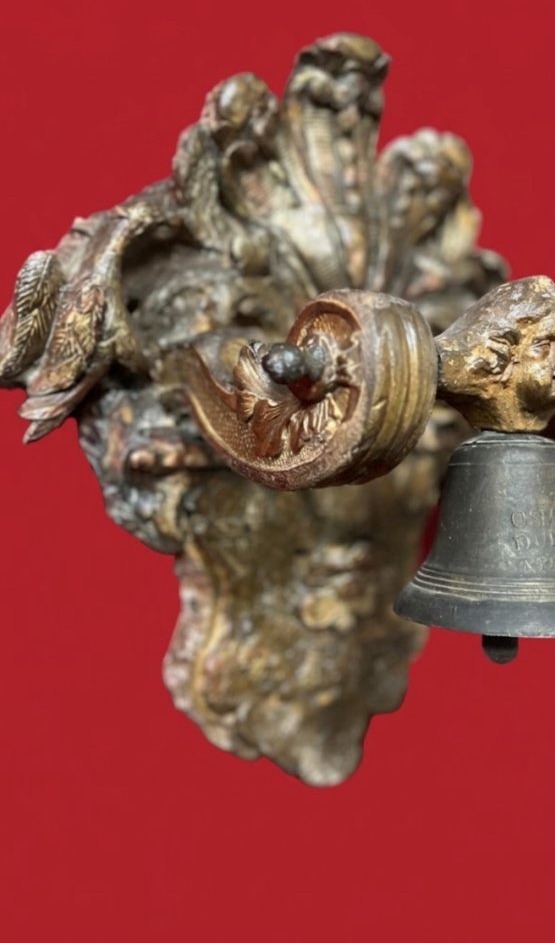
On either side of the mechanism are two carved birds, positioned facing each other and turned toward the interior of the composition.
Their precise identification remains uncertain, but their presence contributes fully to the decorative balance of the piece as a whole.
The plumage, wings, and details of the bodies are meticulously crafted, attesting to the care taken in the execution of this sculpture.
The piece as a whole displays remarkable craftsmanship, with each element contributing to a particularly elaborate decorative composition.
This is not merely a utilitarian doorbell, but rather a true work of decorative art, in which its domestic function takes a back seat to remarkable aesthetic refinement.
The ornamental exuberance, the delicacy of the carving, and the sumptuousness of its execution vividly evoke the opulent taste and refinement of the decorative arts of the “Grand Siècle.”
The mechanism has been preserved in its entirety.
A particularly interesting feature is the preservation of the original mechanism and its pull chain.
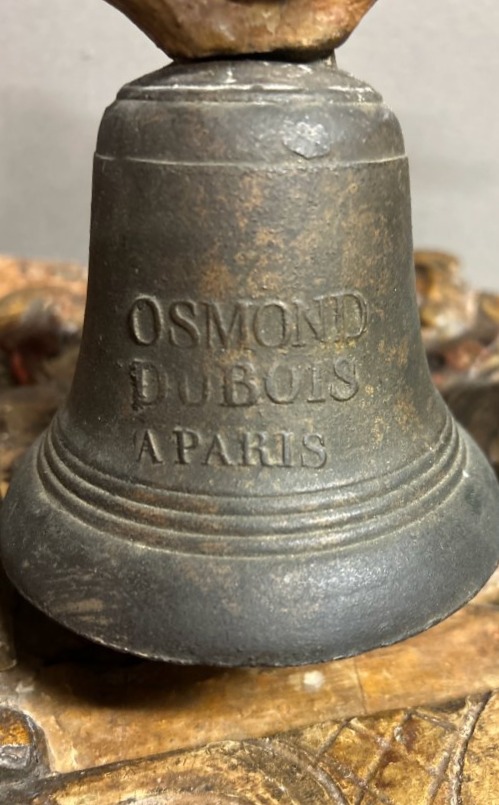
Only the bell was replaced during the 19th century, though this alteration did not affect the original mechanism or its operating system.
The bell currently in place bears a perfectly legible inscription in relief: “OSMOND DUBOIS A PARIS,” the signature of a historically renowned Parisian foundryman.
Osmond-Dubois, a prominent Parisian foundry.
This signature refers to Philippe-Auguste Osmond, who took over and expanded the foundry business of Louis-Dubois, his father-in-law, after marrying his daughter in 1807.
Based on Rue Saint-Martin in Paris, Osmond-Dubois established himself as a renowned foundryman in the first half of the 19th century.
His workshop specialized in particular in the manufacture of bells, chimes, doorbells, clock gongs, and various bronze objects.
His reputation is attested to by industrial documents from the period...
His workshop notably produced the large bells for the Church of Saint-Sulpice in Paris.
He was also awarded the title of “Fondeur du Roi” (Royal Foundryman) in 1827.
The signature on our example thus adds further historical interest to this piece, allowing us to precisely identify the maker of this 19th-century bell.
“A Particularly Rare Piece”
Due to its age, the quality of its carved decoration, the preservation of its original gilding, the presence of its two carved birds, and above all the preservation of its mechanism and period pull chain, this bell is a particularly fascinating testament to the art of living in the grand residences of the 17th and 18th centuries.
Antique service bells of this quality, featuring such elaborate carving, are particularly rare on the antiques market.
A piece full of character—at once decorative, historical, and technical—destined to appeal to connoisseurs and collectors of rare objects and antique furniture.
Dated to the Louis XIV period, late 17th to very early 18th century (circa 1680–1700).
Dimensions:
Total height with chain: 60 cm
Height without chain: 50 cm
Width: 42 cm
4 500 €
Period: 17th century
Style: Louis 14th, Regency
Condition: Some scratches and chips
Material: Gilted wood
Width: 42cm
Height: 60cm
Reference (ID): 1862933
Availability: In stock
Print