




Pair Of Religious Engravings - Period: Empire
Pair of religious engravings - Period: Empire
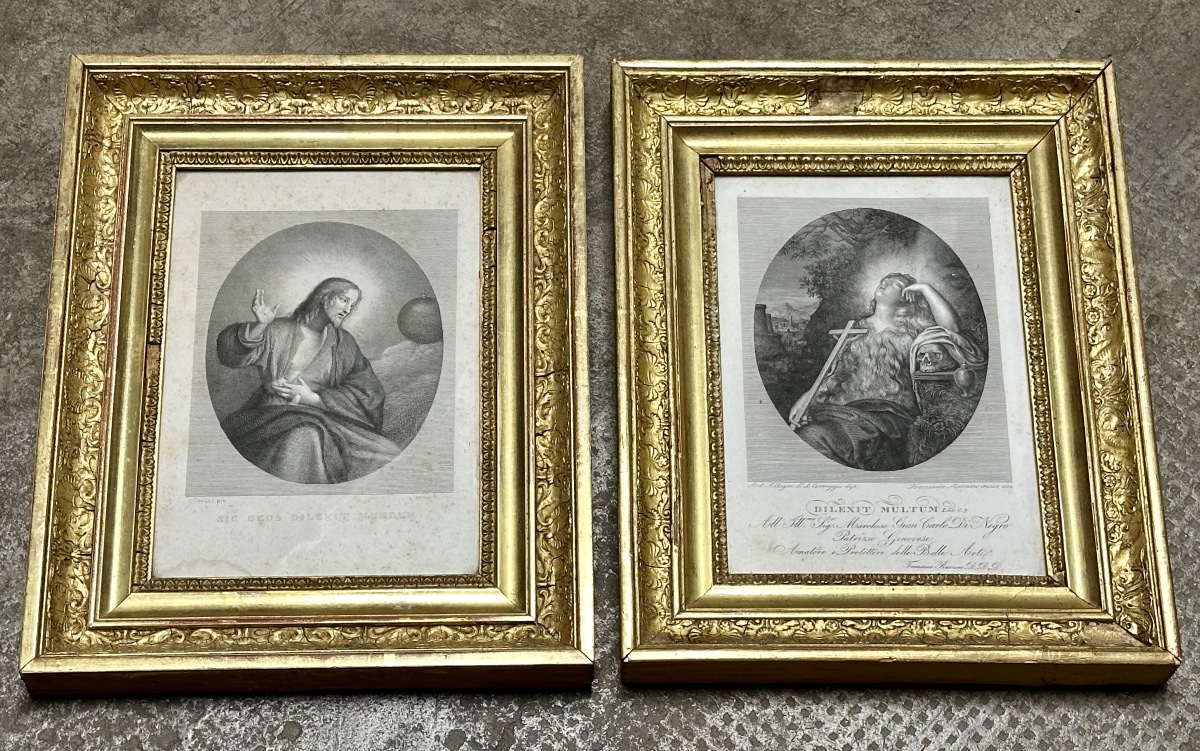
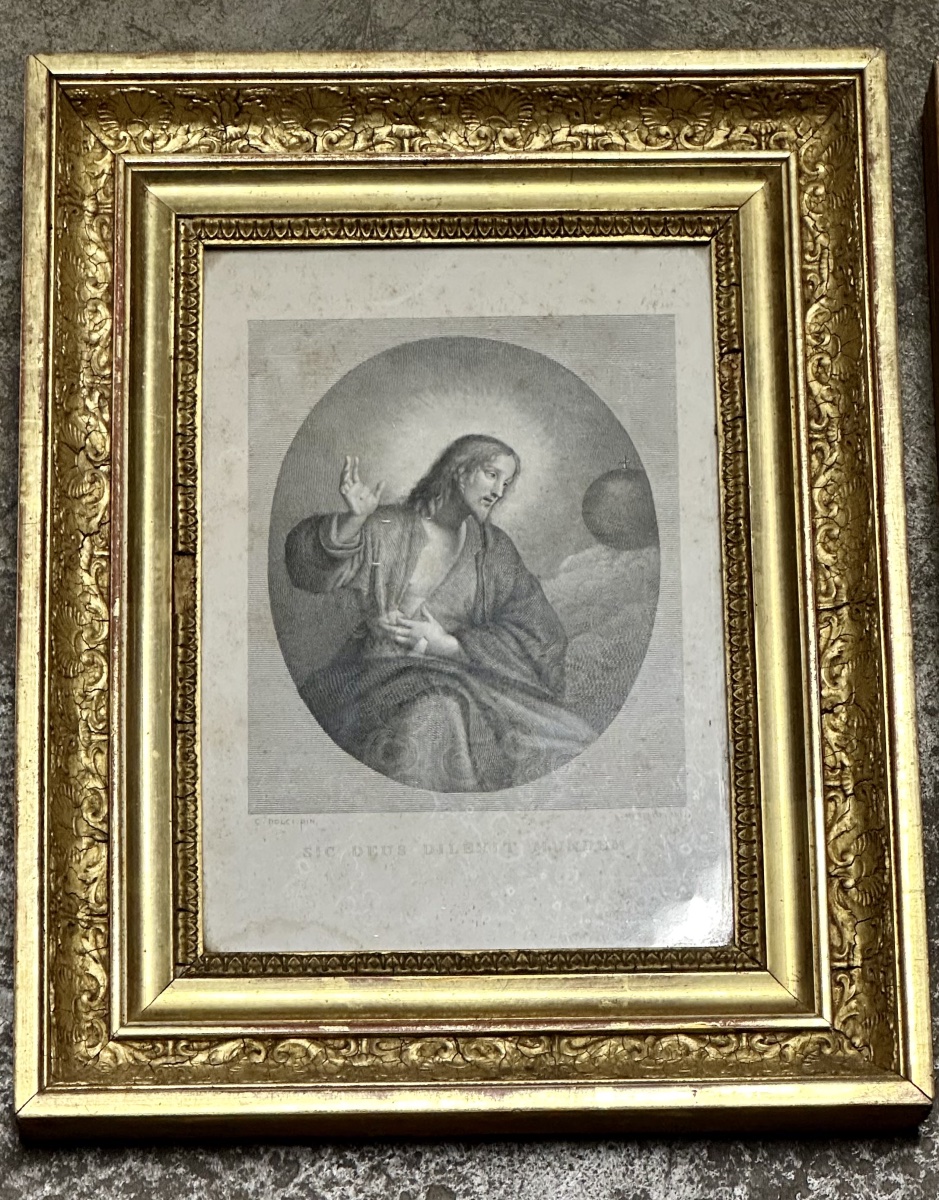
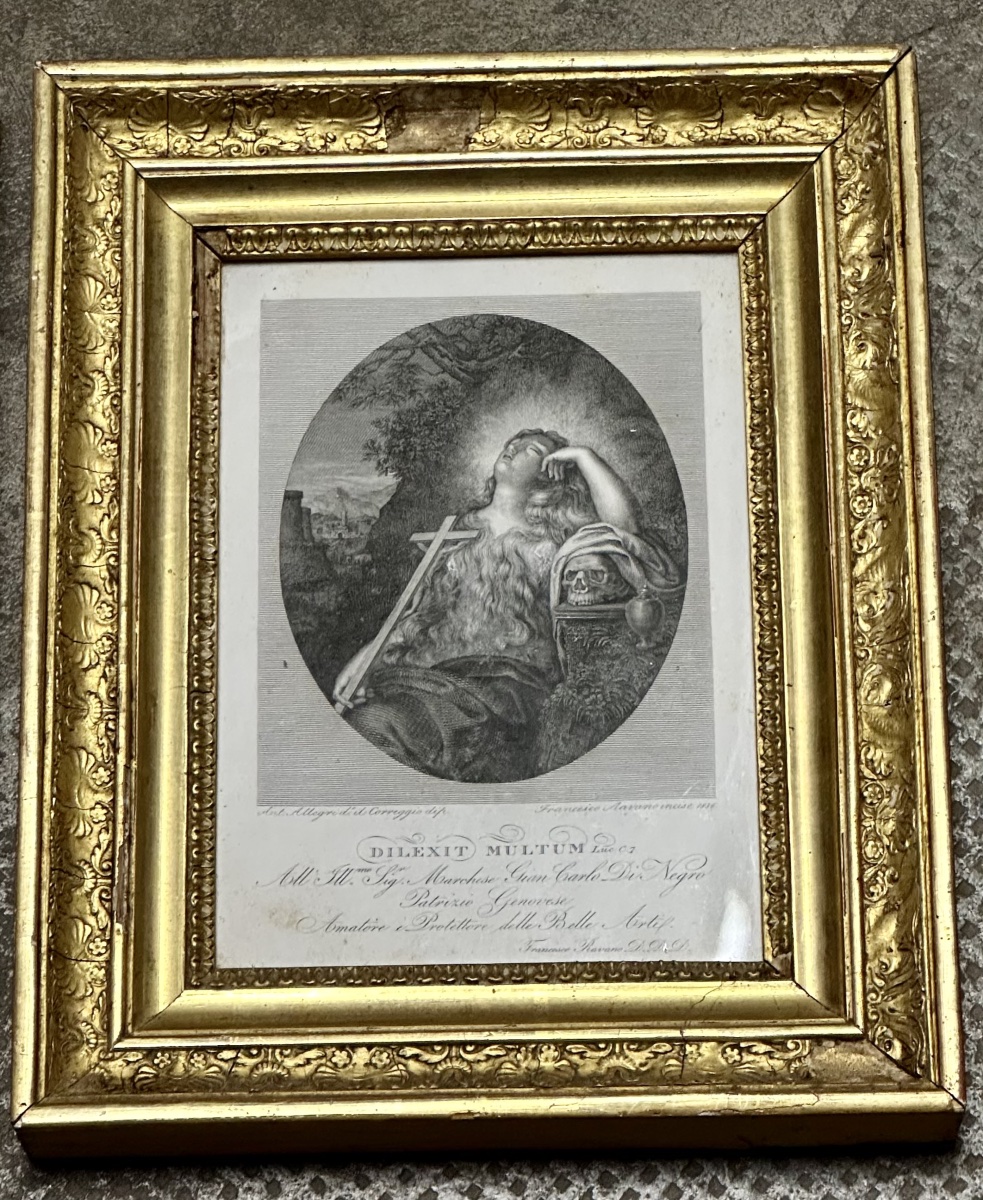
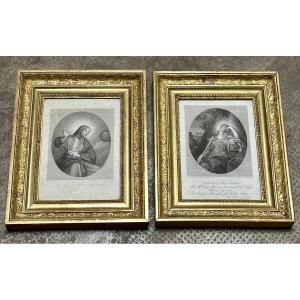
Pair of prints framed in gilded frames depicting, on the left, Christ the Redeemer (Sic Deus dilexit mundum) after Carlo Dolci (19th-century engraving, for example by Massimiliano Capezzuoli after Raffaello Morghen) and, on the right, the Penitent Saint Mary Magdalene (Dilexit multum) after Correggio (19th-century engraving, dedicated to the famous Genoese patron Gian Carlo Di Negro).
Details of the first print
* Subject and title: Christ giving a blessing, showing his stigmata and the wound in his side, next to the globe surmounted by the cross, with the motto from the Gospel of John (3:16) “SIC DEUS DILEXIT MUNDUM” (“God so loved the world”).
* Design (bottom left): C. Dolci pin. — based on the famous 17th-century model by the Florentine painter Carlo Dolci, made extremely popular by Raffaello Morghen’s renowned engraving.
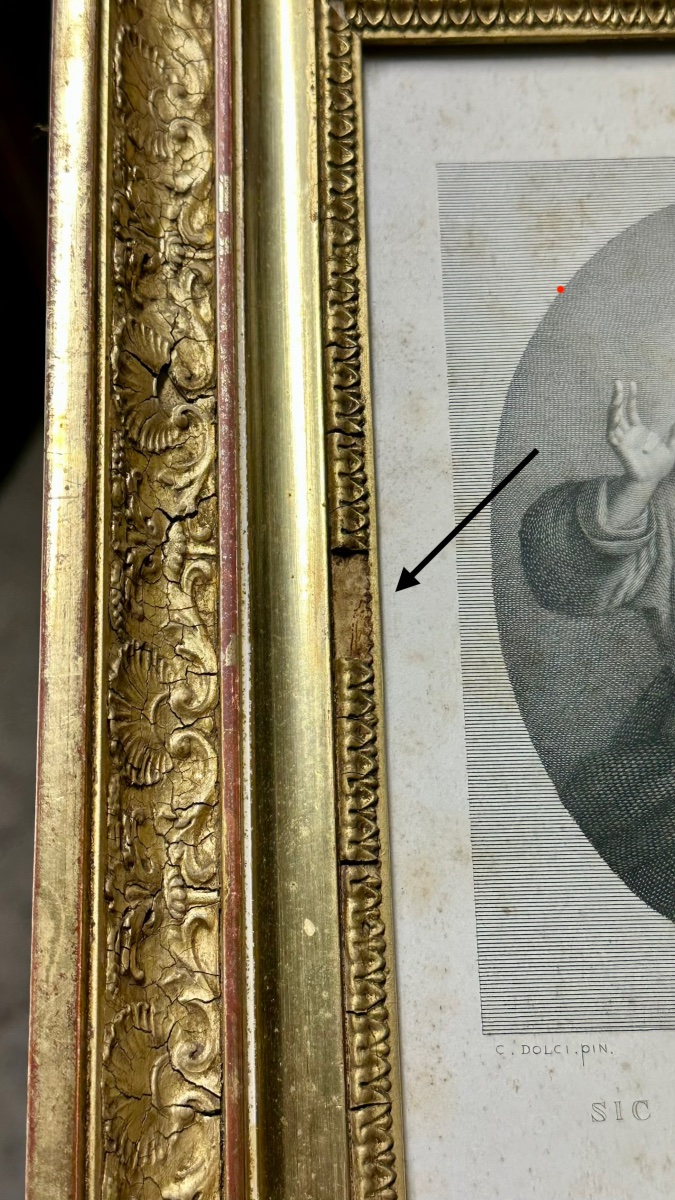
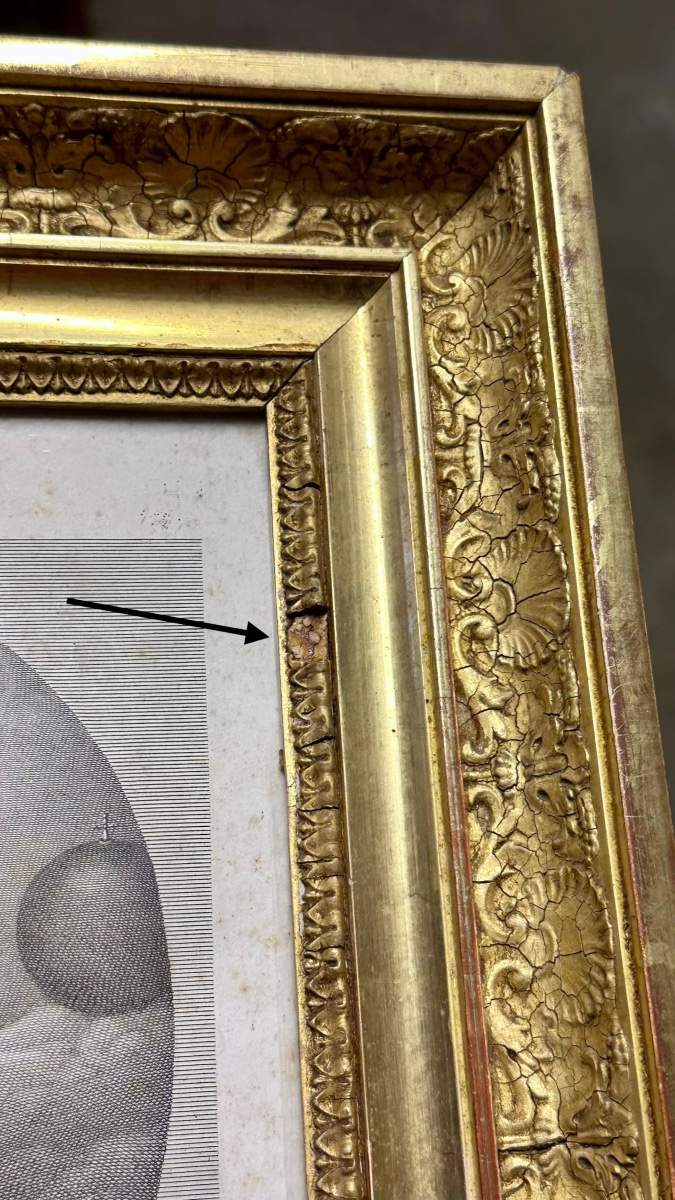
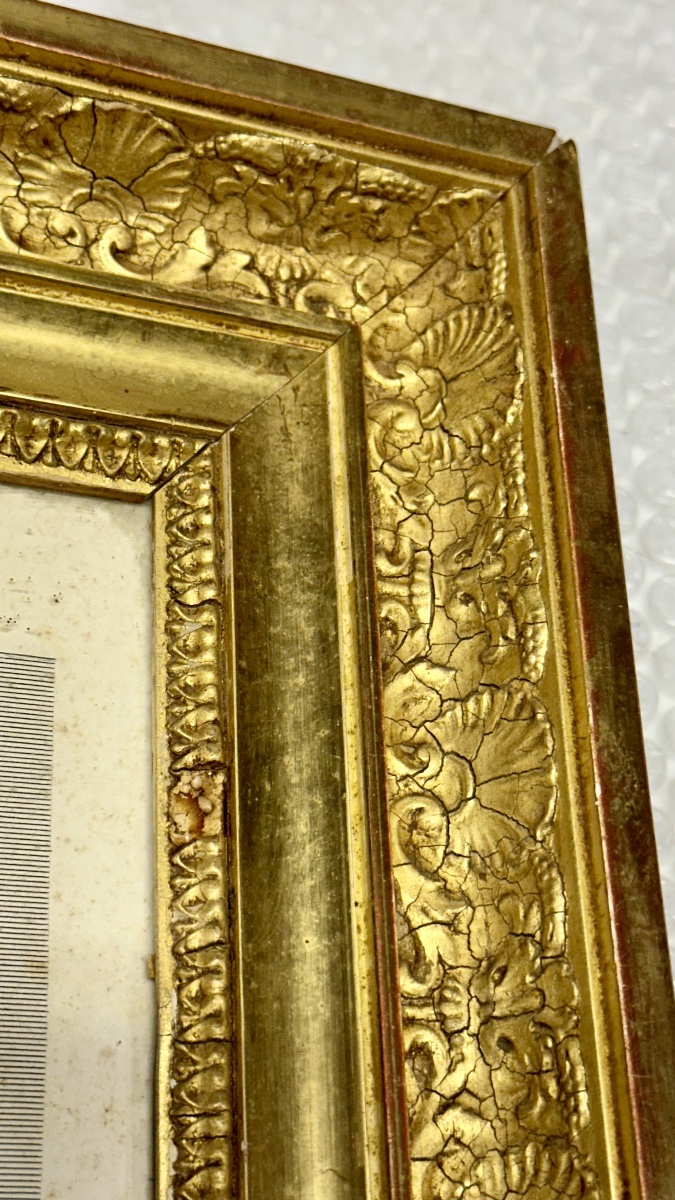
* Design and dating: Like the Magdalene from 1811, it dates to the early 19th century and is mounted in its contemporary gilded frame in the Empire/Neoclassical style; compared to the other, it shows only a few spots of water damage (small moisture stains) that are more evident on the paper and a small chip in the left inner molding of the frame.
* Note on the dedication: In the lower band beneath the title, very faint traces of the engraved dedication can be glimpsed (probably also executed by the same Genoese engraver, Francesco Ravano, who often signed plates by great Italian masters).
Details of the second work and inscriptions
* Subject and title: Saint Mary Magdalene as a Penitent, accompanied by the Gospel motto “DILEXIT MULTUM ” (Luke, chap. 7, i.e., the Gospel according to Saint Luke, chapter 7: “She loved much”).
* Composition (left): Ant. Allegri, known as Correggio (painter)—reproduces a painting then attributed to Correggio.
* Engraver and date (right) : Francesco Ravano (engraver), 1811 — work by the engraver Francesco Ravano, active in Genoa, who also signed the dedication in the lower right corner (“Ioannes Ravano D.D.D.,” meaning “Giovanni Ravano gives, dedicates, consecrates”; this is likely the publisher or a member of his family).
* Central dedication: “To the Most Illustrious Marquis Gian Carlo Di Negro, Genoese Patrician, Lover and Patron of the Fine Arts ” (“To the Most Illustrious Marquis Gian Carlo Di Negro, Genoese patrician, connoisseur, and patron of the fine arts”)—addressed to Gian Carlo Di Negro (1769–1857), a renowned collector and founder of the Villetta Di Negro in Genoa.
Period, historical significance, and relevance to collecting
* Date: 1811 (Napoleonic period / early 19th century); contemporary with the gilded Empire/Neoclassical-style frame, adorned with palmette motifs and a beaded frieze.
* Local significance: This work serves as direct evidence of cultural patronage in Genoa and Liguria in the early 19th century, which gives it greater historical significance than that of the common devotional prints of the period.
Period: Empire
Dimensions: 32.8 x 26 cm — dimensions of the mount: 24 x 17.2 cm — visible dimensions: 22 x 15.2 cm
480 €
Period: 19th century
Style: Consulat, Empire
Condition: Condition of use
Material: Gilted wood
Width: cm. 26
Height: cm. 32,8
Reference (ID): 1862226
Availability: In stock
Print