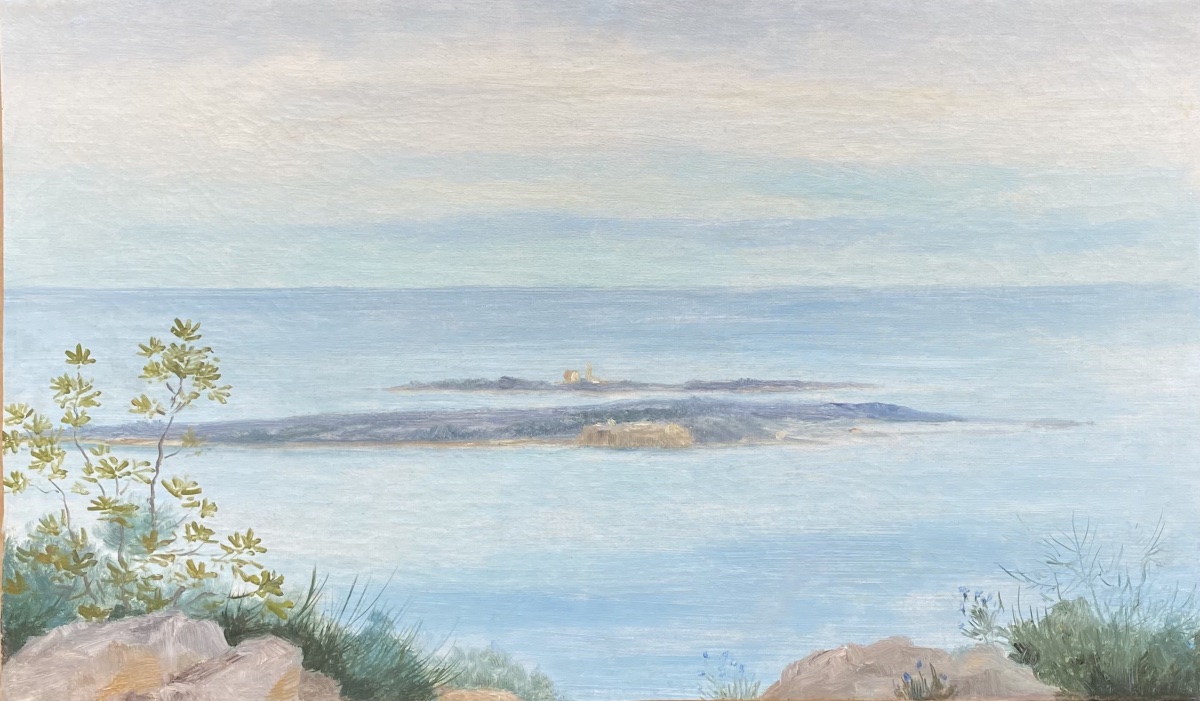
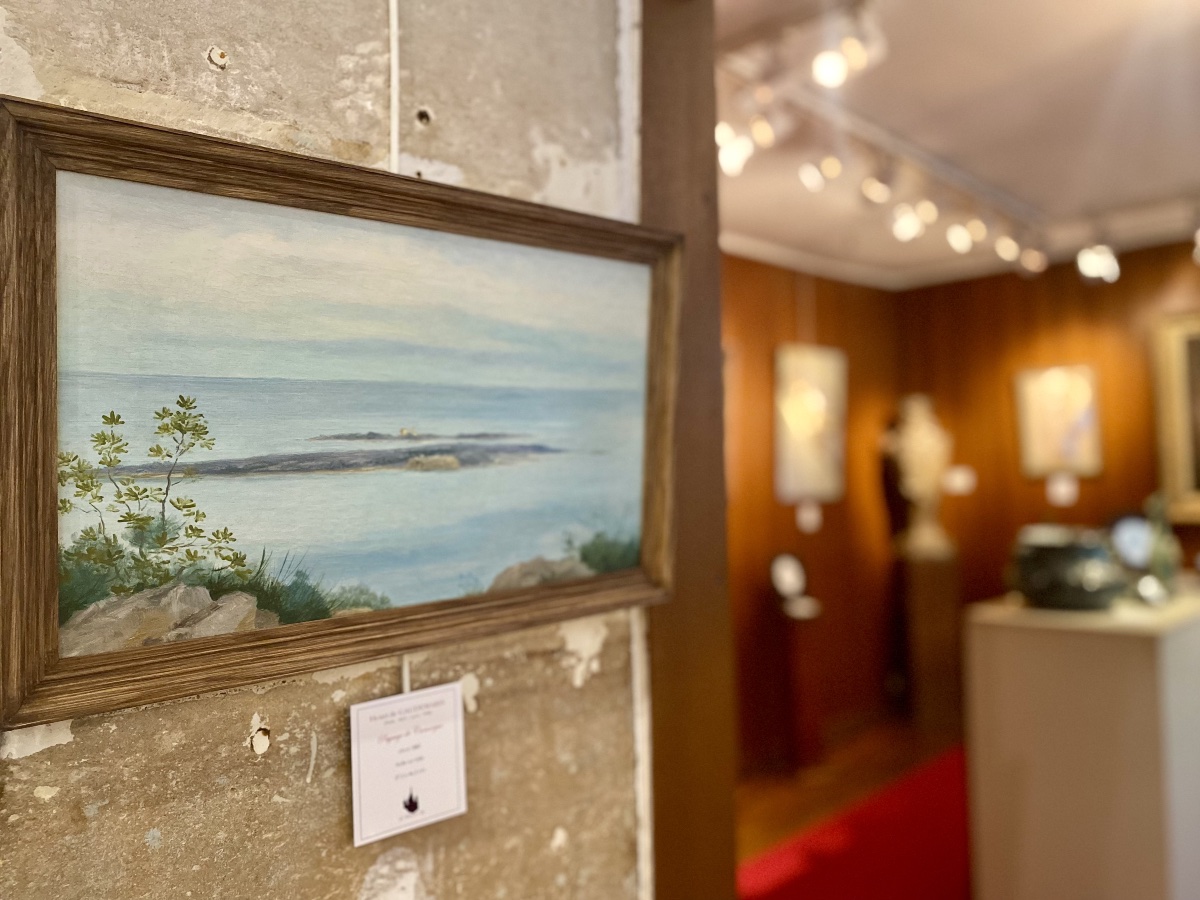
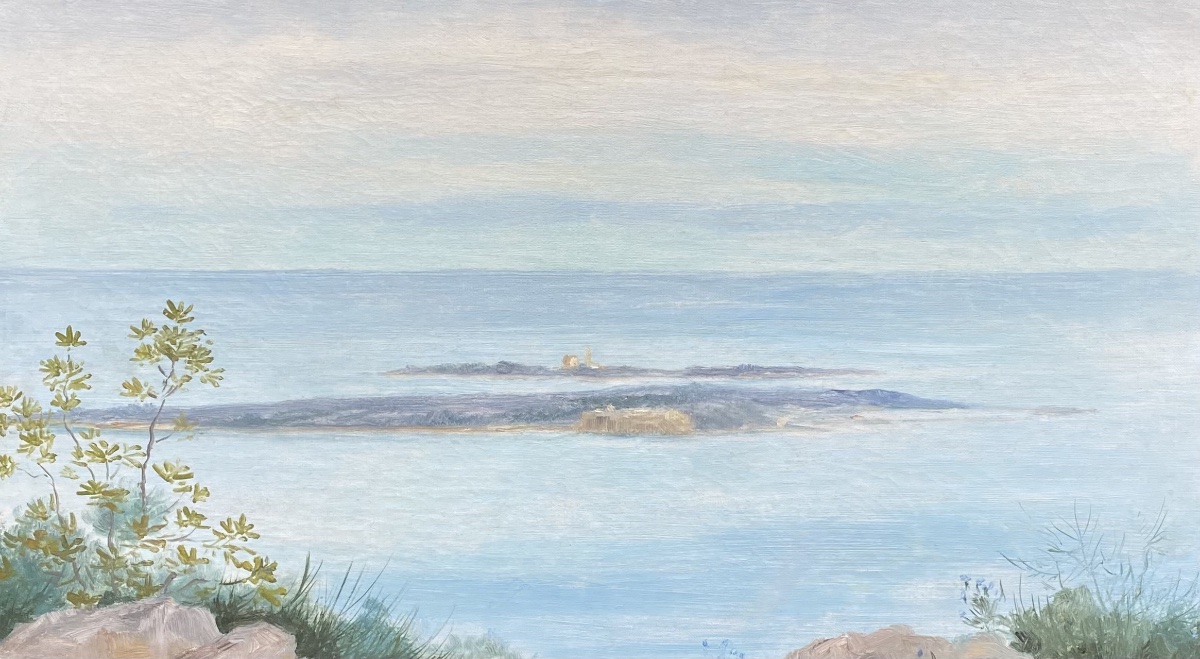
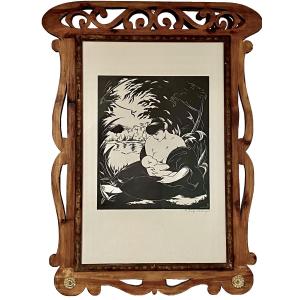
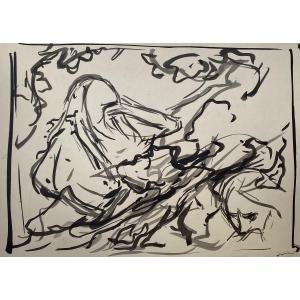
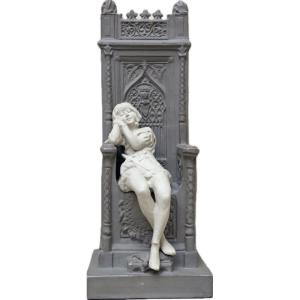
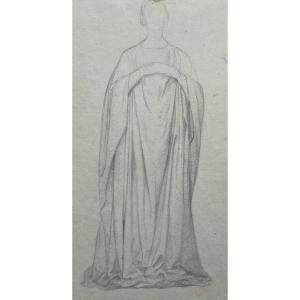
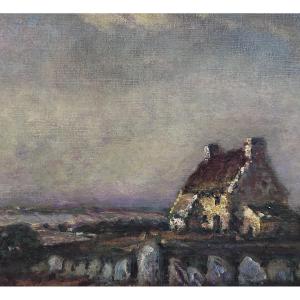
Born in Paris in 1853, Henry de Gaudemaris began his military career at the early age of 17 during the War of 1870 and the Algerian campaigns. Upon returning to civilian life, he settled in Lyon, where he balanced a professional career in industry with his passion for painting. His artistic training began under the guidance of Jean Scohy (1824–1897), then with
Michel Dumas (1812–1885),
a student of Ingres. Following this Ingresque lineage and the tradition of
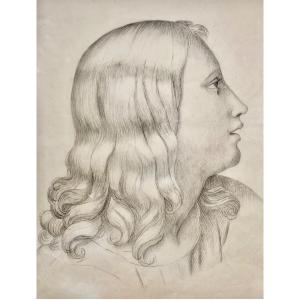
‘Orsel and Flandrin, Gaudemaris developed a rigorous draftsmanship that complemented his natural talent for color and the rendering of figures in calm, luminous atmospheres. Close to the Lyon-based painter Tony Tollet (1857–1953)—winner of the Grand Prix de Rome—with whom he shared a studio and a close friendship, Henry de Gaudemaris quickly became part of the artistic circles of his time. He became actively involved in the Société des Amis des Arts de Lyon beginning in 1883, where he served as one of the organizers of the annual Salons, playing a key role in the selection of works and the promotion of the Lyon art scene. At the same time, he contributed to the world of art criticism as the official correspondent in Lyon for renowned Parisian journals such as
Le Moniteur des Arts and the
Journal des Artistes. Henry de Gaudemaris distinguished himself particularly in history painting, religious subjects of mystical inspiration, and large-scale decorative works. In 1886, his large mystical composition,
The Holy Marys Led by Angels to the Coast of Provence, retouched with the guidance of Alexandre Cabanel, was well received at the Paris Salon. This poetic work would remain on display for many years at the church in Saintes-Maries-de-la-Mer. In 1889, he exhibited
The Offering to Minerva at the Paris Salon. Gaudemaris subsequently devoted himself to major mural projects in churches throughout the Lyon region (Sainte-Croix, Fontaines-sur-Saône, Beauregard, Denicé).
Henry de Gaudemaris’s work attests to the virtuosity and poetic sensibility of a Lyon-based painter at the crossroads of academic tradition and the mystical movement of the late 19th century. His style blends delicate religious symbolism with an academic rigor inherited from 15th-century painting. Although little known to the general public today, Henri de Gaudemaris deserves to be recognized as one of the most refined representatives of the mystical and spiritual revival in late 19th-century Lyon painting.
Bibliography: Christine FEUILLAS, “Notes on the painter Henry de Gaudemaris (1853–1908),” Bulletin des Amis d’Orange, no. 140 (1998), pp. 6–10.